
Review · FLORENCE HISTORY TOURS
Florence Cooking Course with Historic Local Market Visit
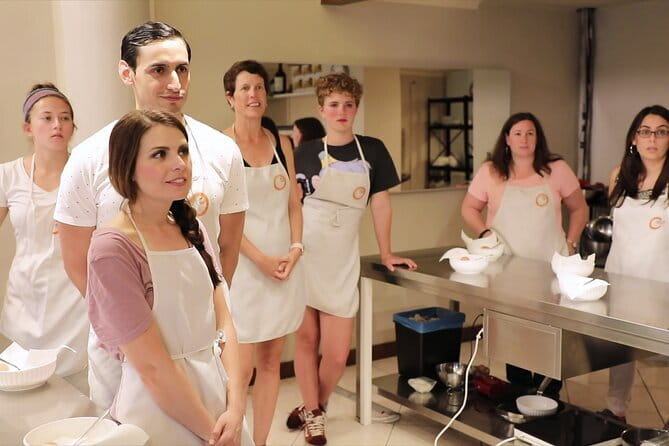
Florence’s best food lesson starts before you reach the kitchen. At San Lorenzo Market, you shop, taste, and learn how Florentines choose olive oil, balsamic vinegar, cheese, salami, truffles, and produce. Then you walk to a cooking school and turn those ingredients into a shared meal.
I like the market stop because it gives the class a sense of place, not just a row of recipes. I also like the practical menu: pasta, bruschetta, a meat or vegetable dish, and dessert are dishes you can repeat at home. The main caution is that hands-on time can vary with the group, and a few participants have found themselves chopping while the chef handled the more technical steps.
Key points at a glance
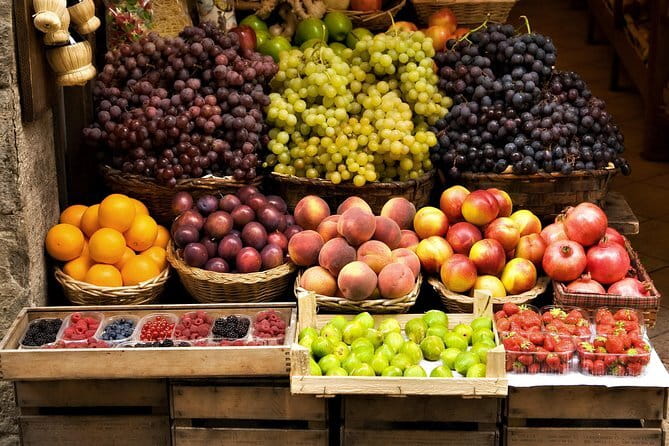
- San Lorenzo comes first: Explore Mercato Centrale with a chef and sample local products before cooking.
- Four-course meal: Expect a starter, two main courses, and dessert, with wine served at lunch.
- Chefs set the tone: Francesco, Caterina, Greta, Noemi, and Stefano are among the instructors named for this class.
- Group size matters: Each chef may supervise up to 15 participants, though some sessions are much smaller.
- Recipes go home with you: The class provides recipes so you can repeat the meal after Florence.
- Arrive early: The 9:50 a.m. meeting time is strict, and late arrivals cannot join or receive a refund.
Starting at San Lorenzo Market
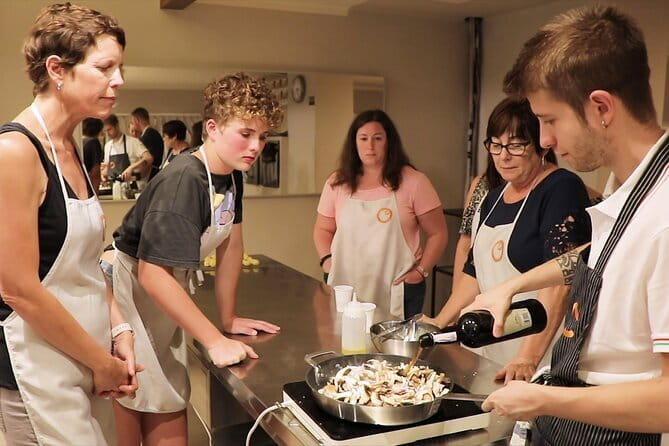
Meet at Piazza San Lorenzo at 9:50 a.m., in central Florence. From there, your chef or tour assistant leads the group into Mercato Centrale, the city’s central food market and the first real lesson of the day.
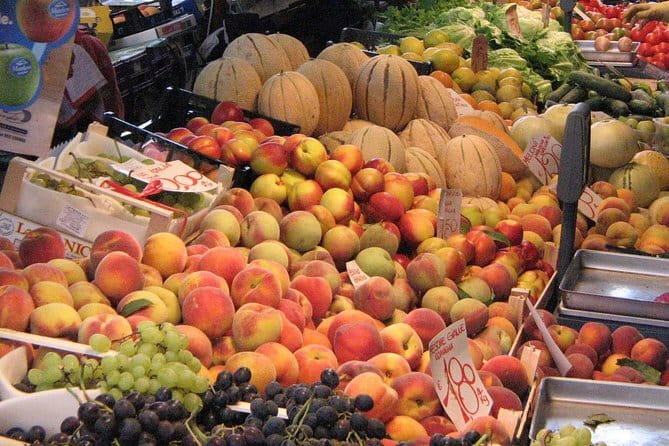
This is not simply a quick stop to buy tomatoes. The market visit focuses on how local ingredients look, smell, taste, and fit into Tuscan cooking. Depending on the session, you might sample truffle products, cheese, salami, balsamic vinegar, olive oil, espresso, fruit, or seasonal produce.
That tasting element is one of the strongest parts of the experience. A chef can explain why one olive oil tastes peppery, how balsamic vinegar differs by age and quality, or where truffle flavor works best. You also get to watch the small negotiations and friendly exchanges between stall owners and local shoppers. It is a useful window into ordinary food culture, even if the market itself is easy to visit without a guide.
The shopping is not always as literal as the description may suggest. Some sessions use the market mainly for tasting and instruction, then purchase only selected ingredients such as herbs or fruit. If you expect to choose every item for the meal, keep your expectations flexible.
The market is also a good place to ask questions. If you are curious about Italian cheese, cured meats, olive oil, or balsamic vinegar, this is when to speak up. Instructors such as Francesco and Caterina have been praised for explaining local products in a friendly, easy-to-follow way.
More Cooking Classes in Italy:
The walk from the market to the cooking school
After the market, the group walks about 10 to 15 minutes to the cooking school. The distance is not great, but Florence’s stone streets can be tiring, especially for anyone with mobility concerns or a heavy day of sightseeing behind them.
The walk is part of the experience, but it is not a private transfer. You need to keep up with the group. One participant found the pace difficult, so I would wear comfortable shoes and avoid scheduling a demanding museum visit immediately afterward.
At the school, the group may be divided among chefs. The official limit is 15 participants per chef, and the actual number can be much lower. A group of four or eight gives you far more room to work than a full class of 15.
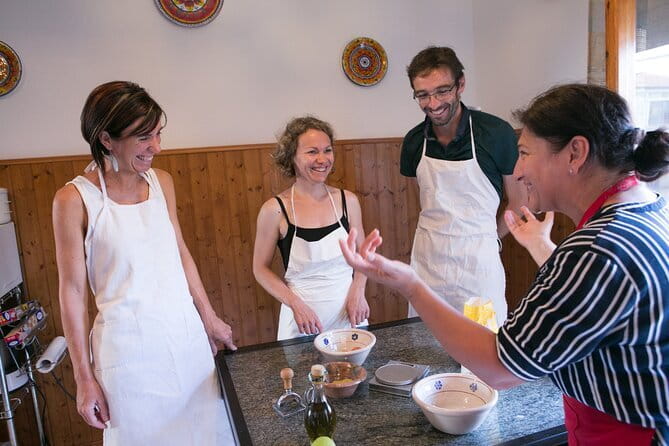
This difference matters. In a small class, you are more likely to shape pasta, stir a sauce, handle the vegetables, and ask for help at the stove. In a full group, the chef may demonstrate one step while several people take turns completing it. You should book this class for a social cooking experience, not a private lesson.
Cooking a Tuscan meal with an English-speaking chef
The advertised sample menu includes croutons with black cabbage and beans, pappardelle with truffle, peposo beef stew, and cantucci with vin santo. In practice, the menu can change. Some sessions have included bruschetta with Tuscan kale and beans, fresh pasta with an olive and caper sauce, chicken with balsamic vinegar, lemon ricotta cake, tiramisu, gnocchi, or panna cotta.
That flexibility makes sense in a market-based class. Ingredients change with the season, and the chef may adjust the meal for the group. Still, if you have your heart set on peposo, pappardelle, or cantucci, ask about the day’s menu before booking.
The recipes are generally designed for home cooks. You are not expected to master a restaurant kitchen or use rare equipment. The most appealing part of the class is the chance to make food that tastes distinctly Italian without requiring advanced skills.
The starter
The first course may be a bruschetta or crouton topped with beans, Tuscan cabbage, tomatoes, garlic, or another simple mixture. This is humble food, but it teaches a useful Italian habit: good bread, good oil, fresh produce, and proper seasoning can do most of the work.
You may chop the vegetables, prepare the topping, and assemble the bread. This is an easy first task and gives the group time to settle in.
More Market Tours in Italy:
- Private Excursion to Floating Market and Ayutthaya World Heritage
★ 5.0 · 515 reviews - Private Heritage Walking Tour in Jaisalmer Fort and Old Bazaar
★ 5.0 · 306 reviews - Old Delhi Food-Spice Market-Temples Tour Soon Featured on NETFLIX
★ 5.0 · 304 reviews - Lima: Historic Center Street Food, Market, and Eateries Tour
★ 4.9 · 216 reviews
Pasta or another main course
Fresh pasta is often the class highlight. You may learn how dough is mixed, shaped, or cut, then pair it with a sauce such as truffle, olive and caper, or another regional preparation.
The amount of pasta-making depends on the chef and the class size. Some participants have been able to do the work themselves. In larger sessions, the chef may prepare or finish part of the pasta while the group watches. If fresh pasta is your main reason for booking, choose a date with a smaller group if possible, and ask at the meeting point how much participation is planned.
The second main course
The second main is usually a meat dish, though the exact recipe can change. The sample menu lists peposo, a peppery Tuscan beef stew. Other sessions have included chicken with balsamic vinegar, vegetables, or a similar home-style dish.
The method is usually straightforward: chopping, seasoning, flouring, stirring, and combining ingredients. You will learn useful flavor combinations, especially the role of olive oil, herbs, balsamic vinegar, and slow cooking.
This is also where the class can feel less hands-on. With one pan and several participants, only a few people may get to stir or manage the stove. The finished food can still be excellent, but you should not confuse a group workshop with a chef-training course.
Dessert
Dessert may be cantucci with vin santo, lemon ricotta cake, tiramisu, or panna cotta. These are approachable recipes and a pleasant way to finish the cooking.
Dessert preparation can be the least active portion. Cream mixtures may need to be cooked or chilled by the chef, and a topping may be added later. I would see this as a lesson in the recipe rather than a full pastry class.
Lunch, wine, and the social side
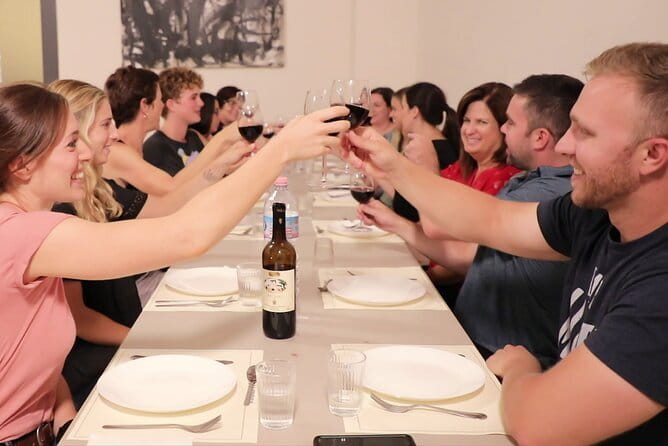
Once the food is ready, you sit down with the group and eat what you prepared. Wine is served with the meal, and drinks are included in the price.
This shared table is more than a reward for finishing the recipes. It gives you time to compare techniques, ask the chef questions, and meet people from different places. The class works well for couples, families with older children, and solo visitors who enjoy a social meal.
The food portions are generous enough for a full lunch. Several menus include four courses, so do not plan a large meal immediately afterward. The atmosphere is informal, with the focus on eating together rather than formal dining.
The chef’s personality makes a difference here. Francesco is described as humorous and warm, while Greta, Caterina, Noemi, and Stefano have each led sessions praised for clear instruction and an engaging manner. Of course, your exact instructor depends on the date and group.
How much cooking will you really do?
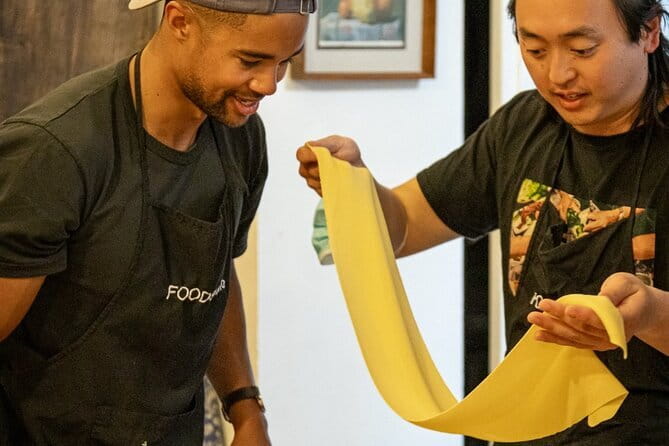
This is the question to settle before you book. The class is hands-on in concept, but the experience changes with the number of people, the kitchen setup, and the chef’s teaching style.
In a small group, you may do nearly every step. That can include preparing pasta, chopping vegetables, assembling the starter, seasoning the main course, and helping with dessert. The experience then feels like a proper workshop.
With a full group, you may spend more time watching demonstrations and taking turns. One participant described a session with many people and only a few cooking plates, where much of the work involved chopping. That is a fair warning.
I would book this class if you want to cook, taste, and share lunch in a relaxed setting. I would look elsewhere if you want detailed instruction on knife technique, pasta science, sauce timing, or individual feedback. The class teaches useful recipes, but it is not designed as an intensive culinary school lesson.
Price and value at $95.58
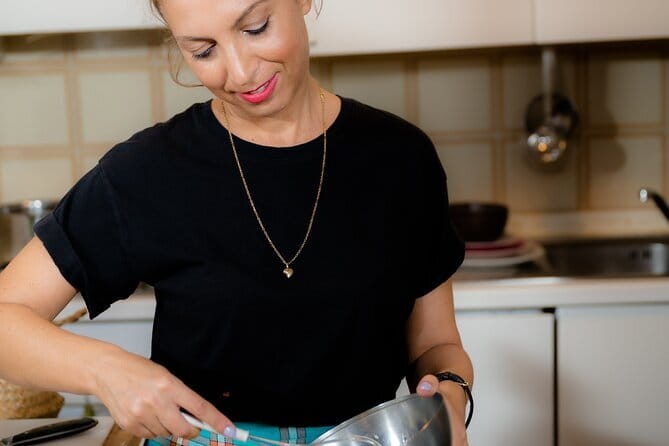
At $95.58 per person, the price includes the market walk, food tastings, cooking instruction, lunch, drinks, wine, and take-home recipes. Hotel pickup and drop-off are not included.
For Florence, that is a reasonable price for a five-hour activity if you value the full package. You are paying for a meal, a market introduction, chef instruction, ingredients, a cooking facility, and a social afternoon. It can also replace a separate lunch and a separate food market tour.
The value drops if your main goal is private instruction. A 15-person class gives you less stove time per person than a four-person session, yet the price is the same. I would consider the class a good buy for people who want a friendly food experience, but only a fair buy for serious home cooks seeking technique-heavy instruction.
The recipes add lasting value. You can recreate the dishes at home, and the methods are simple enough to use without professional equipment. That makes the class more useful than a meal where you only watch someone else cook.
Who should book this class?
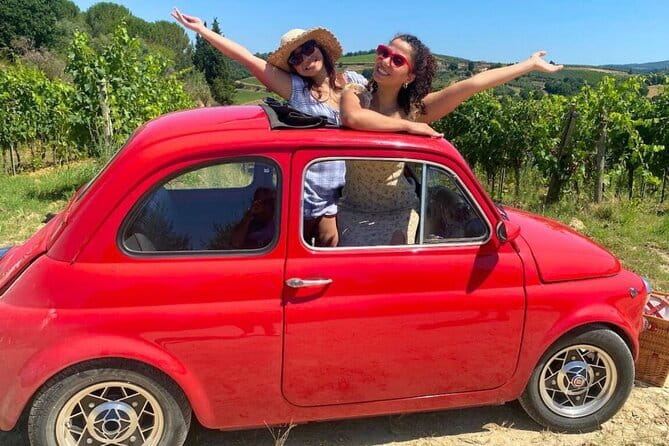
I would recommend it to adults and families with children aged 10 or older who enjoy food, markets, and shared activities. It is especially suitable if you want a break from churches, galleries, and monuments while still learning something tied closely to Florence.
It also suits people who want a gentle introduction to Tuscan cooking. You do not need advanced kitchen skills, and the instructors explain the dishes in English.
This is a good choice for:
- Couples who want a shared activity beyond sightseeing
- Families with teenagers
- Solo visitors who enjoy meeting people at a communal meal
- Home cooks who want repeatable Italian recipes
- Anyone interested in olive oil, balsamic vinegar, truffles, cheese, and fresh pasta
I would hesitate if you have severe or contact celiac disease, since the operator says the class cannot accommodate the risk of contamination. Vegetarians can participate if they notify the operator in advance. You should also report food intolerances or allergies before the class.
Children under 10 are not admitted. The experience is near public transportation, but there is no hotel pickup, and you need to reach the meeting point on your own.
Timing, meeting point, and the one rule not to ignore
The class begins at 9:50 a.m. at Piazza San Lorenzo and lasts about five hours. Arrive early. The meeting point can be confusing, especially if temporary structures or crowds change the appearance of the square. Look carefully for the assistant and allow extra time to find the group.
This is not a flexible drop-in activity. If you arrive late, you may miss the market walk and be unable to join the cooking class. The operator states that late arrivals cannot receive a refund or reschedule the experience.
You can cancel for a full refund up to 24 hours before the start time. Changes or cancellations made less than 24 hours before the class are not accepted.
The activity is offered in English, and from November 1, 2024 through March 31, 2025, English is the only language listed. It is offered with a mobile ticket, so keep the booking information easy to access.
Should you book it?
Book this class if you want a market-to-table day in Florence, with tastings, a shared lunch, wine, and recipes you can use at home. The market visit is the most distinctive feature, and the class is at its best with a small group and an instructor such as Francesco, Caterina, Greta, Noemi, or Stefano.
Do not book it expecting a private lesson or a fixed menu. The recipes can change, and a large group may limit how much cooking you personally do. Arrive early, notify the operator about dietary needs, wear comfortable shoes for the walk, and think of the experience as a social Tuscan food workshop. For that purpose, the price is sensible and the day offers a welcome change of pace from Florence’s crowded sights.
FAQ
Where does the cooking class begin?
It begins at Piazza San Lorenzo, 50123 Florence, at 9:50 a.m. The activity ends back at the meeting point.
How long does the experience last?
The experience lasts approximately five hours.
What food will I prepare?
The sample menu includes croutons with black cabbage and beans, pappardelle with truffle, peposo beef stew, and cantucci with vin santo. The exact menu may vary and has also included bruschetta, fresh pasta, chicken, tiramisu, lemon ricotta cake, gnocchi, and panna cotta.
Is lunch included?
Yes. Lunch with drinks and wine is included.
Can vegetarians take part?
Yes, vegetarians can participate if they inform the operator in advance. You should also report allergies and food intolerances before the experience.
Can I cancel for a refund?
You can cancel for a full refund up to 24 hours before the start time. Cancellations or changes made less than 24 hours before the experience are not accepted.
Newest history tours we have reviewed in Italy
- Bologna: Street Food Tour in the Historic Center★ 4.8 · 125 reviews
- Asti Historic Town Walking Tour★ 4.5 · 82 reviews
- Ancient Rome Half-Day Segway Tour★ 4.8 · 25 reviews
- Ancient Rome: Archeological area Largo Argentina★ 3.9 · 49 reviews
- Alghero: Historic Center Walking Tour with A Local Guide★ 4.8 · 120 reviews
- Alghero: walking tours around the ancient city★ 4.6 · 30 reviews
- Amalfi Organic Lemon Tour & Tasting in the Historical Garden★ 4.9 · 46 reviews
- Alba: History Walking Tour and Food Tasting with a Local★ 4.8 · 20 reviews
Markets, compared.
Private Excursion to Floating Market and Ayutthaya World Heritage
Read our review →
Private Heritage Walking Tour in Jaisalmer Fort and Old Bazaar
Read our review →
Old Delhi Food-Spice Market-Temples Tour Soon Featured on NETFLIX
Read our review →
Lima: Historic Center Street Food, Market, and Eateries Tour
Read our review →
Hoi An Night Market – Ancient Town street food tours by Night
Read our review →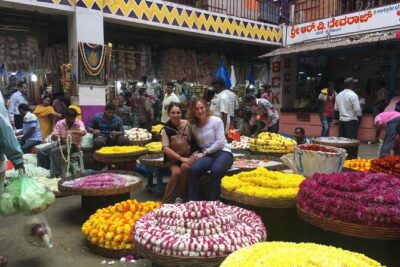
Bengaluru Pete City Market Half-Day Walking Tour
Read our review →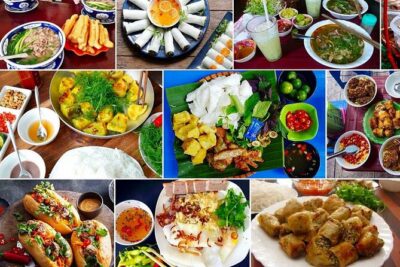
Hoi An Ancient Town – Night Market Street Food Tours By Night
Read our review →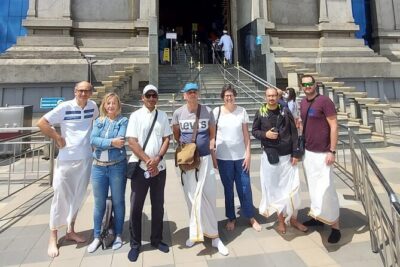
Experience Bangalore – City Tour, Authentic Food & market (Food/Culture/History)
Read our review →Browse the lists this tour appears in