
Review · DUBAI HISTORY TOURS
Dubai’s Favourite Food & Historic walking Tour
Old Dubai tastes best on foot, with a paper cup of something cold in one hand and the spice market in front of you. This tour links 12 food tastings with the story of Dubai’s change from fishing and trading village to modern city, then carries you across Dubai Creek by abra.
I like the way the route crosses both sides of the creek, and I like that the food is spread among local restaurants rather than served as one formal meal. Guides Sandy and Malick are named as particularly strong hosts, with Sandy praised for her clear, engaging approach. The main drawback is the $350 price, which is high for three hours, even when the tastings add up to dinner.
Key points at a glance
- Twelve tastings replace a standard dinner: Expect Arabic crepes, hummus, shawarma, mutable, tabbouleh, camel meat, sweets, drinks, and other small portions.
- The abra crossing is part of the route: You cross Dubai Creek from Deira to Bur Dubai in a traditional boat.
- The walk covers two old districts: The route takes in Deira’s gold and spice souks, then Bur Dubai’s textile souks and Al Fahidi area.
- Food comes with place and context: You hear about Bedouin food habits, spice use, trading culture, and Dubai’s early days.
- The group can reach 15 people: A smaller party may mean more time for questions, but it is not guaranteed to be a private walk.
- The meeting point is easy to reach: Start at Al Ras Metro Station and finish back at the same point.
Why this tour gets beyond Dubai’s glass towers
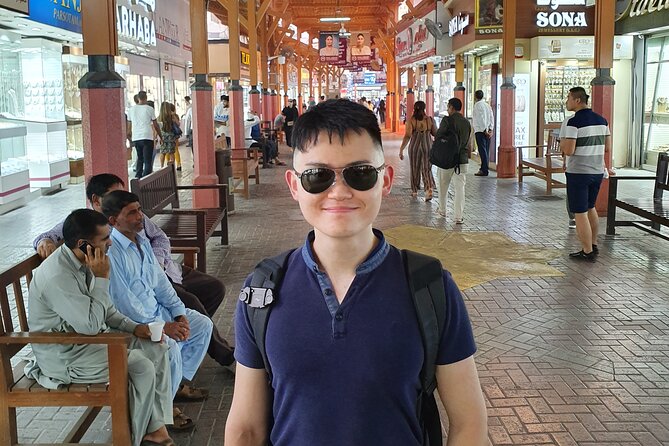
Dubai is easy to read as a city of shopping centers, hotels, and record-breaking buildings. This walk gives you a different starting point. You meet at Al Ras Metro Station, in Deira, and begin near the creek and old trading quarters rather than at a modern landmark.
That choice matters. Dubai’s early life centered on fishing, small-scale trade, and movement across the creek. The tour uses food to make that story practical. Instead of only hearing dates and names, you consider what people ate, how spices were used, and how food traditions remain part of daily life.
I like this approach because the history does not sit apart from the streets. The gold souk, spice market, textile souks, cafes, and ferry crossing all become part of the lesson. You are not simply walking past old places. You are learning why these areas formed and how they still function.
The tour lasts about three hours. That is long enough for a solid introduction to Old Dubai, but not long enough to cover every lane or museum. Think of it as an active food walk with history woven through it, not a full-day heritage program.
More History Walking Tours in Dubai:
- Historic Old Dubai & Souk Small Group Walking Tour
★ 5.0 · 156 reviews - Dubai: Walking, Architecture and History Tour of Dubai Opera
★ 4.9 · 40 reviews - Historic Forts, Boats and Pearls of Old Dubai Walking Tour
★ 5.0 · 31 reviews
Starting in Deira at Al Ras Metro Station
Your day begins at Al Ras Metro Station on Al Khor Street. The location is near public transportation, so you can reach the start without arranging a private transfer. Confirmation is sent at booking, and the activity ends back at the meeting point.
The first stage heads through Deira. Here, your guide sets out the basic story of Dubai’s growth, beginning with fishing and trading. You also hear about earlier eating habits and the role food played in a community that did not yet have the modern services Dubai is known for today.
The first tasting includes an Arabic crepe and dips such as hummus. This is a sensible opening: the food is familiar enough to ease you in, but it still introduces flavors and textures associated with the region. Since the tastings are served in variable quantities, you should think of them as a series of shared bites rather than twelve full plates.
The tour includes bottled water, which is useful in Dubai’s heat. Still, wear light clothes, bring sun protection, and start with a moderate appetite. Twelve tastings can become a large meal even if each serving is small.
Deira’s gold and spice souks
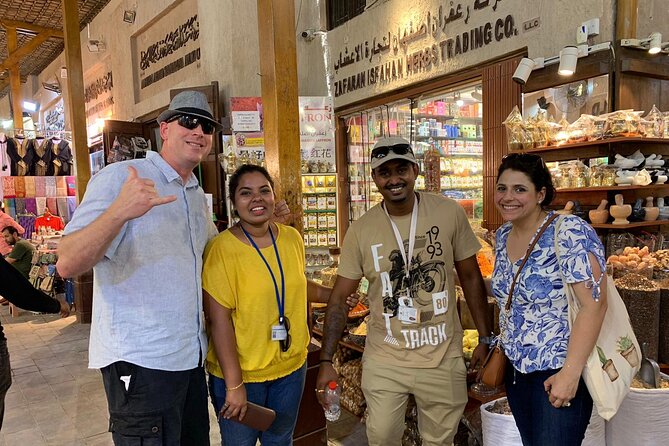
The walk continues through the gold and spice souks. The gold market is a reminder of Dubai’s long trading connections, while the spice market gives the guide a chance to discuss the practical use of seasonings in cooking and traditional medicine.
The spice discussion is one of the more distinctive parts of the tour. You learn how spices were valued not only for taste but also for their perceived medicinal qualities. The guide places this in the context of Bedouin life and the limited medical facilities available in the region before the 1960s.
That context helps explain why certain ingredients carried such importance. Spices were portable, useful, and valuable in a hot trading environment. They could flavor food, preserve ingredients, and serve a place in home remedies. You should treat the medicinal discussion as cultural context rather than medical advice.
The guide also explains how souks formed and how they continue to fit into a city shaped by online commerce. That comparison gives the market visit a modern edge. You see old-style stalls and trading customs while considering what has changed in the age of delivery apps and e-commerce.
The walk can be busy and sensory here, but do not expect a quiet museum visit. You are moving through working market areas. Keep your group in sight, listen for meeting instructions, and allow time to pause without blocking shop entrances.
Crossing Dubai Creek by abra
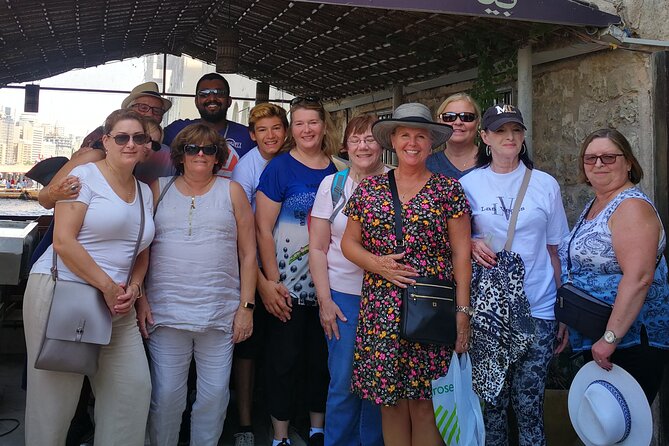
One of the clearest highlights is the abra ride from Deira to Bur Dubai. The crossing is short, but it changes the feel of the tour. Instead of staying on one side of the water, you connect the two districts in the same way the creek has long connected trade, residents, and visitors.
The boat ride also breaks up the walking and gives you a quick view back toward the old waterfront. It is not a sightseeing cruise, and you should not expect a long ride with a narrated route. Its value is in being part of the movement between the souks.
This is a good point to appreciate the tour’s design. The food, history, and transport are linked. You begin in Deira, see its markets, cross the water, and continue into Bur Dubai. That makes the creek feel like part of the city’s story rather than just scenery.
The crossing is also one reason comfortable shoes matter. The tour is not physically extreme, but you will walk through market streets, cross between food stops, and continue after the boat ride.
More History Tours in Dubai:
- Dubai Evening Heritage Safari by Vintage G Class Al Marmoom Oasis
★ 5.0 · 1,500 reviews - Dubai: Abu Dhabi Grand Mosque, Palace, and Heritage Village
★ 4.8 · 1,265 reviews - Dubai Camel Desert Safari, Traditional Meal & Heritage Activities
★ 5.0 · 937 reviews - Dubai: Heritage Safari in Vintage Land Rover with Dinner
★ 4.8 · 861 reviews
Bur Dubai, textile souks, and Al Fahidi
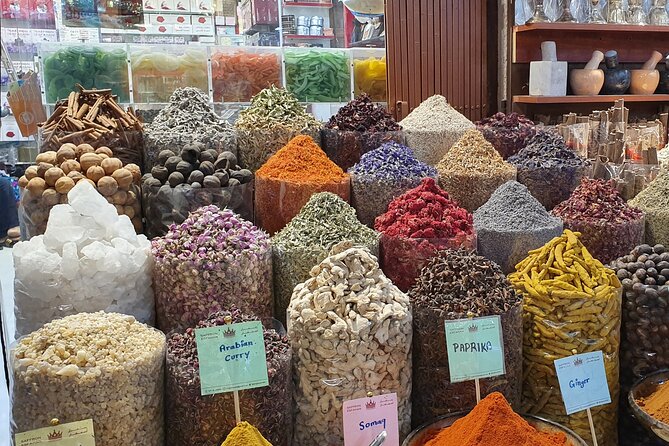
After arriving in Bur Dubai, the route explores textile souks and the Al Fahidi area. The textile markets add another piece to the trading story, while Al Fahidi gives the walk a more architectural and neighborhood-focused setting.
This section is useful for you if Dubai’s modern center has left you wondering where the older city went. The answer is here, in the creek-side districts and older commercial lanes. The walk does not try to make Old Dubai feel frozen in time. It shows a place where traditional market life and modern commerce continue side by side.
The guide fills in the story as you walk, so you get more than a list of buildings. You learn how the districts relate to food, trade, and local life. That is especially helpful if you have limited time in Dubai and want a first orientation before exploring on your own.
The route is not built around grand attractions. Much of its appeal comes from ordinary details: shop displays, food counters, the flow of the market, and the link between the creek and the surrounding streets. If you prefer famous photo stops and polished attractions, this may feel less rewarding. If you want a closer look at older Dubai, it is the stronger choice.
Twelve tastings, from shawarma to camel meat
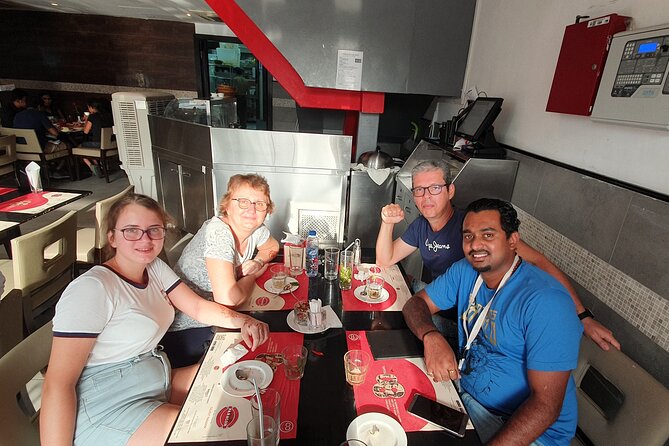
The food is the tour’s main practical advantage. You stop at different restaurants in Old Dubai and receive about twelve tastings in varying quantities. The stated selection includes shawarma, mutable, tabbouleh, camel meat, Arabic crepes, hummus, extra snacks, sweets, and drinks.
The portions are not fixed as one large banquet. That is good for variety. You can try food you might not order alone, then move on before one heavy dish takes over the meal. The format also lets the guide connect each tasting to the surrounding district and the broader food culture.
Shawarma is likely to be a crowd-pleaser, and it was singled out alongside caramel milk, ice cream, and a camel burger as a favorite combination. Camel meat gives you a chance to try something less familiar, but the inclusion is best understood as a tasting, not a promise of a full camel-based meal.
Mutable, a cooked eggplant dish, and tabbouleh add different textures and flavors to the route. Hummus and the Arabic crepe provide a gentler introduction. Since the tour includes dinner, you should not need to plan a separate evening meal afterward.
Food sensitivities deserve attention before booking. The provided details do not specify vegetarian, vegan, halal, gluten-free, or allergy arrangements. You can ask the provider before paying, especially because the tour moves between several restaurants and includes a set group of tastings.
What the guides add to the walk
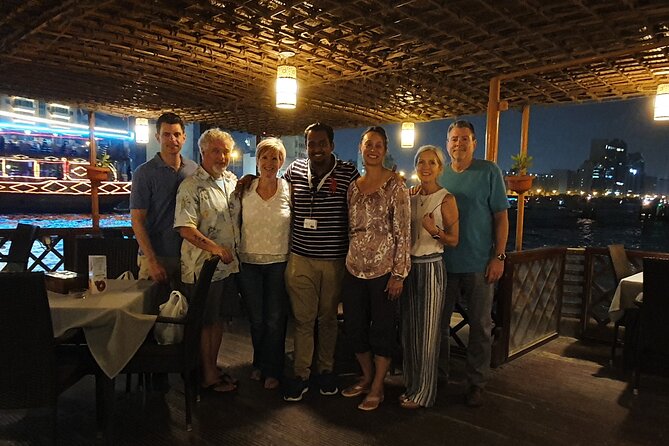
A food walk depends heavily on the person leading it. Sandy is described as engaging, proactive, and well informed, while Malick is praised for making the tour brilliant when a couple had the group to themselves.
Those details point to the kind of guide you want here: someone who can explain the city while keeping the pace moving between food stops. A good host also helps when you are trying unfamiliar dishes or need a little context before ordering.
The tour has a maximum of 15 people. That is small enough to avoid the feel of a large coach outing, though the actual group could still be lively. If fewer people book, you may receive more direct attention. One past booking had only a couple, but you should not assume that will be your arrangement.
The provider is listed as Explore Dubai with Gomez and Sandy, private tours only, while this specific activity gives a maximum group size of 15. If having a fully private walk matters to you, confirm the arrangement before booking. The available details support a small-group format, not a guaranteed private departure.
Is $350 a fair price?
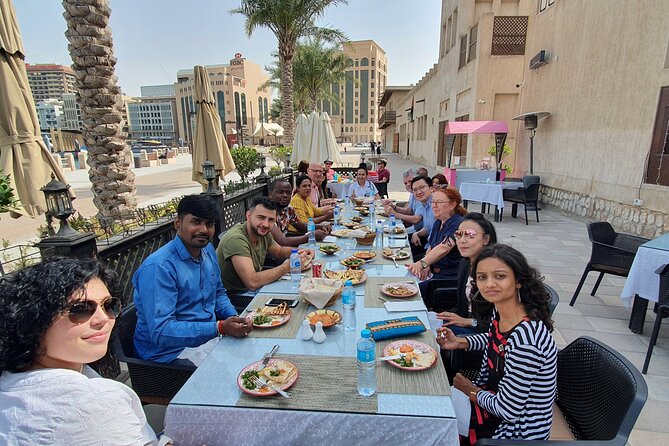
At $350 per person, this is an expensive three-hour activity. You are paying for a guided route, a dozen tastings, bottled water, the abra crossing, and the convenience of having the food stops organized for you.
The price makes more sense if you value explanation and structure. You are not simply buying snacks. You are paying for a guide to connect Deira, the souks, the creek, Bur Dubai, and Al Fahidi into one evening. You also avoid guessing which stalls to try or how to fit both sides of the creek into a short visit.
Still, value depends on your eating habits. If you eat lightly, avoid several listed foods, or prefer to explore markets independently, $350 may feel hard to justify. If you want dinner, orientation, and local context in one compact booking, the cost may be more acceptable.
The 97 percent recommendation rate and 4.9 rating from 32 reviews suggest strong satisfaction, but the sample is not huge. I would use those figures as a positive signal, not as a guarantee that every group will have the same guide or pace.
The activity is booked about 35 days in advance on average. That does not prove every date sells out, but it is a useful planning clue. Book early if you have fixed Dubai dates, then keep the free-cancellation deadline in mind.
Who should book this Old Dubai food walk?
I would point this tour toward you if you want a first look at Old Dubai, enjoy trying several small dishes, and prefer a guide to explain what you are seeing. It also suits couples, families, and small groups who want dinner and sightseeing combined.
It is a particularly good fit early in your Dubai stay. After three hours, you will have a clearer sense of the creek districts and may know where you want to return for more food, shopping, or independent walking.
You may want a different plan if you need a fully private tour, have strict dietary requirements, dislike walking in market areas, or want a long museum-focused history program. The tour has a fixed route and a set of tastings, so it does not promise a custom food itinerary.
Free cancellation is available up to 24 hours before the start time for a full refund. Changes made within 24 hours are not accepted, and late cancellations are not refunded. The activity requires good weather, with another date or a full refund offered if poor weather forces cancellation.
Should you book it?
Book this tour if you want to understand Dubai through its older neighborhoods, not just its skyline. The strongest reasons are the two-sided creek route, the abra crossing, the twelve tastings, and the chance to hear how spices, trade, and food shaped everyday life.
I would hesitate only because of the price and the lack of stated dietary details. For the right person, this is a compact, food-filled introduction to Deira and Bur Dubai. For someone focused on low-cost eating or major modern attractions, it is not the best use of $350.
FAQ
Where does the tour start?
The tour starts at Al Ras Metro Station, at Al Khor Street in Deira, Dubai.
Where does the tour end?
The activity ends back at the meeting point.
How long does the tour last?
The walking and food experience lasts approximately three hours.
How many people can join?
The maximum group size is 15 people.
Is dinner included?
Yes. Dinner is included through about 12 tastings at different restaurants in Old Dubai. Portions vary in size.
What foods are included?
Listed tastings include Arabic crepes, hummus, shawarma, mutable, tabbouleh, camel meat, sweets, drinks, and additional snacks.
Is the abra ride included?
Yes. The route includes an abra ride across Dubai Creek from the Deira side to Bur Dubai.
Is bottled water included?
Yes, bottled water is included.
Can I cancel for a full refund?
You can cancel at least 24 hours before the experience start time for a full refund. Cancellations or changes made less than 24 hours before the start time are not accepted for a refund.
Newest history tours we have reviewed in Dubai
- Dubai Half Day Tour: Discover Old Dubai’s Heritage & Culture★ 4.5 · 97 reviews
- Dubai: Dubai Frame Where Heritage Meets Modernity★ 4.0 · 25 reviews
- Hatta Mountain Tour, Hatta Dam, Heritage Village, Honeybee Garden★ 5.0 · 23 reviews
- 57 Heritage Safari with Dune Buggy★ 5.0 · 29 reviews
- Historic Old Dubai & Souk Small Group Walking Tour★ 5.0 · 156 reviews
- Private Historic Old Dubai and Souks Walking Tour featuring Hidden Gems★ 5.0 · 27 reviews
- Private Full Day Hatta Visit Dam Heritage Village Lake★ 5.0 · 28 reviews
- Hatta Heritage Village Tour from Dubai With Kayaking★ 4.0 · 41 reviews
History Walking Tours, compared.
History and Hauntings of Salem Guided Walking Tour
Read our review →

Freedom Trail History Small Group Walking Tour
Read our review →
Historic Charleston Guided Sightseeing Walking Tour
Read our review →
Tapas Walking Tour with Food, Wine, and History
Read our review →
Savannah History and Haunts Candlelit Ghost Walking Tour
Read our review →
A History of Terror – Belfast City Centre Walking Tour
Read our review →Browse the lists this tour appears in