
Review · TANZANIA HISTORY TOURS
Dar es Salaam History and Architectural Tours
Dar es Salaam’s story is written in many styles: a 1903 cathedral on the site of the city’s first mosque, a Bavarian church under palm trees, tribal homes, carved ebony, fish stalls, and bright Tingatinga paintings. This private tour brings those pieces together, with Bernard guiding you through the city’s past and present.
I like the wide range of stops, from religious buildings and museums to Kariakoo Market and the Mwenge woodcarvers. I also like the practical setup: private transportation, bottled water, snacks, and lunch are included. The trade-off is a long, busy day. With nine stops packed into about seven hours, you will see a lot, but some visits are necessarily brief.
Key points at a glance
- A city tour with real variety: Churches, museums, traditional homes, markets, art, shopping, and modern Dar es Salaam all appear in one day.
- Bernard brings local context: He explains architecture, religion, society, music, and the city’s old and modern identity.
- Private transportation keeps the day flexible: Only your group takes part, with pickup offered.
- Lunch, snacks, and water are included: That matters in Dar es Salaam’s heat and keeps the day moving.
- The markets are active, not staged: Mwenge, Kivukoni, and Kariakoo show different sides of commerce and daily life.
- The $150 price buys breadth and convenience: It is easier to justify if you value a private guide and several admission tickets in one day.
Why this tour gives you a fuller Dar es Salaam
Many city tours focus on a few old buildings and call it a day. This one takes a broader view. You begin with religious architecture, move into Tanzania’s many cultural traditions, visit working markets, and finish with art and modern shopping.
That range is the main reason to book it. Dar es Salaam is not a city you understand from one monument. Its identity comes from the overlap of faiths, trade, migration, art, food, and rapid growth. The tour gives you a way to see those connections without arranging separate taxis, entrance fees, and guides.
Bernard is the guide named in the experience details, and he is described as an enthusiastic, well-spoken local authority on Dar es Salaam’s history and important places. His role matters here. The buildings and markets are interesting on their own, but the context turns separate stops into a story about the city.
More Architecture and Landmark Tours in the world:
- Venice: St. Mark’s Basilica Guided Tour & VR History Intro
★ 3.9 · 4,880 reviews - Venice’s Best: Basilica, Doge’s Palace, Gondola & History Gallery
★ 4.5 · 2,478 reviews - Córdoba: Skip-the-Line Great Mosque-Cathedral History Tour
★ 4.7 · 1,690 reviews
Starting with St. Joseph’s Cathedral
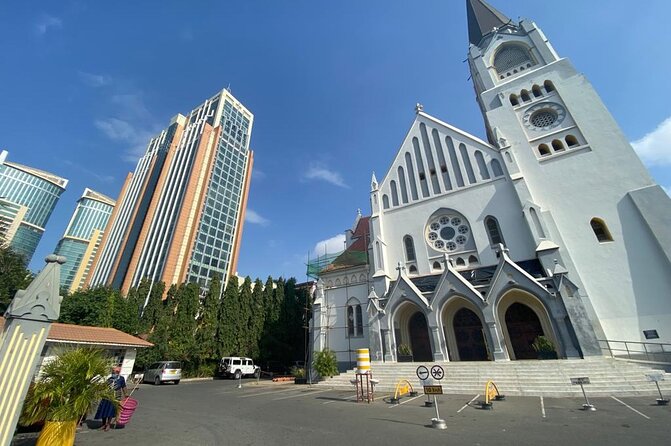
Your first stop is St. Joseph’s Cathedral, built in 1903. The most striking detail is its location: the cathedral occupies the same spot as Dar es Salaam’s first mosque.
That single fact gives you a useful introduction to the city. Religious buildings are not isolated pieces of architecture here. They reflect changing communities, outside influence, and the long contact between East Africa and the wider Indian Ocean world.
You have about 30 minutes, with admission included. That is enough time for a focused look, though not a slow architectural study. If you enjoy church interiors, old masonry, and the way religious buildings shape a city center, this is a strong opening.
Azania Front Lutheran Church and its unusual style
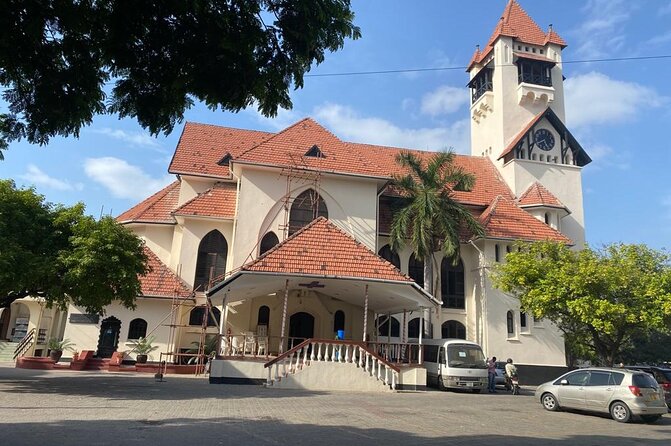
The next church offers a sharp contrast. Azania Front Lutheran Church has a Bavarian design, but its setting and influences are not purely European. The description points to links with churches in Latin America and India, while palm trees around the building remind you that this is Dar es Salaam, not southern Germany.
You get another 30 minutes here. The value is less about a long visit and more about comparison. Seeing St. Joseph’s Cathedral and Azania Front Lutheran Church together helps you notice how imported architectural ideas were adjusted to local conditions and tastes.
If architecture is your main interest, you may wish for more time at both churches. Still, the short format keeps the day from becoming a procession of similar buildings.
Traditional homes at the Village Museum
The Village Museum changes the pace. It is a hands-on museum showing traditional homes and living conditions from several Tanzanian tribes.
This stop helps explain the country beyond Dar es Salaam’s urban core. You are not simply looking at objects in glass cases. The homes give you a physical sense of how people organized domestic space, built with local materials, and adapted to different regions.
One hour is a sensible amount of time. You can walk through the grounds, compare house styles, and ask Bernard about the people and traditions represented. The museum is especially useful early in a Tanzania trip because it gives you cultural reference points for places you may visit later.
The limitation is that a reconstructed or displayed home cannot fully replace seeing a living village. Think of this as a clear introduction, not a complete picture of every Tanzanian community.
More History Tours in the world:
- New York City: American Museum of Natural History Ticket
★ 4.5 · 15,447 reviews - History and Hauntings of Salem Guided Walking Tour
★ 5.0 · 14,564 reviews - Colosseum: Underground and Ancient Rome Tour
★ 4.7 · 12,691 reviews - Lisbon: History, Stories and Lifestyle Walking Tour
★ 4.8 · 10,902 reviews
Ebony carvings at Mwenge Woodcarvers Market
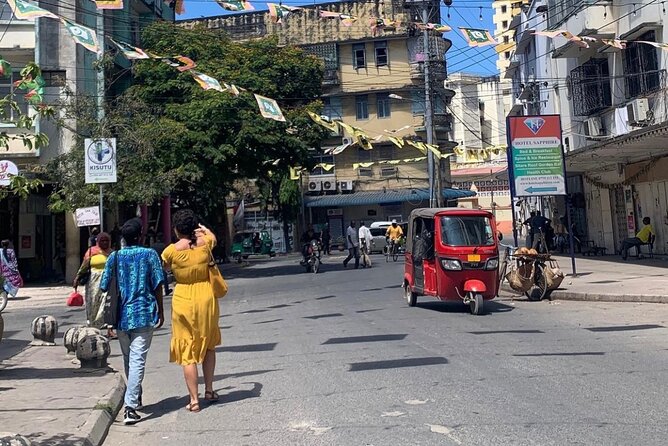
At Mwenge Woodcarvers Market, the focus shifts from architecture to craft. The market is known for statues, masks, and chests carved from strong black ebony wood.
This is a good place to look for something made in Tanzania rather than a generic souvenir. The carving tradition also gives the market a visual identity: dark wood, strong forms, and objects made to be handled and displayed.
You have an hour, which gives you time to browse instead of making a rushed purchase. Ask about prices and compare several pieces before deciding. The experience details do not promise a formal demonstration or fixed shopping format, so approach this as a market visit rather than a workshop tour.
If you are not shopping, the stop still has value, but you may find an hour long. If you like woodwork, masks, or locally made decorative pieces, it will likely be one of the day’s more enjoyable pauses.
The working waterfront at Kivukoni Fish Market
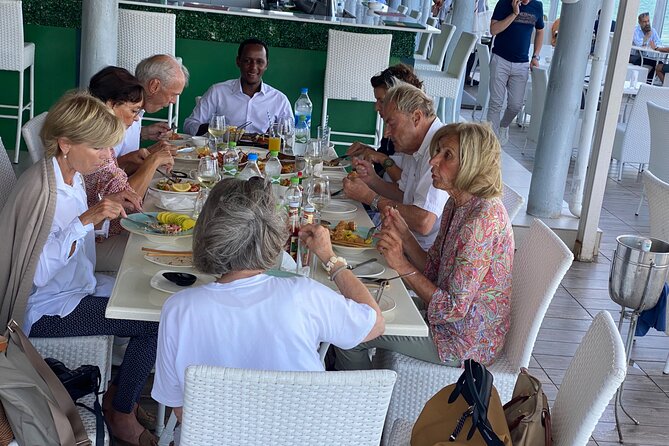
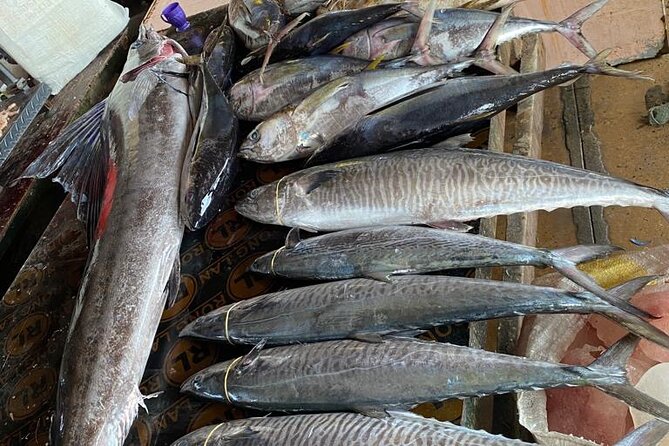
Kivukoni Fish Market shows Dar es Salaam in a more practical mood. It is a seafood market tied to the city’s fishing industry and food culture.
You have about 30 minutes here. That is enough for a quick look at the trade in freshly caught seafood and a sense of how the waterfront supports daily life. The market is not designed as a quiet museum. Expect an active public place where the sights, smells, and movement are part of the experience.
The tour description says you may sample regional seafood dishes, but lunch is separately included as a local meal. Do not assume that a full seafood meal is part of this stop. The market is best treated as a short cultural visit, with Bernard helping you understand its role in the city.
Tanzania’s story at the National Museum
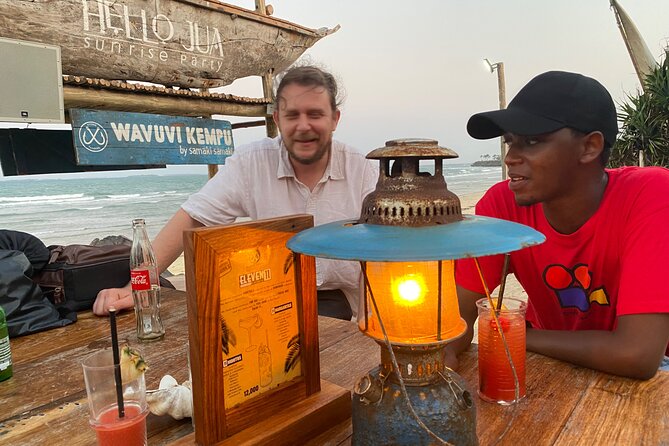
The National Museum of Tanzania gives the day its broadest historical frame. It is a group of five Tanzanian museums whose purpose is to preserve and display material about the country’s history and natural environment.
You receive an hour here. That is useful because the museum covers more than one subject. You can connect the religious buildings, traditional homes, markets, and art you have already seen with a larger national story.
This is probably the stop where Bernard’s explanations will matter most. A museum can feel scattered if you do not know which objects deserve your attention. A guide can help you focus on the parts that relate to Dar es Salaam and Tanzania’s wider cultural development.
An hour will not let you see every exhibit in depth. That is not a flaw in the tour so much as a limit of a one-day city overview. If the museum interests you greatly, you may want to return independently.
Kariakoo Market and the commercial heart of the city

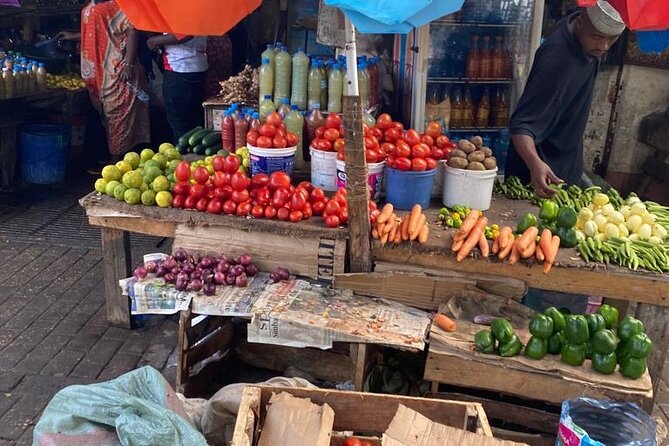
Kariakoo Market extends across many city blocks and contributes heavily to Dar es Salaam’s commercial life. This is the largest market experience on the schedule, with an hour allotted for the visit.
Kariakoo is valuable because it shows the city as a place where people work, trade, shop, and move through ordinary routines. It also gives you a stronger sense of scale than the smaller craft market at Mwenge.
You should expect this part of the day to feel crowded and energetic. Keep your belongings secure and stay aware of the group, especially if the streets are busy. The tour is private, but private does not mean quiet. That is part of the point here.
The market may be less comfortable for anyone who prefers polished attractions. For me, that is precisely why it belongs on a city tour. You are seeing a working part of Dar es Salaam, not a set built for sightseeing.
A modern pause at Mlimani City Mall

Mlimani City offers a deliberate contrast to the older buildings and open markets. Located on Sam Nujoma Road in Ubungo, it is one of Tanzania’s largest malls, covering about 30,000 square meters.
You spend about an hour here. On the surface, a mall may seem like an odd choice on an architectural and historical tour. In practice, it helps complete the picture. Dar es Salaam is not only a colonial-era center and a network of traditional markets. It is also a growing modern city with large retail spaces and contemporary habits.
This stop may appeal most if you want to see present-day urban life, take a break from the heat, or browse in an air-conditioned setting. If your priority is historic architecture, you may consider it the least essential stop. Its value comes from contrast rather than age.
The color of Tingatinga art
The final stop is the Tingatinga Arts Cooperative Society. Tingatinga painting developed in Tanzania during the second half of the 20th century and is known for strong colors on masonite boards.
The paintings often feature bold forms and are popular with international buyers because they are relatively easy to transport. That makes this a practical art stop as well as a cultural one. You can learn about a distinct Tanzanian style and look for a piece that fits in your luggage.
The visit lasts about 30 minutes. That is enough to see the work and understand its visual character, but not enough for a long studio conversation. If you find a painting you like, ask about its size and packing before buying. The tour provides cultural background, but the details of purchasing and shipping are not specified.
What is included in the $150 price
The cost is $150 per person. For a private, roughly seven-hour experience, that price makes the most sense if you want one guide and one vehicle to connect many parts of the city.
The fee includes private transportation, entrance fees, bottled water, snacks, local lunch, and all taxes. Those inclusions add up, especially when you consider that the day covers nine separate stops. You are also paying for planning and for Bernard’s interpretation, not simply a ride between attractions.
The value is weaker if you mainly want a short old-town walk or prefer to explore markets independently. It is stronger if you are visiting Dar es Salaam for a limited time and want a structured introduction without managing transport yourself.
Lunch is local, and one version of the experience included a meal at Akemi, a revolving restaurant with wide city views. Since the exact lunch venue may not be fixed, ask about it when booking if that matters to you.
Alcohol is not included. The provider can take you to bars or sports bars after the tour, at an additional cost of about $30 to $50 per person, for adults aged 18 and over. Dinner is also separate, with good restaurants estimated at $30 to $50.
Timing, comfort, and who should book
The tour begins at 9:00 a.m. and lasts about seven hours. Nine stops create a full schedule, and driving between them takes part of the day. The time listed at each site adds up to roughly six and a half hours, so the remaining time covers transport, lunch, snacks, and transitions.
Dar es Salaam can be hot. The included water is not a minor extra, and the snacks before lunch are useful during a long day. Wear comfortable shoes and light clothing, though the tour details do not specify a dress code for the churches.
Pickup is offered, and private transportation means only your group takes part. Mobile tickets simplify entry. Service animals are allowed, the tour is near public transportation, and most people can participate.
I would choose this tour if I had one day in Dar es Salaam and wanted a guided introduction to architecture, art, markets, religion, and local life. It is also a good fit for first-time visitors who prefer a planned day rather than negotiating transport at each stop.
I would hesitate if I wanted long, quiet visits at museums or churches. The schedule favors breadth. You will see more kinds of Dar es Salaam, but you will not study every site in detail.
Should you book it?
Book it if you want one private day that connects many sides of Dar es Salaam. Bernard’s explanations, the mix of old and new, and the inclusion of lunch, water, snacks, transport, and admissions make the $150 price reasonable for a full introduction.
Skip it if you prefer to build your own short itinerary or spend half a day at one museum. The strongest reason to choose this experience is its range: from the site of the city’s first mosque to ebony carvings, fish stalls, Kariakoo commerce, a modern mall, and Tingatinga art.
Free cancellation is available up to 24 hours before the start time for a full refund. Changes or cancellations made less than 24 hours ahead are not accepted for a refund.
FAQ
What time does the tour begin?
The tour starts at 9:00 a.m.
How long does the tour last?
It lasts approximately seven hours.
Is this a private tour?
Yes. Only your group participates.
Is pickup available?
Yes, pickup is offered.
Is transportation included?
Yes. Private transportation is included.
Is lunch included?
Yes. A local lunch is included.
Are drinks and snacks provided?
Bottled water and snacks before lunch are included. Alcoholic beverages are not included.
Are entrance fees included?
Yes. All listed admission tickets and fees are included.
Can I cancel for a full refund?
Yes, if you cancel at least 24 hours before the experience starts. Cancellations made less than 24 hours ahead are not refunded.
Are service animals allowed?
Yes. Service animals are allowed.
Newest history tours we have reviewed in the world
- Enjoy Ancient Mostar★ 4.0 · 45 reviews
- Private Dublin Historical and Heritage Tour by Bike★ 5.0 · 30 reviews
- Dubrovnik by Night, History, Wine & Bites★ 5.0 · 41 reviews
- Historical Walking Tour of Dublin★ 5.0 · 50 reviews
- DayTripper Dublin: A Guided City Walking Tour★ 5.0 · 90 reviews
- Ancient Old City– Finest tour of Dubrovnik★ 5.0 · 64 reviews
- Dublin LGBTQ Pride Historical and Cultural Walking Tour★ 5.0 · 91 reviews
- Interactive Living History in Dalkey Castle near Dublin City★ 5.0 · 133 reviews
Architecture & Landmark Tours, compared.
St. Mark’s Basilica Guided Tour & VR History Intro
Read our review →
Venice’s Best: Basilica, Doge’s Palace, Gondola & History Gallery
Read our review →
Córdoba: Skip-the-Line Great Mosque-Cathedral History Tour
Read our review →
Pantheon Elite Guided Tour – Rome’s Iconic Ancient Temple
Read our review →
Abu Dhabi Grand Mosque, Palace, and Heritage Village
Read our review →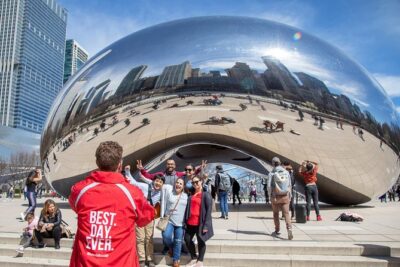
Chicago in a Day: Food, History & Architecture Walking Tour
Read our review →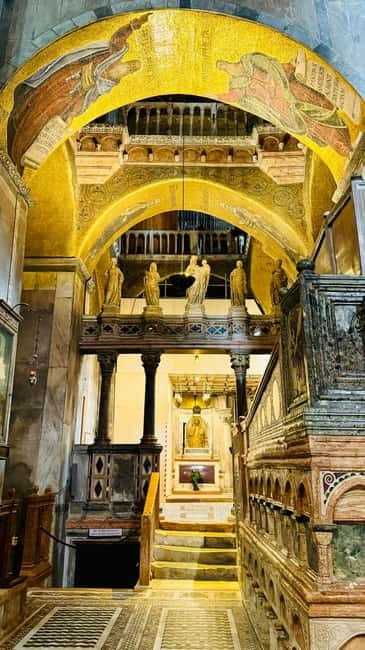
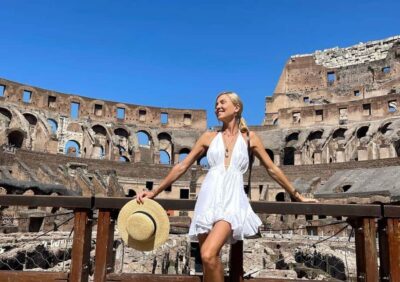
Colosseum Special Access Tour, with Ancient Temples & Tombs
Read our review →Browse the lists this tour appears in