
Review · USA HISTORY TOURS
Red Rocks Amphitheatre Historical Walking Tour
Red Rocks is more than a dramatic concert venue. Its tilted sandstone formations, fossil stories, Indigenous connections, and famous music past all meet in one compact park. This walking tour helps you read the place instead of simply taking a few photos and leaving.
I like the way the tour joins geology and music history, so the natural setting never feels separate from the amphitheatre’s story. I also like the small maximum of 12 people, which gives guides such as Kristina, Michelle, Melissa, and Lisa room to explain details and adjust the pace.
The main consideration is the walking. You’ll deal with steps and climbs, and the amphitheatre may close early for a sound check or concert preparation. Your guide can offer rest breaks, but this is not a sit-down museum visit.
Key points before you book
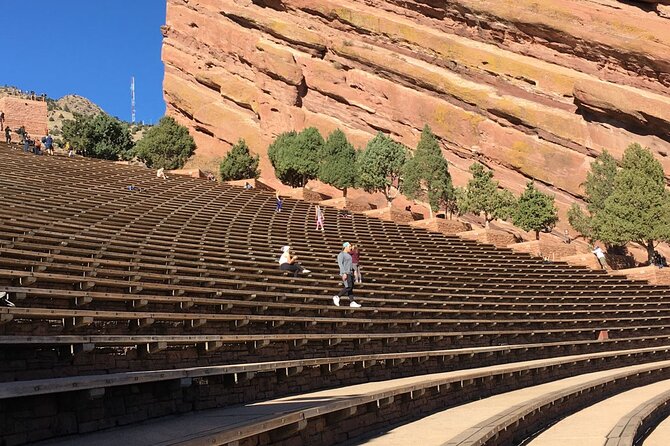
- The music story begins with the rocks: Learn how Red Rocks’ natural acoustics helped shape its role as a concert venue.
- You see more than the amphitheatre: The route includes the Visitor Center, Spirit Statue, Trading Post area, and nearby Dinosaur Ridge stories.
- Guides make the difference: Kristina, Michelle, Melissa, and Lisa are specifically associated with warm, informative tours.
- Expect stairs and uphill walking: The pace can include breaks, but comfortable walking ability matters.
- Small groups keep it personal: The tour has a maximum of 12 people, with private booking priced for at least two.
- Plan around venue activity: Seating may close early before a concert, so the full amphitheatre visit is not guaranteed on every date.
Why Red Rocks deserves a closer look
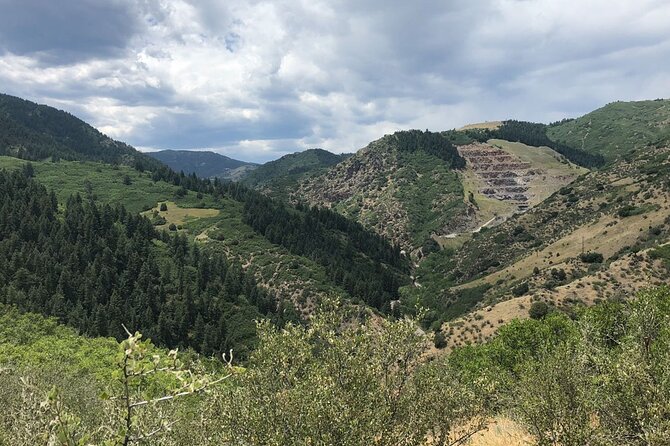
Red Rocks Amphitheatre is easy to treat as a photo stop. You arrive, climb toward the seating area, point your camera at the red cliffs, and move on. That approach gives you the view, but not much sense of why this place matters.
This tour gives the setting a wider frame. You hear about the park’s geology, local fossil finds, Indigenous history, and the musicians who helped turn the venue into a major part of American concert culture. The result is a more useful visit, especially if you have already attended a concert and want to understand what you saw.
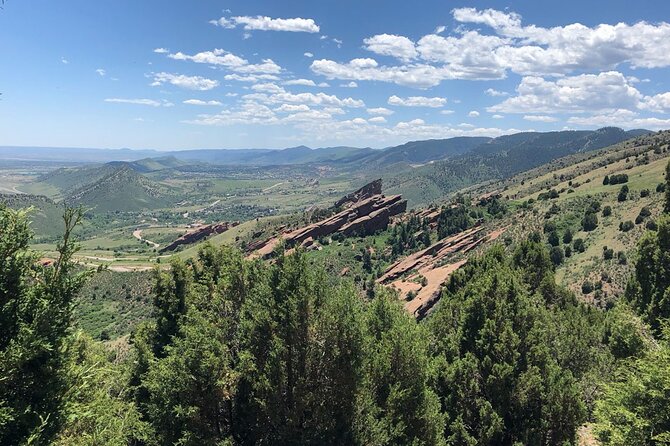
The setting also makes the tour feel different from a standard city walk. The rock formations are the main characters, and the stories come from the ground as much as from the stage. A guide can point out how the formations tilt, explain why the acoustics work, and connect the nearby fossil discoveries to the larger area.
The tour lasts about two hours. The listed stops are short, often around 15 minutes each, but walking between them and pausing for questions fills out the schedule. You are not rushed from one lecture to the next, yet you should still expect a steady outdoor outing rather than a slow museum tour.
More History Walking Tours in the USA
- History and Hauntings of Salem Guided Walking Tour
★ 5.0 · 14,564 reviews - Boston: Freedom Trail History Small Group Walking Tour
★ 5.0 · 6,450 reviews - Historic Charleston Guided Sightseeing Walking Tour
★ 5.0 · 6,216 reviews
Starting at the Visitor Center
The tour begins outside the Red Rocks Visitor Center, at 17900 Trading Post Road in Morrison. The Visitor Center adds useful context before you head toward the larger views. You can explore exhibits covering geology, park history, and the venue’s music roots.
That opening matters because Red Rocks can seem almost too spectacular to process. The exhibits give you a basic vocabulary for the place. Instead of seeing only red stone and rows of seats, you begin to notice how the rock formations, human construction, and concert tradition fit together.
The meeting information also identifies the Red Rocks Trading Post as the guide meeting point. Since the supplied directions name both the Visitor Center and Trading Post area, check the exact meeting instructions when you book. Both are in the same Red Rocks complex, but you do not want to begin the morning by guessing where your guide is waiting.
This is a good point to meet your guide and ask about the walking pace. The group limit is 12, which is small enough for questions without requiring the guide to manage a crowd. The guides who lead this outing, including Kristina, Michelle, Melissa, and Lisa, have been praised for explaining complex subjects in a clear, friendly way.
The Spirit Statue and Red Rocks’ human side
One stop takes you to Spirit, the John Denver tribute statue. It is a natural photo point, but the value is not just the picture. The statue connects Red Rocks to the performers who helped make the venue famous and gives the music story a personal face.
John Denver is only one part of the larger musical legacy. The amphitheatre has hosted major performers, and the exhibits also note Jimi Hendrix. If you have been to a concert here, this stop helps connect the stage you remember with the wider history of the venue.
The guide’s storytelling matters here. A good explanation can prevent the music section from becoming a list of famous names. The strongest approach, reflected in the way Kristina and other guides are described, mixes facts with stories and leaves room for questions.
You will have time for photos, but do not expect a long private session at every stop. The tour works best when you listen first, then use the brief pauses to take pictures. If you want extensive photography time, plan to return after the tour.
Tilted formations near the Red Rock Trading Post

The short walk near the Red Rock Trading Post, also called the Red Valley Store, shifts attention back to the stone itself. You pass tilted formations while your guide explains the local geology. This is one of the more useful parts of the walk because you see the shapes up close rather than only from the amphitheatre seats.
The tilted rock is not background decoration. It explains why Red Rocks feels so sculpted and unusual. Your guide can help you connect the angles and layers you see with the area’s geological story, giving you something specific to look for during the rest of the visit.
The Trading Post also works as a practical landmark. The tour details identify it as a meeting point, while the walking route uses the area as one of its stops. Pay attention to your guide’s directions at the start so you know whether your particular group is gathering outside the Visitor Center or closer to the Trading Post.
This section includes outdoor walking, and the route is not completely flat. The outing is manageable for most people according to the activity information, but the reviews make clear that climbs and steps are part of the experience. Wear shoes suited to walking and do not be shy about taking the offered rest breaks.
Same streets, a different century:
- New York City: American Museum of Natural History Ticket
★ 4.5 · 15,447 reviews - Charleston’s Old South Carriage Historic Horse & Carriage Tour
★ 5.0 · 10,023 reviews - Beneath The Streets Underground History Tour
★ 4.5 · 8,006 reviews - Big Island in a Day: Volcanoes Waterfalls Sightseeing and History
★ 5.0 · 6,569 reviews
Dinosaur Ridge and the fossil story
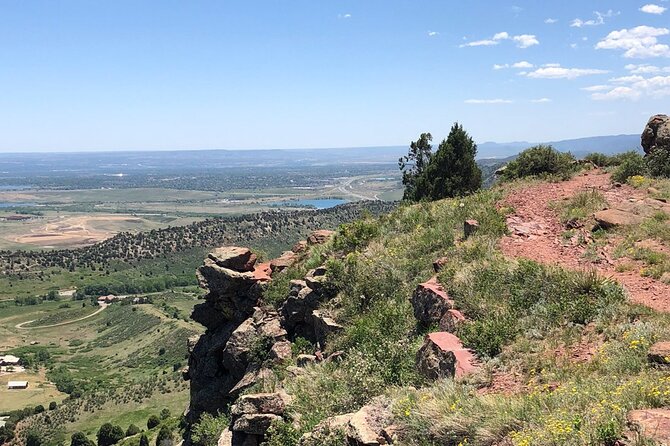
Dinosaur Ridge adds a surprising turn. Red Rocks is usually associated with music and dramatic stone, but nearby fossil discoveries give the area another layer. Your guide discusses footprints and the Apatosaurus ajax, linking the modern park to a much older past.
The value here is scale. The amphitheatre’s concert history reaches back through decades, while the dinosaur evidence reaches back far beyond human memory. Moving between those time periods helps you see the park as more than a venue with a famous view.
This stop is described as a 15-minute visit, so expect an introduction rather than a full fossil field outing. You hear about nearby discoveries and their importance, but the tour is not presented as a separate Dinosaur Ridge excavation or extended paleontology walk.
I like this part because it breaks up the usual Red Rocks narrative. If you came mainly for music, the fossil story gives you something new. If geology interests you, it helps make the rest of the walk more meaningful.
Inside the amphitheatre and its famous acoustics
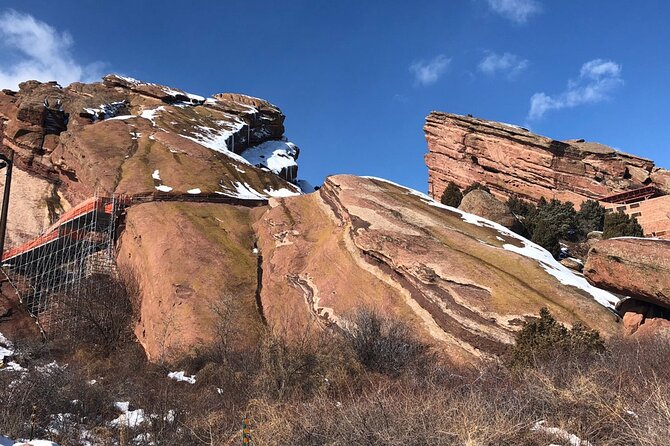
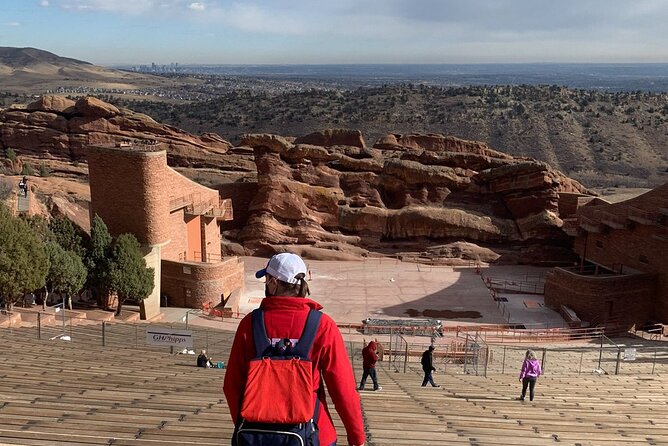
The main event is the open-air amphitheatre. Here, your guide explains how the natural rock walls shaped the venue’s acoustics and helped Red Rocks become a landmark for live music. The setting does much of the talking, but the explanation tells you why the setting works.
You will have a chance to look through the seating area and take in the relationship between the stage, the stone formations, and the open sky, provided the venue is open for the full visit. The shape of the place is impressive even without a performance, and the tour gives you time to consider it rather than rushing through between concert crowds.
The venue remains active. Seating can close early for sound checks and pre-show preparations, and the guide will communicate changes if that affects the tour. This is the most important caveat to understand before paying. You may not receive the full seating-area experience on a date when the venue needs to prepare for an event.
That uncertainty is not a flaw in the guide’s control. Red Rocks is a working music venue, not a preserved building that shuts its doors at a fixed hour. If seeing every part of the amphitheatre is your main reason for booking, choose your date carefully and accept that concert operations can alter the route.
What the guides add to the walk
The strongest praise for this tour centers on the guides’ delivery. Kristina is described as funny while covering science, history, and the modern park. Michelle is associated with clear explanations, a prompt start, and a willingness to allow needed rest stops. Melissa is noted for an excellent, well-informed approach, while Lisa is described as making the stories fun and easy to follow.
Those details matter because Red Rocks can overwhelm a guide. There is a lot to cover, but too much information would turn the outing into a lecture. The best guides keep the pace moving, explain the point of each stop, and notice when the group needs a breather.
The small group helps. With no more than 12 people, you can ask about a rock formation, a performer, or the fossil story without shouting across a large crowd. A private option is available, but it is priced for a minimum of two people, so a solo booking still carries the base charge for two.
The guides also seem to handle different fitness levels sensibly. One account describes a visitor who was nervous about the climbs but found the pace comfortable, while another notes that Michelle made time for breaks on the steps. That does not remove the physical demands, but it suggests the walk is not designed as a race.
Is $29.60 a fair price?
At $29.60 per person, this is a reasonable price if you want interpretation rather than simple access. Entry to the listed stops is free, so you are paying for the guide, organization, local context, and the chance to ask questions in a small group.
The value is strongest for first-time visitors and people who have only seen Red Rocks during a concert. A show gives you the atmosphere, but the crowd, darkness, and limited free time make it hard to study the venue. This tour lets you visit the exhibits, hear the geology, and understand the music story at a much calmer pace.
It is less essential if you only want a quick photograph or already know the park well. You can visit the area without paying for a walking tour, and the activity does not include food or drinks. Bring what you need for the two-hour outing, since refreshments are not part of the price.
Group discounts are available, and the maximum of 12 keeps the experience from feeling like a large coach excursion. For couples, families, or friends who want a guided introduction, the price buys useful context without reaching the cost of a full private sightseeing day.
Who should book this Red Rocks walk?
I would choose this tour if you care about how a place works, not just how it looks. It suits anyone interested in music venues, geology, dinosaurs, Indigenous history, or the connection between natural spaces and public life.
It also works well for concertgoers visiting Red Rocks for the first time. Take the tour before your show if the timing fits, but remember that concert preparation can close the seating area early. If your schedule is tight, allow room for the tour to be adjusted.
People with ordinary walking ability should find the outing manageable, but you need to be comfortable with steps and climbs. The guides can include rest breaks, and service animals are allowed. The activity is near public transportation, and most people can participate, but the information does not promise a fully accessible route.
You can cancel for a full refund up to 24 hours before the start time. Cancellations or changes made within 24 hours are not refunded or accepted, so keep that deadline in mind when arranging a concert day or weather-dependent schedule.
Should you book it?
Book this tour if you want Red Rocks explained by a local guide rather than viewed from a distance. The mix of tilted sandstone, fossil discoveries, the John Denver Spirit Statue, concert history, and natural acoustics gives you more than a standard venue visit.
Skip it if you only have time for a quick stop, dislike steps, or are satisfied with taking photos on your own. For everyone else, $29.60 is a sensible price for a focused two-hour introduction, especially with a small group and guides who can make the science and stories approachable. Check the meeting point and venue schedule before booking, then let the rocks, not just the stage, guide your attention.
FAQ
How long does the Red Rocks historical walking tour last?
The tour lasts approximately two hours. The individual stops are generally around 15 minutes, with additional time for walking between locations and questions.
Where does the tour begin?
The stated start location is outside the Red Rocks Visitor Center at 17900 Trading Post Road, Morrison, Colorado. The tour details also identify the Red Rocks Trading Post as a meeting point, so confirm the precise meeting instructions when booking.
What places are included on the route?
The route includes Red Rocks Park and Amphitheatre, the Visitor Center exhibits, the John Denver Spirit Statue called Spirit, the Red Rock Trading Post area, and stories about nearby Dinosaur Ridge fossil discoveries.
Is the tour suitable for someone who is not an experienced hiker?
Most people can participate, but the walk includes steps and climbs. Guides can allow rest breaks, and the activity information says most people can take part.
Can the amphitheatre seating area close during the tour?
Yes. Red Rocks is an active music venue, and the seating area may close early for sound checks or pre-show preparations. Your guide will communicate changes if this affects the full tour.
What is the cancellation policy?
You can cancel up to 24 hours before the start time for a full refund. Cancellations or changes made less than 24 hours before the experience are not accepted, and the amount paid is not refunded.
Newest history tours we have reviewed in the USA
- Self Guided Detroit’s Spirit and History Solo Walking Tour★ 4.5 · 41 reviews
- Best Downtown Detroit Historical Walking Tour★ 5.0 · 56 reviews
- Detroit’s Hidden History Guided Walking Tour★ 5.0 · 48 reviews
- Private Nightlife Tour in Denver: Culture, History, and Cocktails★ 5.0 · 48 reviews
- Historical Walking Tour Of Denver With A Haunting Twist★ 5.0 · 19 reviews
- Tip Based: Capitol Hill History & Ghost Tour★ 5.0 · 34 reviews
- Denver – Capitol Hill Guided Walking Ghost / History Tour★ 4.5 · 75 reviews
- JFK Historical Tour★ 5.0 · 22 reviews
History Walking Tours, compared.

History and Hauntings of Salem Guided Walking Tour
Read our review →

Freedom Trail History Small Group Walking Tour
Read our review →
Historic Charleston Guided Sightseeing Walking Tour
Read our review →
Tapas Walking Tour with Food, Wine, and History
Read our review →
Savannah History and Haunts Candlelit Ghost Walking Tour
Read our review →
A History of Terror – Belfast City Centre Walking Tour
Read our review →Browse the lists this tour appears in