
Review · CHARLESTON HISTORY TOURS
Historic Charleston Guided Sightseeing Walking Tour
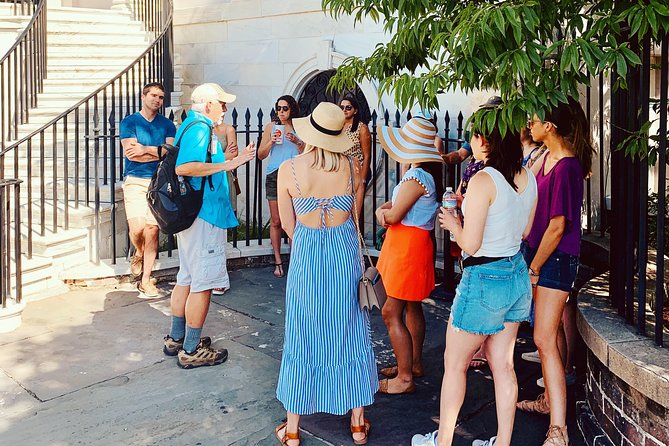
Charleston’s past is packed into a remarkably walkable patch of streets, and this tour puts that story in order. Starting at City Hall, you move through the Four Corners of Law, the French Quarter, Rainbow Row, and the Battery before ending near White Point Garden and the harbor.
I like the way the route connects major landmarks with the people and events behind them, rather than treating the city as a row of pretty façades. I also like the chance to hear different guiding styles: Al, Evans, Dennis, and Duggar are among the guides praised for humor, storytelling, architecture, and useful restaurant suggestions. The main drawback is simple: two hours goes quickly, and outdoor stops can be hot, rainy, or chilly.
Key points at a glance
- Starts at Charleston City Hall: Meet at 80 Broad Street, near the Four Corners of Law.
- Covers several historic districts: Walk through the French Quarter and South of Broad.
- Includes Rainbow Row and the Battery: See two of Charleston’s best-known streetscapes.
- Strong guide element: Al, Evans, Dennis, and Duggar are noted for clear stories, humor, and local advice.
- Flat and manageable route: The walk has no hills, but comfortable shoes and water are essential.
- Small-group format: The maximum group size is 20 people, with several departure times.
Why this two-hour route works well
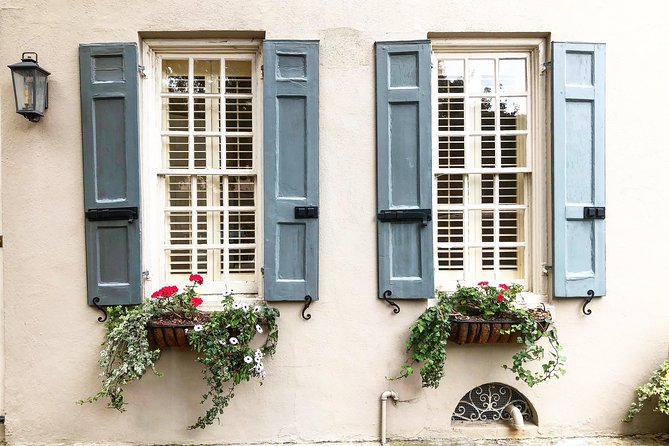
I see this as a useful first look at Charleston, especially if you have only a short stay or want context before exploring on your own. The route does not attempt to take you inside every building. Instead, your guide gives you the backstory that makes the streets, churches, homes, and public spaces more meaningful.
At $30 per person, the price is fair for a licensed local guide and a two-hour introduction in a city where the details are easy to miss. You could walk the same streets for free, but you would not necessarily know why the churches face the way they do, how the city’s architecture responded to storms, or which people shaped Charleston’s role in the Revolutionary War and its recovery after the Civil War.
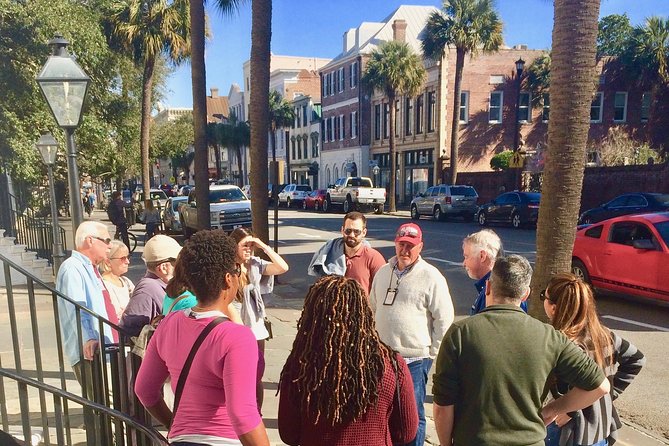
The group limit of 20 is also useful. It is not a private tour, but it should be easier to hear than on a large coach-style outing. The exact personality of the experience depends on your assigned guide. Al is praised for keeping the pace moving and adding fun facts. Evans is noted for connecting individual landmarks to larger American history. Dennis is described as a clear storyteller, while Duggar mixes history with humor and sometimes offers restaurant suggestions.
More History Walking Tours in Charleston
- Hidden Alleyways and Historic Sites Small-Group Walking Tour
★ 5.0 · 2,335 reviews - Charleston historical walking tour with a Professor of History at The Citadel
★ 5.0 · 1,284 reviews - Charleston: Old Walled City Historical Walking Tour
★ 4.7 · 705 reviews
Begin at the Four Corners of Law
The meeting point is in front of Charleston City Hall at 80 Broad Street. Arrive 15 minutes early. Tours begin promptly, and the guide needs to gather the group before setting off.
The opening stop introduces the Four Corners of Law, the intersection of Meeting and Broad streets. Charleston City Hall is one corner, joined by the courthouse, post office, and St. Michael’s Church. This is a smart starting point because it gives you a quick look at the city’s civic, legal, postal, and religious institutions all in one place.
You will also hear about St. Michael’s Church, where George Washington is known to have worshipped. The stop lasts about 15 minutes, so expect an outdoor introduction rather than a long visit inside a building. Admission to the listed attractions is not included, and the tour is built around exterior sightseeing.
This first section is particularly helpful if you like to understand a city through its institutions. Charleston can initially feel like a beautiful maze of old streets. Beginning here gives you a basic map of how the historic center developed.
The French Quarter brings the history into focus
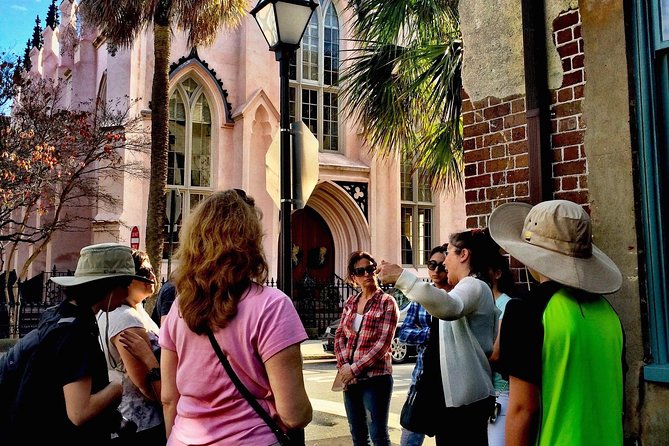
From City Hall, the walk continues into the French Quarter. The route usually includes several notable sites, although the exact stops can vary by guide and day. You may see the Dock Street Theatre, St. Philip’s Church, the Slave Mart Museum, the Powder Magazine, the French Huguenot Church, and the Pink House.
The Dock Street Theatre is presented as America’s first theatre, making it one of the route’s strongest cultural landmarks. St. Philip’s Church and the French Huguenot Church add another layer, showing the importance of religious communities in Charleston’s past. The Powder Magazine points to the city’s military concerns and colonial-era defenses.
The Slave Mart Museum is an important part of the route because Charleston’s beauty cannot be separated from the forced labor and commerce that helped build its wealth. The tour’s stated focus includes the city’s slave history, and that gives you a chance to place the grand homes and public buildings in a more honest setting. The exact depth of discussion will depend on your guide, but the subject belongs in any serious introduction to Charleston.
This 45-minute section is the longest part of the listed route. It gives your guide room to explain architecture, famous residents, major conflicts, and the changes that followed the Civil War. Several people who have taken the tour specifically valued explanations of why houses were designed as they were, how the city repaired damage after storms and hurricanes, and how important figures shaped Charleston.
Do not expect a museum visit or an indoor lecture. You are standing on city streets, listening between stops, so traffic, weather, and the size of the group can affect how much detail you catch. Still, the outdoor format lets you see the buildings in their actual setting, which is often more useful than viewing isolated exhibits.
Rainbow Row is brief but worth the stop
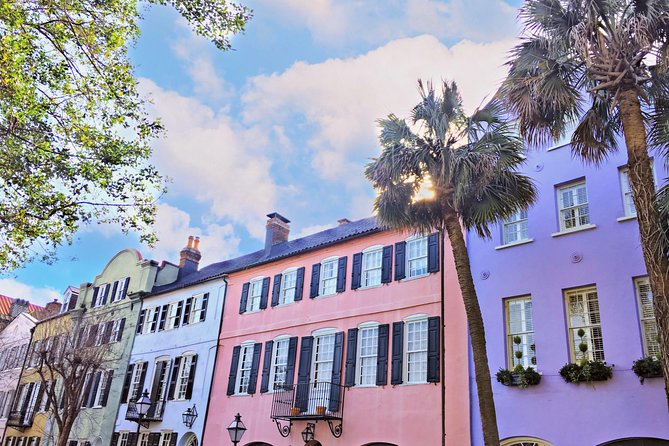
Rainbow Row is one of Charleston’s most photographed stretches, with 13 colorful houses near the waterfront. The scheduled stop is about 10 minutes, so this is mainly a viewing and storytelling pause.
The houses are attractive, but the value is in hearing how Rainbow Row fits into the South of Broad neighborhood. Your guide may explain the area’s historic homes and how the waterfront location affected the city’s growth. Since the tour does not promise entry into the houses, bring your camera and pay attention to the streetscape rather than expecting a full architectural inspection.
This is also a good point to remember that the route can change. Rainbow Row is part of the normal plan, but specific stops may vary by guide. If one landmark matters most to you, ask about it early in the walk.
More History Walking Tours in the USA
- Historic Charleston Walking Tour: Rainbow Row, Churches, and More
★ 5.0 · 691 reviews - Semi-private SMALL group Historic Walking Tours w/certified guide
★ 5.0 · 224 reviews - History and Hauntings of Salem Guided Walking Tour
★ 5.0 · 14,564 reviews - Boston: Freedom Trail History Small Group Walking Tour
★ 5.0 · 6,450 reviews
South of Broad and the Battery
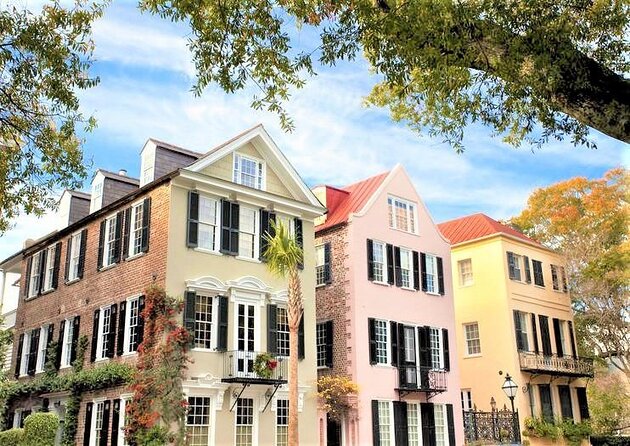
The final major section moves into South of Broad, a residential area known for historic houses and antebellum mansions. You will walk toward the Battery and White Point Garden, with views across the water toward Fort Sumter.
The Battery is one of Charleston’s defining public spaces. Here, the tour shifts from narrow historic streets to open waterfront views. White Point Garden gives you room to see the harbor and understand Charleston’s position on the edge of the water. The Fort Sumter view is a highlight, though this walking tour does not take you to the fort.
The listed time for Battery and White Point Gardens is about 30 minutes. Keep in mind that the guide will not cover the entire length of the Battery. The endpoint can vary with the guide and route, but you can ask to be walked back to the starting point if needed.
This part of the walk is especially pleasant when the weather cooperates. It is also the least protected section, with little relief from sun, wind, or rain. In summer, a water bottle is not optional. Water is not provided, and there are very few places to buy it along the route.
The guide makes the biggest difference
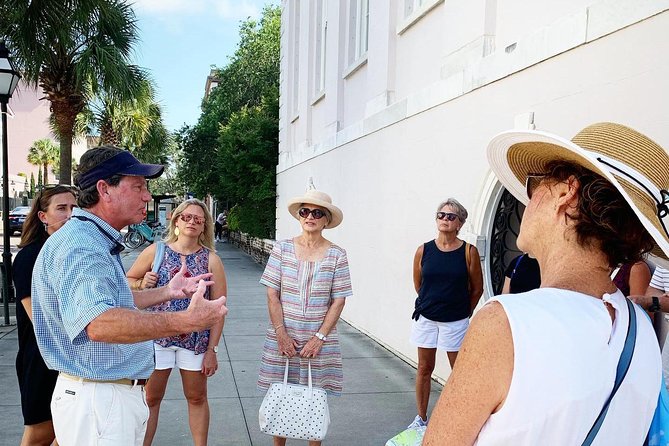
The landmarks provide the setting, but the guide determines how much you get from them. The strongest praise centers on clear explanations, humor, and the ability to connect local buildings with larger events.
Al is described as funny, energetic, and especially good with architecture, culture, and quick facts. Evans is praised for linking Charleston’s story to the Revolutionary War and the city’s rebuilding after the Civil War. Dennis is singled out for speaking clearly, involving the group, and bringing historical figures to life. Duggar combines a strong command of local history with an easy manner and may offer restaurant recommendations.
You cannot choose a particular guide from the information provided, so treat those names as examples of the experience rather than a guarantee. The provider assigns the guide. If your group members booked under different names, contact the provider so everyone can be placed with the same guide.
The format also leaves room for questions. That matters in Charleston, where you may want to ask about a church, a house design, a storm, or the difficult history behind a prominent building. If you want the best exchange, stay close enough to hear and ask questions during the pauses rather than waiting until the group has moved on.
Walking conditions, timing, and what to bring
The route is described as a moderate, easy walk on flat streets with no hills. Most people who are comfortable walking for two hours should find it manageable, but the duration still matters. You will be standing outdoors for much of the tour, and there are no public restrooms along the route.
Bring:
- Comfortable walking shoes
- A full water bottle
- Weather protection suited to the forecast
- Sun protection in warm months
- A phone or camera for the waterfront and Rainbow Row
The tour operates in all weather conditions, though dangerous weather can lead to cancellation and a rescheduled tour or full refund. Check the forecast before leaving your hotel. Charleston’s heat and humidity can make a flat walk feel harder than expected, while winter wind near the Battery can be sharp.
Use the restroom before meeting the guide. This small bit of planning will make the two hours far more comfortable. Service animals are allowed, the tour is near public transportation, and most people can participate.
Parking is available in paid garages and open-air lots downtown. The recommended garage is at 85 Queen Street, but allow extra time to park and walk to Broad Street. Since the tour starts promptly, do not cut your arrival close.
Is $30 a good value?
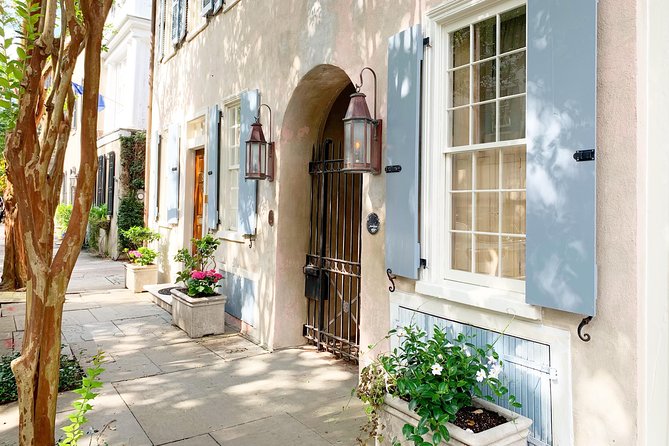
I think $30 is good value if you want an organized introduction rather than a self-guided stroll. The tour covers several key areas, supplies a licensed local guide, and gives you historical context in a compact period. It is also priced low enough to fit into a larger Charleston trip without taking money away from meals, museums, or a harbor activity.
The value is lower if you mainly want private access, indoor visits, or a highly customized route. Admission tickets are not included, and the tour does not promise entry into the Dock Street Theatre, churches, the Slave Mart Museum, or other buildings. You are paying for interpretation and orientation, not a collection of paid admissions.
I would schedule it near the beginning of your stay. You can use the guide’s restaurant suggestions and neighborhood advice afterward, then return to the buildings or museums that caught your attention. Several guides also explain architecture and storm repairs, which can help you notice details you would otherwise pass without seeing.
Who should book this walk?
This tour suits first-time visitors, history fans, couples, families, and solo visitors who want a friendly introduction without committing to a full-day outing. The moderate pace also works well for people who prefer walking to riding in a vehicle.
It is a particularly good fit if you want:
- A broad look at Charleston in two hours
- Stories tied to real streets and buildings
- A flat route through the historic center
- Advice for planning the rest of your stay
- A small group rather than a large sightseeing vehicle
You may want another type of experience if you have limited mobility, dislike outdoor heat or rain, or want to spend most of your time inside. The route is accessible to most participants, but it remains a two-hour walk with no public restrooms and changing weather exposure.
Book at least a little ahead if your schedule is fixed. The tour is often reserved about 14 days in advance, and several departure times make planning easier. Cancellation is free up to 24 hours before the start time. Within 24 hours, the payment is not refunded, except when the operator cancels for poor or dangerous weather.
Should you book it?
I would book this tour as a first-day orientation to Charleston. At a reasonable price, you get the French Quarter, Rainbow Row, South of Broad, the Battery, White Point Garden, and a guide who can explain how the city’s architecture and painful past fit together.
Go prepared for an outdoor walk, not a series of indoor admissions. Bring water, arrive early, use the restroom first, and expect the exact route and storytelling style to vary by guide. If you want Charleston to feel like more than a collection of colorful houses and old churches, this is a sensible place to start.
FAQ
Where does the tour begin?
The tour begins at Charleston City Hall, at 80 Broad Street, Charleston, South Carolina 29401.
Where does the tour end?
The ending point is in the South of Broad area and can vary based on the guide and route. You can request to be walked back to the starting point.
How long is the walking tour?
The tour lasts approximately two hours.
What areas does the tour cover?
The route includes Charleston City Hall and the Four Corners of Law, the French Quarter, Rainbow Row, South of Broad, the Battery, and White Point Gardens.
Is water provided?
No. Water is not provided, and there are very few places to purchase it along the route. Bring your own bottle, especially during summer.
Are there restrooms along the route?
There are no public restrooms along the tour route. Use the restroom before the tour begins.
What happens if the weather is poor?
The tour generally operates in all weather, but it may be canceled in dangerous conditions. If the provider cancels, you will be offered another date or a full refund.
Can I cancel for a refund?
Yes. You can cancel at least 24 hours before the start time for a full refund. Cancellations or changes made less than 24 hours before the tour are not refunded or accepted.
Newest history tours we have reviewed in Charleston
- Private Morning Sail, Dolphin and History Tour on Mystique★ 5.0 · 84 reviews
- Private Photo Session in Historic Charleston★ 5.0 · 123 reviews
- Private Historic Horse & Carriage Tour of Charleston★ 5.0 · 103 reviews
- Semi-private SMALL group Historic Walking Tours w/certified guide★ 5.0 · 224 reviews
- Charleston’s Best Highlights: History, Culture & Architecture★ 5.0 · 422 reviews
- Charleston Horse & Carriage Historic Sightseeing Tour★ 4.5 · 460 reviews
- Charleston’s Historic Residential Horse and Carriage Tour★ 4.5 · 668 reviews
- Charleston: Old Walled City Historical Walking Tour★ 4.7 · 705 reviews
History Walking Tours, compared.

History and Hauntings of Salem Guided Walking Tour
Read our review →

Freedom Trail History Small Group Walking Tour
Read our review →
Tapas Walking Tour with Food, Wine, and History
Read our review →
Savannah History and Haunts Candlelit Ghost Walking Tour
Read our review →
A History of Terror – Belfast City Centre Walking Tour
Read our review →
New Orleans Garden District History Walking Tour
Read our review →Browse the lists this tour appears in