Review · BARCELONA HISTORY TOURS
Barcelona Historical Walking Tour: Gothic Quarter and El Born
Barcelona’s oldest streets tell their stories in layers: Roman walls under medieval buildings, Civil War scars beside quiet squares, and grand churches reached by lanes too tight for a bus. This two-hour walk links the Gothic Quarter and El Born with plenty of stops for stories, photos, and orientation.
I like the route for two clear reasons: it reaches places buses cannot, and it gives you a useful introduction to Barcelona’s past before you tackle the city on your own. Guides including Juan, Lidia, and Vanesa have been praised for energy, humor, historical detail, and friendly help with questions.
The main drawback is time. Eleven stops in two hours means you usually hear the story and see the exterior, rather than make a long visit inside each church or museum. The cathedral and Santa Maria del Mar also charge separate admission if you want to enter.
Key points to know before you book
- Roman Barcelona appears beneath the medieval streets: See traces of Barcino, including the old wall and aqueducts.
- The route connects two historic districts: Walk from the Gothic Quarter into El Born without needing a bus or taxi.
- Guides shape the experience: Juan, Lidia, Vanesa, Darren, Jordan, Petra, and others are praised for clear stories, humor, and local tips.
- The group is limited to 20 people: That is small enough for questions, though the guide’s speaking volume can still matter.
- The pace is generally easy: One morning review praised the cooler temperatures, quieter streets, and manageable walk.
- The price is about $30.25: It offers good value as an orientation tour, but church entry fees are extra.
Why this route works as a first look at Barcelona
This is not a grand tour of every major sight in Barcelona. It is a focused walk through the city’s oldest center, where the best details are often above eye level, behind a narrow doorway, or tucked into a quiet square.
The tour starts at Plaça del Vuit de Març in Ciutat Vella and finishes near the Basilica de Santa Maria del Mar. That direction makes practical sense. You begin in the Gothic Quarter, move through Roman and medieval Barcelona, then reach El Born and one of the city’s finest Catalan Gothic churches.
I like this kind of opening tour because it gives you a mental map. You learn how the old districts fit together, then you can return later for museums, churches, shops, restaurants, or a slower look at the streets that interested you most.
The walk lasts about two hours and is limited to 20 people. That is a useful middle ground: more social and affordable than a private tour, but smaller than a large city group. The strongest feedback centers on guides who use humor, answer questions, and add small details that make the stones easier to understand.
More History Walking Tours in Barcelona
- Barcelona: Tapas Walking Tour with Food, Wine, and History
★ 4.8 · 4,261 reviews - Barcelona Tapas Walking Tour: Food, Wine & History
★ 4.5 · 1,928 reviews - Barcelona: Dark History Night Walking Tour
★ 4.8 · 344 reviews
Els 4 Gats and Barcelona’s artistic crowd
The first stop, Els 4 Gats, introduces Barcelona through its artists rather than its rulers. This historic café and restaurant was a meeting place for artists, intellectuals, and modernists, including Pablo Picasso and Antoni Gaudí.
You will spend around ten minutes here, with no admission charge listed. The value is mainly cultural context. Picasso and Gaudí are two of Barcelona’s best-known names, and this stop connects them to an actual social setting rather than presenting them as distant figures in a museum.
The Art Nouveau design adds another layer. You can look at the building as architecture, then hear how cafés helped shape the city’s creative life. If you want to return for a meal or drink, treat the tour stop as an introduction rather than a full visit.
El Mon Neix En Cada Besada and Catalan identity
A short walk leads to El Mon Neix En Cada Besada, a large photomosaic created in 2014. Its subject links to the Catalan defeat on September 11, 1714, during the War of Spanish Succession.
The work represents what freedom means to people in Barcelona and connects to La Diada, Catalonia Day. You get about ten minutes here, free of charge, which is enough for the guide to explain the symbolism and give you time to look at the image.
This is one of the route’s useful features. You are not only collecting old buildings. You are also hearing about regional identity and the political memory that remains important in Catalonia. The explanation helps you understand why Barcelona can feel culturally distinct from other Spanish cities.
Barcelona Cathedral and the story of Saint Eulalia
The Cathedral of Barcelona is one of the tour’s major landmarks. This Gothic church sits at the heart of the old city and honors Saint Eulalia, Barcelona’s patron saint, who was tortured and killed by the Romans.
The planned stop lasts about ten minutes. Admission is not included, so you should think of this part as an exterior explanation unless you choose to pay to enter separately.
That limitation matters. Ten minutes is enough to appreciate the setting and hear the basic story, but not enough for a full examination of a large Gothic church. If the cathedral is high on your list, return later with more time.
The stop still earns its place because it connects the Roman era, early Christianity, and medieval Barcelona. A good guide can make the church feel like part of the city’s long development rather than just another impressive façade.
More History Walking Tours in Spain
- Barcelona 1.5h Private Old Town, Gothic & Ramblas Walking Tour
★ 5.0 · 318 reviews - Barcelona: The Spanish Civil War Historical Walking Tour
★ 4.9 · 239 reviews - Barcelona Dark History Night Walking Tour With Drinks
★ 5.0 · 153 reviews - Barcelona El Raval Dark History Walking Tour
★ 5.0 · 70 reviews
Casa de l’Ardiaca and the Roman wall

Casa de l’Ardiaca is one of the more unusual stops. The building combines Gothic and Renaissance elements and contains the vertical face of the Roman wall and aqueducts.
You get a close look at how Barcelona was built in layers. Medieval and later structures did not erase the Roman city completely. In places, the old infrastructure remains part of the modern streetscape.
This is exactly the sort of detail that can be easy to miss alone. You might pass the building, admire its shape, and keep walking. With a guide, the wall and aqueducts become clues to the Roman settlement below the present city.
Pont del Bisbe and a Gothic superstition
Carrer del Bisbe follows one of the main routes through Roman-occupied Barcino. The Neo-Gothic Pont del Bisbe crosses the lane and has become one of the Gothic Quarter’s most photographed details.
The bridge also carries a superstitious legend. The guide uses that story to give the stop some fun, especially for visitors who enjoy a bit of mystery mixed with history.
The bridge is a good example of why walking works here. Its narrow setting and surrounding lanes do not fit the rhythm of a bus tour. You can stop, look up, take photographs, and hear how the street relates to the older city.
Plaça Sant Felip Neri and the scars of war
Plaça Sant Felip Neri is one of Barcelona’s most affecting corners. It looks calm and picturesque, but the square carries a painful story from the Spanish Civil War. Marks on the surrounding walls remain as reminders of that past.
The guide’s role matters here. The square can be admired quickly as a pretty spot, but its meaning changes once you learn why the walls are scarred.
This stop also gives the tour emotional balance. The route includes cafés, legends, churches, and architecture, but it does not avoid difficult chapters. I appreciate that approach because Barcelona’s past is not only decorative. The city has also endured conflict, loss, and political upheaval.
El Call and Barcelona’s Jewish quarter
The walk continues through El Call, the old Jewish quarter. Its narrow streets and medieval buildings offer a look at Barcelona’s Jewish history, including the former synagogue and local legends.
You will spend roughly ten minutes here, with no admission charge listed. The time is brief, but the setting is compact, and the narrow lanes help you see how different this part of the old city feels from wider modern streets.
This is another section where a guide adds real value. The architecture alone cannot explain the community that once lived here. You need the historical setting, stories, and references to the synagogue to understand what you are seeing.
Plaça de Sant Jaume and modern government
Plaça de Sant Jaume is a central square surrounded by important government buildings. It remains a working civic space, not simply a preserved monument.
The stop helps connect old Barcelona with the city you see today. Government activity still happens here, so the square has a practical role as well as historical importance.
The guide can also help you place the square on your mental map. From here, the route continues through the historic center toward the Royal Palace and then into El Born.
Plaça del Rei and the royal past
Plaça del Rei brings you to Barcelona’s regal side. The Royal Palace gives the square a formal appearance, but the site also carries darker stories about the city’s past.
You get about ten minutes here, enough for the guide to explain the setting and point out the relationship between the buildings. The square rewards careful looking because its character is easy to reduce to medieval atmosphere alone.
I like this stop because it adds political and royal context after the earlier focus on religion, art, and neighborhood life. Barcelona’s story includes all of these strands, and the route keeps moving between them without asking you to spend an entire afternoon in one place.
Plaça de l’Àngel and the legend behind its name
Plaça de l’Àngel was once known as Wheat Square, a reminder that this part of the city was tied to grain trading. Its current name comes from a heavenly legend.
The stop is short and free. Its appeal comes from the contrast between the old commercial purpose and the later story attached to the square.
This kind of detail makes a walking tour useful. You begin to see street names and squares as records of what happened there. Even a name that seems ordinary can point to trade, religion, or a local tale.
Santa Maria del Mar and the finish in El Born
The final stop is the Basilica of Santa Maria del Mar, a major Catalan Gothic church in El Born. Its design reflects Barcelona’s maritime past and gives the walk a strong finish.
The tour ends at Plaça de Santa Maria. Admission is not included, so you will need to pay separately if you want to enter. That is worth remembering when comparing the $30.25 tour price with your total sightseeing budget.
The church is especially well placed as an ending. After walking through Roman remains, medieval lanes, royal spaces, and the Jewish quarter, you arrive at a building tied to the city’s seafaring identity. You are also in El Born, a convenient area for continuing your day.
What the guide can add to your day
The guide is the most important variable in a historical walking tour. Carpe Diem Tours uses different guides, and the strongest accounts praise Juan, Lidia, Vanesa, Darren, Jordan, Petra, Mariah, Sonia, Thami, Jorge, Craig, Justin, Sara, Tammy, and others for clear explanations, humor, warmth, and enthusiasm.
Juan is noted for using an iPad to show historical images, answering questions, and suggesting food, bars, restaurants, and other sights. Lidia is praised for energy, humor, local knowledge, and clear organization before the tour. Vanesa has been particularly good with children, while Darren has kept a teenager interested.
Those details matter more than a fixed script. The route has a lot of history packed into a short time, so you want a guide who can explain without turning every stop into a lecture.
There is one clear warning in the feedback. One group found its guide too soft-spoken to hear, even after asking her to speak louder, and some people left. This appears to be an isolated but important risk with any group walk. Stay near the guide, speak up early if you cannot hear, and remember that a group of up to 20 can spread out on narrow streets.
Price, pace, and practical value
At $30.25 per person, this is reasonably priced for a two-hour guided introduction to two of Barcelona’s oldest districts. You are paying for local interpretation, route planning, and access to details that can be easy to miss alone.
The value is strongest if this is your first visit, if you have limited time, or if you want historical context before exploring independently. It is less compelling if you already know the Gothic Quarter well or want extended interior visits at the cathedral and Santa Maria del Mar.
The walk is generally considered easy and suitable for most people. A morning start is a smart choice because one review specifically praised the cooler temperatures and quieter streets. Barcelona can be hot and crowded, so timing affects comfort.
Wear comfortable shoes, bring water, and keep your schedule flexible after the finish. The route stops often, but you are still walking over old-city streets for two hours. Confirmation arrives at booking, public transportation is nearby, and free cancellation is available up to 24 hours before the start time. Cancellations or changes inside that window are not refunded or accepted.
Who should book this Barcelona walk
I would choose this tour for first-time visitors, history fans, families who want a manageable introduction, and anyone who likes stories more than a checklist of photo stops. It also suits repeat visitors who want more context for an area they have already seen.
The tour works well at the start of a Barcelona stay. You can use the guide’s food and sightseeing suggestions afterward, then return to the cathedral, El Call, Plaça Sant Felip Neri, or Santa Maria del Mar at your own pace.
I would hesitate if your main goal is detailed church interiors, museum time, or a private conversation with a guide. The itinerary moves quickly, and the short stop at each site favors overview and storytelling over close study.
Should you book it?
Book it if you want a well-priced, two-hour introduction to Barcelona’s oldest center, with Roman traces, Gothic architecture, Catalan identity, Jewish history, local legends, and links to Picasso and Gaudí.
Skip it only if you already have a strong grasp of the Gothic Quarter and El Born or prefer to explore without a group. For most visitors, the route offers a useful start, and the $30.25 fee is fair as long as you remember that entry to the two main churches costs extra.
FAQ
How long does the Barcelona Historical Walking Tour last?
The tour lasts approximately two hours.
Where does the tour start?
The meeting point is Plaça del Vuit de Març in Ciutat Vella, Barcelona.
Where does the tour end?
The tour ends at the Basilica of Santa Maria del Mar, at Plaça de Santa Maria, 1, in Ciutat Vella.
What language is the tour offered in?
The tour is offered in English.
Are admission fees to Barcelona Cathedral and Santa Maria del Mar included?
No. Admission to both Barcelona Cathedral and Santa Maria del Mar is not included in the tour price.
How many people can join the tour?
The activity has a maximum group size of 20 people.
Can I cancel for a full refund?
Yes. You can cancel at least 24 hours before the experience start time for a full refund. Cancellations or changes made less than 24 hours before the start time are not accepted or refunded.
More Medieval History Tours in Barcelona
- Barcelona: Tipsy Tapas & History Tour in the Gothic Quarter
★ 4.8 · 227 reviews - Barcelona: Gothic Quarter Tour Dark History & Ghosts Tour
★ 4.8 · 64 reviews - Barcelona: Market, Tasty Tapas/Food and Gothic History Tour
★ 4.7 · 48 reviews - Barcelona: Cemetery Tour – Gothic Graves & Local History
★ 4.9 · 33 reviews
Newest history tours we have reviewed in Barcelona
- Barcelona Tapas Tour, Taverns, History & Local Culture★ 5.0 · 25 reviews
- Barcelona Historical 3-Hour Bike Tour★ 4.7 · 222 reviews
- Barcelona: Market, Tasty Tapas/Food and Gothic History Tour★ 4.7 · 48 reviews
- Barcelona: Cemetery Tour – Gothic Graves & Local History★ 4.9 · 33 reviews
- Barcelona & Chocolate Amatller History and Culture + Activity and Tasting★ 4.9 · 173 reviews
- Barcelona: The Spanish Civil War Historical Walking Tour★ 4.9 · 239 reviews
- Barcelona: 3-Hour Esoteric, Spiritual & Historical Tour★ 5.0 · 34 reviews
- Barcelona: 3-Hour Sips, Sites & Bites Food & History Tour★ 4.8 · 33 reviews
Medieval History Tours, compared.
Oldtown, Medieval Underground & Dungeon History Tour
Read our review →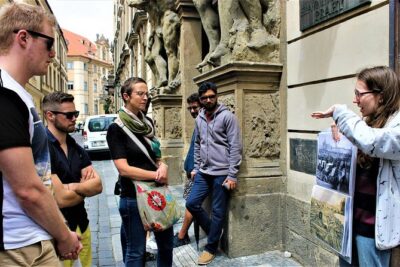
Prague Old Town, Medieval Underground and Dungeon Historical Tour
Read our review →
Templar Tour Convent of Christ & Almourol Castle from Lisbon
Read our review →
Barcelona 1.5h Private Old Town, Gothic & Ramblas Walking Tour
Read our review →
Tipsy Tapas & History Tour in the Gothic Quarter
Read our review →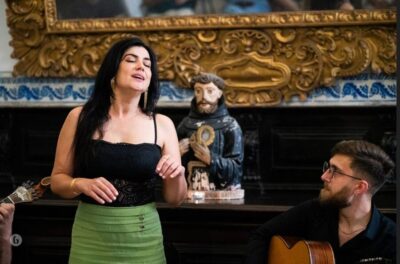
“Porto: Fado Show with Guided Tour in a Historic Monastery”
Read our review →