
Review · GERMANY HISTORY TOURS
Classic city tour in the World Heritage City of Augsburg
Augsburg’s story comes together nicely on this two-hour walk: Roman roots, Renaissance wealth, ingenious waterworks, and the world’s oldest social housing project. The highlight is the Fuggerei, a 500-year-old community that still gives this historic city a very human face.
I like the compact route and the fact that admission to the Fuggerei is included. I also like the canals of the Lechviertel, where Augsburg feels less like a grand museum and more like a working old town. The main caution is language and sound: the tour may be bilingual, and a soft-spoken guide can be hard to hear outdoors.
Key points to know
- Augsburg’s grand center in two hours: See the town hall, Augustus Fountain, Fugger buildings, Lechviertel, and Fuggerei without spending a full day.
- Two included visits: The Fuggerei is included, along with the Golden Hall before August 2024 or the Roman Camp or Brecht House from August 2024.
- A useful bilingual format: German and English may both be used, though English commentary can be shorter when the group is mixed.
- A strong waterworks angle: The Lech canals show how water helped Augsburg grow into an important city.
- A small group, in theory: The maximum is 25 people, a manageable size for a city walk, though hearing the guide still matters.
- Strict timing: The tour starts at 2 p.m. from Tourist Information Augsburg, and late arrivals may miss the group without a refund.
Why Augsburg Makes a Good Two-Hour Walk
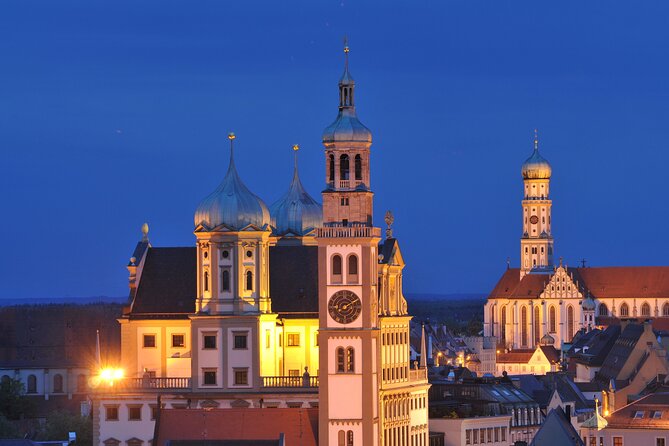
Augsburg is one of those German cities that rewards a little context. Its center combines Roman beginnings, medieval trade, powerful merchant families, religious change, and an unusually advanced water system. On your own, you can see the buildings, but it is harder to understand how they fit together.
This tour gives you that framework in a short stretch of time. You begin in the center at Rathausplatz and finish at the Fuggerei, moving from public power and wealth toward daily life in a historic residential community.
That direction makes sense. Augsburg’s grand town hall and fountains show what money could build. The canals show how practical engineering supported the city. The Fuggerei shows how one wealthy family tried to put some of its fortune back into the community.
The pace is also useful if you have only an afternoon in Augsburg. You are not spending hours on a bus or waiting for a large attraction. The route is a walking tour with four main stops, plus views of other central sights along the way.
At $16.20 per person, the price is modest for a guided city walk with two admissions included. The value depends on what you want. If you want a fast orientation, local background, and entry to the Fuggerei, it is a sensible buy. If you want a long, detailed treatment of Augsburg’s Roman, Protestant, artistic, and industrial past, two hours will feel short.
More UNESCO World Heritage Tours in Germany:
- Berlin: 3-Hour World Heritage Cruise to Potsdam
★ 4.5 · 1,569 reviews - Hamburg: UNESCO-World Heritage Sites Tour
★ 4.7 · 137 reviews - Quedlinburg UNESCO World Heritage Group Tour (private)
★ 4.6 · 32 reviews
Starting at Rathausplatz and Augsburg Town Hall
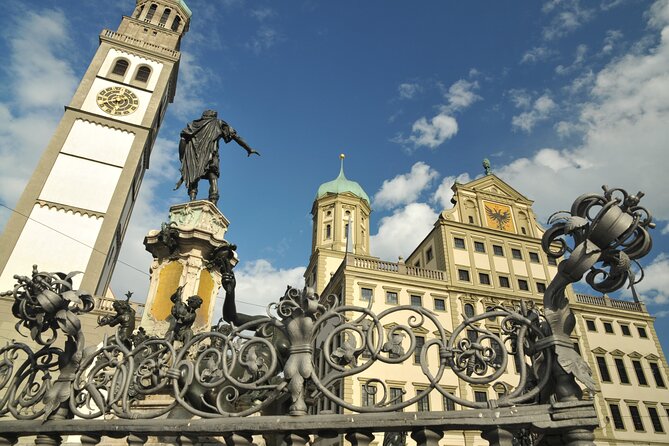
Meet at Tourist Information Augsburg, at Rathausplatz 1, for the 2 p.m. start. This is a central location and a practical place to begin, since the first part of the tour focuses on the town hall and the square around it.
The opening visit changes according to the date. Until the end of July 2024, the tour includes the Golden Hall in Augsburg Town Hall, one of the city’s grandest interiors. Its inclusion gives the walk a strong start, since you move from the square into a formal room built to display civic confidence and wealth.
From August 2024, the indoor stop changes. Tuesday through Friday, the visit is to the Roman Camp. On Saturdays and Sundays, it is to the Brecht House. These alternatives give the experience a different flavor depending on the day: Roman Augsburg during the week, and a literary connection on weekends.
The visit lasts about 30 minutes, with admission included. That is a useful amount of time for an introduction, but it also means the guide has to keep the story moving. If you are especially interested in Roman settlement, Bertolt Brecht, or the Golden Hall, you may want to return on your own for a longer look.
The town hall stop also sets up one of the tour’s recurring themes: Augsburg’s wealth was not accidental. Trade, finance, and powerful families shaped the city. The guides are expected to explain those connections, and several parts of the experience focus on the families who gained wealth and invested it in Augsburg.
One practical issue matters here. Some groups are conducted in both German and English. That can work well when the guide is strong and the group is small, but the English portion may be shorter than you expect. If you book specifically for English, listen at the beginning for how the guide is handling both languages.
Augustus Fountain and the Stories in Rathausplatz
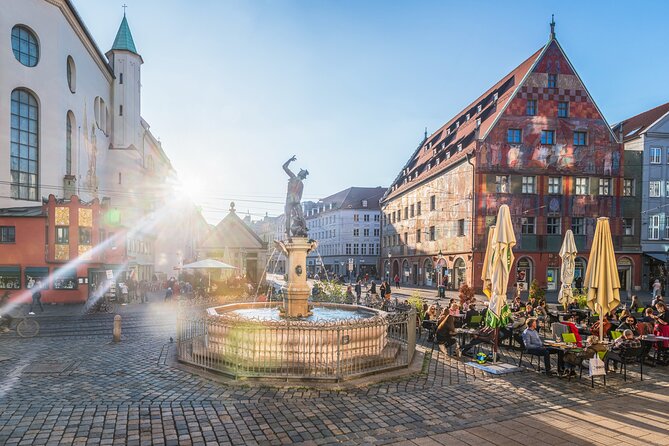
From the town hall, you spend about 15 minutes at Augustus Fountain. It is one of three large historic fountains in Augsburg and sits directly on Rathausplatz.
This is a short stop, but it helps you read the square properly. The fountain is not just decoration. It belongs to the city’s public display of civic pride and connects to Augsburg’s Roman name and early origins.
I like stops such as this because they prevent the walk from becoming a chain of indoor admissions. You pause outside, look around, and place the town hall in its wider setting. The square is also a good point to notice how Augsburg combines monumental public buildings with ordinary city life.
Do not expect a long lecture here. Fifteen minutes is enough for the main facts and a look at the fountain, not a full study of every figure and detail. If fountains are a major interest for you, you may want to seek out the city’s other two grand fountains after the tour.
This stop also reveals the tour’s general style. It is designed to connect sights rather than examine each one in isolation. You hear how Augsburg’s Roman past, civic identity, and later wealth overlap as you walk from one location to the next.
Walking Through the Lechviertel Canals
The route then heads into the Lechviertel, Augsburg’s old craftsman district. You spend roughly 15 minutes among narrow lanes and canals.
This is one of the most distinctive parts of the walk. The water channels are not simply scenic details. They are part of the system that helped Augsburg develop and prosper. Water supported crafts, mills, workshops, and the city’s wider economy.
The canals give you a different view of Augsburg from the formal Rathausplatz. Here, the setting becomes smaller and more intimate. Narrow alleys, old buildings, and flowing water make the city feel practical rather than ceremonial.
I would pay close attention during this section, because it is easy to see the canals and miss their purpose. The guide’s explanation helps you understand why water was such a valuable resource and how it contributed to Augsburg’s importance.
The short time here is both a strength and a limitation. You get a clear introduction without losing the pace of the tour, but there is not much room for a detailed look at the water system or the crafts that developed around it. One especially positive feature of the route is that it brings these canals into the main story rather than treating them as a quick photo stop.
Sound can be a problem in this part of the walk. Water, open streets, and moving groups do not always make ideal listening conditions. The tour offers the free Elysium sound amplifier system. You use your own smartphone, headphones, and an internet connection. Bring all three if you want the best chance of following every explanation.
More History Tours in Germany:
- Leipzig: City History Canal Sightseeing Tour on a Motorboat
★ 4.7 · 7,671 reviews - Leipzig: 1.5-Hour Historical Walking Tour in German
★ 4.7 · 2,217 reviews - Heidelberg: Night Watchman Historic Adventure Tour
★ 4.7 · 1,186 reviews - The Local Tour of Hamburg Historic Centre
★ 5.0 · 1,058 reviews
The Fugger Story and the Long Walk to Fuggerei
The Fugger family is central to Augsburg, and the tour gives its buildings and charitable work a large share of the afternoon. You will see Fugger houses along the route before reaching the Fuggerei itself.
The family’s story matters because it links money, politics, architecture, and social responsibility. Augsburg grew into an important commercial center, and the Fuggers became one of Europe’s most powerful merchant families. Their presence is visible in the city, but the tour also considers how their wealth was put back into the community.
That emphasis is useful, though it will not suit everyone equally. If you want a broad survey of Augsburg, the Fugger material can feel like it takes up too much of the two hours. The route gives less attention than some visitors might want to Augsburg’s role in the Protestant movement, the Mozart family connection, or the full Roman story.
I think the best way to approach this section is to see the Fugger family as one thread in Augsburg’s larger story, not the whole story. The buildings are impressive, but the more interesting question is what kind of city wealth helped create. The tour makes that question visible.
The walk ends at the Fuggerei, so the transition from Fugger wealth to social housing is deliberate. You are not just seeing a famous family home or a decorative old quarter. You are seeing an institution created to provide housing for people with limited means.
Entering the Fuggerei, Augsburg’s Living Social-Housing Community
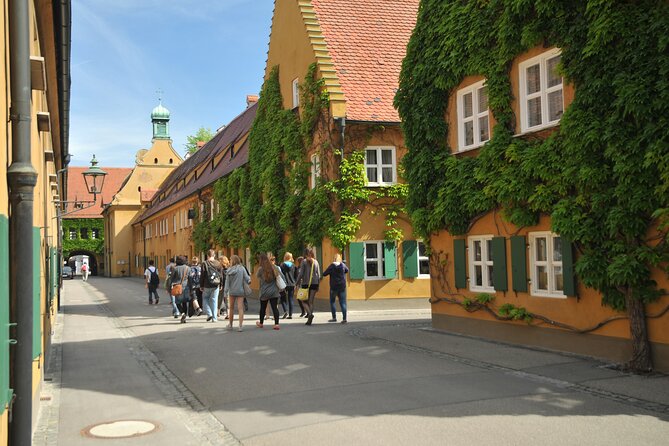
The Fuggerei receives about 30 minutes and admission is included. It is more than a historic attraction. It is a residential community with more than 500 years of history, and that still-active character gives the stop its strongest appeal.
The Fuggerei shows how philanthropy worked in Augsburg and how the Fugger family connected its public image to a lasting social project. The tour explains the basic purpose and history, while the buildings and streets give you a sense of how the community was planned.
This is the longest stop after the opening town hall visit, and the time is justified if you have never seen the Fuggerei. You get enough room to understand why it is famous rather than simply walking through and taking a quick photograph.
Still, I can understand wanting a little less time here if your interests lie elsewhere. Thirty minutes is a substantial portion of a two-hour tour, and some people will prefer more stops around the old town or more detail about Augsburg’s religious and Roman past.
The endpoint is convenient in one way and limiting in another. You finish at Fuggerei, Jakoberstraße 26, rather than returning to Rathausplatz. That is helpful if you plan to continue exploring the area, but you need to plan your next move from there.
Language, Hearing, Weather, and Group Size
The guide quality can shape this experience more than the route does. Several guides are described as warm, clear, and enthusiastic about Augsburg, with strong explanations and useful answers to questions. German-language commentary appears to be a natural part of the experience, and some guides handle both German and English well.
The bilingual setup deserves careful attention. When the guide moves between two languages, English explanations may be shorter. One guide was described as seeming less comfortable giving the tour in English, so I would not book this expecting a long English-only lecture.
Hearing is another practical concern. At least one soft-spoken guide made it difficult for part of the group to follow. The free Elysium system may help, but you need your own smartphone, headphones, and internet connection. Stand close to the guide when possible, especially at the canals and along busy streets.
Weather also matters. This is a walking tour, with outdoor stops at the fountain, Lechviertel, and the route to the Fuggerei. Cold, snow, or wet conditions can make the two hours feel longer. A past winter walk still worked well, but cold feet and poor sound reduced the comfort of the experience.
The maximum group size is 25 people. That is not an intimate private tour, but it is small enough to keep the group moving through narrow streets. Arrive early. The meeting time is 2 p.m., and arriving even one minute late can mean finding that the group has already left. The stated policy offers no refund for a missed start caused by lateness.
How the $16.20 Price Holds Up
At $16.20 per person, this is priced as an accessible introduction rather than a premium private tour. You receive a guide for about two hours, entry to the Fuggerei, and entry to the Golden Hall, Roman Camp, or Brecht House depending on the date and day.
That makes the price attractive if you plan to visit the Fuggerei anyway. You get the admission plus the added value of someone explaining how the places connect. It is also useful for first-time visitors who want a clear route through Augsburg instead of assembling several stops on their own.
The value is less certain if you need a fully English-language tour or a detailed academic history. A bilingual group can reduce English listening time, and two hours leaves only limited space for side topics.
The overall rating is 4.2 from 41 ratings, which fits the experience as a good, useful city introduction with a few uneven details. The strongest praise goes to the route, the guides who explain Augsburg with energy, the water system, and the Fuggerei. The recurring weaknesses are quiet delivery, mixed-language pacing, and too much focus on the Fugger story for some people.
Who Should Book This Augsburg Tour?
I would choose this tour if you have a short stay in Augsburg and want the main historic center explained in one afternoon. It suits first-time visitors, couples, families who prefer a manageable walk, and anyone who wants the Fuggerei included without arranging several separate visits.
It also works well if you care about urban history. The canals, craftsmen’s quarter, public fountains, merchant wealth, and social housing make Augsburg different from a standard old-town stroll.
I would think twice if you want a relaxed, English-only experience with lots of questions and long explanations. You should also consider another option if you dislike walking in cold or wet weather, need a quiet guide, or want equal attention given to Roman Augsburg, Protestant history, and the Mozart family.
Free cancellation is available up to 24 hours before the start time. Inside that window, the amount paid is not refunded, and changes are not accepted. The tour also requires a minimum number of participants, so a cancellation by the operator may lead to another date, another experience, or a full refund.
Should You Book It?
Yes, if you want an affordable two-hour introduction with the Fuggerei as the finale. The route gives you Augsburg’s biggest ideas quickly: Roman beginnings, civic pride, merchant power, working canals, and an old social-housing project that still matters.
Book with realistic expectations. This is not a deep historical seminar, and the bilingual format may shorten the English commentary. Arrive early, bring headphones and a connected smartphone for the sound system, and dress for outdoor walking.
For most first visits, the included admissions and compact route make the $16.20 price worthwhile. If you have only one afternoon in Augsburg, this tour gives you a useful first map of the city and leaves you at the Fuggerei, where you can continue exploring on your own.
FAQ
Where does the tour begin?
The tour begins at Tourist Information Augsburg, Rathausplatz 1, 86150 Augsburg, Germany.
What time does the tour start?
The scheduled start time is 2 p.m.
Where does the tour finish?
The tour ends at the Fuggerei, Jakoberstraße 26, 86152 Augsburg, Germany.
How long does the tour last?
The tour lasts approximately two hours.
What admissions are included?
Admission to the Fuggerei is included. Until the end of July 2024, the tour includes the Golden Hall in Augsburg Town Hall. From August 2024, it includes the Roman Camp from Tuesday through Friday or the Brecht House on Saturdays and Sundays.
Is the tour offered in English?
The tour can include German and English commentary. The amount of English explanation may vary when both language groups are present.
Can I use a sound amplifier?
Yes. The Elysium sound amplifier system is optional and free. You need your own smartphone, headphones, and an internet connection.
What is the cancellation policy?
You can cancel at least 24 hours before the local start time for a full refund. Cancellations or changes made less than 24 hours before the start time are not accepted for a refund.
Newest history tours we have reviewed in Germany
- Historic Dresden Private Walking Tour★ 5.0 · 32 reviews
- Walking Through Dresden’s Past with Dr. Fraser Macdonald★ 5.0 · 72 reviews
- Berlin Food & Cultural Tour: Must-Try German & Berliner Classics★ 5.0 · 51 reviews
- Private Tour: Jewish Heritage Walking Tour of Berlin★ 5.0 · 29 reviews
- Small-Group Historical Bike Tour in Berlin★ 4.5 · 103 reviews
- Historic center of Berlin – Tour in Italian★ 5.0 · 143 reviews
- East Berlin Food & History Tour with Eating Europe★ 5.0 · 204 reviews
- Private Berlin WWII and Cold War History Tour with Local Expert Guide★ 5.0 · 28 reviews
UNESCO World Heritage Tours, compared.
World Heritage Shirakawa-go and Experience Tours from Kanazawa
Read our review →

Bali: Tanah Lot UNESCO World Heritage Sites Full-Day Tour
Read our review →
World Heritage Kyoto & Nara Uji Authentic Matcha Experience
Read our review →

UNESCO’s Ayutthaya Historical Park: Full-Day Tour from Bangkok
Read our review →
Rotterdam: Kinderdijk UNESCO World Heritage Entry Ticket
Read our review →
From Busan: Gyeongju UNESCO World Heritage Guided Day Tour
Read our review →Browse the lists this tour appears in