
Review · ATLANTA HISTORY TOURS
Martin Luther King Jr. History Walking Tour
Atlanta’s Civil Rights story feels most personal in Sweet Auburn, where Martin Luther King Jr. was born, preached, worked, and is memorialized. This 2.5-hour walk ties those places together with stories about King, Coretta Scott King, John Lewis, their mentors, and the people who built the movement. I like the setting, and I like that the tour connects public events with family life. Guides such as Zoe, Joy, Jessica, Jay, and Nic have been praised for making serious history clear, lively, and human.
The main consideration is physical. You will walk about 1.5 miles, stand for long stretches, and handle a few small hills. Most people can manage it, but Atlanta heat, rain, and uneven pacing can affect the day. Access is also limited at some major sites: you see Historic Ebenezer Baptist Church and the Prince Hall Grand Lodge from outside, and the King birth-home tour is not included.
Key details before you book

- About 1.5 miles on foot: Expect roughly 2 hours and 30 minutes of walking, standing, pauses, and storytelling.
- Sweet Auburn is the classroom: The tour stays in the neighborhood where King’s family, church, work, and memorial sites come together.
- Exterior access matters: Ebenezer Baptist Church and Prince Hall Grand Lodge are viewed from outside, so this is not a full inside tour of every landmark.
- Jackson Street Bridge adds a city view: You get a short stop for one of Atlanta’s best-known views.
- Small groups help: The maximum group size is 14, which gives you a better chance to hear the guide and ask questions.
- The guide shapes the experience: Zoe, Joy, Jessica, Jay, Nic, Kristen, Kirsty, Ariel, and others have led this walk, with storytelling and personal touches often central to the experience.
Why Sweet Auburn makes this tour worthwhile
You can visit parts of the Martin Luther King Jr. National Historical Park on your own, but walking without context can leave the places feeling disconnected. This tour gives you a route through the neighborhood and explains how church life, family life, Black business, education, organizing, and national politics met in Atlanta.
That local focus is the tour’s strongest feature. You are not simply hearing a shortened biography of King while moving between unrelated attractions. You are walking through the area where the King family lived and where the Civil Rights movement had a working base.
The tour also widens the story beyond one famous man. Guides discuss Coretta Scott King, Congressman John Lewis, King’s mentors, other Civil Rights leaders, and the role of Atlanta itself. That matters because King’s work did not happen in isolation. The neighborhood helps you see the network around him.
Several guides use speech excerpts at suitable points. Hearing King’s voice while standing near places tied to his life can add emotional weight, but the walk is not solemn every minute. The best guides balance difficult material with humor, conversation, and room for questions.
I would book this early in an Atlanta visit. It gives you a useful frame for later visits to museums, churches, and other Civil Rights sites. You will also leave with a better sense of how Atlanta’s Black communities shaped the city and the country.
More History Walking Tours in the USA
- History and Hauntings of Salem Guided Walking Tour
★ 5.0 · 14,564 reviews - Boston: Freedom Trail History Small Group Walking Tour
★ 5.0 · 6,450 reviews - Historic Charleston Guided Sightseeing Walking Tour
★ 5.0 · 6,216 reviews
Starting at the Martin Luther King Jr. National Historical Park
The tour begins and ends at 450 Auburn Ave NE, at the Martin Luther King Jr. National Historical Park. The guide gives an overview of the site and walks through several areas connected with King’s life and legacy.
This is the most important part of the route, so listen closely at the beginning. The opening sets up the names and events you will encounter later. It also helps you understand why the surrounding streets matter instead of treating each stop as a separate photo opportunity.
The scheduled visit to the National Historical Site lasts about 25 minutes, though the full walk continues through the broader Sweet Auburn area. National Park buildings can close without warning because of staffing shortages. That means you should treat outdoor access and the walking route as the dependable part of the experience, not assume every building will be open.
The King birth-home tour is not included and is listed as closed until 2025. The tour can still introduce you to the area and the wider story, but you should not book it expecting an interior birth-home visit.
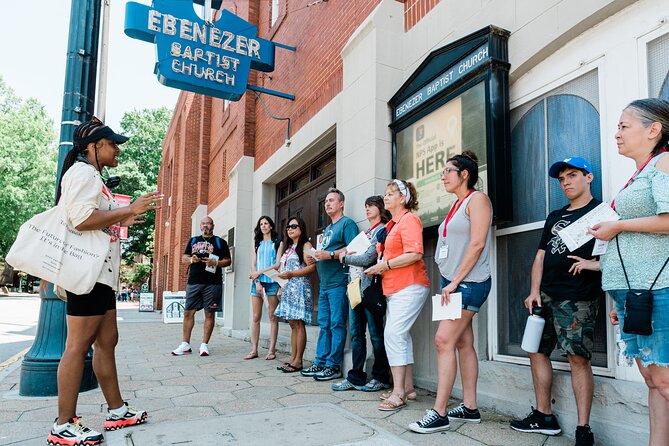
Ebenezer Baptist Church from the outside
Historic Ebenezer Baptist Church is one of the most important landmarks on the route. King preached here, as did his father, and the church became closely linked with the family and the wider Civil Rights movement.
You see the church from outside. The Heritage Sanctuary interior is not included, so the value here comes from the guide’s explanation of the building, the King family connection, and the role of Black churches in organizing and public life.
This is a good place to ask questions. A guide can connect the church to King’s development as a preacher and public figure, while also explaining why the pulpit was more than a religious platform during the Civil Rights era.
The stop is especially useful if you want context rather than a quick photograph. It also makes clear why access details matter. If your main goal is to sit inside the sanctuary, this particular walk will not meet that expectation.
Prince Hall Grand Lodge and Atlanta’s working movement

The exterior of Prince Hall Grand Lodge offers one of the more unusual stops. It was associated with offices used by Dr. King and Congressman John Lewis, and the building also had a historic Madam C. J. Walker Beauty Salon.
This stop adds a practical side to the story. Movements need offices, meeting rooms, businesses, print networks, money, and ordinary places where people can plan. The site helps move the story away from famous speeches alone and toward the daily work behind them.
Because the stop is exterior only, you will rely on the guide to explain what happened there. That is where a strong storyteller makes a difference. Guides who can place King and Lewis in the same local setting help you see Atlanta as a center of organizing, not just a backdrop to national events.
Same streets, a different century:
- New York City: American Museum of Natural History Ticket
★ 4.5 · 15,447 reviews - Charleston’s Old South Carriage Historic Horse & Carriage Tour
★ 5.0 · 10,023 reviews - Beneath The Streets Underground History Tour
★ 4.5 · 8,006 reviews - Big Island in a Day: Volcanoes Waterfalls Sightseeing and History
★ 5.0 · 6,569 reviews
Walking through Sweet Auburn for nearly two hours
The Sweet Auburn portion takes up most of the tour, about two hours. You move between points of interest while the guide fills in the personal and public sides of King’s life.
This longer middle section is where the tour earns its price. A short monument visit can give you names and dates. A walking route gives those facts a physical order. You see how the church, family sites, civic spaces, and memorials relate to one another.
The content is not limited to King’s best-known moments. Guides discuss Coretta Scott King’s influence, King’s mentors, other Civil Rights leaders, and details that are often left out of a basic biography. Some guides also correct popular misunderstandings and explain what the historical record shows instead.
I particularly like the use of personal detail. Stories about King and Coretta, his family, his work, and the final period of his life give the tour an intimate scale. At later points, you may encounter references to his Nobel Peace Prize, his final clothing and suitcase, his birthplace, and his final resting place with Coretta Scott King, depending on the exact route and site access that day.
Do not expect a quiet museum visit. You are outside for most of this time, and the group moves between stops. In warm weather, the heat can be the biggest challenge. One guide has been noted for finding shaded places and offering a short cold-water break, but I would still bring water, wear light clothing, and prepare for sun.
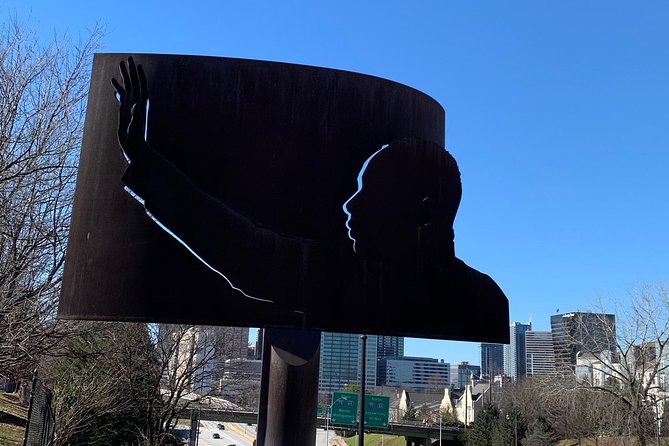
Jackson Street Bridge and the Atlanta skyline

The 10-minute stop at Jackson Street Bridge gives the tour a change of pace. From here, you take in one of Atlanta’s most familiar city views.
The bridge is not directly about King’s biography in the same way as Ebenezer Baptist Church or the National Historical Park. Its purpose is visual and geographic. It helps you see the city beyond the neighborhood and gives the group a brief pause from the denser historical material.
This is a good spot for photographs, but do not treat it as a long sightseeing stop. Ten minutes passes quickly, and the tour soon returns to the Civil Rights story. The short break can be welcome if your legs need a rest.
The King Center and the Civil Rights Walk of Fame
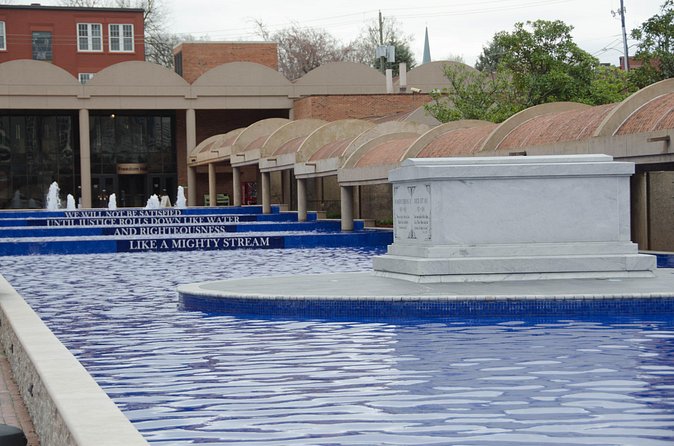
The tour includes the exterior of the King Center and a roughly 10-minute stop there. The center is open seven days a week from 10 a.m. to 5 p.m., but this walking experience does not promise a full independent visit inside.
The King Center gives the story a memorial and educational focus. It is also associated with Coretta Scott King’s work to preserve and extend King’s legacy. Your guide can help connect the place to the earlier stops instead of leaving you to sort out the timeline on your own.
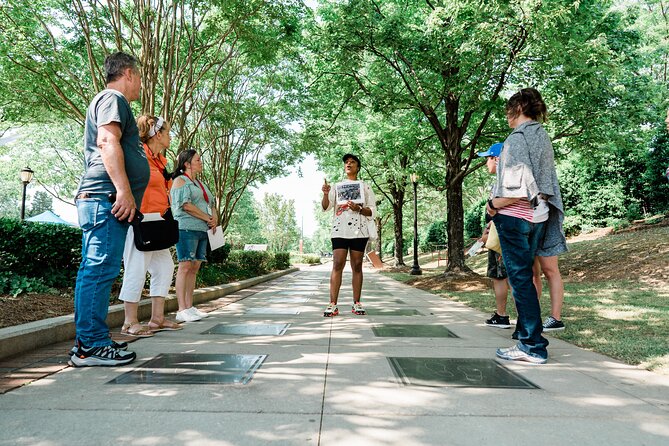
The International Civil Rights Walk of Fame adds another useful layer. You see shoe prints connected with prominent Civil Rights leaders, and the guide links those names to people discussed during the walk.
I like this ending because it broadens your attention again. You finish with King, but not only King. The movement depended on many leaders, organizers, ministers, lawyers, students, workers, and families. The Walk of Fame makes that point in a simple, physical way.
The route also ends back at the original meeting point. That makes it easier to continue exploring Auburn Avenue on your own, though transportation to and from the tour is not provided.
Guides who bring the story to life

The guide is the biggest variable in any history walk, and the named guides associated with this experience have different strengths.
Zoe is known for energetic delivery, clear pacing, and a talent for keeping a 2.5-hour walk from feeling long. Joy brings a conversational style and personal details about King, Coretta, and the King family. Jessica combines strong storytelling with careful answers to questions, and she has been especially effective with groups that want more depth.
Jay is a good fit if you like humor mixed with facts and want a guide who remembers people in the group. Nic has a direct, engaged style and is good at keeping a group moving through busy street areas. Kristen and Kirsty have also been praised for warmth, feeling, and strong command of the material. Ariel has been noted for a friendly, welcoming approach.
Guide assignments can change, so you should not book on the assumption that one particular person will lead your departure. Still, the range of guide styles is encouraging. The tour works best when the guide treats the history as a conversation rather than a memorized speech.
Is $40 a fair price?
At $40 per person, this is not the cheapest way to see the neighborhood, but I think it offers fair value if you want context. You are paying for about 2.5 hours of guiding, route planning, local interpretation, and access to a small group capped at 14 people.
The price makes less sense if you only want photographs of the main landmarks or plan to enter every site independently. The church and Prince Hall Grand Lodge are exterior stops, and the birth-home visit is not part of the experience. In that case, you may prefer a self-guided visit combined with a museum ticket.
For most first-time visitors, though, the guide adds what the buildings cannot provide on their own. You hear how the places connect, how the movement operated locally, and how King’s family and colleagues shaped his public work.
Walking conditions and practical planning
Wear comfortable shoes. This is not a gentle stroll with frequent seating. The route covers about 1.5 miles, includes small hills, and requires standing while the guide speaks.
The tour runs in rain or shine, so check the forecast and bring suitable clothing. Strong sun and Atlanta heat can make the middle section feel harder than the mileage suggests. A charged phone is useful for photographs, and water is a sensible addition.
The experience is offered in English and uses a mobile ticket. It is near public transportation, but you must arrange your own way to and from the meeting point. Service animals are allowed, and most people can participate. It is not recommended if you have difficulty walking or standing for long periods.
The group limit of 14 is a practical advantage. You are less likely to lose the guide’s voice, and questions are easier than in a large coach group. Stay alert around street crossings and keep up with the group. One guide has been praised for moving the group along when people on the street approached, which is useful in an urban walking setting.
The cancellation terms are strict: the experience is non-refundable and cannot be changed for personal reasons. If poor weather or an insufficient number of bookings cancels the tour, you are offered another date or a full refund. Keep that in mind before booking several weeks ahead.
Who should book this Atlanta history walk?
I would choose this tour if you want a serious introduction to Atlanta’s Civil Rights story and prefer learning through places rather than a lecture hall. It suits first-time Atlanta visitors, local residents, families with older children, solo visitors, couples, and anyone who wants a clearer picture of King’s life beyond the famous speech excerpts.
It is also a good choice for people who already know the broad outline and want details about Coretta Scott King, John Lewis, King’s mentors, and the local institutions that supported the movement.
I would hesitate if you need guaranteed indoor access, have trouble walking for 2.5 hours, or want a tour centered only on the King birth home. The route is outdoors, weather-sensitive, and partly dependent on National Park building access.
Should you book the Martin Luther King Jr. History Walking Tour?
Yes, if you can manage the walk and understand the access limits. The strongest parts are the Sweet Auburn setting, the connections between King’s personal and public life, and guides such as Zoe, Joy, Jessica, Jay, and Nic who make the material approachable without reducing its seriousness.
Book it early in your Atlanta stay, wear good shoes, bring water, and arrive ready to listen. You will see several major Civil Rights landmarks, but the real value is learning how those places fit together. For $40, that added context makes this one of the better ways to begin exploring Atlanta’s Civil Rights history.
FAQ
How long does the Martin Luther King Jr. History Walking Tour last?
The tour lasts about 2 hours and 30 minutes.
Where does the tour start and end?
It starts and ends at 450 Auburn Ave NE, Atlanta, Georgia 30312, at the Martin Luther King Jr. National Historical Park.
Is the Martin Luther King Jr. birth home included?
No. The birth-home tour is not included and is listed as closed until 2025.
Can I go inside Historic Ebenezer Baptist Church?
No. The tour includes an exterior visit only. Entry to the Historic Ebenezer Baptist Church Heritage Sanctuary is not included.
How much walking is involved?
The route requires about 1.5 miles of walking, with some small hills and long periods of standing. It is not recommended for people who cannot walk or stand for extended periods.
What happens if the tour is canceled because of weather?
If poor weather cancels the tour, you are offered a different date or a full refund. The tour normally operates rain or shine.
Newest history tours we have reviewed in the USA
- Nashville: Belle Meade Historic Mansion Tour★ 4.8 · 63 reviews
- Beaufort: Local History and Film Sites Tour by golf cart★ 4.9 · 102 reviews
- Boston: Guided Seafood Tasting and History Tour★ 4.9 · 90 reviews
- Beaufort: Gullah Heritage Tour★ 4.8 · 26 reviews
- Beaufort: Historic City Tour by Bus★ 4.9 · 228 reviews
- Austin: Downtown Austin Haunted History Tour★ 4.4 · 31 reviews
- Austin: Morning History Walking Tour of Downtown Austin★ 4.9 · 71 reviews
- Atlanta: Beltline Food, Street Art, and History Walking Tour★ 5.0 · 47 reviews
History Walking Tours, compared.

History and Hauntings of Salem Guided Walking Tour
Read our review →

Freedom Trail History Small Group Walking Tour
Read our review →
Historic Charleston Guided Sightseeing Walking Tour
Read our review →
Tapas Walking Tour with Food, Wine, and History
Read our review →
Savannah History and Haunts Candlelit Ghost Walking Tour
Read our review →
A History of Terror – Belfast City Centre Walking Tour
Read our review →Browse the lists this tour appears in