
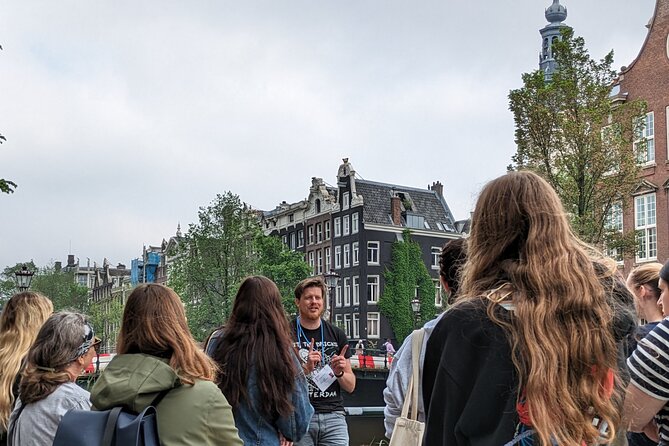
Review · AMSTERDAM HISTORY TOURS
Amsterdam 2 Hour History Walking Tour
Amsterdam’s past is packed into a compact walk: water control, religious change, global trade, war, royalty, and the modern city all appear within two hours. The most interesting part is how ordinary streets explain big national ideas, from the Dutch fight against flooding to the country’s long habit of compromise.
I like the small group of no more than 10 and the relaxed pace. I also like the mix of serious history and useful advice, with guides such as Axel and Mark praised for making the story easy to follow and fun. The main drawback is time. Ten stops in two hours means several places get only a short explanation, and the tour requires good weather.
Key points to know before you book
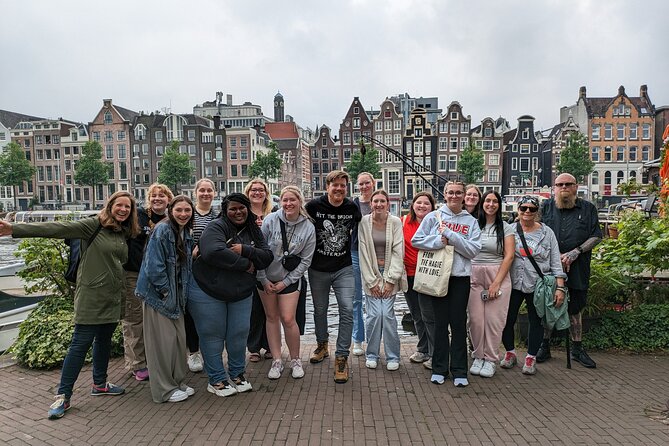
- Water shapes the whole story: The canal belt and Amstel River help explain Amsterdam’s culture, planning, and national identity.
- A rare mix of subjects: You move from De Wallen and Dutch colonial trade to the Jewish Quarter, Protestant history, royalty, and modern city politics.
- Limited group size: With a maximum of 10 people, it should be easier to hear the guide and ask questions.
- A strong first-day choice: Practical tips and central stops can help you get your bearings early in your visit.
- The Monet bridge is a quick photo stop: Groenburgwal offers a famous view, but only about three minutes are set aside for it.
- Good value for a short orientation: At $30.04, the price is reasonable if you want an overview rather than a long, specialized history walk.
Why Amsterdam’s water story is the right place to start
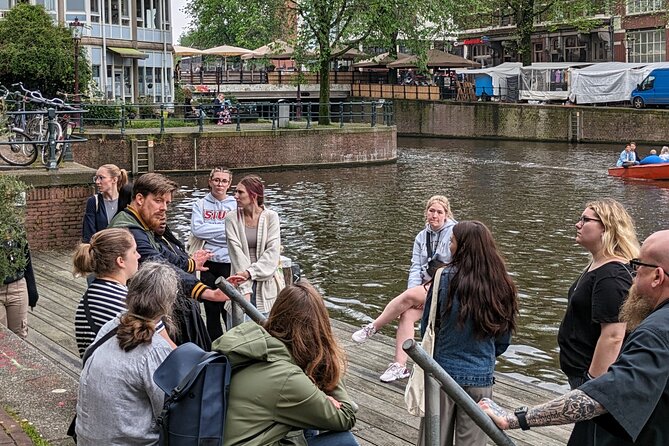
The walk begins at Prinsenstraat 13 in the canal belt, near the historic center. This is a smart starting point because Amsterdam can seem like a maze of bridges, narrow lanes, and waterways until someone explains how the city grew around water.
You’ll learn how the Dutch had to live with water rather than simply push it away. That idea helps make sense of the canals, the city’s practical mindset, and the country’s long tradition of cooperation and compromise.
The canal ring stop is brief, about five minutes, so do not expect a technical lesson on engineering. Instead, think of it as the main idea for the entire walk. The water is not just scenery. It is part of the reason Amsterdam developed the way it did.
The location also gives you an early chance to take in the city’s famous canal views without spending much time on formal sightseeing. Bring a refillable bottle. There are places to refill it along the route, but bottled water is not provided.
More History Walking Tours in Amsterdam
- Amsterdam: Haunted History and Ghost Walking Tour
★ 4.5 · 488 reviews - Amsterdam History Walking Tour
★ 5.0 · 281 reviews - Amsterdam: Highlights & History Walking Tour
★ 4.8 · 266 reviews
De Wallen and Dam Square: Amsterdam’s public face
The walk then reaches De Wallen, Amsterdam’s Red Light District. The stop lasts about 10 minutes and focuses on why the neighborhood exists, how it works, and how Dutch society views it.
This can be a useful stop because it places the district in a wider historical and social setting. You are not simply being led past windows and trying to guess at the story. The guide explains the area’s place in Amsterdam and the local approach to sex work.
The subject may not suit every member of your group, especially younger children or anyone looking for a strictly traditional sightseeing tour. Still, its inclusion gives the walk an honest feel. Amsterdam is not presented as only canals, bicycles, and pretty façades.
From there, you reach Dam Square, the city’s central meeting place. The stop is short, around five minutes, with more attention to the Dutch struggle against water and the way that struggle shaped national thinking.
Dam Square is also the end point of the tour, so seeing it early in the route and returning there later gives the walk a useful sense of direction. The square connects easily with public transportation, and the tour finishes about two minutes from the starting area.
South Church and the shift from Catholic to Protestant rule
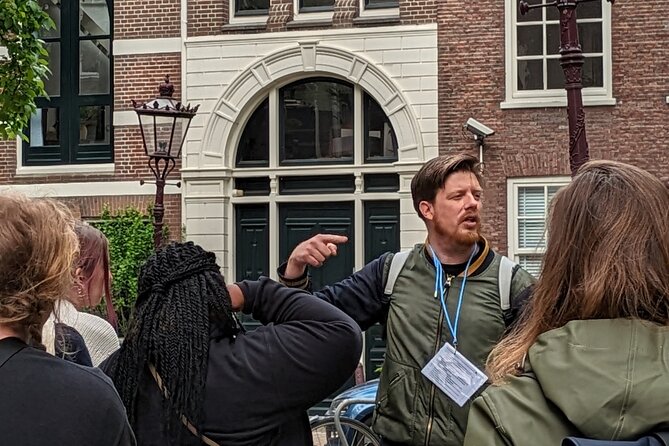
At South Church, you stop beside a calm inner courtyard and learn how and why Amsterdam changed from Catholicism to Protestantism.
The setting matters. A quiet courtyard gives the guide room to explain a major religious and political change without the noise and movement of a main street. The stop lasts about five minutes, so the focus is on the basic story rather than church architecture or an extended visit inside.
This is one of the moments where the tour shows how Amsterdam’s identity changed over time. You are not only looking at old buildings. You are hearing how belief, government, and daily life became tied together.
Because the stop is brief, ask a question if this subject interests you. A small group makes that easier than a large bus tour. Guides such as Axel have been praised for making complicated subjects clear and keeping the mood friendly, so this part should suit you if you like history without a classroom tone.
Jodenbreestraat and Amsterdam’s wartime memory
Jodenbreestraat marks the start of Amsterdam’s Jewish Quarter. Here, the guide covers the Jewish community that lived in the city before and during the war, the catastrophic loss of life, and the Hunger Winter.
This is the most serious section of the walk. The five-minute stop cannot cover every detail, and you should not expect it to replace a visit to a dedicated museum or memorial. Its value is that it puts the city’s wartime history into the streets you are already walking through.
The mention of the Hunger Winter also widens the story beyond one neighborhood. Amsterdam’s wartime experience was not only about persecution and loss. It also included hunger, hardship, and the daily struggle of civilians during the final period of the war.
I would pay close attention here and allow the tone to change. The tour uses humor in other places, but this subject calls for care. A good overview can help you decide if you want to return later for a longer visit focused on Jewish Amsterdam or the war.
More History Walking Tours in the Netherlands
- Anne Frank and Amsterdam Jewish History Walking Tour
★ 5.0 · 259 reviews - Amsterdam: Ghost Walking Tour and Dark History
★ 4.8 · 118 reviews - Amsterdam: Iconic Canals & Historic Sights Walking Tour
★ 4.5 · 90 reviews - Amsterdam: Anna Frank and World War II History Walking Tour
★ 4.8 · 86 reviews
The Dutch East India Company and the price of trade
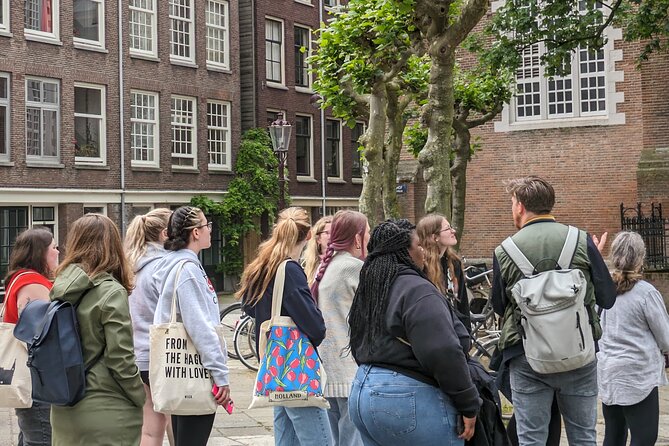
At Bushuis and Oost-Indisch Huis, the walk turns to the former headquarters of the Dutch East India Company. The stop lasts around 10 minutes, making it one of the longer history sections.
You’ll hear how a small country built a far-reaching empire and gained control over the spice trade while also fighting for independence and survival. This is an important part of the tour because Amsterdam’s wealth did not appear by accident. It was connected to commerce, shipping, military power, and overseas expansion.
The best use of this stop is to listen for the tension in the story. The Netherlands fought to protect its own freedom, yet Dutch commercial power also depended on control beyond Europe. A short city walk cannot settle every part of that history, but it can keep the story from becoming a simple celebration of trade.
This stop may be especially useful if you notice grand canal houses and wonder how Amsterdam became so prosperous. The guide links the city’s appearance and influence to the business systems that operated from places such as Oost-Indisch Huis.
Stopera and the modern city’s sense of humor
At the Stopera pier, you reach the Amstel River and see Amsterdam’s modern city hall and opera building. The guide explains why locals call it Stopera and why many consider the building unattractive while still treating it with civic pride.
That contrast gives the tour a welcome change of pace. After churches, war, and empire, you get a glimpse of how present-day Amsterdammers talk about their own city. A building can be mocked and still belong firmly to local identity.
The stop lasts about five minutes. You probably will not get a detailed architectural analysis, but you will gain a useful bit of local perspective. This is the sort of detail that can make later walks through Amsterdam feel more informed.
The river setting is another plus. The route is not limited to narrow lanes and enclosed squares. You get a view along the Amstel and a sense of how the city’s water continues to shape its public spaces.
Begijnhof, a quiet courtyard in the center
Begijnhof is one of the tour’s most appealing stops. This enclosed courtyard offers a peaceful break from the streets, and the guide explains the beguine women who built and lived in the community.
The stop lasts about 10 minutes, enough time to appreciate the setting and hear the basic story. The contrast is the point. Amsterdam’s center can feel busy and noisy, yet this courtyard creates a much calmer mood just a short walk away.
I like this stop because it connects architecture with social history. You are not simply seeing an attractive courtyard. You are learning about a group of religious women and the community they formed.
Remember that Begijnhof is a place with a quiet character. Follow the guide’s instructions and keep your voice down. The tour’s relaxed approach works well here, but the site deserves respect rather than a rushed photo stop.
Royal Palace, orange, and the Dutch monarchy
At the Royal Palace Amsterdam, the guide explains how the Dutch royal family came to be, what France had to do with it, and why the national color is orange even though the flag is red, white, and blue.
The stop is about five minutes and does not include palace admission. You will see the building from the outside as part of the walking route, not take a full palace tour.
That limitation is worth noting if you want to visit the interior. This experience will not replace a ticketed palace visit, but it can give you enough context to make the building more meaningful if you return later.
The orange question is a fine example of the tour’s approach. It takes a familiar Dutch symbol and explains the political and royal connection behind it. Small facts like this are useful during the rest of your visit, especially when you see orange associated with national celebrations or sports.
Groenburgwal and the Monet bridge photo stop
The final sightseeing stop is Groenburgwal, where you see the bridge associated with a famous Monet view. About three minutes are set aside for photographs.
This is a quick stop, so keep your camera ready. You may get the picture you want, but you should not count on a long photography session or a chance to wait for perfect light.
The photo stop adds a lighter finish after the more difficult material at Jodenbreestraat and the serious subjects of empire and religion. It also gives you a recognizable Amsterdam image to take home.
The tour ends at Dam Square, close to the starting point. That makes the route easy to fit into a first day. You can continue sightseeing, catch public transportation, or stop for food without having to cross the city to retrieve your luggage or meet another group.
What $30.04 buys you in two hours
At $30.04 per person, this is a fair price for a guided introduction to central Amsterdam. You are paying for a local guide, a carefully connected route, practical suggestions for the rest of your visit, and a group limited to 10 people.
The value depends on what you want. If you want detailed access to interiors, museum tickets, or long stops at each site, this is not the right product. Admission is not included at the Royal Palace, and the other stops are viewed from public spaces.
If you are new to Amsterdam, the price makes more sense. In two hours, you cover the canal belt, De Wallen, Dam Square, religious history, wartime memory, Dutch trade, modern city politics, Begijnhof, the monarchy, and the Amstel. That is a lot of orientation for a modest fee.
The tour also includes tips and tricks for getting more from Amsterdam, plus discount codes for other tours when requested. Those extras may be useful if you are considering another activity with Hit the Bricks, but the walking tour should be judged first on its own route and guide.
Group size, guide style, and practical limits
The maximum group size is 10. That is one of the strongest features because a history walk works best when you can hear the guide and ask a quick question without holding up a crowd.
The tone is intended to be relaxed, with history explained through humor as well as facts. Axel and Mark are two guides connected with positive experiences of the company, but your guide is not guaranteed to be either of them.
The tour begins at 11:00 a.m. and lasts about two hours. It is offered in English, and confirmation is sent at booking. Most people can participate, service animals are allowed, and the meeting point is near public transportation.
Wear shoes suited to city walking and check the forecast. The experience requires good weather. If poor weather causes cancellation, you can choose another date or receive a full refund.
Free cancellation is available up to 24 hours before the start time. Changes or cancellations inside that window are not accepted for a refund.
Who should book this Amsterdam walk
I would choose this tour if you are visiting Amsterdam for the first time and want a clear framework before exploring alone. It is also a good match if you prefer local explanation to a long list of isolated monuments.
You should book it if you enjoy:
- Short stops connected by a larger story
- A small group and an informal guide
- History mixed with humor and local opinion
- A central route that ends near public transportation
- Practical advice for the rest of your stay
You may want something else if you need extensive time at each site, a specialist focus on art or architecture, or a fully indoor activity. The route also covers difficult subjects, including war, persecution, and colonial power, so it is not simply a light photo walk.
Should you book the Amsterdam 2 Hour History Walking Tour?
Book it if you want to get your bearings fast and understand why Amsterdam looks and feels the way it does. The canal story, small group, practical advice, and wide range of stops give you a useful foundation for the rest of your visit.
The main tradeoff is speed. Each place gets only a few minutes, and the tour does not include interior admissions. For $30.04, though, it offers a strong overview, especially on your first day. Bring water, watch the weather, and keep your expectations focused on context rather than lengthy visits.
FAQ
Where does the tour start?
The tour starts at Hit the Bricks Walking Tours, Prinsenstraat 13, 1015 DA Amsterdam, Netherlands.
Where does the tour end?
It ends at Dam Square, about two minutes’ walk from the starting point. Dam Square also provides access to public transportation.
What time does the tour begin?
The stated start time is 11:00 a.m.
How long does the walking tour last?
The tour lasts approximately two hours.
How many people can join the tour?
The group has a maximum of 10 travelers.
Is the tour offered in English?
Yes. The tour is offered in English.
Is admission to the Royal Palace included?
No. The Royal Palace is visited as a stop on the route, but admission is not included.
What happens if the weather is poor?
The experience requires good weather. If it is canceled because of poor weather, you will be offered another date or a full refund.
More Two-Hour Tours in Amsterdam
- Historic Amsterdam 2-Hour Private Tour with Local Guide
★ 4.9 · 53 reviews - Amsterdam: 2-hour History & Culture tour with a Local
★ 5.0 · 35 reviews - 2-Hour Gettysburg Battlefield Guided History Bus Tour with a National Park Guide
★ 4.5 · 2,201 reviews - Kyoto Gion: 2-Hour Geisha Culture & History Walking Tour
★ 5.0 · 1,186 reviews
Newest history tours we have reviewed in Amsterdam
- Amsterdam: Luxury Canal Cruise with Historic VR Experience★ 5.0 · 305 reviews
- Amsterdam Walking Tour: Urban Legends & History with local guide★ 5.0 · 39 reviews
- Historical Walking Tour, private with local Dutch guide★ 5.0 · 23 reviews
- Guided Walking Tour Amsterdam – Legends, History & Ghost Stories★ 5.0 · 28 reviews
- LGBTQI+ History Tour of Amsterdam★ 5.0 · 123 reviews
- Anne Frank’s Amsterdam Jewish History WWII Exclusive Guided Tour★ 5.0 · 18 reviews
- Amsterdam Haunted History and Ghost Walking Tour★ 5.0 · 47 reviews
- Private Guided Historic Amsterdam Canal Cruise in a Salon Boat★ 5.0 · 21 reviews
History Walking Tours, compared.

History and Hauntings of Salem Guided Walking Tour
Read our review →
Freedom Trail History Small Group Walking Tour
Read our review →
Historic Charleston Guided Sightseeing Walking Tour
Read our review →
Tapas Walking Tour with Food, Wine, and History
Read our review →
Savannah History and Haunts Candlelit Ghost Walking Tour
Read our review →
A History of Terror – Belfast City Centre Walking Tour
Read our review →Browse the lists this tour appears in