
Review · UK HISTORY TOURS
Chatham: The Historic Dockyard Chatham Annual Ticket
Chatham Historic Dockyard lets you walk through the working heart of Britain’s naval past, from the tight corridors of a Cold War submarine to the quarter-mile ropery that has produced ship’s rope since 1618. You are not simply looking at ships behind barriers here. You can peer through a periscope, take the bridge of a destroyer, and ring a bell on a Victorian sloop.
I especially like the three very different ships, which give you a clear sense of how naval life changed across the nineteenth and twentieth centuries. I also like the 365-day ticket, since four hours is not enough to see everything at a relaxed pace. The main drawback is that some visitors may find the ticket exchange a little slow, and parking costs extra.
- Three historic vessels: Board a Cold War submarine, a Second World War destroyer, and a Victorian sloop.
- Britain’s longest working ropery: Watch rope being made along a quarter-mile route with roots reaching back to 1618.
- RNLI lifeboat collection: See the United Kingdom’s largest collection of historic RNLI lifeboats.
- Command of the Oceans: Explore an interactive exhibition with a ship displayed beneath the floor.
- One ticket for a year: Return as often as you like for 365 days after your first activation.
- All-weather variety: Move between ships, galleries, historic buildings, exhibitions, and family activities.
Chatham’s Dockyard Tells the Naval Story Up Close
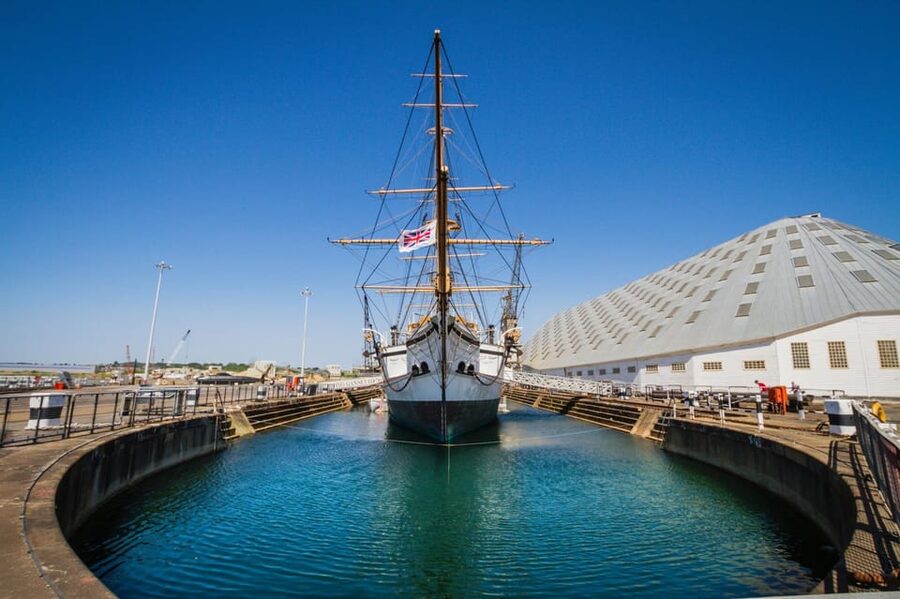
Chatham is one of Britain’s most important maritime heritage sites, but its appeal comes from scale and texture rather than a single grand object. You walk through a former secure dockyard where ships were built, repaired, supplied, and prepared for service.
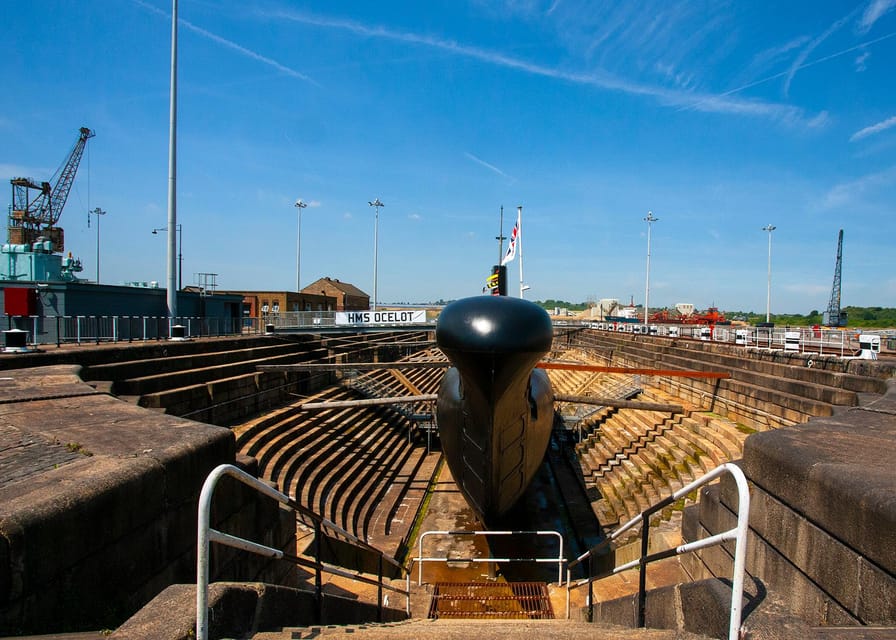
The site connects several eras. The age of sail appears in the old dockyard buildings and rope-making operation. The nineteenth century comes alive aboard the Victorian sloop. The Second World War is represented by a destroyer’s bridge and working spaces. The Cold War feels much more enclosed inside the submarine Ocelot.
I like this sequence because you can compare technologies instead of seeing naval history as one long list of dates. A sailing vessel depended on rope, timber, and canvas. A destroyer relied on machinery, weapons, and a large crew. A submarine demanded careful use of every inch of space.
The dockyard is also a useful place for families and mixed-age groups. Children can climb through parts of the ships and take part in school holiday activities, while adults can spend more time with the exhibitions and dockyard buildings. You should expect a lot of walking, stairs, narrow passageways, and uneven historic surfaces.
Start With the Three Ships

The ships are the most memorable part of the visit, and each offers a different kind of experience. I would not rush through them. Allow time to notice the cramped corners, steep steps, equipment, and small details that explain how people actually worked aboard.
More Entry Tickets in the UK:
- Edinburgh: Edinburgh Castle Guided History Tour with Tickets
★ 4.8 · 9,933 reviews - Portsmouth: Historic Dockyard Ultimate Explorer Ticket
★ 4.8 · 1,052 reviews - New York City: American Museum of Natural History Ticket
★ 4.5 · 15,447 reviews
Ocelot, the Cold War Submarine
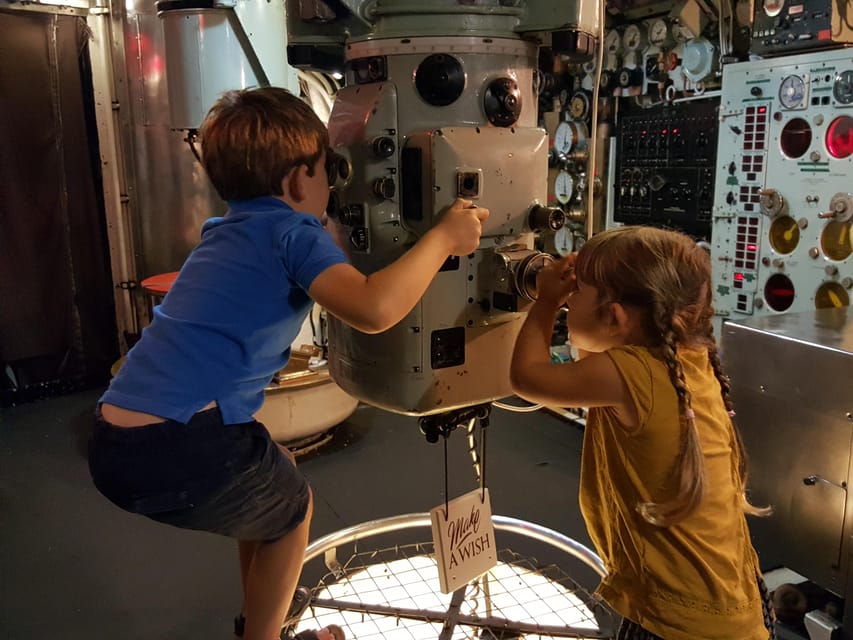
Ocelot gives you the strongest sense of physical confinement. The periscope is the obvious highlight, but the real lesson comes from moving through a submarine where space was carefully controlled.
You can see how little room there was for movement and how closely daily life depended on machinery and discipline. The experience is particularly useful if you want more than a quick look at a military vessel. A former submariner who visited with an ex-Army friend found the civilian guide’s knowledge impressive and was able to add personal stories about life aboard this class of submarine.
That detail points to one of the attraction’s strengths. The guides are not just present to direct you around. They can add context, answer questions, and allow people with their own service experience to contribute to the conversation.
The submarine may not suit you if you dislike tight spaces. Its restricted passages and compact rooms are part of the point, but they can make the visit less comfortable for some people.
The Second World War Destroyer
The destroyer shifts the mood. Its bridge gives you a chance to imagine the responsibility of directing a warship at sea, and the larger layout makes it easier to picture a vessel operating with a full crew.
Take your time on the bridge, then look beyond the obvious control points. The value is in seeing how navigation, communication, and daily work fitted together. You are looking at a working naval environment, not just a painted exterior.
The destroyer helps explain the change from the sailing era to modern naval power. It was built for speed, coordination, and wartime duty, with a very different relationship between crew and ship than you find on the Victorian sloop.
The Victorian Sloop
The Victorian sloop provides the most approachable ship experience. You can ring the ship’s bell on deck, and the vessel gives you a direct connection to an era when naval work still depended heavily on seamanship, rigging, and traditional shipboard routines.
This is a good stop for children because it offers an immediate action rather than a room full of labels. It is also useful for adults who want to understand how the dockyard’s rope-making operation connected to ships in service.
The three vessels work best as a group. The submarine is tight and technical. The destroyer feels operational and military. The sloop connects you to the older craft of sailing. If you only have a short visit, these ships should be near the top of your list.
More History Tours in the UK:
- London Small Group Tour of Historical Pubs
★ 5.0 · 10,422 reviews - A History of Terror – Belfast City Centre Walking Tour
★ 5.0 · 2,883 reviews - Edinburgh: Whisky Tasting with History and Storytelling
★ 4.9 · 2,451 reviews - Edinburgh: Old Town History and Tales Walking Tour
★ 4.8 · 2,361 reviews
Follow the Ropewalk Built for Working Ships
The ropery is one of the most distinctive parts of Chatham. Its quarter-mile length is not just a striking statistic. It explains why rope-making needed so much space. Long strands had to be laid out, twisted, and combined into strong lines for ships.
Rope has an easy-to-miss place in naval history. It supported sails, rigging, anchors, loading, and countless daily tasks. At Chatham, you can see the process rather than simply read about it.
The rope-making demonstration is worth planning around. One visitor who had only four hours considered it a must for a return visit, and that is sensible advice. If you arrive while the operation is running, stay long enough to see how the strands become a finished rope.
The rope museum adds useful context. I would give this section extra time because it connects the tools, materials, workers, and ships in a way that makes the entire dockyard easier to understand.
Go Beneath the Floor at Command of the Oceans
Command of the Oceans is an interactive exhibition that adds variety to the outdoor and shipboard sections. Its unusual feature is a ship concealed below the floor, allowing you to discover how a vessel was built and used from an unexpected angle.
This is a good place to pause after boarding the ships. The exhibits help explain the larger naval system behind them, including the dockyard’s role in producing vessels that helped Britain control major sea routes.
The interactive format should work well for families, but it also gives adults a chance to connect individual objects with wider naval decisions. You are not only looking at a ship. You are thinking about the work, materials, people, and planning needed to create one.
Walk Through the Historic Dockyard Buildings
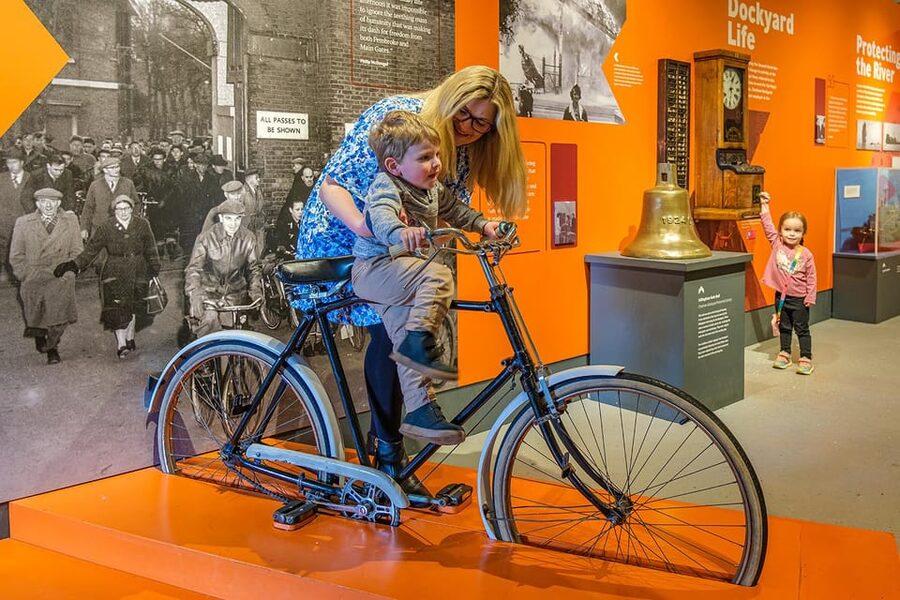
The dockyard buildings carry much of the atmosphere. Their careful restoration helps you understand the site as a former place of work, not simply a museum assembled around a few ships.
No. 1 Smithery adds another layer, with collections from Royal Museums Greenwich and Imperial War Museums. These displays broaden the visit beyond Chatham itself and place the dockyard within Britain’s wider maritime and military story.
The United Kingdom’s largest collection of historic RNLI lifeboats provides a different perspective. These boats were built for rescue rather than combat, and their presence shows how maritime work also involved saving people in danger.
The lifeboats are especially useful if your group has mixed interests. Someone who is less interested in naval warfare may find the rescue vessels and their practical purpose more compelling. The collection also gives the visit a human scale. You can think about the people who operated these boats and the risks they accepted.
Plan More Than Four Hours
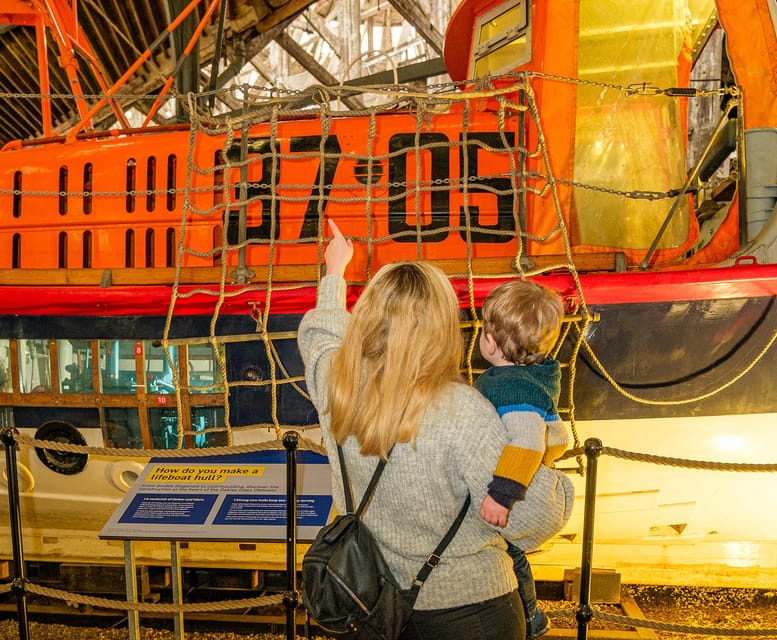
You can see a great deal in four hours, but you will probably leave with several sections still unexplored. The site includes ships, exhibitions, the ropery, the lifeboats, historic buildings, and school holiday activities.
I would treat the first visit as an orientation day rather than trying to inspect every label. Start with the three ships, allow proper time for the ropery, then choose the exhibitions that best match your interests. If you are visiting with children, include breaks and leave room for the interactive displays.
The annual ticket changes the calculation. At about $37 per person, the cost is easier to justify if you live within practical reach of Chatham or are spending several days in South East England. A single long visit can still offer good value, but the return option is the real advantage.
You can come back as many times as you like within 365 days from first activation. That makes it possible to return for a seasonal activity, a school holiday program, or a second look at the parts you had to rush.
What the Staff Add to the Visit
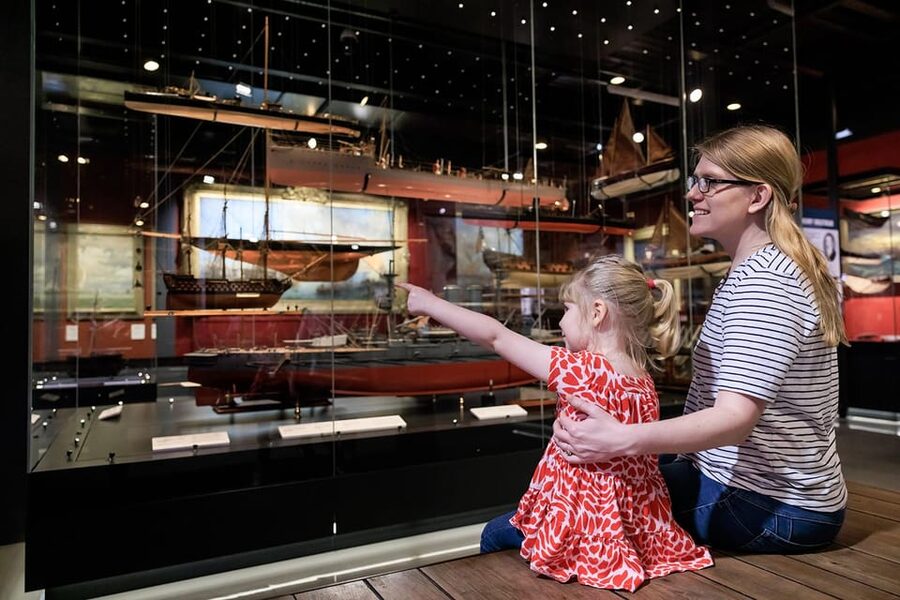
The dockyard works best when guides are available near the ships and exhibitions. Staff were praised for being cheerful, informative, and willing to share useful details. That matters at a site where a short explanation can turn an unfamiliar object into something understandable.
The former submariner’s experience is a good example. A guide was happy to hear personal stories about service aboard Ocelot’s class of submarine, rather than treating the visit as a one-way lecture.
Do not expect a single guide to lead you through every section from start to finish. This is primarily a self-directed visit with staff support around the site. English is the listed language, and the host or greeter service is also in English.
Food, Facilities, and Weather
The dockyard offers enough facilities to make a full day practical. A play area gives children somewhere to pause, and a café or refreshment stop can provide a useful break, particularly in cold weather.
Weather affects the visit because several major attractions are outside or reached by walking between buildings. A wet or cold day will not remove the indoor exhibitions, submarine, and museum sections, but it may make the open dockyard less comfortable.
Wear sensible shoes. The attraction combines historic buildings, ship decks, stairs, and walking routes. The site is wheelchair accessible, but individual ship interiors can still involve tight spaces or restricted movement, so you may want to ask staff about the specific areas you hope to enter.
Parking is not included in the ticket price. Include that extra cost when working out your day’s budget.
Who Will Get the Most From Chatham
I would recommend this experience most strongly to:
- Families who want hands-on history and school holiday activities
- Adults interested in naval engineering, military history, or traditional crafts
- Visitors who enjoy historic ships more than formal guided tours
- People based near Chatham who can use the 365-day return benefit
- Mixed-age groups looking for several kinds of attractions in one place
- Anyone who wants to see rope-making as a working process rather than a static display
You may want to reconsider if you dislike narrow interiors, cannot manage stairs, or prefer a short, tightly scheduled attraction. There is a lot to see, and the site rewards patience.
The visit also suits people who like authentic working details. The ropewalk, restored dockyard buildings, ship machinery, and lifeboats provide more substance than a quick photo stop.
Practical Value of the Annual Ticket
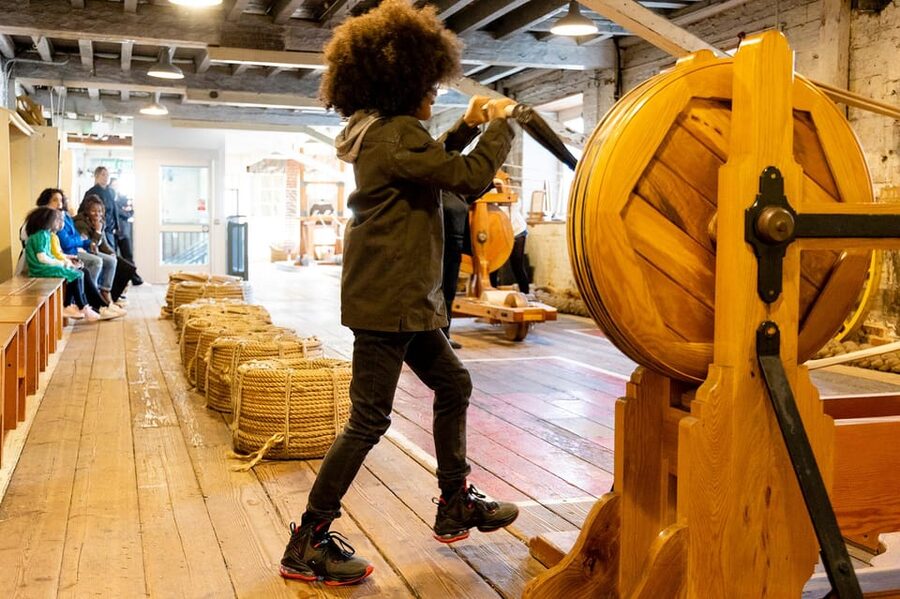
The $37 price is reasonable for the amount included. You receive access to the dockyard, permanent and temporary exhibitions, the three headline vessels, the lifeboat collection, the rope-making museum, and school holiday activities.
The strongest value comes from repeat access. If you are nearby, the annual format lets you split the experience into shorter visits. You can return to the ropery when it is operating, spend longer at No. 1 Smithery, or bring family members on a later day.
One small practical issue is voucher exchange. A ticket barcode was available, but one visitor experienced a slower manual process at admission. That is not a major problem, but it is worth allowing a little time at the entrance rather than assuming you will walk straight in.
You can cancel for a full refund up to 24 hours before the visit, and a reserve-now, pay-later option is available. Those terms help if your South East England plans are still changing.
Should You Book Chatham Historic Dockyard?
Book it if you want a full, flexible day built around real ships, working craft, and military history. The submarine, destroyer, Victorian sloop, ropewalk, lifeboats, and exhibitions give you enough variety to keep a family or mixed-interest group occupied.
I would especially choose it for a repeat visit if you live within reach of Chatham. Four hours is not enough for a careful look at everything, and the 365-day validity turns a demanding one-day museum visit into a year-long pass.
Skip it only if your schedule allows very little time, you dislike ship interiors, or you want a simple attraction with one central exhibit. Chatham is spread across a large historic site, and its best moments come from moving between different parts of the dockyard. For most visitors with a full day, the combination of access, atmosphere, and repeat entry makes the $37 ticket a solid buy.
FAQ
How long is the ticket valid?
The ticket is valid for 365 days from first activation.
What does the ticket include?
It includes entry to The Historic Dockyard Chatham, access to temporary and permanent exhibitions, and school holiday activities.
Can I board historic ships?
Yes. The experience includes access to a Cold War submarine, a Second World War destroyer, and a Victorian sloop.
Can I visit the dockyard more than once?
Yes. You can return as many times as you like during the 365-day validity period.
Is parking included?
No. Parking is not included in the ticket price.
Is the site wheelchair accessible?
Yes. The activity is listed as wheelchair accessible.
What language is available?
The listed language is English, and the host or greeter service is in English.
Can I cancel my booking?
Yes. You can cancel up to 24 hours in advance for a full refund.
Do I have to pay at the time of booking?
No. A reserve-now, pay-later option is available.
What are the main exhibitions and collections?
The site includes Command of the Oceans, No. 1 Smithery, the rope-making museum, and the United Kingdom’s largest collection of historic RNLI lifeboats.
Newest history tours we have reviewed in the UK
- Ilfracombe Seafront History Walking Guided Tour★ 5.0 · 18 reviews
- Walking Bogside History Tour in Guildhall★ 5.0 · 280 reviews
- Private tour of the stunning Cotswolds with an expert local guide★ 5.0 · 45 reviews
- Curious Cambridge – The History Tour that’s FUN!!!★ 5.0 · 80 reviews
- Birmingham Gangs Nighttime Historical Walking Tour with Pub Stops★ 5.0 · 53 reviews
- 2.5-Hours Walking Tour of Birmingham into Black Heritage Madiba★ 5.0 · 49 reviews
- Private Political History & Murals Tour Belfast★ 5.0 · 182 reviews
- Belfast Walking Tour: City Centre History, Troubles & Stories★ 5.0 · 39 reviews
Tickets, compared.


Edinburgh Castle Guided History Tour with Tickets
Read our review →
Taormina: Ancient Theater Skip-the-Line Ticket & Audio Guide
Read our review →
Historic Milan Tour with Skip-the-Line Last Supper Ticket
Read our review →
American Museum of Natural History Admission Ticket
Read our review →
Hop-on Hop-Off Historical Tram Ticket for Line 42
Read our review →
Rotterdam: Kinderdijk UNESCO World Heritage Entry Ticket
Read our review →
POLIN Museum of the History of Polish Jews Ticket
Read our review →Browse the lists this tour appears in