
Review · BRAZIL HISTORY TOURS
São Paulo: Downtown Historical Bike Tour
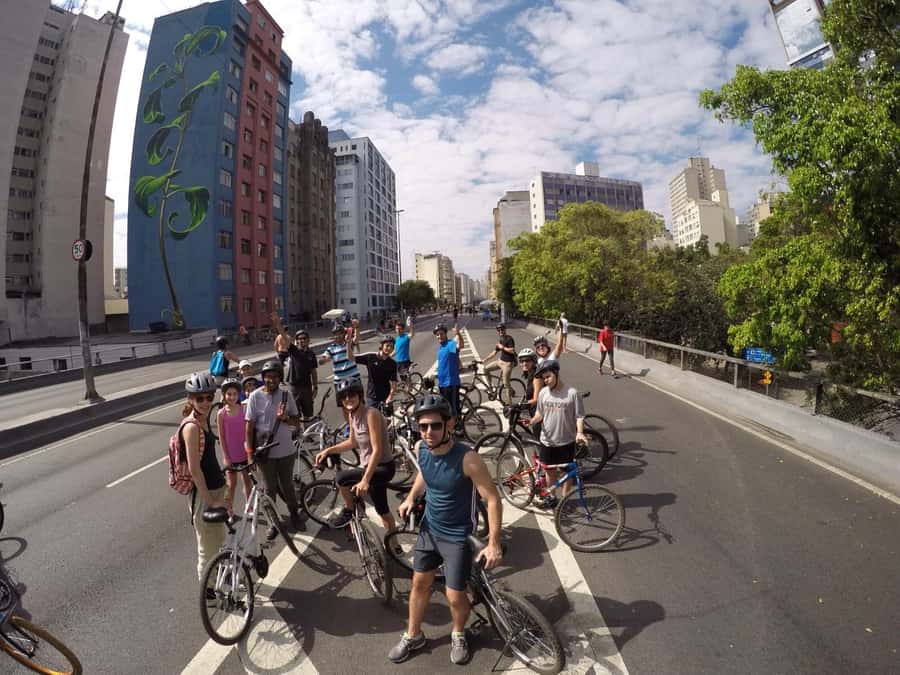
São Paulo reveals itself best from a bike seat. In three hours, you can move from Paulista Avenue’s museums and parks to the old center, the Japanese quarter of Liberdade, and the grand stations and churches that shaped the city. It is a fast, lively introduction to a huge city that can feel hard to grasp from a car window.
I like the small groups of no more than 10 and the way the route mixes famous sights with ordinary city life. I also like the café start and finish at Portinha183, where iced mate, pão de queijo, coffee, juice, ice cream, or açaí make the ride feel social rather than rushed.
The main consideration is traffic. Much of the route uses bike lanes, and guides take safety seriously, but you still need to watch cars, pedestrians, traffic lights, and occasional steep sections. You must already know how to ride a bike, and the full route covers about 9 to 12 miles.
Key points to know before booking
- A broad São Paulo overview: Cover Paulista Avenue, the historic center, Luz, Sé, and Liberdade in one compact ride.
- Strong local guiding: Guides including Juliana, Arthur, Pedro, Roberto, Jefferson, and Lucas bring history, music, architecture, and social issues into the ride.
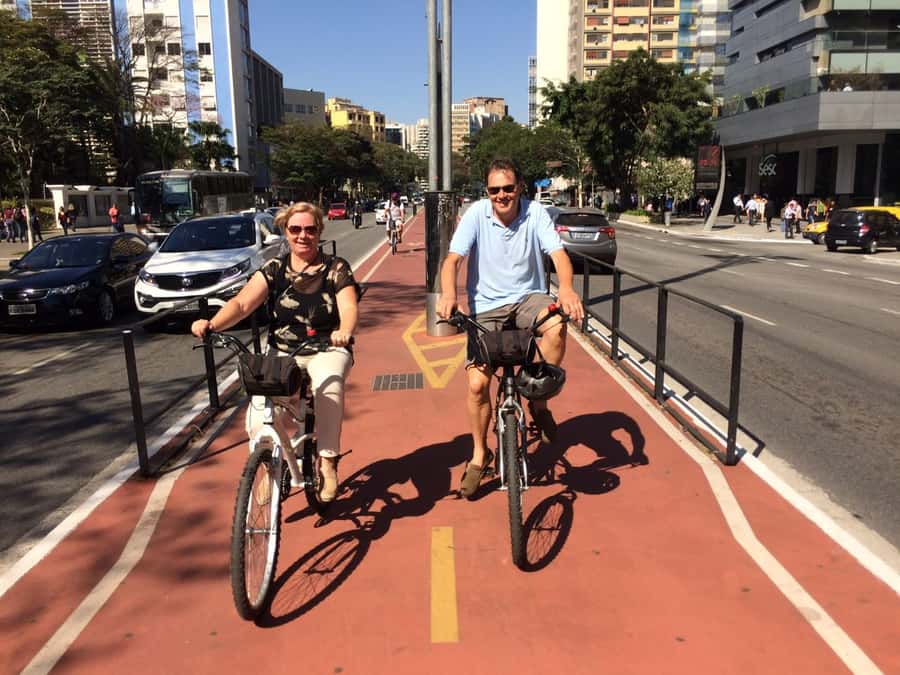
- Mostly bike-friendly routing: Much of the journey uses bike lanes, though city traffic still demands attention.
- A useful first-day activity: The tour gives you a quick sense of how São Paulo’s districts connect.
- Café comforts included: Start or finish with iced mate and pão de queijo at Portinha183.
- Best for capable cyclists: Children under 13 cannot join, and riding ability is essential.
Why a bike is a smart way to see São Paulo
São Paulo is a city of enormous scale. Its districts can feel unrelated when you move between them by taxi or subway, especially if you are trying to understand how the modern business center connects with the colonial core.
A bike gives you that missing sense of connection. You feel the change from Paulista Avenue’s tall towers to the shade of Trianon Park, then from central plazas to old railway buildings and the lantern-lined streets of Liberdade. You also get more street-level detail than you would from a bus.
The ride is not a race. Guides set a manageable pace and stop often for short explanations and photographs. Arthur, Juliana, Pedro, Roberto, Jefferson, Lucas, and others have each been praised for making the history easy to follow and for adjusting the pace to the group. Some guides also take photos and videos, so you can keep your attention on the road.
The experience works especially well at the beginning of a São Paulo stay. You see enough of the city to decide where you want to return later, as one rider did after becoming interested in the Copan Building and its surrounding area.
More History Bike, Segway and Tuk-Tuk Tours in the world:
- Historical Singapore Bike Tour on Full-Sized Bicycles
★ 5.0 · 1,421 reviews - Charlotte’s Ultimate Southern Charm Historical City Cart Tour
★ 5.0 · 1,347 reviews - Barcelona: 2.5-Hour Bike or E-Bike Historical Tour
★ 4.5 · 1,262 reviews
Starting at Portinha183 in Vila Mariana
The meeting point is Portinha183 Café on Rua França Pinto, in Vila Mariana, about five minutes from Ana Rosa Subway Station on the blue and green lines. Arrive 10 minutes before departure so the guide can organize the bikes and check that your equipment fits.
This is a pleasant meeting point, not just a curbside pickup. You can have Brazilian coffee or juice before riding, and the tour includes an iced mate and pão de queijo either before or after the ride. The café also provides a natural place to cool down afterward, with ice cream and açaí available for purchase.
The guide checks the bikes before setting off. A helmet, water bottle, and raincoat if needed are included. Bring sunscreen, comfortable clothes, and a phone or camera if you like taking pictures. Keep your valuables secure and stay alert when using your phone, just as you would in any large city.
Paulista Avenue, Casa das Rosas, and MASP
The first major stretch heads toward Paulista Avenue, São Paulo’s best-known urban corridor. It is lined with offices, cultural spaces, shops, and museums, giving you an immediate look at the city’s modern side.
Casa das Rosas is an elegant French-style mansion that now serves as a cultural center. It makes a welcome contrast with the towers around it, and the stop gives you a chance to slow down before continuing along the avenue.
The São Paulo Museum of Art, usually called MASP, is one of the tour’s strongest photo stops. Its bold structure appears to float above the ground, creating a broad open space beneath it. The ride does not include a museum visit, so think of this as an architectural stop rather than an art tour. If MASP interests you, note it as a place to return to on your own.
Guides use this part of the ride to explain São Paulo’s growth, architecture, and major economic changes. Pedro, in particular, has been praised for connecting buildings and parks with key periods in the city’s development. That wider context helps you see Paulista Avenue as more than a line of office towers.
Trianon Park and Augusta Park
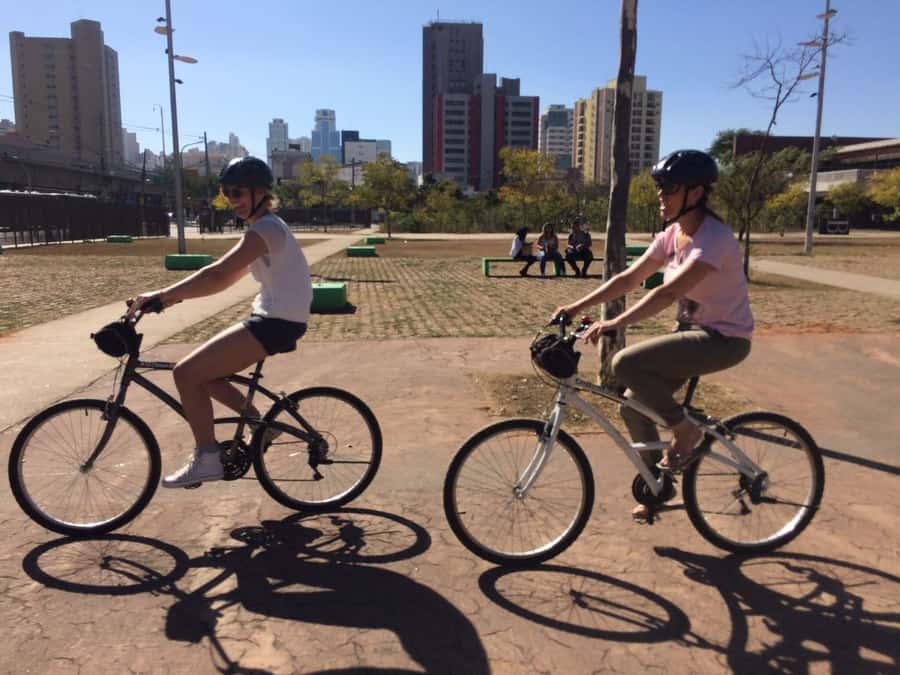
Trianon Park brings a patch of green into the busiest part of Paulista Avenue. You stop for about 20 minutes, giving your legs a rest and your camera a different subject. The park also shows how São Paulo balances intense development with small public spaces.
Augusta Park adds another urban contrast. It is a lively green area where nature and city life meet, with good opportunities for photographs and a short pause. These parks matter because the ride is not only about monuments. You also get a feel for how residents use the city during ordinary days.
The route is generally smooth and not built around difficult climbs, but one rider noted that some parts can feel steep depending on your cycling experience. If you rarely ride in cities, ask the guide about the pace before starting. The group is limited to 10, which makes it easier to stay together and get help if you need it.
More History Tours in the world:
- New York City: American Museum of Natural History Ticket
★ 4.5 · 15,447 reviews - History and Hauntings of Salem Guided Walking Tour
★ 5.0 · 14,564 reviews - Colosseum: Underground and Ancient Rome Tour
★ 4.7 · 12,691 reviews - Lisbon: History, Stories and Lifestyle Walking Tour
★ 4.8 · 10,902 reviews
Copan Building and the modern center
The Copan Building is one of São Paulo’s most memorable sights. Designed by Oscar Niemeyer, its broad curved form breaks from the straight lines of the surrounding blocks. The stop is a good lesson in Brazilian modernism, and it is also one of the places many riders find worth revisiting later.
The surrounding area gives you a useful look at central São Paulo beyond postcard views. Here, grand architecture, daily commerce, pedestrians, and signs of urban hardship exist close together. Jefferson has been praised for explaining difficult subjects such as Brazil’s colonial legacy, inequality, and the challenges facing marginalized communities. That frank approach can make the city easier to understand, even when what you see is not polished.
The tour does not pretend that every downtown street is picture-perfect. You may need to focus more closely on the road in busy sections, particularly when cars and pedestrians share space. That is part of the tradeoff for seeing the city at street level.
Municipal Theater and Vale do Anhangabaú
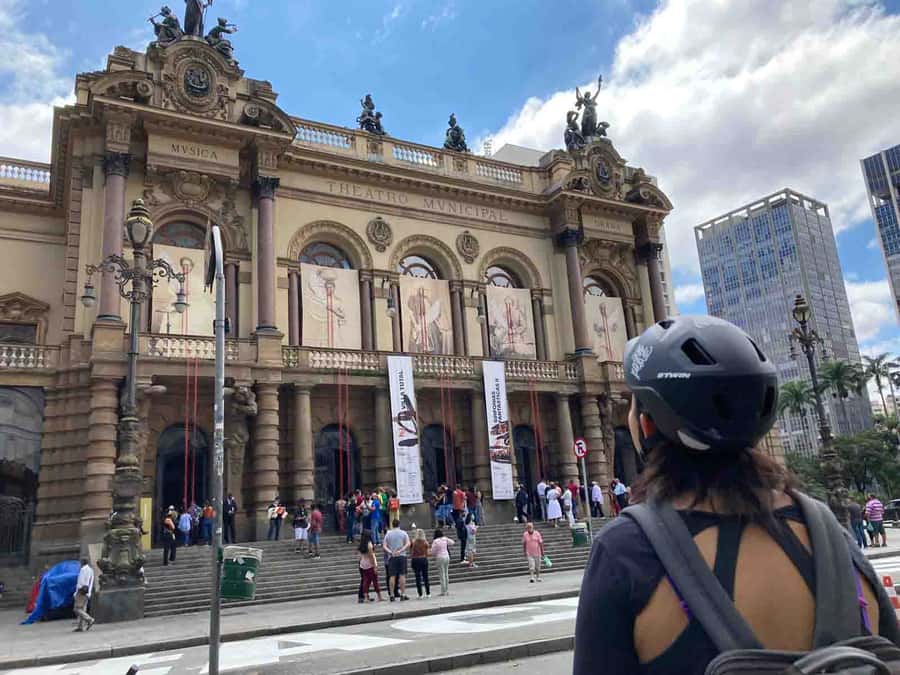
The Municipal Theater brings a more formal architectural note to the route. Inspired by European theaters, its grand façade and decorative details reflect São Paulo’s earlier wealth and its long connection to music, opera, and performance.
The nearby Praça Ramos de Azevedo offers a good viewing point. The stop is brief, so you will mainly admire the exterior and hear the story behind it rather than enter the theater.
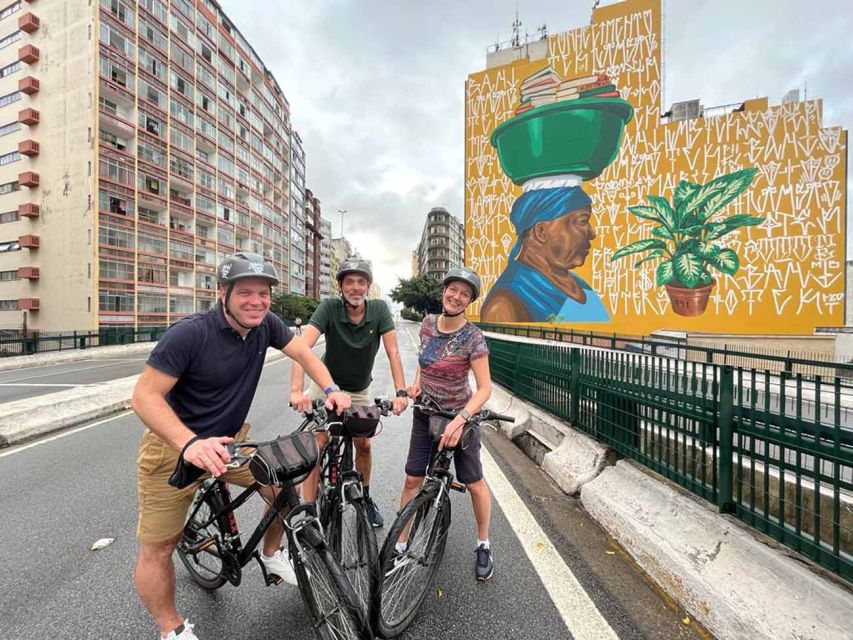
From there, the ride continues to Vale do Anhangabaú, a broad central space shaped by major political and cultural events. It is one of the places where São Paulo’s public life becomes most visible. The scale can feel surprising from a bike, and the open area gives you a pause after riding through denser streets.
One guide, Troccli, has been praised for adding a strong music focus to the city’s story. That sort of personal angle is useful here, since the center is not just a collection of buildings. It is also where public gatherings, cultural movements, and political moments have played out.
Luz Station, Pinacoteca, and Luz Park
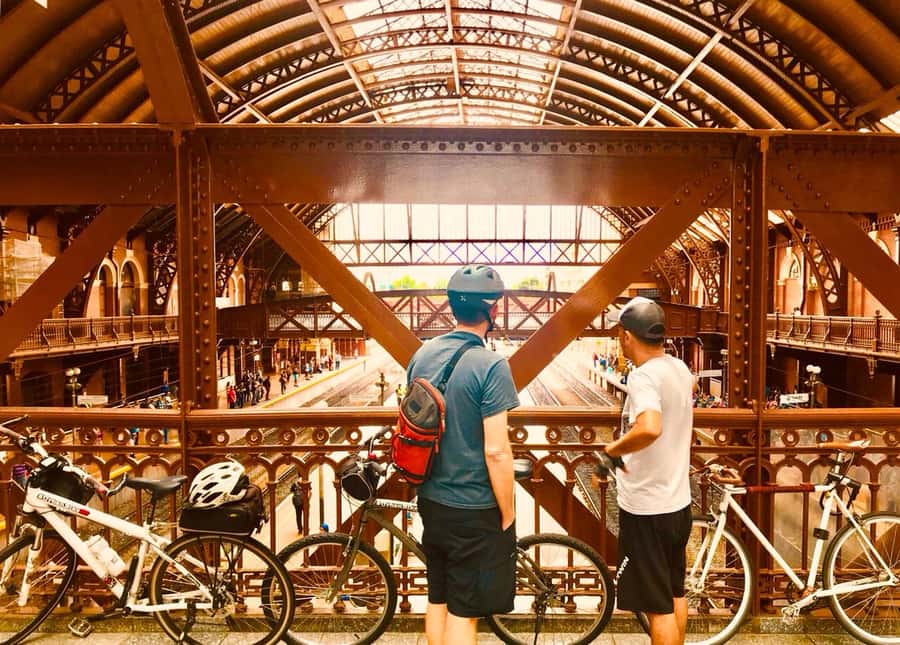
The route then heads north toward Luz Station, a grand 19th-century railway building. Its architecture recalls São Paulo’s era of railway expansion and coffee wealth. Even if you are not a railway enthusiast, the station helps explain how the city grew into a major economic center.
Nearby, the Pinacoteca is one of Brazil’s most important art museums. The stop is mainly for viewing the building and taking photographs, not for a full gallery visit. If you want time inside, plan a separate visit because the bike tour has many more stops ahead.
Luz Park provides a quieter stretch. You can walk briefly, catch your breath, and take in the contrast between formal architecture and open green space. This sequence works well because it slows the tour after the central plazas while still keeping the focus on the city’s past and culture.
The group then crosses the Santa Ifigênia Viaduct, one of the better places for views over the historic center. It is a useful point for photographs and for seeing how the old core fits into the wider city.
Pátio do Colégio and Sé Cathedral
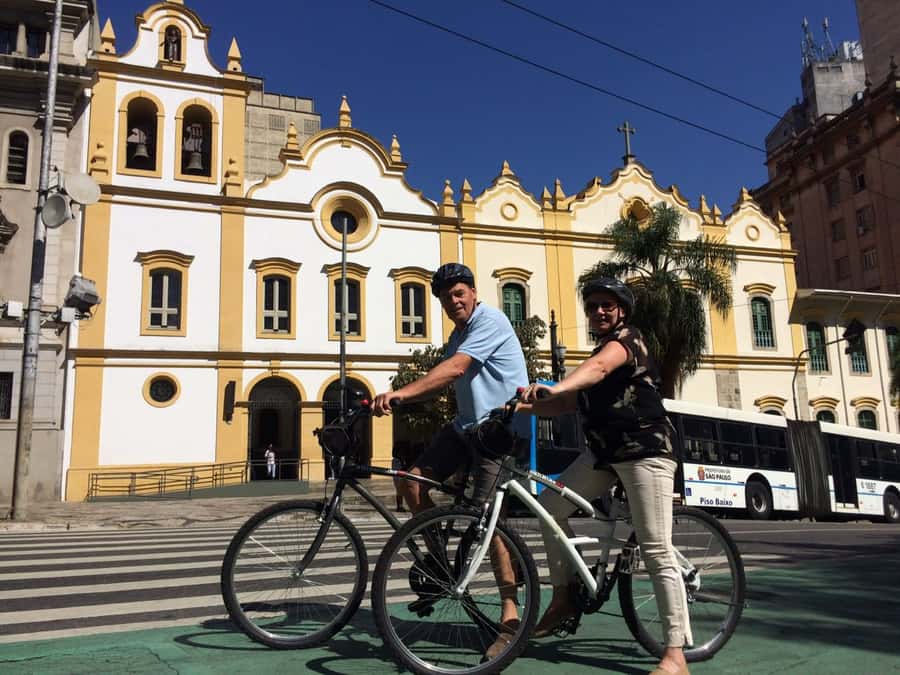
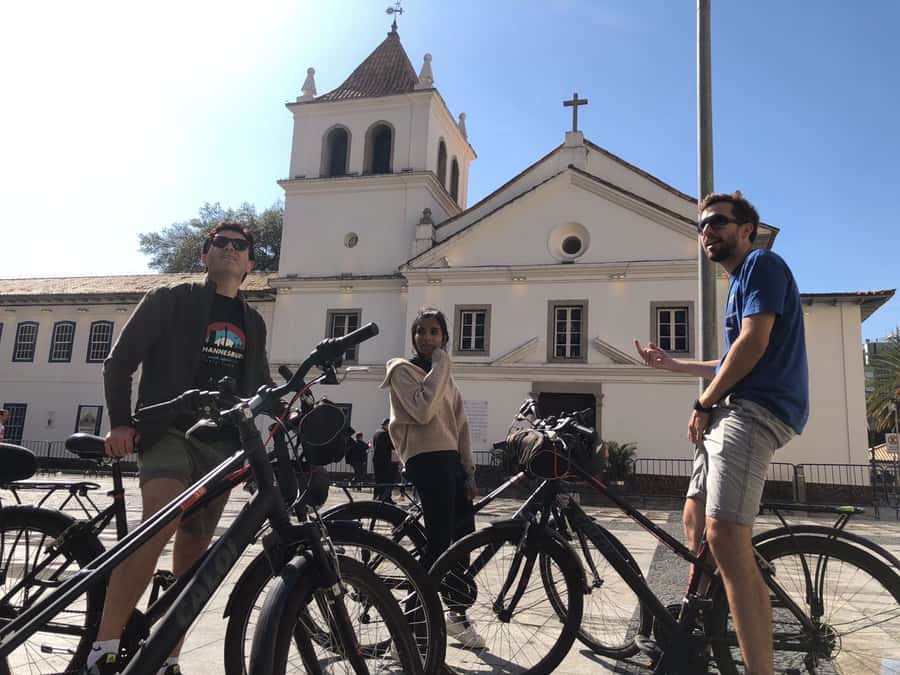
Pátio do Colégio is the symbolic birthplace of São Paulo, founded in 1554. The site marks a sharp change in the story you have been following. After modernist buildings, railway stations, parks, and theaters, you arrive at the place tied to the city’s earliest foundation.
The stop is short, but the location carries real weight. It gives the tour a clear starting point in time, helping you connect the colonial city with the much larger metropolis around it.
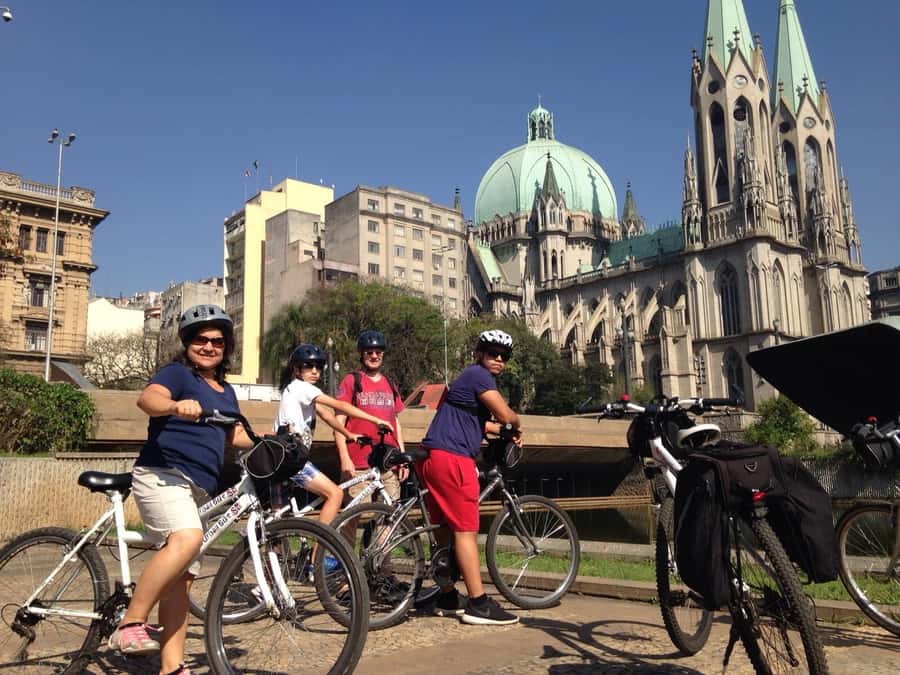
A few steps away, Sé Cathedral brings another major architectural highlight. Its neo-Gothic design includes tall columns and stained glass. The scale of the interior and exterior makes this one of the more impressive stops, although the schedule allows only about 10 minutes.
Because the tour moves quickly, you should think of these sites as introductions. You will learn where they are and why they matter, then decide which ones deserve a longer return visit.
Liberdade and São Paulo’s Japanese-Brazilian character
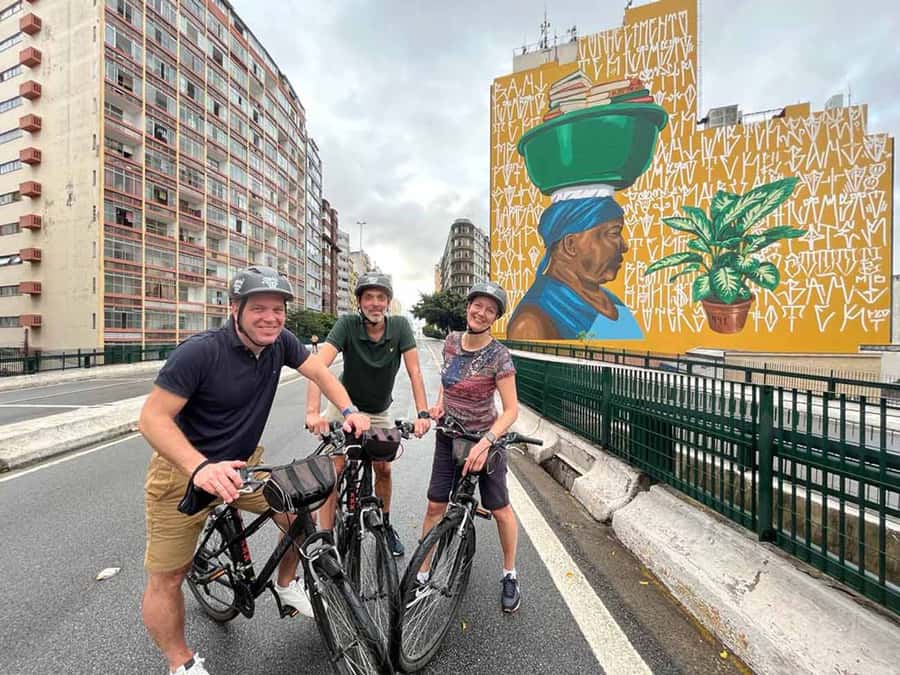
Liberdade is one of the most distinctive parts of the ride. It is home to the largest Japanese community outside Japan, and its streets are marked by lanterns and torii gates. The neighborhood’s identity comes from the meeting of Asian traditions and Brazilian city life.
The planned stop lasts about 30 minutes, making it one of the longer pauses on the route. That gives you time to take photographs, look around, and absorb the atmosphere rather than simply pass through.
The neighborhood is also a reminder that São Paulo cannot be explained through colonial and European influences alone. Immigration has shaped its food, streets, businesses, and communities. Seeing Liberdade after Pátio do Colégio and Sé Cathedral makes that point particularly well.
Older versions of this route have also included areas such as Bom Retiro, Largo do Arouche, and Praça Roosevelt, depending on the guide and day. Since the exact sequence can vary, ask at the start which central districts your group will cover.
How safe and demanding is the ride?
The route covers about 9 to 12 miles in three hours. That includes stops, explanations, and photographs, so you are not pedaling continuously. Still, you need to be comfortable riding in an urban setting.
Much of the route uses bike lanes, and several guides have been praised for careful traffic management. Groups may have a guide at the front and another person at the back, helping keep everyone together. Some guides also use their phones to take photos so riders do not need to stop and handle their own devices in traffic.
The road is not completely stress-free. Cars, pedestrians, traffic lights, and crowded paths require attention. One rider found that busy sections sometimes demanded more focus on the road than on the sights. That is fair warning, not a reason to avoid the tour if you already ride confidently.
Sunday can be a smart choice. One rider found that city traffic restrictions left more room for cycling on that day. Morning departures may also feel more comfortable in warm weather, though starting times depend on availability.
Is $85 good value?
At $85 per person, this is not the cheapest way to rent a bike for a few hours. You are paying for more than the bicycle, though. The price includes a guide, helmet, water bottle, rain protection if needed, a souvenir, iced mate, pão de queijo, and a carefully planned route across several distant parts of São Paulo.
The value is strongest if you have only a day or two in the city. A taxi-based visit can cover some of the same ground, but it will not give you the same connection between districts or the same chance to stop easily at parks, viaducts, and street corners.
It is also good value for solo visitors who want company and orientation without joining a large bus group. Small groups make it easier to ask questions, and guides can adjust the pace. For a private ride, availability may vary, but some departures have effectively become private experiences when only one person booked.
Who should book this São Paulo bike tour?
I would choose this tour if you can ride comfortably, want a broad first look at the city, and enjoy learning through buildings, streets, and local stories. It suits solo visitors, couples, small groups, and business visitors with limited free time.
You should think twice if you dislike traffic, do not ride regularly, or want long interior visits at MASP, Pinacoteca, or Sé Cathedral. The tour gives you the outside view and the context, then moves on.
Children under 13 cannot join. Bring sunscreen, comfortable clothing, curiosity, and enough energy for a half-day ride. The tour is offered in English, Spanish, and Portuguese, and cancellation is free up to 24 hours before departure. You can also reserve now and pay later.
Should you book it?
Yes, if your goal is to understand São Paulo quickly rather than inspect one museum in depth. The combination of Paulista Avenue, Copan, Luz, Sé, and Liberdade gives you a useful cross-section of the city, while guides such as Juliana, Arthur, Pedro, Roberto, and Jefferson add personal stories and practical direction.
Book it for the first part of your stay, preferably on a cooler morning or Sunday if that fits your plans. Skip it only if urban cycling makes you uneasy. For a capable cyclist, this is one of the most efficient ways to get your bearings in a city that is otherwise hard to read.
FAQ
Where does the São Paulo bike tour start?
It starts at Portinha183 Café, Rua França Pinto, 183, in Vila Mariana. The café is about five minutes from Ana Rosa Subway Station, served by the blue and green lines.
How long is the tour?
The tour lasts three hours.
How far do you ride?
You should expect to ride between 9 and 12 miles, including the route through Paulista Avenue, the historic center, Luz, and Liberdade.
Do I need to know how to ride a bike?
Yes. Basic bike-riding ability is essential because the route includes city streets, bike lanes, pedestrians, traffic lights, and some sections that may feel steep.
What equipment is included?
Bike rental, a helmet, a water bottle, and a raincoat if needed are included.
Which languages are available?
The tour is offered in English, Spanish, and Portuguese.
Can children join the tour?
Children under 13 years old are not permitted to join.
What happens if I need to cancel?
You can cancel up to 24 hours before the activity for a full refund. You can also reserve your place and pay later.
Newest history tours we have reviewed in the world
- Bilbao Historical Tour in small group★ 4.7 · 52 reviews
- Bologna: Street Food Tour in the Historic Center★ 4.8 · 125 reviews
- CEBU: Cebu City Heritage and Uphill Guided Tour★ 4.2 · 31 reviews
- Bishkek : City Tour (History, Architects, Statues & Culture)★ 4.9 · 54 reviews
- Blenheim: Omaka Aviation Heritage Centre Admission Ticket★ 4.9 · 31 reviews
- Berlin: Nazi History Walking Tour★ 4.8 · 33 reviews
- Best of Baku: 4-Hour City Tour Historic and Modern Landmarks★ 4.7 · 63 reviews
- Belfast: Best of Belfast History, Culture & Art Walking Tour★ 4.9 · 158 reviews
History Bike, Segway & Tuk-Tuk Tours, compared.
Historical Singapore Bike Tour on Full-Sized Bicycles
Read our review →
Charlotte’s Ultimate Southern Charm Historical City Cart Tour
Read our review →
Asheville Historic Downtown Guided Electric Bike Tour with Scenic Views
Read our review →
Private Guided Historic Electric Cart Tour of St. Augustine
Read our review →
60-Minute Guided Segway History Tour of Savannah
Read our review →
Historic Athens: Small Group Electric Bike Tour
Read our review →
90 Minute Historic Uptown Neighborhood Segway Tour of Charlotte
Read our review →Browse the lists this tour appears in