Review · ROME HISTORY TOURS
Rome: Ancient Baths of Caracalla Ticket & Audio Guide
The Baths of Caracalla show you ancient Rome at its most grand and practical. This was not only a place for bathing, but a public leisure center with swimming pools, gymnasium rooms, massage areas, mosaics, and a clever underfloor heating system called a hypocaust.
I like the freedom to explore at your own speed, and the audio guide gives the bare ruins useful context. I also like the chance to see details such as marble mosaics and learn how stone from the baths was later reused in St. Peter’s Basilica. The drawback is that the audio guide runs on your own phone, and several people have had trouble finding the route or getting the app working.
Key points to know before you go
- Ancient Roman heating: Learn how hot air moved beneath the floors through the hypocaust system.
- Seventeen points of interest: The audio guide covers the swimming pool, gymnasium, massage rooms, mosaics, and other parts of the complex.
- A self-guided visit: There is no live guide, so you set the pace and decide how long to spend at each ruin.
- Bring your own equipment: You need a charged smartphone and headphones. A headset and mobile device are not supplied.
- Dress rules apply: Flip-flops, sandals, shorts, and sleeveless shirts are not allowed.
- Allow about two hours: The site is large enough to reward a slow walk, but the visit fits neatly into a morning or afternoon.
Why the Baths of Caracalla matter
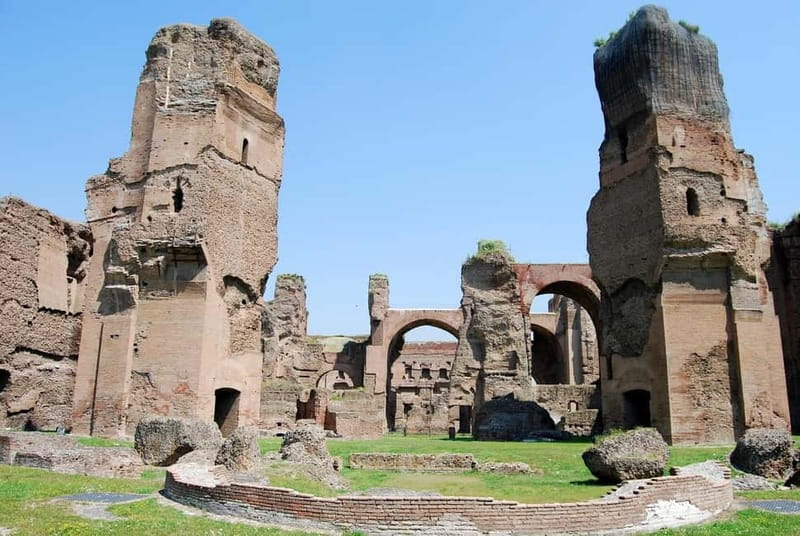
The Baths of Caracalla were built during the reigns of Septimius Severus and his son Caracalla. The complex opened to the public almost 2,000 years ago and became part of ordinary Roman life.
That point matters. You are not looking at a palace reserved for an emperor and his court. These baths served as a public leisure center, where Romans could exercise, bathe, meet friends, relax, and receive massages.
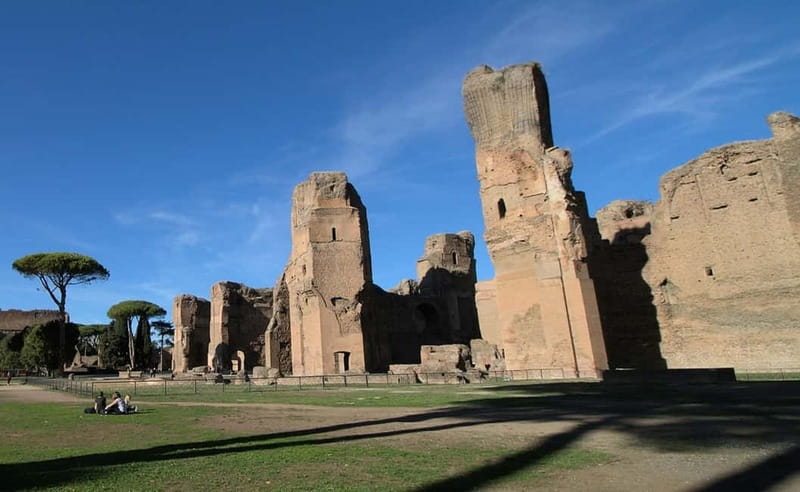
The surviving walls are enormous, even in their ruined state. Their scale helps you picture the original building more clearly than a small museum model ever could. You can walk through the broad spaces and see how the design separated different activities within one huge complex.
Rome has grander famous monuments, but the Baths of Caracalla give you a useful look at how the city worked. They connect engineering, recreation, architecture, and daily life in one place.
More Ancient History Tours in Italy
- Colosseum: Underground and Ancient Rome Tour
★ 4.7 · 12,691 reviews - Colosseum & Ancient Rome with Arena Floor Option I Max 6 People
★ 5.0 · 3,306 reviews - Rome: Colosseum, Ancient Rome Tour or AudioGuided Tour
★ 4.4 · 2,879 reviews
Entering at Viale delle Terme di Caracalla
You go directly to the main entrance at Viale delle Terme di Caracalla, 00153 Rome. There is no hotel pickup or included transport, so you need to make your own way to the site.
Have the downloaded ticket ready to show. The electronic ticket is sent through WhatsApp within 24 hours of your travel date, so do not wait until the last minute to check your phone. The instructions also tell you to scan the QR code on your voucher and download the audio guide before arrival.
This is a simple arrangement, but it rewards a little preparation. Check that the ticket is saved, the audio app is installed, and your headphones are paired before you reach the entrance. A few minutes spent at your accommodation can prevent a frustrating start at the gate.
The experience is wheelchair accessible. Still, the site consists of large archaeological ruins, so you should make sure your own mobility needs match the conditions you expect at an ancient monument.
Following the 17 audio stops
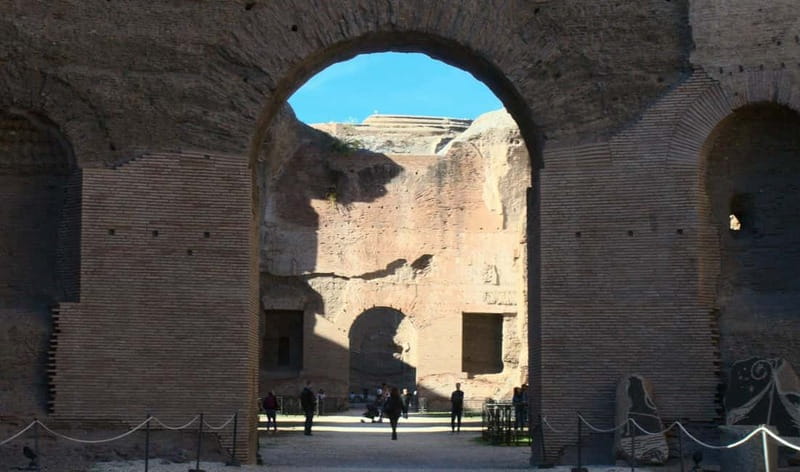
The audio guide gives you a planned route through 17 points of interest. It is not a live tour, so you will not have someone pointing out the next feature or answering questions. Instead, you listen from your phone and pause or replay the commentary when needed.
That flexibility is useful. If one room catches your eye, you can stay longer without holding up a group. If your children lose interest in a technical explanation, you can move on. You can also spread the visit across your own pace within the suggested two-hour duration.
The weak point is navigation. The site is broad, and the route may not always be obvious. The audio content has also been described as difficult to follow in places, with some sections possibly not matching the current condition of the ruins. Restoration work can close parts of the complex, especially in winter.
I would treat the 17 stops as a helpful framework rather than a perfectly marked tour. Keep an eye on the audio guide, look for the next point of interest, and do not worry if you need to pause and reorient yourself.
The swimming pool and public bathing rooms
The swimming pool is one of the central points on the route. It helps you understand the size of the complex and the social role of the baths.
Roman bathing was not simply a quick wash. The baths provided space for exercise, rest, conversation, and personal care. The gymnasium and massage rooms make that clear. These facilities formed part of a wider leisure routine, with people moving between physical activity, warm rooms, bathing pools, and relaxation.
The ruins do not present the building as a finished attraction. Much of the original decoration and structure is gone, and some rooms may feel like open foundations or tall brick walls. You need to use your imagination. The audio commentary is important because it turns those fragments into a picture of how the rooms once worked.
If you enjoy archaeology, architecture, or Roman history, you will likely spend more than a few minutes at these points. If you prefer fully restored interiors, the site may feel stark.
More Ancient History Tours in Rome
- Colosseum Underground & Ancient Rome Guided Tour
★ 4.5 · 2,590 reviews - Pantheon Elite Guided Tour – Rome’s Iconic Ancient Temple
★ 5.0 · 1,447 reviews - Ancient Rome: Colosseum Underground Group Tour
★ 4.5 · 1,059 reviews - Colosseum Express Guided Tour and Ancient Rome Admission Included
★ 4.0 · 1,008 reviews
Seeing the hypocaust heating system
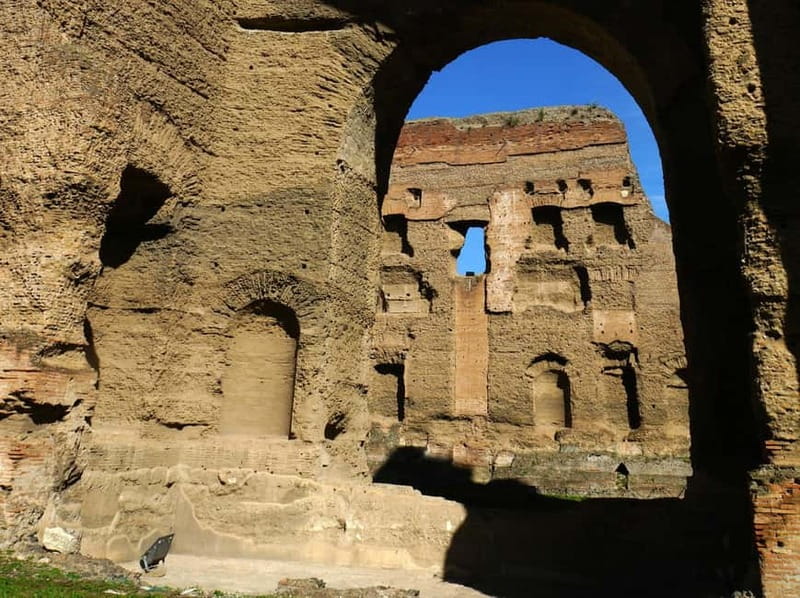
The heating system is one of the most interesting parts of the visit. The Romans heated parts of the baths with a hypocaust, a system that sent hot air beneath raised floors.
This was a major engineering task. The bath complex needed a steady supply of heat, and the design allowed warm air to circulate below the surfaces of the rooms. The audio guide explains how this technology helped the baths function.
For me, this is where the visit becomes more than a walk through old walls. You begin to see the baths as a working machine. The mosaics and grand rooms show the public face of the complex, while the heating system reveals the labor and planning behind it.
The guide also helps you connect the technology to the building’s purpose. These were not decorative rooms with water added as an afterthought. Heating, water, movement, and maintenance all had to work together.
Marble mosaics and surviving artwork
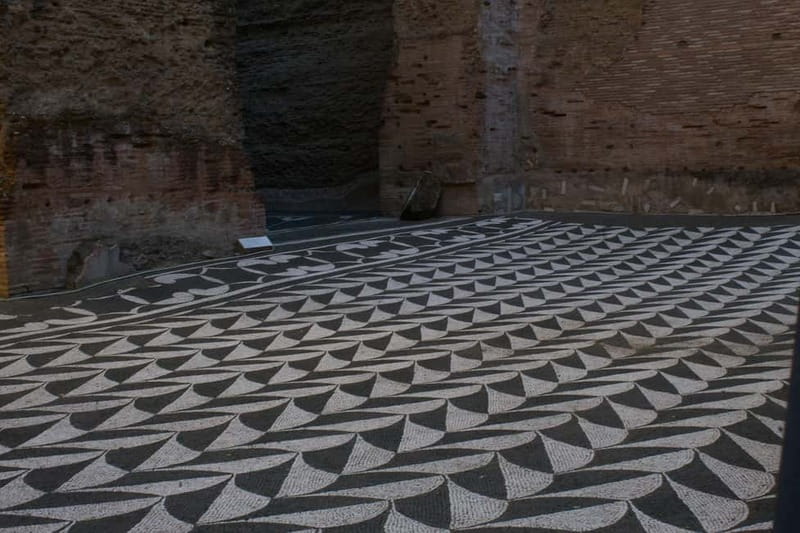
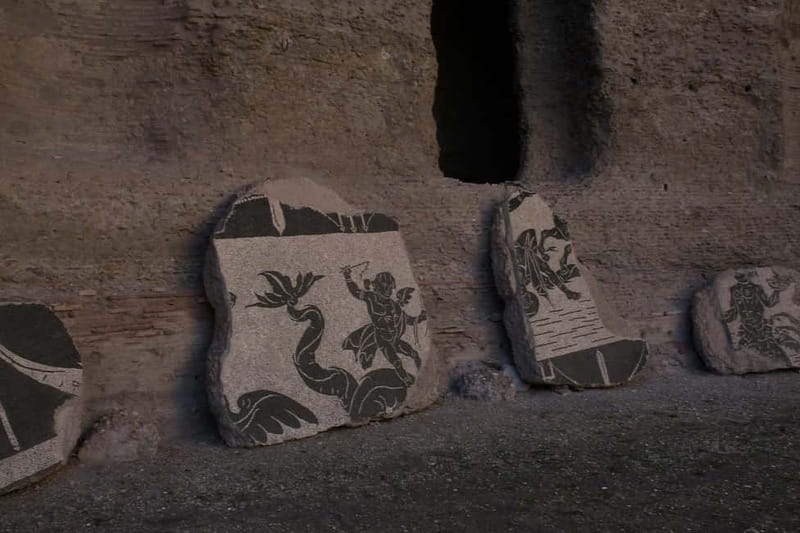
Bring your camera for the preserved mosaics and artwork. The marble details are among the most rewarding visual features at the site, especially when the surrounding walls are mostly exposed brick and stone.
The contrast is striking. The size of the ruins can dominate your view, but a small section of patterned marble may reveal the care given to the original interiors. Look down as you move through the complex, since some of the best details are at floor level.
The baths once contained a great deal of decoration. What survives gives you only part of the picture, but it is enough to show that this was a place designed to impress as well as serve a practical purpose.
You will get more from these details if you slow down. The audio guide provides context, but your own eyes are needed to spot the patterns, colors, and changes in material.
How Rome reused the baths
One useful part of the commentary explains how stones from the baths were later used in the construction of St. Peter’s Basilica.
This gives the site a longer story. The baths were not simply built, used, and abandoned. Their materials continued to have value long after the original complex fell out of use. In Rome, old buildings often became sources of stone, marble, and architectural parts for later projects.
That reuse also explains why the ruins do not look complete. The missing pieces are not all the result of natural decay. Some were removed and placed elsewhere, while other areas suffered from centuries of neglect and restoration work.
It is worth keeping this in mind as you walk. The site reflects several periods of Roman history, not one frozen moment.
Is the $20 price good value?
At about $20 per person, the package is convenient but not the cheapest way to enter the Baths of Caracalla. A separate entrance ticket may cost less at the site, and the added price here mainly pays for the audio guide and the convenience of arranging the ticket ahead of time.
That makes the value depend on how you like to visit. If you want an explanation of the ruins and prefer to have your ticket ready before arrival, the package can make sense. The audio commentary adds useful information about the hypocaust, public bathing, mosaics, and later reuse of the stone.
If you are comfortable buying entry in person and sharing one audio guide between two people, you may find a cheaper option. One person can listen while both of you look at the same feature. You still need your own phone and headphones, so the package does not provide a complete guided-tour setup.
The price is easier to justify if you plan to spend the full two hours on site. It is harder to justify if you only want a quick look at the ruins or if the audio app does not work properly.
Making the phone audio guide work
The audio guide is available in English, Spanish, French, German, and Italian. You need to download it using the QR code on the voucher before you arrive.
This is the most important practical detail. The package does not include a headset or mobile device. Bring your own headphones, and charge your phone fully. You will be using the phone for both the ticket and the commentary.
I would also download the guide before leaving for the baths rather than relying on the entrance area for a strong connection. Check that the language is correct and play one short section to confirm the sound works.
Some French-language users have had difficulty getting the guide to function or finding the promised explanations. Since technical problems can affect the entire experience, a backup plan helps. Read the basic information before arrival and keep your ticket accessible even if the audio app misbehaves.
There is no named live guide included. The commentary is prerecorded and designed for independent use.
Timing, clothing, and comfort
The suggested duration is two hours. That is enough time to follow the main audio points, admire the mosaics, and pause at the major rooms without rushing.
Wear comfortable shoes. The site requires walking around ancient ruins, and flip-flops or sandals are not allowed. Shorts and sleeveless shirts are also prohibited, so dress more conservatively than you might for a hot Roman afternoon.
This dress code can catch people off guard in summer. Check your clothing before leaving your hotel, especially if you plan to combine the baths with other sightseeing. A lightweight shirt with sleeves and longer trousers or a skirt is the safer choice.
Winter brings another consideration. Restoration and renovation can close some areas, so the exact route may change. The ruins remain worthwhile, but you may not see every section shown in promotional material.
Who will enjoy this experience most?
I would recommend this visit to you if you like ancient engineering, Roman daily life, and large archaeological sites that require some imagination. The audio guide gives enough background to make the empty rooms meaningful, and the self-guided format suits independent schedules.
It is also a good choice if you dislike fixed group tours. You can pause, replay, take photographs, and move at your own speed. Families may appreciate that flexibility, though younger children may not stay interested for the full two hours.
The experience is less suitable if you want a polished, fully restored monument or a guide who leads you from room to room. You need to manage the phone, headphones, route, and timing yourself.
I would be cautious about booking it if you cannot use a smartphone comfortably. The audio guide is central to the experience, and the site can be hard to follow without clear directions.
My take on the Baths of Caracalla visit
The Baths of Caracalla reward curiosity more than spectacle. Their tall walls and huge rooms are impressive, but the best moments come when you connect those ruins to the practical systems behind them.
I especially like the combination of the public bathing story and the engineering details. The hypocaust shows how the Romans heated the rooms, while the gymnasium, massage areas, and swimming pool show why people came here in the first place.
The audio guide is useful but not foolproof. Prepare your phone, bring headphones, and expect to do some route-finding. If parts of the site are closed for restoration, accept that the experience may not match a perfect picture of the original complex.
Should you book it?
Book this experience if you want a flexible two-hour visit with commentary in your own language and you are willing to manage the audio guide yourself. The ticket and explanation offer reasonable convenience at $20, especially for a first visit to the baths.
Skip it if your main goal is the lowest possible entrance price, or if you prefer a live guide who handles directions and equipment. For the best chance of a smooth visit, download the audio before arrival, bring headphones, wear proper clothing, and give yourself time to look beyond the largest walls for the mosaics and engineering details.
FAQ
Where are the Baths of Caracalla?
The entrance is at Viale delle Terme di Caracalla, 00153 Rome, Italy. You go directly to the main entrance.
How long does the visit take?
The stated duration is two hours. You explore at your own pace and follow 17 audio points of interest.
Is a live guide included?
No. This is a self-guided experience with prerecorded audio commentary. A live guided tour is not included.
What languages are available for the audio guide?
The audio guide is available in English, Spanish, French, German, and Italian.
What should I bring?
Bring comfortable shoes, a charged smartphone, and your own headphones. The ticket and audio guide are used through your phone, and a headset or mobile device is not supplied.
Is the Baths of Caracalla visit wheelchair accessible?
Yes, the experience is listed as wheelchair accessible.
More Self-Guided History Audio Tours in Rome
- Taormina: Ancient Theater Skip-the-Line Ticket & Audio Guide
★ 4.5 · 2,412 reviews - Athens: Ancient Agora E-Ticket and Audio Tour
★ 3.9 · 413 reviews - Katakolo Port: Transfer to Ancient Olympia and VR Audio Tour
★ 4.1 · 403 reviews - Matera: Sassi di Matera Historical Self-Guided Audio Tour
★ 3.6 · 183 reviews
More Ancient Rome and Colosseum Tours in Rome
- Rome: Colosseum with Arena, Roman Forum and Palatine Guided Tour
★ 4.0 · 5,598 reviews - Colosseum with Arena, Roman Forum and Palatine Hill Guided Tour
★ 4.5 · 3,526 reviews - Rome: Colosseum Arena, Roman Forum & Palatine Hill Tour
★ 4.5 · 1,874 reviews - Colosseum, Roman Forum & Palatine Hill Guided Tour
★ 4.5 · 1,568 reviews
Newest history tours we have reviewed in Rome
- Rome: Colosseum and Ancient Rome Guided Walking Tour★ 4.5 · 95 reviews
- Secrets of Rome: Historical True Crime Small Group Tour★ 4.9 · 85 reviews
- Rome: Private Colosseum Experience and Ancient Ruins Tour★ 4.6 · 25 reviews
- Rome Secrets: Dark History & Tasty Bites Tour★ 5.0 · 37 reviews
- Rome: Guided Tour of Colosseum and Ancient Rome★ 4.9 · 74 reviews
- Rome: Rome at Night Evening Historical Walking Tour★ 4.9 · 24 reviews
- Rome: Introduction to the Colosseum and Ancient City Tour★ 4.8 · 75 reviews
- Rome: Guided Group Colosseum & Ancient City Tour★ 4.8 · 62 reviews
Ancient Rome & Colosseum Tours, compared.
Colosseum: Underground and Ancient Rome Tour
Read our review →
Colosseum with Arena, Roman Forum and Palatine Guided Tour
Read our review →
Colosseum with Arena, Roman Forum and Palatine Hill Guided Tour
Read our review →
Colosseum & Ancient Rome with Arena Floor Option I Max 6 People
Read our review →
Colosseum, Ancient Rome Tour or AudioGuided Tour
Read our review →
Colosseum Underground & Ancient Rome Guided Tour
Read our review →
Colosseum Arena, Roman Forum & Palatine Hill Tour
Read our review →