
Review · AMSTERDAM HISTORY TOURS
Amsterdam: Highlights & History Walking Tour
Amsterdam’s old center is best understood on foot, where a crooked house, a hidden church, or a narrow lane can tell you more than a grand monument. This two-hour walk links the Old Church, Chinatown, Dam Square, Begijnhof, the canals, the Flower Market, and the area around the Anne Frank House.
I like the small groups of up to eight, which give you room to ask questions and keep the walk personal. I also like the mix of famous sights and odd little details, from Amsterdam’s narrowest street to stories about hidden churches, trade, prostitution, and the city’s famously tilted houses. The main drawback is that two hours moves quickly, and the tour ends at Dam Square rather than where it starts.
Key points to know
- A brisk Old Town introduction: See the Old Church, Chinatown, crooked houses, and the narrowest street in Amsterdam.
- Stories beyond the postcard view: Guides explain Amsterdam’s growth from a fishing village into a major trading city.
- Small groups matter: The tour is limited to eight people, with private groups also available.
- A useful first-day walk: The route helps you get oriented before choosing museums, canal cruises, and other visits.
- Guides bring different strengths: Aaron, James, Robin, Aarre, Andrea, and others are praised for humor, local insight, and clear storytelling.
- Practical finish: The walk ends at Dam Square, close to many central sights and transport links.
A smart first look at Amsterdam’s old center
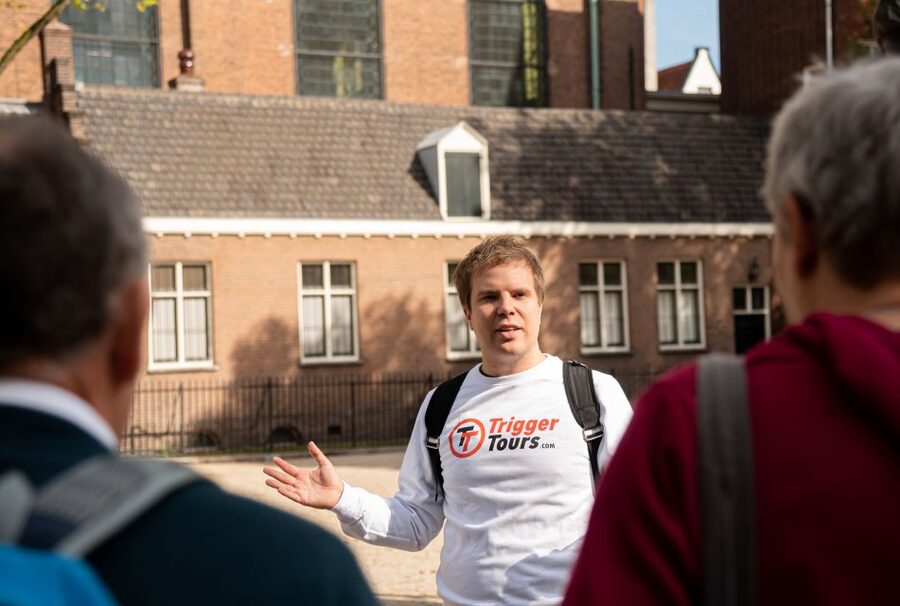
I see this tour as an orientation walk with a strong dose of local storytelling. You are not simply ticking off monuments. You are learning why Amsterdam was built around canals, why many buildings lean, how trade shaped the city, and how modern Amsterdam grew around older institutions and customs.
The route begins at the main entrance of the Park Plaza Victoria Hotel. That location is opposite Amsterdam Centraal station, making it handy if you have just arrived in the city. One practical warning: the meeting instructions have caused some confusion about which hotel entrance to use, so check the exact directions before you set off.
From there, your guide leads you into the old center. The route includes the Old Church, Chinatown, narrow streets, canals, Dam Square, the Royal Palace, Begijnhof, and the Flower Market. You also learn about the Anne Frank House area, though this is a walking tour rather than an entrance visit to the house.
The price is $32 per person, with the €1.50 city tax included. For two hours with a local guide, that is a fair price, especially if your group stays small. You are paying for context and orientation rather than admissions, food, drinks, or a long list of interior visits.
More History Walking Tours in Amsterdam
- Amsterdam: Haunted History and Ghost Walking Tour
★ 4.5 · 488 reviews - Amsterdam History Walking Tour
★ 5.0 · 281 reviews - Anne Frank and Amsterdam Jewish History Walking Tour
★ 5.0 · 259 reviews
Starting with the Old Church and Chinatown
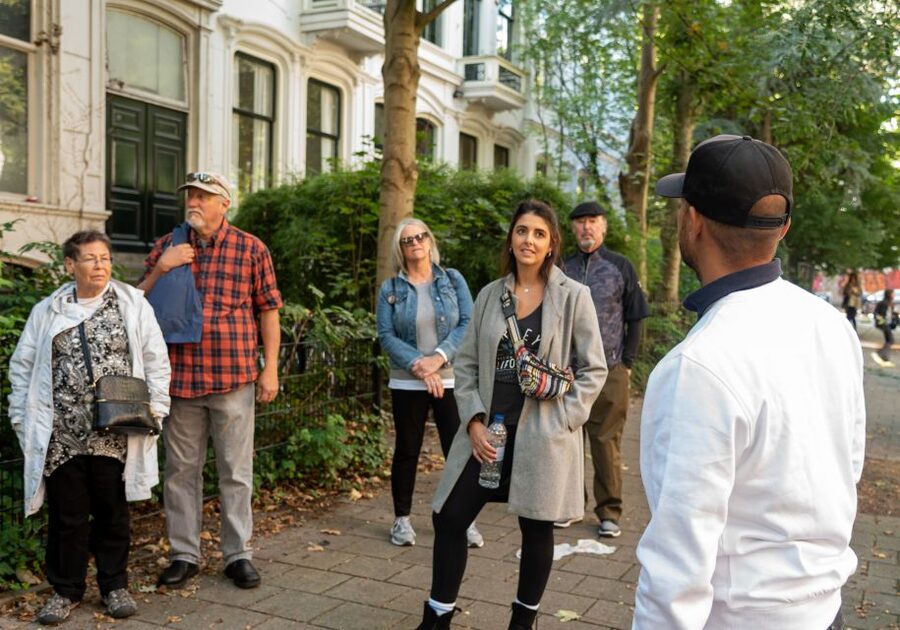
The first part of the walk focuses on Amsterdam’s oldest center. The Old Church gives the tour a clear starting point for understanding the city’s early growth. Around it, the streets show how Amsterdam developed in tight spaces, with buildings pressed close together and canals shaping daily life.
I particularly like this part because the sights are close together but do not feel repetitive. You may look at a major church one minute, then turn into a narrow lane or pass a house that seems to lean toward the street. Those crooked houses are not treated as simple photo stops. Your guide uses them to explain Amsterdam’s building traditions and the limits of constructing on soft ground.
Chinatown adds another layer to the walk. The point is not just to see a different neighborhood sign or restaurant row. It helps show how the center has changed over time and how Amsterdam continues to absorb new communities while retaining its older street plan.
The tour also includes Amsterdam’s narrowest street. This is the kind of stop you might miss if you walked alone with a map. It takes only a moment to see, but it gives the route personality. The city’s most memorable details are often small: a cramped passage, a strange angle, or a doorway that hints at an older use.
Stories about trade, vice, and city growth
The tour gives you a basic timeline for Amsterdam. You learn how the city began as a small fishing village and grew into a major center of trade and commerce. That background helps make sense of the canals, warehouses, churches, markets, and dense streets you see along the way.
I appreciate that the subject matter is not polished into a one-sided story. Amsterdam’s past includes commerce, religion, migration, social rules, and the red-light district. The guide discusses the legalization of prostitution in the Netherlands and how that policy shaped the district over time.
This part may not suit every family or every visitor, particularly if you prefer a strictly architectural walk. Still, it is useful because it treats the city as a real place rather than a museum display. You learn about the choices and conflicts that shaped Amsterdam, not only its prettiest views.
The guides appear to bring different personalities to the same route. Aaron is repeatedly described as friendly, witty, and especially strong on local history. James is praised for humor and an impressive store of stories about buildings and streets. Robin is noted for bringing the city to life with energy and clear explanations. Aarre is remembered for finding something amusing or interesting in almost every block.
Those names do not guarantee who will lead your tour, but they give you a sense of the guide-led format. You can expect a person rather than an audio recording, and questions are part of the experience.
Dam Square, the Royal Palace, and Begijnhof
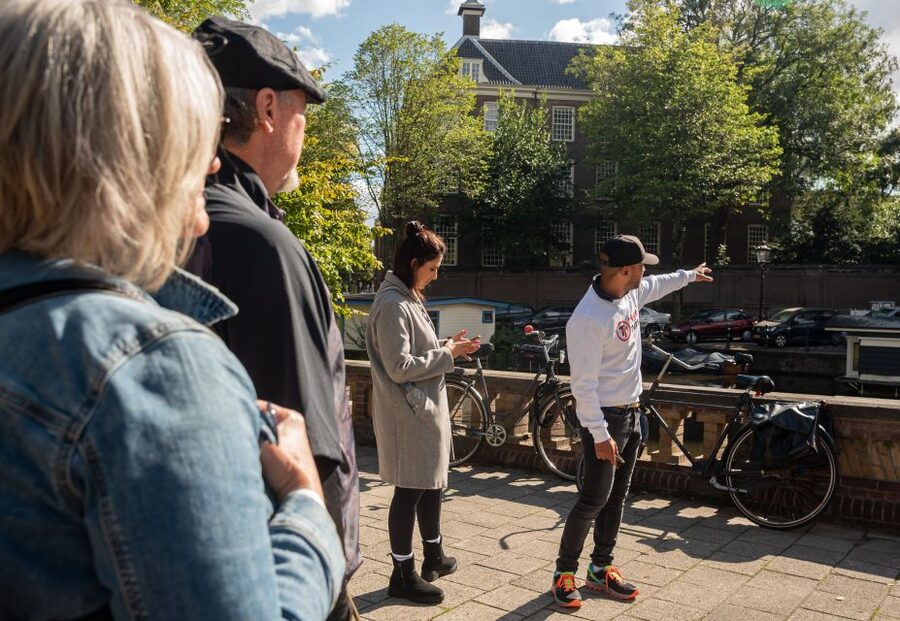
After the Old Town, the walk continues toward Dam Square and the Royal Palace. Dam Square is one of Amsterdam’s main civic spaces, so it is a natural place to connect the city’s past with its present. Your guide explains the buildings and institutions around it while giving you a sense of how central this area remains.
The Royal Palace is viewed from outside on this tour. That distinction matters if palace interiors are high on your list. You will learn about its place in the city, but you should book a separate visit if you want to go inside.
Begijnhof provides a quieter change of pace. It is one of the most memorable stops because it feels tucked away from the traffic of the central streets. The setting lets your guide explain another side of Amsterdam’s religious and social past, and the visit adds variety after the crowded energy around Dam Square.
A strong guide makes these stops work as a connected story. Instead of hearing isolated facts about a palace, a square, and a courtyard, you get a sense of how power, faith, trade, and everyday life occupied the same compact city.
The small group helps here. With no more than eight people, it is easier to hear the guide in narrow streets and easier to pause for questions. Some tours can become a moving lecture, but the small size gives this one a better chance of feeling like a conversation.
More History Walking Tours in the Netherlands
- Amsterdam: Ghost Walking Tour and Dark History
★ 4.8 · 118 reviews - Amsterdam: Iconic Canals & Historic Sights Walking Tour
★ 4.5 · 90 reviews - Amsterdam: Anna Frank and World War II History Walking Tour
★ 4.8 · 86 reviews - Amsterdam Private Historical Walking Tour
★ 5.0 · 75 reviews
Canals, crooked houses, and the Anne Frank House area
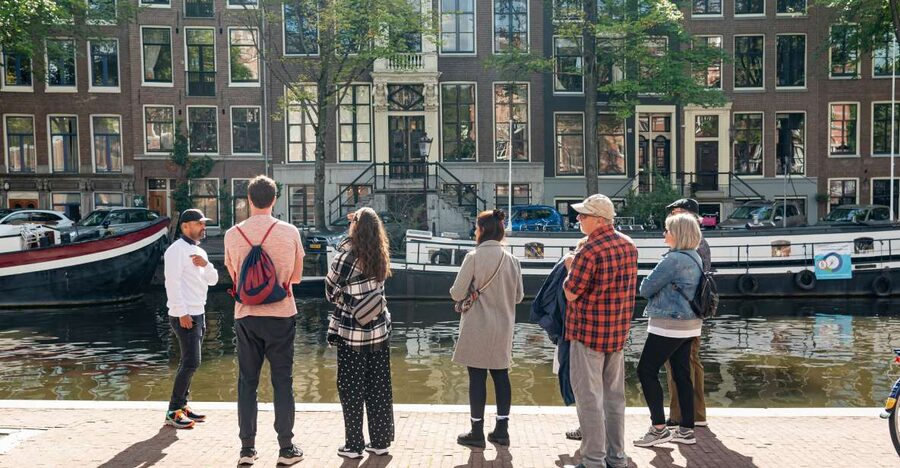
Amsterdam’s canals are not just pretty scenery. They are part of the city’s basic design and its commercial past. As you walk beside them, your guide connects the water to Amsterdam’s growth and to the practical reasons the city developed as it did.
You will also hear more about the famous narrow houses and their unusual angles. These buildings make good photographs, but the explanation behind them is more valuable than the picture alone. I like the way this route uses ordinary streets as teaching tools. You are constantly looking at something that appears familiar, then learning why it is there.
The tour includes sights such as the Anne Frank House. Based on the supplied route, you should expect to see the area and learn about its place in Amsterdam, not enter the museum during this two-hour walk. If you want to visit the Anne Frank House inside, plan that as a separate booking and allow extra time.
This is an important planning point. The tour offers breadth, not long visits at each attraction. You get a useful first look at several districts and landmarks, but the tradeoff is that the guide cannot pause for a full museum visit or detailed interior tour.
The Flower Market and the final walk to Dam Square
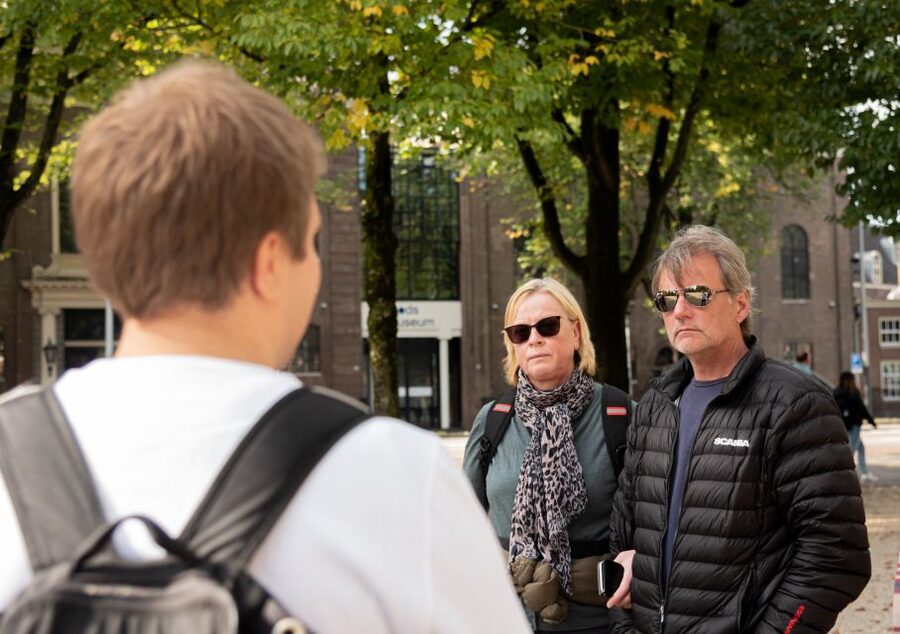
The route also reaches the Flower Market, Amsterdam’s floating street market. Stalls focus on flowers, bulbs, and flower-related goods, giving you a colorful end to the central sightseeing portion.
The market can be touristy, so I would treat it as a quick look rather than the sole reason to book the tour. Its value here comes from the way it connects Amsterdam’s flower trade and shopping culture to the wider city. You can browse if time allows, but food and drinks are not included.
The tour ends at Dam Square. That is useful if you want to continue sightseeing in the center, find a café, or make your own way to another attraction. It also means you should not assume you will finish back at the Park Plaza Victoria Hotel.
The route’s start and finish are both central, but they are different locations. That is convenient for exploring, though less convenient if you have left luggage or need to return to your hotel immediately.
Why the guide makes the difference

The clearest strength of this experience is the guide. The route covers familiar sights, but the value comes from the explanations between them. A good guide can turn a leaning house into a story about construction, a church into a lesson about belief and society, and a canal into a clue about trade.
The strongest feedback points to a shared style among several guides: clear facts, humor, local examples, and time for questions. Andrea is praised for bringing both past and present culture into the walk. David is described as friendly and personal, with the tour feeling like time spent with a local friend. Agapios is noted for patience and care with a group that included older people, a wheelchair user, and a teenager with autism.
You should still allow for some variation. Different guides have different personalities, and the tour may feel more factual with one person and more conversational with another. That is normal for a live walking tour, and the range of positive guide feedback suggests that the format works well across the team.
Group size, pace, and accessibility
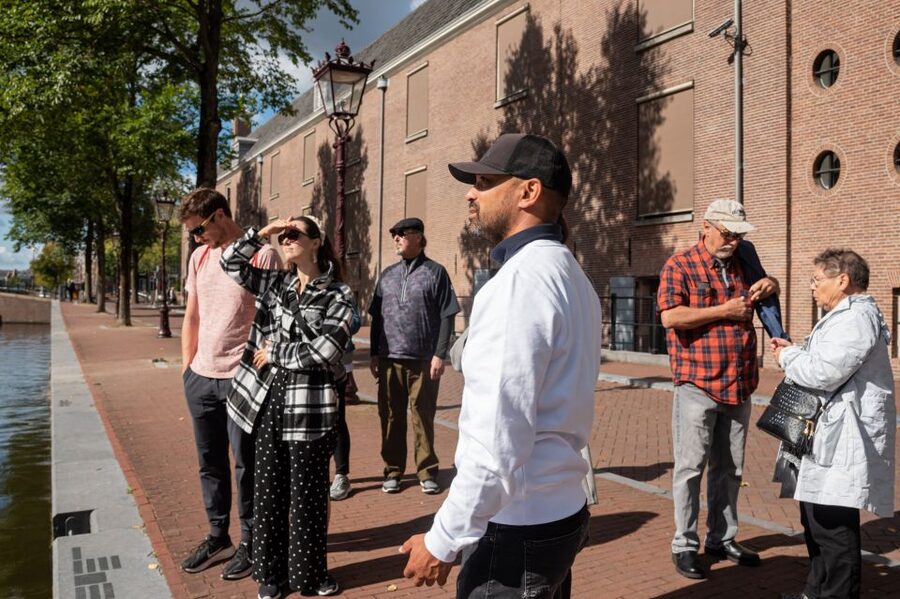
The standard group is limited to eight people. That is a real advantage in Amsterdam, where bicycles, pedestrians, cars, and narrow lanes can make a large group awkward. A small group also makes it easier to hear and ask for restaurant or sightseeing suggestions.
Private groups are available if you want a more tailored pace. Several people have had what amounted to a private tour when few others booked, allowing the guide to adjust the walk and answer more questions.
The activity is listed as wheelchair accessible. One past group included a wheelchair user and received careful support from the guide. Still, the route passes through the old center, with narrow streets and busy public areas, so it is sensible to confirm the exact route and conditions when booking if mobility is a major concern.
The walk lasts two hours. That is long enough to cover many central sights without taking half a day from your schedule. I would wear comfortable shoes and plan for weather. One person faced a torrential downpour, which is a reminder that Amsterdam’s walking tours are exposed to the elements.
Who should book this Amsterdam walk?
I would choose this tour for a first visit, especially if you want a clear introduction before deciding how to spend the rest of your time. It suits people who like history in plain language, local stories, and a mix of famous landmarks and less obvious details.
It is also a good fit if you want to understand the red-light district and the city’s social history without making that the entire focus of your day. Families with older children may enjoy the crooked houses, narrow street, canals, and unusual stories, though parents should note that prostitution is discussed.
You may want something else if your priority is entering major attractions. This tour does not include food, drinks, or admission to the Anne Frank House or Royal Palace. It is a city walk, not an attraction pass.
At $32, I consider it good value when you use it as a first-day orientation. The guide helps you avoid wandering past important places without context, and the small group makes the fee more worthwhile than a large, impersonal walk.
My verdict on the Highlights and History Walking Tour
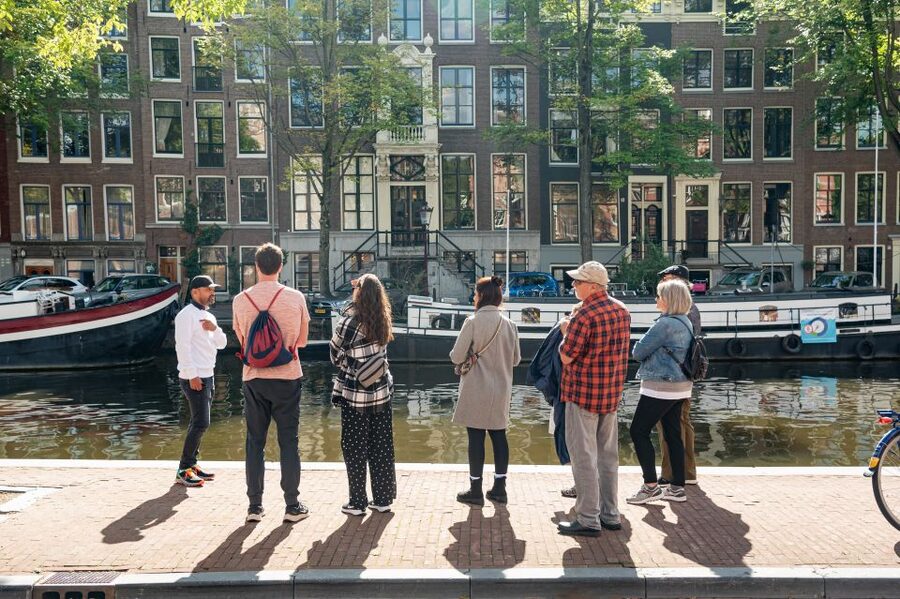
I would book this tour if you have two hours near the start of your Amsterdam visit and want the city explained by a person who can answer questions. The strongest reasons are the small group, the broad central route, and the emphasis on stories that connect architecture, trade, religion, culture, and modern life.
Go in expecting a brisk outdoor overview. You will see many places, but you will not spend long inside any one attraction. Confirm the meeting entrance, remember that the walk ends at Dam Square, and bring weather-ready shoes.
If that sounds like your kind of introduction, this is an easy choice. If you want museum interiors or a slow architectural study, use this tour as a starting point and book those visits separately.
FAQ
How long does the Amsterdam walking tour last?
The tour lasts two hours.
How much does the tour cost?
The listed price is $32 per person. A €1.50 city tax per passenger is included.
Where does the tour begin?
Meet the guide in front of the main entrance of the Park Plaza Victoria Hotel.
Where does the tour end?
The tour ends at Dam Square, not at the starting point.
Which languages are available?
Live guides are available in English, German, and Spanish.
What sights are included on the route?
The walk includes the Old Town, Old Church, Chinatown, crooked houses, Amsterdam’s narrowest street, canals, the Royal Palace, Dam Square, Begijnhof, the Flower Market, and the area around the Anne Frank House.
Is the tour wheelchair accessible?
The activity is listed as wheelchair accessible.
Can I cancel the booking?
You can cancel up to 24 hours in advance for a full refund. Reserve now and pay later is also available.
Newest history tours we have reviewed in Amsterdam
- Amsterdam: Jewish Quarter and History Guided Tour★ 4.7 · 210 reviews
- Skipping Lines & Sipping Beers: A History Tour of Amsterdam★ 5.0 · 22 reviews
- Amsterdam: Iconic Canals & Historic Sights Walking Tour★ 4.5 · 90 reviews
- Amsterdam: Private Pedicab Historical Sightseeing Tour★ 5.0 · 41 reviews
- Amsterdam Walking Tour:Anne Frank, History & Liberal Culture★ 5.0 · 18 reviews
- Amsterdam: Walking Tour of Historic Center★ 4.6 · 24 reviews
- Amsterdam: Luxury Canal Cruise with Historic VR Experience★ 4.7 · 31 reviews
- Amsterdam: Ghost Walking Tour and Dark History★ 4.8 · 118 reviews
History Walking Tours, compared.
History and Hauntings of Salem Guided Walking Tour
Read our review →
Freedom Trail History Small Group Walking Tour
Read our review →
Historic Charleston Guided Sightseeing Walking Tour
Read our review →
Tapas Walking Tour with Food, Wine, and History
Read our review →
Savannah History and Haunts Candlelit Ghost Walking Tour
Read our review →
A History of Terror – Belfast City Centre Walking Tour
Read our review →Browse the lists this tour appears in