
Review · PARIS HISTORY TOURS
Paris: French Fashion History Walking Tour
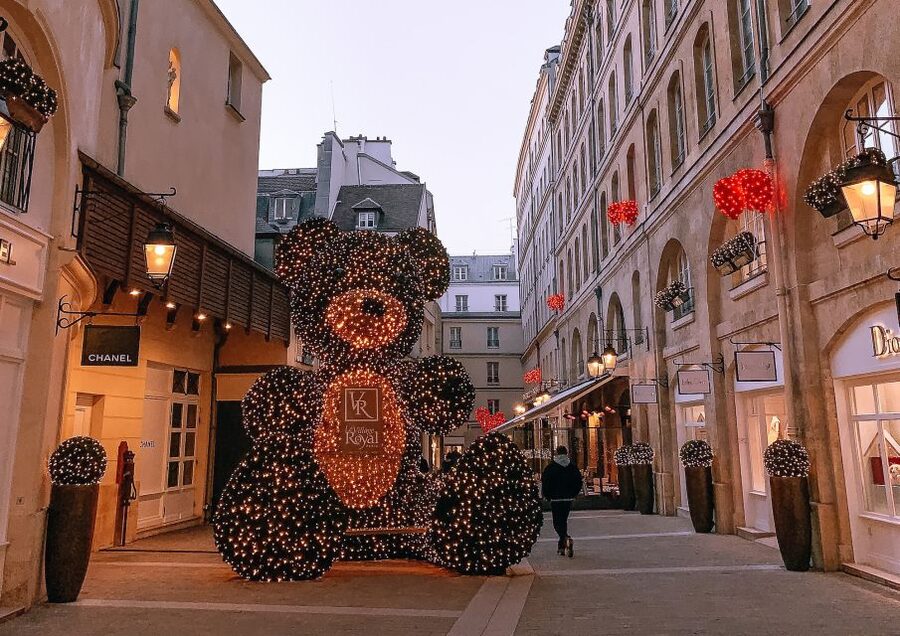
Parisian fashion makes more sense when you see it on the streets where it grew. This private 90-minute walk links rue Saint-Honoré, Place Vendôme, La Madeleine, and the first Hermès shop with the stories of Chanel, Dior, Louis Vuitton, and Yves Saint Laurent.
I like the way the tour connects clothing to social change, especially Chanel’s effect on women’s dress and Dior’s post-war style. I also like the small-group format, which gives you room to ask about brand myths, business, and the difficult personal stories behind famous names. The drawback is the short running time: 90 minutes goes quickly, especially if you enjoy entering shops and asking questions.
Key points at a glance
- Coco Chanel’s complicated story: Learn how her lovers helped save her business, and examine her connection with the German army.
- Hermès before the handbags: See how a saddler became the maker of the Kelly and Birkin bags.
- Fashion on the actual streets: Walk through rue Saint-Honoré, Place Vendôme, and the area around La Madeleine.
- A private group of up to six: The format suits families and friends who want to ask questions without sharing the guide with a large crowd.
- A guide who brings the names together: Hannah explains how each house developed its own identity, then links that past to what the brands do today.
- A weatherproof city walk: Wear comfortable shoes and bring an umbrella, since the tour runs rain or shine.
Why this Paris fashion walk is more than window-shopping
You are not simply being led past expensive storefronts. The point is to understand why these houses mattered, and how their founders changed the way people dressed, traveled, worked, and presented themselves.
The tour focuses on the 19th and 20th centuries, when Paris became a center for Haute Couture and luxury retail. You’ll hear about the first ateliers in the area, the rise of recognizable fashion houses, and the designers who turned clothing into a form of social language.
That makes this a good choice even if you do not follow fashion closely. The emphasis is on people, ambition, scandal, marketing, and changing ideas about women’s freedom. You can enjoy the stories without knowing the difference between a bias cut and a buttonhole.
The activity has a 4.9 rating from 37 ratings, and the strongest praise centers on Hannah’s teaching style. She is described as personable, clear, and able to make the subject work for both serious fashion fans and people who simply want an interesting Paris walk. Several comments also point to her ability to answer questions and connect older brands with their present-day identity.
More History Walking Tours in France
- Paris: Dark History and Ghostly Guided Walking Tour
★ 4.7 · 1,000 reviews - Paris City of Fashion History Private Guided Walking Tour
★ 5.0 · 221 reviews - Paris City Center w/ Notre Dame interior | Exclusive Walking Tour
★ 5.0 · 190 reviews
Starting near La Cure Gourmande on rue Saint-Honoré
Plan to arrive five minutes early near the La Cure Gourmande shop. The meeting point puts you close to one of Paris’s most famous luxury shopping streets, so you enter the subject right away rather than spending the first part of the tour on a long transfer.
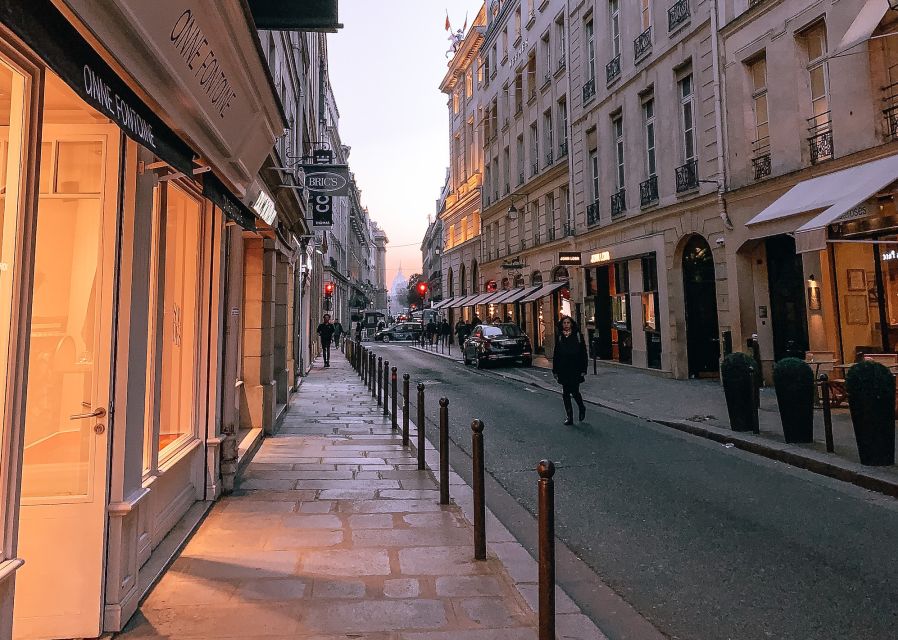
Rue Saint-Honoré is useful as a classroom because its shops show how fashion became tied to location. The guide explains which ateliers opened here and how the street developed into a place where luxury houses could display their work to an international public.
Expect a walking tour rather than a museum lecture. You’ll move between streets, landmarks, and shops, with the guide using the surroundings to explain the brands. The route is wheelchair accessible, though you should still consider the practical effects of a city walk over busy sidewalks and shop entrances.
Because the tour is private, you can set the level of detail through your questions. A fashion student might want more about Haute Couture and brand development. A family group might prefer the personal stories and unusual facts. The small group also helps if you want to pause briefly at a storefront or ask why one house uses a certain design language.
Place Vendôme and the business of luxury
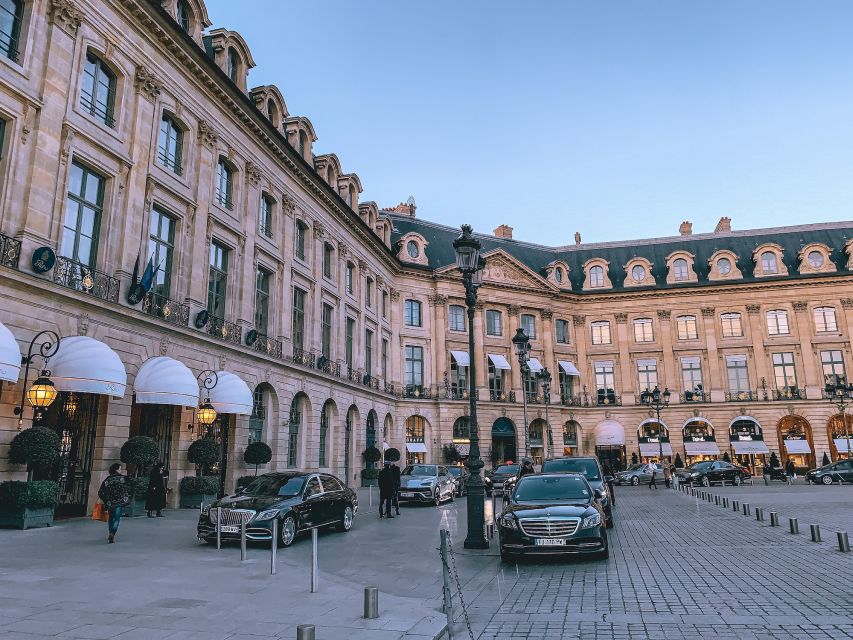
Place Vendôme brings together fashion, jewelry, hotels, and Parisian prestige in one grand setting. It also gives the guide a chance to show that luxury is not just about making a product. It depends on place, reputation, scarcity, and the feeling that the brand belongs to a world apart.
Chanel is closely linked to this part of Paris, as is Ernest Hemingway. The tour uses the square to discuss the people who spent time here and the way Paris became a meeting point for artists, writers, designers, and wealthy clients.
This section should appeal to you if you like the human side of fashion. The stories are not limited to fabric and silhouettes. They look at how designers built relationships, found patrons, recovered from setbacks, and turned a name into a lasting business.
The setting is also one of the tour’s visual strengths. You get the grand architecture of Place Vendôme alongside the polished shop windows. The contrast helps explain why luxury brands invest so heavily in their surroundings. The building, the street, the staff, and the object all work together to create a message.
La Madeleine and the small shopping streets
La Madeleine is an imposing church with a Greek-inspired design. Its size and form can seem surprising beside the commercial streets around it, and the contrast gives the walk a welcome change of pace.
The area around the church is known for shopping, with smaller streets that feel different from the formal scale of Place Vendôme. Here, the guide can show how Paris’s fashion district is not one single boulevard. It is a collection of connected streets, shops, workshops, and landmarks.
I like this part because it keeps the tour from becoming a parade of global logos. You get a sense of the neighborhood that supports the luxury trade, not just the famous names that dominate advertising.
Do not expect a long interior visit at La Madeleine. The supplied details describe it as a place to see and discuss during the walk, not as a separate guided church tour. The value comes from its place in the route and its connection to the surrounding shopping district.
More History Walking Tours in Paris
- Paris: Le Marais & Montmartre Jewish History Walking Tour
★ 4.8 · 170 reviews - Historic Paris Walking Tour in English
★ 4.9 · 78 reviews - Paris Jewish History 2-Hour Private Guided Walking Tour
★ 4.6 · 32 reviews - Paris: Fashion History Walking Tour in the Heart of Paris
★ 4.9 · 22 reviews
Hermès, from saddles to Kelly and Birkin bags
The Hermès story is one of the clearest examples of how a company can change while holding on to its original identity. The tour takes you to the first Hermès shop and explains the brand’s start as a saddler before it became famous for handbags and accessories.
That shift matters. Hermès did not begin with the image most people associate with it today. Its early connection with riding equipment helps explain the attention to leather, construction, and craft that became central to the brand.
You’ll also learn why Hermès remains so exclusive and how the company sells its best-known bags, including the Birkin and Kelly. These are not treated simply as shopping targets. The discussion looks at scarcity, access, brand control, and the reasons a bag can become a cultural object far beyond its practical use.
The tour includes entry into a few shops, giving you a closer look at how luxury houses present their history and products. This does not mean you are guaranteed a chance to buy a Birkin or Kelly. The useful part is learning how the store experience supports the brand’s image, even if you leave with nothing more than a better understanding of the business.
Chanel, women’s clothing, and a difficult wartime chapter
Coco Chanel receives a major part of the tour, and rightly so. Her work helped change women’s clothing by favoring movement, practicality, and a less formal idea of elegance. The guide places that change within the wider story of women’s liberation and the changing roles of women in the 20th century.
You’ll also hear about the personal relationships that shaped Chanel’s life and helped save her brand. This makes the story more complicated than the familiar image of a lone genius. Chanel’s success involved talent, timing, money, relationships, and a strong instinct for controlling her own public image.
The tour does not avoid the darker side of her biography. It examines her connection with the German army, an important and uncomfortable part of her wartime story. That context matters because fashion history is also personal and political history. A good tour should let you appreciate the design work without polishing away the difficult facts.
This is one reason the private format is useful. You may want to ask how Chanel’s reputation was rebuilt, how her personal life affected the company, or where the line falls between understanding a historical figure and excusing her actions. The 90-minute schedule cannot answer every question in full, but it gives you a firm starting point.
Christian Dior and the return of glamour after the war
Christian Dior’s section shifts the mood from Chanel’s practical revolution to a more formal vision of femininity. The tour explains how Dior changed fashion after the war, when clothing carried strong emotional meaning and many people were ready for a dramatic break from years of restraint.
Dior’s story includes failure, superstition, and the feeling that he was following a set path. Those details make him easier to understand as a person rather than just a label on a perfume bottle or dress.
The important point is that Dior did not work in isolation. His designs responded to the moment. After wartime shortages and simple clothing, his style offered structure, ceremony, and a new sense of luxury. You’ll see how one designer could influence the mood of an entire period.
If your interest in fashion is mainly modern streetwear, this section still has value. It explains why the contrast between ease and formality keeps returning in fashion. Designers often react against the previous decade, and Dior’s post-war work is a classic example.
Yves Saint Laurent and modern fashion
Yves Saint Laurent closes the designer sequence with a move toward modernity. The tour presents him as a founding figure in modern fashion and shows how his work helped make new ideas feel possible within the luxury industry.
His place in the story is important because fashion does not stop with one famous silhouette. The industry keeps changing as designers question what is appropriate, who gets to wear certain clothes, and how much freedom a customer should have.
This final section also helps tie the brands together. Chanel changed the relationship between women and clothing. Dior responded to the post-war appetite for glamour. Saint Laurent pushed modern ideas further. Hermès developed a different path through craft and controlled access, while Louis Vuitton built its name through travel and luxury goods.
You leave with a clearer sense that these houses are not interchangeable. Each has a distinct origin and brand identity. That is more useful than memorizing a list of logos.
Louis Vuitton, travel, and the rise of the fashion house
Louis Vuitton adds another angle to the walk: travel. The company’s story shows how luggage and practical objects could become symbols of taste, status, and movement.
This part works well beside the other brands because it shows that French luxury did not grow from clothing alone. Travel goods, leatherwork, saddlery, jewelry, and dress all fed into the wider luxury market.
The guide uses Louis Vuitton to explain how a house can preserve a founding idea while expanding far beyond its first product. You may find yourself looking differently at the familiar monogram after hearing how travel helped shape the brand’s early identity.
Again, the tour is not designed as a shopping trip. You will pass luxury stores and enter a few, but the focus remains on origins, design, and business choices. If you want a buying appointment or a detailed guide to current collections, this is not the right activity.
What $294 means for your group
The price is $294 for a private group of up to six people. At the maximum group size, that works out to $49 per person for 90 minutes. For two people, the per-person cost is much higher, so the value depends heavily on how many people share the booking.
For six friends or family members, the cost is easier to justify because you receive a private guide and can shape the conversation around your interests. It may also compare well with several separate tickets to fashion attractions, though this tour does not include food, drinks, or museum admission.
For a couple, I would book it for the personal format and the subject, not because it is the cheapest way to see Paris. You are paying for a guide who can explain connections between several houses in a short period and respond to your questions as you walk.
The 90-minute length is both a strength and a limit. It fits neatly into a day of sightseeing and leaves time for lunch, shopping, or another museum. But the subject is broad, covering several designers, two centuries, and a number of landmarks. You’ll get a lively introduction, not an academic course.
Who should book this fashion walk?
I would recommend it most strongly to:
- You and your companions are curious about fashion but do not want a technical museum tour.
- You already know the major brand names and want the stories behind them.
- You want a private activity that works for a family or small group.
- You enjoy biography, business history, and the social effects of design.
- You want to combine sightseeing with luxury shopping streets without spending the whole afternoon in stores.
I would think twice if you want a long visit inside a museum, a hands-on fashion workshop, or guaranteed access to a particular boutique or handbag. The tour passes through luxury retail territory, but it does not promise a purchase opportunity.
Wear comfortable shoes. The route is entirely on foot, and the tour runs rain or shine, so bring an umbrella. English and French are available, and wheelchair access is provided.
Free cancellation is available up to 24 hours before the activity for a full refund. You can also reserve now and pay later, which helps if your Paris schedule is still taking shape.
Should you book it?
Book this tour if you want Paris fashion explained through streets, personalities, and business choices rather than only through clothing displays. Hannah’s warm, question-friendly approach appears to suit both dedicated fashion fans and people who simply enjoy a good story.
The best value comes with a group of four to six, when the private price is shared. Keep your expectations in the right place: this is a brisk introduction to Chanel, Hermès, Dior, Louis Vuitton, and Yves Saint Laurent, with a few shop visits and plenty of street context. If that sounds like your kind of Paris lesson, it is a smart use of 90 minutes.
FAQ
How long does the French Fashion History Walking Tour last?
The tour lasts 90 minutes.
How much does the tour cost?
The price is $294 for a private group of up to six people.
Where does the tour meet?
The meeting point is near the La Cure Gourmande shop. You should arrive five minutes before the activity begins.
Which languages are available?
The tour is offered in English and French.
Is the tour wheelchair accessible?
Yes, the activity is listed as wheelchair accessible.
What should I bring?
Wear comfortable shoes and bring an umbrella. The tour takes place rain or shine.
Newest history tours we have reviewed in Paris
- The historic district of Montmartre★ 4.9 · 66 reviews
- Paris: Fashion History Walking Tour in the Heart of Paris★ 4.9 · 22 reviews
- Paris: Khéops VR Experience – Explore Ancient Egypt★ 4.9 · 39 reviews
- Paris Jewish History 2-Hour Private Guided Walking Tour★ 4.6 · 32 reviews
- Montmartre Walking Tour: A Journey Through Art and History★ 5.0 · 21 reviews
- Historic Paris Walking Tour in English★ 4.9 · 78 reviews
- Explore the Marais: History, Art & Local Culture★ 4.6 · 105 reviews
- Arc de Triomphe Rooftop: Unveil History & Breathtaking Views★ 3.1 · 23 reviews
History Walking Tours, compared.

History and Hauntings of Salem Guided Walking Tour
Read our review →

Freedom Trail History Small Group Walking Tour
Read our review →
Historic Charleston Guided Sightseeing Walking Tour
Read our review →
Tapas Walking Tour with Food, Wine, and History
Read our review →
Savannah History and Haunts Candlelit Ghost Walking Tour
Read our review →
A History of Terror – Belfast City Centre Walking Tour
Read our review →Browse the lists this tour appears in