
Review · PARIS HISTORY TOURS
Paris: Khéops VR Experience – Explore Ancient Egypt
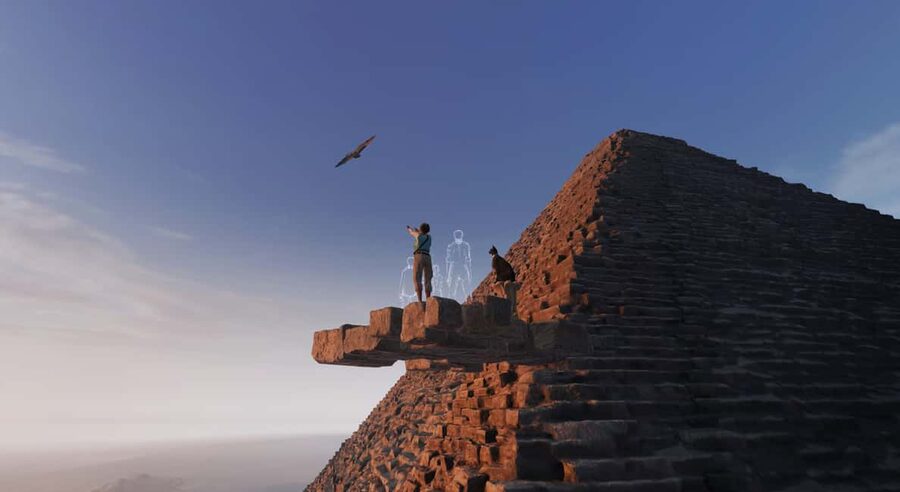
Khufu’s Great Pyramid is the star here, but you do not need a flight to Cairo, a hot day on the Giza Plateau, or permission to enter sealed-off chambers. In Paris, a headset places you inside a detailed recreation of the monument as it looked 4,500 years ago. You can look around, move through the site, and follow the story from the outside of the pyramid to its inner rooms.
I like the sense of scale and the chance to examine spaces that are normally difficult or impossible to visit. I also like the practical format: the activity is indoors, lasts about 45 minutes, and offers French or English guidance, making it an easy addition to a busy Paris day.
The main consideration is that you are taking in a lot at once. One French-language participant found the setting so absorbing that it was hard to study the scenery and follow all the detailed commentary at the same time. If you want every fact, a second visit may be worthwhile.
Key points to know before booking
- You enter Khufu’s Great Pyramid virtually: Walk through corridors and chambers that are not generally open to the public.
- The experience begins with archaeological context: A short introduction explains the Giza Plateau and the mysteries of Egyptian construction.
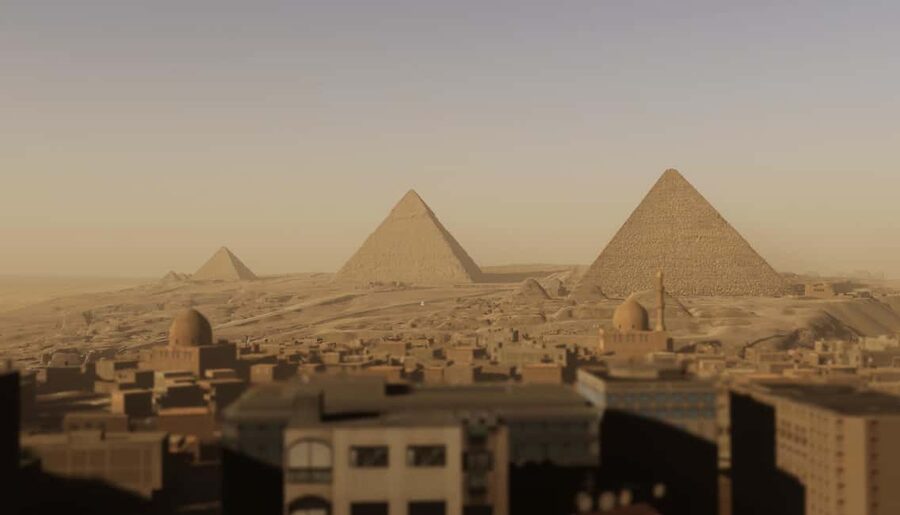
- The VR world is built for movement and close inspection: You can walk across the plateau and examine the pyramid from different angles.
- The main experience lasts 45 minutes: Allow about an hour overall for the full visit and opening information.
- It works well as an indoor Paris activity: Rain, cold, or a packed sightseeing schedule do not affect the setting.
- The format is not for everyone: Children under 8, people with heart problems, and people with epilepsy should not take part.
A modern route into Ancient Egypt
The Khéops VR Experience is not a museum display with a few digital extras. It is a guided virtual visit built around one monument: the Great Pyramid of Khufu, also called Cheops.
You begin with a short introduction to the archaeological setting. This part matters because the pyramid is more than a giant stone shape. The opening gives you a basic sense of the Giza Plateau, the age of the monument, and the questions that still surround its design and construction.
That introduction also helps you use the VR visit well. Without some context, it would be easy to focus only on the spectacle. With it, you can pay attention to the pyramid’s structure, the relationship between the plateau and the monument, and the way the experience leads you from the open site into enclosed passageways.
The host or guide can present the activity in French or English. No individual guide names are provided, so you should choose your preferred language when checking available times.
More Ancient History Tours in Paris:
- Colosseum: Underground and Ancient Rome Tour
★ 4.7 · 12,691 reviews - Colosseum & Ancient Rome with Arena Floor Option I Max 6 People
★ 5.0 · 3,306 reviews - Rome: Colosseum, Ancient Rome Tour or AudioGuided Tour
★ 4.4 · 2,879 reviews
Step one: reaching the Giza Plateau from Paris
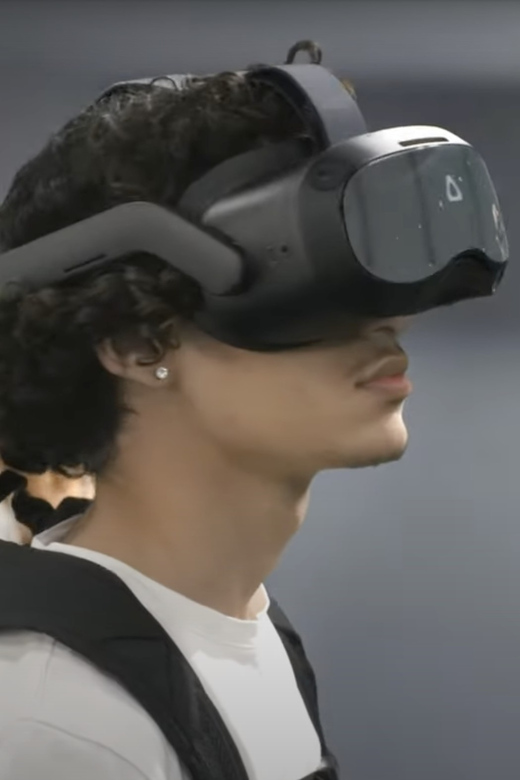
Once you put on the next-generation headset, the Paris venue gives way to a 360-degree recreation of the Giza Plateau. The change is the central trick of the experience, but it is also where the historical value begins.
You are not simply shown a film about Egypt. You can look around the virtual setting and move across the site. The pyramid appears as a structure you can approach and inspect, rather than a background image behind a narrator.
I like this opening because it gives you a sense of the monument’s surroundings before sending you inside. The pyramid makes more sense when you see it as part of a large ceremonial site. You can take in its scale from outside, then move closer to study the stone structure and its entrances.
The virtual setting is presented as Egypt looked more than 4,500 years ago. That does not make it a replacement for seeing the actual pyramid, of course. It does give you a visual reconstruction of a past setting that is difficult to experience in present-day Cairo.
The changing sound and lighting help set the mood. These touches create a cinematic presentation, but they are not the whole point. The useful part is that they guide your attention as the visit shifts from the wide plateau to the darker interior of the pyramid.
Step two: walking inside Khufu’s pyramid
The strongest part of the activity is the move indoors, inside the virtual pyramid. You travel through corridors and chambers that are normally inaccessible to the public, seeing the monument from within rather than standing outside it.
This is where the $37 price needs some thought. You are paying for a short, carefully produced cultural experience, not for a full-day attraction or a physical archaeological site. The value comes from access and presentation. You get to explore a digital version of areas that cannot be visited freely, with the structure brought to life through sound, lighting, and guided explanation.
The ability to move around is important. A standard documentary can show you a chamber, but it controls your view. Here, you can turn your head and examine the virtual surroundings. That freedom gives the visit a stronger feeling of discovery, especially for children and anyone who likes to understand places by looking around rather than reading a long display.
Still, the freedom can work against careful listening. One piece of feedback praised the beauty and staging but noted that it was difficult to study the environment while also keeping up with the guide’s detailed commentary. My advice is to accept that you may not catch every fact on the first pass. Pay attention to the visual journey first, then treat the historical commentary as a second layer.
Why the design works so well
The strongest praise centers on the experience’s total presentation. It has been described as highly immersive, well designed, surprising, beautiful, educational, and fun. Those points fit the format: the activity combines a historical explanation with a large-scale virtual setting, rather than asking you to sit still and watch a short clip.
The 360-degree view is especially useful for a monument like the Great Pyramid. A pyramid has several faces, long approaches, internal corridors, and rooms that are hard to understand from one photograph. Being able to look around gives you a better feel for how the parts connect.
The sound and lighting also help with pacing. The activity can move from a broad exterior view to a more enclosed interior scene without losing your attention. That makes the 45-minute session feel like a complete visit, even though it is much shorter than a full day at Giza.
The design may also explain why families respond well to it. A child can see the pyramid as a place to explore, not only as a topic in a schoolbook. The experience is still educational, but it uses movement and visual drama to hold attention.
One recent French-language comment described the activity as educational and fun, while another said young grandsons were delighted. That combination is useful to keep in mind. This is not a dry lecture, but it is also not just an amusement ride.
More History Tours in Paris:
- Paris: Dark History and Ghostly Guided Walking Tour
★ 4.7 · 1,000 reviews - Notre Dame Cathedral: Exterior Guided Tour & Unscheduled Access
★ 4.5 · 409 reviews - Paris City of Fashion History Private Guided Walking Tour
★ 5.0 · 221 reviews - History of Paris City Center w/ Notre Dame Semi-Private 12ppl Max
★ 5.0 · 194 reviews
What the 45 minutes feel like
The advertised activity lasts 45 minutes, while the booking information gives a total duration of about one hour. That suggests you should plan for a short introduction and surrounding arrangements in addition to the main headset session.
The pace is likely to feel active rather than slow. You start with context, move across the plateau, approach the pyramid, and then enter its interior. The route has a clear beginning, middle, and end, which makes it easy to fit between other Paris plans.
I would not book it as your only major cultural activity of the day. It is better as a focused one-hour appointment that adds a different kind of experience to a museum visit, neighborhood walk, or meal. It can also fill a gap in your schedule without the commitment of a half-day tour.
The length suits families particularly well. Forty-five minutes is enough time to build a story and show several parts of the monument, but short enough to avoid the fatigue that can come with a longer headset session. History lovers may wish it lasted longer, especially if they want to stop and consider each chamber.
Who should book this Paris activity
I would recommend Khéops VR to several kinds of visitors.
Families with children over 8 get a clear story, a striking setting, and a short format. The activity offers more substance than a simple game, but it does not demand the patience of a long lecture.
History and archaeology fans will appreciate the chance to see the interior of Khufu’s pyramid in a form that ordinary sightseeing cannot provide. The introductory context adds value, especially if you want to understand the monument rather than only see its famous exterior.
Rainy-day planners have a dependable indoor option in the heart of Paris. You do not need good weather, outdoor stamina, or a full afternoon free.
Repeat Paris visitors may find it a refreshing change from the city’s standard museums and monuments. It has a clear link to world history, but the presentation is modern and active.
I would be more cautious if you dislike VR headsets, have difficulty with virtual movement, or prefer physical historic places to digital reconstruction. The experience can show you a convincing version of an ancient monument, but it cannot replace standing beside the real pyramid.
Who should skip it or take care
The activity is not suitable for children under 8. The information also excludes people with heart problems and people with epilepsy, so take those warnings seriously rather than treating them as minor fine print.
The supplied details do not describe motion-sickness arrangements or specific headset adjustments. If you know that VR can make you uncomfortable, consider that before paying. The experience involves walking freely through a virtual setting, so it is not simply a seated video.
Wheelchair access is available, which makes the venue usable for wheelchair users. The accessible setup does not change the health restrictions, and you should still check the booking details if you need specific assistance.
The language choice is straightforward: French and English are available. If you want to follow the historical explanation closely, select the language in which you listen most easily. That is particularly important here because the visual setting can compete for your attention.
Is $37 good value?
At $37 per person, Khéops VR is not the cheapest one-hour activity in Paris. It is also not priced like a full museum ticket. The fair comparison is with other short, ticketed cultural attractions that give you a designed experience rather than open-ended access.
I think the price is reasonable if you care about the pyramid’s interior, want an indoor activity, or are traveling with children who respond better to visual experiences than static displays. The value is weaker if you are mainly looking for a quick photo opportunity or a conventional Egypt exhibition.
The ability to reserve now and pay later adds practical value when your Paris schedule is still changing. Free cancellation up to 24 hours before the activity also reduces the risk of booking around uncertain plans. Those policies do not make the ticket cheaper, but they make it easier to fit into a busy itinerary.
The 4.9 rating from 39 bookings points to very strong satisfaction, with the most praised qualities being the design, the emotional presentation, and the sense of discovery. I would still read that score in context: the activity is short, digital, and highly visual. People who enjoy that format are likely to value it most.
Tips for getting more from the visit
Choose your language based on listening comfort, not on the language you speak most often. The information is part of the experience, and the visual action can make it easy to miss details.
Try to give yourself permission not to catch every comment. Look around during the exterior section, then focus more closely when you enter the chambers. If you attempt to study every corner while following every spoken explanation, you may feel rushed.
This is also a good activity to place on a rainy afternoon or between other indoor plans. Its one-hour footprint is easier to manage than a major museum, and you will not need to worry about weather during the visit.
If your family has mixed interests, the experience offers a useful middle ground. History fans get archaeological context, while younger participants get a virtual setting they can explore. Keep in mind that the minimum age is 8, and not every child will enjoy a headset simply because the subject is exciting.
Should you book Khéops VR?
Book it if you want a short, original Paris activity that combines Ancient Egyptian history with modern technology. I especially recommend it for families, rainy-day schedules, and visitors curious about the inside of Khufu’s pyramid.
Skip it if you want the physical atmosphere of a real archaeological site, dislike VR, or need a longer and more detailed history experience. For everyone else, the chance to walk through a carefully recreated Great Pyramid for about an hour makes this a fair-value cultural stop, provided you treat it as a focused virtual visit rather than a substitute for Egypt itself.
FAQ
How long does the Khéops VR Experience last?
The full activity lasts about one hour, with the main VR experience lasting 45 minutes.
What languages are available?
The experience is available in French and English. The host or greeter can also communicate in French or English.
Is the experience wheelchair accessible?
Yes, the activity is wheelchair accessible.
Can children take part?
Children must be at least 8 years old to participate.
Who should not take part?
The activity is not suitable for people with heart problems or epilepsy. Children under 8 are also not permitted.
Can I cancel or pay later?
You can cancel up to 24 hours in advance for a full refund. You can also reserve your place and pay later, which keeps your plans flexible.
Newest history tours we have reviewed in Paris
- The historic district of Montmartre★ 4.9 · 66 reviews
- Paris: Fashion History Walking Tour in the Heart of Paris★ 4.9 · 22 reviews
- Paris Jewish History 2-Hour Private Guided Walking Tour★ 4.6 · 32 reviews
- Paris: French Fashion History Walking Tour★ 4.9 · 37 reviews
- Montmartre Walking Tour: A Journey Through Art and History★ 5.0 · 21 reviews
- Historic Paris Walking Tour in English★ 4.9 · 78 reviews
- Explore the Marais: History, Art & Local Culture★ 4.6 · 105 reviews
- Arc de Triomphe Rooftop: Unveil History & Breathtaking Views★ 3.1 · 23 reviews
Ancient History Tours, compared.
Colosseum: Underground and Ancient Rome Tour
Read our review →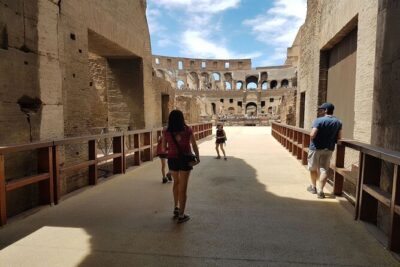
Colosseum & Ancient Rome with Arena Floor Option I Max 6 People
Read our review →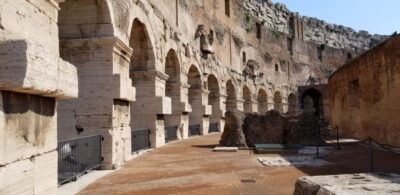
Colosseum, Ancient Rome Tour or AudioGuided Tour
Read our review →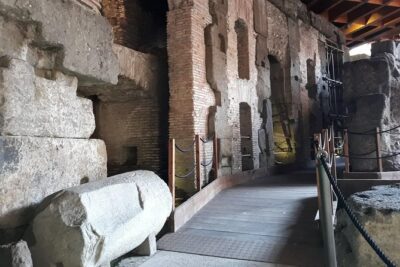
Colosseum Underground & Ancient Rome Guided Tour
Read our review →

Taormina: Ancient Theater Skip-the-Line Ticket & Audio Guide
Read our review →
Discover the Ancient Ruins of Pompeii: Day Trip from Rome
Read our review →
Discover Matera, the ancient city – English tour
Read our review →Browse the lists this tour appears in