
Review · PARIS HISTORY TOURS
History of Paris City Center w/ Notre Dame Semi-Private 12ppl Max
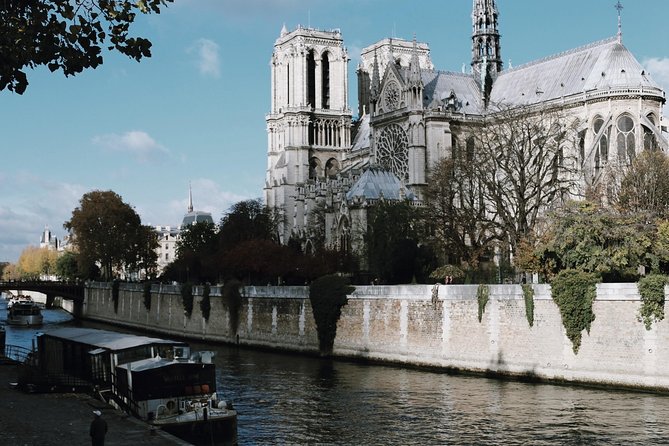
Notre Dame is the star here, but the clever part is the route around it. In less than three hours, you walk from the medieval heart of Paris across the Seine, past the Louvre, and into the Tuileries Gardens before finishing at Place de la Concorde. It gives you a useful first look at the city without trying to cover all of Paris.
I like the 12-person maximum, which makes it easier to hear the guide and ask questions. I also like the mix of famous sights and smaller historical corners, especially Place Dauphine, the Saint-Michel Fountain, and the equestrian statue of Henri IV.
The main consideration is pace. You cover a lot of ground, and several stops are outside views rather than full interior visits. Notre Dame entry is included, but your time inside is unguided, and other attractions such as Sainte-Chapelle, the Conciergerie, the Palais de Justice, the Louvre, and Palais-Royal are not included for admission.
Key points to know before you book
- Notre Dame anchors the walk: You enter the cathedral independently, then continue through the oldest parts of Paris.
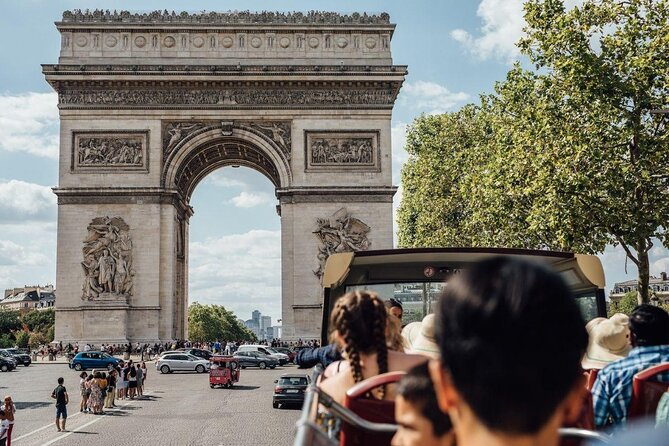
- The route connects major sights: Cité, Pont Neuf, Pont des Arts, the Louvre, Tuileries Gardens, and Place de la Concorde fit into one continuous walk.
- Small groups matter: The tour never exceeds 12 people, with a private option available if you want a more personal schedule.
- Guides shape the experience: Tamari, Hugo, Alasdair, Lili, François, Ren, Alex, Claudia, and Jill have all led tours praised for clear explanations and friendly help.
- It is a real walking tour: Wear comfortable shoes, bring water, and prepare for rain or sun.
- The ending is convenient: You finish at Place de la Concorde, near the beginning of the Champs-Élysées.
Starting on Île de la Cité
You meet in front of the entrance to Cité Métro station, a practical starting point in the middle of Paris. From there, the guide introduces Île de la Cité, the island where Paris began as the Roman settlement known as Lutetia.
This opening gives the whole walk a clear purpose. You are not simply moving from landmark to landmark. You are following the growth of Paris from a small settlement on the Seine toward the royal, religious, and political center it became.
The island is compact, but it carries a large share of the city’s early story. Your guide can connect the Roman beginnings, medieval building projects, royal power, and revolutionary upheaval before you move on.
More Private History Tours in France
- Paris City of Fashion History Private Guided Walking Tour
★ 5.0 · 221 reviews - Strasbourg: Private Walking Tour of the Historical Center
★ 4.2 · 107 reviews - Private Guided History tour of Lourdes
★ 5.0 · 64 reviews
Notre Dame, with time inside but no guided commentary
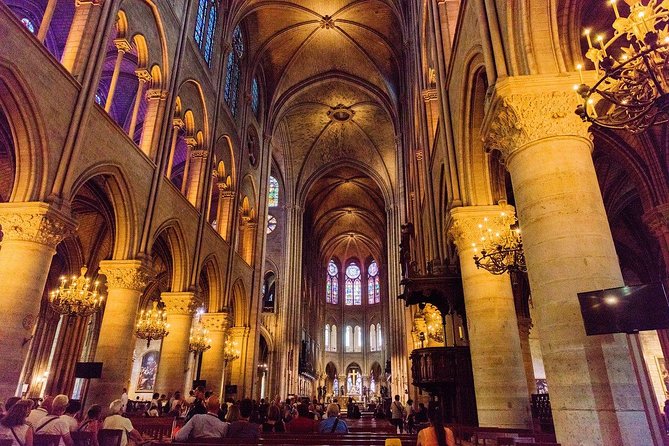
Notre Dame is the emotional center of the outing. The cathedral is about 800 years old and remains one of Paris’s best-known examples of medieval Gothic design.
The interior visit is included, but regulations mean it is unguided. That distinction matters. You can enter and look around, but the guide does not lead the explanation inside the building. The guide’s historical context comes before or after the visit, while your time within the cathedral is independent.
Plan for security procedures and changing access conditions. The information provided says increased security can limit interior visits at some attractions, so the route is strongest when you treat Notre Dame as an important stop rather than the only reason to book.
The tour allows only about 10 minutes at this stop in the planned schedule. That is enough for a focused look, not an extended architectural study. If you want a quiet, detailed visit to Notre Dame, return on your own at another time.
Palais de Justice, Sainte-Chapelle, and the Conciergerie
The next stretch brings you past three major buildings on Île de la Cité. The Palais de Justice occupies the former royal palace complex, known earlier as the Palais de la Cité, and contains some of the oldest surviving buildings in the area.
Sainte-Chapelle is known for its Gothic design and was built in only seven years to hold Christian relics, including the Crown of Thorns acquired by Saint Louis. It is one of those places where an interior admission can add a great deal, but the ticket is not included in this walk.
The Conciergerie offers a darker chapter. It was the oldest remaining part of the Palais de la Cité and later became a notorious prison. More than a thousand people held as enemies of the Revolution were kept there, including Marie Antoinette before her execution.
You should read these stops as exterior history lessons unless you purchase separate admission. The guide provides the setting and the story, but this is not a ticketed tour of all three buildings.
Saint-Michel Fountain and Place Dauphine
Crossing toward the Left Bank, you pass the Saint-Michel Fountain. Commissioned under Napoleon III and Haussmann, it shows the archangel Michael defeating the Devil. It is a quick stop, but the image gives the guide an easy way to discuss public art, political ambition, and the rebuilding of Paris.
Place Dauphine changes the mood. Tucked near the western end of Île de la Cité, the square was one of the first projects ordered by Henri IV. Its calm, enclosed feel makes it a pleasant contrast to the grand avenues and heavy traffic found elsewhere in central Paris.
These smaller stops are part of the tour’s value. You will see the major names, but you also get a sense of how Paris is arranged between them. A guide can point out why a square, bridge, or fountain matters instead of leaving you with only a photograph.
More Private History Tours in Paris
- Private Half Day Historic Tour
★ 5.0 · 58 reviews - The History of Paris: Historical Le Marais Private Tour
★ 4.5 · 47 reviews
Pont Neuf and the statue of Henri IV
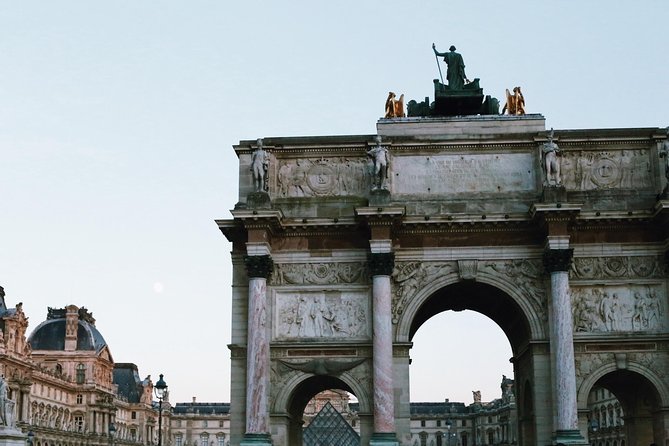
The route then reaches Pont Neuf, considered the oldest stone bridge in Paris. It is also part of the Seine riverbanks recognized as a UNESCO World Heritage site.
In the middle of the bridge, you see the equestrian statue of Henri IV. The original statue dated from the 1600s but was destroyed during the French Revolution. The statue here is a replica, which opens another useful discussion about monarchy, revolution, and how Paris has repeatedly replaced, altered, or reinterpreted its public symbols.
Pont Neuf is also a good point for city orientation. You can look across the Seine toward the changing banks and understand how the river divides, but also connects, Paris. The stop is brief, so do not expect a long pause for photography.
Pont des Arts and the Louvre’s grand approach

From Pont Neuf, you continue toward Pont des Arts. Built between 1801 and 1804, it was the first iron bridge in Paris and connects the Institut de France with the Louvre.
The Louvre section focuses on the outside. You pass through the Cour Carrée, one of the palace’s principal courtyards, and see the glass pyramid designed by I. M. Pei. This is not a Louvre museum tour, and admission is not included, but the approach helps you understand the scale and layers of the former palace.
The Louvre collection spans ancient civilizations through the mid-19th century, but this walk does not attempt to cover it. That is a benefit if you want a quick orientation before a separate museum visit. It is a drawback if you hoped to see the Mona Lisa or spend time inside the galleries.
I would not schedule this walk immediately before a timed Louvre ticket if you need to arrive at a precise hour. The tour has a set route, but walking pace and questions can affect timing.
Palais-Royal and the Arc de Triomphe du Carrousel
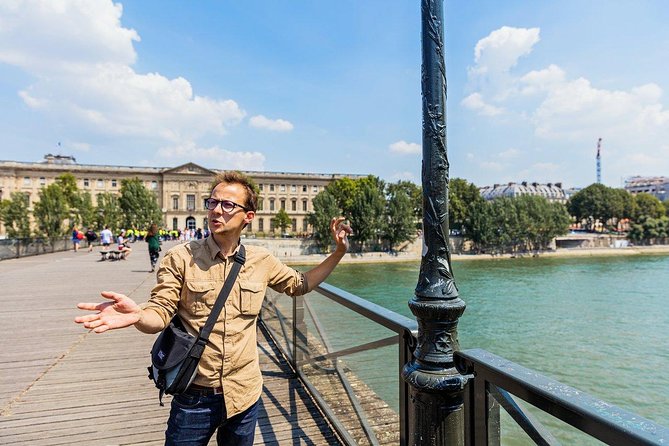
The path includes the Domaine National du Palais-Royal, created by Cardinal Richelieu in 1633. The palace housed royal families before Versailles took over that role.
Today, the gardens provide a pause from the large monuments. Contemporary sculptures and modern architectural features sit beside the older palace setting. Admission is not included, and the planned stop is short, so you see the area as part of the city walk rather than as a full visit.
Leaving the Louvre, you pass the Arc de Triomphe du Carrousel. Napoleon ordered the arch to commemorate military victories. Its location gives you a strong visual line toward the Tuileries Gardens and the wider ceremonial axis of central Paris.
This sequence works well because the guide can explain how royal space became revolutionary and imperial space, then public parkland. You keep walking, but the changing surroundings show how Paris repurposed its grandest sites.
Tuileries Gardens and the final walk to Concorde
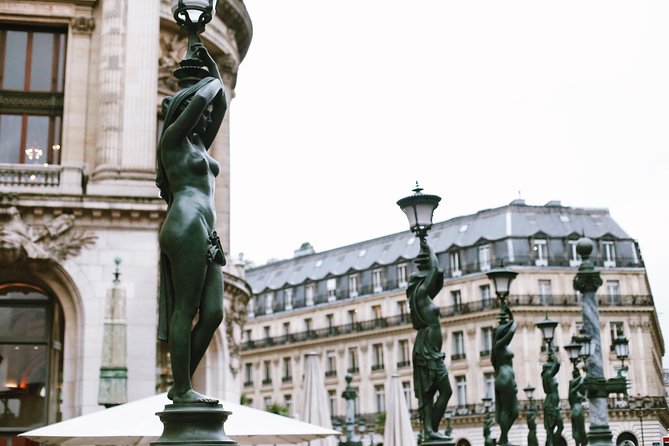
The Tuileries Gardens are the oldest park in Paris, with a history reaching back to the 17th century. Their formal paths and carefully arranged greenery make a welcome change after stone streets and crowded monuments.
You also pass the Tuileries Gardens Bookstore, a small shop focused on gardening and landscape design books, along with garden-themed gifts and cards. It is an unusual detail in a tour filled with famous names, and it gives you one more reason to notice the gardens rather than hurry through them.
The tour ends at Place de la Concorde. The square was once an execution site during the French Revolution and now marks the start of the Champs-Élysées. The ending ties together several themes from the walk: royal power, revolution, public ceremony, and modern Paris.
Because you finish here rather than return to the starting point, plan your next move in advance. You are well placed for the Champs-Élysées, but hotel drop-off is not provided, and you will need to continue by foot, Metro, taxi, or rideshare.
What the guides add to the walk
The strongest part of this experience is the guide’s role in turning a string of sights into a connected story. François has been praised for explaining Paris from its early tribes and Roman attacks through the Franks and the Revolution. That kind of timeline helps you see why the island matters.
Hugo has been described as holding attention throughout the walk, while Alasdair kept the history engaging even on a rainy morning. Lili led a longer-feeling city walk with a friendly manner, and Ren tailored the route to personal interests and questions.
Alex has also adapted the walk around questions and interests, while Claudia was noted for clear and pleasant explanations. Jill worked to accommodate requests, and Tamari, also identified in one account as Tamara, was praised for adjusting the experience to the group.
Guide quality can vary on any scheduled tour, but the pattern here is useful: this experience works best when you ask questions. The route is familiar to anyone with a Paris map, yet a good guide can explain why each stop belongs in the story.
Is the $59.69 price good value?
At $59.69 per person, this is a reasonable price for a small-group orientation if you want a guide rather than a self-guided walk. You are paying for about 2 hours and 40 minutes, a professional guide, a route linking many central sights, and a maximum group size of 12.
The price does not include entry to Sainte-Chapelle, the Conciergerie, the Palais de Justice, Palais-Royal, or the Louvre. Notre Dame entry is included, but the interior portion is unguided. If you want to visit several of those buildings inside, budget for separate tickets and extra time.
Group discounts may be available, and you can upgrade to a private tour for a more personalized outing. For most first-time visitors, the semi-private option offers the better balance. A private booking makes more sense if your group has a particular historical interest, a tight schedule, or specific requests.
Practical details that affect your day
The tour runs in all weather. Paris can look lovely in the rain, but this is still a long outdoor walk, so wear comfortable shoes and bring an umbrella, water, and a hat in summer.
No large bags or suitcases are allowed. Public transportation is nearby at the start, and you should provide a mobile phone number with the country code so the operator can contact you if needed.
The tour requires at least two people to operate. If that minimum is not reached, you are offered another date or a full refund. National celebrations can also change the route, with an alternative planned so you can still see the main sights. In that case, refunds or discounts are not provided.
Free cancellation is available until 24 hours before the start time. Changes or cancellations inside that window are not refunded, so check your plans before the deadline.
Who should book this Paris walk?
I would choose this tour for a first visit, especially if you want a fast orientation before exploring Paris on your own. It is also useful for anyone who likes history but does not want to spend a full day inside museums.
You should book it if you value a small group, enjoy asking questions, and want Notre Dame, the Louvre exterior, Pont Neuf, the Tuileries, and Place de la Concorde connected in one outing. The route also suits families and couples who prefer an active introduction to the city.
I would skip it if your priority is extended time inside Notre Dame, Sainte-Chapelle, the Conciergerie, or the Louvre. You will see many places, but the tour gives you context and orientation rather than full admission-based visits.
For the best use of your time, schedule it early in your Paris stay. You will finish with a clearer map in your head and several ideas for where to return on your own.
FAQ
How long does the tour last?
The experience lasts approximately 2 hours and 40 minutes. The included details also describe it as a 2.5-hour tour, so allow close to three hours for the complete outing.
Where does the tour start?
It starts in front of the entrance to Cité Métro station in Paris.
Where does the tour end?
The tour ends at Place de la Concorde, at the beginning of the Champs-Élysées.
Is Notre Dame admission included?
Yes. Entrance to Notre Dame is included, but the interior visit is unguided because of regulations.
Are admissions to the Louvre and Sainte-Chapelle included?
No. Admission to the Louvre, Sainte-Chapelle, the Conciergerie, the Palais de Justice, and Palais-Royal is not included.
How many people can join the tour?
The group has a maximum of 12 people. A private tour upgrade is also available.
Does the tour operate in bad weather?
Yes. The tour runs in all weather conditions, so bring suitable clothing and comfortable shoes.
Is hotel pickup included?
No. Hotel pickup and drop-off are not included. Taxi or rideshare service is recommended for private transfers.
What happens if the minimum group size is not reached?
The tour requires at least two people. If the minimum is not met, you are offered another date or a full refund.
Can I cancel for a full refund?
Yes, if you cancel at least 24 hours before the experience begins. Cancellations or changes made less than 24 hours before the start time are not refunded.
Newest history tours we have reviewed in France
- Avignon: History and Legend Walking Tour★ 4.8 · 122 reviews
- Avignon: Private Walking Tour – Discover History & Heritage★ 4.3 · 45 reviews
- Avignon: Historic District Guided Food & Wine Walking Tour★ 4.8 · 84 reviews
- Arc de Triomphe Rooftop: Unveil History & Breathtaking Views★ 3.1 · 23 reviews
- Arles: Private Guide Tour – Explore History & Culture★ 4.3 · 22 reviews
- Aix-en-Provence: Between History and City Charm★ 4.9 · 30 reviews
- The History of Paris: Historical Le Marais Private Tour★ 4.5 · 47 reviews
- Private Half Day Historic Tour★ 5.0 · 58 reviews
Private History Tours, compared.
Private Guided Historic Electric Cart Tour of St. Augustine
Read our review →
Private Full-Day Tour of Historical Alexandria
Read our review →
Private Tour of the Historic City in a Ford T Car
Read our review →
Madrid Historical Tour with Local Guide in Eco Tuk Tuk Private
Read our review →
Private Biblical Tour Ancient Corinth & Isthmus Canal from Athens
Read our review →
Private Kathmandu Sightseeing Tour | UNESCO World Heritage sites
Read our review →
Historic Porto by Private Electric Tuk Tuk to Top Landmarks
Read our review →Browse the lists this tour appears in