Review · PARIS HISTORY TOURS
Paris Jewish History 2-Hour Private Guided Walking Tour
Paris Jewish History 2-Hour Private Guided Walking Tour takes you from the Seine to the Marais, following a story shaped by faith, royal persecution, cultural life, antisemitism, war, and survival. You begin near Shakespeare & Company and finish near Bastille, with Notre Dame, the Pletzl, and the elegant Rue Pavée synagogue forming the main points of the walk.
I like the private format, which gives you room to ask direct questions, and the way the tour links Jewish history to the broader story of Paris. Guides such as Hannah and Boris have been praised for clear explanations, patience, and the ability to connect local streets with events such as the Dreyfus affair, the Vichy regime, and the Nazi occupation. The main drawback is time: two hours goes quickly, and one review found the tour needed more stories about everyday Jewish life.
Key points to know before booking
- A compact route through two major Paris areas: Start beside Notre Dame, then walk into Le Marais and its historic Jewish quarter before ending near Bastille.
- The Pletzl is the heart of the walk: You see the traditional Jewish neighborhood, Rue des Écouffes, Goldenberg Deli, and nearby streets that still help define this part of Paris.
- Rue Pavée synagogue is a major architectural stop: This roughly century-old Art Nouveau building gives the tour a visual focus beyond dates and political events.
- The story reaches from medieval Paris to the present: Expect discussion of royal raids, old prejudices, the Dreyfus affair, Vichy rule, and World War II.
- A private guide changes the pace: You can ask about family history, religious traditions, architecture, or Parisian neighborhoods without following a large group.
- The walk costs $176 per person: That is a serious price for two hours, but it can make sense for couples or small groups who value a dedicated guide and focused subject matter.
From Shakespeare & Company to Notre Dame
Your meeting point is in front of Shakespeare & Company, beside the green water fountain. Look for a guide carrying a red canvas tote bag. This is a useful location because it sits directly across the Seine from Notre Dame, so the tour begins in a central part of Paris rather than at an out-of-the-way neighborhood meeting place.
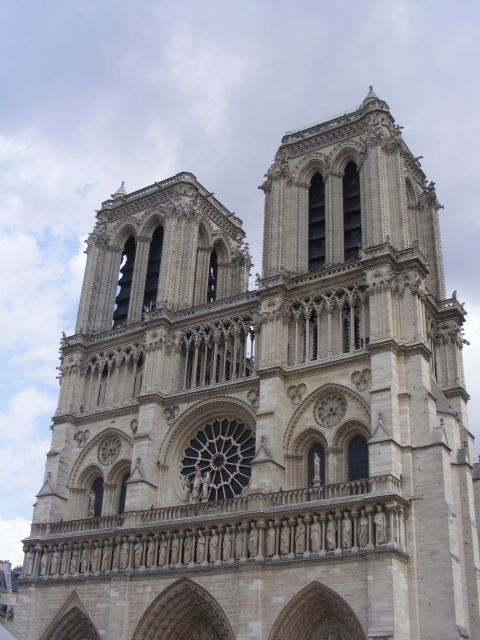
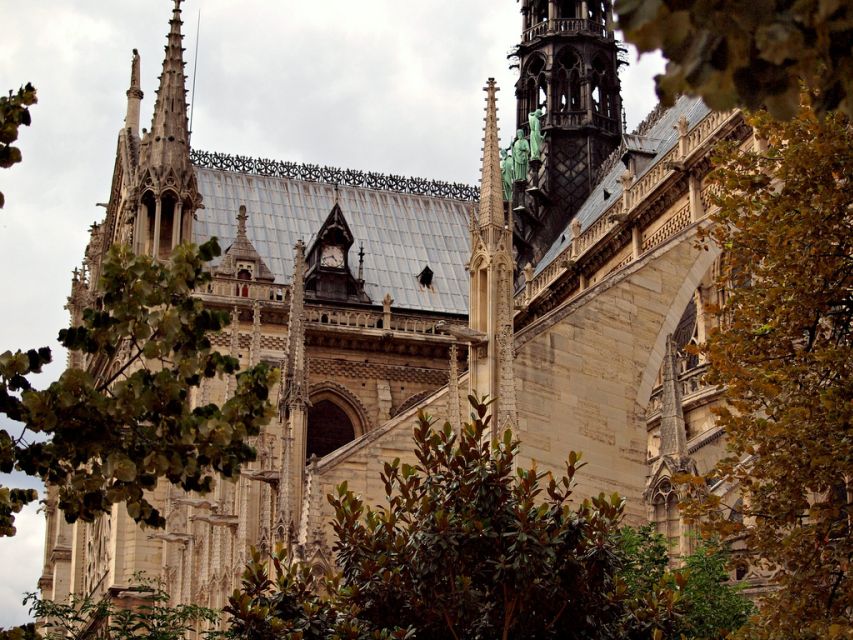
The opening stop is Notre Dame Cathedral, where about 30 minutes are set aside for a guided visit. The cathedral is not simply a famous Gothic church on this walk. You learn about the Jewish aspects connected with Notre Dame and the way Christian Europe’s attitudes toward Jewish communities shaped public life, religious thinking, and old accusations.
This part requires careful attention. The tour deals with uncomfortable subjects, including medieval superstition and prejudice. That is valuable because Jewish history in Paris cannot be reduced to food, architecture, and picturesque lanes. The hard parts explain why later events, including expulsions, legal restrictions, and political antisemitism, had such force.
I like starting at Notre Dame because it gives you a broad frame before you enter the Marais. You are not just being shown a neighborhood and told that it is Jewish. You are given a chance to understand how religious and political ideas affected real communities over many centuries.
The cathedral portion also has a practical limit. Thirty minutes is enough for an introduction, but not enough for a full architectural tour and a detailed account of Jewish life around the site. If you want every stone and historical episode explained, you will need to keep questions focused.
More History Walking Tours in France
- Paris: Dark History and Ghostly Guided Walking Tour
★ 4.7 · 1,000 reviews - Paris City of Fashion History Private Guided Walking Tour
★ 5.0 · 221 reviews - Paris City Center w/ Notre Dame interior | Exclusive Walking Tour
★ 5.0 · 190 reviews
A memorial to the Vichy victims
The route includes a memorial to victims of the Vichy regime, with approximately 15 minutes listed for a guided stop. This section brings the story into the 20th century, when the German occupation and the French Vichy government created a new period of persecution, deportation, and loss.
The memorial gives the historical account a physical place. Instead of hearing only about policies and dates, you pause at a site connected to people who suffered under those policies. The stop is brief, but it helps connect national decisions to the streets you are walking through.
The discussion also includes the Dreyfus affair, the Nazi occupation, and Vichy France. These subjects are not isolated chapters. A good guide can show you how older prejudices fed later political movements, while also explaining that Jewish life in Paris continued through cultural, religious, and family networks.
Boris has been singled out for weaving Jewish history together with the history of Paris and Europe. Hannah has also received praise for answering questions and giving a thorough explanation. The experience may vary by guide, but the private setup gives you a better chance to ask for more detail if the subject moves too quickly.
Entering Le Marais and the Pletzl
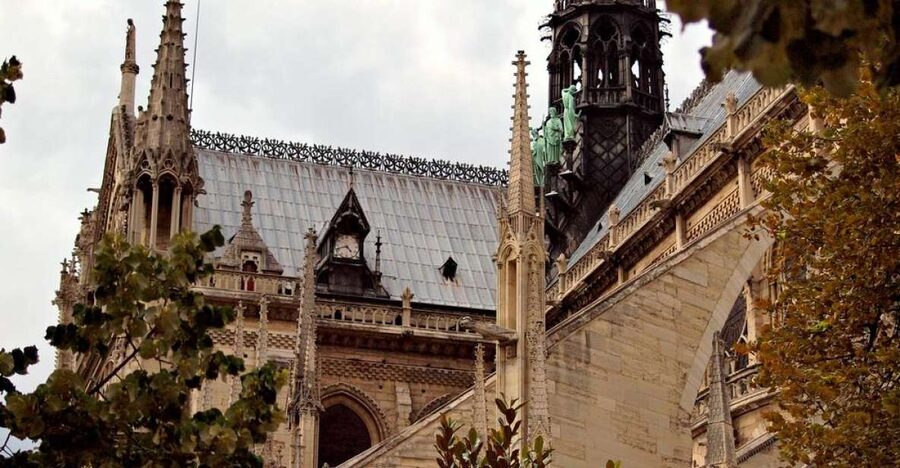
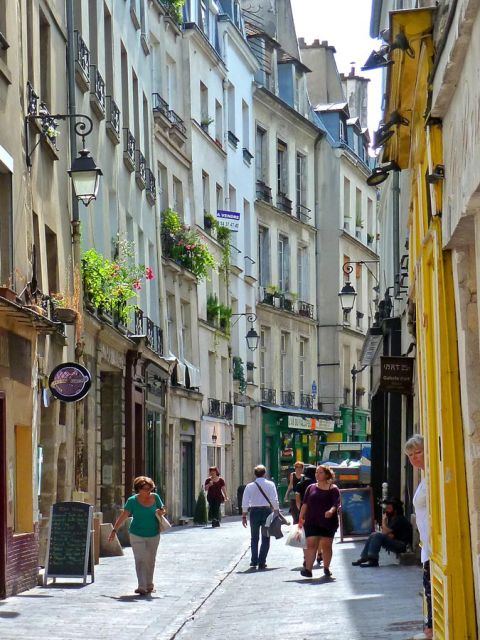
The largest part of the walk takes place in Le Marais, for about one hour. This is where the tour becomes more local and street-based. You see the Pletzl, the traditional center of Paris’s Hebrew community, along with Rue des Écouffes and the area around Goldenberg Deli.
Pletzl means little square in Yiddish, and the name is tied to the historic Jewish quarter in the Marais. The important point for you is that this is not just a themed route assembled for tourists. The neighborhood has been a setting for Jewish religious, commercial, and social life, and its streets carry traces of different periods.
Rue des Écouffes is one of the key streets. The route lets you consider how a community can be read through a city’s street plan, shops, restaurants, religious buildings, and local landmarks. Goldenberg Deli adds a food connection, although food and drinks are not included in the tour.
Do not expect a food tour. The deli is presented as part of the neighborhood story, not as a tasting stop. If you want to eat there or buy something along the route, plan for that separately and remember that the two-hour schedule may not leave much spare time.
This section should suit you if you like connecting history to ordinary urban details. You are walking through an active Paris neighborhood, not a museum that has been frozen in one decade. The Marais is also visually appealing, with historic buildings and handsome streets, but the tour keeps its focus on the Jewish story rather than providing a general neighborhood orientation.
Place des Vosges is another highlight. It is often considered one of the most beautiful squares in Paris, and its regular architecture gives you a chance to look at the planning and building skill behind the complex. The square helps broaden the tour beyond persecution and memorials. You see the Parisian setting in which Jewish residents lived, worked, worshiped, and formed community ties.
Rue Pavée synagogue and Art Nouveau detail
The Rue Pavée synagogue is likely the architectural high point of the walk. Built about a century ago, it is an Art Nouveau building with a design that sets it apart from the grand Gothic and classical buildings elsewhere on the route.
The tour uses the synagogue to show that Jewish Paris is not only a subject of medieval history or wartime memory. It also includes modern religious buildings, changing communities, and the cultural life of the 20th century. The building’s unusual design gives you something concrete to study while the guide explains its place in the neighborhood.
The description refers to the architectural genius that made this complex structure possible. That wording points you toward the building itself: its lines, ornament, and structure deserve attention. You should ask the guide about what you are seeing rather than treating the synagogue as a quick photo stop.
Access conditions inside specific sites are not fully detailed, so you should confirm the exact synagogue visit arrangements when booking. The listed route includes the Rue Pavée synagogue as a principal site, but a walking tour can sometimes involve viewing a building from outside or adapting the stop according to local conditions.
This is one reason a private guide can be useful. If architecture matters to you, you can request more explanation of the Art Nouveau features. If social history matters more, you can ask how the synagogue fits into Jewish life in Paris.
More History Walking Tours in Paris
- Paris: Le Marais & Montmartre Jewish History Walking Tour
★ 4.8 · 170 reviews - Historic Paris Walking Tour in English
★ 4.9 · 78 reviews - Paris: French Fashion History Walking Tour
★ 4.9 · 37 reviews - Paris: Fashion History Walking Tour in the Heart of Paris
★ 4.9 · 22 reviews
Why the private format matters
The tour costs $176 per person, which is high for a two-hour walk. The price is easier to justify if you are traveling as a small private group and want a guide devoted to your questions rather than a standard group lecture.
For one person, the cost may feel steep. For a couple or family splitting the cost across several participants, the private arrangement can offer better value. You are paying for subject focus, a dedicated guide, and the freedom to slow down at a memorial, ask about a family connection, or spend more time on architecture.
The provider, Paris in Person Private Tours, was selected among the top 10 small tour operators in Europe from a field of 26,000 companies. That recognition does not guarantee that every guide or departure will suit you, but it does provide useful context when comparing a specialist private tour with a cheaper general walking tour.
The language choices are English, French, and Serbo-Croatian. The tour is available as a private group, and the route is described as wheelchair accessible. Because Paris sidewalks and historic areas can still vary in width and surface, you should discuss any specific mobility needs before setting out.
The tour operates rain or shine. Bring suitable shoes and a waterproof layer if the forecast is uncertain. Two hours on foot is manageable for many people, but the route includes several neighborhoods and stops, so you should not treat it as a seated lecture.
What the guides do best
The strongest part of the experience is the guide’s ability to connect separate periods into one clear story. Hannah has been praised for being friendly, professional, and willing to answer questions. Boris has been praised for tying Jewish history to the history of Paris and Europe rather than presenting the subject as a narrow neighborhood tour.
Those details matter because the topic can become a list of dates very quickly. The best version of this walk will explain why a street matters, how a political event affected Jewish residents, and how the neighborhood changed over time.
The tour also works well for people who want a thoughtful introduction rather than a specialist academic seminar. You will hear about medieval origins, royal raids, antisemitic beliefs, the Dreyfus affair, the Nazi occupation, Vichy France, and the present day. In two hours, that is a lot of ground.
The tradeoff is depth. One rating of three out of five specifically wanted more stories about daily Jewish life in Paris. That is a fair concern. The route covers major events and important places, but you may not receive a long account of family customs, work, schooling, religious practice, or modern community life unless you ask for it.
Before the tour begins, think of two or three questions you care about. Ask about daily life, the role of the synagogue, the meaning of the Pletzl, or what changed after the war. A private guide can usually adjust the conversation more easily than a large group tour.
Who should book this walk
I would recommend this tour to you if you want Jewish history placed within the larger story of Paris. It suits first-time visitors who want a focused introduction, as well as returning visitors who have already seen the major monuments and want a more specific subject.
It is especially useful for:
- Couples or families willing to pay for a private guide
- Visitors interested in religious history, architecture, and World War II
- People who prefer walking and conversation to a large museum tour
- Travelers who want to explore the Marais with a clear historical purpose
- Those who appreciate being able to ask direct questions in English, French, or Serbo-Croatian
It may not be the best choice if you want a food tour, a long indoor museum visit, or a detailed account of only one era. It also may disappoint you if you expect extensive stories about daily Jewish life without taking an active role in shaping the discussion.
The route finishes near Bastille, at a useful point for continuing your day in central Paris. You can plan a meal or another Marais visit afterward, but food and beverages are not included.
Should you book it?
Book this walk if you want a serious, compact introduction to Jewish Paris, with the Pletzl, Rue Pavée synagogue, Notre Dame, Place des Vosges, and Vichy memorials tied into one route. The guide quality appears to be the deciding factor, and the strongest feedback points to Hannah and Boris as thoughtful, clear, and responsive.
At $176 per person, this is not a bargain walking tour. It is a specialist private experience, so the price makes the most sense when shared by a small group or when the subject has real importance to you. Go in ready to ask questions, and you will get more from the two-hour format.
FAQ
How long does the Paris Jewish History walking tour last?
The tour lasts two hours.
Where does the tour begin?
The meeting point is in front of Shakespeare & Company, beside the green water fountain.
How will I identify the guide?
The guide will be carrying a red canvas tote bag.
Where does the tour finish?
The tour finishes at Bastille.
Which languages are available?
The live tour guide may conduct the tour in English, French, or Serbo-Croatian.
Is this a private tour?
Yes. The activity is offered for a private group.
Is the walking tour wheelchair accessible?
Yes. The tour is listed as wheelchair accessible.
Does the price include food or drinks?
No. Food and beverages are not included.
What happens if it rains?
The tour operates rain or shine, so bring clothing suitable for the forecast.
More Jewish Heritage Tours in Paris
- Budapest Jewish Heritage Memorial Walking Tour & Synagogue Entry
★ 5.0 · 568 reviews - Budapest: Jewish Heritage Guided Tour with Synagogue Ticket
★ 4.8 · 533 reviews - 3-Hour Porto Jewish Heritage Walking Tour with Local Guide
★ 4.5 · 396 reviews - Private Jewish Heritage Journey by Barcelona Dreaming
★ 4.8 · 383 reviews
More Private History Tours in France
- History of Paris City Center w/ Notre Dame Semi-Private 12ppl Max
★ 5.0 · 194 reviews - Private Half Day Historic Tour
★ 5.0 · 58 reviews - The History of Paris: Historical Le Marais Private Tour
★ 4.5 · 47 reviews - Strasbourg: Private Walking Tour of the Historical Center
★ 4.2 · 107 reviews
Newest history tours we have reviewed in Paris
- The historic district of Montmartre★ 4.9 · 66 reviews
- Paris: Fashion History Walking Tour in the Heart of Paris★ 4.9 · 22 reviews
- Paris: Khéops VR Experience – Explore Ancient Egypt★ 4.9 · 39 reviews
- Paris: French Fashion History Walking Tour★ 4.9 · 37 reviews
- Montmartre Walking Tour: A Journey Through Art and History★ 5.0 · 21 reviews
- Historic Paris Walking Tour in English★ 4.9 · 78 reviews
- Explore the Marais: History, Art & Local Culture★ 4.6 · 105 reviews
- Arc de Triomphe Rooftop: Unveil History & Breathtaking Views★ 3.1 · 23 reviews
Jewish Heritage Tours, compared.
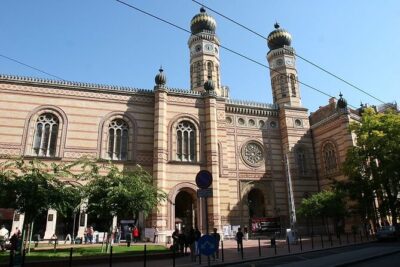
Budapest Jewish Heritage Memorial Walking Tour & Synagogue Entry
Read our review →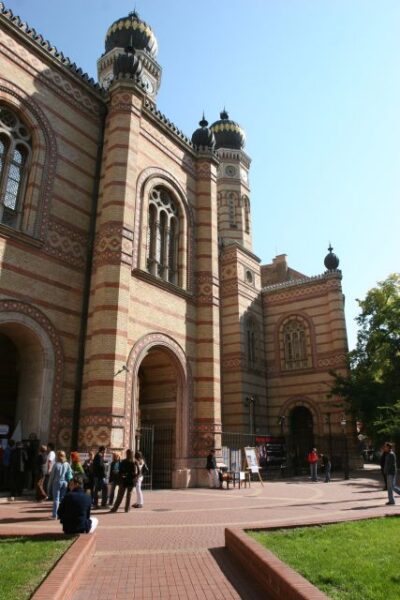
Jewish Heritage Guided Tour with Synagogue Ticket
Read our review →
3-Hour Porto Jewish Heritage Walking Tour with Local Guide
Read our review →
Private Jewish Heritage Journey by Barcelona Dreaming
Read our review →

Anne Frank and the Jewish History of Amsterdam Private Tour
Read our review →
Lisbon Jewish Heritage and History – Private Tour Van
Read our review →