
Review · MUSEUM & GALLERY HISTORY TOURS
Palazzo Falson Historic House Museum entrance ticket
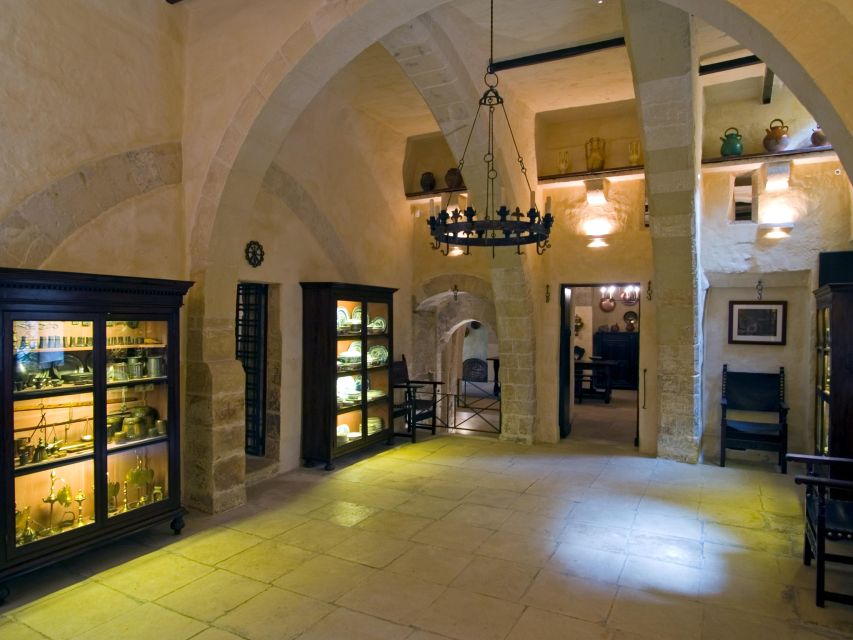
Palazzo Falson is not just another old house in Mdina. It is a medieval family palace filled with the personal collecting passion of Captain Olof Frederick Gollcher, from paintings and armour to books, rugs, jewellery, and silver. The house itself is part of the attraction, with rooms arranged around an internal courtyard and original living quarters on the upper level.
I like the chance to see 17 furnished rooms with 45 separate collections without joining a fixed tour. I also like the rooftop cafeteria, where you can pause over coffee and look across Mdina and beyond. The main drawback is simple: 3,500 objects and more than 4,500 books can feel like a lot if you prefer a quick, light museum visit.
Key points to know before you go
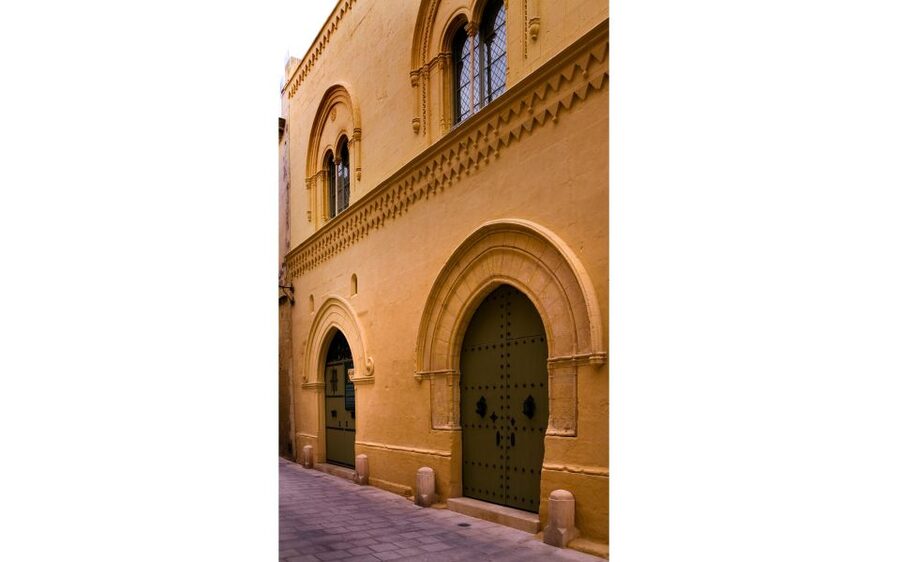
- A medieval Mdina palace: Palazzo Falson is the second-oldest building still standing inside the walled city.
- A collector’s house: Captain Olof Frederick Gollcher’s paintings, books, armour, furniture, and decorative objects fill the rooms.
- Forty-five collections in 17 rooms: Expect more than a single display of paintings or period furniture.
- Important old paintings: Works attributed to Mattia Preti, Jusepe de Ribera, Jakob-Ferdinand Voet, Charles Beale, and Juriaen van Streeck are part of the collection.
- Audio guide included: Choose English, French, German, Italian, Maltese, or Spanish.
- A pleasant finishing point: The upper-floor cafeteria has wide views of Mdina and the surrounding area.
Entering Mdina’s second-oldest surviving building
Palazzo Falson sits inside Mdina, Malta’s former capital, and its age is immediately important to the visit. The building’s origins reach back to the early 13th century, when it was created as a residence for Maltese nobility.
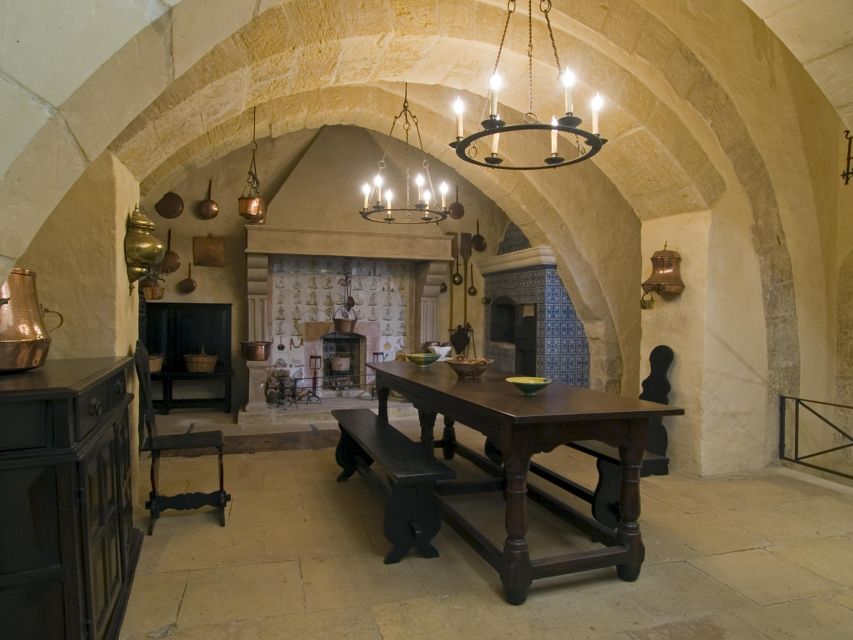
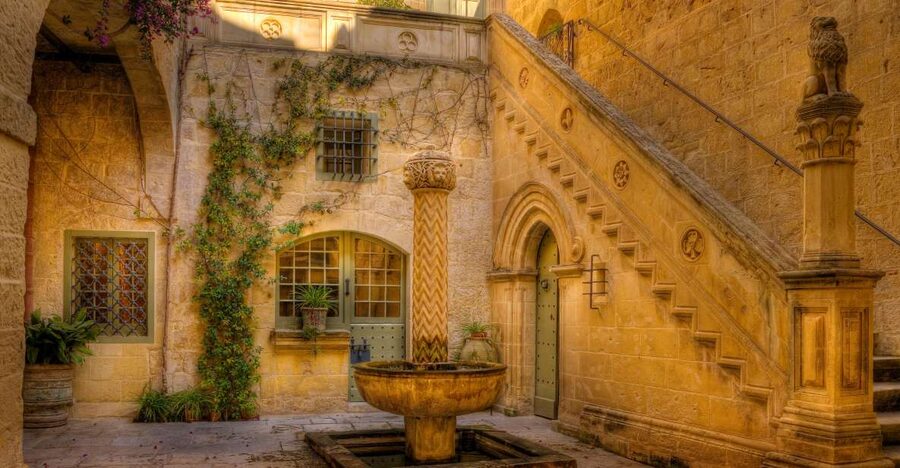
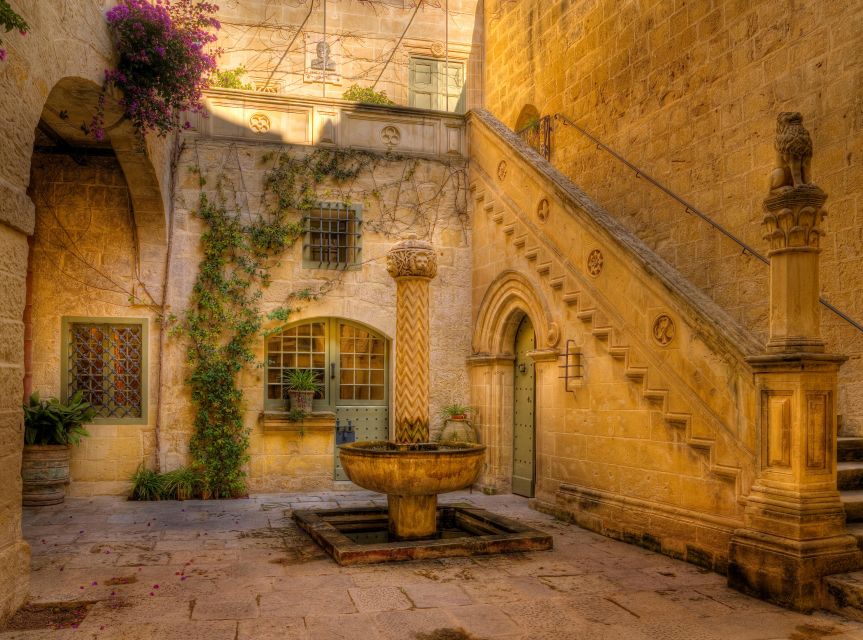
This is not a grand palace designed only for ceremonies. It is a two-storey medieval home shaped by Sicilian building traditions of the period. Rooms wrap around an internal courtyard, while the noble floor above contains the original living quarters. The rooms at the rear of the courtyard form the oldest section.
That layout gives the visit a useful sense of place. You are not simply walking past objects in a modern gallery. You are seeing them within the sort of domestic setting where a noble family once lived, entertained, stored possessions, and displayed its status.
The building has carried several names over time, including Palazzo Cumbo-Navarra, Casa dei Castelletti, and The Norman House. Its connection with the Falson family dates to the early 16th century, when Vice Admiral Michele Falson inherited the property and served as head of Mdina’s town council.
The palace also played a role at a major moment in Malta’s story. After Malta was given to the Knights of the Order of St. John by Emperor Charles V, the first Grand Master in Malta, Philippe Villiers de L’Isle Adam, was hosted here after taking possession of Mdina on 13 November 1530.
You do not need to be an expert in Maltese history to appreciate the building. The simple pleasure is moving through a house that has survived for centuries, then seeing the objects that a later owner gathered inside it.
More Museum and Gallery History Tours in the world:
- New York City: American Museum of Natural History Ticket
★ 4.5 · 15,447 reviews - Paris: Louvre Museum Entry with History of Mona Lisa
★ 3.9 · 2,823 reviews - Venice’s Best: Basilica, Doge’s Palace, Gondola & History Gallery
★ 4.5 · 2,478 reviews
Following Gollcher’s collecting life through 17 rooms
The house museum owes much of its character to Captain Olof Frederick Gollcher, who lived from 1889 to 1962. Of Swedish descent, Gollcher was an artist, researcher, philanthropist, and collector. He also received several honours, including the O.B.E.
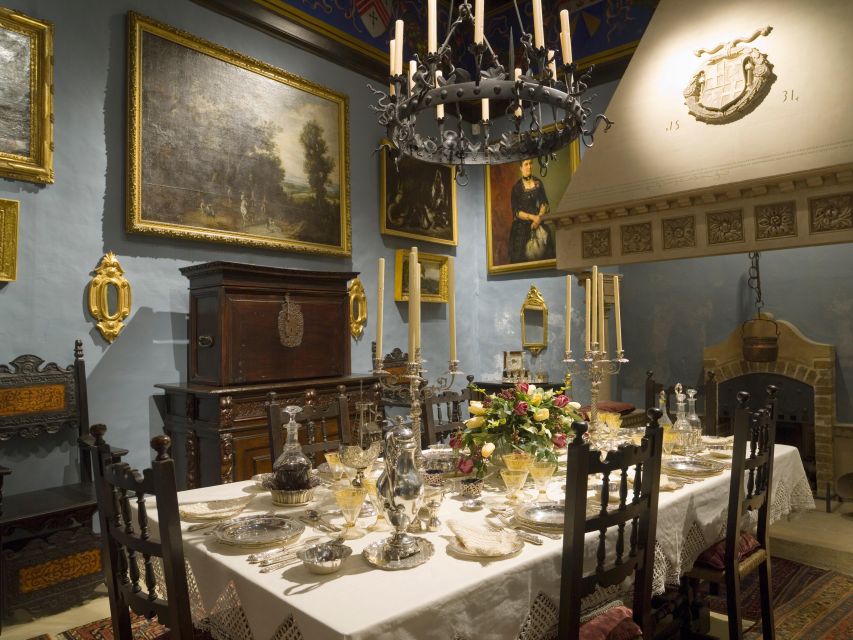
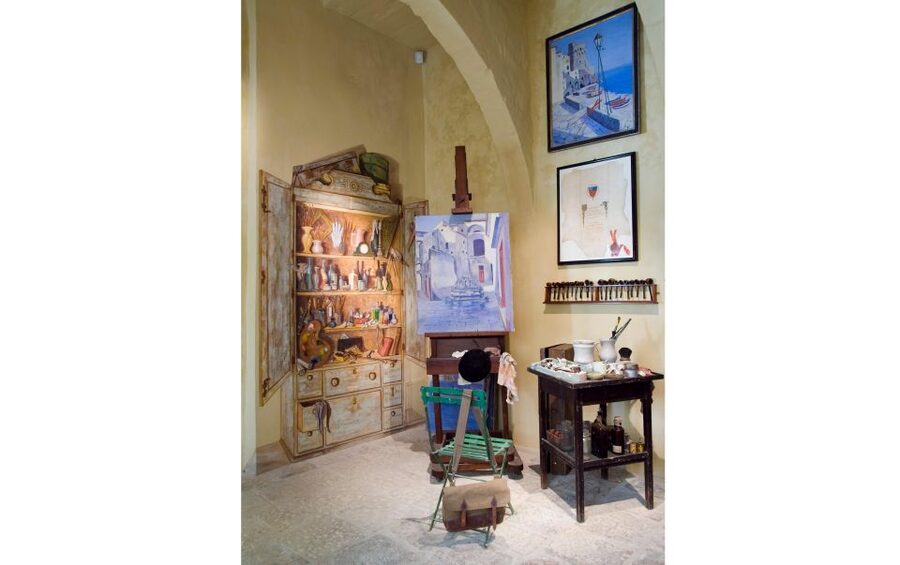
His collection is the reason Palazzo Falson feels so varied. Rather than focusing on one art form, the house brings together 45 different collections and more than 3,500 objects. You might move from paintings to silver, then from jewellery to Oriental rugs or armoury.
That variety makes the museum rewarding for people with different interests. I would recommend it to you if one person in your group enjoys art while another prefers historic weapons, books, or domestic objects. No one has to rely on a single theme to enjoy the visit.
It also means you should resist trying to rush through every item. The audio guide can help you give the important pieces their due, while printed information lets you read at your own pace. Since the ticket is valid for one day, you have more freedom than you would on a tightly timed tour.
The collection can also tell you something about the collector himself. A group of paintings, manuscripts, furnishings, and decorative pieces gives a clearer picture of a person’s tastes than a single portrait ever could. You see the range of subjects that caught Gollcher’s attention and the care given to preserving them.
The paintings worth slowing down for
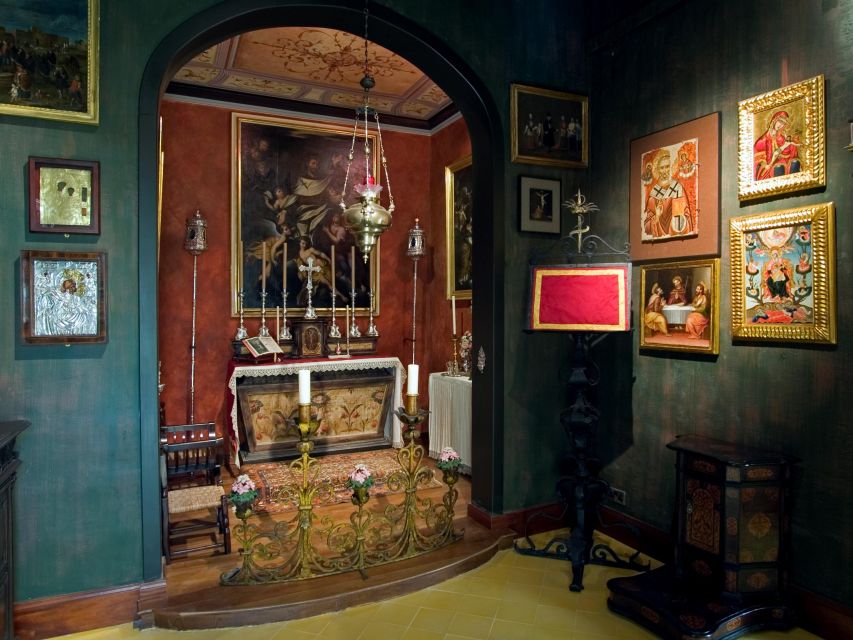
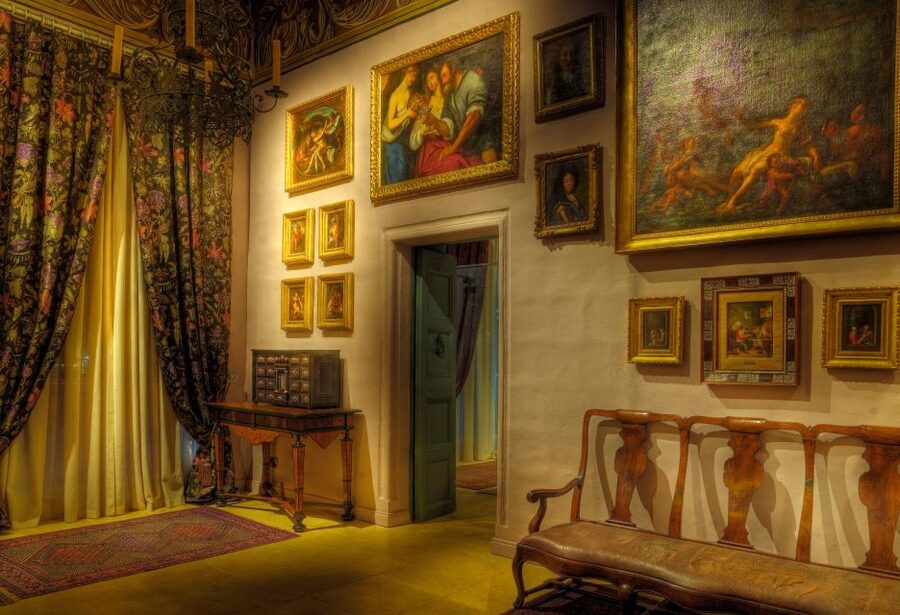
Palazzo Falson’s paintings collection includes several important 17th-century works. Some are attributed to Mattia Preti, Jusepe de Ribera, Jakob-Ferdinand Voet, Charles Beale, and Juriaen van Streeck.
Those names give the collection real weight, but the museum does not require you to arrive with a degree in art history. Use the audio guide to understand which works deserve extra time, then look closely at the paintings rather than treating them as background decoration.
The presence of several attributed works is also worth noting. Attribution means the work is connected to a particular artist, but the wording does not necessarily mean every painting was definitively painted by that person. If you care about art history, pay attention to the labels and audio commentary instead of assuming every attribution is certain.
I like this part of the visit because it gives Palazzo Falson a stronger artistic purpose. You are not looking only at an old house filled with attractive furniture. You can also see works linked to serious 17th-century painting, set within the atmosphere of a private collection.
Silver, jewellery, armour, rugs, and everyday surroundings
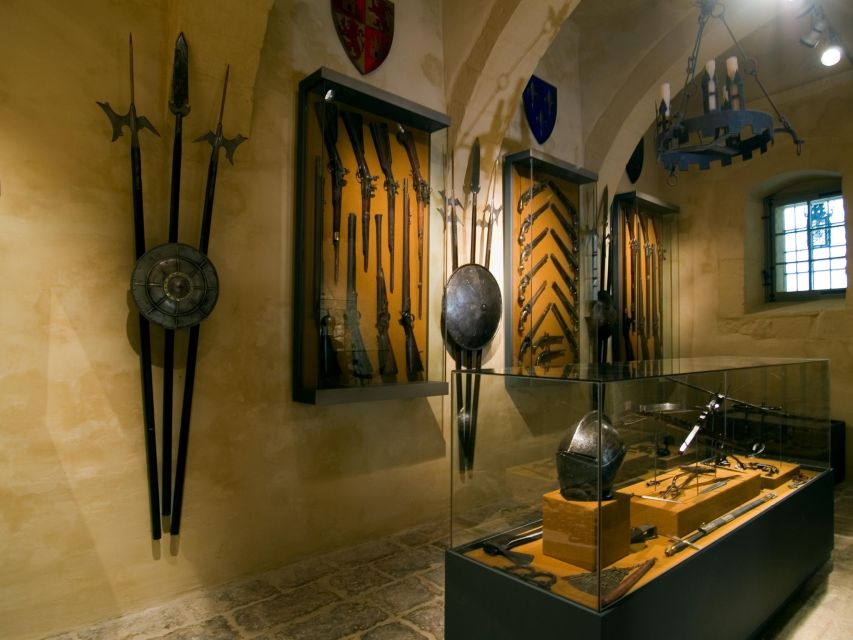
The non-painting objects help keep the museum from feeling too narrow. Silver and jewellery show the value placed on fine materials and skilled workmanship. Furniture helps explain how the rooms functioned. Armoury brings a more practical and martial note, while Oriental rugs soften the interiors and add colour and pattern.
These displays are especially useful if you want to understand how objects shape a historic home. A painting can be admired on its own, but a house filled with furniture, textiles, books, and decorative pieces feels more connected to daily life.
The collection’s range may also affect your pace. You can spend a short time on each room and still get a general impression, or stop often to examine details. I would allow enough time to use the audio guide rather than treating this as a ten-minute stop between Mdina’s streets.
The museum has no single route described as a guided itinerary. Instead, your visit is a self-paced exploration of the house and its collections. That suits independent sightseeing, especially if you want to pause for photographs where permitted, listen to selected audio sections, or return to an object that caught your eye.
More Entry Tickets in the world:
- Edinburgh: Edinburgh Castle Guided History Tour with Tickets
★ 4.8 · 9,933 reviews - Taormina: Ancient Theater Skip-the-Line Ticket & Audio Guide
★ 4.5 · 2,412 reviews - Historic Milan Tour with Skip-the-Line Last Supper Ticket
★ 4.5 · 1,976 reviews - American Museum of Natural History Admission Ticket
★ 4.0 · 1,931 reviews
The library, books, and manuscripts
One of the most unusual parts of the collection is the library, which contains more than 4,500 books along with valuable manuscripts. This gives the house a different mood from a standard art museum.
Books can be easy to overlook when you are surrounded by paintings and furniture, but they reveal another side of Gollcher’s interests. A library of this size suggests sustained collecting and research, not casual decoration. The manuscripts add a sense of rarity, though you should rely on the museum’s information for the details of individual items.
If you enjoy old books, written records, or the feel of a scholar’s private world, give this section time. If you are mainly interested in paintings, it may be the part you move through more quickly. That is one advantage of the audio guide and open duration: you can shape the visit around your own interests.
Finishing with coffee above Mdina
The upper-floor cafeteria is a welcome feature. From the terrace, you can enjoy views of Mdina and beyond, making it a natural place to pause after the indoor rooms.
A coffee stop may sound like a small detail, but it changes the rhythm of the visit. Palazzo Falson asks you to take in many objects in a relatively intimate setting. Sitting on the terrace gives you a chance to process what you have seen rather than walking straight back into Mdina’s narrow streets.
A February 2026 visit by Julie from the United States included touring the house and then enjoying coffee on the rooftop. That is a practical model for your own visit: see the rooms first, then use the cafeteria as a calm end point.
The terrace is also useful if your group has different levels of interest. Someone who loves historic interiors can spend longer with the collection, while another person can look forward to the view and coffee. Just remember that the ticket covers entry to the museum, not any food or drink purchased at the cafeteria.
What the $15 ticket is worth
At $15 per person, this is a good-value choice if you want more than a quick look at Mdina’s streets. The ticket gives you access to a historic building, 17 rooms, 45 collections, and more than 3,500 objects. It also includes the audio guide, which adds value because the collection is too broad to understand fully from a casual walk-through.
The price is less attractive if you only want a short stop or have little interest in household objects, books, or collecting. Palazzo Falson is not a single spectacular room with one famous object. Its appeal grows as you see how the building, rooms, and collections work together.
Compared with a fixed guided excursion, the ticket also gives you control. There is no stated transport or group itinerary, so you are paying for entry and interpretation rather than a full-day tour package. That makes sense for a visit within Mdina, where you can fit the museum around your own plans.
You can reserve now and pay later, which is useful if you are arranging a Malta itinerary before all your timings are fixed. You can also cancel up to 24 hours ahead for a full refund. The ticket is valid for one day, with starting times subject to availability.
Who will enjoy Palazzo Falson most
I would choose this museum for you if you like historic homes, old collections, or the quieter side of a city visit. It is also a strong pick for anyone who wants to see art in a domestic setting rather than in a large, modern gallery.
It suits:
- Art lovers interested in 17th-century paintings and their attributions
- History fans curious about Mdina’s medieval buildings and noble families
- Book lovers who want to see a library of more than 4,500 volumes
- Visitors who enjoy silver, furniture, jewellery, rugs, and armoury
- Independent sightseers who prefer an audio guide to a fixed group tour
- Couples or small groups who want a museum visit followed by a rooftop coffee
Children under six are not suitable for this activity, according to the admission information. Older children may enjoy the armoury and unusual household objects, though the large collection and audio commentary may appeal more to adults and older students.
The available audio guide languages are English, French, German, Italian, Maltese, and Spanish. Printed information is offered in Arabic, Chinese, Czech, Dutch, English, French, German, Greek, Hungarian, Italian, Japanese, Maltese, Polish, Portuguese, Russian, Slovak, Spanish, and Swedish. That printed range is useful if your preferred audio language is not available.
Should you book this Mdina house museum?
Book Palazzo Falson if you want to see an old Mdina residence from the inside and enjoy a broad, personal collection rather than a single headline attraction. The $15 price is fair for the building, the audio guide, the art, the library, and the chance to finish with views from the terrace.
Skip it if your Malta schedule allows only a very brief Mdina walk and you are not interested in paintings, furniture, books, or historic objects. For everyone else, I would set aside time to listen, look closely, and end with coffee above the city. That is when the palace feels less like a checklist stop and more like a visit to a collector’s carefully preserved home.
FAQ
Where is Palazzo Falson Historic House Museum?
It is in Mdina, Malta’s former capital city, inside the walled city.
How much does admission cost?
The entrance ticket costs $15 per person.
How long is the ticket valid?
The ticket is valid for one day.
Is an audio guide included?
Yes. An audio guide is included with admission.
Which audio guide languages are available?
You can use the audio guide in English, French, German, Italian, Maltese, or Spanish.
Is printed information available?
Yes. Printed information is available in Arabic, Chinese, Czech, Dutch, English, French, German, Greek, Hungarian, Italian, Japanese, Maltese, Polish, Portuguese, Russian, Slovak, Spanish, and Swedish.
What is included in the ticket?
The ticket includes entrance to Palazzo Falson Historic House Museum and the audio guide.
What can I see inside the museum?
The museum has 17 rooms containing 45 collections and more than 3,500 objects, including paintings, silver, furniture, jewellery, Oriental rugs, armoury, books, and manuscripts.
Can children visit Palazzo Falson?
Children under six are not suitable for this activity.
Can I cancel my booking?
Yes. You can cancel up to 24 hours in advance for a full refund.
Can I reserve now and pay later?
Yes. The reserve now and pay later option lets you keep your plans flexible and pay nothing at the time of booking.
Newest history tours we have reviewed in the world
- Enjoy Ancient Mostar★ 4.0 · 45 reviews
- Private Dublin Historical and Heritage Tour by Bike★ 5.0 · 30 reviews
- Dubrovnik by Night, History, Wine & Bites★ 5.0 · 41 reviews
- Ancient Old City– Finest tour of Dubrovnik★ 5.0 · 64 reviews
- Historical Walking Tour of Dublin★ 5.0 · 50 reviews
- DayTripper Dublin: A Guided City Walking Tour★ 5.0 · 90 reviews
- Dublin LGBTQ Pride Historical and Cultural Walking Tour★ 5.0 · 91 reviews
- Interactive Living History in Dalkey Castle near Dublin City★ 5.0 · 133 reviews
Museum & Gallery History Tours, compared.

Louvre Museum Entry with History of Mona Lisa
Read our review →
Venice’s Best: Basilica, Doge’s Palace, Gondola & History Gallery
Read our review →
American Museum of Natural History Admission Ticket
Read our review →
Guided African American History Tour with Reserved Museum Entry
Read our review →
POLIN Museum of the History of Polish Jews Ticket
Read our review →
Bell Tower & St Mark’s Square History Gallery Ticket
Read our review →
Field Museum of Natural History Ticket or VIP Tour
Read our review →Browse the lists this tour appears in