
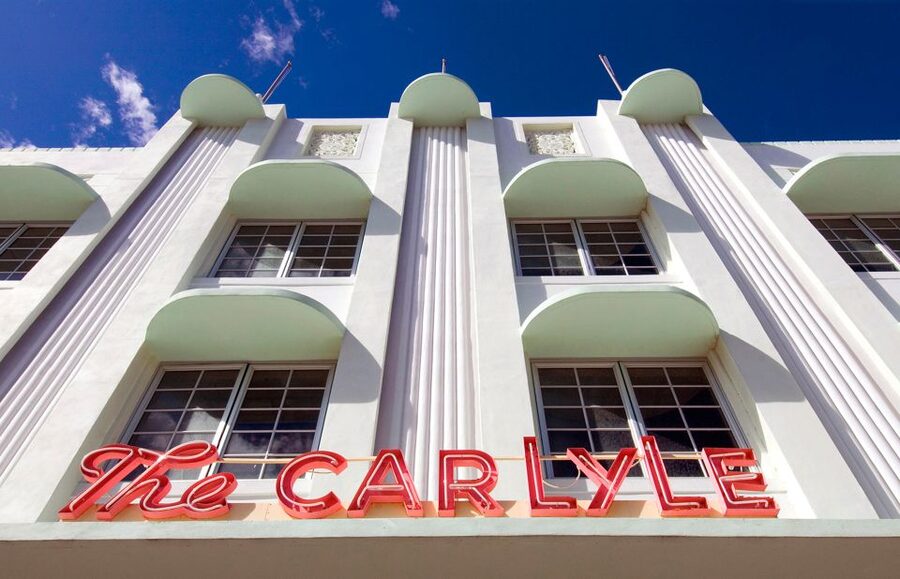
Review · USA HISTORY TOURS
Award-winning Art Deco & History Walking Tour
Miami Beach starts with a surprise: much of it is man-made, and Biscayne Bay was once shallow swamp. This 150-minute walk uses that strange beginning to explain how South Beach grew into a stage for Art Deco hotels, segregation, Cuban migration, movie crews, and some very dark headlines. Damian, a local historian and preservationist, leads the tour with clear enthusiasm.
I like the close look at buildings you could easily pass without noticing, and I like the way architecture is tied to real people and events. Muhammad Ali’s first world heavyweight title win, Miami Vice, Scarface, the Versace murder, and the cocaine cowboys era all enter the story. The only concern is the packed length: at two and a half hours, it may feel long if you prefer a quick orientation walk.
Key points
- Meet inside The Betsy Hotel: The tour begins in an elegant historic setting rather than on a noisy street corner.
- See three architectural styles: Art Deco, Mediterranean Revival, and MiMo receive attention, with details explained in plain language.
- Enter selected historic spaces: Hotel lobbies, rooftops, and other semi-public areas add depth beyond sidewalk viewing.
- Connect buildings to Miami’s darker chapters: Segregation, crime, scandals, migration, and the cocaine cowboys era are part of the story.
- Recognize famous film locations: Miami Vice, Scarface, and Birdcage are linked to places around South Beach.
- Take home a personal guide map: Damian prepares an artful map to help you continue exploring after the walk.
Starting at The Betsy Hotel

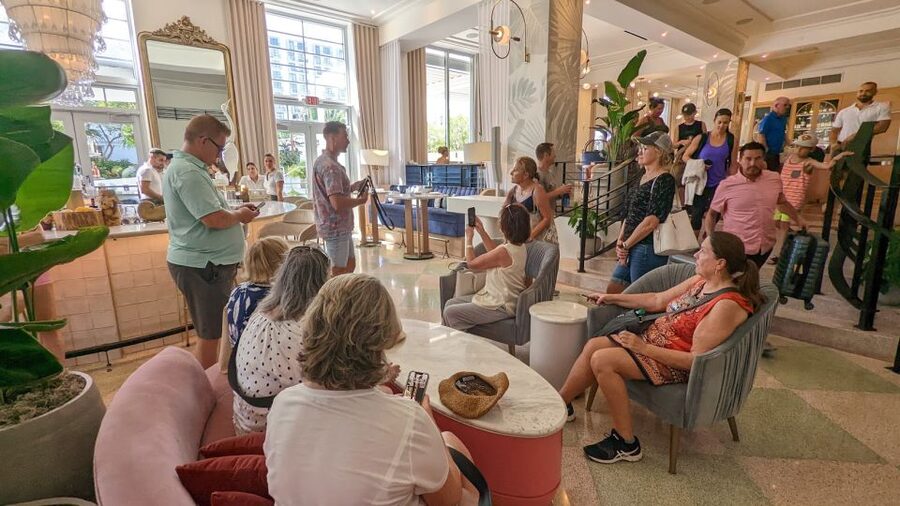
Meeting at The Betsy Hotel gives the tour a fitting opening. You are not simply gathering beside a sign and waiting for a guide to arrive. You begin in one of Miami Beach’s notable hotels, with the chance to connect the setting to the wider story of South Beach architecture.
From there, the walk moves through iconic streets in the South Beach area. The route includes historic hotel lobbies, rooftops, and other semi-public spaces, so the experience is not limited to pointing at façades from across the road. That matters in Miami Beach, where a building’s lobby can reveal as much about its era and intended audience as its exterior.
I would arrive ready to walk and stand for a long stretch. The advertised duration is 150 minutes, and the content is described as packed. One person who enjoyed the tour still felt a shorter two-hour format might have been preferable, so this is not the best choice if you want a brief introduction before heading straight to the beach.
More History Walking Tours in the USA
- History and Hauntings of Salem Guided Walking Tour
★ 5.0 · 14,564 reviews - Boston: Freedom Trail History Small Group Walking Tour
★ 5.0 · 6,450 reviews - Historic Charleston Guided Sightseeing Walking Tour
★ 5.0 · 6,216 reviews
Learning how a swamp became Miami Beach
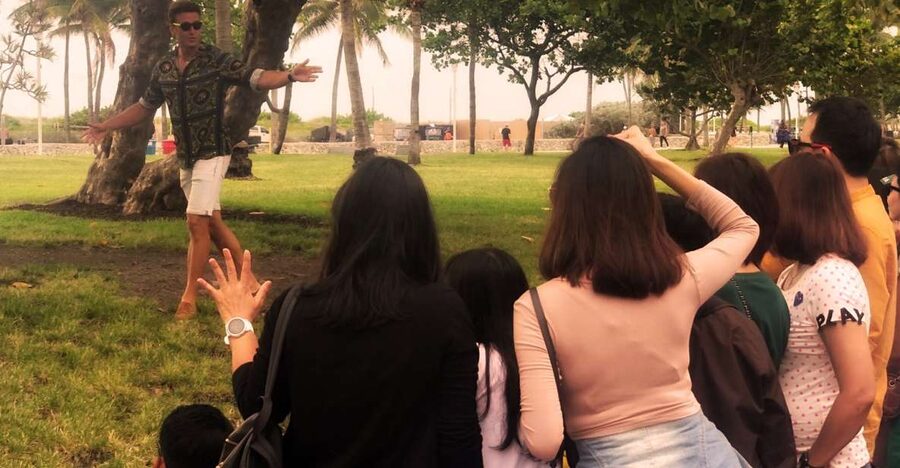
The strongest part of the tour’s setup is its sense of improbability. Miami Beach is mostly man-made, while Biscayne Bay was once a shallow swamp. Those facts give you a useful lens for the city: this is not an old settlement that simply grew at its own pace. It is a built environment shaped by ambition, money, engineering, migration, weather, image-making, and reinvention.
That context makes the architecture easier to understand. Art Deco buildings do not appear as isolated pretty façades. They become evidence of the period when Miami Beach was selling a particular idea of modern leisure. The walk also covers the city’s early development and the Great Depression, helping you place the hotels and streets within larger economic changes.
You will hear about the evolution of the city over time rather than getting a narrow lesson in decorative style. I find that approach more useful because Miami Beach can look like a postcard until someone explains the forces behind it. Once you know what shaped the place, the details on the buildings carry more weight.
Reading Art Deco, Mediterranean Revival, and MiMo
Miami Beach is often reduced to Art Deco, but this tour also covers Mediterranean Revival and MiMo. That broader view is important. It helps you see that South Beach is not one uniform design district, and it gives you more tools for sorting out what you are looking at.
Damian explains architectural details in an accessible way, even if you have no background in design. You can expect to study the features that make these styles distinct, then connect those features to the period and purpose of each building. The point is not to memorize a list of terms. It is to leave with a better eye.
That change in attention is one of the tour’s best results. Afterward, you are more likely to notice lines, decoration, scale, and the way a hotel presents itself to the street. Damian’s work with the Miami Design Preservation League also gives the walk a preservation angle. You hear not only what a building looks like, but why protecting Miami Beach’s character matters.
The style lesson is balanced by local stories and humor. Damian is described as charismatic, friendly, organized, and passionate about the subject. Several comments specifically praised his ability to make complicated design ideas easy to understand. That delivery is useful because architecture tours can become dry when every stop turns into a vocabulary test.
Going inside the hotels
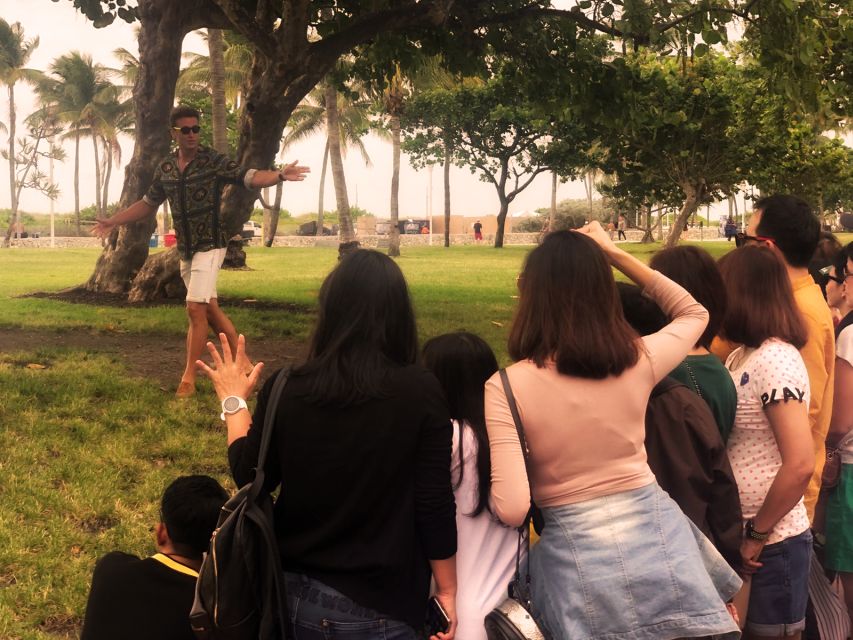
Sidewalk viewing has limits. You can photograph a façade, but you cannot always understand how a hotel was meant to feel from the outside. Access to historic lobbies, rooftops, and other semi-public areas gives the tour a more complete sense of place.
The exact spaces can depend on what is available during the walk, so I would not treat every interior as a guaranteed grand reveal. Still, this access is a real advantage over a basic street stroll. You get to consider how the public face of Miami Beach continues inside, where design, hospitality, and social life met.
The interiors also help explain why these buildings were more than backdrops. They were part of the city’s identity and its promise to visitors. A guide who can point out details in both public streets and hotel spaces helps you see the district as a working historic area, not just a collection of façades preserved for photographs.
Same streets, a different century:
- New York City: American Museum of Natural History Ticket
★ 4.5 · 15,447 reviews - Charleston’s Old South Carriage Historic Horse & Carriage Tour
★ 5.0 · 10,023 reviews - Beneath The Streets Underground History Tour
★ 4.5 · 8,006 reviews - Big Island in a Day: Volcanoes Waterfalls Sightseeing and History
★ 5.0 · 6,569 reviews
Meeting Miami’s stranger side
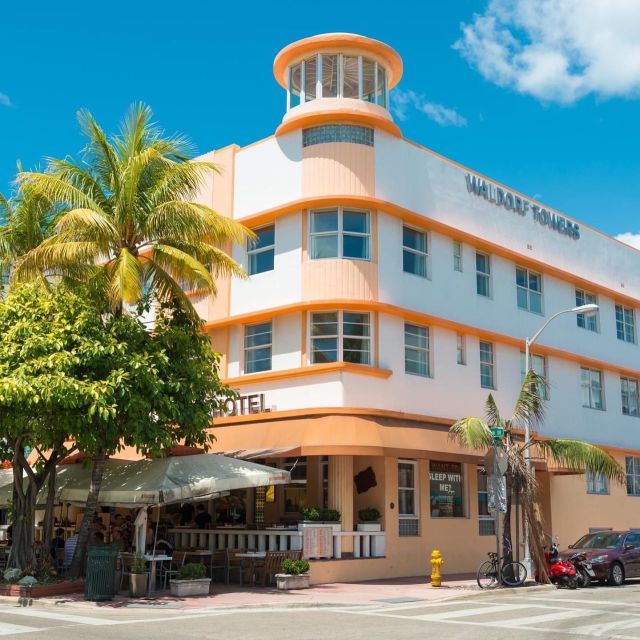
This is not a polite architecture tour that avoids difficult subjects. The story includes segregation, Jewish history, Cuban migration, the cocaine cowboys era, and the influence of Miami Vice. Those chapters complicate the glossy image of South Beach, which is exactly why they belong here.
The treatment of segregation is especially valuable because tourism can flatten Miami Beach into sun, nightlife, and colorful buildings. The city’s past included exclusion and unequal access, and the tour places those realities beside the architecture. Jewish history and Cuban migration add another layer, showing how communities helped shape Miami Beach’s identity.
The true crime and scandal material gives the walk a darker pulse. You will visit locations connected with notorious events, including the murder of Gianni Versace. You will also hear about the cocaine cowboys period, a chapter that helped define Miami’s reputation far beyond Florida.
I appreciate that these stories are used as history rather than cheap shock. The information provided describes the tour as a look at the city’s checkered past, and that is a fair expectation. You should book it if you want Miami’s contradictions included. If you prefer architecture without crime, scandal, or social history, some sections may feel off your preferred track.
Seeing the city through film
Miami Beach has long been used as a visual shorthand for glamour, danger, and oddball comedy. The walk points out film locations associated with Miami Vice, Scarface, and Birdcage, showing how the city’s appearance helped make those productions memorable.
This adds value even if you are not a film expert. You begin to notice how the same streets can represent different versions of Miami: glossy, criminal, comic, or theatrical. The film references also connect the physical city to the way millions of people know it through screens.
The important point is that film locations are one part of a larger story. You are not simply touring movie sets. You are seeing how architecture and image-making fed each other, and how television and cinema helped spread Miami’s reputation around the world.
A guide who makes the difference
The guide is central here. Damian is repeatedly described as passionate, entertaining, welcoming, and well prepared. He has a strong connection to South Beach and works in Art Deco preservation, so the subject is not a script chosen at random. The tour reflects a personal interest in protecting and explaining the area.
His style seems to combine facts, architectural analysis, humor, and storytelling. That mix is useful on a long walking tour. You get enough information to understand the buildings, but the stories give the walk momentum. Damian also answers questions and can relate parts of the tour to your interests.
The supplied information also names Adrian in one account, while most references identify the guide as Damian or Damien. If the name matters to you, check the booking details for the specific departure. The main point is that the tour is led in English by a local historian and preservationist, rather than by an audio guide or a general city guide.
A personally prepared guide map is included. I like that small touch because it extends the experience beyond the final stop. It gives you a visual reminder of the architecture and a way to revisit places you may want to see again at a slower pace.
Is $49 a fair price?
At $49 per person, this is not the cheapest way to walk around South Beach. You can see the outside of many Art Deco buildings for free. The price makes more sense when you count the interpretation, selected access to hotel interiors and rooftops, film-location context, the preservation perspective, and the personal map.
You are paying for someone to turn scattered sights into a coherent story. Without a guide, it is easy to photograph a pastel façade and move on. With Damian, the building connects to Miami’s development, social divisions, migration, popular culture, or criminal past.
The value is strongest for first-time visitors who want more than a photo stop. It is also useful if you have limited time and want one serious introduction to South Beach. The walk covers a lot, so you may leave with a stronger grasp of the city than you would from several unconnected stops.
The price is less attractive if you already know Miami Beach architecture well or mainly want a relaxed stroll. It is also worth considering the 150-minute commitment. You will need to enjoy listening while walking and standing, not just sightseeing at your own pace.
Who should book this walk?
I would recommend it to anyone interested in architecture, urban history, preservation, film, migration, or true crime. It should suit couples, solo visitors, and families with older children who can manage a substantial walking tour and appreciate a story with some serious subjects.
It is particularly helpful for people who look at Art Deco buildings and want to know what they are seeing. Damian’s explanations can turn a pretty street into a readable one. You may also find it useful early in a Miami Beach stay, since the map and place-based context can shape how you explore afterward.
I would hesitate only if you want a short, lighthearted orientation or if you dislike difficult history. The tour does not present Miami as a simple postcard. It includes segregation, crime, scandals, and social change alongside the design details.
Practical details are simple. The tour is in English, begins in The Betsy Hotel lobby, lasts 150 minutes, and offers free cancellation up to 24 hours before the start. You can also reserve and pay later, which helps if your Miami plans are still shifting.
My call: book it if you want the real South Beach story
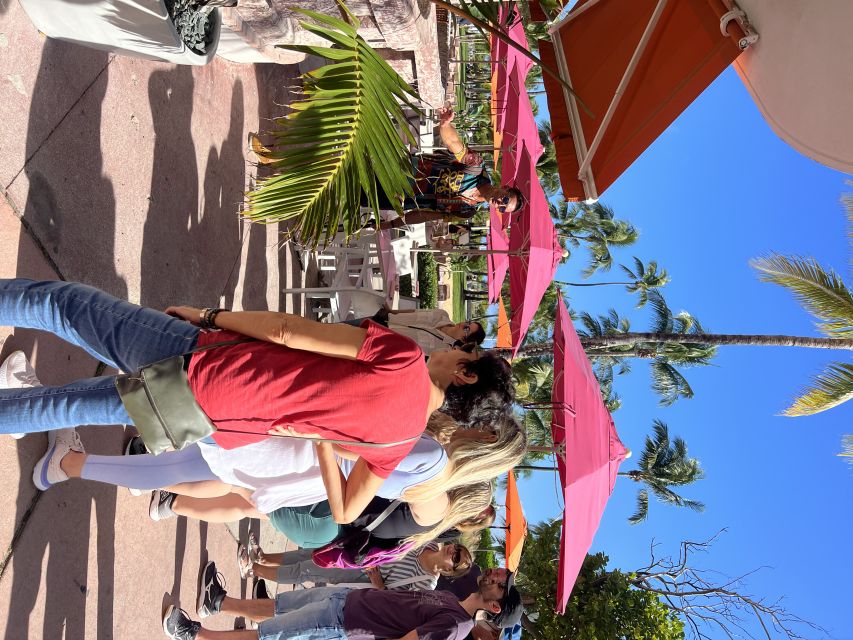
Book this tour if you want Miami Beach explained rather than merely displayed. The combination of Art Deco, Mediterranean Revival, MiMo, preservation, film history, migration, and scandal gives you a fuller picture of the city than a basic architecture walk.
The best reason to choose it is Damian’s personal connection to the subject. His enthusiasm appears to be matched by careful preparation, and the tour’s strongest feature is the way he joins small design details to big local stories.
Skip it if you need a fast two-hour orientation or prefer to explore without a fixed pace. For everyone else, $49 is a reasonable price for two and a half hours of guided context, special access, and a new way to read Miami Beach.
FAQ
Where does the Art Deco and History Walking Tour meet?
The tour meets in the lobby of The Betsy Hotel in Miami Beach.
How long does the tour last?
The advertised duration is 150 minutes, or two and a half hours.
What language is the tour conducted in?
The live guided tour is conducted in English.
Who leads the tour?
The tour is led by Damian, a local historian and preservationist involved with the Miami Design Preservation League. Some supplied tour information spells his name Damien, and one account names Adrian, so check the booking details for the guide assigned to your departure.
What architectural styles will I learn about?
The tour covers Art Deco, Mediterranean Revival, and MiMo architecture in Miami Beach.
Does the tour include access inside buildings?
It includes behind-the-scenes access to historic hotel lobbies and other semi-public spaces, including rooftops.
Can I cancel the tour for a refund?
Yes. You can cancel up to 24 hours in advance for a full refund. You can also reserve now and pay later.
Newest history tours we have reviewed in the USA
- Nashville: Belle Meade Historic Mansion Tour★ 4.8 · 63 reviews
- Beaufort: Local History and Film Sites Tour by golf cart★ 4.9 · 102 reviews
- Boston: Guided Seafood Tasting and History Tour★ 4.9 · 90 reviews
- Beaufort: Gullah Heritage Tour★ 4.8 · 26 reviews
- Beaufort: Historic City Tour by Bus★ 4.9 · 228 reviews
- Austin: Downtown Austin Haunted History Tour★ 4.4 · 31 reviews
- Austin: Morning History Walking Tour of Downtown Austin★ 4.9 · 71 reviews
- Atlanta: Beltline Food, Street Art, and History Walking Tour★ 5.0 · 47 reviews
History Walking Tours, compared.

History and Hauntings of Salem Guided Walking Tour
Read our review →
Freedom Trail History Small Group Walking Tour
Read our review →
Historic Charleston Guided Sightseeing Walking Tour
Read our review →
Tapas Walking Tour with Food, Wine, and History
Read our review →
Savannah History and Haunts Candlelit Ghost Walking Tour
Read our review →
A History of Terror – Belfast City Centre Walking Tour
Read our review →Browse the lists this tour appears in