
Review · GERMANY HISTORY TOURS
Nürnberg: Mörder, Fälscher, Messerstecher
Nuremberg’s Old Town has plenty of grand buildings, but this tour asks a sharper question: what happened when medieval Nuremberg broke its own rules? You’ll follow stories of hangmen, witch hunts, prison cells, public punishment, and debtors through streets that still form the city center.
I like the small price and tight route, which pack a lot of local history into two hours. I also like the way the tour links famous sights, including the Hauptmarkt and town hall, to ordinary crime and harsh justice. The main drawback is that the tour is in German only, and entry to the Hangman’s House, town hall, and medieval dungeons costs extra.
Key points to know before booking
- Franz Schmidt’s Hangman’s House: Begin with Nuremberg’s most famous executioner and the building tied to his work.
- A crime tour through major sights: See the Hauptmarkt, town hall, Fleischbrücke, and Schuldturm while learning what they meant in the justice system.
- Witch hunts at the Weinmarkt: A stop in the old wine market brings a difficult part of Nuremberg’s past into the open.
- Medieval prison conditions: Learn why the Lochgefängnisse existed and what life inside them was like.
- German-language guiding: You need a good command of German to get the full value from the stories and explanations.
- A short, walkable route: The tour lasts two hours and ends at Vordere Insel Schütt, not back at the starting point.
Why Nuremberg’s dark history works so well on foot
This is not a tour of distant ruins. It uses the streets of central Nuremberg as its classroom. You move from the Hangman’s House through the Old Town, stopping at places where law, punishment, religion, trade, and daily life once met.
That makes the subject easier to grasp. A prison is not just a label on a map when you have first heard about the people who enforced the law. A market is not simply a pretty square when you learn how public punishment and executions were connected to it.
I especially like the focus on the gap between medieval justice and modern ideas of fairness. The tour does not simply list gruesome facts. It gives you a way to read familiar landmarks differently. The town hall becomes part of the justice system, the Hauptmarkt becomes more than the home of the Christmas market, and the narrow streets take on a harder edge.
The pace should suit you if you like guided walks with frequent stops. The route includes short walks of one to five minutes between major points, so most of the time goes to explanation rather than covering long distances. Wear good walking shoes and dress for the weather. Much of the experience takes place outside.
Other history walks and heritage tours readers book in Germany:
- Leipzig: City History Canal Sightseeing Tour on a Motorboat
★ 4.7 · 7,671 reviews - Leipzig: 1.5-Hour Historical Walking Tour in German
★ 4.7 · 2,217 reviews - Berlin: 3-Hour World Heritage Cruise to Potsdam
★ 4.5 · 1,569 reviews
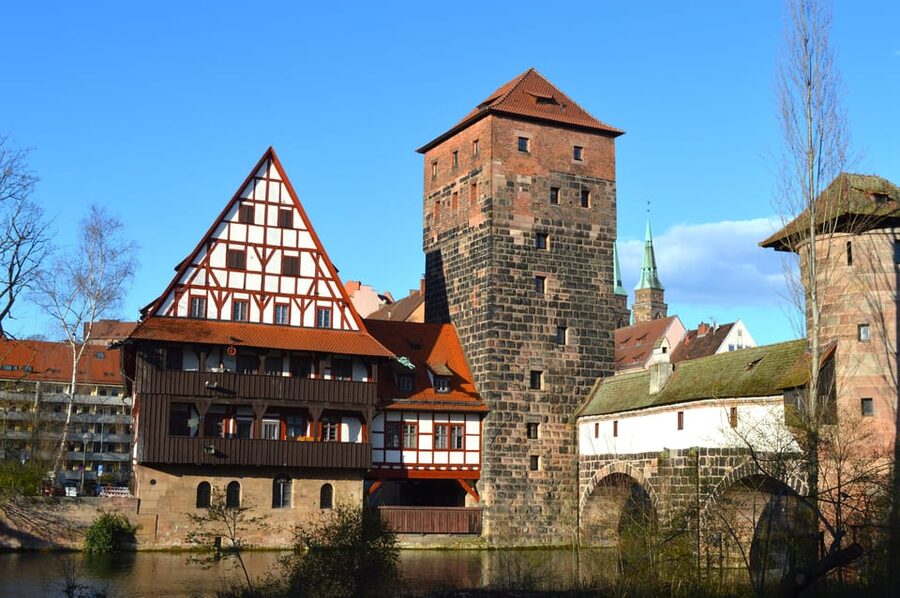
Starting at the Hangman’s House
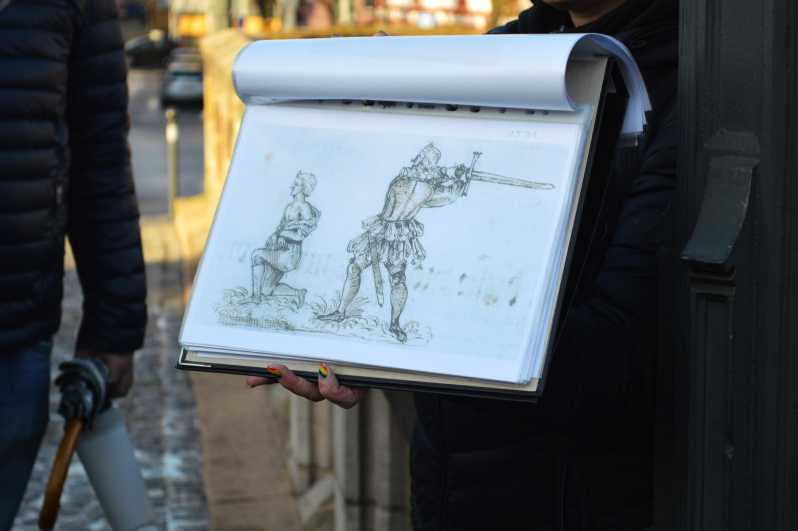
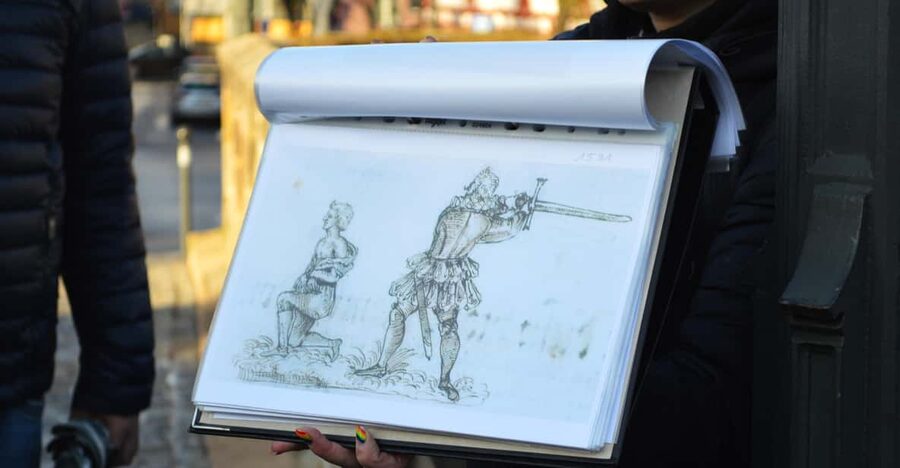
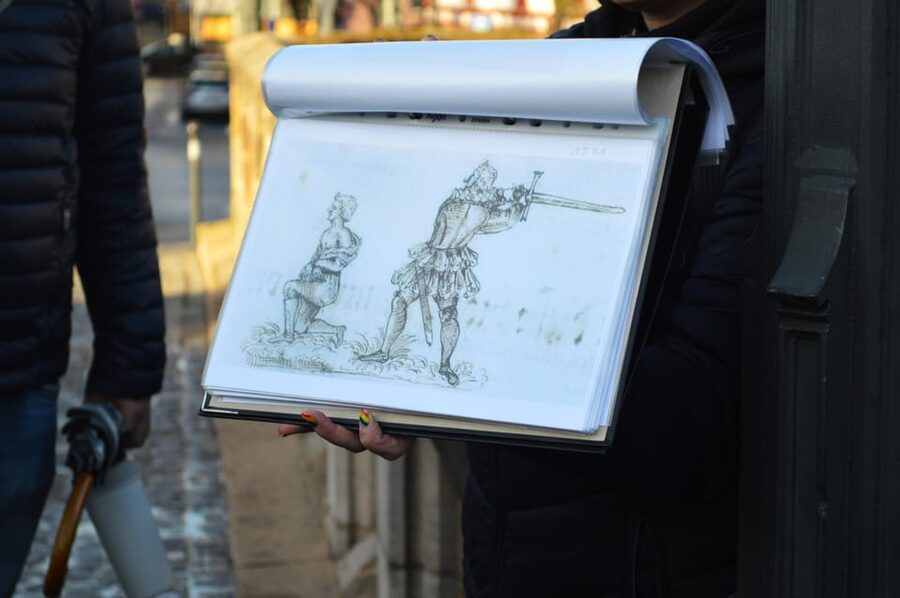
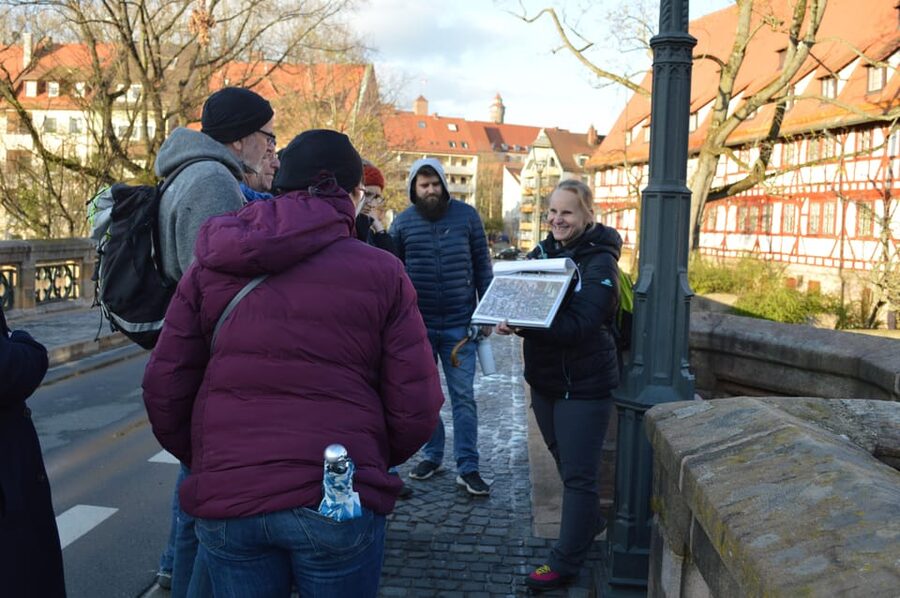
Meet your guide in front of the entrance to the Henkerhaus Museum, also called the Hangman’s House. Look for a guide carrying a picture folder and wearing a green name tag marked Geschichte Für Alle.
The first stop sets the tone. You learn about the house and Franz Schmidt, Nuremberg’s best-known hangman. His job placed him in a strange position: he carried out official punishments, yet his work could leave him and his family on the edge of respectable society.
That tension gives the opening real bite. Medieval and early modern cities needed people to enforce justice, but they did not necessarily welcome those people into ordinary civic life. Starting here lets you see crime and punishment through the person who had to perform the sentence, not only through the officials who ordered it.
The museum itself is not included in the $15 price. That matters if you expect an indoor visit. The walking tour uses the Hangman’s House as its meeting point and subject, but you should plan on paying separately if you want to enter.
For a first stop, this is effective. You get a named historical figure, a specific building, and a clear introduction to the social rules surrounding punishment. It is more memorable than beginning with a general lecture about medieval law.
The Weinmarkt and Nuremberg’s witch hunts
After about four minutes on foot, the route reaches the Weinmarkt. Here the subject turns to witch hunts in Nuremberg.
This is one of the more important stops because it widens the tour beyond theft, violence, and formal punishment. Witch hunts show how fear, belief, accusation, and legal authority could combine. The topic also reminds you that crime was not always based on a clear act witnessed by a victim. Suspicion itself could become dangerous.
The Weinmarkt is a useful setting because you are still in the working heart of the Old Town, not in an isolated memorial site. The tour connects a normal public space with the anxiety and accusations that shaped earlier communities.
Expect this section to work best if you are interested in social history as well as criminal cases. It is not simply a list of dates. The guide explains how the subject fits into Nuremberg’s broader justice system and civic life.
The tour is in German, so the language point matters especially here. Witch-hunt history often depends on careful explanation and context. If you only understand basic German, you may follow the route but miss the finer points.
Town hall and the machinery of medieval justice
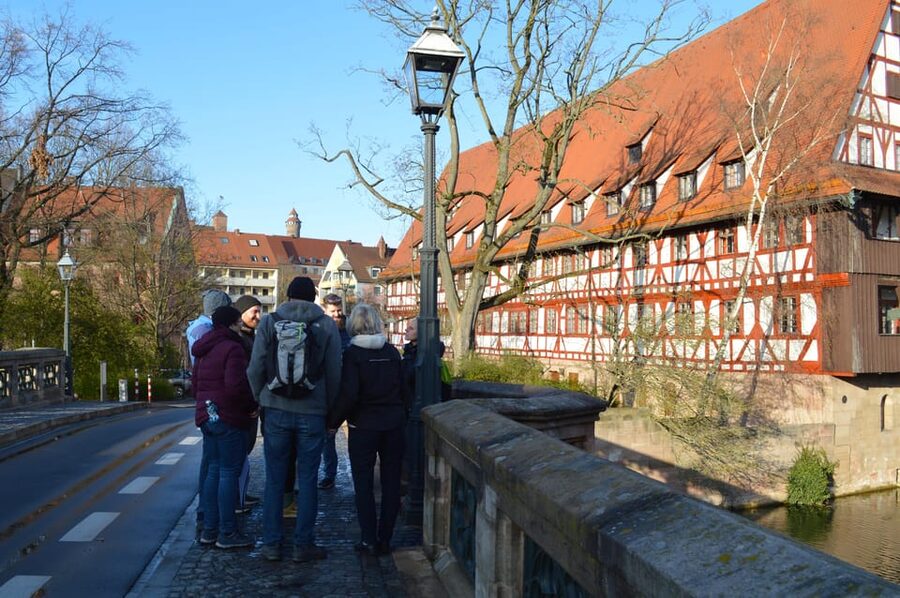
The next stop is Nuremberg’s Old City Hall, only a few minutes from the Weinmarkt. Here you learn more about the medieval justice system.
This is where the tour shifts from individual stories to civic power. The town hall represents the people and institutions that made rules, heard cases, and decided punishment. After beginning with the hangman, you now see the other side of the process.
I like the order of these stops. The tour does not treat the city’s famous buildings as disconnected photo stops. It uses them to explain how justice operated in a place where civic government and public punishment were closely tied.
Entry to the town hall is not included. The guided discussion takes place as part of the walking tour, so you should not assume that the price covers an interior visit. If you want to see inside, check the separate admission arrangements before booking.
Even without an interior visit, the stop has value. The building anchors the discussion in a real seat of local authority. You are not just hearing about an abstract legal system. You are standing beside one of the places associated with civic rule.
Same streets, a different century:
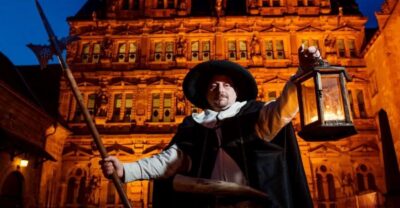
- Heidelberg: Night Watchman Historic Adventure Tour
★ 4.7 · 1,186 reviews - The Local Tour of Hamburg Historic Centre
★ 5.0 · 1,058 reviews - Elbfloren: Historical city tour
★ 4.8 · 929 reviews - Berlin: History of the Third Reich Guided Walking Tour
★ 4.7 · 791 reviews
The Lochgefängnisse and medieval prison life
The medieval dungeons, known as the Lochgefängnisse, are the next major stop. Their purpose and conditions form one of the tour’s strongest practical history lessons.
A prison can tell you a great deal about what a society considered necessary. The Lochgefängnisse raise questions about confinement, debt, punishment, and the treatment of people waiting for a decision. The tour explains how the prison functioned within Nuremberg’s justice system.
This stop may appeal most to people who prefer concrete details. You are not only learning who broke the law. You are learning what happened after authorities took control of someone’s life.
Entry to the medieval dungeons is extra. That is an important cost detail, especially because the name of the tour may make you expect several indoor visits. The walking tour includes the stop and the explanation, but admission is separate.
If you want to go inside, allow for that additional expense and check opening arrangements. The experience described here is built around a two-hour guided walk, not a package of included museum admissions.
The Hauptmarkt beyond the Christkindlesmarkt
From the dungeons, the route takes you to the Hauptmarkt. In December, this is where Nuremberg’s famous Christkindlesmarkt takes place. At other times, the square still serves as one of the city’s key public spaces.
The tour looks past the market’s festive image and examines its link to everyday crime and the death penalty. That contrast is the point. A square known today for seasonal cheer also had a role in public life when punishment could be visible, communal, and severe.
This stop should help you see the Hauptmarkt with fresh eyes. You may already know it as the place for stalls, food, and holiday crowds. The tour adds a less comfortable layer by asking how public spaces were used to display authority and warn the public.
December visitors should expect the square to be especially busy because of the Christkindlesmarkt. That can add atmosphere, but it may also make it harder to hear or keep close to the guide. The tour takes place outdoors, so winter clothing and comfortable shoes are sensible.
The route is short, but a busy market square can still affect the experience. Stay attentive to the guide’s picture folder and green name tag when moving through crowded areas.
Fleischbrücke and the hard edge of punishment
A two-minute walk brings you to the Fleischbrücke, where the guide discusses corporal punishment in the Middle Ages.
This is a useful stop because it moves the subject from legal decisions to physical consequences. Medieval punishment was often meant to be seen. Bodies, pain, shame, and public warning were all part of the system.
The Fleischbrücke also shows how the tour keeps using ordinary city structures as evidence. You are not being taken only to places labeled as prisons or museums. Bridges, squares, markets, and civic buildings all become part of the story.
For some people, this will be the most uncomfortable part of the walk. The subject is not light, and the tour title makes clear that violence and punishment are central. You should book it because you want historical context around difficult topics, not because you are looking for a gentle introduction to Nuremberg.
The benefit is that the tour treats punishment as part of daily civic life. It shows how authorities tried to control behavior and how public spaces helped carry out that message.
Findelgasse and Peter Henlein’s unexpected story
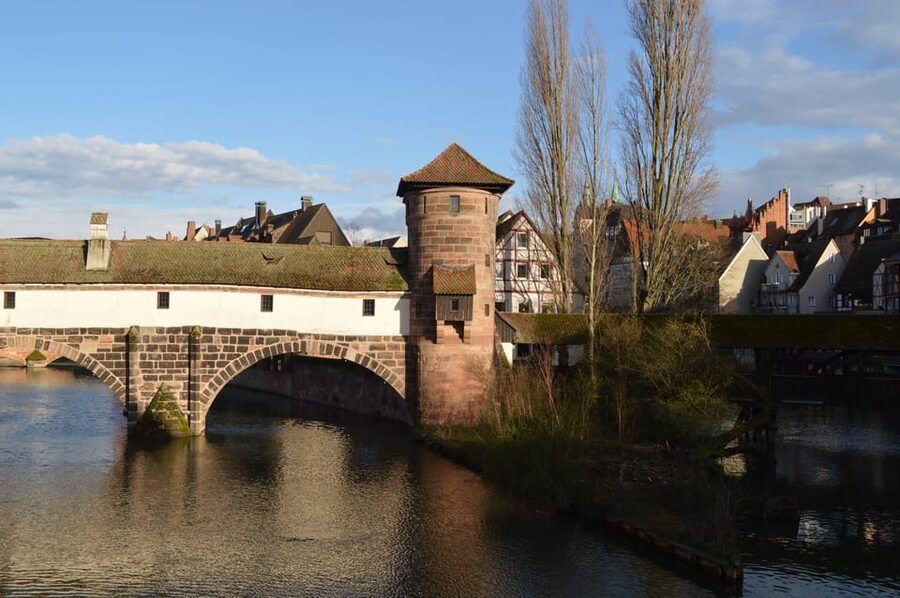
The route continues toward Findelgasse, where you hear about the famous watchmaker Peter Henlein.
This stop adds a welcome change of pace. After hangmen, prison, witch hunts, and corporal punishment, a story about a watchmaker brings in craft, technology, and a different kind of local fame.
It also shows that the tour is not limited to one narrow subject. The walk is called a history of crime, but its stops connect criminal justice with the people and places of Nuremberg’s wider past. Peter Henlein’s story gives the route a human and civic dimension beyond punishment.
The information provided does not promise a visit to a watchmaking museum or workshop. Treat Findelgasse as an outdoor storytelling stop. Its value comes from the guide’s explanation and the way the story fits into the Old Town route.
This is a good reminder to listen for connections. The tour works best when you let each stop add another piece to your picture of historic Nuremberg, rather than expecting every location to be a major attraction.
Finishing at the Schuldturm
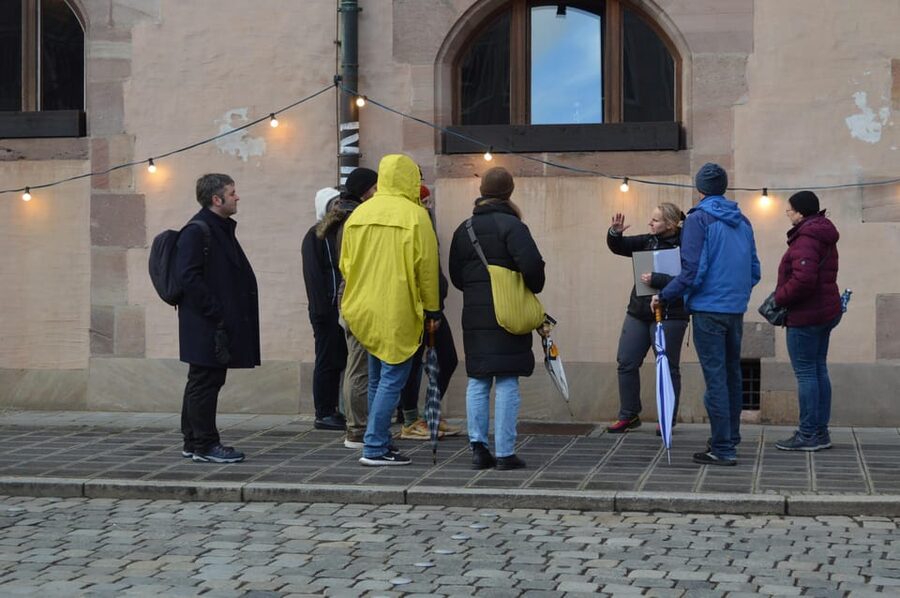
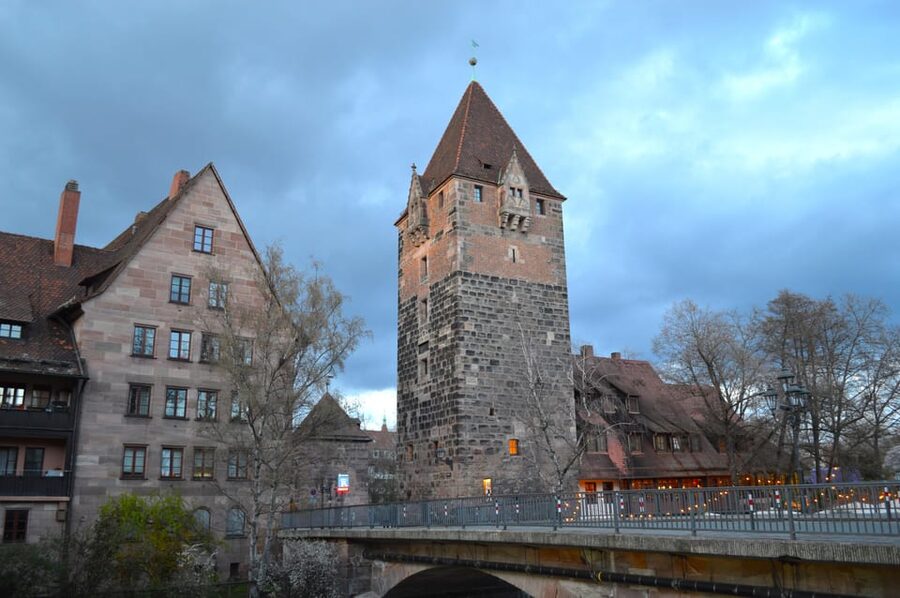
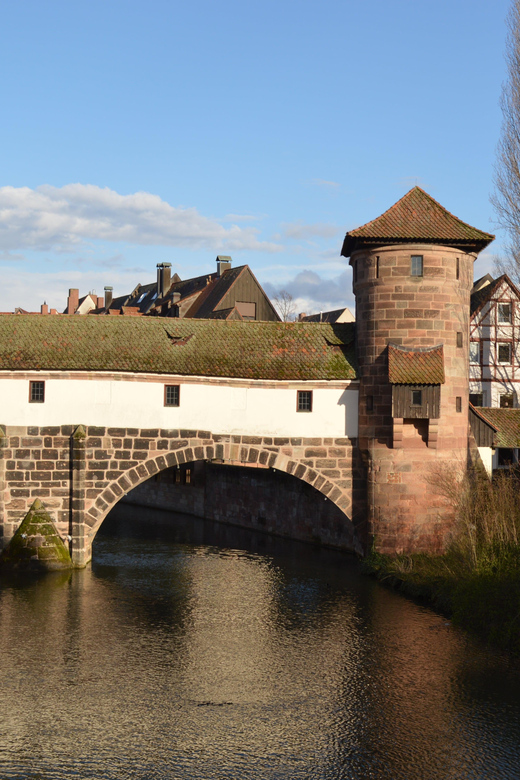
The final stop is in front of the Schuldturm, with the tour ending at Vordere Insel Schütt in Nuremberg-Mitte.
The Schuldturm was connected with debtors and imprisonment. Its purpose and inmates bring the tour back to the question of who could be confined, and why. After hearing about official execution, witch hunts, medieval dungeons, and corporal punishment, you finish with another form of legal and social control.
The ending location matters for planning. You do not return to the Henkerhaus Museum, so check your map before arranging your next activity. Vordere Insel Schütt is still in the central city, but it is a different point from where you began.
A final stop at a prison tower is fitting. It leaves you with a broader view of crime than simple violence. Justice in historic Nuremberg also involved debt, social status, public shame, and the authority to remove people from ordinary life.
What the $15 price really covers
At $15 per person, this is a strong value if you want a guided introduction to Nuremberg’s criminal and legal past. You get a qualified guide, a two-hour walking route, and several connected locations in the center.
The price does not include admission to the Hangman’s House, town hall, or medieval dungeons. That keeps the basic tour affordable, but it also means you should budget extra if you want to enter those sites.
The tour’s value comes mainly from interpretation. A self-guided walk can show you the same streets, but it may not explain why the buildings matter or how the places connect. Here, the guide ties them together through a single subject.
The rating is 4.8 from 53 reviews, and the strongest praise focuses on clear explanations, strong subject knowledge, answers to questions, and an engaging pace. One German-language review specifically praises a guide who kept the material interesting and handled questions well. Another describes the tour as easy to follow even in rain and darkness, which suggests that the guide’s delivery helps maintain the pace in poor conditions.
That said, a good guide cannot remove the language barrier. Book this only if you can follow a live tour in German.
Who should book this walking tour?
I would recommend it to you if you enjoy:
- Local history tied to real streets and buildings
- Difficult subjects such as executions, witch hunts, prison, and public punishment
- Guided walks with frequent stops rather than long museum visits
- Seeing familiar landmarks from a less polished angle
- A short activity that fits into a busy Nuremberg schedule
- German-language cultural tours
Families should consider the subject carefully. The route is educational, but its themes include death, violence, imprisonment, and witch hunts. The information provided does not set a minimum age, so you should decide based on the children in your group.
The tour is not suitable for people with mobility impairments. The route is on foot, and even though the walks between stops are short, the two-hour format requires steady movement through the Old Town.
Groups of 10 or more should contact Geschichte Für Alle e.V. by email before booking. The tour is designed around a guided walk, so a large group may need separate arrangements.
Practical details that affect your visit
The tour lasts two hours. Starting times vary, so check availability for the date you want.
The meeting point is directly in front of the Henkerhaus entrance. Find the guide with the picture folder and green Geschichte Für Alle name tag. This detail is useful in a busy Old Town, especially if several groups gather near the museum.
Bring comfortable shoes and clothing suited to the weather. The route includes outdoor stops at the Weinmarkt, town hall, Hauptmarkt, Fleischbrücke, Findelgasse, and Schuldturm.
The live tour language is German. No other language is listed, and no audio guide or translation service is included.
You can cancel up to 24 hours before the start for a full refund. The reserve-now, pay-later option lets you hold a place without paying at the time of booking. If you book through GetYourGuide, the booking confirmation serves as proof of payment, and no separate invoice can be issued.
Should you book Nürnberg: Mörder, Fälscher, Messerstecher?
Book it if you want Nuremberg’s Old Town explained through crime, punishment, and civic power rather than only churches, markets, and grand façades. The two-hour route is focused, the $15 price is fair, and the stops give familiar landmarks a more serious meaning.
Skip it if you want a relaxed sightseeing walk, dislike grim historical subjects, need an English-language guide, or cannot manage a walking tour. Also remember that three possible indoor visits cost extra.
For German speakers with an interest in local history, this is a smart way to spend two hours. You leave with more than a list of old buildings. You learn how Nuremberg handled fear, debt, violence, accusation, and punishment, and you see the city center with sharper eyes.
FAQ
How long does the tour last?
The walking tour lasts two hours.
What language is the tour in?
The live tour guide speaks German.
How much does the tour cost?
The listed price is $15 per person.
Where does the tour start?
Meet in front of the entrance to the Henkerhaus Museum, also called the Hangman’s House.
How do I identify the guide?
The guide carries a picture folder and wears a green name tag marked Geschichte Für Alle.
Is entry to the Hangman’s House included?
No. Entry to the Hangman’s House is not included in the walking tour price.
Are the town hall and medieval dungeons included?
No. Admission to the town hall and the medieval dungeons is also not included.
Where does the tour finish?
The tour ends at Vordere Insel Schütt, 90403 Nürnberg-Mitte, Germany.
Is the tour suitable for people with mobility impairments?
No. The activity is listed as unsuitable for people with mobility impairments.
Can I cancel for a refund?
Yes. You can cancel up to 24 hours in advance for a full refund.
Can groups of 10 or more join?
Groups of 10 or more should contact Geschichte Für Alle e.V. by email at [email protected].
Newest history tours we have reviewed in Germany
- Historic Dresden Private Walking Tour★ 5.0 · 32 reviews
- Walking Through Dresden’s Past with Dr. Fraser Macdonald★ 5.0 · 72 reviews
- Berlin Food & Cultural Tour: Must-Try German & Berliner Classics★ 5.0 · 51 reviews
- Historic center of Berlin – Tour in Italian★ 5.0 · 143 reviews
- Private Tour: Jewish Heritage Walking Tour of Berlin★ 5.0 · 29 reviews
- Small-Group Historical Bike Tour in Berlin★ 4.5 · 103 reviews
- East Berlin Food & History Tour with Eating Europe★ 5.0 · 204 reviews
- Private Berlin WWII and Cold War History Tour with Local Expert Guide★ 5.0 · 28 reviews
Germany History Tours, compared.
Leipzig: City History Canal Sightseeing Tour on a Motorboat
Read our review →
Leipzig: 1.5-Hour Historical Walking Tour in German
Read our review →

Bamberg: Guided Beer History Tour with Optional Tasting
Read our review →Browse the lists this tour appears in