
Review · GERMANY HISTORY TOURS
Nuremberg: Historical Rock Passages Tour
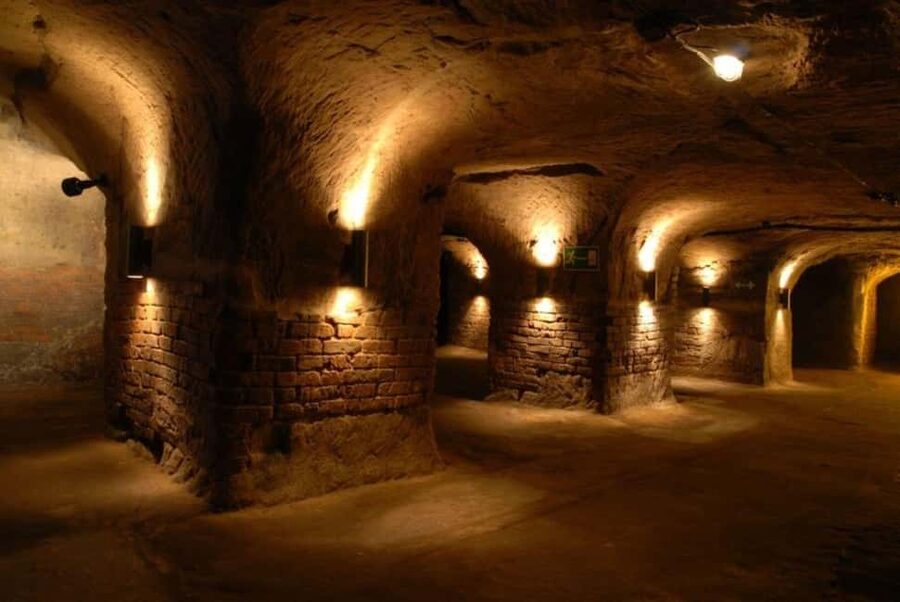
Nuremberg’s historic rock passages are not a polished museum display. They are working underground spaces cut into the sandstone beneath the old town, with cool corridors, beer cellars, whiskey storage, and a World War II air-raid shelter. I like the way this tour connects everyday brewing with wartime survival, and I like that the route ends back at the Altstadthof brewery rather than leaving you underground with no sense of place.
The guide-led format also earns points. Charlie has a lively way of explaining facts and drawing people into the conversation, while another recent guide brought humor and clear explanations to the hour. The main drawback is the language: the live tour is in German, and the passages are a poor fit for anyone with limited mobility or claustrophobia.
Key points at a glance
- 700 years beneath Nuremberg: The rock cellar system was first recorded in 1380 and grew into a large network below the city.
- Beer storage still matters: Altstadthof uses part of the old cellars to mature special beers and beer spirits.
- More than a brewery tour: You also see a whiskey distillery, whiskey storage, and a World War II air-raid shelter.
- German-speaking guide: Charlie is praised for an entertaining, question-friendly style, but the live commentary is in German.
- Small group of up to four: This gives the tour a personal feel and makes it easier to ask questions.
- Tasting costs extra: The 16 dollar price covers the tour, not beer or other drinks afterward.
Why these cellars tell Nuremberg’s story
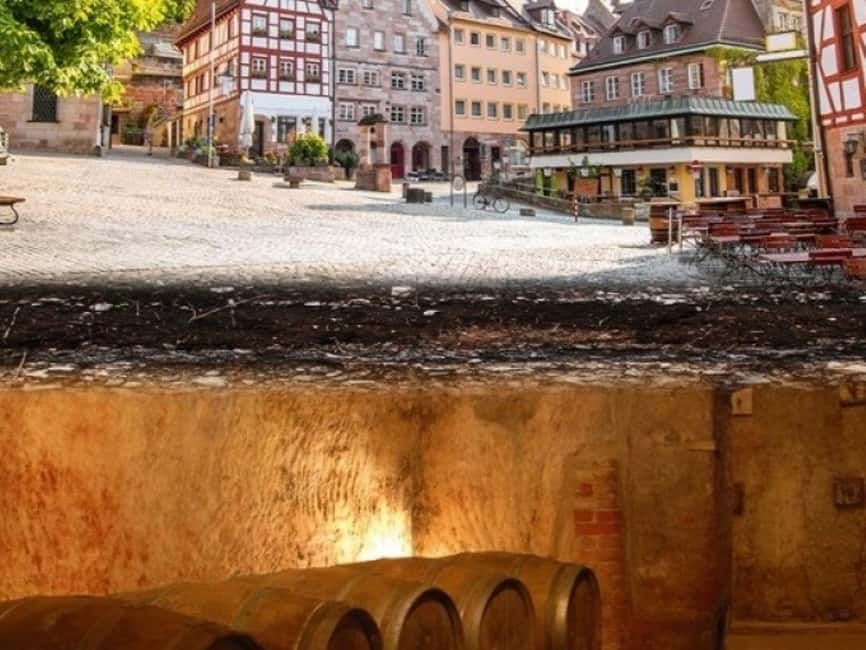
Under Nuremberg’s old town, people cut vaults and corridors into bright-colored sandstone over many centuries. The first written mention of the rock passages dates to 1380, but their story is less about a single grand construction project and more about practical city life.
The cellars offered steady conditions for storing food and drink. Beer became the main business, especially the red beer associated with Nuremberg. Before modern refrigeration, an underground space with a stable temperature was a useful place to mature and hold beer.
That practical purpose gives the tour its strongest thread. You are not simply walking through old stone rooms. You are seeing how a city adapted its ground, labor, and local brewing habits to daily needs.
I like this kind of history because it works at street level, or in this case, below street level. Instead of focusing only on rulers and monuments, the tour shows how ordinary trade shaped Nuremberg. Beer storage may sound modest, but it explains why such a large underground system was worth building and maintaining.
More History Tours in Germany:
- Leipzig: City History Canal Sightseeing Tour on a Motorboat
★ 4.7 · 7,671 reviews - Leipzig: 1.5-Hour Historical Walking Tour in German
★ 4.7 · 2,217 reviews - Berlin: 3-Hour World Heritage Cruise to Potsdam
★ 4.5 · 1,569 reviews
Beginning at Bergstraße 19
The meeting point is in front of the brewery shop at Bergstraße 19. That detail matters, since the rock passages are part of a working brewery setting rather than a separate attraction with a large independent entrance.
Allow a little time to find the shop and gather before the start. The tour lasts one hour and returns to the same address, so you do not need to plan a separate pickup or work out where the route finishes.
The group is limited to four people. I see that as a real advantage here. Underground spaces are easier to appreciate when you are not trying to hear over a crowd, and a small group gives you a better chance to ask about the cellars, the beer, or the wartime use of the tunnels.
The guide is the heart of the experience. The live tour is in German, and the strongest comments about the guides focus on humor, clear explanations, and good interaction. Charlie, in particular, is praised for using questions to involve everyone and for keeping the hour moving at a brisk pace.
If you understand German, this format should feel personal rather than scripted. If you do not, check the language arrangements carefully before booking. Audio guides in various languages are associated with the experience, but the audio guide is not included in the tour price, and the stated live-guide language is German.
Following the beer through the sandstone
The first major theme is the old beer cellar. Nuremberg’s rock passages were used for the maturation and storage of beer for many years, with the city’s red beer taking a central place in that story.
This is where the tour feels most connected to local life. Beer was not just something poured in a tavern. It required storage, time, and a suitable place to mature. The cellars helped make that possible beneath the streets of the city.
Today, the Altstadthof brewery uses a small portion of the larger network for special beers and beer spirits. That continued use adds a practical link between past and present. You can see that the underground rooms are not only preserved as historic scenery. Part of their original purpose still survives.
The system is described as branched and labyrinthine. You should expect corridors and vaults rather than spacious halls with wide walking routes. That character is part of the appeal, but it also explains the restrictions. Large bags, oversize luggage, bikes, baby carriages, and several types of mobility equipment are not allowed.
Do not bring food or drinks into the passages. Smoking and vaping are also prohibited. These rules are easy to understand in a narrow historic cellar, but they are worth knowing before you arrive, especially if you are coming directly from a day of sightseeing with a full bag.
A brewery and distillery still in use
The route includes the home brewery and distillery. You also see whiskey storage, a detail that gives the tour more range than a straightforward beer history walk.
The brewery connection is strongest when you think about storage. The underground rooms made sense for beer, and the present-day operation uses some of that space for special products. The whiskey side adds another layer, showing how the cellar environment now supports beer spirits and whiskey-related production.
You should separate the tour from the tasting afterward. Beer is not included in the 16 dollar price, and the tour itself does not promise a drink in the cellar. Afterward, you can sample specialties in the tasting boutique, brewery, restaurant, or brewery cellar tavern, but those purchases are extra.
That arrangement is fair. You pay for a focused historical tour, then decide how much more you want to spend on the food and drink side. If you are mainly interested in the cellars, you are not forced to buy a tasting. If you enjoy local brewing, you can extend the visit at your own cost.
The original Nuremberg red beer is the obvious specialty to look for afterward. The experience presents it as a local product tied directly to the cellar story, not as a random souvenir drink.
Same streets, a different century:
- Heidelberg: Night Watchman Historic Adventure Tour
★ 4.7 · 1,186 reviews - The Local Tour of Hamburg Historic Centre
★ 5.0 · 1,058 reviews - Elbfloren: Historical city tour
★ 4.8 · 929 reviews - Berlin: History of the Third Reich Guided Walking Tour
★ 4.7 · 791 reviews
Seeing the World War II air-raid shelter
The air-raid shelter is the sharpest change in mood. The same underground spaces that helped store beer also offered protection during World War II.
That contrast is important. A cellar can be part of commerce in one period and a place of fear and safety in another. The tour places those uses within the same underground setting, helping you understand how valuable the passages were when the city faced danger.
The air-raid shelter is included in the route, along with the beer cellar, brewery, distillery, and whiskey storage. The one-hour limit means this is an introduction rather than a long military-history program. You get the setting and the basic story, then move on.
I find that balance useful. The tour does not pretend to cover every chapter of Nuremberg’s wartime past. Instead, it shows one clear example of how the old cellars were reused when the city needed protection. That makes the wartime section feel connected to the rest of the route rather than tacked on.
The narrow underground setting may make this section especially intense for people who dislike enclosed spaces. If you know you are uncomfortable in tight corridors, take that seriously. The tour is not suitable for people with claustrophobia.
What the guide adds to the hour
A one-hour tour can easily become a dry list of dates. The best guide moments here appear to come from the delivery.
One guide, Charlie, is noted for presenting many historical facts in an entertaining way, with the hour passing quickly. Another guide is praised for humor and for bringing people into the explanation through questions. Those details matter because the passages themselves may not have extensive displays or large visual reconstructions to do the teaching for you.
You should expect the guide to explain the origin and use of the cellars over roughly 700 years. The route covers beer storage, the historic red beer, the brewery and distillery, whiskey storage, and the air-raid shelter.
The small group helps. With a maximum of four people, the guide can respond to questions without losing control of the route. It also gives you a better chance to ask about details that interest you, whether that is brewing, the stonework, or wartime use.
The tradeoff is clear: the experience depends heavily on understanding German. Some content may appear in its original language, and an audio guide is not included. If you need English commentary, confirm the available option before paying.
Is 16 dollars a fair price?
At 16 dollars per person, I consider this a reasonable price for a short specialty tour, especially if you want to see a part of Nuremberg that ordinary sightseeing does not cover.
The value comes from the combination of subjects. You get the old beer cellar, the working brewery connection, the distillery, whiskey storage, and the World War II shelter in one guided hour. A tour focused only on beer might feel narrow, while a general city walk would not normally take you underground into these rooms.
The price does not include beer, tasting samples, or the audio guide. That keeps the base cost clear, but you should budget separately if the post-tour drink is part of your plan.
For some people, one hour will feel exactly right. You get a compact historical stop that can fit between other sights. Others may want more time underground, especially if they enjoy industrial history or brewing. The short length means you should book it for the focused cellar story, not as a full-day look at Nuremberg’s past.
Free cancellation up to 24 hours before the start and the option to reserve now and pay later add useful flexibility. The practical catch is that starting times depend on availability, so check the schedule before shaping your day around it.
Who should book this experience?
I would choose this tour if you enjoy unusual city history, local beer culture, or places that still have a working purpose. It suits a small group that wants a guide who can answer questions and keep the story moving.
German speakers get the clearest benefit from the live commentary. If you do not speak German, investigate the audio option before booking rather than assuming it is part of the standard admission.
The experience is not suitable for wheelchair users or people with mobility impairments. Walking frames, crutches, electric wheelchairs, scooters, and baby carriages are not allowed. The passages also rule out large bags, handcarts, pets, bikes, alcohol, food, drinks, and smoking materials.
Children cannot attend unaccompanied, and bachelor or bachelorette party groups are not allowed. These rules make the tone clear: this is a small historical tour in a controlled underground space, not a casual party stop.
My recommendation for the Nuremberg rock passages
Book it if you want a compact, local experience that links Nuremberg’s beer trade with its wartime history. The continuing use of the cellars by Altstadthof gives the tour more purpose than a room-by-room look at old stonework.
I especially like the small group, the mix of brewery and whiskey spaces, and the chance to see an air-raid shelter in the same underground network. The strongest guides, including Charlie, seem to make good use of questions and humor, which matters in a one-hour tour.
Skip it if you dislike enclosed spaces, need step-free access, or require a language other than German without first confirming an audio option. For everyone else, 16 dollars is a sensible price for a focused hour beneath Nuremberg, with the option of a red beer afterward if you want to continue the story at the source.
FAQ
Where does the Historical Rock Passages Tour begin?
The meeting point is in front of the brewery shop at Bergstraße 19 in Nuremberg.
How long does the tour last?
The guided tour lasts one hour and returns to Bergstraße 19.
What language is the live tour in?
The live tour guide speaks German.
Is an audio guide included?
No. The audio guide is not included in the tour price. Audio guides in various languages are associated with the experience, so check the available option before booking.
Is beer included in the ticket price?
No. Beer is not included. You can purchase specialties afterward in the tasting boutique, brewery, restaurant, or brewery cellar tavern.
Does the tour include a brewery?
Yes. The route includes the Altstadthof home brewery and part of the historic beer cellar system.
Does the tour include whiskey-related areas?
Yes. The experience includes the distillery and whiskey storage.
Does the tour visit a World War II air-raid shelter?
Yes. A World War II air-raid shelter is included in the route.
How large is the tour group?
The group is limited to four participants.
Is the tour suitable for wheelchair users or people with claustrophobia?
No. The experience is not suitable for wheelchair users, people with mobility impairments, or people with claustrophobia.
Newest history tours we have reviewed in Germany
- Historic Dresden Private Walking Tour★ 5.0 · 32 reviews
- Walking Through Dresden’s Past with Dr. Fraser Macdonald★ 5.0 · 72 reviews
- Berlin Food & Cultural Tour: Must-Try German & Berliner Classics★ 5.0 · 51 reviews
- Small-Group Historical Bike Tour in Berlin★ 4.5 · 103 reviews
- Historic center of Berlin – Tour in Italian★ 5.0 · 143 reviews
- Private Tour: Jewish Heritage Walking Tour of Berlin★ 5.0 · 29 reviews
- East Berlin Food & History Tour with Eating Europe★ 5.0 · 204 reviews
- Private Berlin WWII and Cold War History Tour with Local Expert Guide★ 5.0 · 28 reviews
Germany History Tours, compared.

Leipzig: City History Canal Sightseeing Tour on a Motorboat
Read our review →
Leipzig: 1.5-Hour Historical Walking Tour in German
Read our review →



Bamberg: Guided Beer History Tour with Optional Tasting
Read our review →Browse the lists this tour appears in