
Review · ANCIENT HISTORY TOURS
Anuradhapura Private Ancient City Day Tour
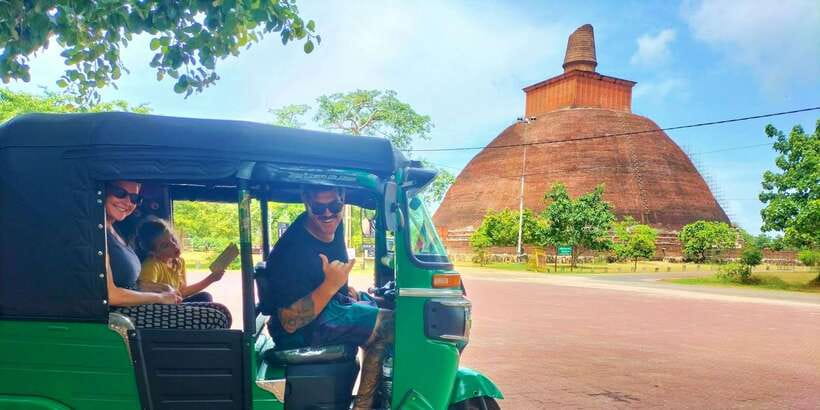
Anuradhapura is too spread out for a casual walk, and this private tuk tuk tour gives you a practical way to see its major sacred and archaeological sites in five hours. Guide Navin adds the missing context, explaining Buddhist customs, old kingdoms, architecture, and daily life in Sri Lanka.
I like the personal service and the relaxed pace. You get hotel pickup, private transport, water, and time for photographs, while Navin can adjust the outing to your interests. The main drawback is time: with roughly a dozen stops packed into five hours, you will see many places briefly rather than study each one at length.
Key points to know before you book
- Navin brings the sites to life: His explanations cover Buddhism, Sri Lankan culture, history, wildlife, and local customs.
- A tuk tuk solves the distance problem: The ancient city covers a wide area, so transport saves energy and time.
- The itinerary is packed: Expect short visits of about 25 minutes at many stops, with driving between them.
- The main entrance fee is extra: The tour costs $30 per person, while the foreign visitor ticket for the ancient city was reported at about another $30.
- You get a private outing: Hotel pickup and drop-off make this easier than arranging separate rides at each temple.
- Dress and sun protection matter: Bring comfortable shoes, a passport, and sun cream. Hats are not allowed.
Why Anuradhapura works best with wheels
Anuradhapura was Sri Lanka’s first capital, and its sacred area is not one compact ruin field. Stupas, monasteries, pools, statues, and old ceremonial spaces are spread across a large area. You can visit independently, but getting from one important site to the next takes planning and transport.
That is where the tuk tuk earns its keep. You are not committing to a long walking circuit under the sun, and you do not have to negotiate separate rides. The driver and guide take you from one stop to the next, leaving you free to listen, look around, and take photographs.
The five-hour length suits a stopover, an afternoon arrival, or a first look at the city. I would not call it a slow archaeological study. The schedule includes about 25 minutes at many locations, so the outing is designed to give you a broad understanding of Anuradhapura rather than hours at one monument.
The private format helps. You are not tied to a large group, and Navin can spend more time on the subjects that interest you. If Buddhism matters to you, ask about its philosophy and living traditions. If you prefer architecture or ancient engineering, ask him to point out details in the stupas, pools, guard stones, and monastery ruins.
More Ancient History Tours in the world:
- Colosseum: Underground and Ancient Rome Tour
★ 4.7 · 12,691 reviews - Colosseum & Ancient Rome with Arena Floor Option I Max 6 People
★ 5.0 · 3,306 reviews - Rome: Colosseum, Ancient Rome Tour or AudioGuided Tour
★ 4.4 · 2,879 reviews
Meeting Navin and settling into the tuk tuk
Pickup is included in Anuradhapura. You are asked to wait in your hotel lobby 10 minutes before the arranged time, which is a small but useful detail in a city where timing can otherwise become vague.
Navin is the named guide for this experience. His strongest quality is his manner: friendly, funny, and energetic without making the visit feel hurried. His English is described as clear, and he can explain both religious ideas and practical parts of Sri Lankan life.
A quick tuk tuk lesson is part of the experience. This adds a playful local touch, although you should follow Navin’s instructions carefully and treat it as a short introduction rather than a full driving activity. Some outings have also included light snacks and extra refreshments beyond the listed bottled water, but water is the dependable inclusion.
The guide’s local connections can help the day run smoothly at busy religious sites. That matters on a poya day, when Buddhist observances can bring more activity to sacred places. Still, this remains a working religious area, not just an open-air museum. Keep your voice low, follow instructions, and allow worshippers space.
Sri Maha Bodhi and Ruwanwelisaya

The first major sacred stop is Jaya Sri Maha Bodhi, usually shortened to Sri Maha Bodhi. This is one of the central religious places in Anuradhapura, and the visit gives you an early sense of how living worship and archaeology overlap here.
Your guide can explain the tree’s religious importance and the customs surrounding it. You should expect an active sacred setting rather than a silent ruin. Wear suitable clothing, listen to local instructions, and remember that people may be praying while you are taking photographs.
The schedule allows about 25 minutes here. That is enough for an introduction and a look around, but not enough for a long contemplative visit. If Sri Maha Bodhi is especially important to you, tell Navin at the start so you understand how much time can be given to it.
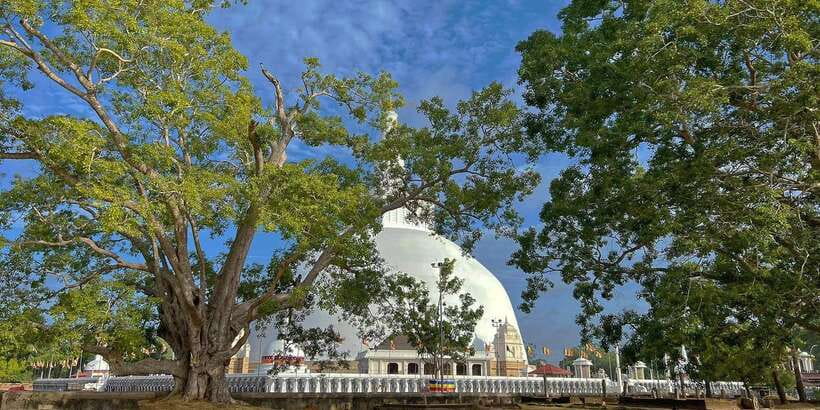
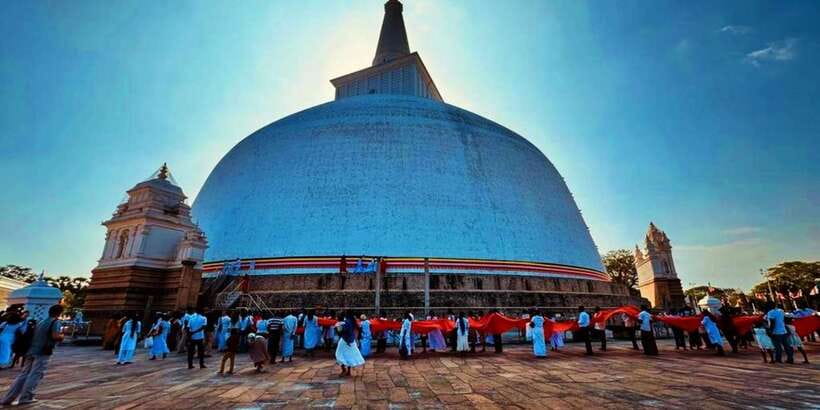
Ruwanweli Maha Seya is one of the tour’s major visual moments. Its large white stupa is difficult to miss, and Navin’s explanation helps connect the monument’s shape and scale with Buddhist practice and Sri Lankan history.
This is another place where photography can easily distract you from the setting. Take your pictures, then give yourself a few quiet minutes to look at the monument and watch the rhythm of worship around it. The short visit works well for a first introduction, though anyone with a strong interest in religious architecture may wish for more time.
Jethawanaramaya and the old monastery world
Jethawanaramaya introduces the scale of Anuradhapura’s former monastic centres. The site is not simply one structure to photograph. It points to the size and organisation of the communities that once lived, studied, and worshipped here.
Navin’s explanations are useful because bare stone and brick can be hard to read without a guide. He can help you understand what you are seeing and how the different parts of a monastery related to one another.
The stop is listed at about 25 minutes. That keeps the day moving, but it also means you should not expect to inspect every ruin. I would focus on the overall scale, the remaining brickwork, and the way the site fits into the larger ancient city.
More Private History Tours in the world:
- Private Historical Walking Tour of York
★ 5.0 · 1,324 reviews - Private Guided Historic Electric Cart Tour of St. Augustine
★ 5.0 · 1,194 reviews - Istanbul: Acemoglu Historical Turkish Bath w/Private Options
★ 4.6 · 1,190 reviews - From Cairo: Private Full-Day Tour of Historical Alexandria
★ 4.1 · 1,155 reviews
Kuttam Pokuna, the Twin Ponds
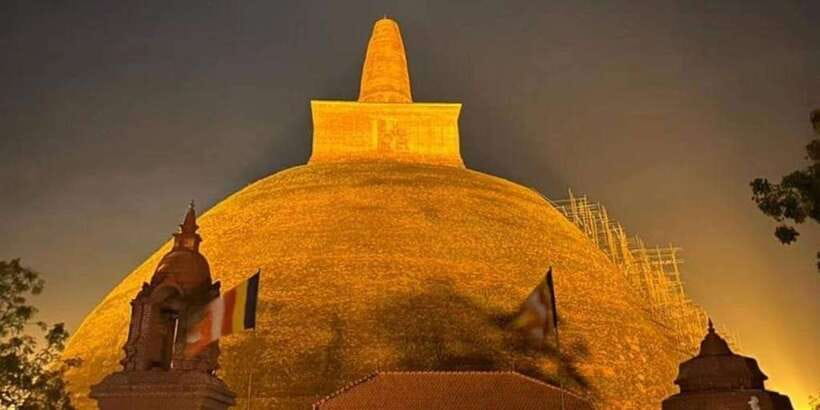
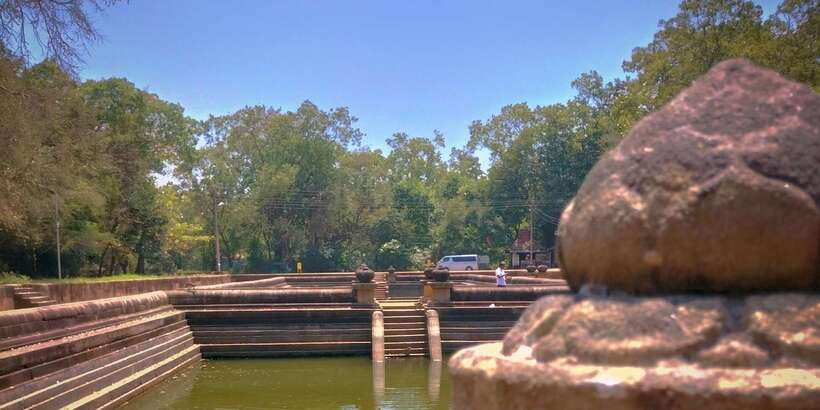
Kuttam Pokuna, often called the Twin Ponds, is one of the tour’s most interesting stops for anyone curious about ancient engineering. These large bathing pools are linked with monastic life, and their careful construction gives you a glimpse of the practical systems behind the religious centres.
This is a good place to ask questions. Look at the steps, edges, and proportions rather than treating the pools as simple decorative features. Even without a long lecture, the site helps you see that Anuradhapura was a planned city with serious skill in water management and construction.
The 25-minute visit gives you time for photographs and a basic explanation. The stone can be bright in the sun, so sun cream and water are not optional extras here. Comfortable shoes also help, since you will be moving around ancient surfaces rather than polished walkways.
Samadhi Buddha and the Abhayagiri complex
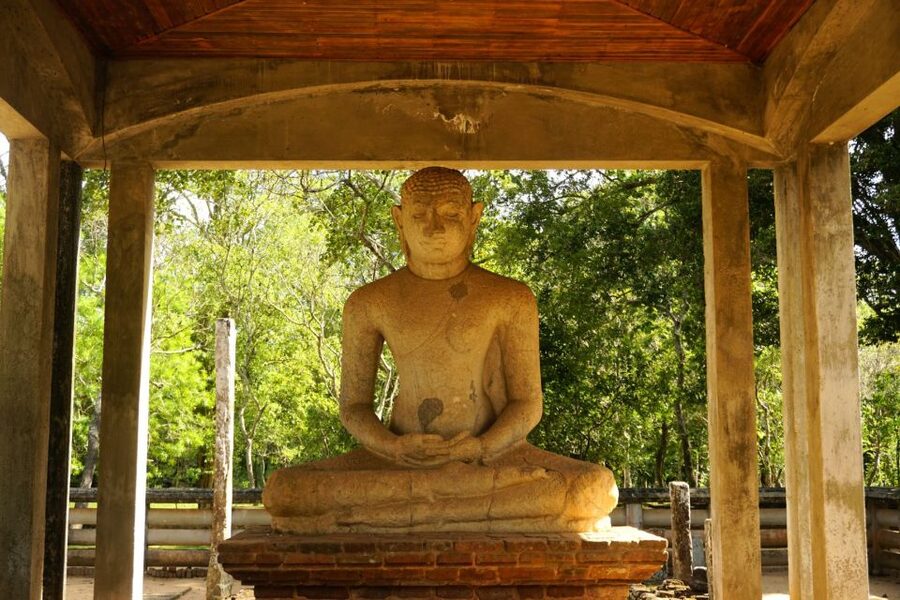
The Samadhi Buddha Statue offers a quieter change of pace. The seated figure is closely linked with Buddhist art and meditation, and Navin can explain how the statue fits into the wider religious setting.
Give yourself a moment to look at the face and posture before rushing to the camera. The stop is brief, but this is one of those places where a little stillness can add more than another hurried photograph.
Abhayagiri Vihara then shifts the focus back to the scale of a major monastic complex. You will visit the area connected with Abhayagiri, followed by the main refectory of the monastery. These stops help show that ancient religious centres needed more than shrines. They also required spaces for eating, teaching, living, and organising daily life.
The main refectory is particularly useful for making the ruins feel practical. It gives you a chance to think about the people who used the complex every day, not only the kings and monuments associated with it.
Elephant Pond and the Moonstone
The Elephant Pond is another large water feature associated with the Abhayagiri area. Its scale makes a strong impression, but the value of the stop comes from seeing how water, monastic life, and the wider city were connected.
The itinerary also includes the Anuradhapura Moonstone, a carved threshold feature with religious and symbolic meaning. It can look small compared with the huge stupas, so this is exactly the kind of detail that is easy to miss on your own.
A guide earns his fee at places like this. Without an explanation, you may see a decorated stone and move on. With Navin, you can ask about the carvings, their meaning, and how the feature fits into Buddhist architecture.
The moonstone stop also shows the broad range of the tour. You are not only visiting the famous monuments. You are also getting short introductions to smaller objects that help explain how people entered and used sacred buildings.
Guard stones and Thuparama Seya
Muragala, or the guard stone, adds another architectural detail to the route. Guard stones were placed near entrances, and their role becomes clearer when you see them in relation to steps, doorways, and sacred buildings.
This is a stop for close looking. Notice the carving and placement, then ask Navin how the feature fits into the religious design of the site. The 25-minute slot should be enough for an explanation and a few photographs.
The final listed monument is Thuparama Seya, one of the oldest and most important stupas in the ancient city. It gives the tour a fitting finish, bringing you back to the central role of Buddhist worship in Anuradhapura.
By this point, you will have seen both active sacred places and archaeological remains. That contrast is one of the best parts of the outing. You are not touring a dead collection of stones. You are seeing a place where ancient structures, modern religious practice, and local routines share the same ground.
What the $30 price really covers
The advertised price is $30 per person. For a private five-hour experience, that is a reasonable starting price, especially since it includes a guide, private transport by tuk tuk, hotel pickup and drop-off, bottled water, and the short tuk tuk lesson.
The important catch is the entrance fee. Tourist entrance tickets are not included, and the current foreign visitor charge for the ancient city was reported at about $30 per person. That means you should budget roughly another $30 for the main ticket, although you should confirm the current amount when booking.
At first glance, paying for the tour and then paying again to enter may seem expensive. I think the value depends on how much context you want. If you simply want to see the monuments from the outside, independent transport may cost less. If you want explanations, door-to-door transport, and help covering a large area in one afternoon, the guide becomes much more useful.
The private format is also valuable for couples, families, and small groups with different interests. You are not paying for a large coach experience, and you can ask questions as you go.
Practical details that affect your day
The tour is conducted in English, with a live guide and an English audio guide listed as included. Navin’s clear English is helpful if you want explanations about Buddhism and history rather than only basic sightseeing directions.
Wear comfortable shoes. You will be visiting temple grounds, archaeological areas, and old stone surfaces, and the itinerary includes walking around each stop.
Bring your passport, as requested in the activity information. Also bring sun cream. The tour takes place in daylight, and much of the sightseeing is outdoors.
Hats are not allowed, so do not rely on one as your main sun protection. Use sun cream, drink water, and dress respectfully for religious places.
The experience is listed as wheelchair accessible. If access needs are important for you, confirm the exact tuk tuk and site arrangements before booking, since the itinerary includes ancient ruins and multiple stops.
The activity is not considered suitable for people over 95. That is an unusually specific restriction, but it is part of the stated information and worth noting for older members of your group.
Free cancellation is available up to 24 hours before the tour for a full refund. You can also reserve now and pay later, which helps if your Sri Lanka schedule is still shifting.
Who should book this Anuradhapura tour?
I would choose this tour if you have only half a day, want a private guide, or feel unsure about finding the main sites on your own. It is also a strong choice if you want Buddhism and Sri Lankan culture explained in plain English rather than reading signs at each stop.
Families and first-time tuk tuk riders should enjoy the easy transport and lighthearted tone. Couples and small groups will appreciate being able to ask questions without a crowd around them.
Independent history specialists may want more time at individual monuments. Five hours is enough to cover the main route, but it is not a substitute for several days of study. If you prefer to sit quietly at one stupa or photograph every architectural detail, this schedule may feel too brisk.
The best approach is to see the tour as an informed first look. Navin’s local advice can also help shape the rest of your stay in Sri Lanka. Past outings have included tips for other places, wildlife sightings, and practical travel suggestions, so you can use the final part of the day to ask about your next destination.
Should you book it?
Book this tour if you want to see a wide spread of Anuradhapura without arranging transport yourself. The combination of Navin’s clear explanations, private tuk tuk travel, hotel pickup, and access to both active temples and archaeological sites gives you far more structure than simply hiring a ride.
Go in with the right expectations. You will not spend an hour at every monument, and the entrance fee is extra. But for $30 per person, the guide and transport offer solid value for a focused introduction to one of Sri Lanka’s most important historic cities.
FAQ
How long does the Anuradhapura private tour last?
The tour lasts five hours, including transport and sightseeing around Anuradhapura.
How much does the tour cost?
The listed price is $30 per person. Tourist entrance tickets are not included. The foreign visitor entrance fee was reported at about another $30 per person for the ancient city, but confirm the current charge before booking.
Is hotel pickup included?
Yes. Pickup and drop-off in Anuradhapura are included. You should wait in your hotel lobby 10 minutes before the scheduled pickup time.
Which language does the guide speak?
The live tour guide speaks English, and an English audio guide is also included.
Is this a private tour?
Yes. The activity is for a private group and includes private transport.
What transport is used?
The tour uses a tuk tuk for the five-hour outing.
What should I bring?
Bring your passport, comfortable shoes, and sun cream. Bottled water is included.
Are entrance tickets included?
No. Tourist entrance tickets are not included in the tour price.
Can I cancel the booking?
Yes. You can cancel up to 24 hours in advance for a full refund. The reserve now and pay later option is also available.
Newest history tours we have reviewed in the world
- Bilbao Historical Tour in small group★ 4.7 · 52 reviews
- Bologna: Street Food Tour in the Historic Center★ 4.8 · 125 reviews
- CEBU: Cebu City Heritage and Uphill Guided Tour★ 4.2 · 31 reviews
- Bishkek : City Tour (History, Architects, Statues & Culture)★ 4.9 · 54 reviews
- Blenheim: Omaka Aviation Heritage Centre Admission Ticket★ 4.9 · 31 reviews
- Belfast: Best of Belfast History, Culture & Art Walking Tour★ 4.9 · 158 reviews
- Berlin: Nazi History Walking Tour★ 4.8 · 33 reviews
- Best of Baku: 4-Hour City Tour Historic and Modern Landmarks★ 4.7 · 63 reviews
Ancient History Tours, compared.
Colosseum: Underground and Ancient Rome Tour
Read our review →
Colosseum & Ancient Rome with Arena Floor Option I Max 6 People
Read our review →
Colosseum, Ancient Rome Tour or AudioGuided Tour
Read our review →
Colosseum Underground & Ancient Rome Guided Tour
Read our review →
Taormina: Ancient Theater Skip-the-Line Ticket & Audio Guide
Read our review →
Discover the Ancient Ruins of Pompeii: Day Trip from Rome
Read our review →
Discover Matera, the ancient city – English tour
Read our review →Browse the lists this tour appears in