
Review · UNESCO WORLD HERITAGE TOURS
Luang Prabang: UNESCO World Heritage City Highlights Tour
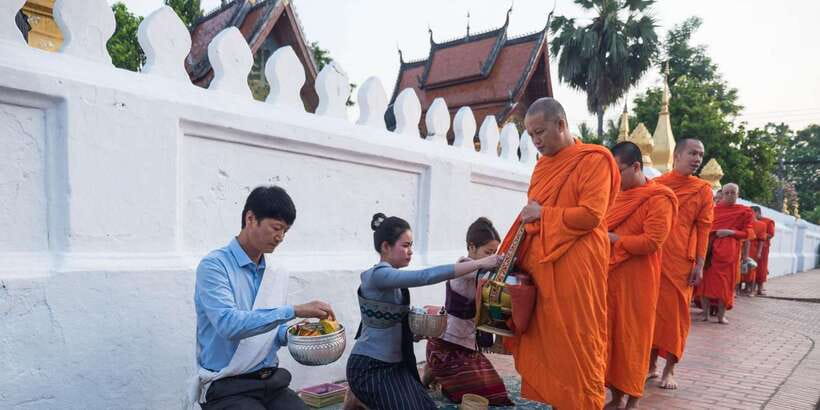
Luang Prabang is at its most revealing before breakfast, when saffron-robed monks move quietly through the old town and locals place rice in their bowls. This tour lets you see that ritual, the morning market, major temples, the former Royal Palace, and Phousi Hill without having to piece the day together yourself.
I like the early start and local context, especially when a guide such as Boun, who spent 18 years as a monk, explains the meaning behind the alms-giving ceremony. I also like the choice of formats: a focused half-day city tour, a full-day cultural program, or a city tour combined with Kuang Si Falls.
The main drawback is pace. The full-day version can pack in temples, museums, a village, and a waterfall, while entry fees are extra. Some guides have also hurried visitors along, and one delayed group missed part of the planned sightseeing.
Key points at a glance
- The 6 AM option begins with alms giving and the morning market, making it the best choice for cultural context.
- Wat Xieng Thong and the former Royal Palace provide the strongest introduction to Luang Prabang’s religious and royal past.
- Phousi Hill requires a stair climb, but the view over the Mekong, Nam Khan, and town is the payoff.
- Kuang Si Falls is an optional full-day addition, with about 2.5 hours of free time at the falls.
- Former monks Boun and Bounlouam are among the most memorable guides, especially for explanations of Buddhism and temple art.
- The advertised $35 price is good for transport and guiding, but you should budget about $6 more for key city admission fees.
Why the early morning option is worth setting an alarm for
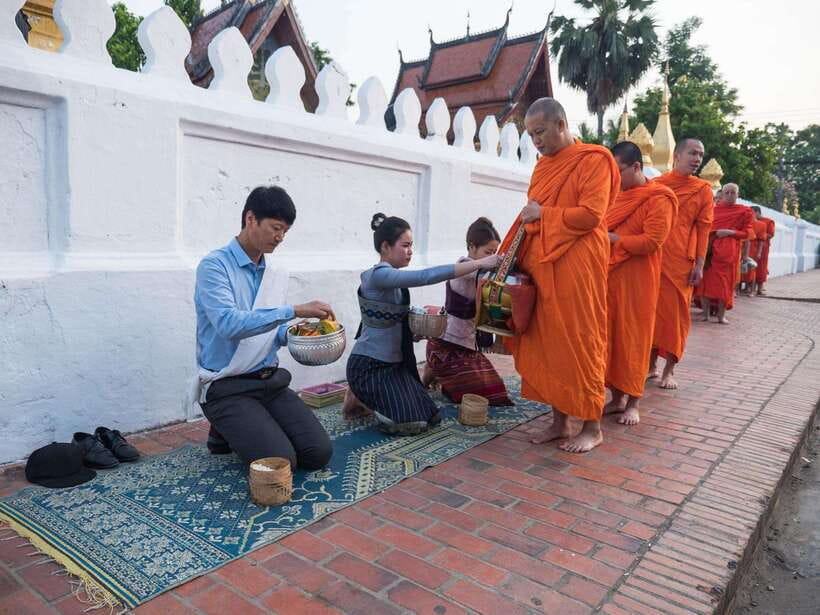
The optional 6 AM start is the most distinctive version of this experience. Hotel pickup comes before sunrise, followed by the alms-giving ceremony, a visit to the morning market, breakfast time, and a return pickup for the main city tour.
The ceremony is quiet and easy to misunderstand if you arrive without guidance. A good guide explains where to stand, how locals take part, and why respectful behavior matters. Some guides arrange a place to sit or stand and provide rice, while others may offer a traditional shoulder scarf for the ceremony.
You should treat this as a religious practice, not a photo performance. Keep a respectful distance, dress modestly, avoid blocking the monks, and follow your guide’s instructions. The early hour also matters because the market is calmer before the day heats up and crowds arrive.
After roughly 30 minutes at the ceremony and 20 minutes at the market, you get about 1.5 hours for breakfast and rest. That pause is useful. You are not expected to march through the entire morning on an empty stomach.
One practical warning: confirm the exact pickup time. The advertised start may be 6 AM, but the vehicle may need to arrive earlier to catch the ceremony. One group missed part of the ritual after receiving a last-minute message about an earlier pickup.
More UNESCO World Heritage Tours in the world:
- World Heritage Shirakawa-go and Experience Tours from Kanazawa
★ 5.0 · 4,049 reviews - From Tirana: Berat UNESCO Heritage & Belshi Lake Tour
★ 4.9 · 3,863 reviews - Bali: Tanah Lot UNESCO World Heritage Sites Full-Day Tour
★ 4.7 · 1,947 reviews
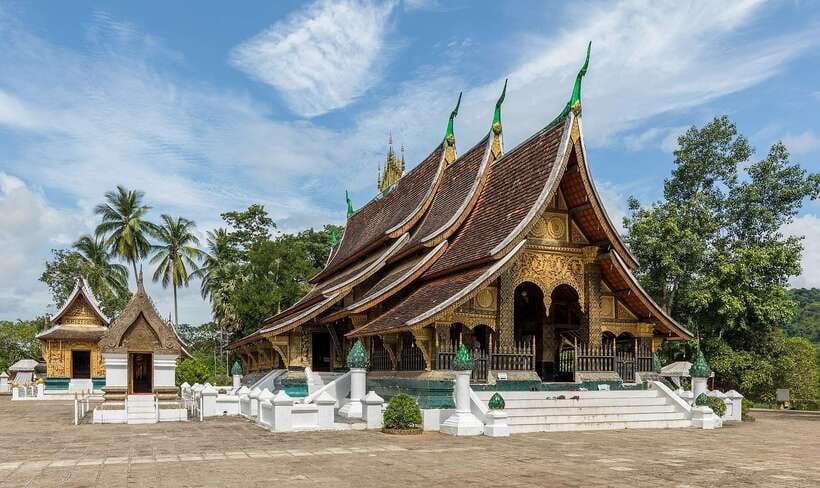
Wat Xieng Thong sets the tone for Luang Prabang
The main sightseeing section begins at the tip of the peninsula, where the Nam Khan River meets the Mekong. It is a sensible place to begin because your guide can explain how Luang Prabang developed around its rivers, temples, and royal center.
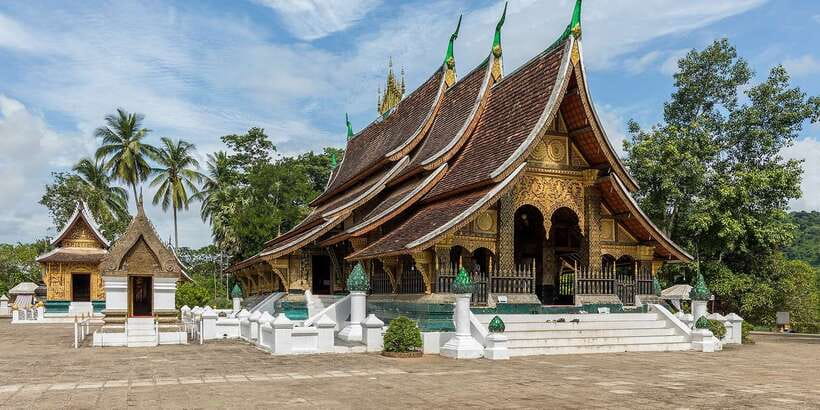
From there, you walk to Wat Xieng Thong, widely regarded as the city’s most important temple. Its low, sweeping rooflines are a useful introduction to traditional Luang Prabang temple design. Rather than simply pointing out decorative details, a strong guide can explain how the temple functions as part of daily Buddhist life.
Allow about an hour here. The value is not only the building itself. You also get a chance to see how local people use the temple, which gives the visit more meaning than a quick photograph from the entrance.
The tour then continues to Wat Sensoukharam and other nearby temples. This is the point where a good guide earns the fee. Without interpretation, several gilded temples can begin to blend together. With clear explanations, you start to notice differences in layout, religious imagery, and the role each place plays in the community.
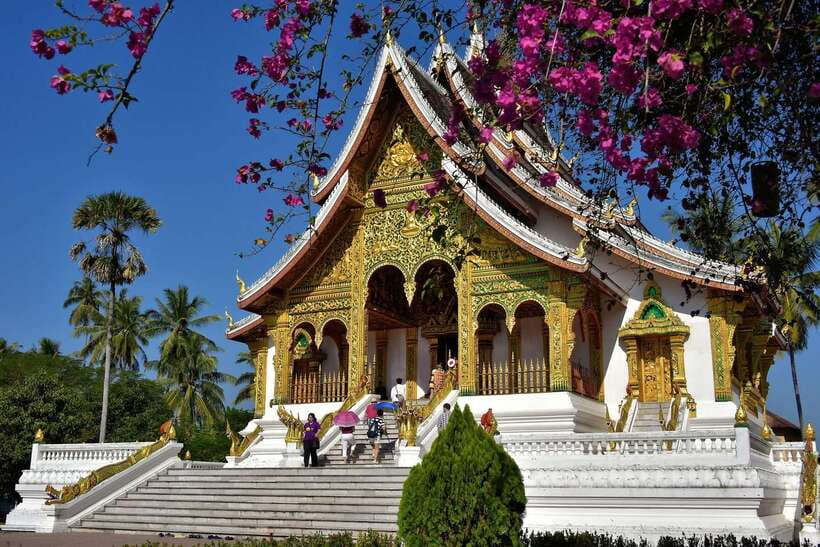
The former Royal Palace connects Laos to its royal past
The National Museum of Luang Prabang occupies the former Royal Palace. It is one of the strongest stops for understanding the transition from royal rule to modern Laos.
Inside, you see historical objects connected with the Lao monarchy, along with a mix of Lao design and French Beaux-Arts architecture. The building itself tells part of the story. It reflects the period when Luang Prabang was both a Lao royal center and a place shaped by French colonial administration.
The museum visit is scheduled for about an hour. That is enough time for a useful introduction, though you may want longer if you enjoy historical displays. The strict dress code matters here. Men and women wearing shorts or short skirts must cover up before entering, with no exceptions.
Bring a light covering if your clothing is not conservative. This is easier than trying to borrow or buy something at the entrance, and it keeps the visit moving.
The museum can be busy, and one practical complaint concerned confusion with lockers and regrouping. Keep track of where the group meets, especially if the guide moves ahead. You should also carry only what you need, since you may have to bring personal belongings between stops if the vehicle changes.
Phousi Hill is a short climb with a big payoff
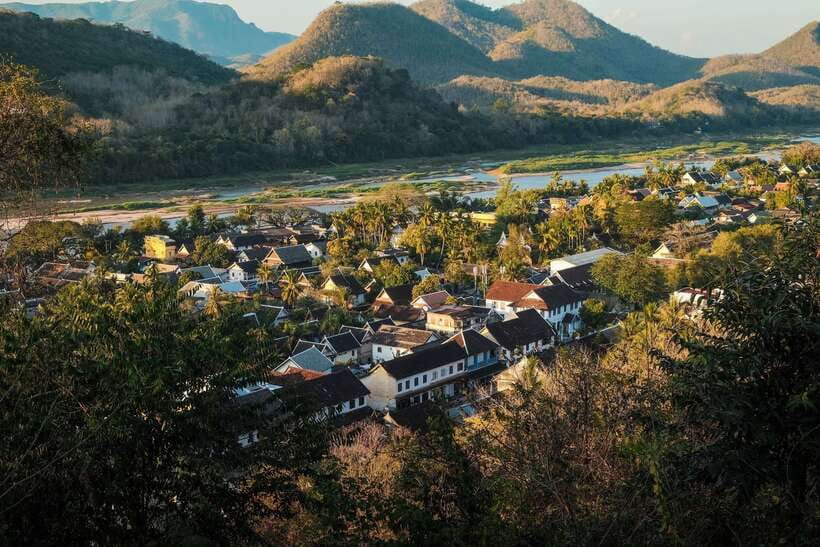
The climb up Phousi Hill is brief on the schedule, about 30 minutes, but the stairs make it more demanding than that number suggests. Visitors describe it as hundreds of steps, so I would not treat this as a casual flat-town walk.
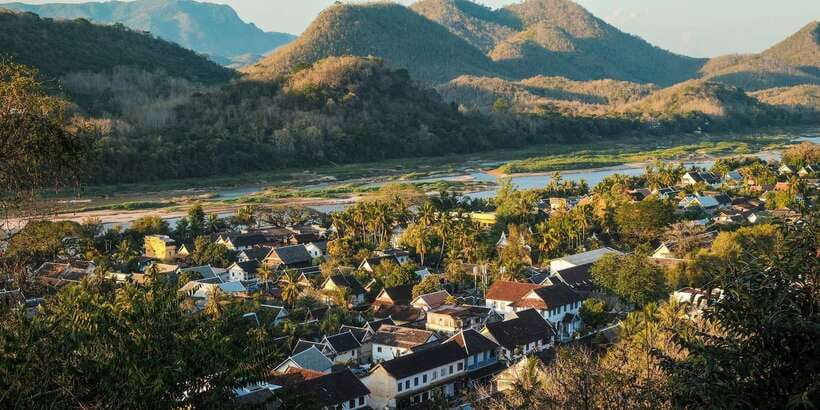
The reward is a broad view over Luang Prabang, the rivers, the bridge, and the surrounding hills. The view is especially appealing in the cooler morning, when the town may still be shaded or overcast. Some groups reach the top early enough for sunrise, depending on the chosen start time and pace.
Wear sensible shoes and carry water. The operator has supplied water and cool towels on some departures, but you should not rely on that as your only preparation.
This stop works well near the end of the morning city program. You have already seen the religious and royal center, and the hill gives you a clear sense of how compact the old town is. If you dislike stairs or want time for careful photography, tell your guide early. One complaint involved a guide rushing the group, which can make the climb and the views feel hurried.
More History Tours in the world:
- New York City: American Museum of Natural History Ticket
★ 4.5 · 15,447 reviews - History and Hauntings of Salem Guided Walking Tour
★ 5.0 · 14,564 reviews - Colosseum: Underground and Ancient Rome Tour
★ 4.7 · 12,691 reviews - Lisbon: History, Stories and Lifestyle Walking Tour
★ 4.8 · 10,902 reviews
Choose between heritage sights and Kuang Si Falls
The full-day choices split after free time for lunch. One route continues with cultural sights in and around the city. The other heads to Kuang Si Falls and a Hmong village.
The cultural route includes Ban Xang Khong, the paper village on the Mekong, the UXO Lao Visitor Center, Wat Wisunarat, and Wat Mai. It is the better choice if you want more background on Lao society, religion, and recent history.
Ban Xang Khong adds a more local craft angle to the day. The village is known for paper production, and the stop helps balance the grand temples with an everyday working community. Do not expect a long workshop unless your guide confirms one in advance. The scheduled visit is about an hour.
The UXO Lao Visitor Center addresses the legacy of unexploded ordnance from the war. This is a serious, educational stop rather than a light tourist attraction. I consider it valuable because it gives necessary context for modern Laos, but you should know the subject matter may be difficult.
Wat Wisunarat is described as the oldest temple in Luang Prabang, while Wat Mai is the largest. Together, they provide another look at the city’s religious architecture after you have already visited Wat Xieng Thong.
The alternative route to Kuang Si Falls allows about 2.5 hours at the site. That gives you enough time to see the falls properly and possibly swim, rather than treating them as a quick roadside photograph. The waterfall admission is included when you choose this option.
One important tradeoff is time. If you want a relaxed waterfall visit and a close look at the Hmong village, the day may feel tight. One schedule gave plenty of time at Kuang Si but only a few minutes at the village. If the village matters more to you, say so before the afternoon begins.
What the Hmong village stop can and cannot provide
The Hmong exhibition antique house and culture stop lasts about 20 minutes on the listed schedule, while the broader route describes a Hmong village visit on the way back from Kuang Si.
This is enough for an introduction to Hmong culture and household objects, but not enough for a long community visit. I would see it as a brief cultural stop rather than the central purpose of the afternoon.
That distinction helps you choose the right version. Pick the waterfall route if you want scenery, swimming time, and a short cultural visit. Pick the heritage route if you prefer museums, temples, crafts, and the social history of Laos.
Guides make the difference
The strongest part of this tour is the guide’s ability to explain Buddhism and Lao history in plain English. Several guides have former monastic experience, including Boun and Bounlouam, who each spent many years as monks. That background can add useful detail about daily monastic life, temple paintings, religious objects, and the alms ceremony.
Sack is another guide singled out for his friendly manner and ability to connect with children. That makes the tour a workable choice for families, particularly if your child is curious but not ready for a highly academic historical tour.
Sitthai has been praised for clear historical explanations, while Bun and Vone are known for strong local knowledge and care with the group. Guide quality can vary, and some English accents may take a little getting used to. One group found its guide difficult to understand at times, while another found the explanation level excellent.
I would ask questions and tell the guide what interests you. If you want Buddhism, ask for more temple detail. If you prefer royal history, request more time in the museum. A private or small-group format gives you a better chance to adjust the pace.
Price, extra costs, and the real value
The listed price is $35 per person, though the exact cost can vary by option and group arrangement. For that amount, you receive hotel pickup and drop-off, an English-speaking local guide, and transport between the city and any selected afternoon destination.
That is fair value, especially if you have only one day in Luang Prabang. A private car, coordinated pickups, and a guide who can explain the sites would otherwise take effort to arrange. The value is strongest for the half-day city program and for small groups that want flexibility.
You must budget separately for key city admissions. Wat Xieng Thong costs 30,000 LAK, the Royal Palace costs 60,000 LAK, and Phousi Hill costs 30,000 LAK. Together, that is about US$6, payable in cash on site.
Food and drinks are not included. The morning option allows time for breakfast, but you pay for it yourself. Kuang Si Falls admission is included when that option is selected, and the listed information also includes Hmong museum admission. A Pak Ou Caves fee is mentioned in the admission information, but Pak Ou Caves is not part of the itinerary described here, so confirm any extra destination before paying for it.
Who should book this Luang Prabang tour
I would recommend this experience if you are visiting Luang Prabang for the first time, have limited time, or want a guide to explain what you are seeing. It is also a good match for families and small groups, particularly when you can request a guide who works well with children.
Choose the early start if you care about Buddhist practice and local daily life. Choose the half-day city tour if you want the core sights without a long afternoon. Choose the cultural full-day route if museums, war history, crafts, and temples matter more than waterfalls.
The Kuang Si version suits you if you want the city highlights plus one of Laos’s best-known natural attractions. Just be realistic about the pace and the short village stop.
I would be more cautious if you dislike stairs, need a slow photography schedule, or prefer spending a full morning at one temple. This is a lot of Luang Prabang in a short time, and the experience depends on the guide keeping the timing under control.
Should you book it?
Book this tour if you want a well-organized introduction to Luang Prabang and do not want to arrange separate transport for each sight. The early alms-giving option is the strongest choice, and a guide with former monastic experience can add real value.
Skip it if you already know the city well or prefer wandering at your own speed. In that case, spend your money on a private guide for fewer sites and more time at each one.
For most first visits, I would choose the early city tour, add Kuang Si only if you have the energy for a long day, and carry cash for the three main city admissions.
FAQ
How long does the tour last?
The available formats range from about 4.5 hours to a full day. The early morning option adds the alms-giving ceremony, morning market, breakfast break, and a second pickup before the main city tour.
What are the tour options?
You can choose a half-day city tour, a full-day city tour, or a city tour combined with Kuang Si Falls. Custom private-tour destinations can be discussed in advance.
Is hotel pickup included?
Yes. Hotel pickup and drop-off in Luang Prabang are included. You should wait in the hotel lobby 10 minutes before the scheduled pickup.
Are entrance fees included?
The main city admission fees are not included. Wat Xieng Thong costs 30,000 LAK, the Royal Palace costs 60,000 LAK, and Phousi Hill costs 30,000 LAK. Kuang Si Falls admission is included when that option is selected.
Is the alms-giving ceremony included?
It is available as an add-on through the 6 AM starting option. That option also includes a visit to the morning market before returning for breakfast and continuing the tour.
What should I wear for the Royal Palace?
Dress conservatively. Shorts and short skirts are not allowed unless covered before entry, and the rule applies to both men and women.
Is the tour private or shared?
Private and small-group formats are available. The exact group arrangement depends on the option you book.
Newest history tours we have reviewed in the world
- Enjoy Ancient Mostar★ 4.0 · 45 reviews
- Private Dublin Historical and Heritage Tour by Bike★ 5.0 · 30 reviews
- Dubrovnik by Night, History, Wine & Bites★ 5.0 · 41 reviews
- Historical Walking Tour of Dublin★ 5.0 · 50 reviews
- DayTripper Dublin: A Guided City Walking Tour★ 5.0 · 90 reviews
- Ancient Old City– Finest tour of Dubrovnik★ 5.0 · 64 reviews
- Dublin LGBTQ Pride Historical and Cultural Walking Tour★ 5.0 · 91 reviews
- Interactive Living History in Dalkey Castle near Dublin City★ 5.0 · 133 reviews
UNESCO World Heritage Tours, compared.
World Heritage Shirakawa-go and Experience Tours from Kanazawa
Read our review →
Bali: Tanah Lot UNESCO World Heritage Sites Full-Day Tour
Read our review →
World Heritage Kyoto & Nara Uji Authentic Matcha Experience
Read our review →
UNESCO’s Ayutthaya Historical Park: Full-Day Tour from Bangkok
Read our review →
Rotterdam: Kinderdijk UNESCO World Heritage Entry Ticket
Read our review →
From Busan: Gyeongju UNESCO World Heritage Guided Day Tour
Read our review →Browse the lists this tour appears in