
Review · SPAIN HISTORY TOURS
Jerez: Historic Center Guided Tour
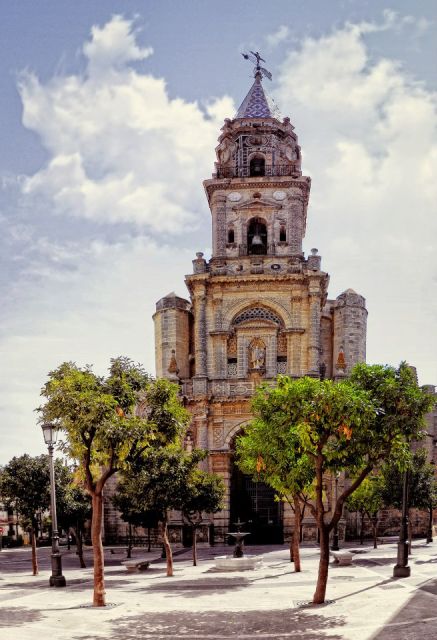
Jerez is best understood on foot, where Moorish walls, Christian churches, old palaces, and sherry culture meet within a compact center. This two-hour walk moves from the Plaza del Arenal through San Miguel and the Alcázar quarter, then brings the story into focus at San Dionisio Church and the cathedral.
I like two things here: the guides make the long timeline easy to follow, and the optional two-wine sherry tasting gives the history a proper local finish. The main drawback is that entrance tickets are not included, so you see the Alcázar and cathedral from outside unless you arrange separate visits.
Key points at a glance

- A history walk from Tartessians to the Moors: The guide connects the area’s earliest settlers with Phoenician, Roman, Visigothic, Islamic, and Christian eras.
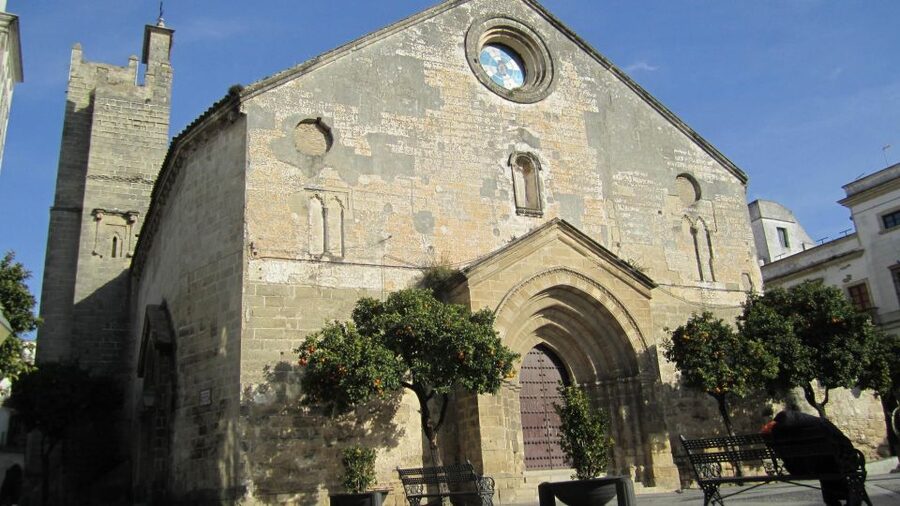
- San Miguel shows Jerez at its most local: Expect a Gothic church, traditional streets, and architecture that feels less polished than a major monument zone.
- The Alcázar quarter mixes Muslim and Christian Jerez: You see the defensive wall and learn how the city’s power shifted over time.
- San Dionisio is the only Mudejar church in town: Its design reflects the meeting of Islamic craft and Christian worship.
- The cathedral is an architectural lesson from the street: Gothic, Baroque, and Neoclassical façades appear in one complex.
- The optional sherry tasting adds flavor and context: Two wines help explain why Jerez matters far beyond its monuments.
Why Jerez makes sense with a guide

Jerez de la Frontera is often treated as a quick stop between Cádiz and Seville, but that misses the point. Its identity is layered, and the layers are not always easy to read from a map. A church may carry Mudejar details, a square may occupy the site of an older civic building, and a sherry tradition may depend on centuries of changing rulers and trade.
I like starting with a guide because the city’s story is not laid out in one grand monument. It is scattered across façades, walls, churches, courtyards, and small squares. The guide gives you a framework, then points out details you might otherwise pass without noticing.
This is a walking tour, not a museum visit. You will spend most of the two hours outdoors, moving through the old center and stopping for explanations. That makes comfortable shoes and a refillable water bottle sensible choices, especially in warm weather.
The tour is offered in English, Spanish, or French. Some departures may run in two languages at once, English and Spanish, so ask at booking if a single-language tour matters to you. Private groups are available, which can be useful if you want more time for questions or a slower pace.
More Old Town and Historic Centre Walks in Spain
- Madrid Essential: Historic Center, Plaza Mayor & Royal Palace
★ 5.0 · 6,416 reviews - Valencia Old Town Tour with Wine & Tapas in 11th Century Historic Monument
★ 5.0 · 3,234 reviews - Madrid Historic Centre Food Tour with Authentic Tapas & Wines
★ 5.0 · 814 reviews
From Plaza del Arenal into San Miguel
The usual meeting point is Plaza del Arenal, a central starting place that helps you get your bearings before entering the older quarters. Meeting points can vary by the option you book, so check your confirmation rather than assuming every departure begins here.
From the plaza, the route heads toward San Miguel. This neighborhood is associated with a strong local character and a Gothic church that gives the area its main visual anchor. You will also see the typical architecture of Jerez, where whitewashed walls, enclosed spaces, decorative details, and older residential façades create a quieter mood than the city’s main squares.
The value of this section is orientation. A guide can explain how the modern city wraps around the old center, while also pointing out small details in the street plan. Past participants have especially appreciated guides who connect architecture with daily life, rather than treating every stop as a date to memorize.
Guides including Lucia, Marta, Rose, Charo, Rosa, and Maria have been praised for clear English, humor, and an easy conversational manner. That matters on a short city walk. Two hours can feel rushed if the guide delivers a lecture, but the strongest guides make room for questions about food, local customs, orange trees, flamenco, and places to eat later.
Reading the Alcázar quarter and its defensive wall
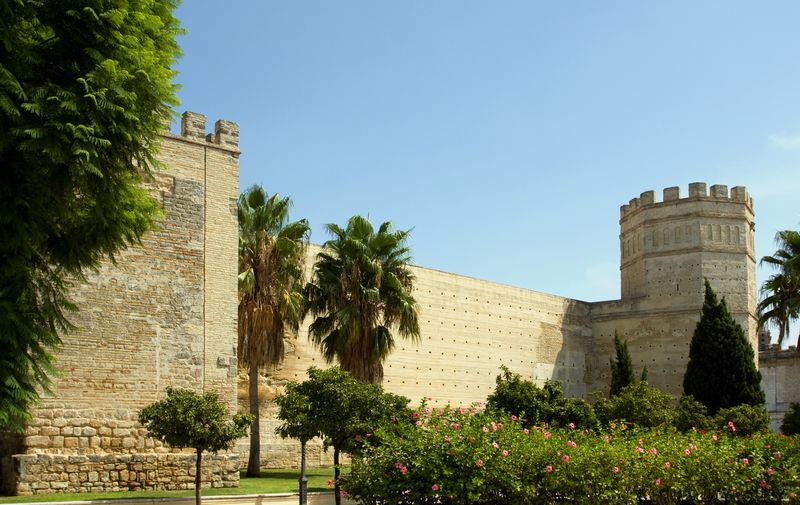
The route then turns toward the Alcázar area, where Muslim and Christian landmarks sit close together. You will see part of the Alcázar’s defensive wall and hear how the city developed as a fortified settlement.
The wall is not simply an old stone backdrop. It gives you a physical clue about Jerez’s position and past importance. Fortifications tell you that this was a place where control, movement, and protection mattered. The guide places the wall within the wider sequence of Phoenician, Roman, Visigothic, Muslim, and Christian influence.
The Alcázar itself is not included as an interior visit. That is an important limit. You can study the exterior setting and defensive remains, but the tour does not replace a ticketed visit inside. If the Alcázar is high on your list, plan separate time for it and check opening details independently.
I find this outdoor approach useful as a first look. You learn what to watch for before visiting on your own. On the other hand, travelers who want a full monument tour may find the stop too brief, especially if they expected to go through the gates.
This part also shows the city’s mixed identity. Jerez is not presented as purely Moorish or purely Christian. Its streets and monuments reflect changing rule, adaptation, and reuse. That is one of the more useful ideas to carry with you for the rest of Andalusia.
San Dionisio and the Mudejar meeting point
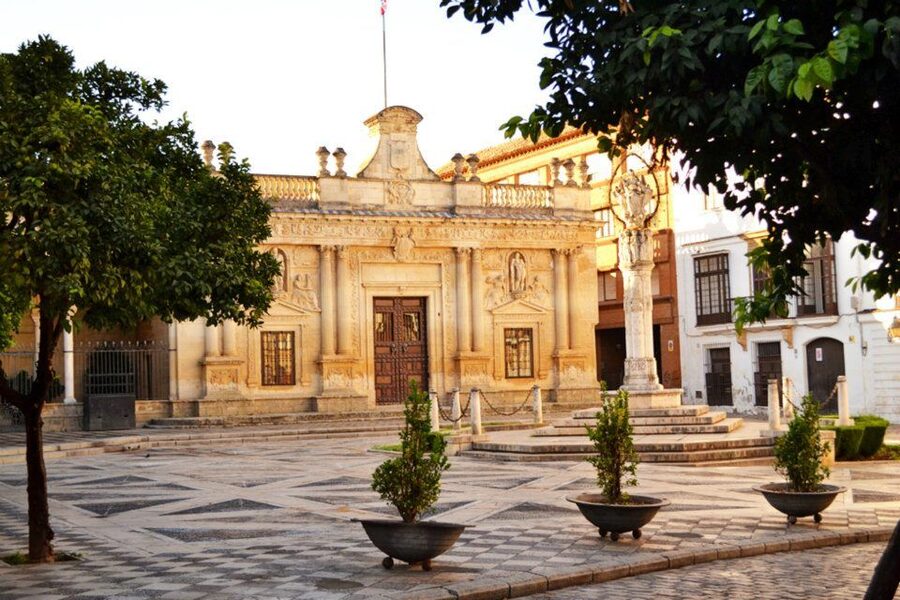
One of the clearest stops is the Church of San Dionisio, described as the only Mudejar church in Jerez. Mudejar architecture is especially helpful for understanding medieval Spain because it reflects Christian buildings shaped by Islamic artistic methods and craftsmen.
You will admire the church from the outside rather than take part in an included interior visit. The guide explains what makes its design important and helps you look beyond the broad shape of the building. This is where a good guide earns the fee: the point is not only that the church is old, but that its details record contact between cultures.
The church also gives the tour a welcome change of scale. After the broad story of empires and fortifications, you focus on one building. A guide with an interest in ecclesiastical architecture, such as Maria or Lucia, can make façades easier to read by explaining how religious buildings communicate their period and purpose.
If religious architecture is not your main interest, this section may feel heavier than expected. One past assessment found that the walk spent a lot of time on the religious side of Jerez. The tour does include palaces, civic spaces, wine, and local personalities, but the churches are central to its route.
Same streets, a different century:
- Barcelona: Tapas Walking Tour with Food, Wine, and History
★ 4.8 · 4,261 reviews - Sevilla Food Tour: Tapas, Wine, History & Traditions
★ 5.0 · 3,468 reviews - Madrid Tapas & Taverns Small Group Food & History Tour
★ 5.0 · 2,664 reviews - Barcelona Tapas Walking Tour: Food, Wine & History
★ 4.5 · 1,928 reviews
The cathedral’s Gothic, Baroque, and Neoclassical faces
The cathedral provides one of the best visual lessons on the walk. Its exterior brings together Gothic, Baroque, and Neoclassical façades, allowing you to compare different styles without crossing the city.
That mixture also tells you something about how large buildings evolve. A cathedral is rarely designed and completed in one clean period. Changes in taste, money, building campaigns, and religious priorities can leave several styles on the same structure.
The tour does not include entry to the cathedral. You will study its exterior and hear the historical explanation from the street. I consider that a fair arrangement for a $26 tour, but only if you understand what you are buying. This is a guided introduction to Jerez, not a ticketed monument package.
The street-level view has its own benefit. You can step back, compare the different façades, and notice how the cathedral relates to the surrounding quarter. The guide can also help you avoid the common mistake of seeing a grand church as one uniform object. Look for changes in ornament, proportion, and surface treatment.
Tartessians, Phoenicians, Romans, and Moors
The early history section reaches back to the Tartessians, who are presented as the first settlers in the area. Their story is followed by the Phoenicians, Romans, Visigoths, and Moors, each leaving a mark on Jerez.
A guide makes this sequence more useful by tying it to the streets you are standing in. Otherwise, ancient names can blur into a list. You will hear how successive cultures shaped the city, its buildings, and its wider place in Andalusia.
The Moorish period receives special attention because the route passes through areas where Islamic and Christian monuments sit close together. The Christian conquest did not erase everything that came before it. Buildings, street patterns, decorative methods, and civic uses continued to change over time.
I like this broad sweep because it gives you context for later stops in Cádiz province. It also helps explain why Jerez feels different from a city built around one single period. The story is long, but the guide has only two hours, so expect a lively overview rather than a specialist archaeological seminar.
The best guides keep the chronology human. Rose has been praised for making the walk feel like a trip through the city’s past, while Angel was noted for mixing historical facts with humor. That style is useful if you want solid information without sitting through a formal lecture.
Squares, palaces, and the old Town Hall site

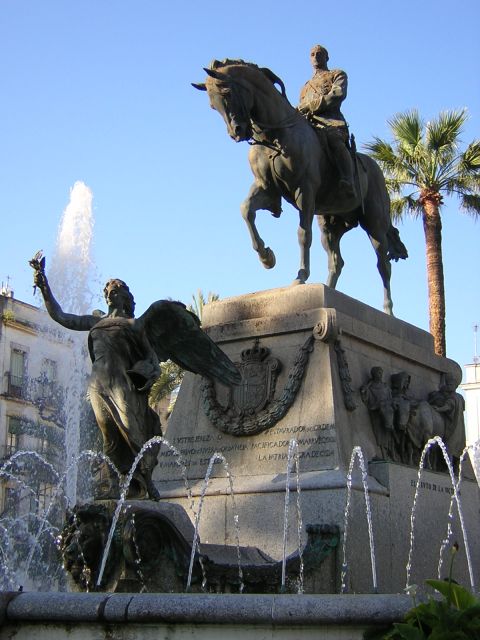
Between the major monuments, the walk passes decorative squares and palaces. These stops matter because Jerez is not only a city of churches and walls. Its civic and private buildings show how local wealth, status, and public life developed.
The old Town Hall site is another useful reference point. It helps connect the city’s political story with the religious and military buildings already seen. You get a broader picture of how power was displayed in public spaces.
Some guides also point out less obvious places, shops, and cafés. Earlier departures have included access to buildings or shops that gave participants a look at parts of the city they would not have found alone. Do not assume every departure includes the same spontaneous stop, but a good question to ask your guide is where to return for a pastry, tapas, or a drink.
This is also where the tour can feel most personal. Charo has been described as making the walk feel like wandering with a local friend, while other guides have added stories about Lola Flores, a famous flamenco dancer from Jerez. Those details give the polished monuments a local voice.
Ending with two Jerez wines
You can choose an option that includes a tasting of two Jerez wines. This is not an unrelated add-on. Sherry production is one of the main reasons Jerez is known outside Spain, and tasting helps turn an abstract local specialty into something you can recognize.
The tasting typically adds a relaxed finish in a tabanco, a traditional Jerez wine bar. Some departures have ended in a very old tabanco where a flamenco performance was also taking place. That performance is not guaranteed by the tour details, so treat it as a possible bonus rather than part of the promised schedule.
The two wines give you a simple introduction rather than a full bodega course. You will not leave with a complete guide to every style, but you will have a better sense of how wine fits into the city’s daily culture. Marta has been praised for her knowledge of Jerez wines, which can be especially helpful if you have a strong interest in the subject.
If you do not drink wine, check the available option before booking. The standard walking tour remains focused on history and architecture, while the tasting version adds a social stop at the end. For many people, the wine option is worth the extra appeal because it links the city’s past to something you can experience immediately.
What $26 gets you
At $26 per person, this is a reasonable price for a two-hour guided introduction, especially if you want a clear overview before exploring Jerez alone. The fee covers the guide and taxes, but not tickets to the Alcázar or cathedral.
The value depends on your priorities. If you want a short, friendly orientation with history, architecture, and local suggestions, the price is sound. If you want long interior visits, extensive archaeological detail, or a full sherry education, you will need to add other activities.
The tour requires at least two adults. A booking with one adult and one child is not allowed, so families should check the group rules carefully. Wheelchair access is available, though the old center may still include surfaces and spaces where pace and comfort vary. A private group is another option if you want more control over the route.
Free cancellation is available up to 24 hours before the start for a full refund, and you can reserve now and pay later. Those policies help if your Andalusia plans are still shifting.
Who will enjoy this walk most
I would choose this tour if you are visiting Jerez for the first time and want the city to make sense quickly. It suits people who enjoy architecture, layered history, local stories, and a modest amount of walking.
It is also a good fit for a short stay. The route gives you enough background to decide later if you want to return to the Alcázar, cathedral, a sherry bodega, or a tabanco. Guides often share food and drink suggestions, which can save you from wandering without a plan after the tour.
You should think twice if your main goal is an inside look at the monuments. Tickets are not included, and the church, cathedral, and Alcázar are primarily discussed from outside. You may also want another option if you dislike tours that spend a fair amount of time on religious buildings.
Should you book the Jerez historic center tour?
Book it if you want a friendly, well-paced introduction to Jerez that connects Moorish and Christian architecture with the city’s wine culture. The strongest guides, including Lucia, Marta, Rose, Charo, and Maria, bring humor and local detail to a route that could otherwise feel like a list of old buildings.
Choose the wine-tasting option if sherry is part of your reason for coming to Jerez. Skip that add-on if you prefer to arrange your own bodega visit or do not drink.
My practical advice is to take this walk early in your stay, then return to the Alcázar or cathedral with the context you gained. At $26, it offers good value as a city orientation, as long as you accept that interior admission is not included.
FAQ
How long is the Jerez historic center tour?
The tour lasts two hours. Some past walks have finished in about an hour and a half, but the advertised duration is two hours.
What languages are available?
The live guide is available in English, Spanish, and French. Some visits may be conducted in English and Spanish at the same time.
Where does the tour meet?
The usual meeting point is Plaza del Arenal, but it may vary depending on the option booked. Check your booking details before setting out.
Are tickets to the Alcázar and cathedral included?
No. Tickets are not included, and the tour does not include interior visits to the Alcázar or cathedral.
Is the sherry tasting included?
A tasting of two Jerez wines is available with the tasting option. Check that you select this option when booking.
How many adults are needed to book?
The tour requires a minimum of two adults. A booking for one adult and one child is not allowed.
Is the tour wheelchair accessible?
Yes, the activity is listed as wheelchair accessible.
Can I cancel for a full refund?
Yes. You can cancel up to 24 hours in advance for a full refund. Reserve now and pay later is also available.
Newest history tours we have reviewed in Spain
- Visita Guiada Por El Casco Histórico De Cuenca Y Su Catedral★ 5.0 · 45 reviews
- Mosque of Cordoba History Tour in English Tickets included★ 5.0 · 257 reviews
- Jerez de la Frontera History and Art Walking Tour★ 4.5 · 49 reviews
- 2 Hours Tour around Cádiz: History, anecdotes and curiosities★ 5.0 · 89 reviews
- The Authentic Bilbao Pintxos, Food & Wine Tour with a Local★ 5.0 · 360 reviews
- Bilbao Historical Small Group Tour★ 4.5 · 159 reviews
- Barcelona Jewish & Gothic Tour★ 5.0 · 18 reviews
- Andorra Original History and Sightseeing Tour (Private, Pickup)★ 5.0 · 350 reviews
Old Town & Historic Centre Walks, compared.
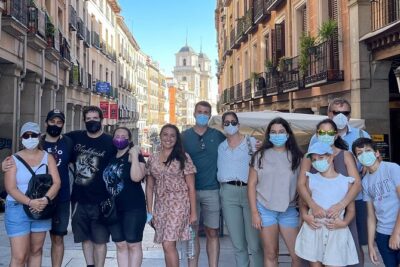
Madrid Essential: Historic Center, Plaza Mayor & Royal Palace
Read our review →
Live Fado Show with Port Wine in Historic Center
Read our review →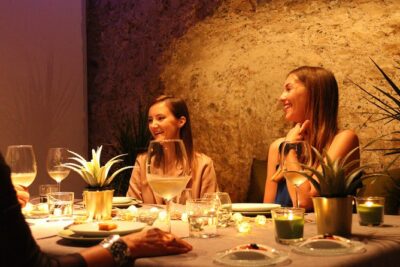
Valencia Old Town Tour with Wine & Tapas in 11th Century Historic Monument
Read our review →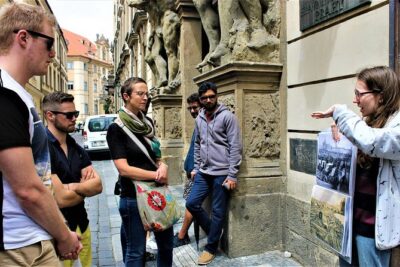
Prague Old Town, Medieval Underground and Dungeon Historical Tour
Read our review →
Cartagena: Historic Center and Getsemaní Shared Walking Tour
Read our review →
Old Town Walking Tour History and Tales in Edinburgh
Read our review →
Philadelphia Old City Historic Walking Tour with 10+ Top Sites
Read our review →Browse the lists this tour appears in