
Review · PARIS HISTORY TOURS
Historic Paris Walking Tour in English
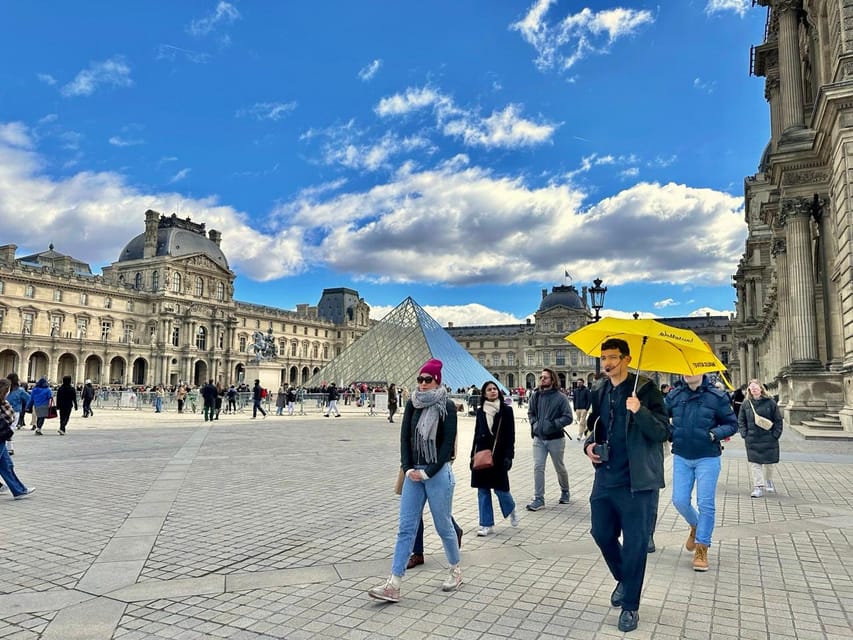
Paris reveals itself best on foot, and this 150-minute historic walk gives you a useful first look at the city’s grandest center. You move from Hôtel de Ville toward Notre-Dame, the Louvre, Pont des Arts and the Tuileries Gardens while your guide connects palaces, revolutions, art thefts and daily Parisian life.
I like the strong mix of major landmarks and human stories, including Quasimodo, Napoleon, Hitler and the Mona Lisa. I also like the clear meeting point, the English-only format, and the guides’ lively approach. The main drawback is pace: two and a half hours on city streets can feel brisk, and the tour focuses on outside views rather than museum or cathedral entry.
Key points at a glance
- A useful first walk: Start at Hôtel de Ville and build a mental map of central Paris before sightseeing on your own.
- Big history in a compact route: Link Notre-Dame, Sainte-Chapelle, the Louvre, Pont des Arts and the Tuileries Gardens in one outing.
- Story-led guiding: Guides such as Tom, Harry, Thomas, Yazid and Francesca are praised for humor, warmth and clear explanations.
- Good value at $31: The fee covers your reservation and guide payment within a pay-as-you-wish tour format.
- Moderate physical effort: Expect 150 minutes of walking, with no hotel pickup or drop-off.
- Plan around the weather: A crisp morning can be ideal, but rain, heat and crowded streets affect an outdoor tour.
Why this walk works as a first taste of Paris
Paris can overwhelm you on arrival. There are too many grand buildings, too many centuries, and too many places competing for your attention. This tour gives those sights an order.
You begin at Hôtel de Ville, a central starting point near the Seine and the historic heart of the city. From there, the walk unfolds as a story rather than a checklist. Roman origins lead into medieval Paris, royal power gives way to revolution, and the palace of the Louvre becomes a museum known around the world.
That structure matters. If you visit Notre-Dame, the Louvre and the Tuileries separately, you may admire each place without seeing how they fit together. A guide can point out the political and religious links between them, helping you understand Paris as one connected city.
The tour also gives you practical orientation. After 150 minutes, you will have a clearer sense of the river, central boulevards, bridges and major sights. That is especially useful on a first day. You can then return to the places that deserve more time, such as the Louvre or Sainte-Chapelle.
More History Walking Tours in France
- Paris: Dark History and Ghostly Guided Walking Tour
★ 4.7 · 1,000 reviews - Paris City of Fashion History Private Guided Walking Tour
★ 5.0 · 221 reviews - Paris City Center w/ Notre Dame interior | Exclusive Walking Tour
★ 5.0 · 190 reviews
Meeting the guide at Hôtel de Ville
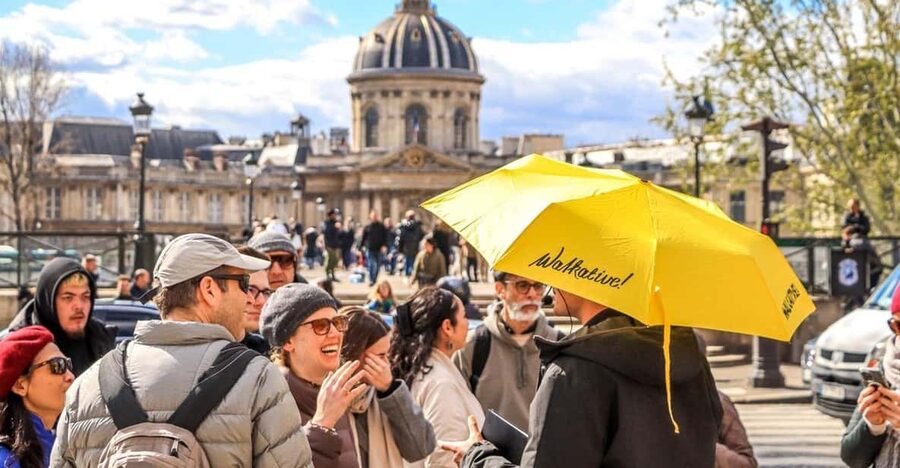
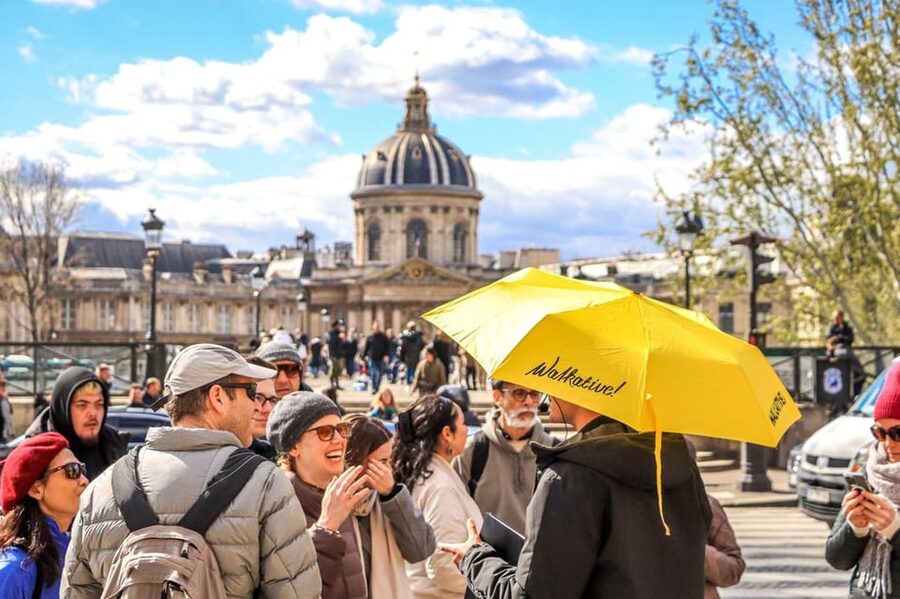
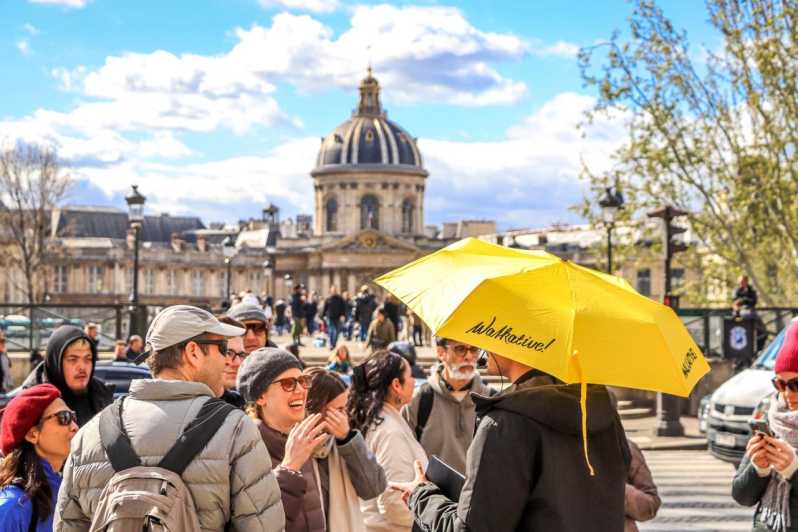
The meeting point is outside the metro at Hôtel de Ville, exit 5. Look for the yellow umbrella and arrive 10 minutes before the starting time.
That detail is worth taking seriously. Hôtel de Ville is a busy central area, and a few extra minutes give you time to come up from the metro, find the right exit and locate the group without a rushed start. Hotel pickup is not included, so you need to make your own way there.
The tour is in English and uses a live guide rather than an audio recording. That gives you the chance to ask questions as the walk develops. The guide names connected with this tour include Tom, Harry, Thomas, Yazid, Francesca, Victoria, Gurvan, Dawie and Tank. Their reported styles vary, but the qualities you should expect are warmth, humor, strong storytelling and a genuine command of Parisian art and history.
Group size is not fixed in the information provided. One account described fewer than 20 people, while other departures may differ. A smaller group makes it easier to hear and ask questions, but you should not assume every departure will feel intimate.
Notre-Dame and the medieval heart of Paris
Notre-Dame is one of the walk’s central landmarks, and the guide uses it to explain more than Gothic architecture. The cathedral represents the religious and political importance Paris gained during the medieval period, when the city became a major center of French power and learning.
You also hear about Paris before the grand monuments. The Parisii, a Gallic tribe, settled on land surrounded by the Seine. Rome later took control, and Paris became a capital of the Franks in the sixth century. Those early layers help explain why the city’s center feels so dense with churches, bridges and old institutions.
The tour also includes Sainte-Chapelle. Its setting and medieval purpose add another angle to the story of royal Paris. Since the walk is not advertised as an interior visit, you should treat these places as guided exterior sights unless your booking information says otherwise.
Notre-Dame is also where the storytelling can become more personal. The tale of Quasimodo links the cathedral to literature and popular memory, while the broader discussion covers religious conflict, civil unrest and the changing role of the church.
This section may appeal most to you if you enjoy stories that connect architecture with people. If you want detailed architectural analysis of every stone or a long visit inside a cathedral, this tour will feel more like an introduction than a specialist study.
From royal palace to the Louvre Museum
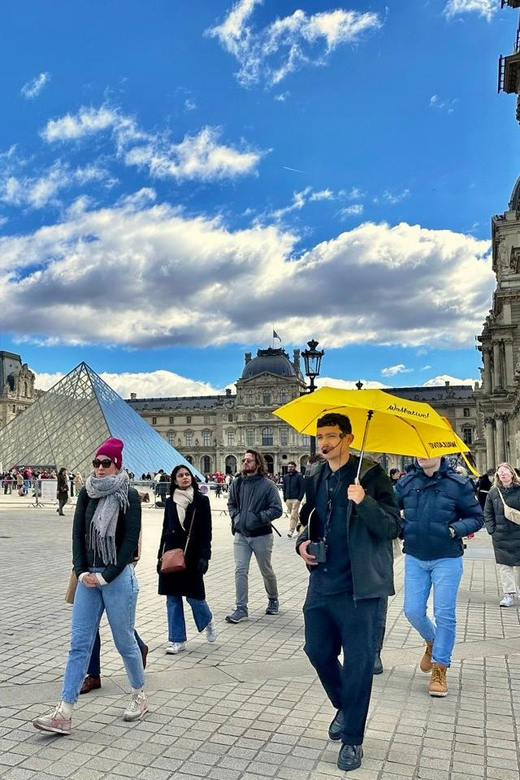
The Louvre is the tour’s biggest history lesson. The guide explains how it developed from a royal palace into one of the world’s best-known art museums.
That change is more interesting than simply hearing a list of famous paintings. The Louvre reflects the shift from monarchy to a public cultural institution, and the French Revolution forms an important part of that story. You learn how royal collections, political power and national identity became tied to the museum.
The Mona Lisa brings a lighter, more dramatic thread. The tour covers the famous theft, described as one of the boldest art thefts in history. This is a good example of the walk’s balance. You get serious political and art history, but you also get a story that is easy to remember and fun to retell.
Allow your guide to do the explaining, then return to the Louvre on your own if you want the full museum experience. This walk cannot replace several hours inside the galleries. It can, however, give you a better reason to choose certain rooms and a stronger sense of what the building meant before it became a museum.
Crowds around the Louvre can make it harder to keep a group together. Stay close to the yellow umbrella and listen for instructions when the guide moves the group along.
More History Walking Tours in Paris
- Paris: Le Marais & Montmartre Jewish History Walking Tour
★ 4.8 · 170 reviews - Paris: French Fashion History Walking Tour
★ 4.9 · 37 reviews - Paris Jewish History 2-Hour Private Guided Walking Tour
★ 4.6 · 32 reviews - Paris: Fashion History Walking Tour in the Heart of Paris
★ 4.9 · 22 reviews
Pont des Arts and the Seine
Pont des Arts adds a change of mood. After the palace and cathedral stories, the bridge opens the view toward the Seine and the buildings along the river.
Bridges are among the best places to understand Paris. They connect the city physically, but they also reveal its scale. From the Pont des Arts, you can take in the relationship between the river, the Louvre and the grand central core.
Your guide may use this stop for stories about love, art and Parisian character. The city’s reputation for romance is part of the tour, but the walk also addresses the sharper side of Paris: inequality, revolt and political change.
This is a short stop rather than a dedicated photography session. If you want uninterrupted pictures, note the location and return later. A guided group needs to keep moving, and bridge traffic can make long pauses awkward.
The Tuileries Gardens and the city’s grand makeover
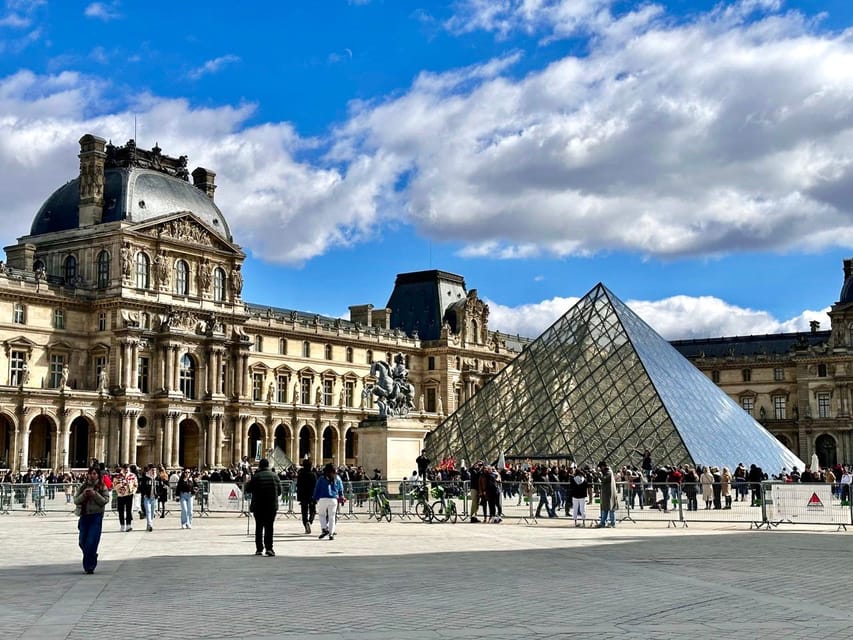
The Tuileries Gardens provide a calmer finish and a useful lesson in urban design. The gardens sit between the Louvre and Place de la Concorde, offering open space in the middle of monumental Paris.
Here, the guide can explain how royal spaces, public gardens and later city planning shaped the capital. The walk also reaches the period when Paris was rebuilt with wide boulevards, parks, aqueducts and sewers.
That redesign had practical and political aims. It improved movement and sanitation, but wide streets also made barricades harder to build. This is one of the more revealing themes in the tour: the city’s beauty was partly shaped by fear of another uprising.
The Eiffel Tower belongs to this wider story of modernization. Built for the 1889 Universal Exposition, it was disliked by many Parisians at first and became a beloved symbol later. The tour includes the Eiffel Tower among the sights you see, though the exact viewing point and amount of time there are not specified.
The Tuileries are also a good place to end because you can continue in several directions. You may return toward the Louvre, carry on toward the Champs-Élysées, or pause for a picnic with bread, cheese and wine. The tour does not provide food or drinks, but it gives you the setting for one of Paris’s simplest pleasures.
The stories behind revolution, Napoleon and war
This is not only a monuments walk. The guide covers the Enlightenment, poverty, inequality and the French Revolution. You learn how new ideas gained force in a city where many people lived with severe hardship.
The monarchy’s collapse, the execution of the royal family and Napoleon’s rise give the route a clear political arc. Napoleon’s relationship with Paris adds drama, but the important point is how quickly the city’s role changed from royal capital to revolutionary center and then to the base of a new imperial power.
The tour also includes Hitler and his connection to Paris. That subject adds a modern wartime layer to the older stories of kings, churches and revolutions.
I appreciate this range because it suits more than one kind of traveler. You can be an art enthusiast, a student of military history or someone with only a passing interest in the past. The guide’s job is to keep the material moving and understandable, rather than burying you under dates.
Thomas received particular praise for combining art history, military history and humor. Harry was singled out for strong storytelling and an ability to make the past feel close. Yazid was noted for enthusiasm about art, buildings and culture. Those details suggest that the guide can shape the experience around the group, but the exact person leading your departure is not guaranteed.
What $31 means in real value
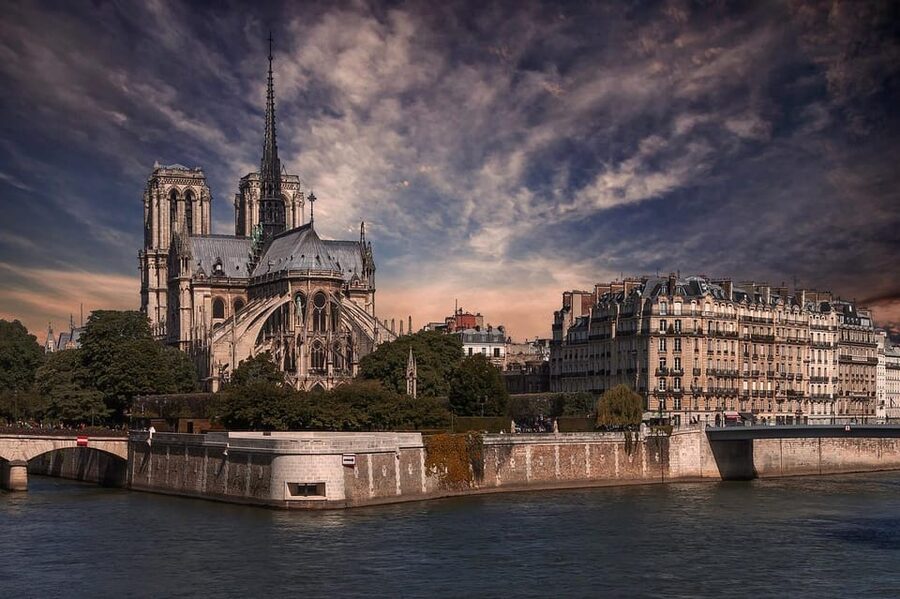
At $31 per person, this is a reasonable price for a live, English-speaking introduction to central Paris. You are paying for a reservation and for the guide’s payment within a pay-as-you-wish tour format. The booking system lets you reserve now and pay later, and cancellation is free up to 24 hours before the activity for a full refund.
The value depends on how you use it. If you simply want a pleasant walk past famous sights, you may find the fee higher than an independent stroll. If you want context, a coherent route and someone who can answer questions, the cost compares well with the time saved in planning.
The tour does not include entry tickets, hotel transport, food or drinks. It also cannot give you the depth of a dedicated Louvre visit or a cathedral tour. Think of it as a framework for the rest of your stay.
I would book it early in a Paris visit, not on the final afternoon. One person who waited until the last day wished the tour had come sooner, and that makes sense. The information is most useful before you choose which sights deserve your limited time.
How demanding is the walk?
The duration is 150 minutes, and the route covers several central landmarks. One account described it as good exercise but not strenuous. That is a fair expectation.
You should be comfortable walking through city streets for two and a half hours, standing while the guide speaks and keeping up as the group moves between stops. The tour does not list a special mobility program, so contact the provider directly if you have specific access needs.
Weather will affect the experience. A crisp February morning can offer comfortable walking and lighter seasonal crowds, while August sun may make exposed streets and open gardens feel harder. Wear practical shoes, bring water and check the forecast.
The meeting point is easy to reach by metro, but the tour does not include transport back to your hotel. Plan your next stop before the walk ends, especially if you have a timed museum reservation.
Who should book this Paris walk?
I would choose this tour for a first visit, a solo trip or a short stay when every hour matters. It is also a good fit for families and mixed-age groups because the material ranges from architecture and art to theft, romance, revolution and war.
Solo travelers may appreciate the clear meeting point and the group structure. One solo participant found the experience welcoming and inclusive, helped by a guide who used simple icebreakers and kept conversation flowing. That kind of atmosphere cannot be guaranteed on every departure, but the format makes meeting people easier than sightseeing alone.
History fans should find enough substance to enjoy the route, while companions with less interest in kings and wars can still follow the human stories. The tour is less suitable if you want a quiet stroll, a private guide or long interior visits.
Should you book the Historic Paris Walking Tour?
Book it if you want a lively introduction to central Paris, especially during your first day or two. The route links Notre-Dame, Sainte-Chapelle, the Louvre, Pont des Arts, the Tuileries and the Eiffel Tower in a way that helps you understand the city rather than simply photograph it.
The strongest reason to choose it is the storytelling. Guides such as Tom, Harry and Thomas have been praised for humor, warmth and clear explanations, and the material gives them plenty to work with.
Skip it if you dislike group walking, need extensive time at each sight or want guaranteed entry to the Louvre, Notre-Dame or Sainte-Chapelle. For most people seeking context at a fair $31 price, though, this is a smart first step into Paris.
FAQ
How long is the Historic Paris Walking Tour?
The tour lasts 150 minutes, or two and a half hours.
Where does the tour meet?
Meet outside the metro at Hôtel de Ville, exit 5. Look for the yellow umbrella.
How early should I arrive?
Arrive 10 minutes before the activity begins.
Is the tour conducted in English?
Yes. The tour has a live English-speaking guide.
Does the tour include hotel pickup and drop-off?
No. Hotel pickup and drop-off are not included, so you must make your own way to Hôtel de Ville.
What sights are included?
The walk covers or discusses Notre-Dame Cathedral, Sainte-Chapelle, the Louvre, Pont des Arts, the Tuileries Gardens, elegant boulevards and bridges, and the Eiffel Tower.
Can I cancel the booking?
Yes. You can cancel up to 24 hours in advance for a full refund. You can also reserve now and pay later.
Newest history tours we have reviewed in Paris
- The historic district of Montmartre★ 4.9 · 66 reviews
- Paris: Fashion History Walking Tour in the Heart of Paris★ 4.9 · 22 reviews
- Paris: Khéops VR Experience – Explore Ancient Egypt★ 4.9 · 39 reviews
- Paris Jewish History 2-Hour Private Guided Walking Tour★ 4.6 · 32 reviews
- Paris: French Fashion History Walking Tour★ 4.9 · 37 reviews
- Montmartre Walking Tour: A Journey Through Art and History★ 5.0 · 21 reviews
- Explore the Marais: History, Art & Local Culture★ 4.6 · 105 reviews
- Arc de Triomphe Rooftop: Unveil History & Breathtaking Views★ 3.1 · 23 reviews
History Walking Tours, compared.
History and Hauntings of Salem Guided Walking Tour
Read our review →
Freedom Trail History Small Group Walking Tour
Read our review →
Historic Charleston Guided Sightseeing Walking Tour
Read our review →
Tapas Walking Tour with Food, Wine, and History
Read our review →
Savannah History and Haunts Candlelit Ghost Walking Tour
Read our review →
A History of Terror – Belfast City Centre Walking Tour
Read our review →Browse the lists this tour appears in