
Review · HANOI HISTORY TOURS
Hanoi City Highlights Walking Tour – Landmarks & History
Hanoi’s past comes at you from every direction on this tour: an old Taoist temple, the country’s political center, Ho Chi Minh’s mausoleum, two thoughtful museums, a former prison, and a railway that squeezes past people’s homes. The most memorable stop may be Train Street, where you sit with a drink and watch the train pass close to the buildings.
I especially like the strong storytelling and the chance to see Hanoi through more than one lens. You get national history, religious customs, women’s lives, wartime memory, and ordinary local habits in one outing. Guides including John, also known as Huy, Henry, Henri, and Tom have been praised for making serious subjects clear and adding humor along the way.
The main consideration is pace. This is a lot of Hanoi in roughly four and a half hours, and several museum visits can feel demanding. The mausoleum has strict access rules, the route is not suitable for wheelchair users or people with mobility limits, and the small-group option does not include hotel pickup.
Quick takeaways

- Train Street with a quieter viewing spot: Have a drink and wait for the train in a place arranged by the guide, rather than simply wandering into the narrow alley.
- Seven major private-tour stops: Quan Thanh Pagoda, the National Assembly area, Ho Chi Minh Mausoleum, two museums, Hoa Lo Prison, and Train Street create a broad picture of Hanoi.
- Up to six people in the small group: This keeps the outing more personal than a large coach tour.
- Useful guide names to know: John, also called Huy, Henry, Henri, and Tom have led recent tours, with John receiving especially strong praise for wartime explanations and local stops.
- Morning timing matters: The mausoleum can be entered only in the morning and is closed to this visit on Mondays and Fridays.
- Good value at $24: The price includes a local guide, bottled water, snacks, and listed drinks, with private pickup and drop-off included only on the private option.
Why this tour gives you more than a checklist of sights
Many city tours in Hanoi stay near the Old Quarter and touch only the surface. This one tries to explain how the city works, and why people worship, remember, work, and live as they do.
That range is its greatest strength. At Quan Thanh Pagoda, you learn about Taoist worship and Vietnamese religious practice. At the Ho Chi Minh Mausoleum and One Pillar Pagoda, the focus shifts to national identity and Buddhist tradition. Hoa Lo Prison brings the difficult wartime past into view, while the Women’s Museum gives attention to family life, work, and the role of Vietnamese women.
The private option is the fullest version. It includes Quan Thanh Pagoda, the National Assembly Building, Ho Chi Minh Mausoleum and garden, the National Fine Arts Museum, the Vietnamese Women’s Museum, Hoa Lo Prison, and Train Street. The small-group route takes a different shape, beginning around Ly Thai To Park and Hoàn Kiếm Lake, then adding Lenin Park, One Pillar Pagoda, Dien Huu Temple, Hoa Lo Prison, and a local tea or snack stop.
That difference matters. Choose private if you want the broad museum-heavy route and hotel pickup. Choose the small group if you prefer a compact walking group of no more than six people and want Hoàn Kiếm Lake and local tea included.
More History Walking Tours in Vietnam
- Hoi An: Ancient Town Guided Walking Tour
★ 4.9 · 766 reviews - Hoi An Ancient Town Walking Tour with a Local
★ 5.0 · 517 reviews - Hoi An Ancient Town – Walking Tour with Local Guide
★ 4.9 · 385 reviews
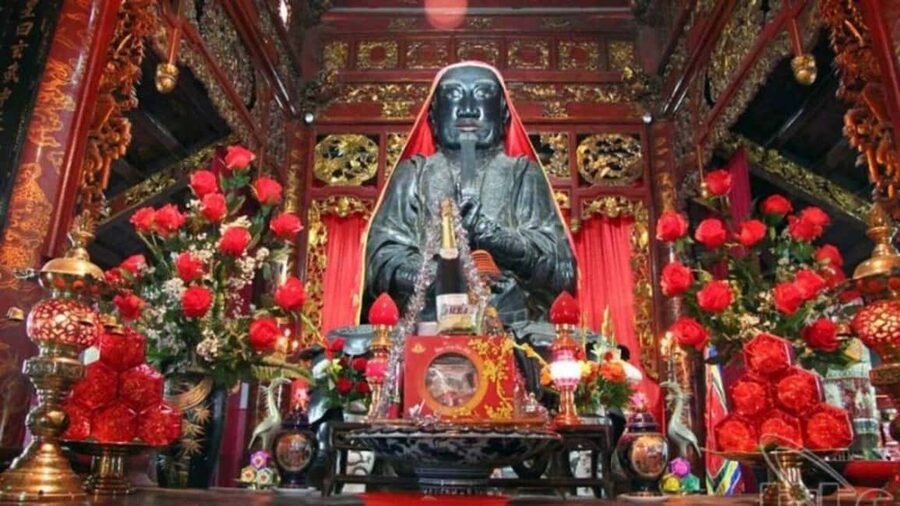
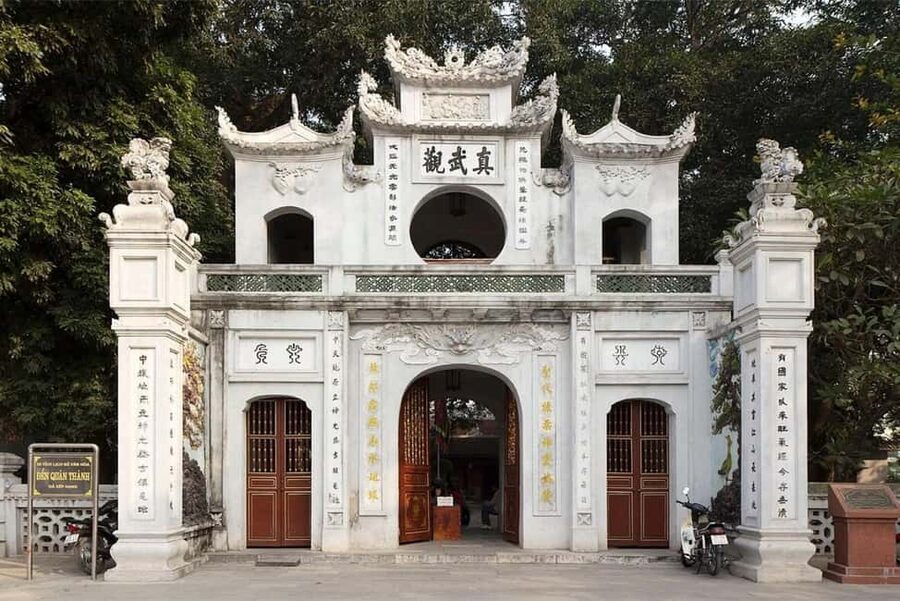
Private tour: Quan Thanh Pagoda opens the cultural story
The private tour begins with hotel pickup, then heads to Quan Thanh Pagoda, one of Hanoi’s oldest Taoist temples. Allow about 30 minutes here.
The value of this stop is not just the building. Your guide explains Vietnamese worship and the way different beliefs have shaped daily life. It gives you a useful frame for the temples and pagodas that follow.
This is also a quiet start before the denser museum portion. You get a moment to look around and ask questions rather than rushing straight into a string of displays. Dress respectfully, and bring clothing that covers your knees and a T-shirt, since suitable clothing is specifically required for the religious and mausoleum visits.
Next comes the National Assembly Building, with about 10 minutes set aside for a guided look. You will not spend long here, but the stop adds a modern political layer to a tour otherwise filled with older sites and wartime memory.
Ho Chi Minh Mausoleum requires careful timing
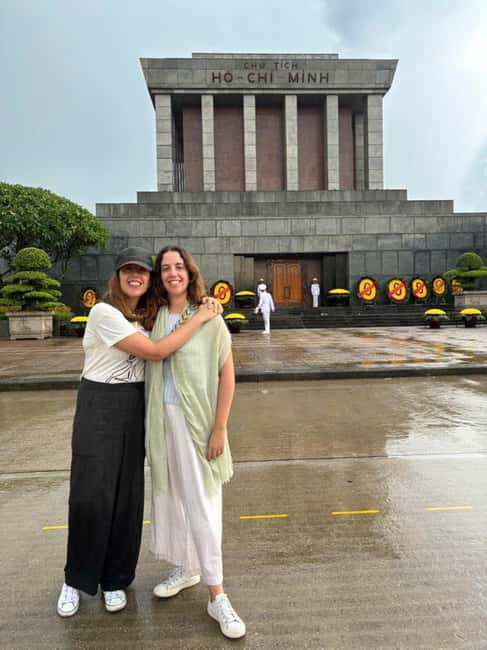
The mausoleum is one of the tour’s main anchors, with about 80 minutes planned around the site. The guide explains Ho Chi Minh’s humble life and his place in modern Vietnam.
You can enter the mausoleum only in the morning, except on Mondays and Fridays. That rule is the single most important scheduling detail on this experience. If seeing the interior matters to you, confirm the start time before booking and do not assume an afternoon departure will include it.
The clothing rule is firm here too. Bring shorts or trousers that go below the knee and a T-shirt. Baby strollers and carriages are not allowed, and the activity is not suitable for pregnant women, people with mobility impairments, wheelchair users, or people over 75.
The site can be busy, but the guide may help you avoid some waiting by choosing a better time. One recent outing was praised for missing the busiest queues, and another included express security access. Treat that as a useful benefit, not a guarantee, since crowd levels and entry procedures can change.
Two museums, two different views of Vietnam
The private route gives you about an hour at the National Fine Arts Museum. This is a good stop for anyone who wants more than war and politics.
The collection covers Vietnamese art from ancient to modern times. You can expect a change of mood here, with attention on artistic traditions and how Vietnamese culture has been expressed over time. If you prefer outdoor sightseeing only, an hour indoors may feel long. If you like art and want context beyond famous monuments, this is one of the tour’s strongest additions.
The Vietnamese Women’s Museum also receives about an hour. Its focus is the lives, work, family roles, and contributions of Vietnamese women. That subject broadens the tour considerably. Instead of presenting Vietnam only through kings, presidents, soldiers, and political events, it gives space to everyday people and social life.
I would particularly value this stop early in a Hanoi visit. It can help you notice the role of women in family and public life during the rest of your stay. The tradeoff is time: visiting two museums in the same half-day leaves less room for unplanned wandering.
Same streets, a different century:
- Ninh Binh Heritage Full Day Tour with Buffet Lunch and Limousine
★ 5.0 · 2,692 reviews - Premium Cu Chi Tunnels Tour with Local Expert by SpeedBoat
★ 5.0 · 2,045 reviews - Hanoi Heritage Premium Daily Tour
★ 5.0 · 914 reviews - Halong Heritage Luxury Day Cruise-Buffet lunch&Limousine transfer
★ 5.0 · 846 reviews
Hoa Lo Prison brings the hardest history into focus

Hoa Lo Prison Museum, often called the Hanoi Hilton in connection with its use during the war, is the most emotionally serious stop. The tour takes you through dark cells, artifacts, and stories connected with former prisoners.
A guide makes a real difference here. The history is politically and emotionally complicated, and a good explanation helps you understand how the site is presented in Vietnam. John, Huy, Henry, Henri, and Tom have all been singled out for clear explanations of the country’s past, including the Vietnam War and wartime events.
Expect this part to be sobering rather than light entertainment. The tour is designed to give you context, not just a quick photograph outside. At the same time, the full itinerary contains several museums and major sites, so the amount of information can become tiring by the time you reach this stop.
If you want only famous buildings and easy sightseeing, this may be more serious than you expect. If you want to understand Hanoi’s past from a local perspective, it is essential.
Train Street is the tour’s most vivid finish

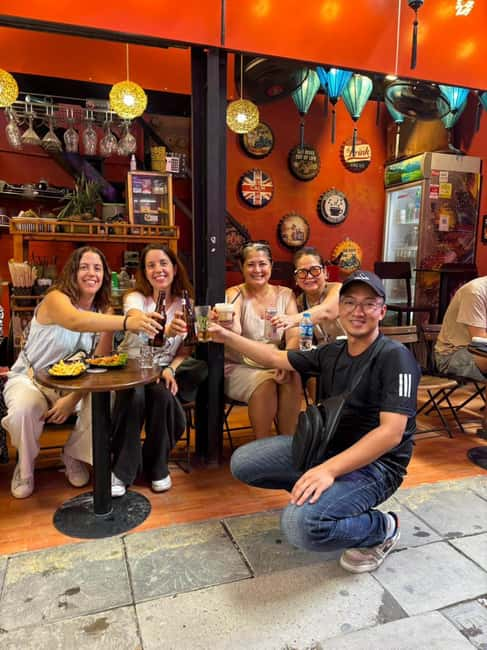
The final major stop is Hanoi Train Street, where railway tracks run extremely close to residential buildings. The guide takes you to a place where you can sit with a drink and watch the train pass.
This is the moment when Hanoi’s history tour turns into a piece of present-day city life. You see how homes, small businesses, visitors, and the railway occupy the same narrow space. It is also a good photo stop, though you should follow the guide’s instructions and keep clear of the tracks.
The guides do not simply drop you at the alley and leave you to figure it out. John has taken groups to a quieter sitting area, and Tom’s route included time for food and a drink before the train arrived. That practical touch matters because Train Street can feel crowded and confusing.
The stop is planned for about 30 minutes. A train schedule can affect the wait, so do not expect the exact same timing every day. Drinks may include beer, Coke, Fanta, sparkling water, orange juice, tea, and similar options, while the listed snacks include peanut brittle, potato crisps, cheese crisps, and rice snacks. The information also notes that some beverages are optional, so ask the guide what is included before ordering anything extra.
The small-group route adds Hanoi’s public spaces
The small-group version begins at a meeting point rather than with hotel pickup. The guide will be in front of the statue with the company flag, and the meeting details should be confirmed through WhatsApp the day before.
You start at Ly Thai To Park, a calm place tied to Hanoi’s thousand-year legacy. From there, you walk around Hoàn Kiếm Lake, the city’s symbolic center, and hear the legend of the returned sword. This opening is less museum-heavy than the private route and gives you a stronger sense of Hanoi’s public spaces.
Lenin Park follows, then Ho Chi Minh Mausoleum, One Pillar Pagoda, and Dien Huu Temple. The pagoda is linked to a king’s dream and is one of Hanoi’s best-known Buddhist structures. Dien Huu Temple adds another chance to discuss worship and religious customs.
The route then reaches Train Street and Hoa Lo Prison. On an afternoon tour, you finish at a local place for traditional tea, drinks, and snacks. That final stop is aimed at ordinary Vietnamese life and local business, not another major monument. I like that ending because it gives you time to talk with the guide after the formal sightseeing is over.
The small-group tour is capped at six people, which should make it easier to ask questions and stay together on foot. Still, the total outing is listed as four and a half hours, and the walking, heat, museum visits, and traffic can make it feel full. The advertised duration also appears in places as four hours or 270 minutes, so allow roughly four to four and a half hours rather than planning a tight connection afterward.
How the guides shape the experience
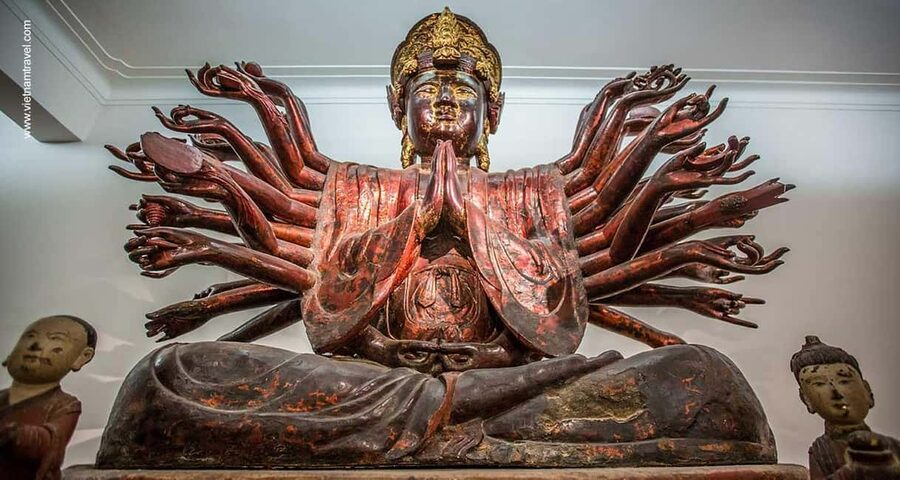
The strongest repeated praise is for the guides’ enthusiasm, clear explanations, and ability to make the day fun without treating serious subjects lightly. John, also known as Huy, is associated with detailed explanations of Hanoi and the wars. Henry and Henri have been described as warm and passionate about Vietnamese culture, while Tom has been praised for answering questions and adding local cafés and food stops.
No tour guide can remove every difference between a private and small-group experience. Your exact guide may vary, and the pace will depend on the group. Still, the structure gives the guide room to do more than recite dates. The best use of this tour is to ask questions about worship, politics, wartime memory, family roles, and modern city life as you go.
If you prefer silent sightseeing, this will probably feel talk-heavy. That is the point here. The value lies in the explanation connecting one place to the next.
Price, pace, and practical value

At $24 per person, this is strong value if you want a guided introduction to Hanoi’s culture and modern history. The fee includes an experienced local guide, cold bottled water, listed drinks, local snacks, and rain protection. The private version also includes pickup and drop-off, while the small-group option does not.
The price is especially appealing for the private format, provided your group is large enough to share the cost. You get several major sites, museum guidance, Train Street, and help with timing. Separate entry fees are not clearly detailed in the supplied information, so confirm what is covered before you pay.
Bring cash. Wear comfortable clothes suitable for walking and religious sites, and keep your knees covered. Raincoats are supplied, but Hanoi weather can still affect comfort.
The tour offers free cancellation up to 24 hours before departure and a reserve-now, pay-later option. The available guiding languages are English, German, and French. Use a WhatsApp number when booking because the guide sends confirmation the day before and may need to coordinate the meeting point or pickup.
Who should book this Hanoi tour?
I would choose this tour if you are in Hanoi for a short stay and want a guided explanation of the city rather than a list of photo stops. It suits first-time visitors, history fans, museum lovers, and anyone curious about religion, politics, family life, and wartime memory.
The private option is best for couples, families who can manage the walking, or small groups wanting hotel pickup and a broader museum route. The small-group option suits solo visitors and people who enjoy meeting a few others while keeping the group size low.
I would think twice if you have mobility limits, need a relaxed pace, dislike indoor museums, or want a simple Old Quarter walking tour. This is a busy half-day with serious content and strict mausoleum rules.
Should you book it?
Book it if you want Hanoi explained by a local guide and like the idea of pairing major national sites with a drink beside Train Street. The price is fair, the route covers more ground than a basic city stroll, and the guides’ strength appears to be their ability to connect difficult history with ordinary life.
Choose the morning option if entering Ho Chi Minh Mausoleum is important. Choose private for hotel pickup and the full museum route, or small group for Hoàn Kiếm Lake, One Pillar Pagoda, a maximum of six people, and an afternoon tea stop. Either way, leave room in your schedule afterward. Four hours can become four and a half, and you will have taken in a lot.
FAQ
How long does the tour last?
The tour is described as lasting four hours, 270 minutes, or four and a half hours depending on the section. Plan for roughly four to four and a half hours.
What is the price?
The listed price is $24 per person.
Is hotel pickup included?
Hotel pickup and drop-off are included with the private option. The small-group tour uses a meeting point and does not include pickup.
What languages are available?
The tour is offered in English, German, and French.
Can I visit inside Ho Chi Minh Mausoleum?
You can visit inside only in the morning, and the mausoleum visit does not operate on Mondays and Fridays.
What should I wear?
Wear a T-shirt and shorts, trousers, or another garment that covers below your knees. This is important for the mausoleum and religious sites.
Is the tour suitable for wheelchair users?
No. The activity is not suitable for wheelchair users or people with mobility impairments. It is also not recommended for pregnant women or people over 75.
What is included at Train Street?
The tour includes listed drinks such as tea, juice, soft drinks, sparkling water, and beer, along with local snacks including peanut brittle and crisps. Some beverages may be optional, so confirm any extra charge with the guide.
Newest history tours we have reviewed in Vietnam
- Da Nang to Hoi An ancient town by private transfer★ 5.0 · 36 reviews
- Hoi an Coconut Boat & Hoian ancient Town Tour From Danang orHoian★ 5.0 · 27 reviews
- Hoi an Coconut Boat & Hoi an Ancient Town From Da nang or Hoi an★ 5.0 · 26 reviews
- Explore Hoi An ancient town and local villages with a local guide★ 5.0 · 18 reviews
- Hoi an Coconut Boat & Hoi an Ancient Town(Option Marble Mountain)★ 4.5 · 86 reviews
- My Son Sanctuary And Hoi An Heritage Full-day Tour★ 4.5 · 25 reviews
- Private HoiAn Ancient Town Night Market Street food tour by Night★ 5.0 · 19 reviews
- Hoi An Ancient town -Marble Mountains Tours FROM DANANG(15H30-21H★ 4.5 · 84 reviews
History Walking Tours, compared.

History and Hauntings of Salem Guided Walking Tour
Read our review →

Freedom Trail History Small Group Walking Tour
Read our review →
Historic Charleston Guided Sightseeing Walking Tour
Read our review →
Tapas Walking Tour with Food, Wine, and History
Read our review →
Savannah History and Haunts Candlelit Ghost Walking Tour
Read our review →
A History of Terror – Belfast City Centre Walking Tour
Read our review →Browse the lists this tour appears in