
Review · SPAIN HISTORY TOURS
Granada: Historic Center and Lower Albaicin Walking Tour
Granada’s story comes alive on foot, where Islamic courtyards, Catholic monuments, old market lanes, and Moorish streets sit within a few minutes of one another. This tour gives you that broad picture for $16, then adds a photo stop in the lower Albaicin with the Alhambra in view.
I like the clear mix of history and orientation, especially the way the walk links the Reconquista of 1492 with Granada’s Islamic past. I also like the practical local touch: guides such as Pablo, Irene, Jaime, and Anna have offered suggestions for places to eat and sights to visit later. The main drawback is the uphill walk into the Albaicin, which is not suited to people with mobility impairments and may feel demanding if you have knee, heart, or stamina problems.
Key points to know before booking
- Two sides of Granada in one walk: Cover the central monuments and the lower Albaicin rather than seeing only one part of the city.
- A useful Alhambra viewpoint: Finish with a clear chance to photograph Granada’s best-known landmark from across the valley.
- Strong guide-led history: Expect attention to Islamic Granada, the 1492 Reconquista, architecture, local customs, and flamenco.
- Good value at $16: A 2.5-hour guided walk costs less than many short sightseeing activities and helps you plan the rest of your stay.
- Some uphill walking: Narrow Albaicin lanes and slopes make comfortable shoes essential.
- Best early in your visit: The route can help you understand the city’s layout before exploring the Alhambra or returning to central sights on your own.
Starting at the Catholic Kings monument
The meeting point is easy to identify: look for the monument to Isabel la Católica and Cristóbal Colón, also known as Ferdinand and Isabella and Christopher Columbus. You meet your guide in the middle of Granada, close to many of the buildings included in the walk.
This is a useful starting point because the monument places you at the meeting point of Granada’s medieval, Islamic, and Christian stories. The guide can explain how the Catholic Monarchs are tied to the final stage of the Reconquista, which ended in Granada in 1492. That date is not a small footnote here. It shaped the city’s buildings, public spaces, religious life, and later identity.
The tour is available in English or Spanish. Names associated with recent departures include Pablo, Irene, Jaime, Anna, Emilio, Elene, and Rocio. The strongest feedback centers on guides who turn dates and architecture into a conversation, answer questions, and keep the group involved rather than simply reciting facts.
You should still allow for differences in delivery. English is not every guide’s first language, and one person found a strong accent difficult at times. The history was still clear to that person for the most part, but if you need very easy-to-follow spoken English, keep this practical point in mind.
More History Walking Tours in Spain
- Barcelona: Tapas Walking Tour with Food, Wine, and History
★ 4.8 · 4,261 reviews - Barcelona Tapas Walking Tour: Food, Wine & History
★ 4.5 · 1,928 reviews - Madrid Historical Walking Tour
★ 5.0 · 721 reviews
Granada’s central squares and old market streets
The first part takes you through the historic center, where Granada’s main monuments are packed into a walkable area. This is not a ticketed museum tour, so you should expect to view the buildings from outside unless the guide says otherwise. Its value comes from connecting what you see, rather than from long interior visits.
Plaza Bib Rambla is one of the central stops. The square is known for its Giants Fountain, a prominent feature that gives the guide a natural way to discuss Granada’s public spaces and changing city life. The plaza also gives you a break from the narrow streets and a chance to get your bearings.
From there, the route includes the Alcaiceria, the old market quarter. Its lanes recall Granada’s role as an Islamic city and its long tradition of trade. You can look closely at the street pattern and building fronts while the guide explains how this part of town fits into the older urban plan.
The Corral del Carbón offers another strong link with Granada’s commercial past. Its name refers to a former inn and trading space, and it is one of the stops that helps turn an abstract history lesson into something visible. The guide’s explanation matters here because the building is easy to pass without understanding why it is important.
The walk also brings you near the Madraza, a former Islamic school. This is one of the clearest reminders that Granada was an important center of Muslim learning before Christian rule took hold. You then see major Christian-era buildings, including the Cathedral, the Church of Saint Ana, the Royal High Court, the Royal Chancillería, and the Royal Jail.
Taken together, these stops show a city rebuilt and reinterpreted across different periods. I find that more useful than seeing the Cathedral alone or hearing a single story about the Alhambra. Granada makes better sense when you can place the Islamic school, Christian court, market quarter, and religious buildings on the same map.
What the 1492 story adds to the walk
The tour gives special attention to Granada’s Islamic heritage and the Reconquista. That focus is important because the city is often reduced to one monument, the Alhambra. The Alhambra matters, but Granada’s identity reaches well beyond its palace walls.
Your guide can explain how 1492 marked the end of Muslim rule in Granada and the beginning of a new Christian chapter. You see that transition in the buildings along the route. The Madraza and Alcaiceria point toward the earlier Islamic city, while the Cathedral, royal institutions, and Church of Saint Ana reflect later power and religion.
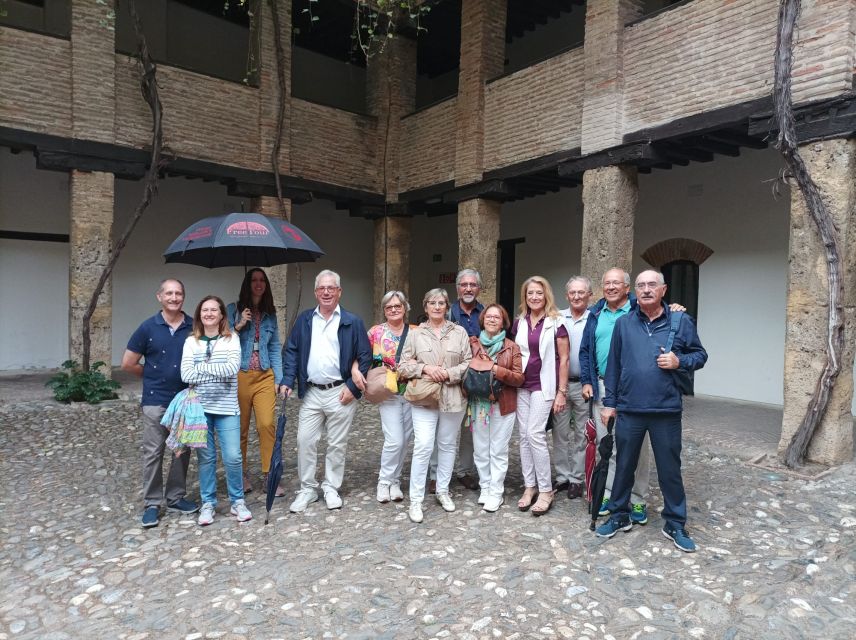
A good guide also helps you notice less obvious details. One family group found that questions about old cobblestones and architectural styles led to useful explanations about how the city developed. That is a good sign for curious visitors who want more than a list of dates.
The tour can also touch on local art and flamenco. One departure included a quiet pause devoted to flamenco, which added a cultural note without turning the walk into a performance. Since the activity is a walking tour, you should not expect a flamenco show or a formal visit to a performance venue. The benefit is a short introduction that may help you understand Granada’s cultural life and decide what to explore later.
Entering the lower Albaicin
After the center, the route moves into the lower part of the Albaicin. This is where the pace and feel of the tour change. Streets become narrower, the route becomes less formal, and the Moorish past is easier to sense in the layout of the neighborhood.
The lower Albaicin is not a flat, polished shopping district. You walk through charming lanes and head uphill toward a viewpoint. The slopes are one reason the activity is marked as unsuitable for people with mobility impairments. Even visitors who usually enjoy walking should wear shoes with good support and be ready for uneven or inclined streets.
The route does not appear to cover every corner of the Albaicin. That is a strength for a 2.5-hour tour. A full exploration would take much longer, and the walk instead gives you a manageable introduction to the lower section before ending at a rewarding view.
The neighborhood helps you understand why Granada feels different from many Spanish cities. The tight street plan and Moorish character contrast with the open central plazas and grand Christian buildings. I like this change of scale. You move from formal monuments to a neighborhood where history is present in the shape of the streets.
The guide may also build in short comfort stops. One group found that their guide adjusted the pace and allowed breaks when several people had health concerns. That does not guarantee a private or customized departure, but it shows why asking your guide early about the uphill section is sensible.
More Old Town and Historic Centre Walks in Spain
- Madrid Essential: Historic Center, Plaza Mayor & Royal Palace
★ 5.0 · 6,416 reviews - Valencia Old Town Tour with Wine & Tapas in 11th Century Historic Monument
★ 5.0 · 3,234 reviews - Madrid Historic Centre Food Tour with Authentic Tapas & Wines
★ 5.0 · 814 reviews - Madrid in a Day Tour:Royal Palace, Historic Center & Prado Museum
★ 5.0 · 628 reviews
The Alhambra view that gives the walk its payoff
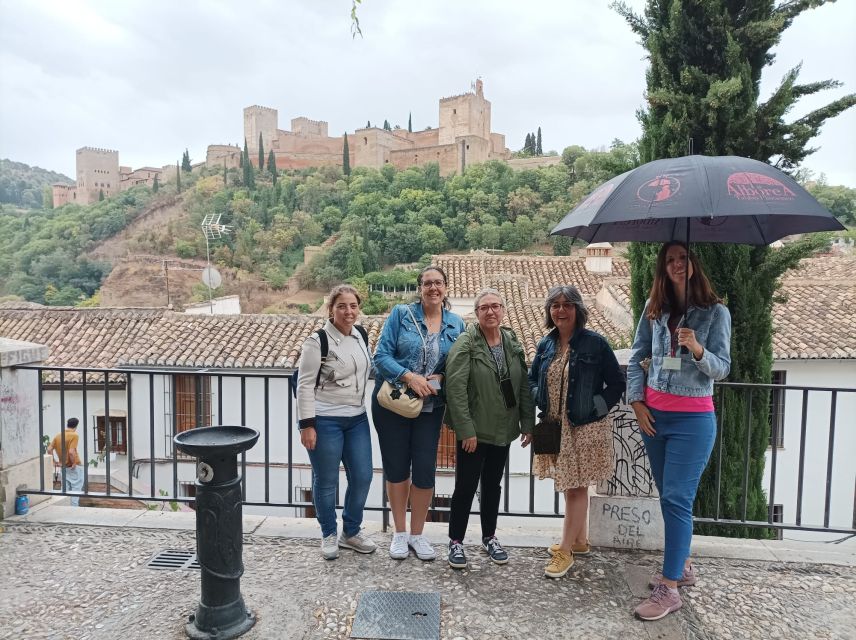
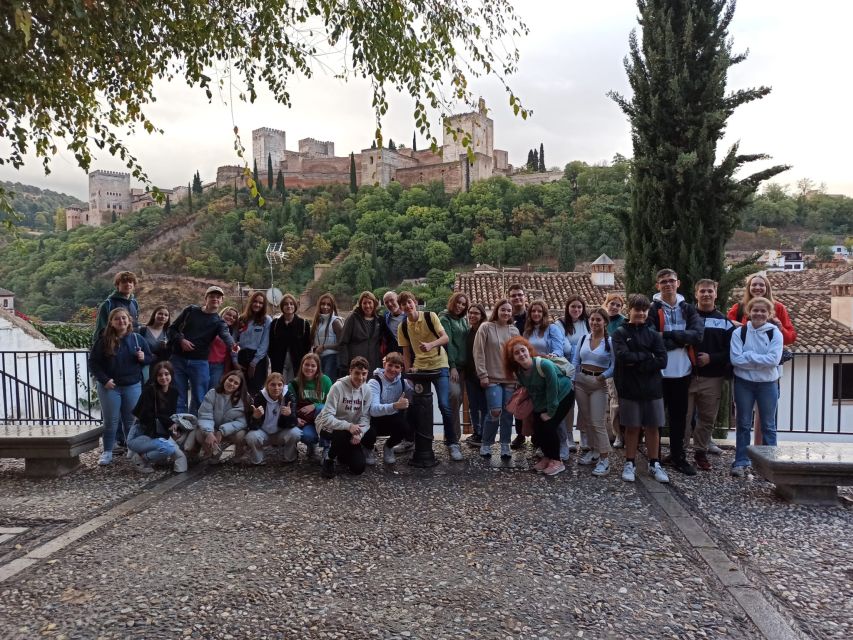
The final viewpoint is one of the tour’s strongest features. From the lower Albaicin, you can look toward the Alhambra and take photographs from across the city. The view gives you a useful sense of the Alhambra’s position above Granada, rather than presenting it as an isolated attraction.
This does not replace an Alhambra visit. You will not enter the palace, gardens, or fortress on this walking tour, and no Alhambra admission is included. Instead, the viewpoint provides context. After seeing the monument from below, you may understand its relationship with the Albaicin and the rest of Granada more clearly.
I would plan this activity before your Alhambra visit if possible. The walk can help you recognize the old city’s layout, learn the key historical terms, and decide which areas deserve a second look. It also works after an Alhambra visit if you want to place that experience within the wider story of Granada.
Take a phone or camera, but do not treat the photo stop as the whole reason to book. The view is memorable, yet the tour’s real value is the connection between the center, Albaicin, Islamic Granada, and the Christian city that followed.
The guides and the value of live storytelling
The guide makes a major difference on a history-heavy walk. The most praised guides have included Pablo, who combined humor with detailed information; Irene, who answered questions with energy; Jaime, who explained the city’s past with clear enthusiasm; and Anna, who kept the walk organized.
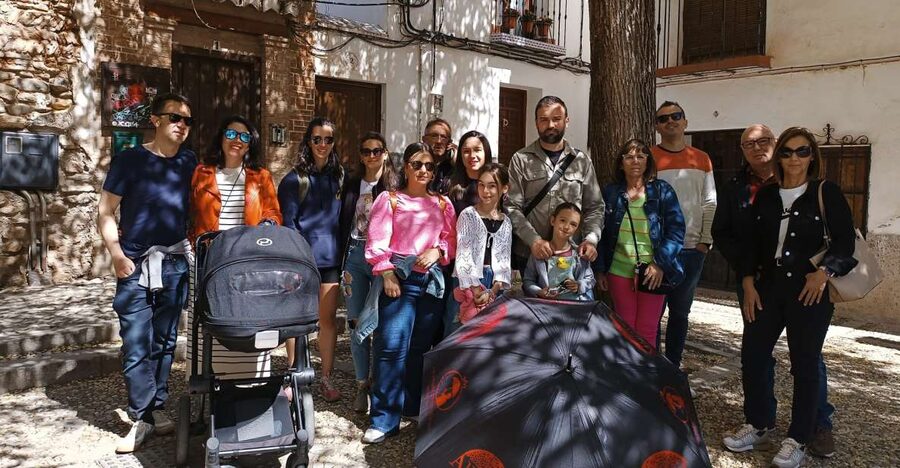
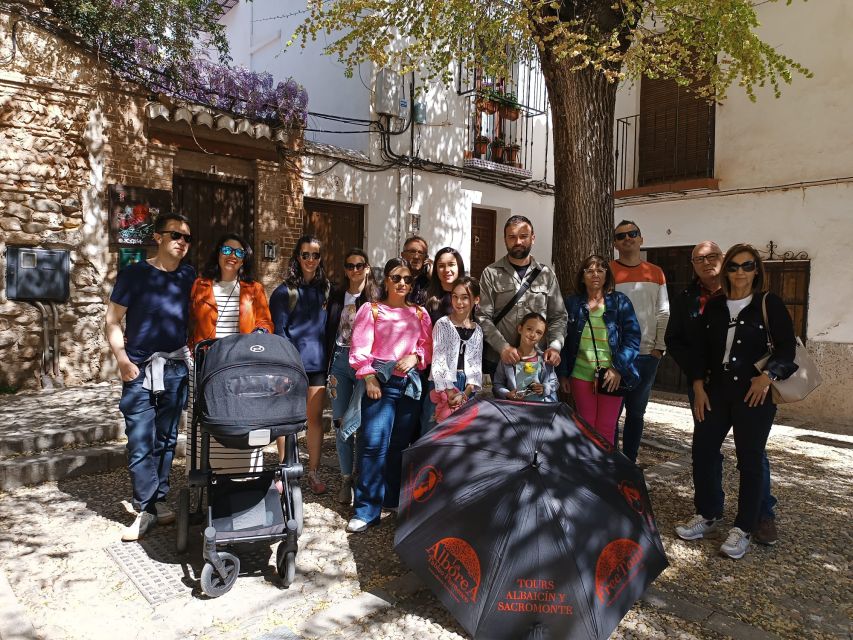
Several departures were described as small, including one with five people and another family group of seven. Small groups can make it easier to ask questions and easier for the guide to adjust the pace. Group size can vary, so you should not book expecting a private tour, but a smaller departure would make this experience feel especially good value.
The guide’s role is also practical. You can ask about other places to visit, food, architecture, and what deserves your time later. That matters in Granada, where the historic center, Albaicin, and Alhambra each reward different amounts of time.
The tone appears to be friendly and involving rather than stiff. Some guides ask questions of the group, pause for comfort, and use local examples. That style suits you if you like learning through conversation. If you prefer to move quickly and take photographs without stopping for explanations, this may feel slower than exploring alone.
Is $16 a fair price for 2.5 hours?
At $16 per person, this is a strong-value introduction to Granada. You receive a live guide, a 2.5-hour route, central monuments, the lower Albaicin, and an Alhambra viewpoint. The price is particularly reasonable if you are visiting for the first time and want a city overview before spending money on separate attractions.
The tour does not include entrance tickets, transport, food, or an Alhambra visit. That keeps the cost low but also means you need to budget separately for the sites you want to enter. The walk is best viewed as an orientation and history experience, not a substitute for Granada’s paid monuments.
I especially like the value for a short stay. In one morning or afternoon, you see enough of the center and Albaicin to plan the rest of your time. You can return to the Madraza, Cathedral, Alcaiceria, or another area with a better sense of where you are.
The published rating is 4.7 from 136 ratings, with particularly strong praise for the guides’ history, friendliness, patience, and ability to make the walk entertaining. That pattern is more useful than a high score alone because it points to what you are actually paying for: clear explanation and local perspective.
Timing, comfort, and who should book
The activity lasts 2.5 hours, and available starting times depend on the date. I would choose an early departure if you want to use the tour to get your bearings. It can also be a good first activity in Granada because the guide may suggest places to visit and help you understand the city’s layout.
Wear comfortable shoes. This is not a decorative suggestion. The route includes city streets, narrow Albaicin lanes, and an uphill section. You should also think honestly about your walking ability before booking. The activity is specifically not suitable for people with mobility impairments.
You are a good match for this tour if you:
- Are visiting Granada for the first time
- Want a clear introduction to Islamic and Christian history
- Enjoy walking through neighborhoods rather than only entering monuments
- Want an Alhambra view without booking an Alhambra ticket
- Like asking questions and hearing local recommendations
- Have limited time and want to cover several central areas
You may prefer another activity if you need step-free access, want a relaxed flat route, or mainly want to enter the Alhambra. This walk shows the Alhambra from outside and focuses on the surrounding city.
The cancellation terms add useful flexibility. You can cancel up to 24 hours ahead for a full refund, and you can reserve now and pay later. Keep those points in mind if your Granada schedule is still shifting.
Should you book the Granada walking tour?
I would book it as a first or second activity in Granada, especially at $16. The combination of central monuments, Islamic history, lower Albaicin streets, and an Alhambra viewpoint gives you a lot in 2.5 hours.
Book with realistic expectations. You are not getting an interior tour of the Alhambra, a flat stroll, or a guaranteed private group. You are getting a guide-led introduction to the city, with the chance to learn from people such as Pablo, Irene, Jaime, or Anna and to ask questions along the way.
If you can manage the uphill walk and enjoy history explained in person, this is an easy recommendation. Wear good shoes, meet at the Catholic Kings monument, and leave time afterward to return to the places that caught your attention.
FAQ
Where does the Granada walking tour meet?
The meeting point is in front of the monument of Isabel La Católica and Cristóbal Colón, also known as the monument to the Catholic Monarchs and Christopher Columbus.
How long does the walking tour last?
The tour lasts 2.5 hours.
What languages are available?
The tour is offered in Spanish and English with a live guide.
Does the tour enter the Alhambra?
No. The tour includes a viewpoint of the Alhambra from the lower Albaicin, but Alhambra admission is not included.
What landmarks are included?
The route includes the Corral del Carbón, Alcaiceria, Plaza Bib Rambla, Church of Saint Ana, Royal High Court, Giants Fountain, Madraza, Cathedral, Royal Chancillería, Royal Jail, and the lower Albaicin.
Is the tour suitable for people with mobility impairments?
No. The activity is not suitable for people with mobility impairments, and the lower Albaicin section includes uphill walking. Comfortable shoes are recommended.
Can I cancel or pay later?
You can cancel up to 24 hours in advance for a full refund. You can also reserve your place and pay later.
Newest history tours we have reviewed in Spain
- Visita Guiada Por El Casco Histórico De Cuenca Y Su Catedral★ 5.0 · 45 reviews
- Mosque of Cordoba History Tour in English Tickets included★ 5.0 · 257 reviews
- Jerez de la Frontera History and Art Walking Tour★ 4.5 · 49 reviews
- 2 Hours Tour around Cádiz: History, anecdotes and curiosities★ 5.0 · 89 reviews
- The Authentic Bilbao Pintxos, Food & Wine Tour with a Local★ 5.0 · 360 reviews
- Bilbao Historical Small Group Tour★ 4.5 · 159 reviews
- Barcelona Jewish & Gothic Tour★ 5.0 · 18 reviews
- Andorra Original History and Sightseeing Tour (Private, Pickup)★ 5.0 · 350 reviews
Old Town & Historic Centre Walks, compared.

Madrid Essential: Historic Center, Plaza Mayor & Royal Palace
Read our review →
Live Fado Show with Port Wine in Historic Center
Read our review →
Valencia Old Town Tour with Wine & Tapas in 11th Century Historic Monument
Read our review →
Prague Old Town, Medieval Underground and Dungeon Historical Tour
Read our review →
Cartagena: Historic Center and Getsemaní Shared Walking Tour
Read our review →
Old Town Walking Tour History and Tales in Edinburgh
Read our review →
Philadelphia Old City Historic Walking Tour with 10+ Top Sites
Read our review →Browse the lists this tour appears in