
Review · JAPAN HISTORY TOURS
2.5-Hour Nagoya Tour: Castle History, Local Food & City View
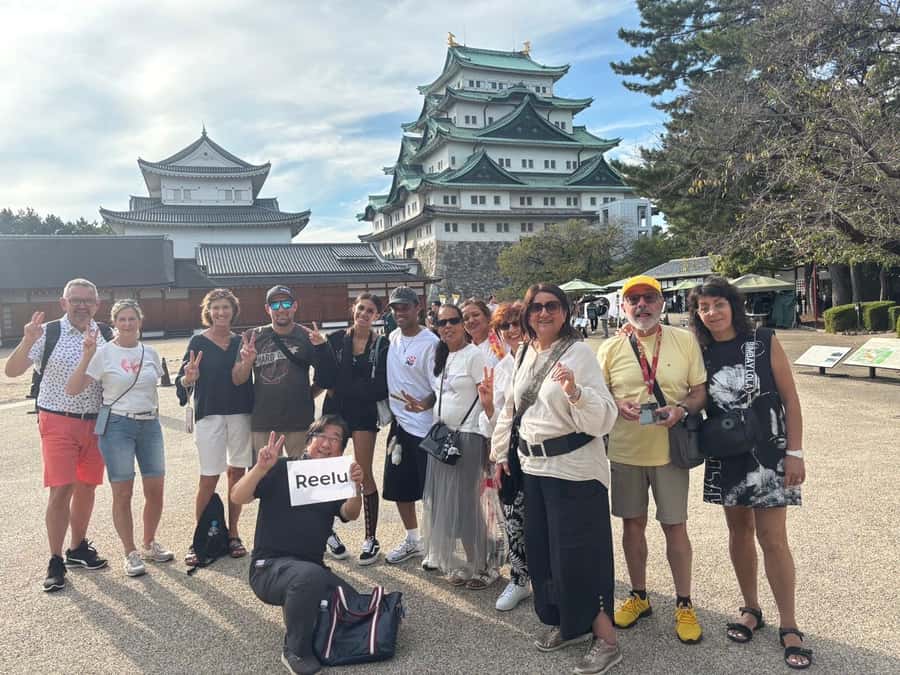
Nagoya Castle gives this short tour real substance. You get samurai-era architecture, stone walls, palace paintings, a garden walk, and a guide who can explain what you are seeing instead of leaving you to guess. I especially like the visit to Honmaru Palace, where sliding screen paintings bring the castle’s past to life, and the stop at Kinshachi Yokocho, where food becomes part of the cultural lesson.
I also like the tight timing. The castle visit takes about 90 minutes, followed by 30 minutes for local dishes and shopping, so you can fit the tour into a short Nagoya stop. The catch is that this is a brisk outing, and food is not included. If you want a slow castle visit or a full meal, you may need more time afterward.
Key points to know before booking
- Castle access is the heart of the tour: You enter through the East Gate and visit Ninomaru Garden and Honmaru Palace.
- The guide adds useful context: Guides including Toshi, Mariko, Risa, Kanna, Ray, and Shu have been praised for clear explanations and friendly help.
- Kinshachi Yokocho adds local flavor: You learn about Nagoya dishes, browse food stalls, and have time for souvenirs.
- The schedule suits a short visit: The planned route takes roughly 2.5 hours, with about 90 minutes at the castle.
- The price is reasonable for the access: At $41 per person, admission and guiding are included, while food, drinks, and transport are extra.
- Wear good walking shoes: You will spend the tour on foot, with outdoor sections that may call for sunscreen.
Why Nagoya Castle makes a strong short tour
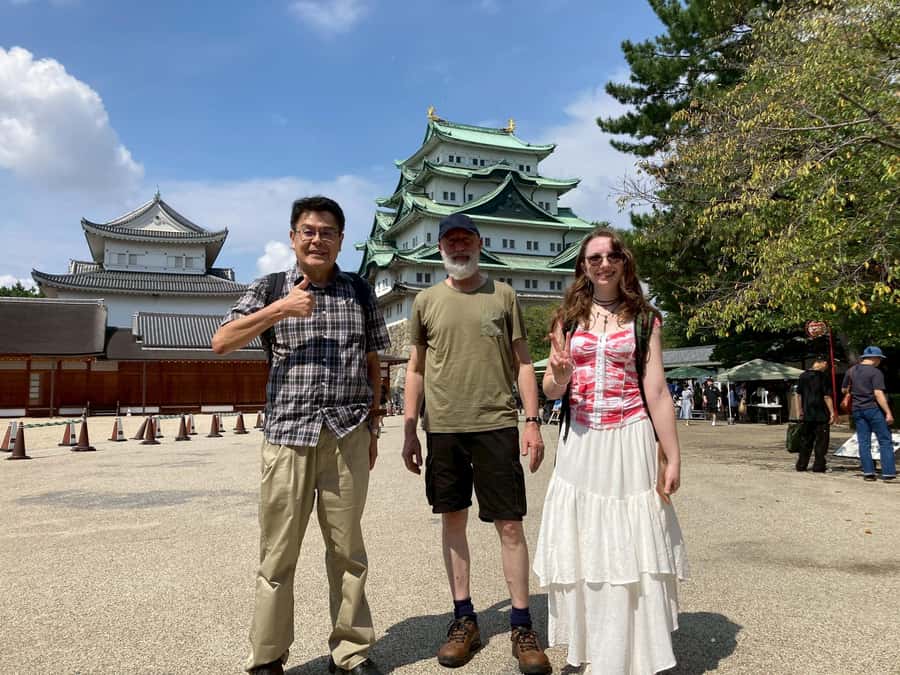
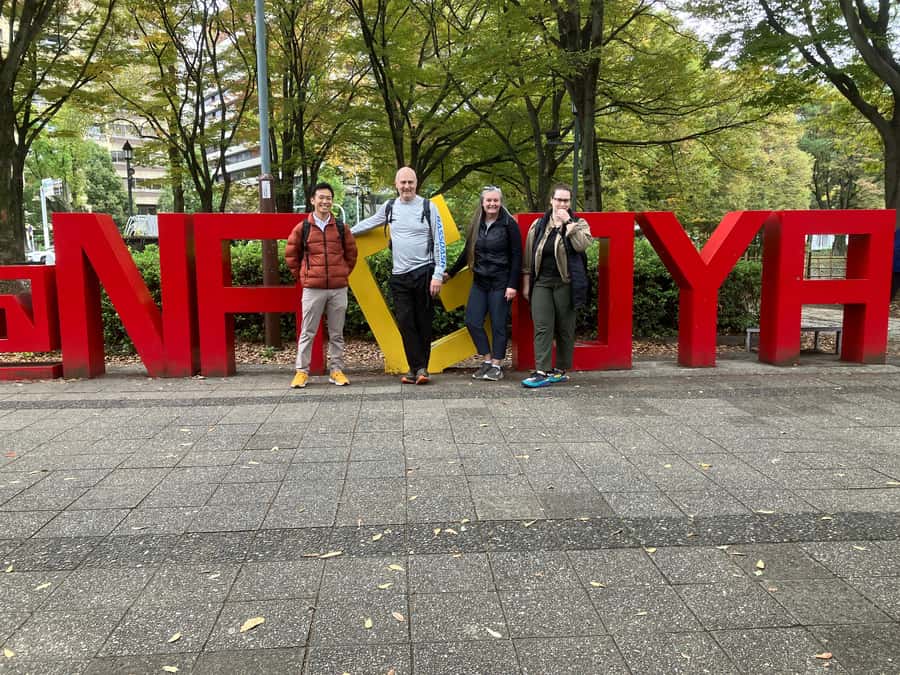
Nagoya can be easy to underestimate. Many people pass through on the way between Tokyo and Kyoto, yet the city has its own samurai story and its own food traditions. This tour focuses on both without asking you to spend a full day.
Nagoya Castle is the clear anchor. Its broad grounds, traditional architecture, garden paths, stone defenses, and palace interiors give you several different ways to understand the city’s past. A guide helps connect those pieces. Instead of simply seeing a wall or painted panel, you get an explanation of how the castle fit into samurai society and why its design matters.
I find that especially useful in Japan, where a building can look simple until someone explains its purpose. The guide’s job here is not just to point out attractive details. It is to supply the background that helps you read them.
The tour holds a 4.5 rating from 36 reviews, with repeated praise for clear explanations, patience, friendliness, and good time management. Toshi was singled out for making the visit feel personal and for answering even small questions. Mariko was praised for keeping the group organized and on schedule, while Kanna, Risa, Ray, and Shu were also noted for helpful, easy-to-follow guiding.
Those details matter because a short tour leaves little room for confusion. A guide who keeps you oriented can make the castle feel much larger in value than it does on a hurried self-guided walk.
More Castle and Palace History Tours in Japan
- Tokyo: Imperial Palace and Shogun Historical Walking Tour
★ 5.0 · 2,251 reviews - Tokyo Castle & Imperial PalaceーShogun Walking Tour
★ 4.7 · 1,068 reviews - Tokyo: Imperial Palace Japanese History Walking Tour
★ 4.9 · 987 reviews
Entering through the East Gate
The experience begins at Nagoya Castle’s East Gate. From there, you follow the guide through the castle grounds and begin the main visit.
The East Gate is a practical starting point because it gets you into the historic area quickly. Once inside, the tour moves through several key parts of the site rather than focusing on one building alone. You should expect a mixture of outdoor walking, architecture, garden scenery, and interior viewing.
This is also where comfortable shoes become important. Ninety minutes may not sound long, but the visit is active, and the route includes garden paths and large castle grounds. Bring a camera, since the tour includes both wide views of the grounds and close details such as painted screens and stonework.
On sunny days, sunscreen is a sensible extra. The tour includes outdoor sections, and the supplied information does not suggest that every part of the route is sheltered.
Ninomaru Garden and the castle grounds
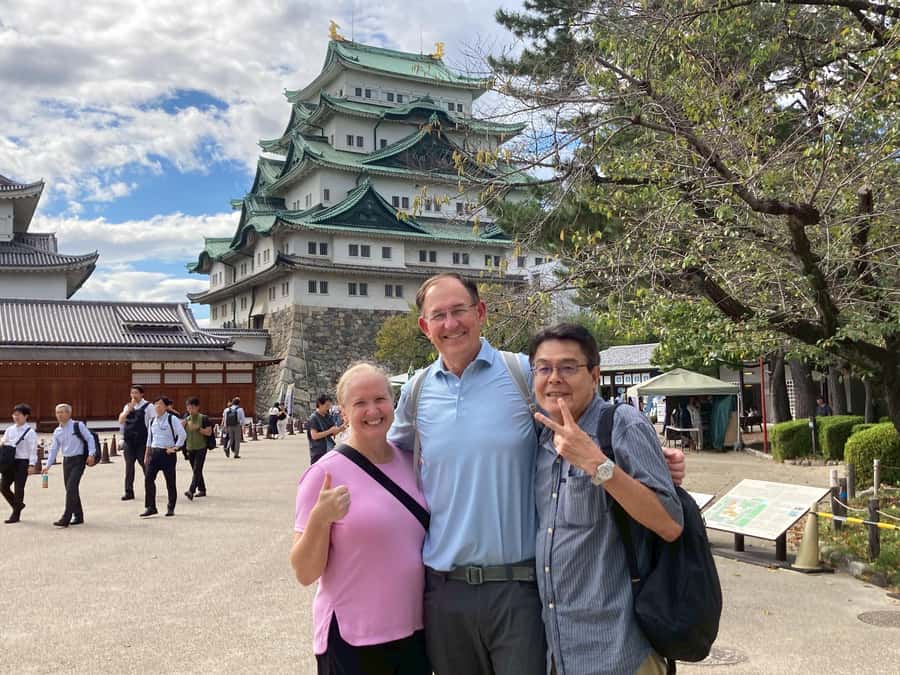
Ninomaru Garden offers a change of pace from the castle buildings. After the stronger architectural lines of the walls and gates, the garden gives you a quieter place to notice traditional design and the relationship between buildings and open space.
Your guide can help explain why the garden matters rather than treating it as a quick photo stop. You may find that this is one of the more restful parts of the tour, especially if you have arrived after a busy morning in Nagoya.
The garden visit also helps break up the castle experience. You are not simply moving from room to room. You get a sense of how the site was arranged and how formal architecture worked with carefully planned outdoor areas.
Because the entire castle portion lasts around 1.5 hours, the pace is purposeful. You will see the main sights, but you should not expect unlimited time at every viewpoint or exhibit. If you like to photograph every detail or read every sign, you may want to return independently later.
Honmaru Palace and the painted screens
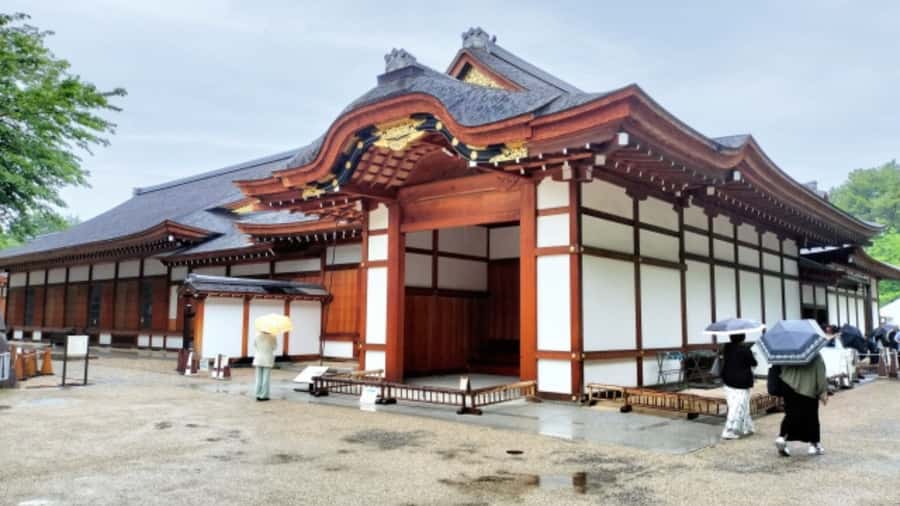
Honmaru Palace is one of the most important stops on the route. The traditional sliding screen paintings provide some of the tour’s most striking visual detail, and the guide gives them context that you might miss alone.
Painted screens can be easy to treat as decoration. Here, their size, placement, and traditional style help show how interior spaces were used and presented. Listen closely as the guide explains the cultural meaning of what you are seeing, since this is the kind of detail that turns a pretty room into a more understandable historic setting.
The palace visit is also a good reason to choose a guided tour rather than simply paying admission and wandering. Several guides have been praised for explaining the era around Nagoya Castle, not only the building itself. That wider context helps you understand why the palace was built and how it relates to samurai culture.
The tour includes Nagoya Castle admission, which adds value to the $41 price. You are paying for the entry ticket and the English-speaking guide in one booking rather than arranging the main visit separately.
Same streets, a different century:
- Kyoto: Fushimi Inari, Kinkakuji, Bamboo Grove 1 Day Bus Tour
★ 4.8 · 4,316 reviews - World Heritage Shirakawa-go and Experience Tours from Kanazawa
★ 5.0 · 4,049 reviews - World Heritage Kyoto & Nara Uji Authentic Matcha Experience
★ 5.0 · 1,573 reviews - Kyoto Gion: 2-Hour Geisha Culture & History Walking Tour
★ 5.0 · 1,186 reviews
Stone walls, architecture, and samurai context
Nagoya Castle’s stone walls are another major part of the visit. They may not have the bright visual pull of the palace interiors, but they show the practical side of a castle: defense, control, and careful construction.
A good guide makes these features easier to notice. Charles, one of the named guides, was praised for taking the group beyond the usual path. That suggests the experience may include details that you could overlook if you only followed the most obvious route.
The historical setting is one of the tour’s strongest points. You learn about the castle alongside the era that produced it, rather than receiving isolated dates. Tomoko’s guide was praised for explaining the historical background of the period, and Joseph specifically appreciated the cultural meaning of the castle and surrounding area.
For you, that means the tour is likely to work best if you enjoy asking questions. The guide-led format gives you a chance to connect architecture, social customs, and local history in a way that a quick photo stop cannot.
Kinshachi Yokocho and Nagoya food culture
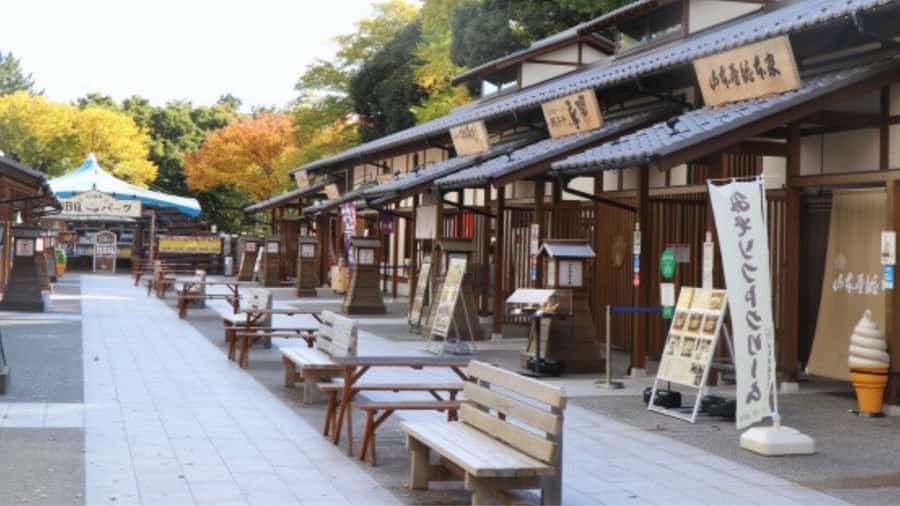
After the castle, the tour turns to Kinshachi Yokocho for about 30 minutes. This area near Nagoya Castle has traditional-style buildings, food spots, and souvenir shops. It gives you a quick introduction to the city’s local dishes without requiring a separate food tour.
The guide introduces Nagoya’s food culture and points out dishes worth knowing. Food and drinks are not included, so think of this as a guided tasting opportunity rather than a prepaid meal. You can use the break to browse, choose something to eat, or simply listen and make notes for later.
That distinction matters. Thirty minutes is enough to get oriented and perhaps buy a snack, but it may feel short if you want a full lunch, several tastings, and time in the shops. I would treat Kinshachi Yokocho as a sampler, then return on your own if a particular dish catches your attention.
This stop also improves the overall balance of the tour. Nagoya is not presented only as a historic city. You get a quick look at what people eat and how local food fits into the city’s identity.
One guide, Toshi, even shared a less touristy place for sake tasting with his group. That sort of local recommendation can be useful, though you should not assume that every guide will offer the same tip. The value of the stop is that you can ask about food and drinks while you are already in the right area.
Is $41 a fair price?
At $41 per person, the tour offers solid value if you want a guided castle visit and have limited time. Nagoya Castle admission is included, as is the English-speaking guide. You also get the Kinshachi Yokocho introduction without paying for a second activity.
The price is less attractive if you prefer to explore slowly on your own or if you already know Nagoya’s food scene. A self-guided visit may give you more freedom, though it will not provide the same steady explanation or personal answers.
The strongest value comes from the guide’s role. Several named guides have been praised for being clear, patient, organized, and open to questions. That is particularly useful for first-time visitors who want the castle’s story explained in plain English.
Food, drinks, souvenirs, and transport are extra. Plan for those costs rather than treating the $41 as an all-in price. You will also want to check the meeting option carefully, since the starting location may vary. The listed options include Nagoya Monument and Nagoya Port Building, and the information gives Nagoya Port Building as the finish point. Confirm the exact arrangement when you book.
Timing for cruise passengers and short stays
The 2.5-hour schedule is aimed at efficiency. The main plan allows about 90 minutes at Nagoya Castle and 30 minutes at Kinshachi Yokocho, with the full activity listed as lasting from 150 minutes to three hours depending on the available option.
That makes it a useful choice for cruise passengers or anyone with only part of a day in Nagoya. You can see a major historic site, get a local food introduction, and finish without committing to a long walking program.
The short format also creates the main limitation. You will not have much spare time for delays, extended shopping, or a long meal. If your schedule is tight, allow extra time around the tour for getting to and from the meeting point, since transport is not included.
For a short visit, I would book this early in your day if possible. That gives you more flexibility afterward, though the exact start times depend on availability. Do not assume that a 2.5-hour tour takes only 2.5 hours of your total day. Meeting-point transfers and your onward plans still need space.
Who will enjoy this experience most?

I would recommend this tour to:
- First-time visitors who want Nagoya’s major historic sight explained in English.
- Cruise passengers with a limited window in the city.
- People who enjoy asking questions about architecture, samurai culture, and local customs.
- Visitors who want a short introduction to Nagoya food without booking a separate food tour.
- Anyone who values a clear route and help staying on schedule.
I would be more cautious if you want a relaxed photography walk, a long sit-down meal, or several hours inside the castle. The route is designed to cover key sights efficiently, not to give you unlimited time at each one.
Families and older participants should also think about the walking involved. The tour information specifically calls for comfortable shoes, and the route includes outdoor areas. Nothing in the supplied details promises special accessibility arrangements, so ask the provider directly if that is important for your group.
Practical advice for a better visit
Wear shoes that are comfortable for steady walking. Bring a camera, and pack sunscreen for a bright day.
Keep some money available for food, drinks, and souvenirs at Kinshachi Yokocho. Since those purchases are not included, you can choose how much or how little to spend.
Take advantage of the guide’s local knowledge. Ask about the palace paintings, the castle’s stone walls, and which Nagoya dishes are worth trying. The strongest praise for this experience centers on guides who answer questions and offer useful local suggestions, so speaking up can make the short format feel more personal.
Finally, check the meeting point and ending arrangements before setting off. The available starting options can vary, and the listed coordinates are 35.18241330124308, 136.90480732801836. The activity information also names Nagoya Port Building as a finish point, so match the booked option with your cruise or city plans.
Should you book this Nagoya Castle tour?
Book it if you want a focused introduction to Nagoya, especially if you have only a few hours. The combination of castle architecture, Ninomaru Garden, Honmaru Palace, and Kinshachi Yokocho gives you a useful picture of both the city’s samurai past and its food culture.
The tour is worth the $41 when you value an English-speaking guide who can explain details, answer questions, and keep the route moving. Guides such as Toshi, Mariko, Risa, Kanna, Ray, and Shu have been praised for exactly those qualities.
Skip it if you prefer complete freedom, need a long meal, or want to spend half a day studying the castle at your own pace. For everyone else, this is a practical, well-packed way to make Nagoya’s main historic sight count.
FAQ
How long does the Nagoya Castle tour last?
The tour takes approximately 2.5 hours, or 150 minutes. Available options may show a total duration of up to three hours, so check the start time and selected option before booking.
What places are included?
The route includes Nagoya Castle, Ninomaru Garden, Honmaru Palace, and Kinshachi Yokocho.
Is Nagoya Castle admission included?
Yes. Admission to Nagoya Castle is included in the activity price.
Is food included at Kinshachi Yokocho?
No. Food and drinks are not included. You can use the 30-minute stop to browse, shop, or buy food at your own expense.
What language is the tour conducted in?
The tour is conducted in English with a live guide.
Where does the tour start?
The meeting point depends on the option booked. The listed starting choices include Nagoya Monument and Nagoya Port Building.
Where does the tour finish?
The provided activity information lists Nagoya Port Building as the finish point. Confirm the exact arrangement for your selected option.
What should I bring?
Bring comfortable shoes and a camera. Sunscreen is also recommended on sunny days.
Can I cancel the booking?
You can cancel up to 24 hours in advance for a full refund. A reserve-now, pay-later option is also available.
Newest history tours we have reviewed in Japan
- Authentic Sapporo: Nijo Market Seafood Lunch & History Tour★ 4.8 · 20 reviews
- Asakusa: 3.5-hour Big-picture History Walk★ 4.7 · 39 reviews
- Asakusa: A Big-picture History Walk to Know Japan★ 4.6 · 77 reviews
- 1-Day Tour from Nagoya: Hiking the Historic Nakasendo Trail★ 4.9 · 34 reviews
- Tokyo: Nikko World Heritage Private Day Trip Hotel Pick-up★ 4.8 · 145 reviews
- 2.5 Hour Private History and Culture Tour in Himeji Castle★ 5.0 · 185 reviews
- From Tokyo: Nikko World Heritage Sight Full Day Private Tour★ 4.9 · 127 reviews
- From Tokyo: Nikko World Heritage Site Private Full-Day Trip★ 4.9 · 243 reviews
Castle & Palace History Tours, compared.
Edinburgh Castle Guided History Tour with Tickets
Read our review →
Madrid Essential: Historic Center, Plaza Mayor & Royal Palace
Read our review →
Venice’s Best: Basilica, Doge’s Palace, Gondola & History Gallery
Read our review →
Imperial Palace and Shogun Historical Walking Tour
Read our review →
Saadian Tombs & Bahia Palace, Medina Guided Tour
Read our review →
Charleston historical walking tour with a Professor of History at The Citadel
Read our review →
Abu Dhabi Grand Mosque, Palace, and Heritage Village
Read our review →
Buda Castle District Dark History, Legends and Vampire Night Tour
Read our review →Browse the lists this tour appears in