
Review · USA HISTORY TOURS
Walking Tour: Civil Rights History -The Church, Children & Community
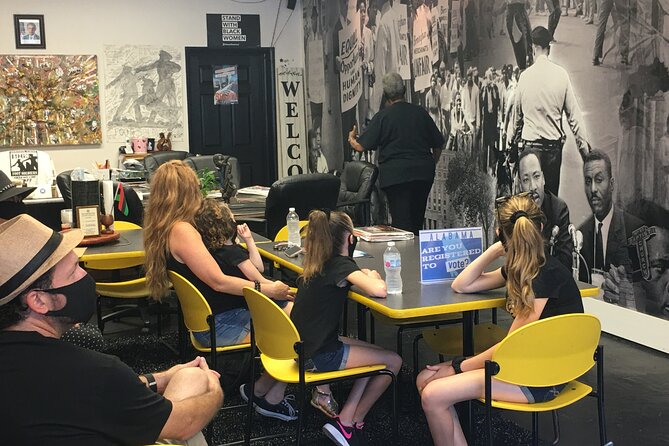
The most powerful part of this Birmingham walk is its focus on people close to the movement: children who faced police violence, church members who organized for change, and Black business owners who helped sustain the fight. You move through the actual Civil Rights District rather than hearing the story from a bus window.
I like the small group limit of 12, which gives you room to ask questions, and I like the mix of places: Kelly Ingram Park for protest history, then the 4th Avenue Business District for the economic side of social change. The main consideration is pace. Two hours on foot requires moderate fitness, and hot or wet weather can affect the experience.
Key points to know before you book
- The church bombing anchors the tour: Begin with the church where four girls were killed during segregation, then connect that tragedy to the wider movement.
- Kelly Ingram Park includes audio: The guided walk uses storytelling and an audio portion to help explain the park’s role in protest and confrontation.
- The 4th Avenue stop adds business history: See sites connected with Birmingham’s Black commercial district, including the Mosaic Temple and Jazz Hall of Fame area.
- Small groups keep the conversation personal: The maximum is 12 people, useful if you want to ask about names, places, and events.
- The tour returns to its starting point: Meet at 1601 5th Ave N and finish there, with no private transportation included.
- Families can take part: A protest sign-making station and family-friendly touches have made this a good fit for parents with young children.
Why Birmingham’s Civil Rights District works best on foot
Birmingham’s Civil Rights story is compact enough to follow by walking, but the short distances do not mean the subject is simple. This district brings together a church, a public park, former commercial streets, and memorial spaces that show how protest moved from meetings to marches and from local businesses into wider social change.
I prefer this kind of tour to a broad city drive because you can pause at the places where events unfolded. You see how close the church is to Kelly Ingram Park and how the business district belongs in the same story. The physical layout helps you understand that churches, children, parks, and businesses were not separate pieces of the movement. They worked together.
The walk begins at 1601 5th Ave N in the Birmingham Civil Rights District. The meeting point is near public transportation and close to the Birmingham Civil Rights Institute. The activity lasts about two hours and ends back at the starting point, so you do not need to arrange a ride from another part of town.
The price is $65.99 per person. That is not a low-cost stroll, but the value depends on what you want from a guide. You are paying for a focused small-group discussion, local interpretation, and access to several connected sites in one compact visit. If you only want to photograph the landmarks, you can explore the district on your own. If you want help understanding how the pieces fit together, the fee is easier to justify.
More History Walking Tours in the USA
- History and Hauntings of Salem Guided Walking Tour
★ 5.0 · 14,564 reviews - Boston: Freedom Trail History Small Group Walking Tour
★ 5.0 · 6,450 reviews - Historic Charleston Guided Sightseeing Walking Tour
★ 5.0 · 6,216 reviews
Beginning with the church and the four girls
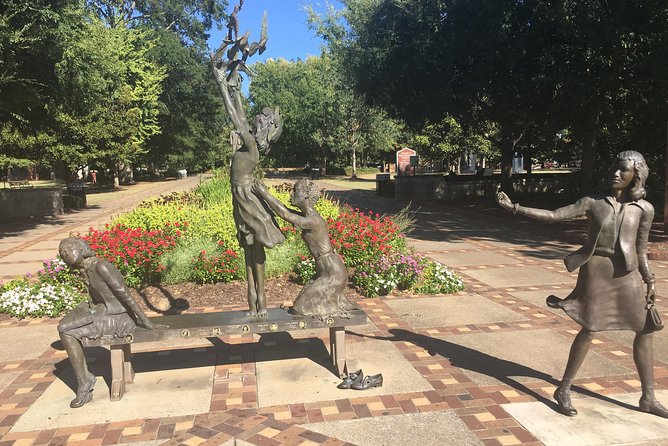
The first stop is the beloved church bombed during the segregation era, a tragedy that killed four young girls. This is not treated as a quick photo stop. The guide uses the church to explain segregation, the role of religious congregations, and why this building became such an important place in the Civil Rights Movement.
You should expect the tone to be serious. The subject calls for attention, especially if you are visiting with children. At the same time, the tour’s focus on the girls and the church community gives the story a human scale. You are not simply hearing a list of dates. You are considering how a place of worship became a center for organizing, courage, grief, and public action.
This opening also gives the rest of the walk a clear purpose. The tour title points to church, children, and community, and those themes continue at the park and in the business district. The church represents faith and organizing. The children represent the risks young people took in the fight for equal rights. The businesses represent the local economy that supported Black life and activism during Jim Crow.
If you are hoping to go inside the church, confirm the current access details before booking. The information provided for this activity describes the church stop but does not promise interior admission. The safest expectation is an interpretive visit around the landmark, with the guide explaining its role.
Kelly Ingram Park and the story of protest
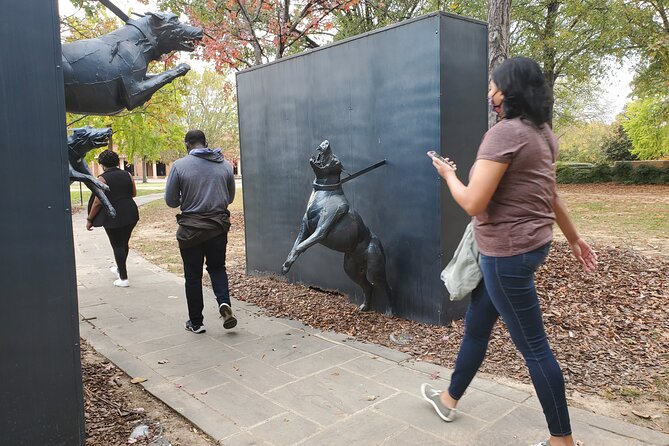
The walk through Kelly Ingram Park lasts about 30 minutes, and admission is free. Its importance comes from what happened here: the park became the central point for protests and riots connected with the struggle for equal rights.
This is the part of the tour where the guide’s storytelling matters most. You are not left to look at a park and guess why it matters. The walk is interactive, and an audio portion is included. That combination can help you picture how the space functioned during demonstrations and why public protest in Birmingham drew such strong attention.
I like the park stop because it lets you consider the role of place in a movement. A public park may look ordinary at first, but once you hear how it was used during protests, its meaning changes. The guide can connect the physical space to the decisions people made, the dangers they faced, and the wider response to the demonstrations.
The small group is especially useful here. A group of up to 12 is large enough to create conversation but small enough that you can ask for clarification. Guides Antonia and Antonio have been described as warm, personal, and willing to spend time answering questions. Since the exact guide is not guaranteed, do not book on the assumption that one particular person will lead your walk, but the format supports an open conversation.
The audio element is worth noting. The supplied details do not explain the equipment or length of the recording, so you should not expect a full museum-style presentation. Think of it as one part of the park’s guided interpretation rather than the whole experience.
The 4th Avenue Business District and the economic side of change
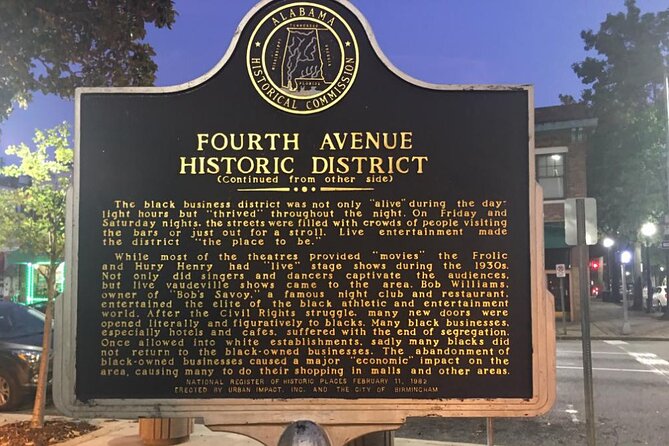
The longest portion of the walk, about one hour, takes place in the 4th Avenue Business District. This section looks at the attractions and businesses that made the area an important Black commercial center before and during the Jim Crow era.
This is a useful change of focus. Many Civil Rights tours concentrate almost entirely on marches, arrests, speeches, and famous leaders. Here, you also learn why Black-owned businesses mattered. They provided services, meeting places, jobs, and a degree of economic independence at a time when segregation restricted daily life.
The guide points out places connected with the district, including the Mosaic Temple, the Jazz Hall of Fame, Eddie Hendrix Park, and other nearby attractions. The names give you a sense of the range of the stop, but the real value is the connection between commerce and social change. A movement needs places where people can meet, share news, raise money, and build trust. Businesses often supplied that support.
This hour may appeal most to you if you want more than a famous-landmark checklist. You get a fuller picture of how a community functioned under Jim Crow and how local businesses helped maintain civic life. The tradeoff is that the stop may feel less immediately dramatic than Kelly Ingram Park. It asks you to pay attention to context rather than expect a single emotional moment.
The 4th Avenue portion is also where questions can make the experience better. Ask how the businesses supported organizing, what has changed in the district, and how the sites connect to the church and park. The small-group format gives you a better chance to have that exchange than a large coach tour would.
More Architecture and Landmark Tours in the USA:
- Chicago in a Day: Food, History & Architecture Walking Tour
★ 5.0 · 1,153 reviews - Historic Charleston Walking Tour: Rainbow Row, Churches, and More
★ 5.0 · 691 reviews - Charleston’s Best Highlights: History, Culture & Architecture
★ 5.0 · 422 reviews - Charleston: History and Architecture Guided Walking Tour
★ 4.8 · 349 reviews
A personal guide style, with room for questions
The strongest feature of this activity is the guide-led conversation. Antonia is described as personable and willing to answer many questions, while Antonio is praised for explaining Birmingham’s movement history with warmth and pride. Those qualities matter because this subject can easily become a dry sequence of names and dates.
The best guides help you connect past events to present concerns without turning the walk into a lecture. One guide described how the movement’s past helps explain challenges still faced by Birmingham’s Black community. That approach gives the tour more purpose, especially if you are visiting for the first time and want to understand why this history remains important.
The tour also includes a Birmingham Foot Soldiers discussion. That title suggests attention to the local people who did the daily work of organizing, marching, and sustaining the movement. The supplied information does not provide the names or length of this discussion, so treat it as a featured conversation rather than a separate scheduled stop.
You also receive Wi-Fi as part of the activity. That is a practical extra, though it is not the reason to book the walk. The real benefit is having a guide who can respond to your questions while you are standing in the places being discussed.
Taking the tour with children
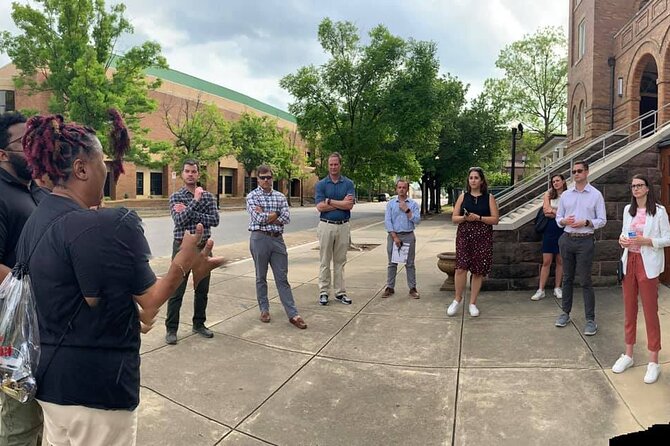
Families have a few reasons to consider this experience. The central theme includes the role of children in the movement, and a protest sign-making station gives young participants something active to do. A parent has also described coloring a protest sign with a three-year-old, which shows how the activity can be adapted for very young children.
Still, this is not a light family attraction. The church bombing and the violence surrounding the protests are difficult subjects. I would prepare older children in advance and decide how much detail is appropriate for younger ones. The guide’s storytelling and the small-group setting may help, but parents remain responsible for setting the pace of the conversation.
The walk can also work well for adults visiting with a baby or young child, based on the way guides have welcomed families. Keep in mind the moderate fitness requirement and the fact that the activity takes place outdoors and on foot. A stroller, breaks, and weather planning may matter, though the supplied information does not specify pavement conditions or stroller access.
Timing, comfort, and practical details
Plan for about two hours, with roughly 30 minutes in Kelly Ingram Park and about one hour in the 4th Avenue Business District. The remaining time covers the opening church discussion, movement between sites, and the Birmingham Foot Soldiers conversation.
Wear comfortable walking shoes and check the forecast. The experience requires good weather, and it may be canceled if conditions are poor. If that happens, you are offered another date or a full refund. The activity also requires a minimum number of participants, so a cancellation is possible if that minimum is not reached.
Private transportation is not included. That is unlikely to be a problem if you are already in the Civil Rights District, since the meeting point is near public transportation and the activity returns to the same location. It matters more if you are staying far outside central Birmingham and need to plan your arrival.
Service animals are allowed. The tour is offered in English, and a mobile ticket is provided. Confirmation arrives at booking, which makes it easier to fit the walk into a day of sightseeing.
For cancellations, you can receive a full refund if you cancel at least 24 hours before the start time. Changes or cancellations inside that 24-hour window are not accepted for a refund. Cutoff times follow Birmingham’s local time.
Who will get the most from this walk
I would recommend this tour to a first-time Birmingham visitor who wants a clear introduction to the Civil Rights District. It is also a good fit if you prefer local stories, walking, and conversation over a large group presentation.
You will likely get the most from it if you:
- Want to understand the connection between churches, children, parks, and Black businesses
- Prefer a guide who can answer questions in real time
- Are comfortable walking for two hours
- Have an interest in the daily community work behind major historic events
- Are visiting with children and want a serious but participatory experience
You may prefer another option if you need private transportation, want a longer museum visit, or cannot walk outdoors for two hours. This tour also may not suit you if you want a purely visual sightseeing experience with little discussion. Its purpose is to explain and connect, not simply to point out buildings.
Should you book the Civil Rights History walk?
Book it if you want Birmingham’s Civil Rights story presented through church life, children’s experiences, protest, and business communities rather than through famous names alone. The compact route, return to the meeting point, and group limit of 12 make it easy to fit into a Birmingham visit.
At $65.99, the cost is reasonable for a two-hour small-group experience if you value personal interpretation and questions. I would choose it early in your stay, then visit the nearby Birmingham Civil Rights Institute afterward if you want more exhibits and detail. Families should prepare children for serious subject matter, and everyone should plan for walking and suitable weather.
FAQ
Where does the tour begin?
The tour begins at 1601 5th Ave N, Birmingham, Alabama 35203, USA.
Where does the tour end?
The activity ends back at the meeting point.
How long does the walking tour last?
The tour lasts approximately two hours.
What language is the tour offered in?
The tour is offered in English.
How many people can join the tour?
The maximum group size is 12 people.
Is admission to Kelly Ingram Park included?
Yes. Kelly Ingram Park has free admission, and the guided walk there is included in the experience.
Is private transportation included?
No. Private transportation is not included.
What happens if the tour is canceled because of weather?
You will be offered a different date or a full refund if poor weather causes the cancellation.
Newest history tours we have reviewed in the USA
- Self Guided Detroit’s Spirit and History Solo Walking Tour★ 4.5 · 41 reviews
- Best Downtown Detroit Historical Walking Tour★ 5.0 · 56 reviews
- Detroit’s Hidden History Guided Walking Tour★ 5.0 · 48 reviews
- Private Nightlife Tour in Denver: Culture, History, and Cocktails★ 5.0 · 48 reviews
- Historical Walking Tour Of Denver With A Haunting Twist★ 5.0 · 19 reviews
- Tip Based: Capitol Hill History & Ghost Tour★ 5.0 · 34 reviews
- Denver – Capitol Hill Guided Walking Ghost / History Tour★ 4.5 · 75 reviews
- Downtown Dallas Sightseeing & History 2 Hour E-Scooter tour★ 5.0 · 155 reviews
Architecture & Landmark Tours, compared.

St. Mark’s Basilica Guided Tour & VR History Intro
Read our review →
Venice’s Best: Basilica, Doge’s Palace, Gondola & History Gallery
Read our review →
Córdoba: Skip-the-Line Great Mosque-Cathedral History Tour
Read our review →
Pantheon Elite Guided Tour – Rome’s Iconic Ancient Temple
Read our review →
Abu Dhabi Grand Mosque, Palace, and Heritage Village
Read our review →
Chicago in a Day: Food, History & Architecture Walking Tour
Read our review →

Colosseum Special Access Tour, with Ancient Temples & Tombs
Read our review →Browse the lists this tour appears in