
Review · CHARLESTON HISTORY TOURS
Charleston’s Best Highlights: History, Culture & Architecture
Charleston’s past comes into sharp focus on this walk, from the Old Exchange where the Declaration of Independence was read to the High Battery, where you look toward Fort Sumter. I like the way the route joins architecture with national history, rather than treating the city as a row of pretty façades.
I also like the guides’ flexible teaching style. Brian and Fin are praised for clear storytelling, humor, and the ability to answer questions or shape the walk around your interests. The main consideration is that several stops are viewed from outside, and admission to places such as the Old Exchange, Old Slave Mart Museum, and Nathaniel Russell House is not included.
Key points at a glance
- Old Charleston in one compact walk: Cover major landmarks from the Old Exchange to the High Battery without using a bus or carriage.
- Strong guide-led storytelling: Brian and Fin bring backgrounds in teaching, local history, and guiding, with plenty of room for questions.
- A serious look at slavery: Discuss Charleston’s role in the interstate slave trade at the Old Slave Mart, though the museum interior is not part of the tour.
- Architecture with context: See Georgian row houses, Gothic Revival design, Federal-style townhouses, churches, theaters, and waterfront mansions.
- Good first-day orientation: The route gives you useful context for a longer stay, helping you recognize the city’s major streets and landmarks.
- Small-group format: The maximum group size is 20, though the outing may feel much smaller when bookings are light.
Why this Charleston walk is worth your morning
This is a two-hour walking introduction to Charleston’s historic center, but it is more than a quick parade of old buildings. The route connects political events, religious life, architecture, the slave trade, and the Civil War.
That range is the tour’s main strength. You move from the colonial period to the American Revolution, the founding of the United States, the growth of the port economy, and the opening shots of the Civil War. At the same time, you see the details that make Charleston visually distinctive: pastel row houses, ironwork, church spires, formal gardens, and homes facing the harbor.
I would book this near the beginning of a Charleston visit. The route helps you get your bearings, and the stories give meaning to places you may pass again later. It is also a useful choice if you have only one day in town and want a broad introduction rather than a single-house museum visit.
The advertised duration is about two hours. In practice, you should allow extra time. Guides Brian and Fin are praised for answering questions at length, and several outings have extended well beyond the scheduled period. That can be a benefit if you enjoy history, but it may be inconvenient if you have a strict dinner reservation or another timed activity.
More Architecture and Landmark Tours in Charleston:
- Historic Charleston Walking Tour: Rainbow Row, Churches, and More
★ 5.0 · 691 reviews - Venice: St. Mark’s Basilica Guided Tour & VR History Intro
★ 3.9 · 4,880 reviews - Venice’s Best: Basilica, Doge’s Palace, Gondola & History Gallery
★ 4.5 · 2,478 reviews
Starting at the Old Exchange and Provost Dungeon
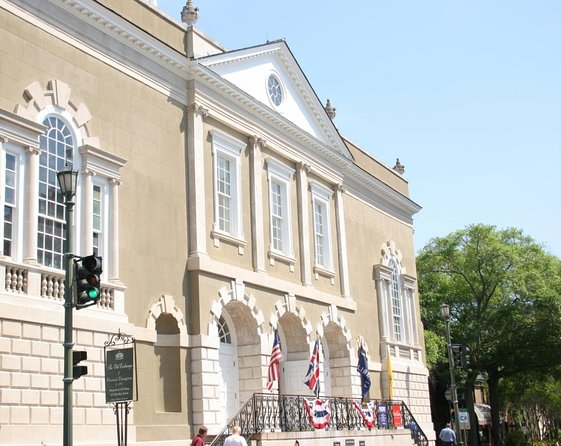
The tour begins at 122 East Bay Street, at one of Charleston’s most important historic buildings. The Old Exchange dates to about 1771 and has been tied to several major events in South Carolina and American history.
The Declaration of Independence was read here in 1776. During the American Revolution, the building served as a British prison for about two years. South Carolina ratified the United States Constitution here in 1788, and George Washington was entertained at the building during his week-long visit in May 1791.
That is a lot of history for one opening stop, and it gives the walk a strong start. You are not simply hearing that Charleston is old. You are seeing a place connected to the Revolution, the new federal government, and the early republic.
Admission to the building is not included. The guide’s focus is the exterior and its story, so consider this stop an introduction rather than a full museum visit. If the building interests you, you can return separately for a longer look.
Rainbow Row and Charleston’s preservation story
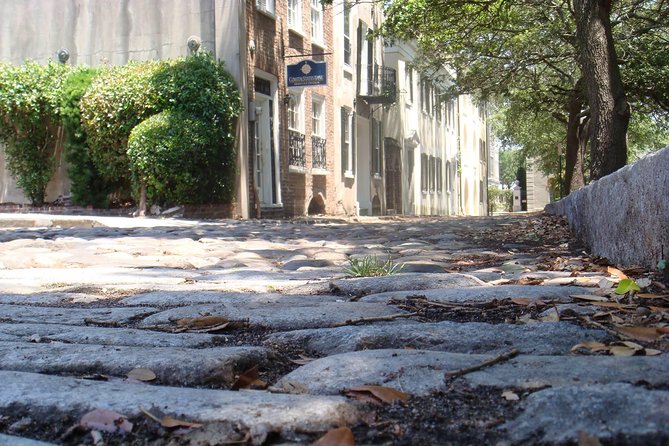
Rainbow Row takes only about five minutes on the route, but it is one of the city’s most recognizable sights. The attached Georgian row houses form the longest row of their kind in the country.
The buildings originally held mariner’s stores during the 18th and 19th centuries. Their bright Caribbean color scheme came later, as part of Charleston’s preservation efforts in the 1930s. That detail is useful because it corrects a common assumption: the colorful appearance is not simply a leftover from the colonial era.
This is a quick photo stop, not a long architectural study. Still, it helps you notice how Charleston’s preservation movement shaped the city you see today. The façades are free to view from the street, but you should not expect interior access.
Facing the Old Slave Mart Museum
The stop at the Old Slave Mart Museum brings the most difficult subject into the walk. The building was known as Ryan’s Slave Mart in the 1850s and served as an auction site in the interstate slave trade.
The guide discusses Charleston’s role in slavery and the port city’s connection to the buying and selling of enslaved people. This is an important part of understanding Charleston, and it keeps the tour from presenting the city as only elegant houses and pleasant streets.
The tour does not enter the museum. The City of Charleston operates it, and on-site tours are available separately. If you want a fuller treatment of the subject, plan time to visit on your own. The walking tour provides context, but this stop is brief, about ten minutes, and cannot replace a museum visit.
I appreciate that the subject is included directly in the route. You should also know that the pace means the discussion may be an overview rather than an extended examination of the lives of enslaved people, the mechanics of the trade, and its long aftermath.
More Local Culture and Traditions Tours in Charleston:
- Amsterdam Food and Cultural Tour with Tastings
★ 5.0 · 4,315 reviews - Sevilla Food Tour: Tapas, Wine, History & Traditions
★ 5.0 · 3,468 reviews - Tromsø: Reindeer Camp and Sami Cultural Tour with Lunch
★ 4.7 · 3,326 reviews - Half Day Dominican Republic Cultural Tour : Small Group
★ 4.5 · 1,862 reviews
French Huguenot Church and the city’s religious mix

The French Huguenot Church is a short stop, about five minutes, but its presence adds another layer to Charleston’s story. The Gothic Revival building dates to 1845 and serves one of the few practicing Huguenot congregations in the country.
The church points to the city’s links with French Protestant refugees and to the mix of religious communities that helped shape Charleston. You will hear about the building and its place in local religious life, though the itinerary does not promise a full interior visit.
This is a good example of how the tour uses architecture as a doorway into social history. The pointed Gothic design looks different from the surrounding colonial and Federal-style buildings, and the contrast helps you read the streets more carefully.
Dock Street Theater and Charleston’s stage tradition
At Dock Street Theater, the route turns to entertainment and public life. The building occupies the site of the first theater in the British colonies.
The present structure, dating to about 1937, was restored from the former Planter’s Hotel, built around 1809. Charleston Stage operates here as South Carolina’s largest professional theater company, with roughly 120 performances each year.
Entrance depends on availability, so treat this as an exterior stop unless the guide can take you inside. Even from the street, the building gives you a chance to consider how Charleston changed from a colonial port to a modern cultural center while preserving older structures.
This is also one of the stops where a guide’s storytelling matters. A list of dates would be dry. A good explanation can show how hotels, theaters, churches, banks, and private homes served different roles as the city grew.
Four Corners of Law and Charleston City Hall
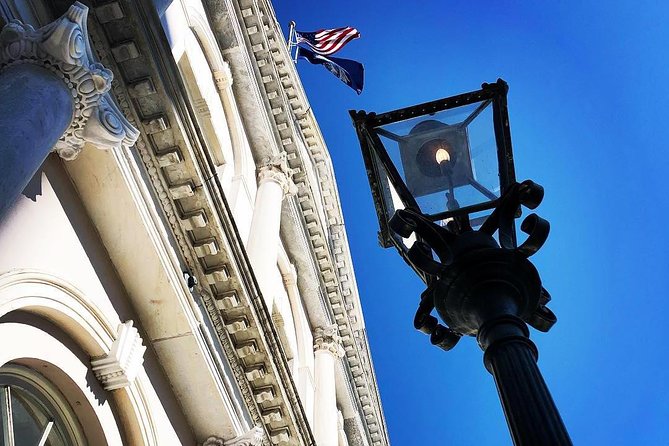
Charleston City Hall sits at one of the city’s Four Corners of Law, a name associated with Robert Ripley of Ripley’s Believe It or Not. The phrase refers to the concentration of religious and civic buildings at this intersection.
City Hall began as a bank in 1801 and has served as city hall since 1818. It is considered one of the oldest continuously operating city halls in the country.
This stop is short, about two minutes, but it makes a useful point about how Charleston’s civic center developed. On weekdays, visitors can enter the council chamber and view the city’s collection at no charge. The walking tour does not guarantee that the interior will be open, so treat that as an optional extra rather than part of the core experience.
St. Michael’s Church and the churchyard
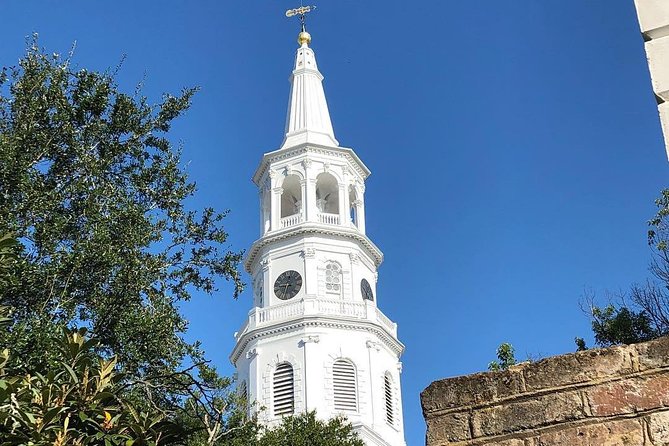
St. Michael’s Church is one of the more substantial stops, at about 15 minutes. Built around 1761, it is the oldest house of worship in Charleston.
The guide discusses the city’s religious past and present, while the building itself offers plenty to notice. Much of the original woodwork remains, and the church has Tiffany stained-glass windows. The churchyard contains the graves of John Rutledge and Charles Cotesworth Pinckney, both signers of the United States Constitution.
Entrance depends on availability. If the doors are open, the interior adds detail to the stop. If not, the churchyard and exterior still provide a strong setting for the discussion.
This is one of the places where you benefit from a guide who can connect local events to the wider founding of the country. Brian is especially praised for linking South Carolina figures with people and developments in other colonies and states. Fin is also described as a former high-school history teacher, which helps explain the emphasis on clear chronology and questions.
Nathaniel Russell House and the Federal style
The group enters the garden of the Nathaniel Russell House, a Federal-style townhouse built in 1808. Nathaniel Russell came from Rhode Island and made his wealth as a merchant involved in shipping.
The garden visit is a welcome change of pace after several street-side stops. You can look at the house’s proportions and setting while the guide explains the role of wealthy merchants in Charleston’s port economy.
Admission is not included, and the route specifies entry to the garden rather than a full house visit. If you want to see the interior, you will need to arrange that separately. Even so, the garden gives the tour a useful pause and shows how a private urban home could express status, order, and wealth.
The stop also quietly raises questions about who benefited from Charleston’s commercial success. That makes it a valuable companion to the earlier discussion at the Old Slave Mart.
The High Battery, waterfront homes, and Fort Sumter
The final major section takes you up on the High Battery wall. From here, you look toward waterfront mansions and out toward Fort Sumter.
The guide discusses the beginning of the Civil War and the role of the Edmondston-Alston House. The house has remained in the same family since 1838 and was a place where General Beauregard watched the bombardment of Fort Sumter with other onlookers.
This is a strong closing point because the view makes the military story easier to picture. You are not hearing about Fort Sumter in an abstract way. You can see the direction of the fort and understand the waterfront setting that shaped Charleston’s wartime experience.
Admission to the Edmondston-Alston House is not included. The tour walks up to the Battery wall to view the house and discuss the events, rather than promising an interior visit.
The route then returns to the starting point. Since the walk covers several historic districts and includes extended standing, wear comfortable shoes and bring water. The exact pace may vary with the group, guide, weather, and number of questions.
The guides: Brian and Fin
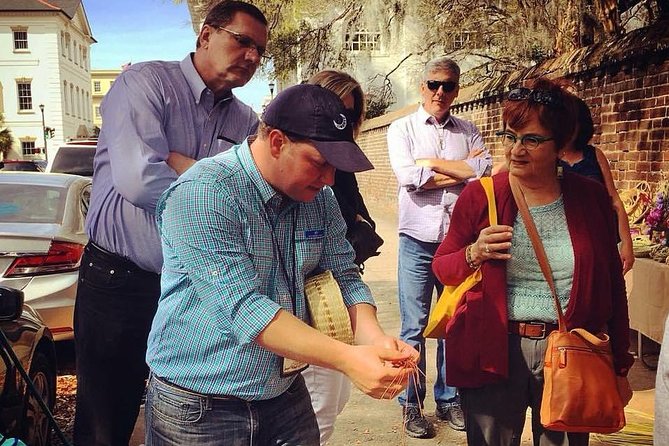
The guide is the heart of this experience. Brian is repeatedly praised for his strong command of Charleston and American history, along with a friendly, funny manner. He is described as tailoring the walk to the group, asking what people want to see, and making the experience feel more like a walk with an informed local than a memorized speech.
Fin receives similar praise for enthusiasm, storytelling, and his background teaching high-school history. His tours have included detailed answers and long conversations about Charleston’s place among the colonies and states.
That flexibility matters. A large historic district can become tiring if every stop is delivered at the same pace. A guide who notices questions and adjusts the emphasis can make the difference between a pleasant walk and a genuinely useful introduction.
The group limit is 20 people. That is small enough for a good guide to manage, though the actual feel depends on the booking size. Some departures may be close to private, while others will have a fuller group.
Value, timing, and practical details
No tour price is provided here, so I cannot judge the dollar cost directly. The value depends on what you want included. You are paying primarily for the guide’s time, storytelling, local context, and route planning. Several admission fees are not included, so budget separately if you want to enter the Old Exchange, Old Slave Mart Museum, Nathaniel Russell House, or Edmondston-Alston House.
For many people, the tour works best as a first-day activity. It gives you a map in your head and points out places you can revisit later. If you already know Charleston well, the value will depend more on the guide’s interpretation and your interest in connections between local and national history.
The tour is offered in English and uses a mobile ticket. It begins and ends at 122 East Bay Street. The location is near public transportation, and service animals are allowed. Most people can take part, but remember that this is a walking tour with several outdoor stops.
The weather policy matters in Charleston’s heat, rain, and occasional storms. The experience requires good weather. If the operator cancels because of poor conditions, you can choose another date or receive a full refund. You can cancel for a full refund up to 24 hours before the start time. Cancellations or changes within 24 hours are not refunded or accepted.
Who should book this Charleston walking tour?
I would recommend it to first-time visitors who want a strong overview before choosing which museums and houses to visit. It also suits returning visitors who want more context for buildings they may have seen without understanding their connections.
History-minded families should find plenty to discuss, though younger children may tire during the longer explanations. Couples and small groups will appreciate the personal question-and-answer style, especially when the guide can adapt the route or emphasis.
This is less suitable if you want extensive interior access, a short photo walk, or a tour focused only on architecture. You will see many major buildings, but several are viewed from the street and several admission tickets cost extra.
Should you book it?
Book this tour if you want Charleston explained through its buildings, people, conflicts, and turning points. The route covers the Old Exchange, Rainbow Row, the Old Slave Mart, St. Michael’s Church, the Battery, and Fort Sumter views, while guides such as Brian and Fin add the detail that makes those places meaningful.
Skip it if you need a tightly timed two-hour activity or want every landmark entered as part of the ticket. For everyone else, especially on the first day of a Charleston stay, this is a useful and thoughtful way to get oriented. Plan for comfortable shoes, open-ended questions, and possibly more than two hours.
FAQ
Where does the Charleston walking tour begin?
The tour begins at 122 East Bay Street, Charleston, South Carolina 29401.
Where does the tour end?
The activity ends back at the meeting point on East Bay Street.
How long does the tour last?
The advertised duration is approximately two hours. The walk may run longer, depending on the guide, group, and questions.
What language is the tour offered in?
The tour is offered in English.
What landmarks are included?
The route includes the Old Exchange and Provost Dungeon, Rainbow Row, the Old Slave Mart Museum, French Huguenot Church, Dock Street Theater, Charleston City Hall, St. Michael’s Church, the Nathaniel Russell House garden, and the Edmondston-Alston House area and High Battery.
Is admission to the buildings included?
Admission is not included for the Old Exchange and Provost Dungeon, Old Slave Mart Museum, Nathaniel Russell House, or Edmondston-Alston House. Entry to Dock Street Theater and St. Michael’s Church depends on availability. Some other stops are viewed free from outside.
Does the tour enter the Old Slave Mart Museum?
No. The tour discusses Charleston’s role in the slave trade from outside the building. The City of Charleston operates the museum, and tours are available on site.
How large is the group?
The maximum group size is 20 people.
Can I cancel for a refund?
Yes. You can cancel at least 24 hours before the start time for a full refund. Cancellations or changes made less than 24 hours before the start time are not refunded or accepted. If poor weather causes the operator to cancel, you will be offered another date or a full refund.
Newest history tours we have reviewed in Charleston
- Private Morning Sail, Dolphin and History Tour on Mystique★ 5.0 · 84 reviews
- Private Photo Session in Historic Charleston★ 5.0 · 123 reviews
- Private Historic Horse & Carriage Tour of Charleston★ 5.0 · 103 reviews
- Semi-private SMALL group Historic Walking Tours w/certified guide★ 5.0 · 224 reviews
- Charleston Horse & Carriage Historic Sightseeing Tour★ 4.5 · 460 reviews
- Charleston’s Historic Residential Horse and Carriage Tour★ 4.5 · 668 reviews
- Charleston: Old Walled City Historical Walking Tour★ 4.7 · 705 reviews
- Historic Charleston Walking Tour: Rainbow Row, Churches, and More★ 5.0 · 691 reviews
Architecture & Landmark Tours, compared.

St. Mark’s Basilica Guided Tour & VR History Intro
Read our review →
Venice’s Best: Basilica, Doge’s Palace, Gondola & History Gallery
Read our review →
Córdoba: Skip-the-Line Great Mosque-Cathedral History Tour
Read our review →
Pantheon Elite Guided Tour – Rome’s Iconic Ancient Temple
Read our review →
Abu Dhabi Grand Mosque, Palace, and Heritage Village
Read our review →
Chicago in a Day: Food, History & Architecture Walking Tour
Read our review →

Colosseum Special Access Tour, with Ancient Temples & Tombs
Read our review →Browse the lists this tour appears in