
Review · CHARLESTON HISTORY TOURS
Charleston History, Homes, and Architecture Guided Walking Tour
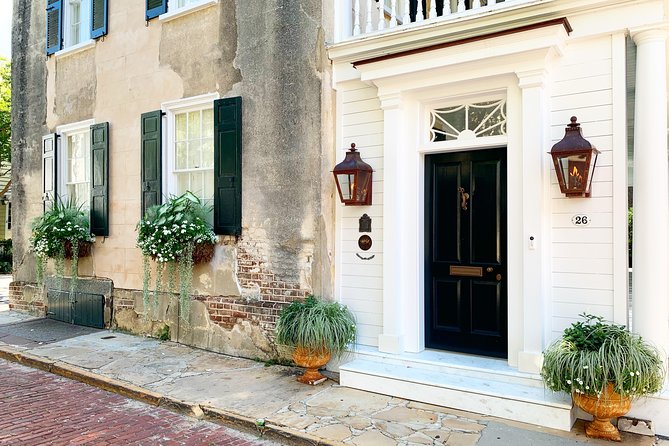
Charleston’s story is written into its streets, churches, seawall, and pastel homes. This two-hour walk takes you from City Hall through the French Quarter and South of Broad, with stops at St. Michael’s Church, Rainbow Row, the Old Exchange, and White Point Gardens. The guide supplies the dates and drama, but the real pleasure is seeing how the city’s architecture and past fit together block by block.
I like the small maximum of 20 people, which should make it easier to hear and ask questions. I also like the included entry to the Powder Magazine Museum, a useful extra for anyone who wants more than a quick look at Charleston from the sidewalk. The main consideration is heat, rain, or a slow-moving group, since the tour runs outdoors in all weather and begins promptly.
Key points to know before you book
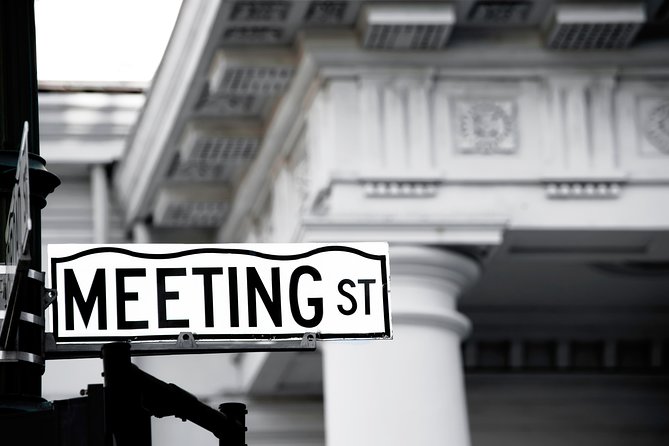
- City Hall is the starting point: Meet outside 80 Broad Street, at one of Charleston’s Four Corners of Law.
- The route covers the city’s essential historic core: Expect the French Quarter, Rainbow Row, South of Broad, the Old Exchange, and the Battery.
- Local guides shape the experience: Dennis, Al, Duggard, Evans, Mark Jones, and Lawrence are among the guides associated with this tour.
- Powder Magazine admission is included: Visit the museum at your leisure, separate from the main walking route.
- The pace is manageable but still outdoors: Bring water, wear comfortable shoes, and plan for sun or rain.
- The $28 price is fair for a two-hour orientation: You get a licensed guide, a compact route, and museum admission.
Why this walk is a good first look at Charleston

I see this tour as a useful introduction rather than a full study of Charleston. In two hours, you get a guided framework for the city: colonial power, religious life, Revolutionary politics, the Civil War, slavery, architecture, and the social world behind the grand homes.
That matters because Charleston can look deceptively simple at first. You may walk past a church, a narrow house, or an old wall without knowing why it matters. A good guide points out the details that turn a pleasant stroll into a lesson: the Four Corners of Law, the role of the Battery, the age of St. Michael’s, and the changing fortunes of the buildings around the French Quarter.
The tour has earned a 4.9 rating from 267 reviews, with 98 percent of participants recommending it. More important than the numbers is the pattern in the comments: guides are praised for their local knowledge, humor, pacing, and ability to explain difficult subjects with care. Dennis is repeatedly singled out for his clear delivery and attention to comfort. Al is praised for making facts lively, while Duggard, Evans, Mark Jones, and Lawrence are also described as engaging and well informed.
Guide assignments can change, so you should not book expecting a particular person unless the operator confirms it. Still, the repeated praise for several guides suggests that the quality is not tied to just one individual.
More History Walking Tours in Charleston
- Historic Charleston Guided Sightseeing Walking Tour
★ 5.0 · 6,216 reviews - Hidden Alleyways and Historic Sites Small-Group Walking Tour
★ 5.0 · 2,335 reviews - Charleston historical walking tour with a Professor of History at The Citadel
★ 5.0 · 1,284 reviews
Starting at City Hall and the Four Corners of Law
The walk begins outside Charleston City Hall at 80 Broad Street. This is a smart starting place because the area is known as the Four Corners of Law, where religious, civic, and legal institutions sit close together.
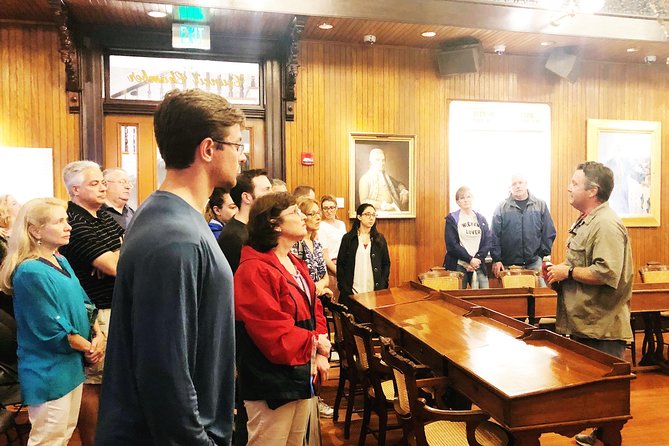
Your guide uses City Hall to explain how Charleston organized public authority. The opening stop lasts about 10 minutes and is free to enter because the tour begins outside. Arrive early. The operator asks you to be there 15 minutes before the scheduled start, and the guide leaves promptly after the introduction.
That punctuality is worth taking seriously. One participant arrived only five minutes late and missed the group. The guide had already begun walking after waiting through the introduction. If you are delayed, call the operator rather than assuming the group will remain at the meeting point.
Washington Square and St. Michael’s Church
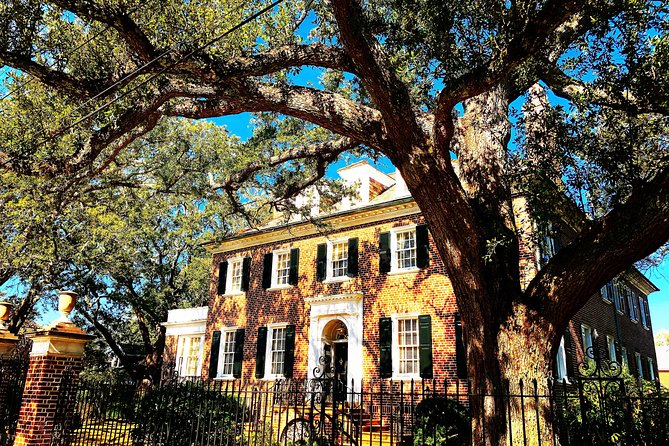
Washington Square is a brief five-minute stop, but it helps connect Charleston’s public spaces with its political past. The guide explains the park before moving on to St. Michael’s Episcopal Church.
St. Michael’s is one of the most important stops on the route. It is the oldest surviving religious structure in Charleston, and George Washington worshipped there. Even if you are not focused on church architecture, this stop helps you see how religion, politics, and social rank overlapped in the early city.
You should expect an exterior explanation rather than a long interior visit. The itinerary allows about 10 minutes here, so the guide’s job is to give you the useful context without turning the tour into a formal church lecture.
This is also where a strong guide can make a real difference. Guides such as Dennis and Evans are praised for connecting dates and famous names with personal stories and local detail. That style suits Charleston, where the important facts often sit beside small human anecdotes.
Rainbow Row and the city’s famous houses
Rainbow Row is the photo stop most people already know. The colorful Georgian houses along East Bay Street create one of Charleston’s most recognizable scenes, but the guide adds context that a quick photograph cannot provide.
You learn how these buildings fit into the city’s commercial and residential past and why the row became such a symbol of Charleston. The stop lasts about 10 minutes, enough time to look closely at the facades and hear the story without lingering too long.
I like that this is not presented as an isolated pretty corner. The route places Rainbow Row within a wider discussion of architecture, neighborhood life, and changing property use. You begin to notice proportions, window arrangements, narrow lots, and the relationship between public streets and private homes.
This portion is especially good for visitors who want to understand Charleston’s appearance. The walk does not simply list famous addresses. It explains why the homes look as they do and how the city’s built character developed.
More History Walking Tours in the USA
- Charleston: Old Walled City Historical Walking Tour
★ 4.7 · 705 reviews - Historic Charleston Walking Tour: Rainbow Row, Churches, and More
★ 5.0 · 691 reviews - Charleston: History and Architecture Guided Walking Tour
★ 4.8 · 349 reviews - Charleston History and Hops Tour: Bar and History Walk
★ 5.0 · 316 reviews
The Old Exchange and Provost Dungeon
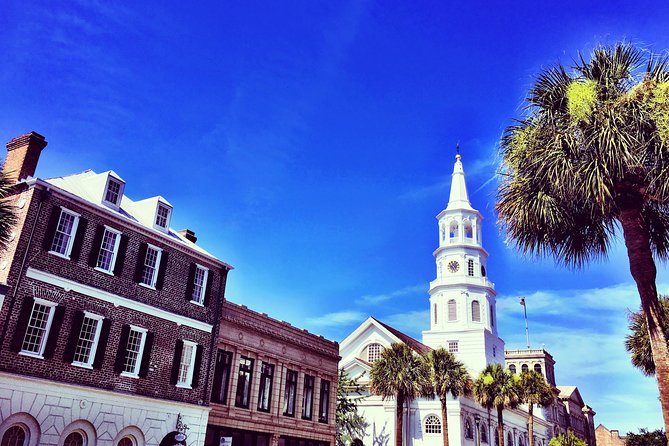
The Old Exchange and Provost Dungeon brings the tour into Charleston’s colonial political story. The building is described as South Carolina’s most historic building, with a 300-year history connected to pirates, patriots, and presidents.
The scheduled stop is short, about five minutes, so expect an explanation of the building and its importance rather than a full museum visit. The tour includes the Powder Magazine Museum, but the information provided does not state that admission to the Old Exchange and Provost Dungeon itself is included.
That distinction matters if you want to tour the dungeon interiors. Ask the operator about separate admission before booking any additional visit. During the walk, you will still gain useful context about the building’s place in Charleston’s colonial and Revolutionary story.
This stop also helps keep the tour from becoming only an architecture walk. Charleston’s handsome streets were shaped by trade, government, war, and forced labor. A responsible guide needs to explain both the city’s achievements and the human cost behind its wealth.
South of Broad, the Battery, and White Point Gardens
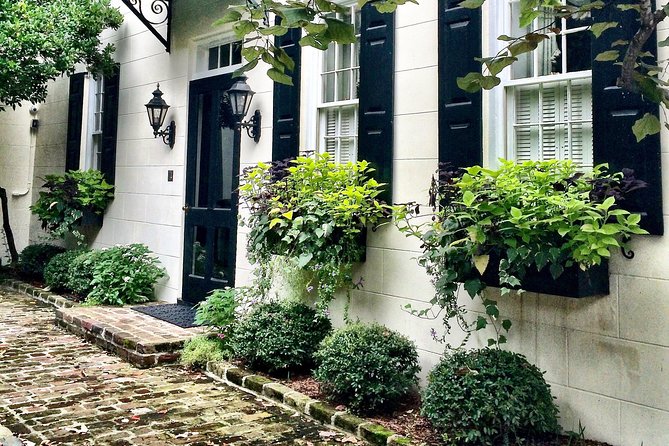
The route then moves into South of Broad and toward the Battery. This is where the tour becomes less about individual landmarks and more about the city as a neighborhood.
At the Battery, you stroll beside the seawall and look toward the stately homes around White Point Gardens. The stop lasts about 15 minutes, the longest single stop on the listed route. The guide discusses the people who lived in these houses and the forces that shaped the area.
The waterfront walk gives you a welcome change of pace after the denser streets near the French Quarter. It also offers one of the clearest ways to understand Charleston’s residential image. The mansions are impressive, but the guide’s job is to add social context rather than simply admire them.
On hot days, this section can be pleasant or tiring depending on the shade and the pace. One guide, Duggard, is praised for keeping the group in the shade as much as possible. That is not something every guide can guarantee, so bring water and dress for the forecast.
The tour ends at 94 Battery Place, only a few blocks from the starting point. The exact end point can change with the guide and route. If you want to return to City Hall, the guide will walk you back when requested.
The Powder Magazine Museum adds value after the walk
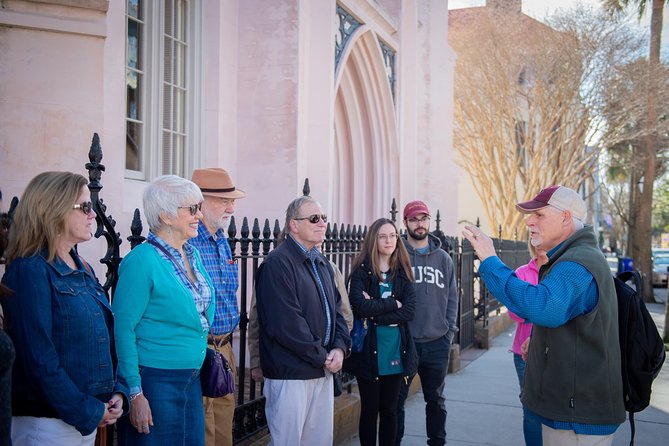
Your ticket includes the Powder Magazine Museum, which you can explore at your leisure. This is a useful addition because the main tour spends only two hours on a broad range of subjects.
The museum lets you continue with Charleston’s military and colonial story after the guide has finished. It also gives you a quieter indoor option, which can be welcome after walking in heat or rain. The provided details do not specify how long you should allow there, so plan it around your schedule rather than treating it as part of the fixed two-hour route.
At $28 per person, the museum admission helps make the price reasonable. You are not paying only for a walk past famous homes. You receive a licensed local guide, a structured route through several major districts, and an additional museum visit.
How the guides handle history and difficult subjects
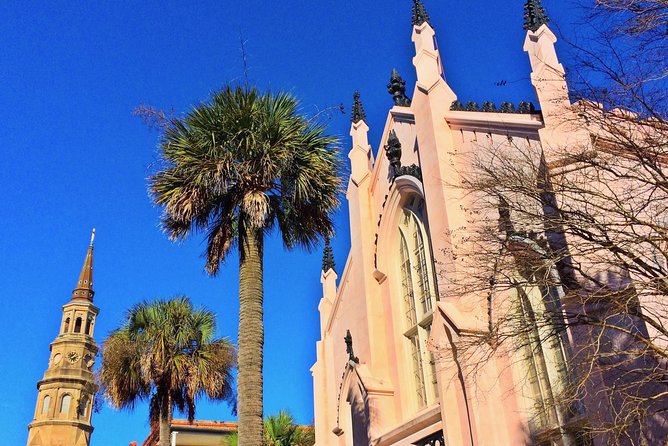
The strongest feature of this experience is the guide’s interpretation. The route covers the American Revolution, the Civil War, religious life, architecture, slavery, and the people who shaped Charleston. That is a lot for two hours, so the guide must choose carefully.
Several guides are praised for mixing humor with serious subjects. Dennis is described as a South Carolina native who gives local anecdotes and watches the group’s comfort. Al is praised for enthusiasm and for pointing out details people might otherwise pass. Evans is described as especially passionate about local history, while Lawrence is praised for giving clear explanations and useful suggestions for further exploration.
You should expect a lively presentation, not an academic seminar. One person found that some stories ran a little long, and another thought a few historical points might have been inaccurate. That is a fair reminder to treat the tour as an orientation. If you are a serious Civil War or architectural-history student, use it to decide what you want to study next.
The treatment of slavery also matters. Charleston’s wealth and architecture cannot be separated from slavery, and the guide is expected to address that subject with care. One detailed account specifically praises a guide for handling it sensitively while discussing society, architecture, and the city’s role in the Revolutionary and Civil War periods.
Timing, group size, and what to bring
Morning and afternoon departure times give you some flexibility. A morning walk may be easier in warm weather, while an afternoon departure may suit a schedule that begins later. The tour operates in all weather conditions, so check the forecast and dress accordingly.
Wear comfortable shoes. Charleston’s historic streets can make poor footwear a mistake, especially when you are walking for two hours and stopping often. Bring a water bottle, particularly from late spring through early fall.
The maximum group size is 20 people. That is not a private tour, but it is small enough for a guide to keep the group together and answer occasional questions. The pace is described as comfortable, with stops for rest and bathroom needs, though you should not expect every minute to be spent indoors.
Children must be accompanied by an adult. Service animals are allowed, and the activity is near public transportation. Most people can participate, but the tour remains a walking activity in outdoor conditions, so consider your own comfort with heat, rain, and two hours on foot.
Cancellation and booking details
You receive confirmation when you book, and the tour is commonly reserved about three weeks ahead. That advance pattern suggests booking early if your Charleston dates are fixed, particularly if you want a specific departure time.
Free cancellation is available up to 24 hours before the start time. Cancellations made within 24 hours are not refunded, and changes within that period are not accepted. If poor weather forces the operator to cancel, you are offered another date or a full refund.
Who should book this Charleston walk?
I would choose this tour for a first visit, especially if you want a clear introduction before exploring on your own. It suits couples, families with older children, and friends who enjoy history but do not want a long formal lecture.
It is also a good fit if architecture matters to you. Rainbow Row, South of Broad, the Battery, and the church buildings offer plenty to see, while the guide explains what makes the homes and streets distinct.
I would be more cautious if you dislike group tours, need a fully indoor activity, or want extensive access to building interiors. The route is mainly outside, and several major stops are viewed from the street. Serious specialists may also want a more focused tour on slavery, Civil War history, food, or architecture.
Should you book it?
At $28, this is a solid-value way to get oriented in Charleston. You see major landmarks, walk through the French Quarter and South of Broad, hear local stories, and receive Powder Magazine admission without committing half a day.
Book it if you want a friendly guide to help you read the city. Arrive 15 minutes early, bring water, wear good shoes, and keep your schedule flexible enough for the outdoor conditions. If you do that, this tour gives you a strong first map of Charleston and plenty of ideas for what to explore next.
FAQ
Where does the Charleston walking tour begin?
The tour begins outside Charleston City Hall at 80 Broad Street, Charleston, South Carolina.
Where does the tour end?
The listed end point is 94 Battery Place. The exact end can vary with the guide and route, but it remains a few blocks from the starting point. The guide will walk you back to City Hall if you request it.
How long does the tour last?
The guided walking tour lasts approximately two hours.
What landmarks are included?
The route includes City Hall, Washington Square, St. Michael’s Episcopal Church, Rainbow Row, the Old Exchange and Provost Dungeon, the Battery, White Point Gardens, the French Quarter, and South of Broad.
Is Powder Magazine Museum admission included?
Yes. Your ticket includes admission to the Powder Magazine Museum, which you can visit at your leisure.
What should I bring?
Bring a water bottle and wear comfortable shoes. Dress appropriately for the weather because the tour operates in all weather conditions.
How large is the tour group?
The tour has a maximum of 20 participants.
What is the cancellation policy?
You can cancel up to 24 hours before the start time for a full refund. Cancellations or changes made less than 24 hours before the start time are not accepted and are not refunded. If poor weather causes the operator to cancel, you receive a different date or a full refund.
More Architecture and Landmark Tours in Charleston
- Charleston’s Best Highlights: History, Culture & Architecture
★ 5.0 · 422 reviews - Charleston History and Architecture Walking Tour
★ 5.0 · 63 reviews - Venice: St. Mark’s Basilica Guided Tour & VR History Intro
★ 3.9 · 4,880 reviews - Venice’s Best: Basilica, Doge’s Palace, Gondola & History Gallery
★ 4.5 · 2,478 reviews
Newest history tours we have reviewed in Charleston
- Charleston’s Strong Women of the South History Tour★ 4.5 · 27 reviews
- Charleston’s Historic Pubs, Taverns, and Taprooms Tour★ 4.5 · 33 reviews
- Sip History in The Sun Cabana Covered Cocktail Class★ 5.0 · 332 reviews
- Small-Group Tour: Charleston Old Walled City Historical Walking Tour★ 4.5 · 283 reviews
- Sip History In a Secret Speakeasy Cocktail Class★ 5.0 · 40 reviews
- Private Sunset Sail BYOB Dolphin/History Tours on 43ft Mystique★ 5.0 · 42 reviews
- Private Afternoon Sailing/Dolphin & History Tour on 43ft Mystique★ 5.0 · 32 reviews
- Private Walking Tour of Historic Charleston★ 5.0 · 38 reviews
Architecture & Landmark Tours, compared.

St. Mark’s Basilica Guided Tour & VR History Intro
Read our review →
Venice’s Best: Basilica, Doge’s Palace, Gondola & History Gallery
Read our review →
Córdoba: Skip-the-Line Great Mosque-Cathedral History Tour
Read our review →
Pantheon Elite Guided Tour – Rome’s Iconic Ancient Temple
Read our review →
Abu Dhabi Grand Mosque, Palace, and Heritage Village
Read our review →
Chicago in a Day: Food, History & Architecture Walking Tour
Read our review →

Colosseum Special Access Tour, with Ancient Temples & Tombs
Read our review →Browse the lists this tour appears in