Review · ROME HISTORY TOURS
Rome: Colosseum and Ancient Rome Small Group Guided Tour
The most compelling part of this tour is the way it links the Colosseum’s public spectacle to the power games of Ancient Rome. You are not just looking at old stone. You are hearing how emperors used gladiators, wild animals, and grand construction to win public favor.
I like the small-group format, which should make it easier to follow the guide than on a large walking tour. I also like that the ticket covers the Colosseum, Roman Forum, and Palatine Hill, giving you a fuller picture of ancient Roman life. The main drawback is the strict timing: you must arrive 30 minutes early with official ID, and the tour is not suitable for wheelchair users or people with mobility impairments.
Key points to know before you book
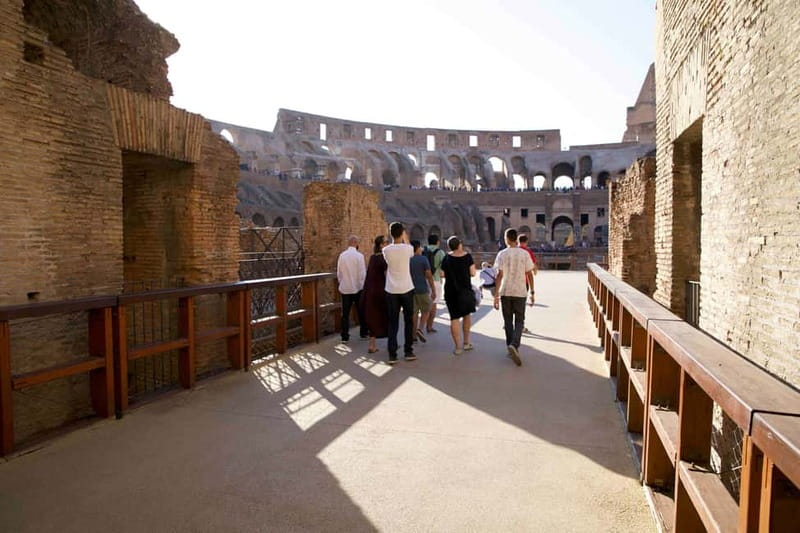
- The Colosseum visit lasts one hour, with stories about gladiators, animal fights, construction methods, and imperial propaganda.
- The Roman Forum and Palatine Hill receive one hour, covering the political, religious, and economic heart of Ancient Rome.
- Your ticket, guide, headset, taxes, and site admission are included, so the $63 price covers the main costs.
- You walk between meeting points and sites, including two listed 15-minute walks.
- Official ID is essential, and the name on your booking must match your identification.
- English, Spanish, and French tours are available, but the exact guide’s name is not provided in advance.
Why this Ancient Rome tour works well
Rome’s central archaeological area can feel confusing at first. You see broken columns, arches, temples, and broad stretches of stone, but without a guide, it is easy to miss what each place once meant. This tour gives you a clear route through the Colosseum, Roman Forum, and Palatine Hill in 2.5 hours.
That time frame is useful if you want a strong introduction without giving up an entire day. You get about one hour inside the Colosseum and another hour in the Forum and Palatine area. The remaining time covers walking, group organization, and entry procedures.
I would not call this a slow, wandering tour. It is a focused visit to Rome’s biggest ancient sights. You will hear the main stories, see important viewpoints, and get enough context to make a later independent visit more rewarding.
The advertised small-group format is another practical advantage. Exact group size is not provided, so you should not assume a tiny private-style outing. Still, a smaller group usually makes it easier to hear explanations through the supplied headset and stay connected to the guide.
More Ancient History Tours in Italy
- Colosseum: Underground and Ancient Rome Tour
★ 4.7 · 12,691 reviews - Colosseum & Ancient Rome with Arena Floor Option I Max 6 People
★ 5.0 · 3,306 reviews - Rome: Colosseum, Ancient Rome Tour or AudioGuided Tour
★ 4.4 · 2,879 reviews
Meeting at Via dei Fori Imperiali
The tour begins at Via dei Fori Imperiali, 25, in front of the Tourist Information Point at the Imperial Forums. Look for coordinators wearing The Ultimate Italy T-shirts.
This is a busy part of central Rome, so give yourself plenty of time. The meeting instructions require you to check in at least 30 minutes before departure. That is not a suggestion to ignore. Colosseum reservations run on strict time slots, and arriving late can mean missing the group.
You will walk from the meeting point toward the Colosseum. The stated walk takes about 15 minutes. Wear comfortable shoes, since the route includes outdoor walking and the archaeological sites have uneven historic surfaces.
Bring your passport or official identification. Security staff require an official ID for every participant, and the name used during booking must match the name on the document. This rule can affect children and adults alike, so check the booking details before leaving your hotel.
Inside the Colosseum for one focused hour
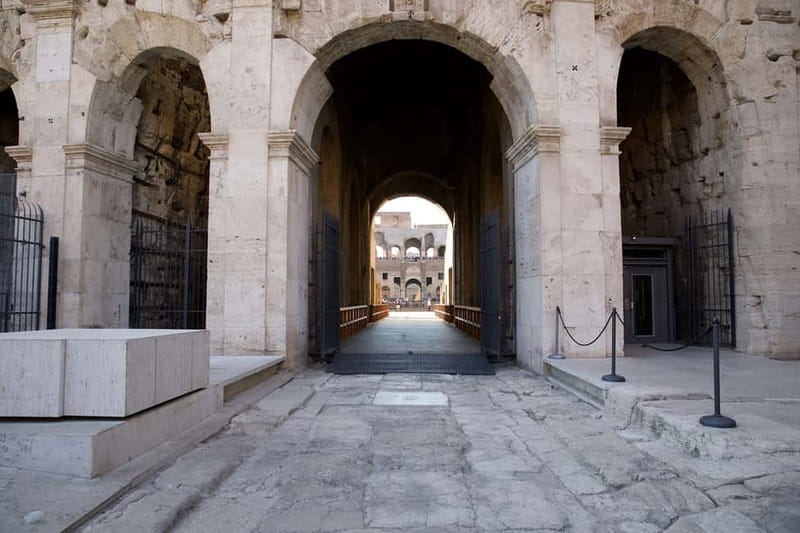
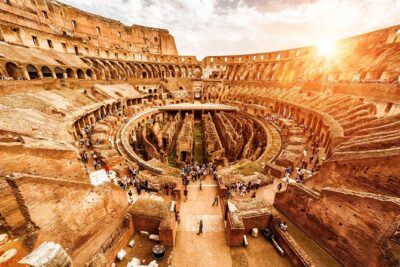
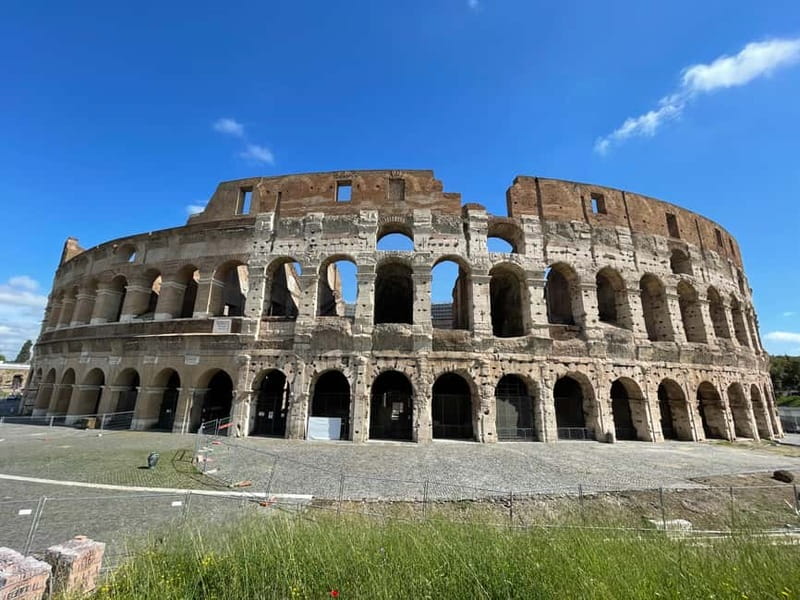
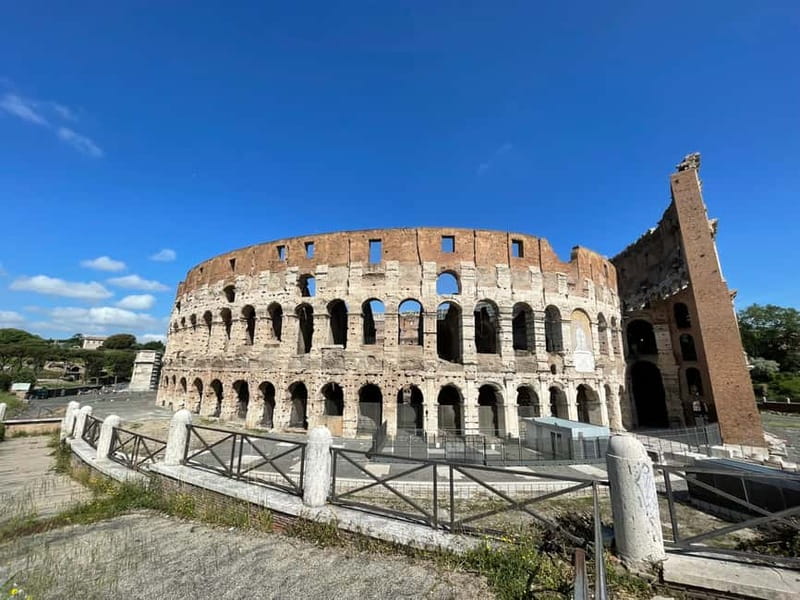
The Colosseum dates from 72 AD and remains Rome’s most recognizable ancient monument. Its size is impressive even before you hear the stories. The tour gives you a guided hour inside the building, with attention to how the Romans planned and built it.
The guide explains construction techniques developed and used by the Ancient Romans. That helps you look past the familiar outer arches and notice the engineering behind the arena. The building was designed to move large numbers of people through its entrances and seating areas, while its structure supported a huge public venue.
The human stories are central to the visit. You will hear about gladiators who fought in front of packed crowds, as well as contests involving exotic animals. These were not casual entertainments. They were carefully organized public events, tied to status, money, imperial authority, and the desire to control public opinion.
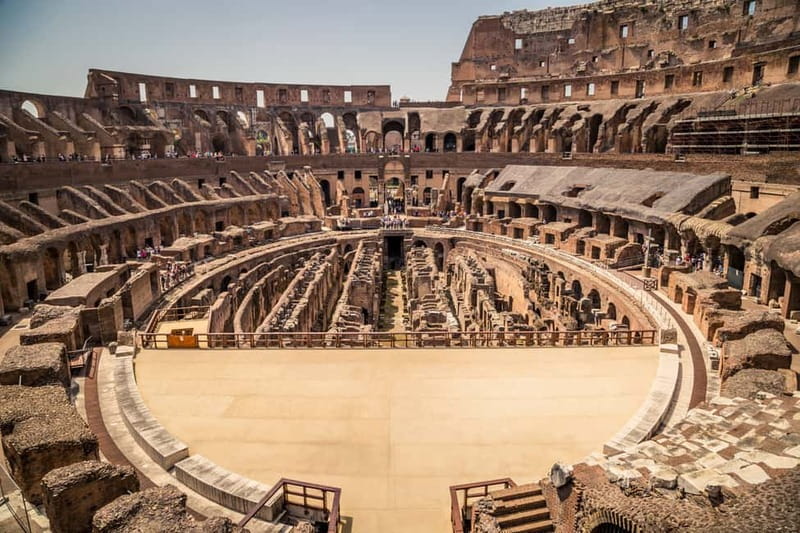
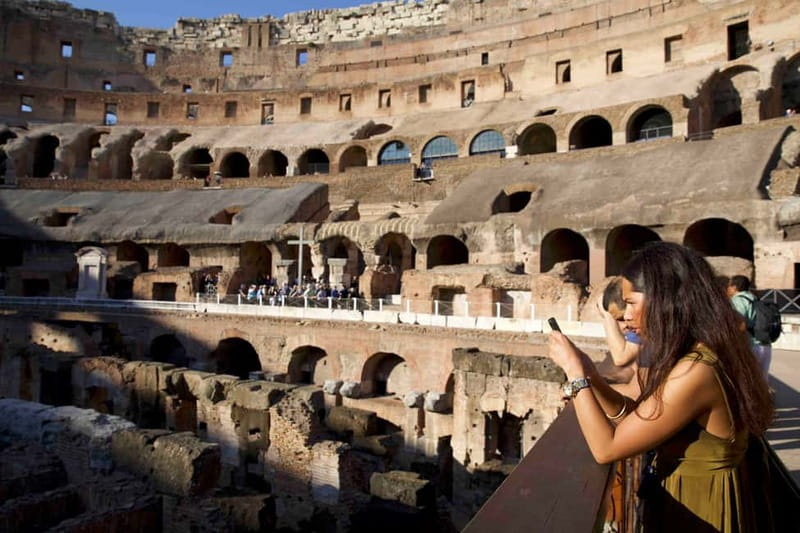
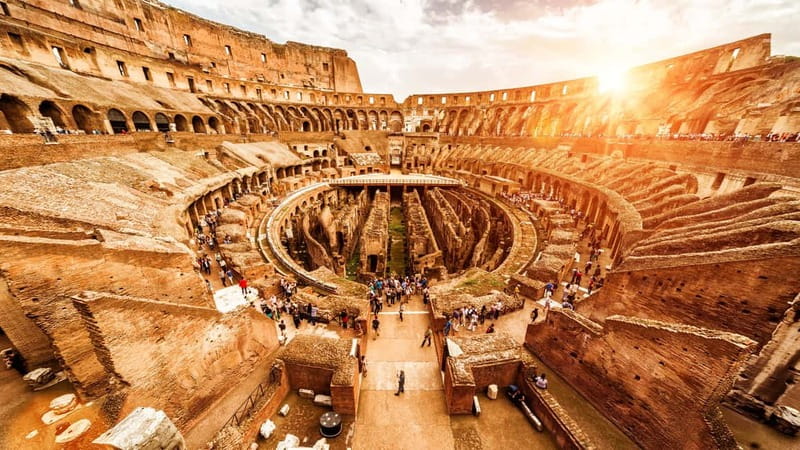
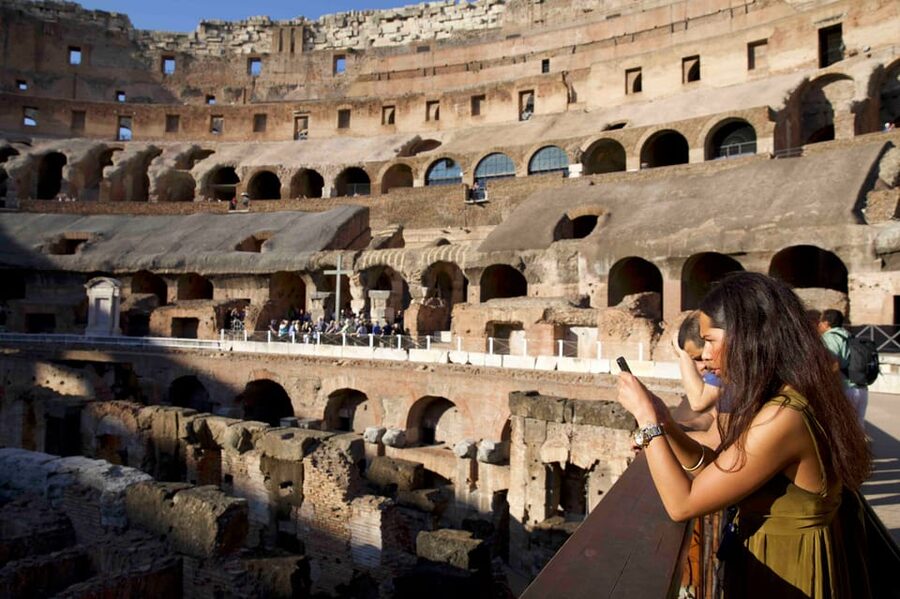
You will see the areas connected with the gladiators preparing for combat and the seating areas where spectators watched the games. The guide’s job here is to help you picture the contrast: men facing deadly violence below, while the audience watched from carefully arranged tiers above.
The tour also addresses political propaganda. Emperors could use the games to display generosity and strength. Funding a grand arena and staging lavish events helped rulers present themselves as protectors of the people. At the same time, public spectacle could distract from political tensions and reinforce the emperor’s claim to glory.
That political angle gives the Colosseum visit more weight. It moves the conversation beyond gladiators and bloodshed. You begin to see the arena as a machine for entertainment and power.
One hour is enough for a strong introduction, but it is not enough to examine every architectural feature at length. If you are especially interested in Roman engineering or the details of the arena’s underground systems, you may want a separate visit with more time. For most first-time visitors, the guided format keeps the experience moving and prevents you from getting lost in the scale of the monument.
Walking into the Roman Forum
After the Colosseum, the tour continues on foot. Another listed walking segment takes about 15 minutes before the guided visit to the Roman Forum.
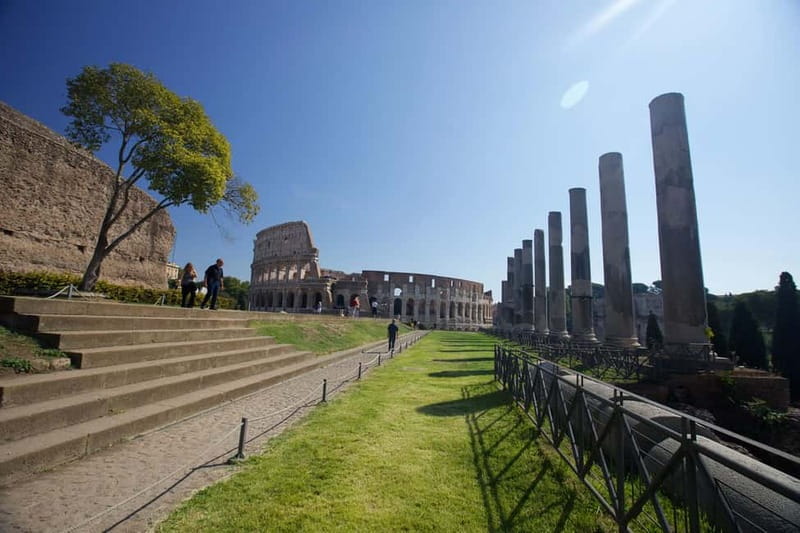
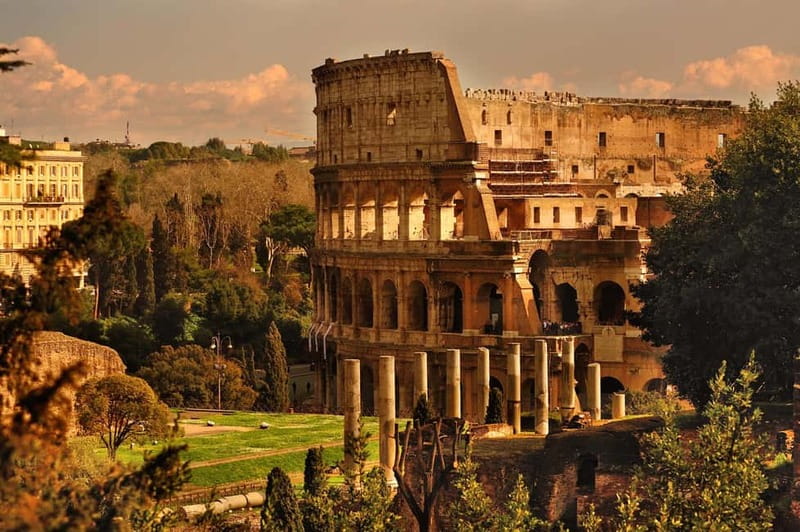
The Forum was the downtown of ancient Rome. It served as the political, economic, and religious center of the city. This is where the grand public business of Roman life took place, and the ruins make more sense once you know how those functions fit together.
The Forum can be hard to read on your own. A column may be part of a temple, basilica, or public monument, but the difference is not always obvious from the remains. Your guide provides the framework, pointing out what happened in the area and how Romans used it.
You will learn about everyday Roman life as well as major public events. The tour also considers what Romans enjoyed most, adding a social angle to the more familiar stories of emperors and military victories.
This hour is likely to feel different from the Colosseum. The arena has a clear shape and a powerful visual identity. The Forum is more open and scattered, with ruins spread across a broad archaeological area. You need to listen closely and keep an eye on the guide.
That is where the headset matters. Outdoor ruins can be noisy, and the group may spread out while walking. The headset helps you hear the explanation without standing directly beside the guide every second.
The Forum portion received particular praise in the available feedback, including a French-language comment highlighting the Forum and part of Palatine Hill. That matches my own sense of where guided help matters most in this tour. The Colosseum makes an instant impression, but the Forum benefits greatly from someone explaining what you are seeing.
More Ancient History Tours in Rome
- Colosseum Underground & Ancient Rome Guided Tour
★ 4.5 · 2,590 reviews - Pantheon Elite Guided Tour – Rome’s Iconic Ancient Temple
★ 5.0 · 1,447 reviews - Ancient Rome: Colosseum Underground Group Tour
★ 4.5 · 1,059 reviews - Colosseum Express Guided Tour and Ancient Rome Admission Included
★ 4.0 · 1,008 reviews
Palatine Hill and the views over Rome
Palatine Hill forms part of the same one-hour guided section as the Roman Forum. The hill is tied to the imperial palaces and offers some of the best elevated views over the ancient area and the modern city.
The tour includes the chance to see the remains of the imperial palace and look out over Rome. These stops give you a useful change of pace after the denser ruins of the Forum. They also help explain why the hill mattered. This was not simply an attractive place to walk. It was connected with imperial power and elite life.
You should expect walking uphill and across an archaeological site. That is one reason the tour is not suitable for people with mobility impairments or wheelchair users. The route is not described as accessible, and the provider specifically excludes those who need wheelchair access.
The guide will also point out locations for photographs. That is a small but worthwhile benefit. The Forum and Palatine Hill offer broad views and layers of ancient masonry, but the best angle is not always obvious when you are moving with a group.
Keep your camera ready, but do not let photographs replace the explanation. The value of this part of the tour comes from connecting the views with the social structure of Rome: public life below, imperial power above, and the Forum tying the city together.
What the $63 price includes
At $63 per person, this tour is priced as a guided introduction rather than a bare admission ticket. Your fee includes a professional guide, a headset, taxes, and admission to the sites.
The value depends on how much help you want. If you prefer to move independently and read signs at your own pace, you may find the fixed schedule less appealing. You are paying for the guide’s structure and explanations as much as for entry.
For a first visit, I think the price is reasonable because it covers three major ancient sites in 2.5 hours. You avoid having to organize separate admission and a route between the Colosseum and Forum. The headset is also useful in a busy outdoor setting.
Food, drinks, hotel pickup, and drop-off are not included. Plan to eat before or after the tour and make your own way to the meeting point. Since the meeting point is in central Rome, you should also allow time to reach it before the 30-minute check-in deadline.
The non-refundable policy deserves attention. You should book only when your Rome schedule is firm. The tour runs in rain or shine unless officials close the monument for safety reasons, so bring suitable clothing and do not expect ordinary bad weather to cancel the visit.
Language, group pace, and practical comfort
Tours are available in English, Spanish, and French. The guide’s name is not supplied in advance, so choose the language that lets you follow historical explanations comfortably.
The pace is likely to be steady. You have several major sites to cover, and the schedule includes walking between them. Comfortable shoes are essential, not just a nice extra.
Do not bring pets, luggage, large bags, or backpacks. The security checks at site entrances are mandatory, and waits can become considerable during busy periods. Those checks are separate from the ticket line, so even a reserved tour can take longer to enter.
The tour is not designed for unaccompanied minors. Families should plan for an adult to accompany younger participants. Every person entering the monument must have official ID.
The group will follow the scheduled departure time even if you are delayed. Arrive early, find the coordinators in the identifying T-shirts, and keep your documents easy to reach.
Who should book this tour?
I would choose this tour if you are visiting Rome for the first time and want the major Ancient Rome sights explained in a compact morning or afternoon. It suits you especially well if you like history presented through stories of people, power, public life, and political motives.
It is also a good fit if the Forum feels intimidating. The ruins can be difficult to interpret without help, and the guide gives you a clear sequence through the archaeological park.
You may want a different option if you need wheelchair access, dislike fixed schedules, or prefer long stretches of quiet independent exploration. The tour is non-refundable, has strict entry timing, and does not allow large bags or backpacks.
The strongest reason to book is the connection between the monuments. You see the Colosseum as a place of spectacle, the Forum as the center of Roman civic life, and Palatine Hill as a seat of imperial power. That three-part story gives you a much better grasp of Ancient Rome than a quick photo stop at the arena alone.
Should you book the Colosseum and Ancient Rome tour?
Book it if you want a guided introduction to the Colosseum, Forum, and Palatine Hill without spending a full day on the archaeological park. The $63 fee includes admission, a professional guide, and a headset, and the small-group setup should keep the explanations more personal than a large crowd tour.
Skip it if your schedule is uncertain, since the activity is non-refundable, or if you need an accessible route. For everyone else, arrive early with matching official ID, wear good shoes, and give the Forum and Palatine Hill as much attention as the famous arena. Those quieter ruins are where the tour’s wider story of Rome comes together.
FAQ
How long does the tour last?
The tour lasts 2.5 hours. It includes a one-hour guided visit to the Colosseum, a one-hour guided visit to the Roman Forum and Palatine Hill, and walking time between locations.
Where is the meeting point?
Meet at Via dei Fori Imperiali, 25, 00186 Rome, in front of the Tourist Information Point at Fori Imperiali. Coordinators wear The Ultimate Italy T-shirts.
How early should I arrive?
You must arrive at the meeting point at least 30 minutes before the scheduled departure time for check-in. The tour uses strict timed reservations.
Is official identification required?
Yes. Every participant must bring an official passport or ID card. The name entered during booking must match the identification shown at the Colosseum entrance.
Which languages are available?
The live guide is available in English, Spanish, and French.
Can wheelchair users join the tour?
No. The tour is not suitable for wheelchair users or people with mobility impairments.
More Small-Group History Tours in Rome
- Rome: Trastevere street food and history tour – small group
★ 5.0 · 58 reviews
More Small-Group History Tours in Italy
- VIP Colosseum Underground and Ancient Rome Small Group Tour
★ 4.5 · 332 reviews - Small-Group Rome to Pompeii & Amalfi: Day of History & Sea
★ 5.0 · 239 reviews - Colosseum Forum Ancient Rome Small Group Tour for Kids Families
★ 5.0 · 198 reviews - Secrets of Rome: Historical True Crime Small Group Tour
★ 4.9 · 85 reviews
Newest history tours we have reviewed in Rome
- Rome: Colosseum and Ancient Rome Guided Walking Tour★ 4.5 · 95 reviews
- Secrets of Rome: Historical True Crime Small Group Tour★ 4.9 · 85 reviews
- Rome: Private Colosseum Experience and Ancient Ruins Tour★ 4.6 · 25 reviews
- Rome Secrets: Dark History & Tasty Bites Tour★ 5.0 · 37 reviews
- Rome: Introduction to the Colosseum and Ancient City Tour★ 4.8 · 75 reviews
- Rome: Guided Tour of Colosseum and Ancient Rome★ 4.9 · 74 reviews
- Rome: Rome at Night Evening Historical Walking Tour★ 4.9 · 24 reviews
- Rome: Guided Group Colosseum & Ancient City Tour★ 4.8 · 62 reviews
Ancient Rome & Colosseum Tours, compared.
Colosseum: Underground and Ancient Rome Tour
Read our review →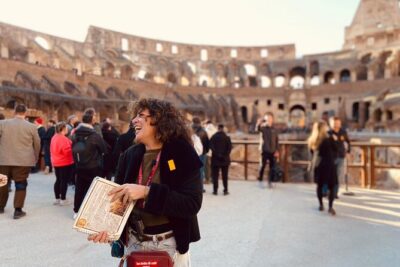
Colosseum with Arena, Roman Forum and Palatine Guided Tour
Read our review →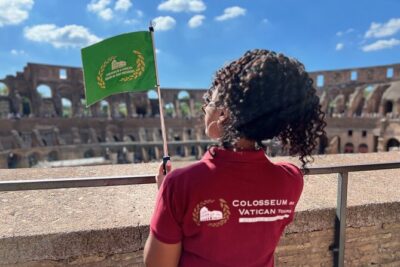
Colosseum with Arena, Roman Forum and Palatine Hill Guided Tour
Read our review →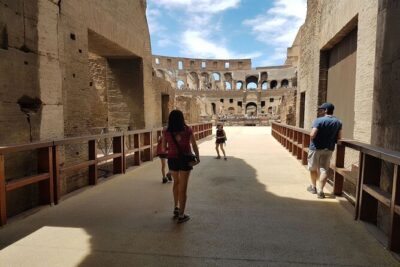
Colosseum & Ancient Rome with Arena Floor Option I Max 6 People
Read our review →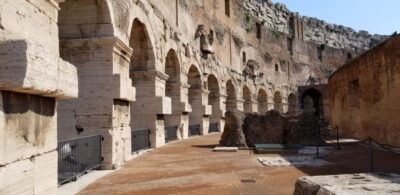
Colosseum, Ancient Rome Tour or AudioGuided Tour
Read our review →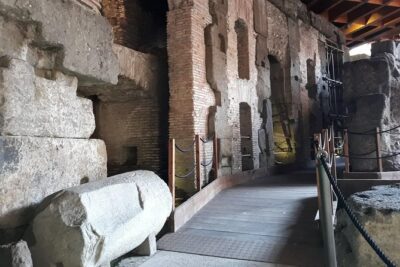
Colosseum Underground & Ancient Rome Guided Tour
Read our review →
Colosseum Arena, Roman Forum & Palatine Hill Tour
Read our review →