
Review · SAVANNAH HISTORY TOURS
History of Savannah Walking Tour
Savannah’s city plan is the real star of this tour. You’ll walk from Chippewa Square to Forsyth Park through a chain of historic squares, streets, homes, churches, and a cemetery, learning how the city’s 1733 design shaped daily life long after James Oglethorpe founded Georgia’s first city. Sarah, the guide, brings the story together with clear explanations and plenty of room for questions.
I like two things here: the small-group format, which makes it easier to hear and ask questions, and the relaxed 90-minute pace, with shaded stops instead of a hard march through the heat. The main consideration is simple: the tour stays outside, and museum admission is not included, so you’ll need a separate visit if you want to go inside the Owens-Thomas House or Mercer-Williams House.
Key points about this Savannah walk
- A city plan you can understand: Follow Savannah’s original square system rather than seeing isolated sights.
- History beyond pretty buildings: Learn about Native communities, slavery, Irish immigration, the Civil War, and Savannah’s founding.
- Sarah’s personal guidance: Expect a friendly, articulate guide who welcomes detailed and even offbeat questions.
- A comfortable route: The walking is paced at 90 minutes, with shaded stops along the way.
- A useful first-day tour: Finish at Forsyth Park with a better sense of how to explore Savannah independently.
- $35 value: The price covers the guided walk, but not entry to any museum.
Why Savannah’s squares make a better classroom
Savannah can look effortless at first glance: mossy trees, handsome buildings, broad streets, and elegant squares. Yet the city makes much more sense once you understand its plan. This tour uses the squares as stepping stones through time, showing you how public spaces, homes, churches, cemeteries, and government buildings fit together.
You begin in Chippewa Square, where Sarah introduces James Oglethorpe and the founding of Savannah in 1733. The square gives you an immediate sense of the city’s scale and design. Rather than beginning with a long lecture, the tour puts the story under your feet, then builds outward as you walk.
I especially like this approach for a first visit. You are not simply collecting names and dates. You are learning how Savannah’s layout helped organize colonial life, shaped later growth, and still guides the way you move around the Historic District today.
The small group matters here. Savannah’s streets can be noisy, and a guide’s point can disappear quickly when a group is too large. With a limited group, you can hear Sarah more easily and stop her when a detail catches your attention.
More History Walking Tours in Savannah
- Savannah History and Haunts Candlelit Ghost Walking Tour
★ 5.0 · 3,235 reviews - Historic Savannah Guided Walking Tour
★ 5.0 · 2,918 reviews - Southern Flavors Food, Pub Crawl, and History Walking Tour
★ 4.5 · 1,623 reviews
Chippewa Square and the founding of Georgia
Chippewa Square is the meeting point, and Sarah waits in the center, in front of the large statue, wearing a Tour Guide Lanyard. That detail makes the start easy to manage, especially if you are unfamiliar with Savannah’s squares.
The opening discussion centers on Oglethorpe and the founding of Savannah. You’ll get the basic framework for the city’s early years before moving toward Wright Square and Oglethorpe Square. This part is useful because it gives the rest of the walk a clear timeline.
Do not expect an in-depth visit inside a historic building at this stage. The value is in the outdoor setting and the way the guide connects the physical city to its origins.
Wright Square, Tomochichi, and the Yamacraw
At Wright Square, the story shifts from colonial planning to the people who made the new settlement possible. Sarah discusses Tomochichi and the Yamacraw, whose role was vital to the colony’s early success.
This is an important correction to the usual version of Savannah’s founding. A quick city walk can make Oglethorpe seem like the whole story. Here, you learn that the colony’s survival and development depended on relationships with local Native people.
The stop also shows why a guided walk can add value to a city that is easy to admire from the outside. You can photograph a square on your own, but you may miss the political and human history connected to it.
Oglethorpe Square and Savannah’s design
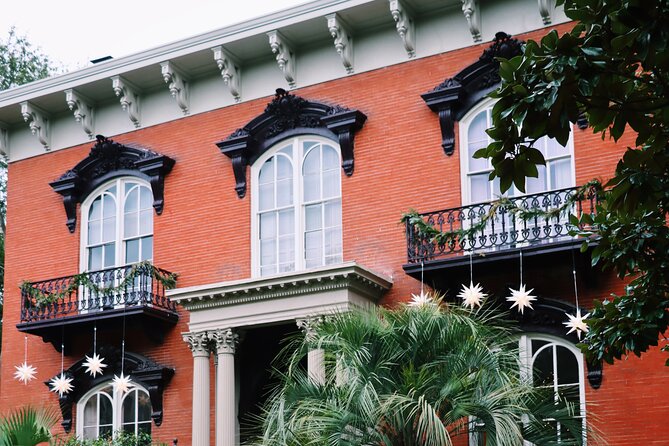
Oglethorpe Square keeps the focus on Savannah’s unusual plan. As you move between squares, you begin to see repeated patterns in the streets and open spaces.
The tour does not treat urban design as a dry technical subject. Instead, it uses the streets themselves to explain how Savannah was organized. That makes the information easier to remember, since you are seeing the plan while hearing about it.
The walk is also intentionally unhurried. You will not be rushed from one address to the next, and the frequent shaded stops are welcome in warm weather. Still, this is a walking tour, not a seated lecture, so comfortable shoes and sensible clothing remain a good idea.
More History Walking Tours in the USA
- Genteel and Bard’s Savannah Dark History and Ghost Encounter Walking Tour
★ 5.0 · 1,546 reviews - Heart of Savannah History Walking Tour – 2hr
★ 5.0 · 857 reviews - Creepy Crawl Night-Time Haunted Pub Walking Tour of Savannah’s Historic District
★ 4.5 · 802 reviews - Genteel and Bard’s Savannah History Walking Tour
★ 5.0 · 684 reviews
Owens-Thomas House and the realities of slavery
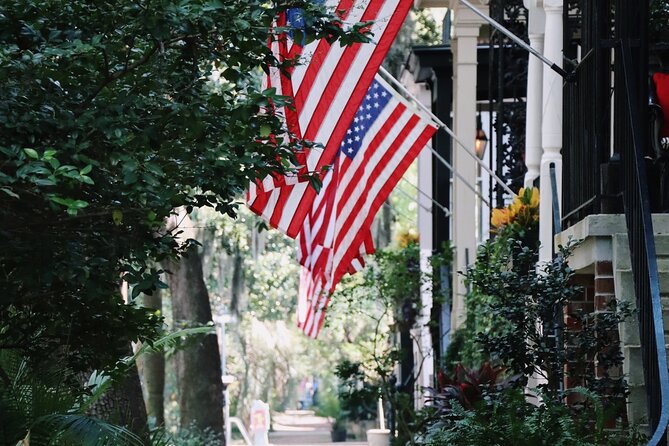
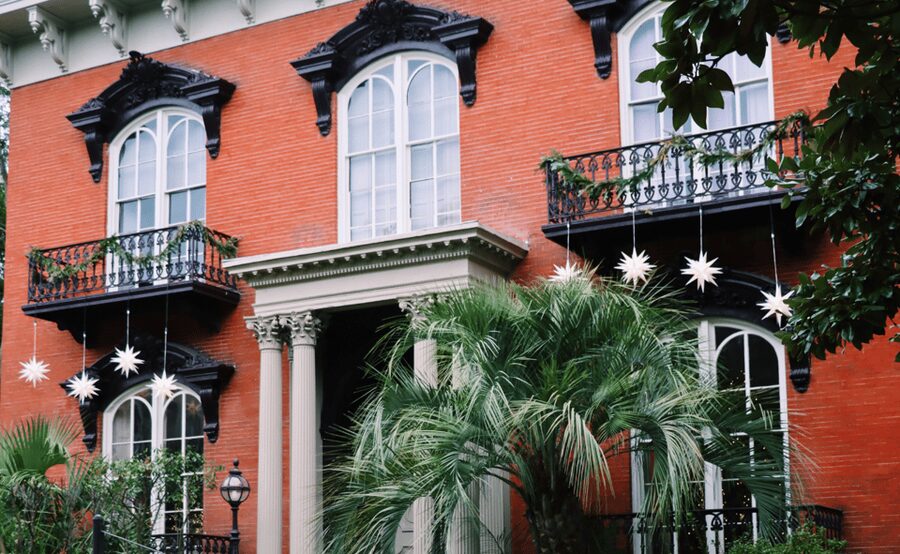
The Owens-Thomas House and Slave Quarters provide one of the tour’s most serious stops. From outside, you discuss how slavery shaped Savannah’s economy and daily life during the antebellum era.
That context matters. Savannah’s grand homes and carefully planned streets can create a polished picture of the past. This stop makes clear that the city’s wealth and social order rested on the labor and suffering of enslaved people.
You will not enter the museum as part of the tour. Admission to museums is not included, so consider this an introduction rather than a complete visit. If this subject interests you, you can return later for the interior experience, but the walking tour still gives you a necessary framework before you do.
Colonial Park Cemetery and the people behind the dates
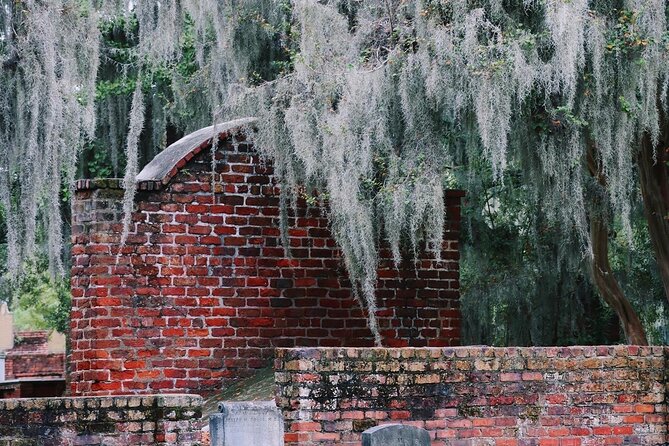
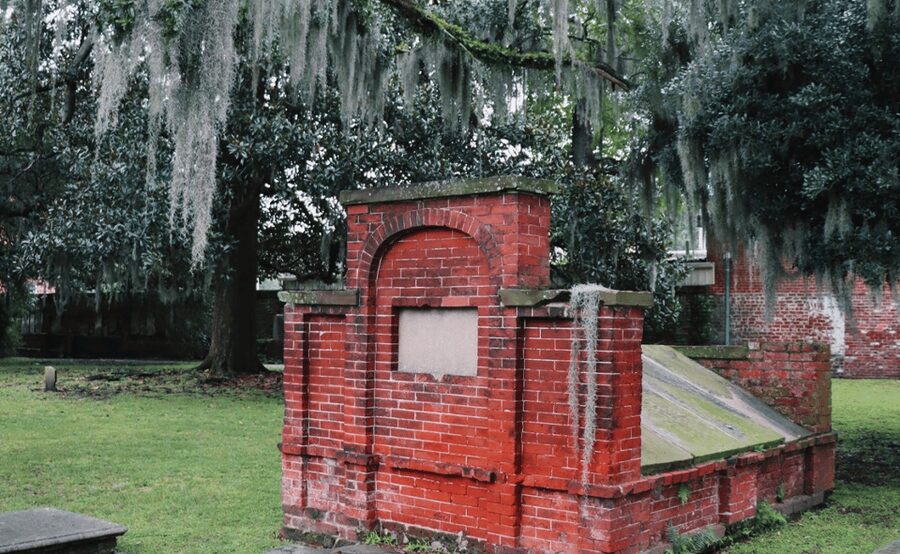
Colonial Park Cemetery adds a quieter, more personal layer to the walk. Here, Sarah discusses life and death in historic Savannah, including the city’s Victorian past.
Cemeteries are often where a city’s broad history becomes more human. Instead of hearing only about founders, generals, and famous families, you get a sense of how ordinary people and changing customs shaped Savannah over time.
The stop also breaks up the architecture-heavy parts of the route. You move from squares and houses into a place built around memory, mortality, and public remembrance. It is a useful change of pace, although anyone hoping for a long cemetery visit should remember that the full tour lasts only 90 minutes.
The Cathedral and Savannah’s Irish connection
The Cathedral of St. John the Baptist brings immigration and religion into the story. Sarah explains the influence of Savannah’s Irish community and how that community became part of the city’s identity.
The cathedral is a strong example of why the tour works best as a walk through several kinds of places. You see public squares, private homes, a cemetery, and a major religious building, each revealing a different part of Savannah’s past.
The tour focuses on interpretation from outside rather than museum-style interior viewing. If you want to spend time studying the cathedral’s inside, plan that separately. The walking route gives you the historical reason to care about the building before you return.
Green-Meldrim House and the Civil War
At Green-Meldrim House, the story moves to the Civil War. You learn how Savannah’s location and resources made it strategically important during the conflict.
This stop helps place Savannah within a larger national story. The city was not an isolated port with attractive old buildings. Its position mattered, and its buildings witnessed major changes in the country.
I appreciate that the tour covers the Civil War without allowing one period to swallow the whole experience. Savannah’s past stretches from the founding in 1733 through Native diplomacy, slavery, immigration, war, and later civic life. The route gives each period a place.
Jones Street and the pleasure of walking slowly
Jones Street is one of the prettiest parts of the route, often called the most beautiful street in America. That claim is subjective, but the street gives you a pleasant stretch of shaded walking among Savannah’s historic homes and architecture.
This is where the relaxed format pays off. You have enough time to look upward, notice details, and listen without feeling that you need to sprint to the next stop. Sarah’s explanations add meaning to what might otherwise be a quick photo stop.
It is also a useful reminder that Savannah’s appeal is not limited to famous squares. Some of the best moments come from moving between major landmarks and simply seeing how the residential streets connect them.
Monterey Square and the Mercer-Williams House
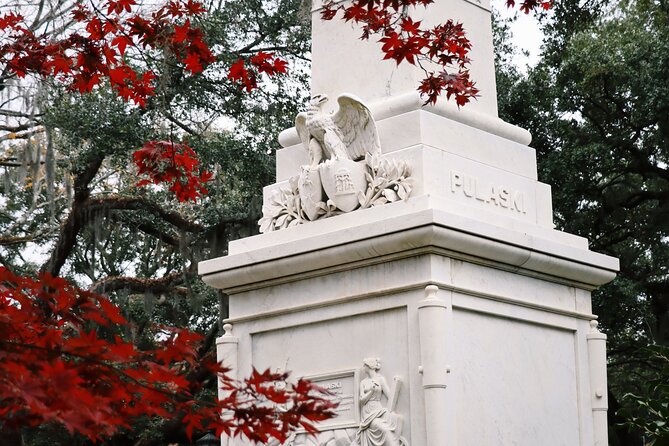
At Monterey Square, you learn about General Pulaski and the Mercer-Williams House. The square brings together military history, architecture, and one of Savannah’s best-known homes.
The Mercer-Williams House is especially familiar to many visitors because of its connection to Savannah’s popular cultural image. On this tour, it is treated as part of the city’s larger historical setting rather than as an isolated celebrity address.
Again, entry is not included. You’ll receive the outdoor history and setting during the walk, then decide if you want a separate museum visit. That can be a good arrangement if you prefer to choose only the interiors that interest you.
Finishing at Forsyth Park
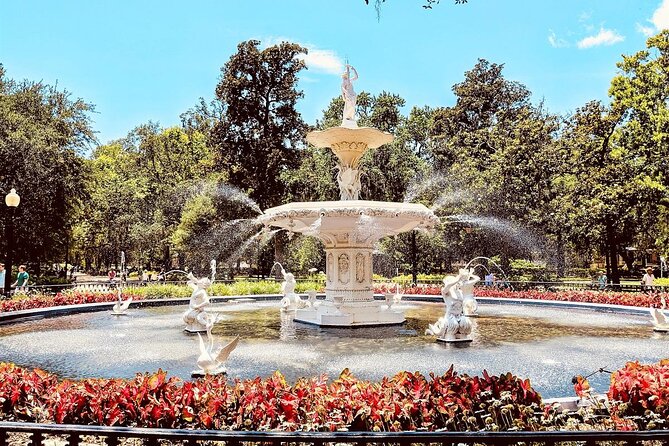
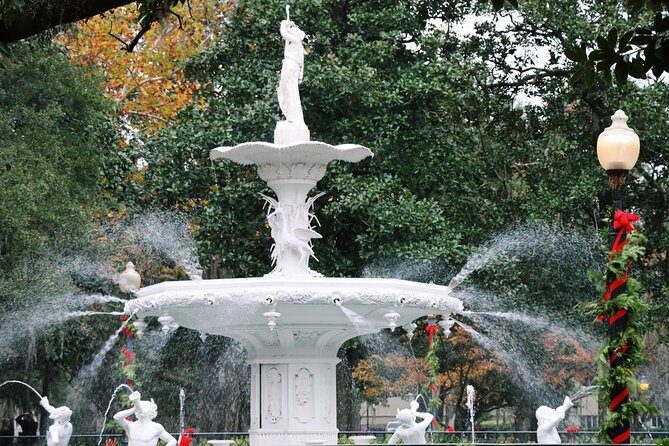
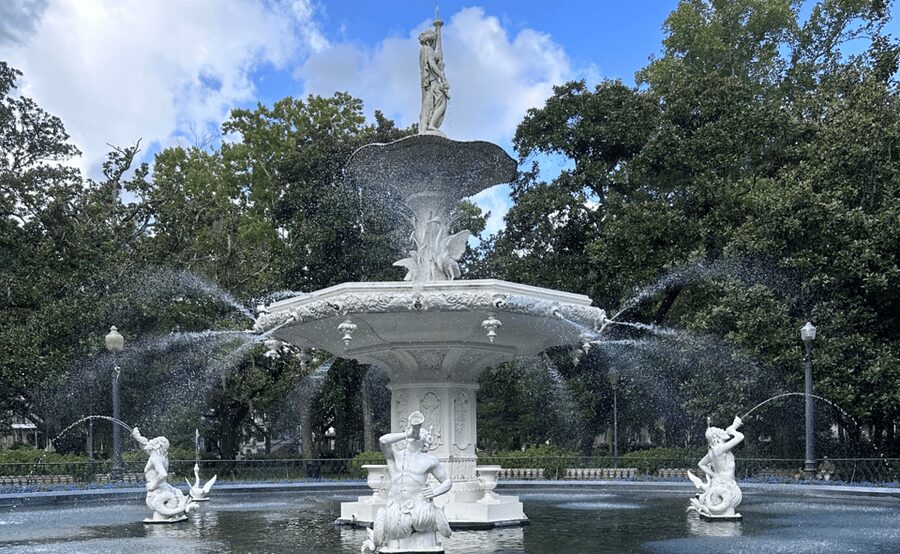
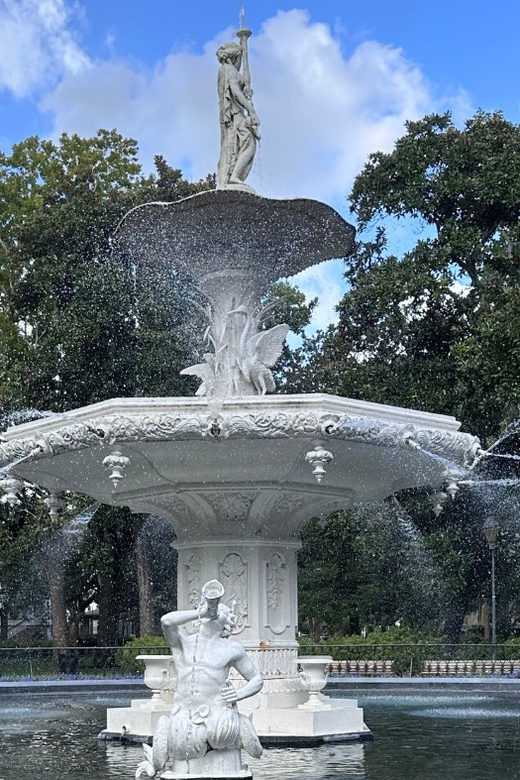
The walk ends at Forsyth Park, beside Savannah’s famous fountain. This is a satisfying finish because the park gives you room to pause after a route packed with names, events, and buildings.
By this point, you should have a better mental map of the Historic District. You can connect the squares, understand why certain buildings matter, and recognize the competing stories behind Savannah’s graceful appearance.
The ending is also practical. Forsyth Park is a natural place to continue your day, though the tour itself does not include additional activities there. Sarah’s recommendations can help you decide what to see next, and the people who praised the experience especially valued her suggestions for the rest of their time in Savannah.
What Sarah adds to the experience
Sarah is the strongest thread running through the tour. She is described as cheerful, organized, friendly, articulate, and well prepared. Just as important, she makes space for questions rather than treating the route as a fixed speech.
That matters if you have specific interests. You can ask about architecture, notable characters, the city’s founding, slavery, the Civil War, or details that come up naturally as you walk. Sarah has also been praised for handling unusual questions with good humor.
The tour has received a perfect 5.0 rating from 19 reviews, with repeated praise for Sarah’s clear storytelling and personal attention. That is a small sample, but the consistency is useful: the guide is not a minor part of the experience. She is the reason the route feels connected rather than like a list of stops.
Is $35 a fair price?
At $35 per person, this is a sensible price for a 90-minute guided walk, especially if Savannah is new to you. You are paying for a local guide, a planned route, historical context, and the chance to ask questions in a small group.
The value is strongest when you take the tour early in your stay. You’ll learn where the main squares and landmarks are, then use that knowledge to plan later visits. Sarah’s recommendations may also save you time when choosing what to see next.
The price is less attractive if you want lengthy interior visits. No museum entry is included, and the tour does not replace a dedicated museum experience. Think of it as a well-organized introduction to the city, not an all-inclusive sightseeing pass.
Who should book this walking tour?
I would choose this tour if you want Savannah’s history explained in plain language while you walk at an easy pace. It suits first-time visitors, history fans, couples, small groups, and anyone who prefers personal conversation over a large crowd.
It also works well for people who want more than architecture. The route addresses Tomochichi and the Yamacraw, slavery, Irish immigration, the Civil War, Savannah’s founding, and the city’s changing culture.
You may want something else if your priority is entering several museums, moving quickly through a long list of sights, or hearing the tour in a language other than English. The live guide speaks English, and the experience is entirely centered on walking outdoors.
Book it if you want to understand Savannah before exploring it on your own. Skip it only if you already know the Historic District well or want a tour built around interiors rather than streets and squares.
FAQ
How long is the History of Savannah Walking Tour?
The tour lasts 90 minutes.
How much does the tour cost?
The price is $35 per person.
Where does the tour begin?
Meet Sarah in Chippewa Square, in the center of the square in front of the large statue.
How will I recognize the guide?
Sarah will be wearing a Tour Guide Lanyard.
Where does the tour finish?
The walk finishes at Forsyth Park.
What language is the tour conducted in?
The live tour guide speaks English.
Are museum admissions included?
No. Entry to museums is not included in the tour price.
Can I cancel for a full refund?
Yes. You can cancel up to 24 hours in advance for a full refund.
Do I have to pay when I reserve?
No. The reserve now and pay later option lets you book your place without paying immediately.
Newest history tours we have reviewed in Savannah
- Savannah: Historic District Guided Bike Tour★ 4.8 · 47 reviews
- Savannah: Historical Panoramic City Tour★ 4.8 · 72 reviews
- Savannah: Historical Pub Crawl Tour with Drinks Included★ 3.9 · 34 reviews
- Savannah: History and Culture Walking Tour★ 4.6 · 149 reviews
- Savannah: Battles & Brews Civil War History Pub Crawl★ 4.4 · 36 reviews
- Savannah: African American History Tour★ 4.9 · 72 reviews
- Savannah: Historical Bike Tour with Tour Guide★ 4.8 · 140 reviews
- Savannah: History, Culture, & Scenic Views E-Bike Tour★ 5.0 · 69 reviews
History Walking Tours, compared.

History and Hauntings of Salem Guided Walking Tour
Read our review →

Freedom Trail History Small Group Walking Tour
Read our review →
Historic Charleston Guided Sightseeing Walking Tour
Read our review →
Tapas Walking Tour with Food, Wine, and History
Read our review →
Savannah History and Haunts Candlelit Ghost Walking Tour
Read our review →
A History of Terror – Belfast City Centre Walking Tour
Read our review →Browse the lists this tour appears in