
Review · CHICAGO HISTORY TOURS
Historic Homes and Cottages of Wicker Park Walking Tour
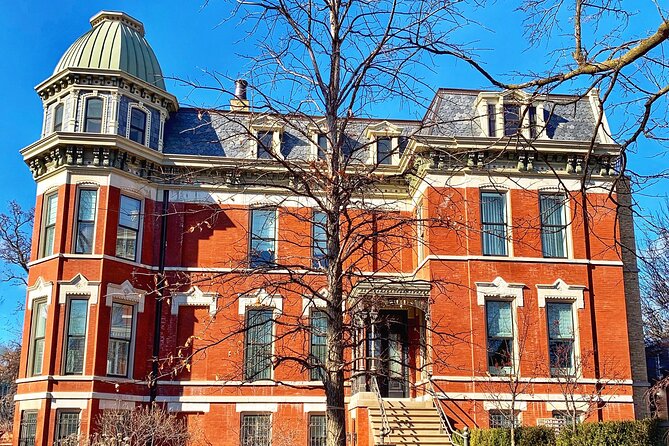
Wicker Park’s best stories may be told by small wooden cottages, not grand museums. On this walking tour, you follow quiet residential streets to see more than 40 workers’ cottages, along with mansions and other historic buildings that reveal how Chicago grew during the late 1800s.
I like the small group of no more than eight because it gives you a real chance to hear the guide and ask questions. I also like the use of the Atlas app, which adds photographs and information about the properties you see. The main caution is the walking: although the tour is listed as about 90 minutes, the route description calls it a two-hour-plus, three-mile walk, so you should allow extra time and be ready for a steady outing.
Key points to know before you book

- More than 40 workers’ cottages: See a Chicago building style that is easy to miss without local guidance.
- A walk through Wicker Park’s past: The route connects homes and streets to roughly 150 years of Chicago history.
- Ronnie leads the experience: His enthusiasm for architecture shapes the tour and adds context to each property.
- Atlas adds visual detail: Use photographs and property information as you move from stop to stop.
- Small group, maximum eight: This is a close-up neighborhood walk rather than a large group lecture.
- Three miles on foot: Plan for good weather, comfortable shoes, and a moderate fitness level.
Why Wicker Park’s workers’ cottages deserve your attention
Wicker Park is often associated with restaurants, shops, nightlife, and its well-known streets. This tour shifts your attention to the older residential blocks, where modest homes preserve a less obvious part of Chicago’s story.
The workers’ cottages are the main attraction. More than 40 appear along the route, and the point is not simply to count them. You get to compare the different styles in which they were designed and built, then consider how these homes fit into the city’s late-19th-century growth.
That matters because a small cottage can tell you something a mansion cannot. Mansions show wealth and ambition. Workers’ cottages point to ordinary households, practical housing, and the people who helped build and operate a growing city.
I like this approach because it puts architecture at eye level. You are not only looking at a famous landmark from a distance. You are examining a row of homes, noticing their scale and design, and hearing how they connect to Chicago’s past.
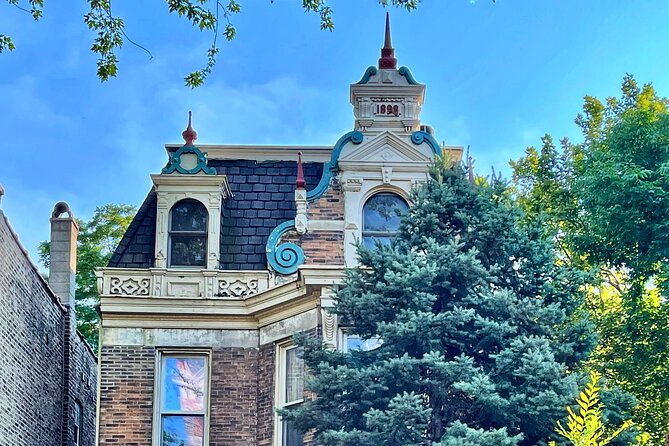
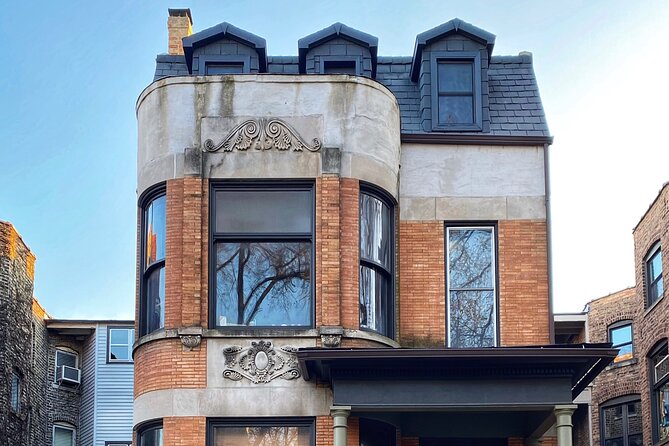
The route also includes more than 25 historic homes, mansions, and buildings beyond the cottages. That mix keeps the walk from becoming repetitive. One block may offer a compact workers’ home, while another brings a larger residence or a property with a different architectural character.
More History Walking Tours in the USA
- Chicago in a Day: Food, History & Architecture Walking Tour
★ 5.0 · 1,153 reviews - Chicago Walking Tour: Historic Treasures of Chicago
★ 5.0 · 362 reviews - Chicago Walking Tour: Historic Skyscrapers
★ 5.0 · 67 reviews
Ronnie’s architecture stories give the walk its shape
The guide named in the experience is Ronnie, and the strongest praise centers on his enthusiasm for architecture and Chicago history. That is important here. This is not simply a stroll through a pleasant neighborhood where you receive a list of addresses.
You need someone to explain why one house matters, what makes its design different, and how the surrounding streets fit into the city’s past. Ronnie’s role is to provide that context and connect individual properties to a wider story.
The information provided describes history reaching back 150 years and beyond. You can expect the conversation to move between buildings, local history, and the changes that shaped Wicker Park. The result should feel more like reading a neighborhood through its houses than checking off formal sights.
I also appreciate that the guide’s enthusiasm seems focused on the subject itself. Architecture walks work best when the guide can make ordinary details worth noticing. A cottage may not look dramatic at first glance. With the right explanation, its form and setting become much more interesting.
The small group helps here. With a maximum of eight people, you are less likely to lose the thread of the conversation or struggle to hear from the back. You can also ask about a particular property when something catches your eye.
The Atlas app adds photographs to the street view
The Atlas application is a useful part of this experience. It includes the stops, photographs, and additional information about the properties viewed during the walk.
That feature gives you a second way to understand the buildings. You see the house in front of you, then use the app to connect it with an image or extra detail. For an architecture tour, that can be especially helpful because the subject is visual. A photograph may show a feature that is hard to spot from the sidewalk, or help you remember a property after the tour ends.
I would not treat the app as a replacement for Ronnie. Its value is in supporting the live explanation. Ronnie supplies the human connection and historical context, while Atlas gives you a visual reference point.
It also helps if you like to keep track of what you have seen. The tour covers many properties, so a list of stops and photographs can make the experience easier to follow. You may find the app most useful during or just after the walk, while the buildings are still fresh in your mind.
What the Wicker Park route includes
The listed starting point is 1237 N Hoyne Ave, Chicago, Illinois 60622. The tour begins at 6:00 p.m., which places the walk in the early evening rather than the middle of the day.
The route ends at 2001 W Division St, at a four-story red-brick historic building on the corner of West Division Avenue and North Damen Avenue. That gives the walk a clear point-to-point shape rather than sending you back to the starting address.
The central stop is Wicker Park itself and its surrounding residential streets. The route description emphasizes the cottages, but it also includes historic homes, mansions, and buildings. You should expect the interest to come from the sequence of properties and the explanations between them, not from entering a single museum or house.
The tour is described in two different ways: the general details give an approximate duration of one hour and 30 minutes, while the route note calls it a two-hour-plus, three-mile walk. That is a meaningful difference. If you have a dinner booking, train connection, or evening event, leave a generous buffer and confirm the current timing before you go.
The route is also described as including a one-hour stop, but the full walking note makes clear that the overall outing may last much longer. I would plan around the longer estimate. It is better to finish early than to spend the final part of the walk watching the clock.
More History Walking Tours in Chicago:
- History and Hauntings of Salem Guided Walking Tour
★ 5.0 · 14,564 reviews - Lisbon: History, Stories and Lifestyle Walking Tour
★ 4.8 · 10,902 reviews - Boston: Freedom Trail History Small Group Walking Tour
★ 5.0 · 6,450 reviews - Historic Charleston Guided Sightseeing Walking Tour
★ 5.0 · 6,216 reviews
What makes the cottages more than a photo stop
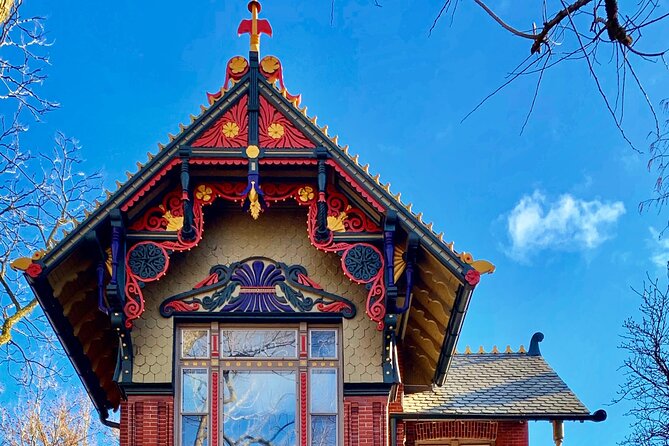
The cottages are valuable because they show a Chicago architectural style that many people would pass without a second thought. Their appeal is not only visual. They offer a way to understand how homes were designed for working households during a period of major city growth.
You will see different styles and construction approaches rather than one identical pattern repeated down a street. That variety gives the guide something specific to point out. You can compare proportions, details, and the way each house relates to its neighbors.
The tour also helps you see Wicker Park as a lived-in neighborhood instead of a collection of entertainment venues. The historic buildings are part of ordinary streets, which makes the experience feel grounded. You are walking through a real residential setting, looking at architecture where it belongs.
For me, that is the strongest reason to book. You leave with a better sense of how Chicago’s past survives in small details. The experience does not depend on a single famous landmark. It depends on learning how to look.
Mansions and historic buildings add contrast
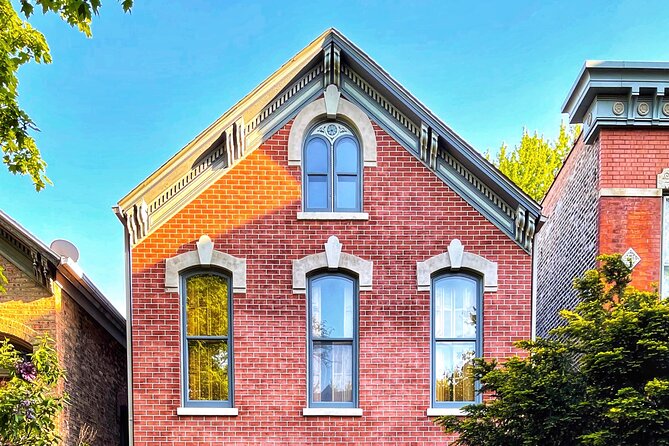
If the tour covered only workers’ cottages, the subject might become narrow. The larger homes, mansions, and additional historic buildings give you contrast.
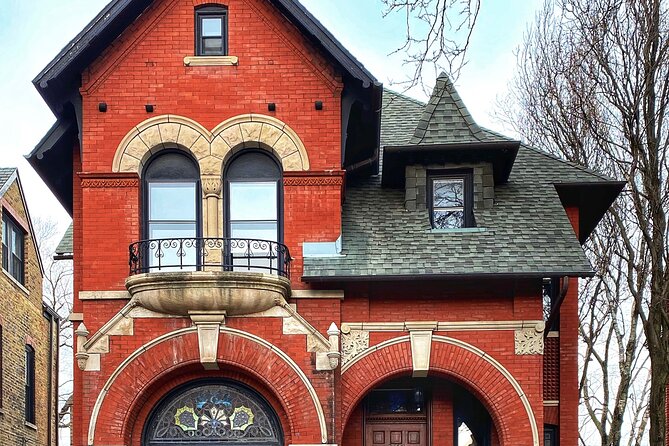
A mansion can show a different level of money, scale, and social position. Set beside smaller homes, it helps you think about the people who lived in the same part of the city and how their homes reflected their circumstances.
The route includes more than 25 historic homes, mansions, and buildings in addition to the cottage focus. That is a substantial amount to see during a walking tour, so the pace may feel active. You are not spending a long time inside one property. You are moving through the district and building an overall picture.
This variety also makes the experience suitable for people who already know a little about Chicago architecture. You do not need to be an expert, but the walk offers more than a basic overview of one building type.
A small group changes the feel of the experience

Eight people is a useful maximum for a city walking tour. You remain close to the guide, and the group should be easier to manage on residential streets than a large crowd.
The smaller format also suits the subject. The cottages are viewed from the street, so you need to hear the explanation and have a clear view of the property. A large group could make that awkward. Here, you should have a better chance to stand near the relevant building and follow the guide’s comments.
There is a tradeoff. A small-group tour can feel more dependent on the guide and the group’s pace. If the discussion becomes lively, the walk may run longer. If you prefer to move quickly and take photos without stopping, this may feel slower than exploring independently.
For most people interested in local architecture, the tradeoff is worthwhile. The experience is designed around interpretation, not simply walking from one address to another.
Price and value at $45
At $45 per person, this is priced as a focused specialist walk rather than a basic neighborhood orientation. The value depends on how much you want from the architecture and history.
If you simply want to wander Wicker Park, you can do that without paying. The fee earns its keep through the guide’s research, the route through more than 40 cottages, the additional historic properties, the small group, and the Atlas app.
I think the price is reasonable for someone who wants the neighborhood explained. You are not paying for admission to a major attraction, since the route is outdoors and the listed admission at the stop is free. You are paying for access to a carefully chosen walk and for the stories that help you understand what you are seeing.
The value is also stronger if you enjoy architecture enough to notice differences between homes. If your main interest is shopping, food, or nightlife, the tour may not be the best use of $45. Its appeal is specific and fairly focused.
The experience is offered in English, with a mobile ticket. Confirmation arrives when you book, and the tour is limited to eight people.
Timing, weather, and the physical demands
The 6:00 p.m. start makes this an evening activity. That can work well if you want to spend the day elsewhere in Chicago and set aside the early evening for a neighborhood walk.
Good weather is required. If poor weather cancels the experience, you are offered a different date or a full refund. Since the walk is outdoors and covers about three miles, that policy makes sense.
The physical requirement deserves careful attention. The route note describes a two-hour-plus walk and says it is not suitable for most children under 13 or adults with health issues. A moderate fitness level is expected.
Wear comfortable shoes and avoid scheduling this immediately before another activity that requires you to be fresh. The tour is not presented as a casual five-minute stroll between attractions. You are walking through a neighborhood for a sustained period.
Service animals are allowed, and the meeting area is near public transportation. Those details make arrival easier, but the route’s length remains the main practical issue.
Who will enjoy this walk most
I would recommend this tour to you if you enjoy:
- Residential architecture and old city neighborhoods
- Chicago history told through buildings
- Small groups and guide-led walking
- Finding details beyond the usual major attractions
- Comparing modest homes with larger historic properties
- Using photographs and property notes to support what you see
It is especially good for repeat visitors who have already seen central Chicago’s headline attractions. Wicker Park gives you a different view of the city, and the cottage focus offers a subject that is easy to miss on your own.
It may be less suitable if you dislike walking, need a tightly fixed schedule, or want to enter historic houses rather than view them from the street. The experience is also not aimed at most children under 13, and adults with health concerns should think carefully about the distance and duration.
Booking details and the cancellation rule
The tour is non-refundable and cannot be changed after booking. If you cancel or request an amendment, the amount paid is not refunded.
The exceptions are cancellations made by the operator because of poor weather or because the minimum number of participants is not met. In those cases, you are offered another date or experience, or a full refund.
That makes it wise to book only when your schedule is firm. It is also worth checking the weather before committing, especially because the experience depends on an outdoor route.
Should you book the Wicker Park cottages tour?
Book it if you want to see Chicago through its residential architecture rather than through its biggest landmarks. The combination of more than 40 workers’ cottages, more than 25 additional historic homes and buildings, Ronnie’s architecture stories, and the Atlas app gives the walk a clear purpose.
I would be cautious if you are counting on a 90-minute outing. The supplied timing is inconsistent, and the route description calls it a two-hour-plus, three-mile walk. Plan for the longer version.
For the right audience, $45 is a fair price for a small, focused look at Wicker Park. You get the most from it when you are curious about how ordinary homes preserve the story of a city.
FAQ
Where does the tour start?
The tour starts at 1237 N Hoyne Ave, Chicago, Illinois 60622.
What time does the tour begin?
The listed start time is 6:00 p.m.
Where does the tour end?
It ends at 2001 W Division St, at a four-story red-brick historic building on the corner of West Division Avenue and North Damen Avenue.
How long is the tour?
The general duration is listed as approximately one hour and 30 minutes. The route note describes it as a two-hour-plus, three-mile walking tour, so you should allow extra time.
How far do you walk?
The route description gives a distance of about three miles.
How many people can join the tour?
The maximum group size is eight people.
What will I see on the walk?
You will see more than 40 workers’ cottages in Wicker Park, along with more than 25 historic homes, mansions, and buildings.
Is the tour offered in English?
Yes. The experience is offered in English.
Is the tour suitable for children?
The route is not suitable for most children under 13 because of its length and walking demands.
What happens if bad weather cancels the tour?
You are offered a different date or a full refund if poor weather causes the cancellation.
Is the tour accessible by public transportation?
The meeting area is near public transportation.
Are service animals allowed?
Yes, service animals are allowed.
Newest history tours we have reviewed in Chicago
- Chicago River Architecture Tour Aboard a Historic Yacht★ 5.0 · 45 reviews
- Historical and Architectural Chicago Fireboat River & Lake Cruise★ 5.0 · 246 reviews
- Walkin’ with Colin: Chicago History-Mystery-Comedy-Tragedy Tour★ 5.0 · 218 reviews
- Chicago Walking Tour: Historic Skyscrapers★ 5.0 · 67 reviews
- Field Museum of Natural History All-Access Pass★ 4.5 · 135 reviews
- Chicago Architecture and True Crime Tour★ 5.0 · 326 reviews
- Field Museum of Natural History Early Access Ticket★ 4.5 · 52 reviews
- African American Heritage Tour of Chicago★ 4.5 · 127 reviews
History Walking Tours, compared.

History and Hauntings of Salem Guided Walking Tour
Read our review →

Freedom Trail History Small Group Walking Tour
Read our review →
Historic Charleston Guided Sightseeing Walking Tour
Read our review →
Tapas Walking Tour with Food, Wine, and History
Read our review →
Savannah History and Haunts Candlelit Ghost Walking Tour
Read our review →
A History of Terror – Belfast City Centre Walking Tour
Read our review →Browse the lists this tour appears in