
Review · DUBROVNIK HISTORY TOURS
Dubrovnik walking history tour
Dubrovnik’s Old Town makes a strong first impression, but its stone streets reveal much more when a local guide explains what you are seeing. This 90-minute walk links Pile Gate, Sponza Palace, Onofrio’s Fountain, and the Cathedral with stories about the old Republic of Dubrovnik and the city’s fight to protect its freedom.
I like the guide-led pace and the focus on major sights without trying to cram in every corner of town. I also like the chance to hear local history from guides such as Ines, who has been praised for clear English, useful recommendations, and personal stories.
The main catch is simple: the tour does not include City Walls admission or tickets for other facilities. If walking the walls is central to your plan, you will need to budget another €35 per person and arrange that separately.
Key points at a glance
- Pile Gate meeting point: Start at Art Go’lden, Brsalje ul. 1, close to one of Dubrovnik’s main entrances.
- A 90-minute orientation: See several essential Old Town landmarks without committing to a long half-day tour.
- Onofrio’s Fountain: Learn how a 12-kilometre aqueduct brought water to Dubrovnik in the 15th century.
- Strong guide feedback: Ines and a guide identified as Ynez receive particular praise for history, local advice, and English.
- City Walls cost extra: Admission is not included and is listed at €35 per person.
- Small enough to stay manageable: The maximum group size is 30 people, though that can still feel busy in narrow streets.
Starting at Pile Gate and entering Dubrovnik’s Old Town
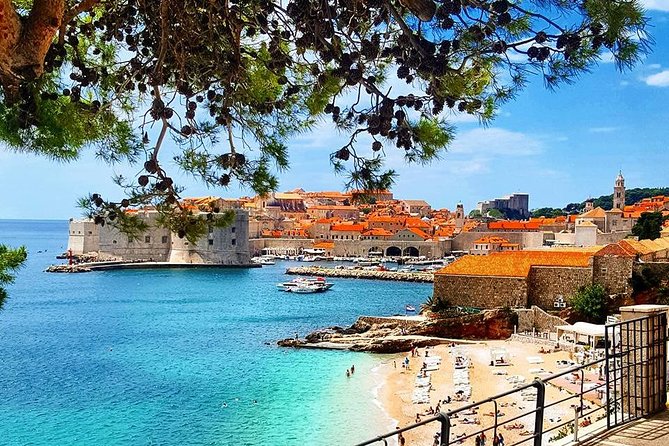
The tour begins at Art Go’lden, Brsalje ul. 1, near Pile Gate. This is a practical meeting point because Pile Gate is one of the clearest access points into Dubrovnik’s Old Town. You return to the same meeting point at the end, so you do not need to plan transport between the start and finish.
Pile Gate is also a useful place to begin mentally. Dubrovnik can look like a film set at first glance, with polished limestone, fortified entrances, and tightly packed buildings. A guide helps turn that first impression into a story about a maritime republic, civic power, water supply, religion, and independence.
The group can include up to 30 people. That is not a tiny private walk, so you should expect to stay close to the guide and listen carefully when the streets are full. The advantage is that the tour remains short and focused, giving you a useful introduction before you explore on your own.
The walk is offered in English and lasts about 1 hour and 30 minutes. That length suits you if you want context but still plan to spend the rest of the day visiting museums, eating, shopping, or walking the walls independently.
More History Walking Tours in Croatia
- Dubrovnik Old Town History Walking Tour
★ 5.0 · 1,684 reviews - Dubrovnik: Ancient City Walls & Wars Walking Tour
★ 5.0 · 1,270 reviews - Dubrovnik: Old Town History Walking Tour
★ 4.9 · 474 reviews
Franciscan Monastery and the first layers of local history
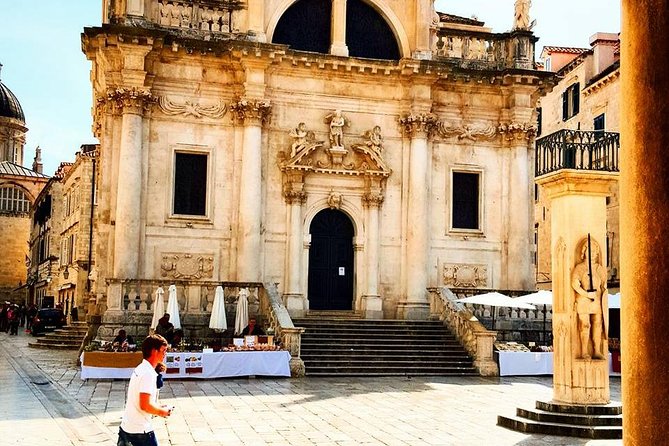
One of the early sights is the Franciscan Monastery, an important religious and cultural landmark inside the Old Town. The supplied details do not promise a separate interior visit, so you should think of this part as a guided look at the monument and its place in Dubrovnik rather than assume you will receive extended time inside.
This is where a guide can make a difference. A building such as the monastery is easy to photograph and pass by, but its importance becomes clearer when connected to the city’s religious life and long civic story. Guides praised for combining historical facts with local knowledge can help you understand why the Old Town contains such a dense mix of churches, palaces, public spaces, and defensive structures.
Ines is repeatedly singled out for her command of Dubrovnik and Croatian history, including the period of Yugoslavia. That wider view is useful. Dubrovnik is not only a medieval-looking walled city. It is also part of modern Croatia, and a good explanation can connect the old Republic with the country’s later development without reducing everything to dates and battles.
The walk is described as informative but easygoing. You should still wear comfortable shoes. The experience takes place entirely on foot, and Dubrovnik’s stone streets can be hard on your feet even when the route itself is not especially long.
Orlando’s Column and the meaning of freedom
The route includes Orlando’s Column, one of Dubrovnik’s best-known public monuments. It is presented as a symbol of the city’s freedom, which gives this stop more weight than a quick photo opportunity.
This is an ideal place to hear about the old Republic of Dubrovnik and the way public monuments expressed civic identity. The column sits in the middle of the city’s historic public life, close to important buildings and ceremonial spaces. Your guide can explain why freedom mattered so much to a small maritime state surrounded by larger powers.
The tour’s strongest theme is the connection between individual sights. You are not simply ticking off Orlando’s Column, a palace, and a church. You are being shown how Dubrovnik’s public spaces worked together. Political authority, trade, religion, and water supply all appear within a short walk.
The description promises local legends as well as historical facts. That balance matters. Pure date-heavy tours can become tiring, while stories without context leave you with little to remember. The best parts of this walk appear to come from combining the two, with personal details and recommendations adding a local voice.
Onofrio’s Fountain and Dubrovnik’s 12-kilometre aqueduct
Onofrio’s Fountain gives the tour one of its most memorable practical details. Built in the 15th century, it marked the end of a 12-kilometre aqueduct that supplied Dubrovnik with water.
That fact changes how you see the Old Town. The city’s beauty is easy to notice, but reliable water was a serious engineering and public health problem. The aqueduct shows that Dubrovnik was not simply a fortified settlement of grand churches and stone houses. It was an organized city that invested in infrastructure.
You can refresh yourself and drink water from the fountain during the tour. This is a small but welcome detail, especially in Dubrovnik’s hot weather. One cancellation was linked to a guide becoming ill in extreme heat, a reminder that summer conditions can affect a walking tour. Bring water, use sun protection, and consider an earlier or later start if your booking options allow it.
The fountain also helps keep the walk grounded. You are learning about the ordinary needs of city life, not just rulers and monuments. That practical angle is one reason the tour works well as a first introduction to Dubrovnik.
More History Walking Tours in Dubrovnik:
- Dubrovnik Old Town: Small-Group Walking Tour With A Local
★ 5.0 · 123 reviews - Dubrovnik Jewish Heritage Private Walking Tour
★ 5.0 · 121 reviews - Dubrovnik: Small-Group Guided Old Town History Walking Tour
★ 4.9 · 37 reviews - Historic Walk with Game of thrones details in Dubrovnik
★ 5.0 · 20 reviews
Sponza Palace and the old Republic’s civic power
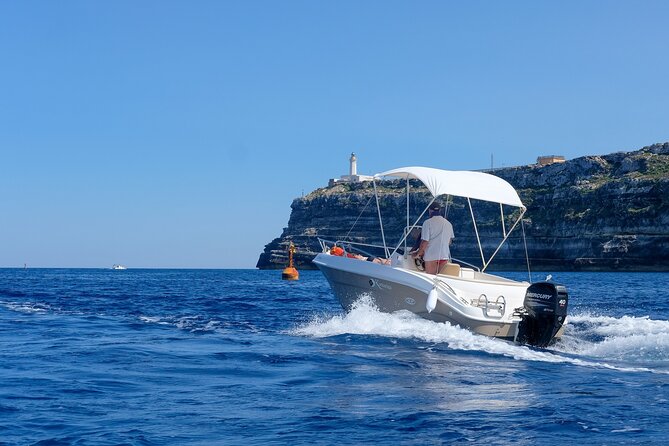
Sponza Palace is listed as the itinerary stop and is also part of the broader Old Town walk. Its presence gives the tour a strong architectural and political focus.
The tour description identifies Sponza Palace along with the Rector’s Palace as key places to visit. You should expect the guide to explain their role in Dubrovnik’s government and public life, though the supplied details do not promise admission to palace interiors. If entering these buildings is important to you, check the booking information before paying for separate tickets.
Sponza Palace is especially valuable in a walking tour because you can see it in relation to the streets and squares around it. A guide can point out how a palace functioned as part of a working city rather than as an isolated attraction. That setting helps you understand the old Republic as a place of commerce, administration, and diplomacy.
The 30-person maximum deserves a note here. A group of that size can make it harder to hear in a crowded square, but it is still more controlled than a free public gathering. Stay near the guide, especially at Sponza Palace and other popular stops, and do not expect the intimacy of a one-to-one tour.
The Rector’s Palace and the Cathedral of the Assumption
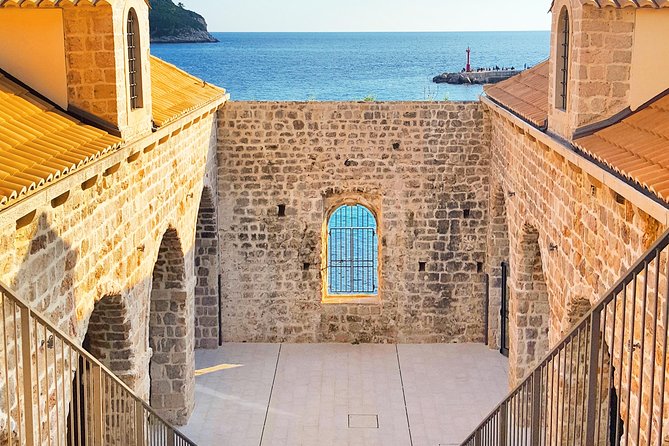
The Rector’s Palace is another central stop. Its name points to the political structure of the old Republic, and the guide uses it to explain Dubrovnik’s leadership and civic order.
The value of seeing the palace with a guide is the sense of how power was organized. You receive more than a description of the facade. The walk connects the building with Dubrovnik’s broader development, giving you a clearer idea of how the city governed itself and protected its interests.
The route also includes the Cathedral of the Assumption, a Baroque church rebuilt after the devastating earthquake of 1667. That detail gives the cathedral a particular importance. It is not only a religious building but also evidence of how Dubrovnik recovered after a disaster that reshaped the city.
The cathedral brings another layer to the tour. You have already encountered water engineering, civic freedom, and political buildings. Here, you see religious life and rebuilding. The sequence creates a compact lesson in how the city functioned and how it responded to crisis.
As with the other buildings, do not assume that admission to every interior is included unless your booking confirmation says so. The clear inclusion is the licensed guide. Tickets for City Walls and other facilities are excluded.
What the guide adds to the walk
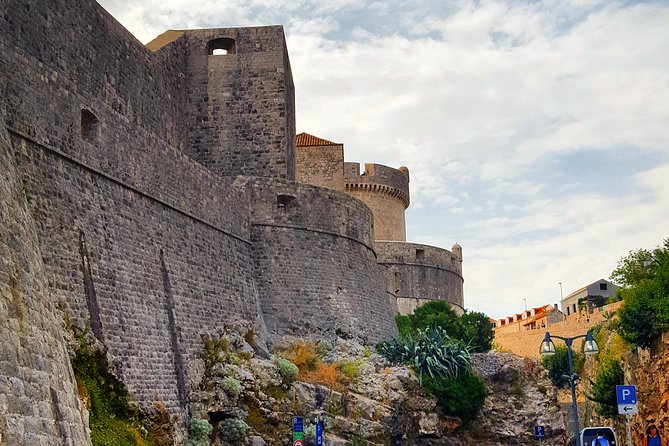
The guide is the heart of this experience. The strongest praise goes to Ines, who is described as friendly, easygoing, and able to explain Dubrovnik, Croatia, and Yugoslavia in clear English. Another review identifies the guide as Ynez, likely a variation in spelling, and highlights strong English and an excellent grasp of the subject.
That matters if you want more than a standard recital of dates. The guide has been praised for explaining the importance of each area, keeping a comfortable pace, and offering recommendations that can help with the rest of your visit.
The walk is also described as allowing time for photographs without feeling rushed. That is important in Dubrovnik, where you can easily spend too much time stopping for pictures and then lose the thread of the tour. A thoughtful pace lets you look around while still following the story.
No guide can control every condition. Heat, crowd levels, or an unexpected illness can affect a scheduled walk. One booking was cancelled when the guide became unwell on the way to the meeting point, and the payment was refunded in full. It appears to have been an isolated problem rather than a pattern, but you should avoid placing a time-critical connection immediately after any walking tour.
What the $33.61 price really buys you

At $33.61 per person, the tour is priced as a mid-range introduction rather than a bargain basement stroll. You are paying mainly for the licensed guide and the structure of a carefully selected route through the Old Town.
The value is strongest if you are new to Dubrovnik, have only a few hours, or want help understanding what you are seeing before exploring independently. The tour gives you a framework that can make later visits to the Cathedral, Rector’s Palace, Sponza Palace, or City Walls more meaningful.
The value is weaker if you already know Dubrovnik well or prefer to wander without a schedule. You may also feel the price is high if you expect entry to the City Walls or palace interiors. Those costs are separate, with City Walls admission listed at €35 per person.
Because the tour lasts about 90 minutes, it also works well as an orientation purchase. You can use the first part of your day to learn the city’s basic story, then return to the places that interest you most. That approach avoids paying for a long tour when you mainly need a clear introduction.
Who should book this Dubrovnik walking tour?
I would recommend it most strongly to first-time visitors who want history presented in plain English and at a steady pace. It also suits couples, families with older children, and anyone who prefers a guide to explain the Old Town rather than reading plaques at every stop.
It is a good fit if you want:
- A short introduction before exploring on your own
- Major landmarks in one connected walk
- A licensed guide with local knowledge
- Background on the old Republic and modern Croatian history
- Time for photographs without a full-day commitment
I would be more cautious if you need guaranteed interior access to every monument, want a private experience, or plan to visit the City Walls as part of the same ticket. The group can reach 30 people, and the City Walls cost extra.
Book at least a day ahead if your schedule is fixed. The experience is often reserved well in advance, with an average booking lead time of 48 days. Free cancellation is available up to 24 hours before the start time, but cancelling later does not qualify for a refund.
Should you book it?
Yes, if you want a focused introduction to Dubrovnik’s Old Town and value a guide who can connect monuments with the city’s political, religious, and practical past. The best reasons to book are the short format, the licensed guide, the aqueduct story at Onofrio’s Fountain, and the strong praise for Ines or Ynez.
Just set the right expectations. This is a guided street walk, not an all-inclusive attraction pass. City Walls admission is separate, entry to other facilities is not promised, and a group of up to 30 people may not feel intimate. For a first look at Dubrovnik that leaves time for your own discoveries, the price is reasonable.
FAQ
How long does the Dubrovnik walking history tour last?
The tour lasts approximately 1 hour and 30 minutes.
Where does the tour begin?
It begins at Art Go’lden, Brsalje ul. 1, 20000 Dubrovnik, Croatia, near Pile Gate.
Where does the tour end?
The activity ends back at the meeting point.
What language is the tour offered in?
The tour is offered in English.
Is a guide included?
Yes. The tour includes a licensed tour guide.
Are City Walls tickets included?
No. City Walls tickets are not included and are listed at €35 per person.
Does the tour include admission to other facilities?
No. Tickets for the City Walls and other facilities are not included.
How many people can join the tour?
The maximum group size is 30 people.
Can I cancel for a full refund?
Yes, if you cancel at least 24 hours before the experience start time. Cancellations made less than 24 hours before the start time are not refunded, and changes within that period are not accepted.
Newest history tours we have reviewed in Dubrovnik
- Historic Walk with Game of thrones details in Dubrovnik★ 5.0 · 20 reviews
- Private History Old Town and City Wall Tour in Dubrovnik★ 5.0 · 41 reviews
- Game of Thrones and History Combo Private Tour★ 5.0 · 53 reviews
- Private Walking Tour of Dubrovnik Hidden Gems and History★ 5.0 · 19 reviews
- Dubrovnik’s History with a Local: the Homeland War Stories Private Tour★ 5.0 · 29 reviews
- Dubrovnik History, Sweets & Liquors in a Private Palace (PRIVATE)★ 5.0 · 63 reviews
- Early Bird Dubrovnik History Tour – 7:30 Start★ 5.0 · 198 reviews
- Dubrovnik History Tour + Local Shop Experience (Small Group)★ 5.0 · 22 reviews
History Walking Tours, compared.

History and Hauntings of Salem Guided Walking Tour
Read our review →

Freedom Trail History Small Group Walking Tour
Read our review →
Historic Charleston Guided Sightseeing Walking Tour
Read our review →
Tapas Walking Tour with Food, Wine, and History
Read our review →
Savannah History and Haunts Candlelit Ghost Walking Tour
Read our review →
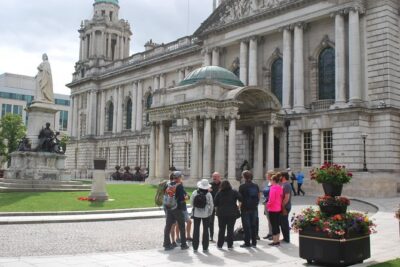
A History of Terror – Belfast City Centre Walking Tour
Read our review →Browse the lists this tour appears in