Review · SPAIN HISTORY TOURS
Cordoba: Segway Tour historic center
Córdoba’s old center is made for a tour that links big sights with small lanes. On this 1.5-hour Segway ride, you move from Plaza de la Corredera and Plaza del Potro to the Roman Bridge, Mosque-Cathedral, Alcázar, Royal Stables, and San Basilio patios without wearing out your feet.
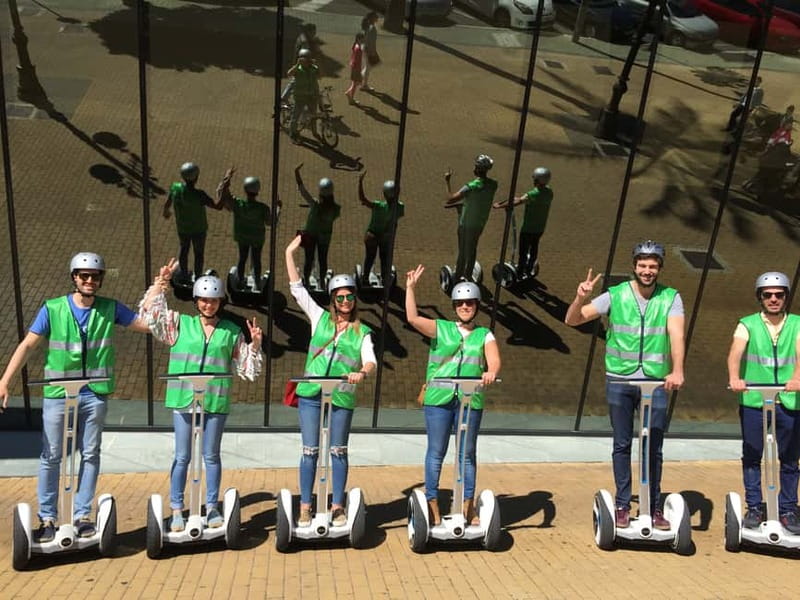
I like the small group size, limited to five people, and the chance to see four different Andalusian courtyards rather than simply passing their flower pots from the street. I also like that guides such as Jorge take time to help first-time riders feel steady before setting off.
The main concern is safety and pace. Some riders found the Segways wobbly, and one account described a guide getting too far ahead. This is best for confident adults who can keep up and follow instructions, not for anyone with mobility problems or limited balance.
Key points to know before booking
- Small groups of up to five: You get a more personal outing than on a large city tour, with a better chance to ask questions.
- Four Andalusian courtyards: San Basilio gives you a close look at the flower-filled patio tradition and the Courtyards Festival.
- Major sights in a short ride: The route links Plaza de la Corredera, the Roman Bridge, Mosque-Cathedral, Alcázar, Royal Stables, and San Basilio.
- First-time riders need a proper lesson: A safety induction and helmet are included, and guide Jorge has been especially patient with beginners.
- $53 for 90 minutes: The price is fair if you value a quick orientation and a motorized way to cover ground, but it does not replace a full visit inside the main monuments.
- Allow for mixed experiences with equipment and pacing: Some riders found the Segways unstable, so ask for a careful introduction before leaving.
Why a Segway works well in Córdoba
Córdoba’s center packs major sights into a compact area, but its stone streets and long walking routes can still take a toll. A Segway lets you cover more ground while keeping the tour light and lively.
You stand on a small platform and steer with the handlebar while an electric motor does the work. That matters in a city where the route moves between open squares, narrow streets, and the riverfront. You are not pedaling, and you do not need to manage a bicycle in traffic, but you still need to balance and react to the machine.
The tour is not designed as a detailed museum visit. Instead, it gives you a useful first look at Córdoba’s main historic areas. I see it working best early in your stay, when you want to understand how the center fits together before returning on foot to the Mosque-Cathedral, Alcázar, patios, or museums.
You ride with a live guide in English or Spanish. The group limit of five is a real advantage here. Small groups are easier to keep together on busy streets, and you can ask for a slower explanation or a quick stop without holding up a coach full of people.
The route is only 90 minutes, so expect highlights and orientation rather than lengthy time at each monument. If your priority is entering every major attraction, you will need separate tickets and more time afterward.
More History Bike, Segway and Tuk-Tuk Tours in Spain
- Barcelona: 2.5-Hour Bike or E-Bike Historical Tour
★ 4.5 · 1,262 reviews - Madrid Historical Tour with Local Guide in Eco Tuk Tuk Private
★ 5.0 · 876 reviews - San Sebastian E-bike trour: Basque History and Cultural.
★ 5.0 · 367 reviews
Starting at Plaza de la Corredera
The tour begins at the Rent a Bike Cordoba office, where you meet the guide, receive a helmet, and complete the safety induction. The exact starting time depends on availability, so check the booking calendar before planning other activities around it.
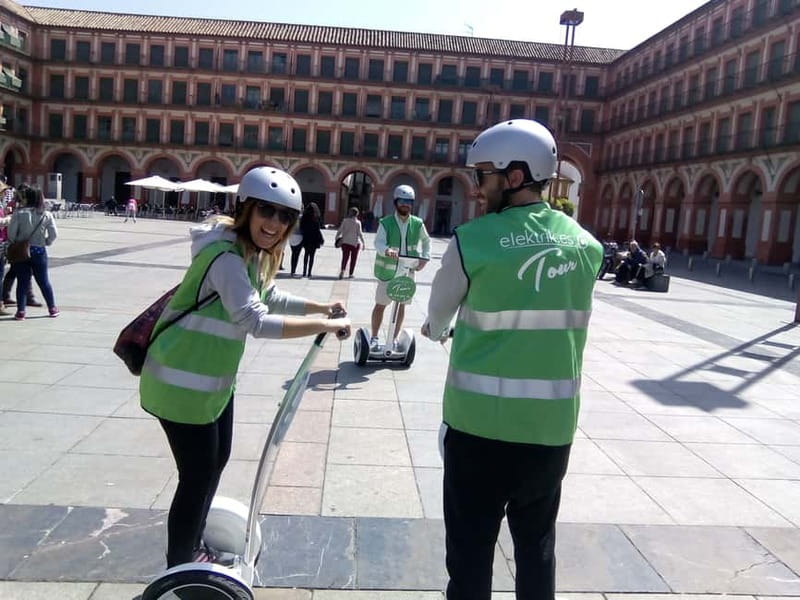
The first historic setting is Plaza de la Corredera. This broad rectangular square feels different from Córdoba’s tighter medieval lanes and provides a useful introduction to the city’s public life.
The square has hosted large events, including bullfights and horse shows. That detail helps you read the space as more than a pretty plaza. Its broad shape was built for crowds and spectacle, while the rest of the old center often feels intimate and enclosed.
This is also a practical place to get comfortable on the Segway. Pay attention during the safety briefing, even if you have used one before. The equipment requires balance, and a calm start matters more than rushing into the route.
The tour includes a travel bag, which is handy for small personal items. Still, you should keep your belongings secure while riding and avoid bringing anything that could interfere with steering.
Plaza del Potro and Córdoba’s artistic side
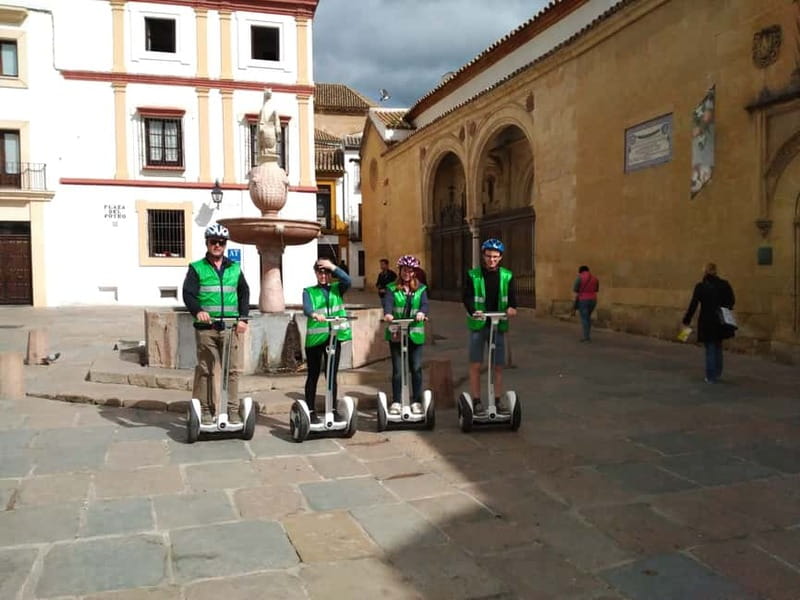
From Plaza de la Corredera, the route continues toward Plaza del Potro. This smaller square has a statue of a foal and sits near important museums.
The contrast with the opening square is part of the appeal. Plaza de la Corredera gives you a sense of grand public gatherings. Plaza del Potro brings you into a more compact part of the old city, where art, local stories, and older buildings shape the setting.
Because the stop is part of a moving city tour, do not expect a full museum visit. The value is in seeing how the square connects with the wider historic center and learning why it matters from the guide.
I would use this section to ask questions about Córdoba’s changing neighborhoods and the way its Roman, Islamic, Jewish, and Christian periods overlap. The tour description promises historical explanation, but the time limit means the guide must keep moving.
Crossing the Roman Bridge over the Guadalquivir
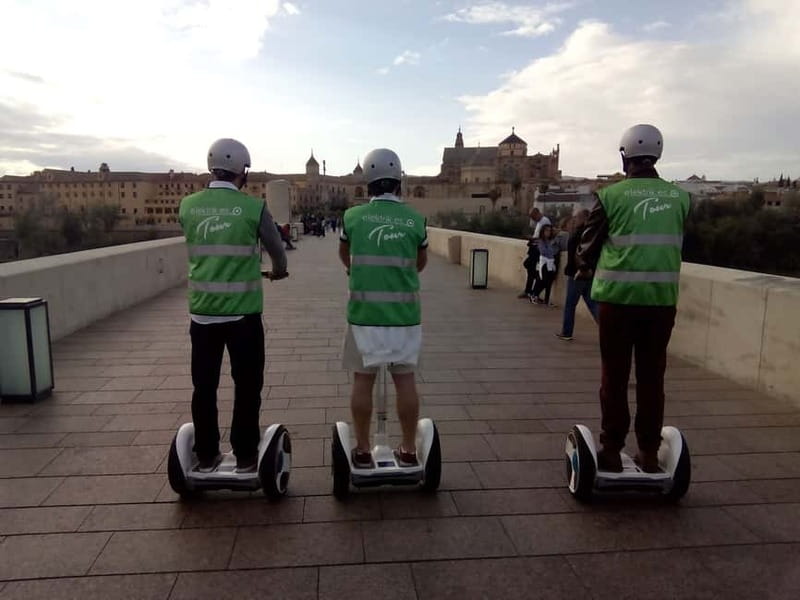
The Roman Bridge is one of the route’s strongest visual stops. It crosses the Guadalquivir, the river that played an important role in Córdoba’s past.
From here, you get a broader view of the city than in the narrow streets. The river also explains why Córdoba developed as an important settlement. A bridge is never just a crossing in a historic city. It links the old center with the far bank and gives you a sense of the city’s position along the water.
The bridge can also be the point where crowd control matters most. One rider described a guide getting too far ahead and not noticing a fall, so keep the group in sight and speak up if the pace feels too quick. A guide should lead, but you should not feel pressured to match a speed that makes you uncomfortable.
This is one reason the small group format helps, at least in principle. With only five participants, the guide can check that everyone is together. Your own awareness still matters, especially around pedestrians and on uneven surfaces.
More Old Town and Historic Centre Walks in Spain
- Madrid Essential: Historic Center, Plaza Mayor & Royal Palace
★ 5.0 · 6,416 reviews - Valencia Old Town Tour with Wine & Tapas in 11th Century Historic Monument
★ 5.0 · 3,234 reviews - Madrid Historic Centre Food Tour with Authentic Tapas & Wines
★ 5.0 · 814 reviews - Madrid in a Day Tour:Royal Palace, Historic Center & Prado Museum
★ 5.0 · 628 reviews
The Mosque-Cathedral: Córdoba’s essential landmark
The tour then reaches the Mosque-Cathedral, commonly called the Mezquita. It is one of Córdoba’s defining monuments and one of the key places to understand the city’s layered past.
The guide introduces the story of the building and explains its place as one of Europe’s largest mosques before its later Christian use as a cathedral. That context makes the stop more useful than a quick photo break.
You should be clear about what this tour does and does not include. The route takes you to the Mosque-Cathedral and explains its history from outside, but the supplied details do not include admission or an interior visit. Plan a separate visit if you want time among the famous arches and inside spaces.
I like having this stop on a short orientation route because it gives you a reference point for the rest of your visit. Afterward, you can return on foot with a better idea of where the monument sits within Córdoba’s old center.
The Alcázar and the Royal Stables
The Alcázar is another important stop. It served as a royal palace for the Christian kings, adding another layer to Córdoba’s complicated past.
The site works well in the sequence because you have just heard about the Mosque-Cathedral’s Islamic and Christian uses. Moving onward to a royal palace helps you connect the city’s different periods instead of treating each monument as an isolated sight.
The route also includes the Royal Stables of Córdoba, associated with the Pura Raza Española horses. For anyone interested in Spanish riding culture, this is a distinctive detail that sets the tour apart from a basic city loop.
Again, this is a sightseeing stop rather than a full guided visit inside every building. The benefit is the historical connection and the chance to see several major landmarks in one compact outing. If you want gardens, rooms, collections, or a longer explanation at the Alcázar or stables, plan extra time.
San Basilio and Córdoba’s famous patios
The most distinctive part of the route is the San Basilio neighborhood. This area is known for patios that can be visited throughout the year, not only during the annual Courtyards Festival.
Córdoba’s patios are more than decorative gardens. They reflect a local way of organizing homes around shared or private courtyards, with plants, flowers, tiled surfaces, and careful daily upkeep. The tour focuses on the flower arrangements and explains how the Courtyards Festival developed.
You will see four different Andalusian courtyards and compare their styles. That variety matters. A quick glance at one patio can leave you thinking they are all alike, while four examples show differences in layout, decoration, planting, and atmosphere.
The patio visit also gives the tour a more local feel. The Roman Bridge, Mosque-Cathedral, and Alcázar are essential sights, but San Basilio shows how Córdoba’s residents shape and maintain living spaces within the old center.
The details provided do not say exactly which courtyards are open on every departure, so access may depend on the day and local conditions. Still, the route is designed around the neighborhood and its patio tradition, making this more than a standard monument checklist.
What the guide adds to the ride
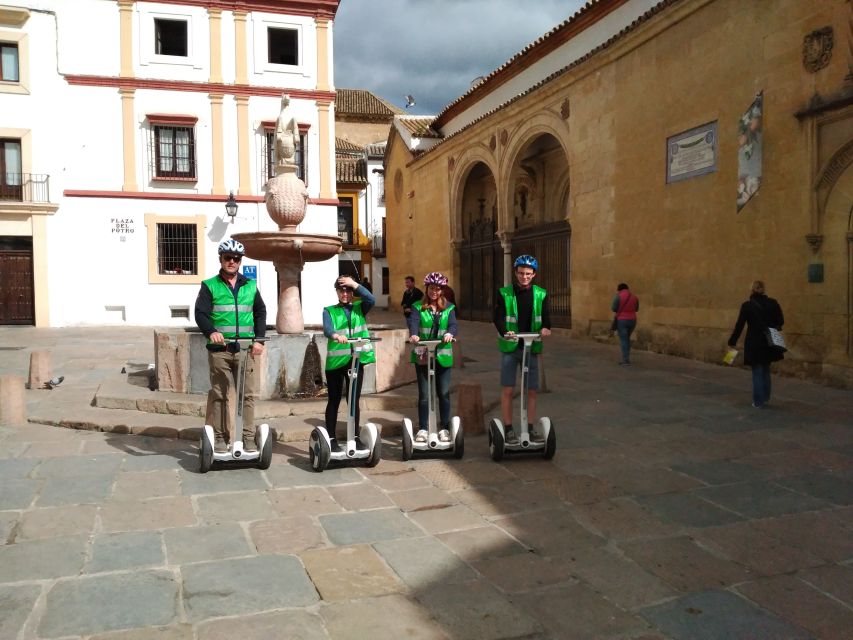
The guide is central to the experience. You are not simply renting a Segway and following a map. The tour includes historical commentary in English or Spanish, along with local suggestions for traditional Córdoba food at the end.
Jorge is specifically noted for working patiently with first-time riders. When only two people were booked for one departure, he made sure both felt fully comfortable before leaving and answered their questions. That is the kind of start I would want from any guide-led Segway tour.
Guide quality can still vary by departure. One rider enjoyed the information but felt the guide rode too far ahead, leaving the group to handle crowds alone. That is a serious point, especially for a first-time rider or anyone nervous about falling.
If you feel uncertain, say so during the induction. Ask the guide to watch your pace and keep the group close. The best version of this tour is not a race through Córdoba. It is a controlled ride with enough pauses for you to look around and listen.
The guide’s food advice is a useful finishing touch. The information does not name specific restaurants or dishes, so treat it as a chance to ask for suggestions rather than a promised food tasting.
Equipment, comfort, and safety
The experience includes the Segway, helmet, safety induction, and travel bag. You do not need to arrange separate equipment rental.
The safety induction deserves your full attention. Several riders had concerns about the machines or the pace. One account described unstable Segways, while another reported multiple falls in a mixed group that included a mobility scooter and an electric bike.
That does not mean every departure will have the same problem, but it does point to the need for a proper fit between rider and activity. You should be comfortable standing, balancing, steering, and stopping on your own. The activity is not suitable for people with mobility impairments.
The group is limited to five participants, though one past departure had seven people and a mix of transport types. That suggests group composition can affect the pace and feel of the outing. A group of Segway riders with similar ability should move more smoothly than a mixed group using different equipment.
Wear practical clothing and shoes that let you stand securely. The provided information does not set out a detailed clothing rule, so keep it simple and comfortable. Most important, do not treat the Segway as effortless. It is motorized, but you still have to control it.
Is $53 a fair price?
At $53 per person, this is a mid-priced short city experience. The cost includes the guide, Segway, helmet, safety instruction, travel bag, and 90 minutes of sightseeing.
The value is strongest if you want a quick overview of Córdoba and like the idea of riding rather than walking. You cover several major areas, learn the basic story of the city, and get access to a small-group format. For a first day in town, that can save energy and help you choose where to return later.
The value is weaker if you are mainly interested in interiors. The route brings you to the Mosque-Cathedral, Alcázar, and Royal Stables, but the supplied details do not include admission or extended visits inside them. You would pay separately for those attractions and still need time to explore them properly.
I would compare the price with your own walking plans. If you are happy to spend the afternoon on foot, Córdoba’s center can be explored independently. If you have limited time, want a guide, or simply find Segway riding more fun than walking, $53 is reasonable.
The 4.5 rating from 21 reviews suggests the overall experience is often successful, but the individual feedback points to a clear condition: the guide must match the group’s ability and keep riders together.
Who should book this Córdoba Segway tour?
I would recommend it to adults and older teens who are comfortable trying a Segway, want a fast introduction to the old center, and enjoy a mix of famous landmarks and local details.
It is especially useful for:
- First-time visitors who want to get their bearings quickly
- People who prefer a motorized ride to a long walking tour
- Small groups who want time for questions
- Visitors interested in San Basilio’s patios and the Courtyards Festival
- History-minded visitors who want an overview before visiting monuments inside
I would skip it if you have mobility impairments, poor balance, or strong concerns about falling. I would also avoid booking it if you want a slow, detailed tour of each monument’s interior.
Book early in your stay if you choose it. The route can show you where the main sights are, while the guide’s food suggestions may help with the rest of your visit. The tour offers free cancellation up to 24 hours ahead and lets you reserve now and pay later, which gives you some flexibility if your plans are still changing.
Should you book it?
Book this tour if you want a lively 90-minute introduction to Córdoba, especially one that includes San Basilio’s patios rather than only the headline monuments. The small group, English or Spanish guide, and chance to ride through several historic areas make it a useful orientation.
Go in with realistic expectations. This is not a replacement for visiting the Mosque-Cathedral or Alcázar inside, and the Segway requires balance and attention. Ask for a careful safety lesson, stay close to the guide, and speak up if the pace is too quick.
For a confident rider who values variety, the combination of Roman Bridge views, royal history, Córdoba’s riverfront, and four patio styles makes the $53 price defensible. For anyone uncertain on a Segway, a walking tour may be the wiser choice.
FAQ
How long is the Córdoba Segway tour?
The tour lasts 1.5 hours, or 90 minutes.
How much does the tour cost?
The listed price is $53 per person.
Where does the tour meet?
You meet the guide at the Rent a Bike Cordoba office.
What languages are available?
The live guide speaks English or Spanish.
How many people are in the group?
The stated group limit is five participants.
Is a Segway included in the price?
Yes. The tour includes the Segway, helmet, safety induction, guide, and travel bag.
Does the tour visit the Mosque-Cathedral?
The route stops at the Mosque-Cathedral, also known as the Mezquita, and includes an explanation of its history. The provided details do not state that admission or an interior visit is included.
Are Córdoba’s patios part of the tour?
Yes. The route includes San Basilio, where you can see four different Andalusian courtyards and learn about the Courtyards Festival. The patios in this neighborhood can be visited throughout the year.
Is the tour suitable for people with mobility impairments?
No. The activity is listed as unsuitable for people with mobility impairments. Because you must balance and control the Segway, you should also consider your comfort and ability before booking.
Newest history tours we have reviewed in Spain
- Visita Guiada Por El Casco Histórico De Cuenca Y Su Catedral★ 5.0 · 45 reviews
- Mosque of Cordoba History Tour in English Tickets included★ 5.0 · 257 reviews
- Jerez de la Frontera History and Art Walking Tour★ 4.5 · 49 reviews
- 2 Hours Tour around Cádiz: History, anecdotes and curiosities★ 5.0 · 89 reviews
- The Authentic Bilbao Pintxos, Food & Wine Tour with a Local★ 5.0 · 360 reviews
- Bilbao Historical Small Group Tour★ 4.5 · 159 reviews
- Barcelona Jewish & Gothic Tour★ 5.0 · 18 reviews
- Andorra Original History and Sightseeing Tour (Private, Pickup)★ 5.0 · 350 reviews
Old Town & Historic Centre Walks, compared.
Madrid Essential: Historic Center, Plaza Mayor & Royal Palace
Read our review →
Live Fado Show with Port Wine in Historic Center
Read our review →
Valencia Old Town Tour with Wine & Tapas in 11th Century Historic Monument
Read our review →
Prague Old Town, Medieval Underground and Dungeon Historical Tour
Read our review →
Cartagena: Historic Center and Getsemaní Shared Walking Tour
Read our review →
Old Town Walking Tour History and Tales in Edinburgh
Read our review →