Review · BARCELONA HISTORY TOURS
Barcelona El Raval Dark History Walking Tour
Barcelona El Raval Dark History Walking Tour is less about grand monuments and more about the city’s rough edges: foundling babies, grisly crimes, old autopsies, monastic violence, nightlife, and industrial decay. You walk from Plaça de Castella toward Paral·lel, seeing a side of Barcelona that is easy to miss between the Gothic Quarter and the major sights.
I like the small group limit of 15, which gives the guide room to answer questions, and I like the clear two-hour route with six substantial stops. Guides including Eoghan, Zaynab, Callum, Andres, and Cal have been praised for storytelling, humor, local advice, and making the neighborhood feel approachable.
The main consideration is the subject matter. This is a dark-history tour, not a gentle introduction to Gaudí or a standard old-town walk. Some stories involve death, crime, abandoned infants, and autopsies, and parts of Raval and Paral·lel can feel gritty rather than polished.
Key points to know before you book
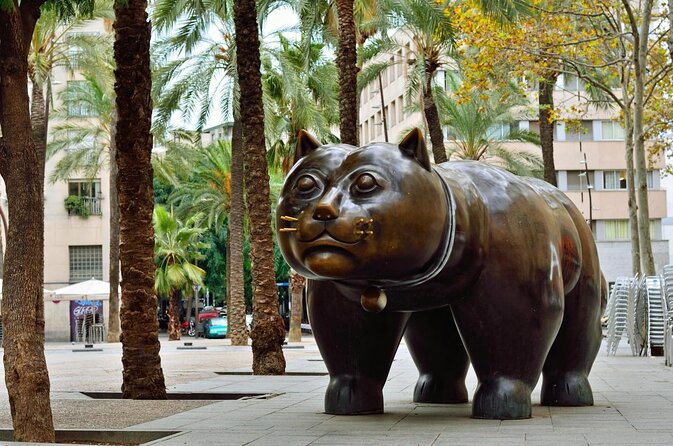
- The route covers six stops in two hours, beginning near Sant Pere Nolasc Mercedaris and ending at Jardins de les Tres Xemeneies.
- The stories are the main attraction, including the Vampire of the Raval and Barcelona’s old medical and criminal past.
- You see two important churches, Sant Pere Nolasc Mercedaris and Sant Pau del Camp.
- The walk finishes with street art and industrial history, rather than returning to the starting point.
- Groups are capped at 15 people, a useful size for a storytelling-focused walk.
- The $33.42 price is reasonable if you want context, local recommendations, and places you might not find on your own.
Why El Raval makes a good dark-history walk
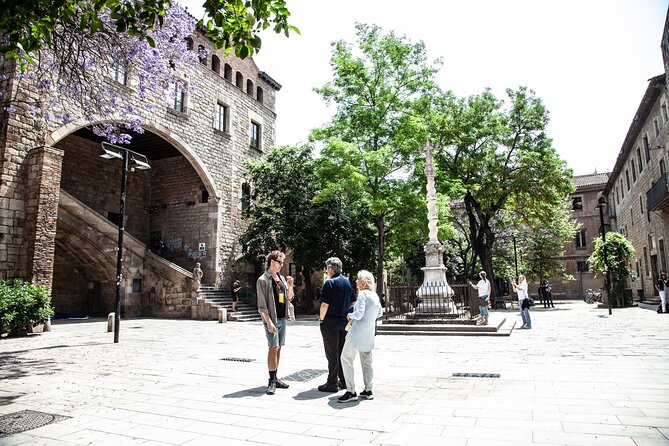
El Raval sits on the western side of Barcelona’s old center. It has long been tied to hospitals, workshops, religious institutions, nightlife, migration, poverty, art, and social change. That mix gives the guide plenty to work with.
This is not a tour where you simply admire façades and move on. The buildings act as clues. A church points to old religious power. A former hospital leads to medicine and autopsies. A narrow street recalls a notorious criminal. The route then moves toward Paral·lel, where entertainment and nightlife once drew a very different crowd from the shoppers and museum visitors found elsewhere in central Barcelona.
I like this approach because it gives you a better sense of how cities actually work. Barcelona is not only a postcard of tiled benches, modernist architecture, and sunny plazas. It also has uncomfortable chapters. Those chapters help explain why Raval feels distinct from the more carefully presented parts of the old city.
The tour also treats the neighborhood as more than a collection of crimes. Along the way, you connect social rights, art, industry, religion, medicine, and changing urban life. That wider frame matters. A dark-history tour can become cheap shock value if it only lists murders and scandals. The strongest moments here appear to come when the guide explains how those events fit into Barcelona’s wider story.
More Dark History and Haunted Tours in Barcelona
- Barcelona: Dark History Night Walking Tour
★ 4.8 · 344 reviews - Barcelona’s Dark History Night Tour
★ 5.0 · 181 reviews - Barcelona Dark History Night Walking Tour With Drinks
★ 5.0 · 153 reviews
Starting at Sant Pere Nolasc Mercedaris
The meeting point is Parròquia de Sant Pere Nolasc Mercedaris at Plaça de Castella, 6. This gives you a central start in Ciutat Vella, close to public transportation and within reach of the old city.
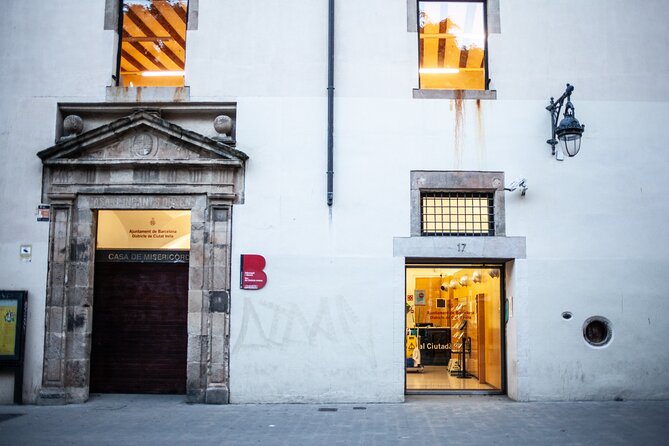
The opening stop focuses on the Fundació Privada Casa de Misericòrdia de Barcelona. Its striking detail is the old foundling wheel, a device used for leaving unwanted infants anonymously. It is described as being hidden in plain sight, which is exactly the kind of detail that works well on a walking tour. You may have passed a building like this without knowing what happened there.
Expect roughly 20 minutes at this first location. That pace matters. You are not rushing through a list of addresses. The guide has time to explain the institution, the social conditions behind it, and why this small architectural feature carries such a grim story.
This stop also sets the tone. The tour is not built around monsters from the past alone. It looks at the systems and customs that shaped daily life. The story may be unsettling, but it also raises questions about poverty, family, religion, and the limited choices available to desperate people.
Carrer de Joaquín Costa and the Vampire of the Raval
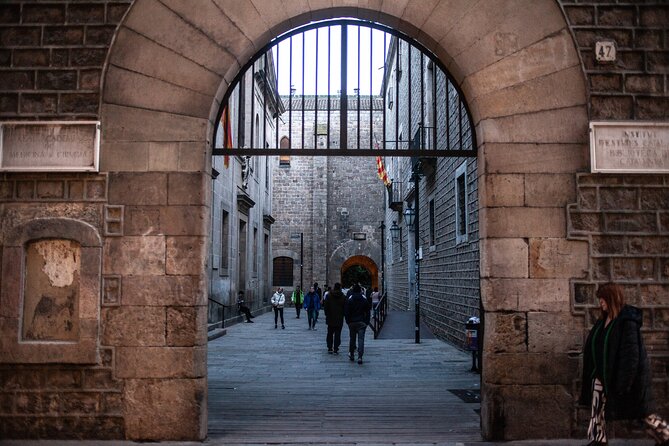
The second stop is on Carrer de Joaquín Costa, once associated with a notorious villain whose crimes became part of Barcelona’s darker folklore. The tour connects this area with the Vampire of the Raval, often described as Barcelona’s own Jack the Ripper.
That nickname gives the stop an obvious hook, but you should expect the guide to do more than repeat a sensational label. The appeal lies in hearing how crime stories become part of a neighborhood’s identity. A street that now has cafés, shops, and ordinary city traffic can carry memories of fear and scandal.
The stop lasts about 20 minutes. A small group is helpful here because the guide can keep the story focused without needing to shout over a large crowd. Several guides have been praised for their delivery, especially Eoghan, who is repeatedly described as charming, funny, and an excellent storyteller. Other departures have been led by Zaynab or Zeynep, Callum, Andres, and Cal. Your guide is not guaranteed, but the range of positive comments suggests that the operator uses several confident local presenters.
This is also a good place to remember that the tour is designed for adults and older children who can handle serious subject matter. The supplied information does not set an age limit, but stories involving violent crime may not suit every family.
The old Hospital de la Santa Creu and medical history

At the Real Academia de Medicina de Cataluña, you encounter part of the former Hospital de la Santa Creu. The building is tied to Barcelona’s medical past and to autopsies, giving the tour one of its most macabre stops.
The value here is the shift from individual crime to public institutions. Hospitals can be places of care, but they also reveal what a society understood about illness, death, and the human body. A stop connected to autopsies gives the guide a chance to explain the less comfortable side of medical progress.
You should not assume that this walking tour includes entry to the academy or a formal indoor visit. The supplied details list the stop as free and describe the experience as a walking tour. Treat the building and its story as the focus, not a ticketed museum admission.
As with the other stops, the timing is about 20 minutes. That creates a steady rhythm: walk, listen, look closely, then move on. You get enough information to understand the place without spending the whole afternoon on one subject.
More History Walking Tours in Barcelona
- Barcelona: Tapas Walking Tour with Food, Wine, and History
★ 4.8 · 4,261 reviews - Barcelona Tapas Walking Tour: Food, Wine & History
★ 4.5 · 1,928 reviews - Barcelona 1.5h Private Old Town, Gothic & Ramblas Walking Tour
★ 5.0 · 318 reviews - Barcelona: The Spanish Civil War Historical Walking Tour
★ 4.9 · 239 reviews
Sant Pau del Camp and a violent monastic past
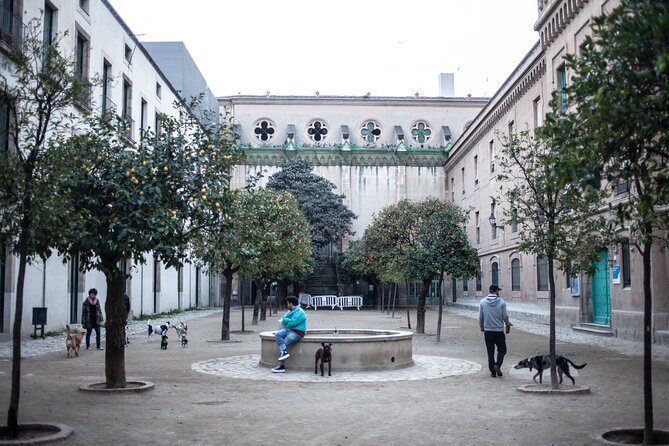
Sant Pau del Camp is one of the route’s strongest visual and historical pauses. It is described as Barcelona’s oldest church and was once a monastery with a violent history.
The church brings a different mood from the crime stories on Carrer de Joaquín Costa. Its age and religious setting may suggest calm, but the guide uses it to show that sacred buildings also have complicated pasts. Power struggles, conflict, and violence were not limited to taverns or back streets.
You will see why this stop earns a place on a Raval walk. It links architecture with history instead of treating the church as a quick photo stop. If you have already visited Barcelona’s grand cathedral or the Sagrada Família, Sant Pau del Camp offers a smaller and less obvious point of comparison.
The tour does not promise interior admission, so check your expectations. You are paying for the guide’s interpretation and the route, not for entry tickets to a series of monuments. That helps keep the price at $33.42, but it also means the experience depends heavily on the guide’s ability to bring the setting to life.
Paral·lel and the old Chinese district
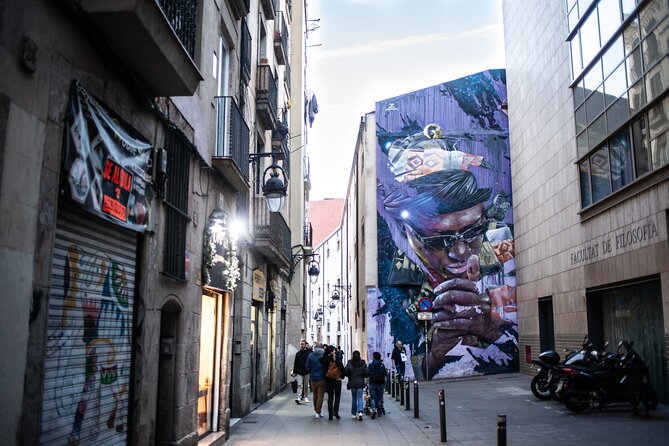
The route then reaches Avenida del Paralelo, usually written as Avinguda del Paral·lel. This part of the walk examines the so-called Chinese district and the area’s 20th-century nightlife.
Here the tone shifts from medieval and institutional history to entertainment, vice, and urban culture. Paral·lel became known for theaters, clubs, cabarets, and a seedier nightlife. The tour’s description presents this as one of the less polished sides of 20th-century Barcelona, which fits the overall theme.
I like this section because it keeps the walk from becoming a parade of old horrors. Barcelona’s dark side was not only about murder or punishment. It also involved nightlife, marginal communities, changing ideas about pleasure, and the neighborhoods that served people seeking entertainment outside respectable hours.
The exact meaning of Chinese district can require careful explanation, and this is a point where your guide’s skill matters. You want context rather than a quick label. A strong guide can show how names, stereotypes, nightlife, and urban change overlap without turning the area into a curiosity for outsiders.
Finishing at Jardins de les Tres Xemeneies
The final stop is Jardins de les Tres Xemeneies, or the Three Chimneys Gardens, at Plaça de Les Tres Xemeneies on Avinguda del Paral·lel, 49. The tour ends here, not back at the starting point.
That ending is practical if you plan to continue toward Paral·lel or Sants-Montjuïc. It also gives the walk a visual change of pace. The gardens occupy a former industrial setting, and the three chimneys recall Barcelona’s factory past. Today, the area is especially appealing if you enjoy graffiti and large-scale street art.
This is a smart final stop. After stories about crime, hospitals, monasteries, and nightlife, you finish with a public space shaped by industry and contemporary art. The city’s past has not vanished. It has been reused, painted over, and made part of everyday urban life.
Remember that the route is point to point. Wear comfortable shoes and plan your next stop from the gardens rather than assuming you will be returned to Plaça de Castella. The tour lasts about two hours, and the six 20-minute stops suggest a walking pace that is manageable for most people who can comfortably walk around a city.
What the guide adds to the experience
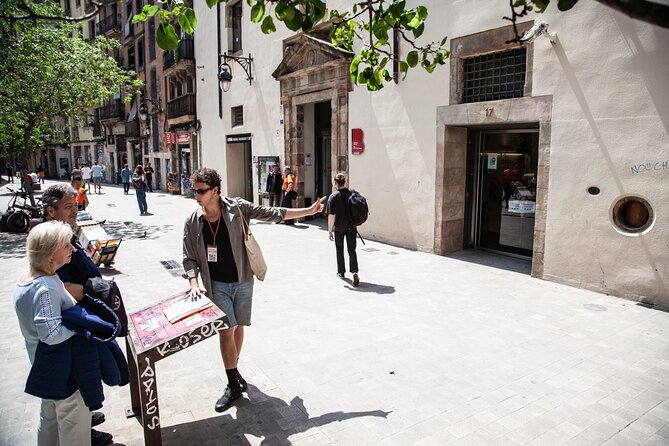
The guide is the heart of this tour. The route itself is interesting, but you can pass most of these places without understanding what they mean.
Eoghan receives especially strong praise for his warmth, humor, passion for Barcelona, and ability to tell a story. One useful detail is that he also offered suggestions for food and other things to do. That can be valuable early in your stay, when you are still deciding where to eat and which parts of the city deserve more time.
Zaynab, also spelled Zeynep in the supplied material, is described as informative and good at pointing out sights that many people would otherwise miss. Callum is praised for keeping a small group engaged while offering historical and cultural context. Andres is noted for explaining the neighborhood’s past in an enjoyable way, and Cal is described as making the group feel safe and welcome in an area that some guidebooks portray with unnecessary alarm.
Those details point to an important benefit: the walk can help you read Raval with more confidence. You are not being told that every street is dangerous, nor are you being asked to ignore the area’s problems. You are being given enough background to see the neighborhood as a real part of Barcelona, with beauty, hardship, art, history, and change all present at once.
Price, group size, and practical value
At $33.42 per person, this is not the cheapest way to spend two hours in Barcelona. You can walk through Raval alone for free. The question is what you want from the visit.
The price makes sense if you value an organized route and a guide who can connect six locations into one story. You also get local suggestions and a small group capped at 15 people. That is much better for conversation than a large coach tour, especially at stops where the guide needs to explain details rather than simply point and move on.
The experience includes an experienced local guide. Lunch is not included, which is no surprise for a two-hour walking tour. You should eat before or after according to your schedule, and the finish near Paral·lel gives you a useful area from which to continue.
A mobile ticket keeps the booking simple. Confirmation is provided at booking, service animals are allowed, and the tour is near public transportation. Most people can participate, but you should be comfortable walking for about two hours and standing during the stops.
The cancellation policy is flexible if your plans change early. You can cancel for a full refund up to 24 hours before the start time. Changes or cancellations inside that window are not accepted for a refund, and the tour requires a minimum number of people. If that minimum is not reached, you are offered another date or experience, or a full refund.
Who should book this Raval walk?
I would choose this tour if you have already seen, or plan to see, Barcelona’s major sights and want a stronger sense of the city behind the postcard. It suits curious adults, history fans, urban explorers, and anyone who enjoys hearing how ordinary streets became tied to crime, medicine, religion, industry, and nightlife.
It is also a useful first activity. One person described it as a good way to start a Barcelona visit because it made the city feel more familiar and offered useful context for later exploring. That makes sense. Once you understand where Raval sits and how its past shaped the area, you may feel more comfortable returning on your own.
I would think twice if you want only grand architecture, cheerful anecdotes, or a quiet sightseeing walk. The title is accurate. Some stories are disturbing, and the route deliberately visits the grittier side of the city. Also, because the experience ends in a different neighborhood, it may not fit neatly between reservations on opposite sides of Barcelona.
Should you book the Barcelona El Raval Dark History Walking Tour?
Book it if you want Barcelona’s less polished story and enjoy a guide who can make old buildings and ordinary streets meaningful. The route is compact, the group is small, the price is fair for a focused two-hour experience, and the high 4.9 rating from 70 reviews, with 99 percent recommending it, supports its strong reputation.
I would especially consider booking it early in your stay. Guides such as Eoghan, Zaynab, Callum, Andres, and Cal have been praised for making the walk informative, friendly, and easy to follow, though the assigned guide can vary. Skip it if crime, autopsies, and violent history are not your idea of a good afternoon.
FAQ
How long does the Barcelona El Raval Dark History Walking Tour last?
The tour lasts approximately two hours.
How many people can join the tour?
The group has a maximum of 15 people.
Where does the tour begin?
It begins at Parròquia de Sant Pere Nolasc Mercedaris, Plaça de Castella, 6, in Barcelona’s Ciutat Vella.
Where does the tour end?
The tour ends at Jardins de les Tres Xemeneies, at Plaça de Les Tres Xemeneies on Avinguda del Paral·lel, 49.
What places are included on the walking route?
Stops include Casa de Misericòrdia de Barcelona, Carrer de Joaquín Costa, the Real Academia de Medicina de Cataluña, Sant Pau del Camp, Avenida del Paralelo, and Jardins de les Tres Xemeneies.
Is lunch included?
No. Lunch is not included in the tour price.
Can I cancel for a full refund?
Yes. You can cancel at least 24 hours before the experience start time for a full refund. Cancellations or changes made less than 24 hours before the start time are not accepted for a refund.
More History Walking Tours in Spain
- Barcelona Historical Walking Tour: Gothic Quarter and El Born
★ 5.0 · 217 reviews - Madrid Historical Walking Tour
★ 5.0 · 721 reviews - Valencia: Essentials and World Heritages Sites Walking Tour
★ 4.7 · 684 reviews - Seville: Tapas, Taverns, and History Walking Tour
★ 4.9 · 676 reviews
Newest history tours we have reviewed in Barcelona
- Barcelona Tapas Tour, Taverns, History & Local Culture★ 5.0 · 25 reviews
- Barcelona Historical 3-Hour Bike Tour★ 4.7 · 222 reviews
- Barcelona: Market, Tasty Tapas/Food and Gothic History Tour★ 4.7 · 48 reviews
- Barcelona: Cemetery Tour – Gothic Graves & Local History★ 4.9 · 33 reviews
- Barcelona & Chocolate Amatller History and Culture + Activity and Tasting★ 4.9 · 173 reviews
- Barcelona: The Spanish Civil War Historical Walking Tour★ 4.9 · 239 reviews
- Barcelona: 3-Hour Esoteric, Spiritual & Historical Tour★ 5.0 · 34 reviews
- Barcelona: 3-Hour Sips, Sites & Bites Food & History Tour★ 4.8 · 33 reviews
Dark History & Haunted Tours, compared.

Savannah History and Haunts Candlelit Ghost Walking Tour
Read our review →

New Orleans Small-Group Haunted History Carriage Tour
Read our review →

Genteel and Bard’s Savannah Dark History and Ghost Encounter Walking Tour
Read our review →