Review · ROME HISTORY TOURS
Ancient Rome Tour in a Golf Cart
Rome can wear out even the keenest sightseer. This three-hour golf cart tour gives you a broad look at the city without asking you to march between every ruin. You’ll glide through narrow streets, stop near major monuments, and hear the story of ancient Rome from a guide who drives as well as explains. The Colosseum, Imperial Forums, and Circus Maximus form the tour’s big ancient-Rome spine.
I especially like the efficient route and the chance to see several places that are scattered across the city. I also like the small-group feel, with a maximum of 15 people, plus the option to get out for photos and short visits at many stops. Guides such as Matteo, Daniel, Elena, and Roberto have earned praise for clear English, humor, patience, and useful local suggestions.
The trade-off is simple: this is an outside sightseeing tour, not an entry ticket. You’ll see the monuments from the street and hear explanations rather than enter the Colosseum or Roman Forum. The golf cart can also feel shaky on Rome’s rough pavement, and the meeting point is not marked with a shop sign, so you need to wait in the right place.
Key points to know before booking

- A fast first look at ancient Rome: Cover the Colosseum, Imperial Forums, Circus Maximus, Theatre of Marcellus, and several lesser-known ruins in about three hours.
- Outside views only: The guide stops at each monument for commentary and photos, but admission to the sites is not part of this experience.
- A useful alternative to a long walking day: The cart brings you close to sights that buses and regular cars cannot reach as easily.
- Guide quality matters: Matteo, Daniel, Elena, Roberto, and Fabrizio are specifically praised for history, humor, questions, and practical advice.
- Small but not private: The cart holds up to 15 people, though some departures may be much smaller.
- Meet at Via dei Condotti 61: There is no Luxurbe sign or storefront. Wait directly outside the building entrance for the golf cart.
Why a golf cart works well in Rome
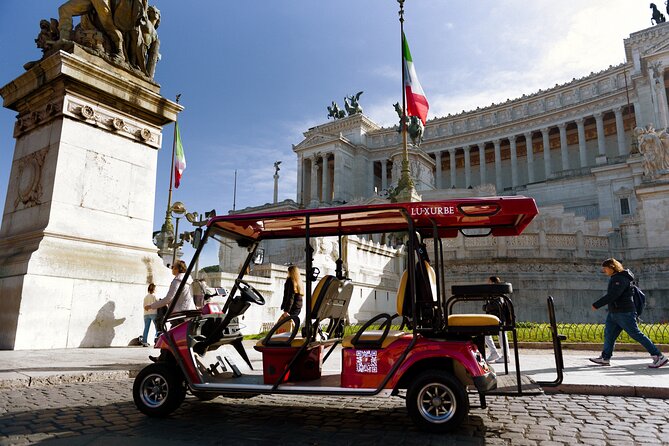
Rome’s historic center is compact on a map but tiring on foot. Ancient sites are separated by busy roads, hills, uneven paving, and long stretches where the view changes slowly. A golf cart lets you cover more ground while keeping the city close at hand.
You are not sealed inside a coach. The open-sided ride gives you a street-level view, and the cart can reach narrow lanes that ordinary tour buses cannot. That makes the route feel more connected to daily Rome, even though the main purpose is sightseeing.
The ride also helps if you want to save your legs for a later visit inside the Colosseum or Vatican Museums. It suits people with limited walking stamina, though it is not a perfectly smooth ride. The cart is essentially a small open vehicle, and Rome’s old roads can jolt you around. If you have back problems or dislike bumpy transport, keep that in mind.
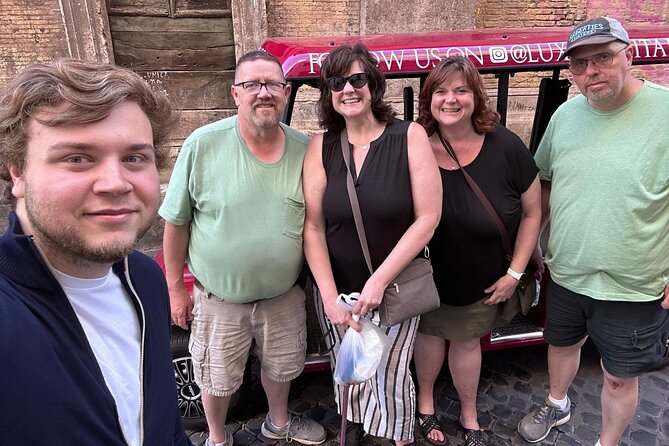
The guide is also the driver, so the experience depends heavily on that one person. The strongest feedback points to guides who keep the history lively while handling the route safely. Matteo is praised for his easy manner and care behind the wheel. Daniel is noted for teaching well and adjusting the tour to what people want to see. Elena brings strong enthusiasm for Italian history, while Roberto is praised for clear English and thoughtful answers.
More Ancient History Tours in Italy
- Colosseum: Underground and Ancient Rome Tour
★ 4.7 · 12,691 reviews - Colosseum & Ancient Rome with Arena Floor Option I Max 6 People
★ 5.0 · 3,306 reviews - Rome: Colosseum, Ancient Rome Tour or AudioGuided Tour
★ 4.4 · 2,879 reviews
Starting on Via dei Condotti
The tour starts at Via dei Condotti 61, one of Rome’s best-known luxury shopping streets. This is close to Piazza di Spagna and the Spanish Steps, so it is easy to combine with a day in the city center.
Via dei Condotti is more than a row of expensive shops. Its elegant façades and straight view toward Via del Corso make it a good opening contrast to the rough stones and broken columns you’ll see later. The street has also appeared in films, adding a small piece of modern Roman glamour before the tour turns toward antiquity.
Be precise at the meeting point. There is no Luxurbe sign or shop, and the instruction is to wait directly in front of the building entrance. The golf cart and driver are meant to find you there. Rome traffic can cause a slight delay, but one poor experience involved people waiting without clear contact, so arrive early and keep your phone available. If you arranged a custom pickup, the driver is expected to contact you shortly before arrival.
The tour returns to this same meeting point. That makes it easier to plan dinner or another walk afterward, though traffic means the total timing should be treated as approximate.
Largo di Torre Argentina and the city’s older layers
One early stop is Largo di Torre Argentina, an archaeological square with four Republican-era temples and the Curia of Pompey. The ruins sit below modern street level, which gives you a clear reminder that today’s Rome was built directly over its ancient past.
The site is also known for its cat sanctuary. Stray cats are cared for among the ruins, an unusual Roman detail that helps keep the stop from feeling like a purely academic history lesson.
You’ll have about 20 minutes here. That is enough for the guide to explain the site and give you time for photos, but not enough for a long archaeological study. The value is in seeing a major ancient complex that many people pass without understanding.
Piazza Venezia and the broad Roman view
At Piazza Venezia, the scale changes. The grand Altare della Patria dominates the square, with its white stone and broad stairways dedicated to Victor Emmanuel II. The piazza connects several important parts of central Rome, including the Roman Forum, Capitoline Hill, and major roads leading through the center.
Expect a city-view stop rather than a quiet archaeological pause. Traffic and crowds can make this one of the more hectic points on the route, but the location helps you understand how modern Rome wraps around the ancient city.
The guide can point out how the roads connect the major landmarks. That orientation is useful early in a Rome visit, when the city’s historic center can feel like a jumble of separate sites. You’ll spend about 20 minutes here, with time for photos and a short explanation.
More Ancient History Tours in Rome
- Colosseum Underground & Ancient Rome Guided Tour
★ 4.5 · 2,590 reviews - Pantheon Elite Guided Tour – Rome’s Iconic Ancient Temple
★ 5.0 · 1,447 reviews - Ancient Rome: Colosseum Underground Group Tour
★ 4.5 · 1,059 reviews - Colosseum Express Guided Tour and Ancient Rome Admission Included
★ 4.0 · 1,008 reviews
Theatre of Marcellus and the Forum Piscarium
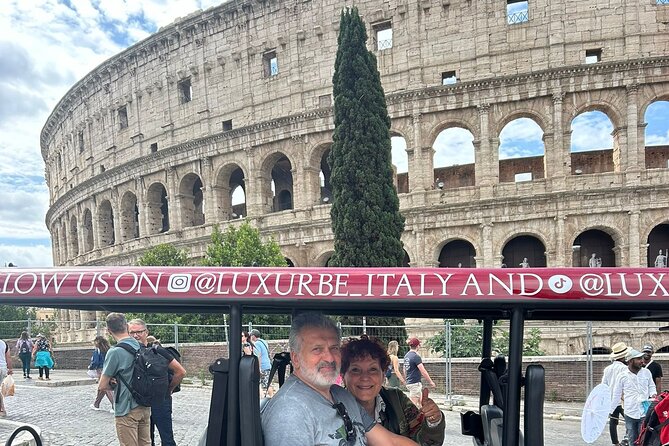
The Theatre of Marcellus is one of the tour’s more rewarding stops. Built in the late first century BC and completed under Augustus, it could once hold roughly 20,000 spectators. Its lower arches still show the shape of a major Roman entertainment venue, and its design came before the Colosseum.
What makes it especially interesting is the way later Rome grew around it. The ancient structure is not isolated in a large park. It sits among newer buildings, which lets you see how Roman construction was reused and absorbed over the centuries.
You’ll spend around 20 minutes here. The stop is long enough to take in the form of the theatre and hear how it fits into the development of Roman amphitheaters. Since you remain outside, focus on the surviving exterior rather than expecting a full archaeological visit.
Nearby, the route includes the Forum Piscarium, an ancient fish market associated with the early Roman Republic. This is a smaller and less famous piece of the route, but it adds something the grand monuments cannot: a glimpse of ordinary commerce. Ancient Rome was not only emperors, temples, and battles. It also needed markets, food sellers, and daily trade.
The planned stop is about 10 minutes, so the explanation will be brief. Still, it gives the tour a useful human scale before the larger imperial monuments return.
The Temple of Venus and Rome near the Colosseum
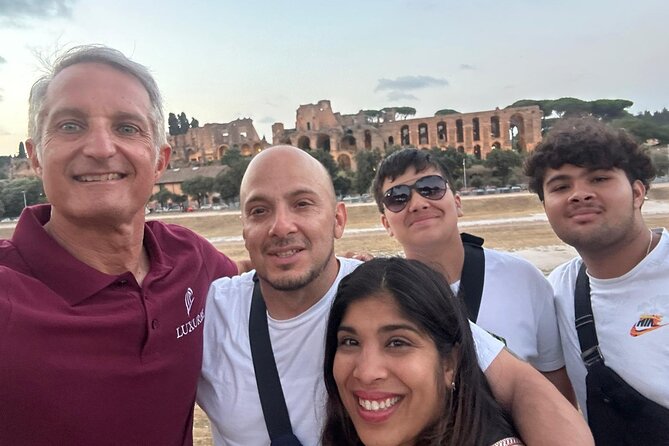
The Temple of Venus and Rome was designed under Emperor Hadrian and completed in AD 135. It honored Venus Felix and Roma Aeterna and was the largest temple in ancient Rome.
The surviving remains are impressive mainly for their size and placement. This is a good place to hear how Roman emperors used architecture to project power, connect themselves with the city, and shape the view around the Colosseum.
The tour allows about 20 minutes here. You’ll see the remains from outside, take photographs, and receive an explanation of the temple’s role. If you want to study the surviving columns, foundations, or interior details closely, you would need to return on your own with a separate admission plan.
Domus Aurea and Nero’s extravagant palace
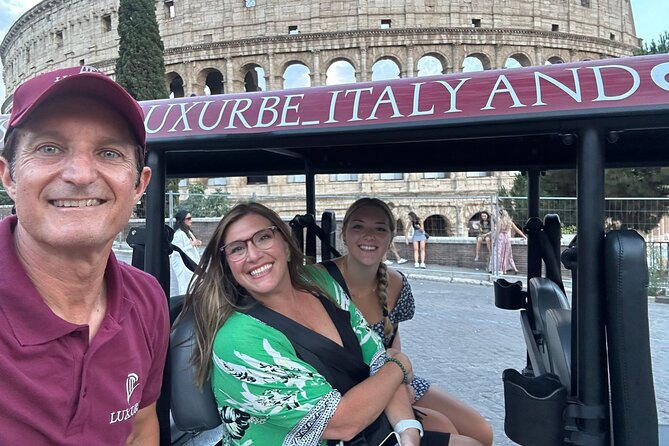
The Domus Aurea was Emperor Nero’s enormous palace complex, built after the fire of AD 64. Its reputation comes from lavish frescoes, mosaics, and gold-plated decoration. Much of the complex was later buried, which is why the site can feel less obvious than the Colosseum even though it tells an important story about imperial Rome.
This stop gives the guide a chance to explain Nero’s ambition and the political reaction to his building program. The contrast is sharp: a private palace of extreme luxury beside public monuments built to win popular support.
You’ll have about 20 minutes for the outside view and commentary. Do not book this tour expecting to enter the underground palace rooms. The golf cart tour gives you context and a location guide, while an official Domus Aurea visit would be a separate activity.
Seeing the Colosseum without entering
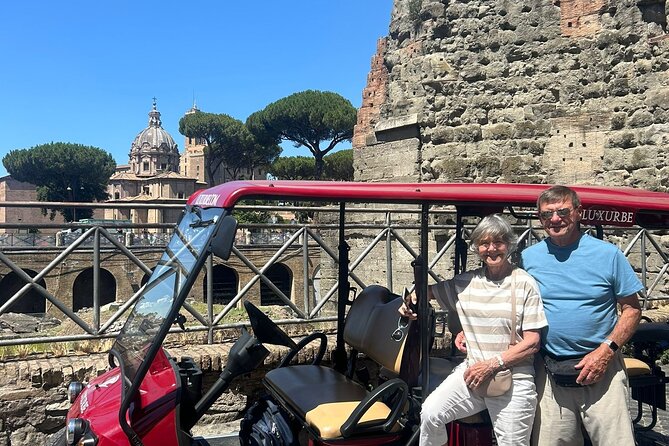
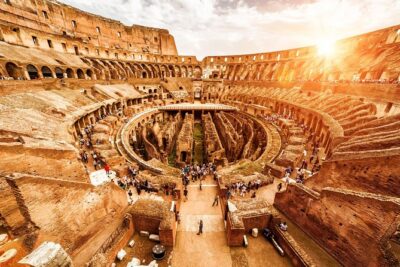
The Colosseum is the visual high point of the route. Built under Vespasian and opened under Titus in AD 80, it could hold up to 50,000 spectators for gladiatorial contests and public spectacles.
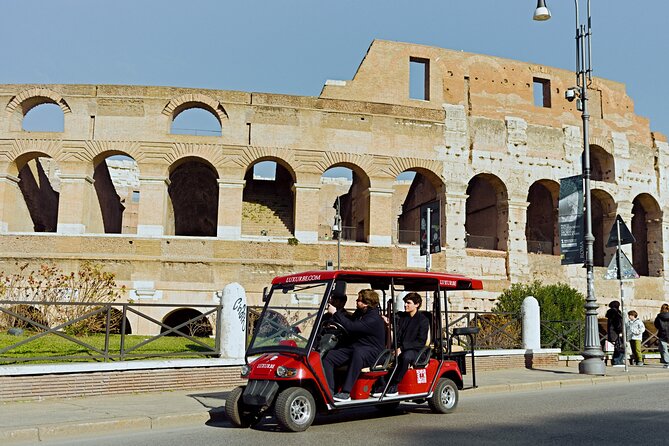
A golf cart is a practical way to approach it. You get close without spending the energy needed to walk across the ancient center, and you can step out for photographs and an explanation. The guide can help you understand the building’s scale, purpose, and place in the wider imperial district.
The key limitation is important: this tour does not include entry. You will not see the arena floor, underground chambers, or seating levels from inside. I would use this experience as an orientation, then reserve a separate timed admission if the Colosseum is a major priority for you.
The 20-minute stop works well for a first look. It is enough to appreciate the exterior and take pictures, but not enough to examine every arch or learn the full story of the building. That is exactly why the tour is best viewed as a city overview rather than a replacement for site visits.
Imperial Forums and the route through Roman power
The Imperial Forums stretch along a long corridor of ruins built between 46 BC and AD 113. Julius Caesar and later emperors created these public squares as places for politics, religion, commerce, and ceremony.
From the cart, you can see how the forums form a chain of monumental spaces rather than one single ruin. Temples, basilicas, columns, and fragments appear at different levels beside modern streets. The guide’s explanation helps connect those pieces.
This is one of the places where the headset or interactive reading material can help. Rome’s ruins are often easier to appreciate once you know what stood where. The supplied material gives you something to follow during the ride, while headsets are available if needed.
The planned stop lasts about 20 minutes. Again, it is an exterior visit. You’ll gain a clear sense of the area and its purpose, but you should not expect the slow, detailed route of an archaeological walking tour.
Circus Maximus and the scale of Roman entertainment
The Circus Maximus is a broad, elongated space that once hosted chariot races and other public events. It could hold more than 150,000 spectators, making it one of the largest entertainment venues in the ancient world.
Today, the open area can be harder to read than the Colosseum. There are fewer complete walls, and the scale only becomes clear when you look across the length of the former track. That is where the guide’s explanation matters most.
You’ll spend around 20 minutes here. It is a useful pause after the denser ruins of the Imperial Forums, and it gives you a sense of how Roman public life worked on a massive scale. You may find this stop less visually dramatic than the Colosseum, but it is valuable for understanding the size of the ancient city.
What the three hours really include
The advertised duration is about three hours, with some of that time spent moving between stops. The itinerary includes roughly 10 to 20 minutes at each location, but actual timing can shift with traffic and the pace of the group.
You will pass through a wide range of Rome, from luxury shopping streets to Republican temples, imperial monuments, markets, theatres, and racecourses. This variety is the main value. In one morning or afternoon, you can build a mental map of the historic center instead of seeing one sight in isolation.
The tour is offered in English. A licensed guide drives the cart, and headsets can be provided if required. Interactive reading material is included, which is useful if road noise or traffic makes every spoken detail hard to catch.
Bring water. Bottled water is not included, and Roman heat can make even a seated tour tiring. Wear shoes that can handle getting in and out of the cart and walking short distances around the stops.
Is $84.46 a fair price?
At $84.46 per person, this is not the cheapest way to see Rome’s landmarks. You are paying for the vehicle, the driver-guide, the compact route, and the time saved compared with walking between all these locations.
The price makes the most sense on a first day in Rome, when you want orientation before choosing which sites deserve a longer visit. It also works well if you are traveling with adult children, have limited energy for walking, or want to revisit Rome without repeating a full tourist routine.
For a private experience, this price would feel different, but the standard group can reach 15 people. Some departures may be very small, while others may feel less personal. If you want a detailed archaeological lesson at each monument, a walking tour with site entry may give you more depth for the money.
If your main goal is to enter the Colosseum or Roman Forum, add those tickets separately and count this golf cart ride as an overview. If your goal is to see many major places comfortably and decide where to return, the cost is easier to justify.
Who should book this golf cart tour?
I would choose this for a first full day in Rome, an arrival day when you want something engaging but not exhausting, or a return visit when you already know the main sights and want a quick refresher.
It suits families with older children, adults who prefer less walking, and anyone who likes history in manageable portions. It also works for people who want photographs at several sites without navigating Rome’s traffic and confusing streets alone.
I would hesitate if you want long interior visits, silent time among ruins, or a very slow scholarly tour. The road can be rough, the cart is open to city noise, and the guide must divide attention between driving and commentary. Meeting-point communication also deserves care, so arrive early and wait at the exact entrance on Via dei Condotti 61.
Should you book it?
Book this tour if you want a comfortable, efficient introduction to Rome’s ancient center and understand that every monument is viewed from outside. The best part is the combination of coverage and ease: in three hours, you can connect the Colosseum, Imperial Forums, Circus Maximus, Theatre of Marcellus, and lesser-known ruins without spending the whole day on foot.
Skip it if entering the sites is your top priority. In that case, put your money toward timed admissions and a walking guide inside the monuments. For everyone else, especially on the first or second day of a Rome stay, this is a practical way to get your bearings and choose where to return.
FAQ
How long does the Ancient Rome Golf Cart Tour last?
The tour lasts approximately three hours. Some of that time is used to travel between stops, and timing can vary with Rome traffic.
Does the tour enter the Colosseum or Roman Forum?
No. All participants see the monuments from outside, with stops for explanations and photographs. Admission is not included.
Where does the tour start and finish?
It starts at Via dei Condotti 61, 00187 Rome, directly in front of the building entrance. The activity ends back at the same meeting point.
Is hotel pickup available?
Pickup is offered, and custom pickup can be arranged. If you booked a custom pickup, the driver should contact you shortly before arrival. The standard meeting point is Via dei Condotti 61.
How many people can join the tour?
The maximum group size is 15 people. The guide is also the golf cart driver.
What is included in the price?
The price includes golf cart transportation, a licensed guide, interactive reading material, and headsets if required. Bottled water is not included.
More Ancient Rome and Colosseum Tours in Rome
- Rome: Colosseum with Arena, Roman Forum and Palatine Guided Tour
★ 4.0 · 5,598 reviews - Colosseum with Arena, Roman Forum and Palatine Hill Guided Tour
★ 4.5 · 3,526 reviews - Rome: Colosseum Arena, Roman Forum & Palatine Hill Tour
★ 4.5 · 1,874 reviews - Colosseum, Roman Forum & Palatine Hill Guided Tour
★ 4.5 · 1,568 reviews
More History Bike, Segway and Tuk-Tuk Tours in Rome
- Golf Cart Tour Rome: Glide By Ancient Wonders & Hidden Gems
★ 5.0 · 256 reviews - Ancient Appian Way PRIVATE Bike Tour
★ 5.0 · 89 reviews - Rome in Golf Cart 4 Hours History & have Fun
★ 5.0 · 37 reviews - Ancient Rome Half-Day Segway Tour
★ 4.8 · 25 reviews
Newest history tours we have reviewed in Rome
- Ancient Rome: Archeological area Largo Argentina★ 3.9 · 49 reviews
- Ancient Rome Half-Day Segway Tour★ 4.8 · 25 reviews
- Colosseum Forum Ancient Rome Small Group Tour for Kids Families★ 5.0 · 198 reviews
- VIP Colosseum Underground and Ancient Rome Small Group Tour★ 4.5 · 332 reviews
- Colosseum & Ancient Rome Semi-Private Tour★ 5.0 · 208 reviews
- Small-Group Rome to Pompeii & Amalfi: Day of History & Sea★ 5.0 · 239 reviews
- Colosseum & Ancient Rome Guided Walking Tour★ 5.0 · 332 reviews
- Ancient Rome at Twilight Walking Tour★ 5.0 · 276 reviews
Ancient Rome & Colosseum Tours, compared.
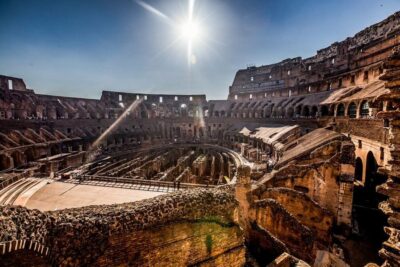
Colosseum: Underground and Ancient Rome Tour
Read our review →
Colosseum with Arena, Roman Forum and Palatine Guided Tour
Read our review →
Colosseum with Arena, Roman Forum and Palatine Hill Guided Tour
Read our review →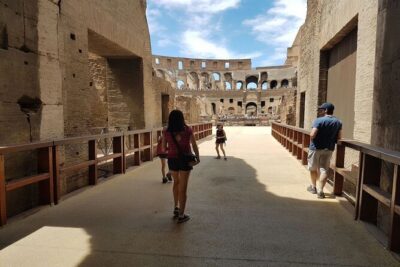
Colosseum & Ancient Rome with Arena Floor Option I Max 6 People
Read our review →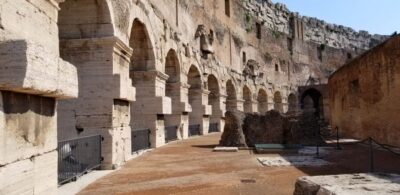
Colosseum, Ancient Rome Tour or AudioGuided Tour
Read our review →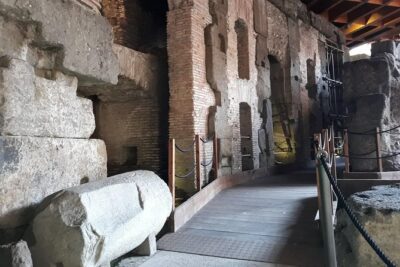
Colosseum Underground & Ancient Rome Guided Tour
Read our review →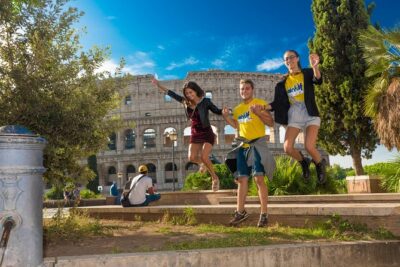
Colosseum Arena, Roman Forum & Palatine Hill Tour
Read our review →