
Review · BRAZIL HISTORY TOURS
Ancient Rio and Santa Teresa Tour with Hotel pick-up and drop-off
Santa Teresa’s steep lanes, old mansions, street art, and yellow tram give Rio a very different face from the beaches. Then the tour shifts to Ancient Rio, where imperial squares, former markets, theaters, libraries, and grand government buildings tell the story of the city’s rise.
I like the mix of neighborhood wandering and downtown landmarks. I also like the small-group format, with a maximum of 19 people in a minivan and the chance to have guides such as Renato, Dario, Wagner, or Monica explain the city in clear, personal terms. The main catch is that the tram ride is not included, and the four-hour schedule can feel rushed.
Key points to know before you book
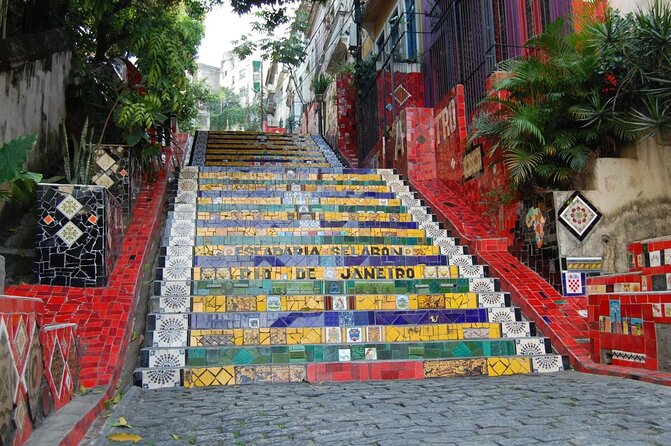
- Santa Teresa brings the old Rio atmosphere: See early-20th-century mansions, colorful walls, artists’ spaces, and the historic tram route.
- The 1897 tram is viewed, not ridden: This tour does not include a tram ticket or a ride.
- Downtown is the tour’s historical core: Praça XV, Arco do Teles, Cinelândia, and the grand civic buildings connect Rio’s colonial, imperial, and modern eras.
- You visit several buildings from outside: The National Museum of Fine Arts, Theatro Municipal, and National Library are architectural stops, not interior visits.
- Hotel pickup and return add real value: The tour begins and ends at the Rio Othon Palace area, with pickup timing arranged according to your hotel.
- Allow for walking on old streets: Uneven cobblestones and short walks make comfortable shoes important.
Santa Teresa first, with Rio’s old tram nearby
The tour begins in Santa Teresa, a hillside neighborhood known for its slower pace, artistic character, and grand houses from the early 1900s. You get about an hour here, enough to see the main character of the area without turning the visit into a long neighborhood walk.
The setting is one of the best reasons to book this outing. Santa Teresa feels removed from the broad avenues and beach hotels below. Its old mansions, narrow streets, painted walls, and small art spaces offer a look at a more personal side of Rio. The area has long been connected with painters and other artists, and the colorful street art gives the neighborhood a strong visual identity.
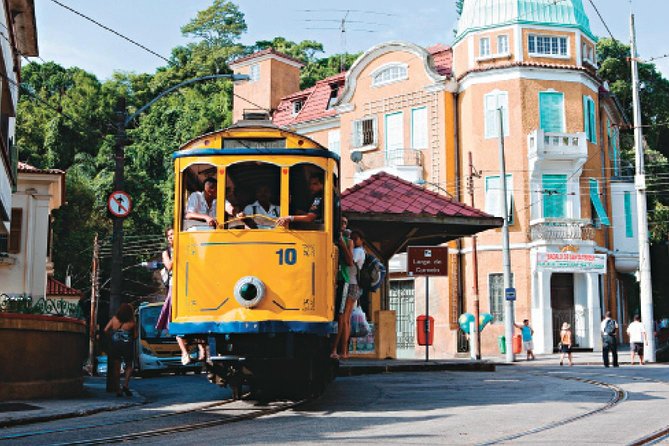
You will also see the famous tram, built in 1897. It is an important piece of Santa Teresa’s past and remains one of the area’s most recognizable sights. Be clear about what you are buying, though: the tour does not include riding the tram. Several people expected the old yellow tram experience and found the omission disappointing.
That is not a minor detail if the tram is your main reason for booking. A separate tram ride requires more time, and this shared tour uses those hours to cover a wider stretch of Rio. If you want a leisurely ride, long photo stops, and time to browse shops, a private tour would give you more control.
Santa Teresa’s charm comes with practical limits. The streets can be uneven and steep in places, so you should wear walking shoes and expect some cobblestone. Monica received special praise for helping a passenger with walking difficulties, but the tour is not designed as a fully step-free experience.
More Ancient History Tours in the world:
- Colosseum: Underground and Ancient Rome Tour
★ 4.7 · 12,691 reviews - Colosseum & Ancient Rome with Arena Floor Option I Max 6 People
★ 5.0 · 3,306 reviews - Rome: Colosseum, Ancient Rome Tour or AudioGuided Tour
★ 4.4 · 2,879 reviews
Parque das Ruínas and the story of Laurinda Santos Lobo
The next stop is Parque das Ruínas, a former home connected with Laurinda Santos Lobo, an important supporter of artists. The building now serves as a cultural center and keeps that artistic connection alive.
You have about 20 minutes here. That is enough to see the site and take photographs, but not enough for a long program or a slow visit. The stop works well because it adds human context to Santa Teresa. You are not simply looking at old walls and colorful streets. You are also learning how the neighborhood became linked with Rio’s creative life.
The cultural center is free to visit as part of the tour. Still, the schedule remains tight, so your experience depends heavily on the guide and the pace of the group. Guides such as Renato and Romeu have been praised for connecting architecture, local culture, and Brazilian history in an easy way. Other guides have been described as less engaged, so the quality of the commentary can vary.
Lapa’s Arches, from water supply to tram route
Arcos da Lapa gets around 30 minutes, making it one of the longer stops. The great white arches once carried water into the city. Today, they support the Santa Teresa tram route and serve as one of Rio’s most recognizable urban landmarks.
This is a useful place to understand how Rio changed over time. A structure first built for water transport later became part of a public transport route. The arches link the old city’s practical needs with its present-day identity.
You will have time for photographs and an explanation from the guide, but do not expect a long independent stop. The tour moves through several districts in four hours, so the value here comes from the story and the wider route rather than a detailed architectural study.
Praça XV and imperial Rio
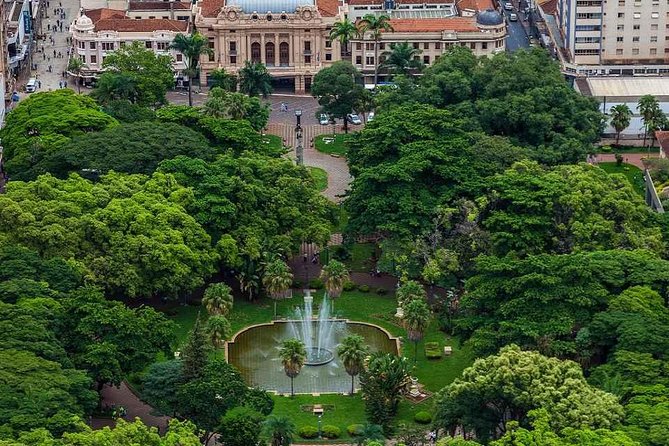
At Praça Quinze de Novembro, the tour enters the historic center. The square is surrounded by major buildings, including Paço Imperial, Palácio Tiradentes, and the Legislative Assembly of Rio de Janeiro.
This is one of the most useful stops for understanding Rio as a former capital and imperial center. The square also includes Praça XV Station, a ferry terminal serving Rio and Niterói. That transport connection helps you see the area as part of a living city, not only as a preserved historic quarter.
You get roughly 30 minutes here. I would use the time to listen first, then photograph the buildings and ask the guide to point out the different periods represented around the square. Guides who explain the complicated colonial and political past of Rio can make this section especially rewarding.
The setting can also be quiet at certain times. A Sunday morning may offer a calmer downtown visit, but shops and cultural venues may be closed. New Year’s Day and Mondays can have the same problem. If you want open shops, cafés, and handicraft stalls, ask about the day of the week before booking.
More History Tours in the world:
- New York City: American Museum of Natural History Ticket
★ 4.5 · 15,447 reviews - History and Hauntings of Salem Guided Walking Tour
★ 5.0 · 14,564 reviews - Lisbon: History, Stories and Lifestyle Walking Tour
★ 4.8 · 10,902 reviews - London Small Group Tour of Historical Pubs
★ 5.0 · 10,422 reviews
Arco do Teles and the former market quarter
Arco do Teles is a smaller, more intimate stop. It sits in an area that was once the city’s downtown market, with narrow streets and alleys now lined with bars and small restaurants.
The tour allows about 20 minutes here. That is enough to see the passage, understand its old market role, and get a taste of the area’s current social life. It is not a full meal stop, and lunch is not included.
This is also where the schedule can feel too strict. Some tours move quickly through the lanes, leaving little time to sit down for coffee or enjoy a snack. If you need a drink, a bathroom break, or a proper pause, speak up early. At least one poor experience came from a guide refusing a short refreshment stop because the group was behind schedule.
Cinelândia and the grand buildings of central Rio
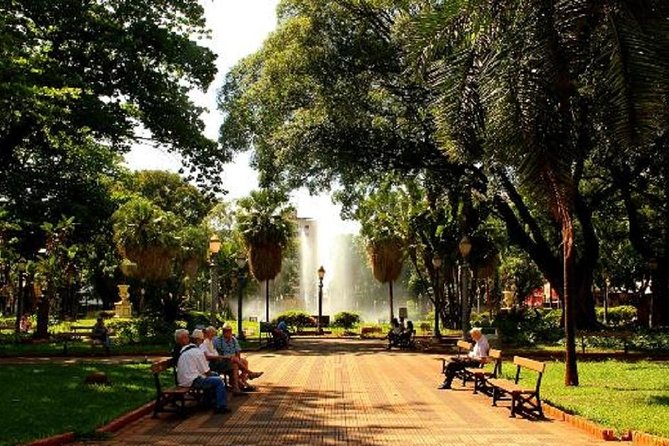
Cinelândia receives about 30 minutes. This famous square is surrounded by grand historic buildings and offers strong photo opportunities. It is a good place to see how Rio’s urban modernization changed the center during the early 20th century.
The nearby National Museum of Fine Arts was designed in 1908 by Adolfo Morales de los Rios. It was built for the National School of Fine Arts, which continued the work of the Imperial Academy of Fine Arts. The building itself reflects the modernization of Rio under Mayor Pereira Passos, when the city was the federal capital.
You do not enter the museum. The focus is the exterior architecture, so this stop will suit you if you like buildings and city design more than gallery time. Museum admission is not part of the price.
Theatro Municipal comes next, or forms part of the same central-city sequence. Opened in 1909, it is one of Brazil’s major theaters and has hosted dancers, musicians, opera singers, and performers from Brazil and abroad. Since the 1930s, it has maintained its own choir, symphony orchestra, and ballet company.
Again, you view the building from outside. You get about ten minutes, which is enough to appreciate the facade and hear why the theater matters, but not enough for a performance or interior tour. If you are hoping to see the ornate inside, you will need a separate visit.
The National Library is another exterior stop. Founded in 1810 by King João VI of Portugal, it holds almost nine million items, including rare books, manuscripts, letters by Princess Isabel, early Brazilian newspapers, and two copies of the Mainz Psalter Bible, printed in 1492.
The building is imposing, but the schedule gives you about ten minutes and does not include entry. This is a good example of the tour’s overall approach: you see many important places quickly, then decide which ones deserve a longer return visit.
What the four-hour schedule really feels like
The published stops add up to several hours, but the tour is described as approximately four hours because driving, pickup, traffic, and group movement are built into the day. You should expect a compact overview rather than a slow walking tour.
That compact format is useful if you have limited time in Rio or want an introduction before choosing where to return. The air-conditioned vehicle saves energy in the heat and makes it possible to cover Santa Teresa, Lapa, Praça XV, and Cinelândia in one morning or afternoon.
The downside is uneven pacing. Some guides have allowed plenty of time for photographs and questions. Others have hurried people along, creating the feeling that each stop is only a quick glance. Full vehicles can also affect your view, especially if you are placed in one of the middle rear seats.
Group size matters here. The minivan can hold up to 19 people, while the overall activity may include as many as 99 participants across vehicles. If you prefer quiet conversation and complete control over timing, book a private version instead. Several people had excellent private outings with guides including Roger and Dario, who were able to adjust the route and respond to individual interests.
Guides can make or break the experience
The strongest part of this tour is often the guide. Renato has been praised for linking history, economics, and modern Rio. Dario has been described as warm, well informed, and especially good at explaining Ancient Rio. Wagner, Romeu, Wanessa, Jack Daniel, Roger, and Monica also received positive comments for their energy, punctuality, language skills, or care with individual needs.
That praise points to what you should hope for: not just names and dates, but an explanation of how Rio developed from a colonial port into Brazil’s capital and then into the modern city you see today.
The weaker experiences had a different pattern. Some guides spoke little, gave incorrect details, seemed distracted by the driver, or offered commentary that was difficult to follow. A strong guide can make a short exterior visit feel worthwhile. A disengaged guide can make even an impressive building seem like a passing view from a van window.
Pickup communication is another point to watch. The operator contacts you with the exact time based on your hotel, so check email and your phone before the tour. Delays of more than 30 minutes have occurred, and Carnival traffic can make the problem worse. One departure ran more than an hour late because of transport problems and festival congestion.
Is $55 a fair price?
At $55 per person, the tour offers reasonable value if you want transport, hotel pickup and return, a guide, and a broad introduction to two different parts of Rio. The air-conditioned vehicle matters in a hot city, and avoiding the need to arrange separate transport between Santa Teresa and the center adds convenience.
The price is less attractive if you expect extensive walking time, tram travel, food, or museum entry. Lunch is not included, and the tour only views the National Museum of Fine Arts, Theatro Municipal, and National Library from outside.
I see the price as strongest for a first visit, a short stay, or a day when you want to understand the city beyond Corcovado and Sugarloaf. It is less suitable if you already know central Rio and want a slow, detailed cultural visit.
Who should book this Rio history tour?
I would recommend it to you if you want to see parts of Rio that are easy to miss from the beach districts. It is especially useful for a first visit, a short stay, or anyone who wants a guided introduction before exploring Santa Teresa and downtown alone.
You should also book it if you value local explanation. The city’s architecture and public spaces make more sense when someone connects the Portuguese court, imperial Rio, urban modernization, art, transport, and present-day culture.
I would hesitate if you have mobility problems with uneven cobblestones, unless you confirm your needs in advance. I would also hesitate if the historic tram ride is essential, since it is not included. Finally, avoid expecting a leisurely café crawl. The schedule is designed to cover ground.
The tour requires at least two people to operate and can be canceled for poor weather or if the minimum is not met. You can cancel for a full refund up to 24 hours before the start time. Comfortable clothes and walking shoes are sensible, and you may be asked to show a copy of your identification.
Should you book Ancient Rio and Santa Teresa?
Book this tour if you want a practical, affordable overview of Santa Teresa and Rio’s historic center, with hotel transport and enough context to make the buildings meaningful. The combination of the 1897 tram, Parque das Ruínas, Lapa Arches, Praça XV, Arco do Teles, and Cinelândia gives you a strong first look at old Rio.
Choose a private tour instead if you want to ride the tram, linger over coffee, enter museums, or shape the route around your own interests. For the shared option, confirm pickup time, ask whether the tram will be ridden, and choose a day when the places you care about are likely to be open.
FAQ
How long does the Ancient Rio and Santa Teresa tour last?
The tour lasts approximately four hours.
Where does the tour start and end?
The listed meeting point is Hotel Rio Othon Palace at Av. Atlântica, 3264, in Copacabana. The activity ends back at the meeting point.
Is hotel pickup included?
Hotel pickup and drop-off are included, with the exact pickup time arranged according to your hotel location. Check your email and phone for the updated time.
Can I ride the Santa Teresa tram?
No. The tour lets you see the historic tram, but a tram ride and admission ticket are not included.
Does the tour enter the museums and historic buildings?
No. The National Museum of Fine Arts, Theatro Municipal, and National Library are exterior architecture stops. Museum entrance fees are not included.
Is lunch included?
No. Lunch is not included in the tour price.
How many people can join the tour?
The minivan can hold a maximum of 19 people. The activity information also lists a maximum of 99 participants overall.
What should I wear?
Wear comfortable clothing and walking shoes. Santa Teresa and the historic center include uneven cobblestone streets, so supportive footwear is important.
Newest history tours we have reviewed in the world
- Bilbao Historical Tour in small group★ 4.7 · 52 reviews
- Bologna: Street Food Tour in the Historic Center★ 4.8 · 125 reviews
- CEBU: Cebu City Heritage and Uphill Guided Tour★ 4.2 · 31 reviews
- Bishkek : City Tour (History, Architects, Statues & Culture)★ 4.9 · 54 reviews
- Blenheim: Omaka Aviation Heritage Centre Admission Ticket★ 4.9 · 31 reviews
- Best of Baku: 4-Hour City Tour Historic and Modern Landmarks★ 4.7 · 63 reviews
- Belfast: Best of Belfast History, Culture & Art Walking Tour★ 4.9 · 158 reviews
- Berlin: Nazi History Walking Tour★ 4.8 · 33 reviews
Ancient History Tours, compared.
Colosseum: Underground and Ancient Rome Tour
Read our review →
Colosseum & Ancient Rome with Arena Floor Option I Max 6 People
Read our review →
Colosseum, Ancient Rome Tour or AudioGuided Tour
Read our review →
Colosseum Underground & Ancient Rome Guided Tour
Read our review →

Taormina: Ancient Theater Skip-the-Line Ticket & Audio Guide
Read our review →
Discover the Ancient Ruins of Pompeii: Day Trip from Rome
Read our review →
Discover Matera, the ancient city – English tour
Read our review →Browse the lists this tour appears in