
Review · SPAIN HISTORY TOURS
Alcalá World Heritage Tour
Alcalá de Henares is more than a day trip from Madrid. It is a university city, a Cervantes city, and a place where centuries of Spanish history meet on a compact old-town route. This $11 tour with David Alba takes you from the quieter Plaza de las Bernardas to the old University of Alcalá, the city’s grand finale.
I like two things right away: David brings both the celebrated events and the uncomfortable parts of Alcalá’s past into the story, and the tour keeps moving without turning into a lecture. The main consideration is language. The listed live tour is in Spanish, so you should contact David in advance if you need the tour in English.
Key points to know
- A low-cost introduction: At $11 per person, this is an inexpensive way to get your bearings before exploring Alcalá on your own.
- David Alba leads the tour: He is a certified guide and a tourism graduate from the University of Alcalá de Henares.
- Cervantes is central: You visit the birthplace museum, the old Hospital de Antezana, Cervantes Square, and the chapel holding his baptismal certificate.
- The university is the finale: The tour saves the Old University of Alcalá for the end, where the city’s identity comes into focus.
- Mostly exterior sightseeing: The route includes many outside views, with entry into the Capilla del Oidor. The 6:00 pm group does not enter the chapel.
- A playful touch: David includes a game during the tour, with the result revealed near the end.
Why Alcalá works so well as a day visit
Alcalá de Henares has a useful advantage for a first-time visitor: its major sights sit close together in the historic center. You can move from medieval religious buildings to Cervantes landmarks, then finish among university courtyards and old academic façades without spending the day crossing a large city.
The setting also gives the tour a clear storyline. Alcalá was shaped by several cultures and by the university founded under Cardinal Cisneros. It later became closely linked with Miguel de Cervantes Saavedra, author of Don Quixote de la Mancha. David uses these threads to explain not just what a building is, but why it matters to the city.
I especially like the choice to begin at Plaza de las Bernardas rather than at the busiest university square. You start in a quieter section of the historic quarter, then gradually move toward the places most visitors have come to see. That pacing gives the route a natural build.
This is not a full museum day. Most stops are explained from outside, and the listed times are short, usually five to fifteen minutes. Think of it as a lively orientation with historical context, not an extended architectural study.
More UNESCO World Heritage Tours in Spain:
- Essentials of Valencia and its World Heritage Sites
★ 4.5 · 405 reviews - World Heritage Shirakawa-go and Experience Tours from Kanazawa
★ 5.0 · 4,049 reviews - From Tirana: Berat UNESCO Heritage & Belshi Lake Tour
★ 4.9 · 3,863 reviews
Starting at Plaza de las Bernardas and the Arch of San Bernardo
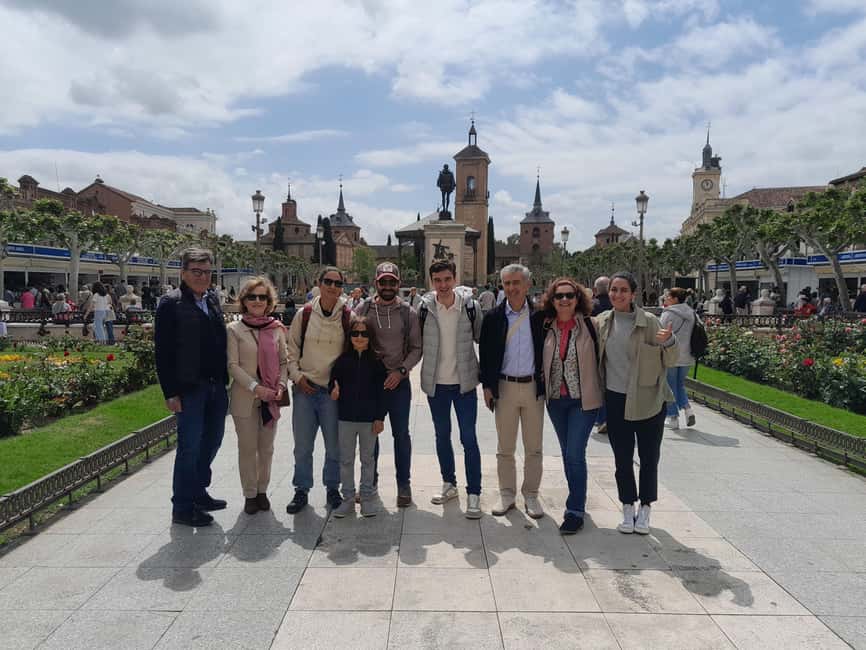
The meeting point is the obelisk in Plaza de las Bernardas. David wears a card marked Discover with David, which should make him easy to identify.
The plaza provides a calmer opening than the more famous central streets. David introduces Alcalá’s long past here and begins explaining how the old quarter developed. The nearby Arch of San Bernardo is also included, giving you an early look at the way historic routes and religious institutions shaped the city.
This opening is useful if you have just arrived from Madrid and want to get your bearings fast. You are not thrown into a dense list of names. Instead, the first few minutes establish the basic story you will hear repeated in different forms throughout the walk: Alcalá was a place of faith, study, trade, and cultural exchange.
Archbishop’s Palace and the Casa de la Entrevista
The Archbishop’s Palace is one of the route’s larger historic façades. David explains its connection to the city’s religious and political importance, helping you read the building as more than an attractive old wall.
The next stop is the Casa de la Entrevista, or Interview House. The visit is brief, but it adds another layer to Alcalá’s past. This section of the route works best as a transition between the city’s religious history and the grander civic and academic sights ahead.
Because the tour focuses on exterior visits, you should not expect a long indoor examination of either building. Their value here is in the explanation and the way David connects them to the surrounding streets.
The Cathedral of the Holy Children
The Magistral Cathedral of the Holy Children is one of the most important religious buildings in Alcalá. Its name refers to the city’s young Christian martyrs, Justo and Pastor, whose story is tied closely to Alcalá’s identity.
David gives you about ten minutes here, enough time to understand the cathedral’s place in the city and to examine its exterior. The cathedral is a good example of why a guide helps. Without context, you might simply mark it as another historic church. With an explanation, it becomes part of the larger story of Alcalá as a religious center.
Since the tour does not promise a full interior visit, check your expectations before booking. If entering the cathedral is a priority, you will need to arrange that separately.
More History Tours in Spain:
- Madrid Essential: Historic Center, Plaza Mayor & Royal Palace
★ 5.0 · 6,416 reviews - Barcelona: Tapas Walking Tour with Food, Wine, and History
★ 4.8 · 4,261 reviews - Sevilla Food Tour: Tapas, Wine, History & Traditions
★ 5.0 · 3,468 reviews - Valencia Old Town Tour with Wine & Tapas in 11th Century Historic Monument
★ 5.0 · 3,234 reviews
Calle Mayor and the city’s everyday character
Calle Mayor brings a change of mood. This historic main street is one of the key public spaces in Alcalá, and it helps you picture how the old center functions beyond its monuments.
The route here is not just a march between famous buildings. David points out the relationship between the street, the surrounding houses, and the city’s long commercial life. The stop is short, but it gives you a chance to see Alcalá as a living town rather than an open-air museum.
I like this part because it breaks up the sequence of palaces and churches. You get a sense of the old center’s daily rhythm before moving into the more personal Cervantes section.
Cervantes’ birthplace and the Hospital de Antezana
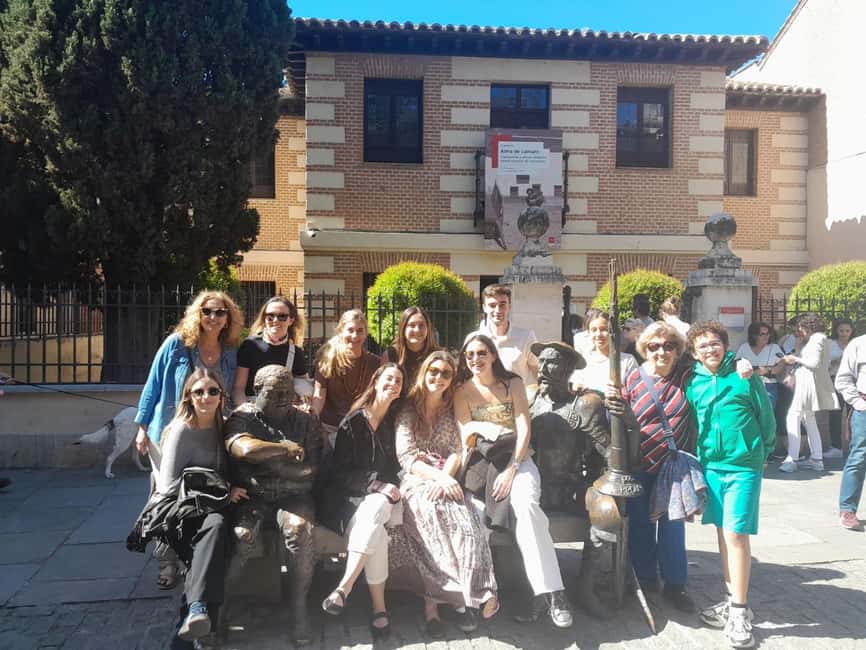
Miguel de Cervantes is one of Alcalá’s strongest claims to fame, and the tour gives him a substantial place in the story. At the Cervantes Birthplace Museum, David explains the connection between the author and the city.
The museum marks the traditional birthplace of Cervantes and offers context for the writer behind Don Quixote. The planned visit here is mainly a guided explanation from outside, so you should not assume that the museum admission itself is included.
The nearby Old Hospital of Antezana adds an unexpected detail. Cervantes’ father, Rodrigo de Cervantes, worked there as a surgeon, linking the writer’s family directly to this institution. This is exactly the sort of small connection that makes a short city tour feel more personal.
David’s style appears best suited to people who like stories with side paths. His explanations include celebrated events, difficult episodes, and counterhistory rather than only the polished official version. He also keeps a light tone, which helps when the subject turns serious.
Cervantes Square and the Corral de Comedias
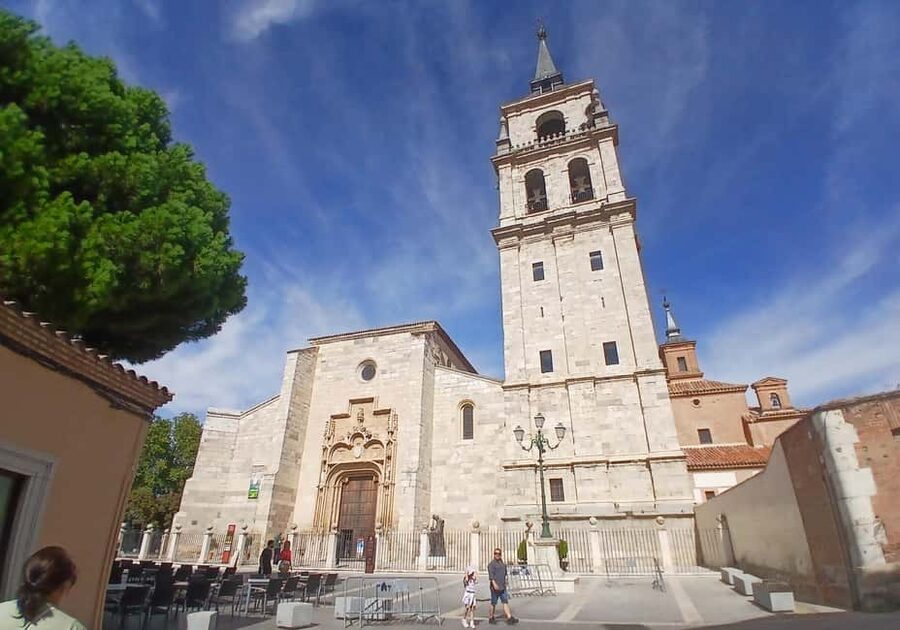
Cervantes Square is a natural place to pause and connect the writer’s name with the city around you. The square also brings together several important public and cultural landmarks.
The Corral de Comedias is one of the most interesting stops for anyone curious about Spanish theatre. A corral de comedias was a traditional performance space, and Alcalá’s venue is part of the city’s long theatrical history.
The stop is brief, so you will receive an introduction rather than a full theatre tour. That is still valuable. David gives you the basic purpose and setting, then moves the group onward before the route becomes repetitive.
You may want to return later if the theatre interests you. The tour helps you decide which places deserve more of your time after the guided walk.
The Capilla del Oidor and Cervantes’ baptismal record
The Capilla del Oidor is the tour’s main interior visit. Inside, you can see the place where Cervantes’ baptismal certificate is kept, an especially meaningful stop for anyone interested in his life.
This is a small but important detail. The birthplace museum connects Cervantes with Alcalá by tradition and family history, while the baptismal record provides a more direct documentary link.
The standard plan includes entry into the chapel, but the 6:00 pm group does not enter. If seeing this document matters to you, avoid that departure time or confirm the arrangement with David before booking.
The chapel also gives the route a useful change of pace. After several exterior explanations, you step indoors for a specific object with a direct connection to the author.
Saving the Old University for last
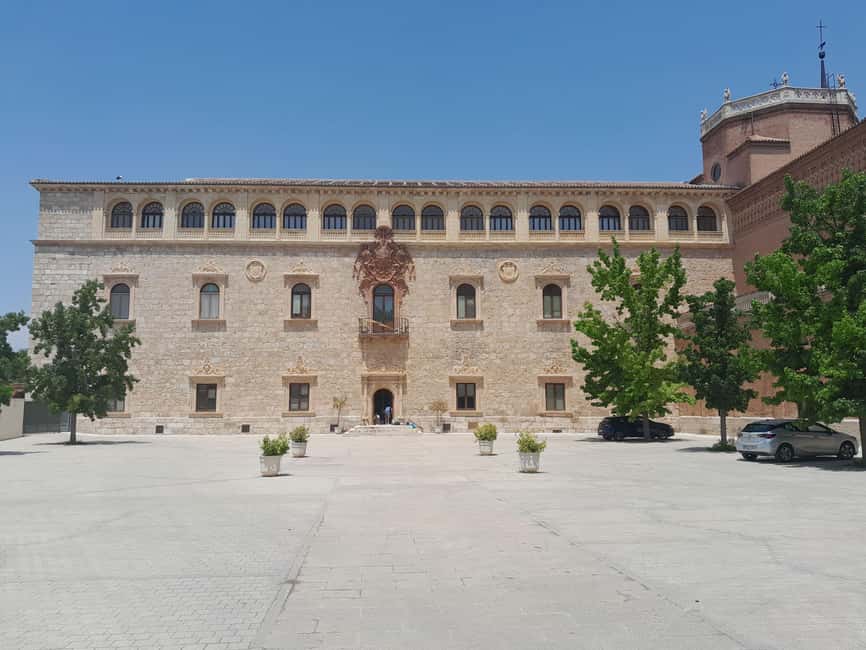
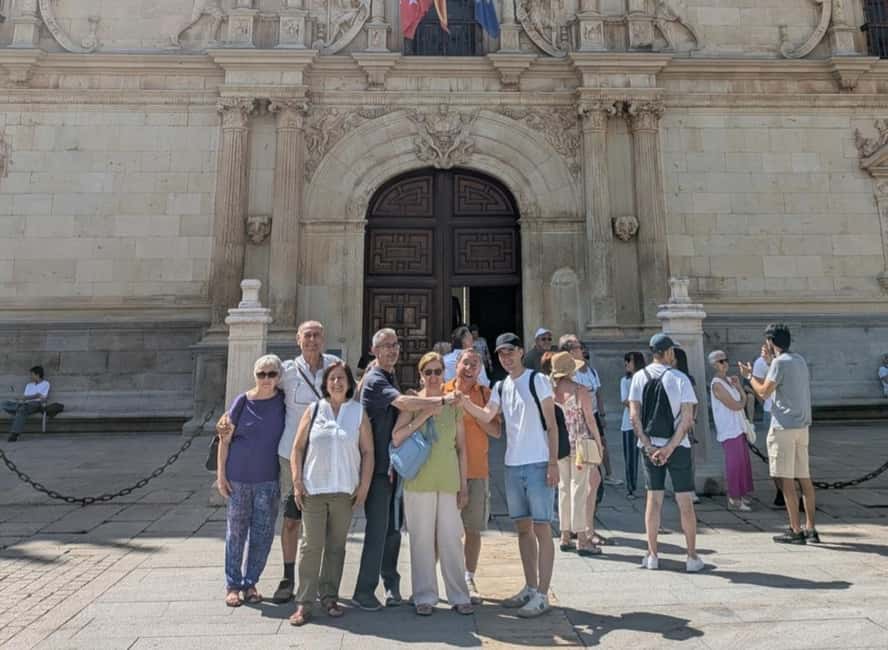
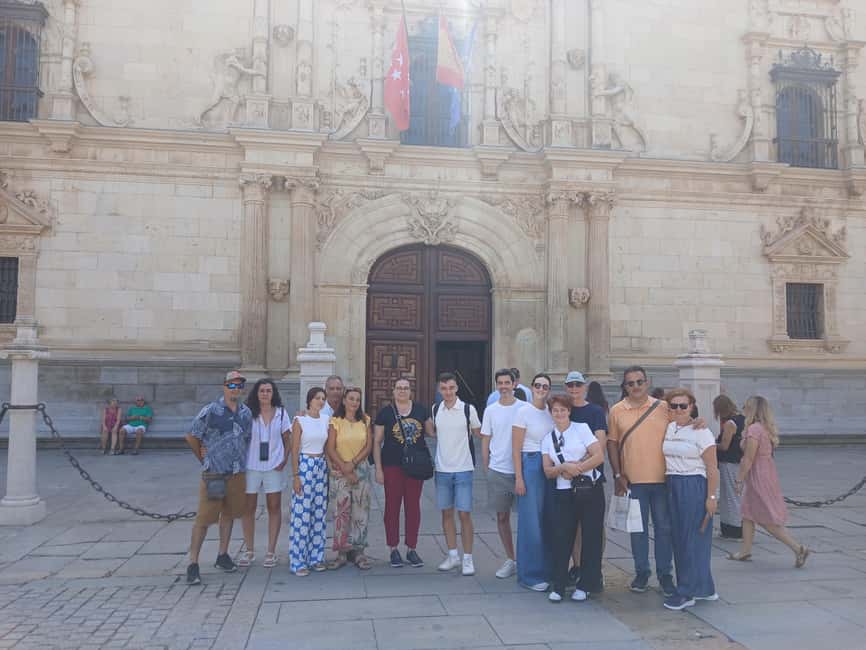
The Old University of Alcalá is the tour’s most important stop, and the route wisely leaves it until the end. Founded through the work of Cardinal Cisneros, the university helped make Alcalá the first university city in the world, according to the tour’s historical framing.
The university is not simply another grand building. It explains why Alcalá developed the cultural importance it did. Students, teachers, religious figures, and scholars shaped the city’s streets and institutions, leaving a mark that you can still see in the historic center.
David studied tourism at the University of Alcalá de Henares, so this is also the part of the tour where his connection to the city feels most direct. He can explain the university as both a historic institution and a continuing part of Alcalá’s identity.
The official route finishes at Plaza de San Diego, beside the university area. Ending here gives the tour a satisfying structure. You begin with the older quarter, pass through religious and Cervantes landmarks, and finish at the institution that brought Alcalá its international importance.
Again, the emphasis is on an exterior visit. The description does not promise a full indoor university tour or access to every courtyard. If you want detailed interior access, ask about separate admission or another visit.
David Alba’s guiding style
The strongest part of this experience is the guide. David Alba is a certified guide and a graduate of the University of Alcalá de Henares. His approach is described as friendly, funny, clear, and packed with historical detail.
That combination matters. Alcalá has enough dates, names, religious references, and literary connections to overwhelm you if they are delivered without a plan. David’s route keeps the explanations short at each stop, then builds the larger story as you go.
He also aims to use every minute of the tour. That suits you if you prefer a steady pace and plenty of information. It may feel fast if you want long periods for photographs or quiet inspection at each building.
A game is included during the walk, with the outcome revealed near the end. It is a small feature, but it gives the group something playful to follow between the heavier historical subjects.
The feedback around David is notably warm. Paula Lorente praised his command of history, his humor, his clear explanations, and his willingness to cover both positive events and less comfortable counterhistory. Manuel Anglés described the tour as especially friendly and entertaining. Those comments fit the tour’s stated aim: serious content delivered in an easy way.
Price, timing, language, and practical details
At $11 per person, this is strong value if you want an introduction to Alcalá rather than a series of paid interior admissions. The price covers the guided route and the listed visits, but most stops are outside. Only the Capilla del Oidor is specifically included as an interior visit, and the 6:00 pm departure skips that entry.
The activity is valid for one day, with starting times shown when you check availability. The stop-by-stop plan adds up to a compact guided experience, although the booking information describes the duration as one day rather than giving a precise total walking time. Allow extra time around the scheduled start and finish.
The live guide is listed as Spanish. English is available only by contacting David, so this is the most important point to settle before you reserve. Some content is shown in its original language.
The route is wheelchair accessible according to the activity information. You can also cancel up to 24 hours in advance for a full refund and reserve without paying immediately, which gives you some flexibility if your Madrid plans are still changing.
Who will enjoy this Alcalá tour
I would choose this tour if you are visiting Alcalá for the first time and want the main story in one organized outing. It suits history fans, literature lovers, and anyone who wants to understand why the city earned World Heritage status.
It is also a good match for visitors who prefer a guide with personality. David’s humor, game, and direct explanations keep the route from feeling like a string of formal lectures.
Families may appreciate the short stops and playful format, although the amount of historical information will work best for older children and adults. The tour can also help you decide which interiors to revisit later.
I would hesitate if your priority is a long cathedral visit, a full university interior tour, or extensive time inside museums. This is a city introduction with one specified interior stop, not a ticketed museum package.
Should you book it?
Book this tour if you want a low-cost, well-organized introduction to Alcalá de Henares, especially if David can lead it in your preferred language. The route covers the major names and places: the cathedral, Archbishop’s Palace, Calle Mayor, Cervantes sites, Corral de Comedias, Capilla del Oidor, and Old University.
Before reserving, confirm two things: the language and the departure time. If you need the chapel interior, avoid the 6:00 pm group. If those details work, the $11 price makes this an easy choice for getting the city’s story straight before you explore on your own.
FAQ
Where does the tour begin?
It begins at the obelisk in Plaza de las Bernardas. David can be identified by a card around his neck marked Discover with David.
Where does the tour finish?
The tour finishes at Plaza de San Diego, beside the Old University area.
Is the tour available in English?
The listed live tour language is Spanish. English is available by contacting David, so you should confirm this before booking.
Which places include an interior visit?
The Capilla del Oidor is the specified interior visit. The 6:00 pm group does not enter the chapel. The other listed sights are visited from outside.
Is the tour wheelchair accessible?
Yes. The activity information states that the tour is wheelchair accessible.
Can I cancel the reservation?
Yes. You can cancel up to 24 hours in advance for a full refund. You can also reserve now and pay later.
Newest history tours we have reviewed in Spain
- Bilbao Historical Tour in small group★ 4.7 · 52 reviews
- Barcelona Tapas Tour, Taverns, History & Local Culture★ 5.0 · 25 reviews
- Barcelona Historical 3-Hour Bike Tour★ 4.7 · 222 reviews
- Barcelona: Market, Tasty Tapas/Food and Gothic History Tour★ 4.7 · 48 reviews
- Barcelona: Cemetery Tour – Gothic Graves & Local History★ 4.9 · 33 reviews
- Barcelona & Chocolate Amatller History and Culture + Activity and Tasting★ 4.9 · 173 reviews
- Barcelona: The Spanish Civil War Historical Walking Tour★ 4.9 · 239 reviews
- Barcelona: 3-Hour Esoteric, Spiritual & Historical Tour★ 5.0 · 34 reviews
UNESCO World Heritage Tours, compared.
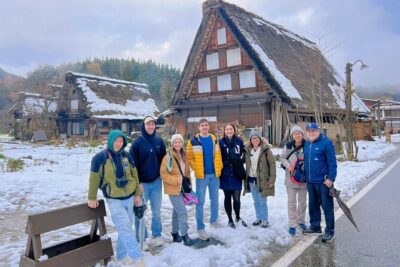
World Heritage Shirakawa-go and Experience Tours from Kanazawa
Read our review →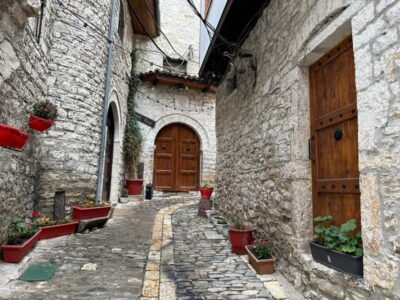

Bali: Tanah Lot UNESCO World Heritage Sites Full-Day Tour
Read our review →
World Heritage Kyoto & Nara Uji Authentic Matcha Experience
Read our review →
UNESCO’s Ayutthaya Historical Park: Full-Day Tour from Bangkok
Read our review →
Rotterdam: Kinderdijk UNESCO World Heritage Entry Ticket
Read our review →
From Busan: Gyeongju UNESCO World Heritage Guided Day Tour
Read our review →Browse the lists this tour appears in