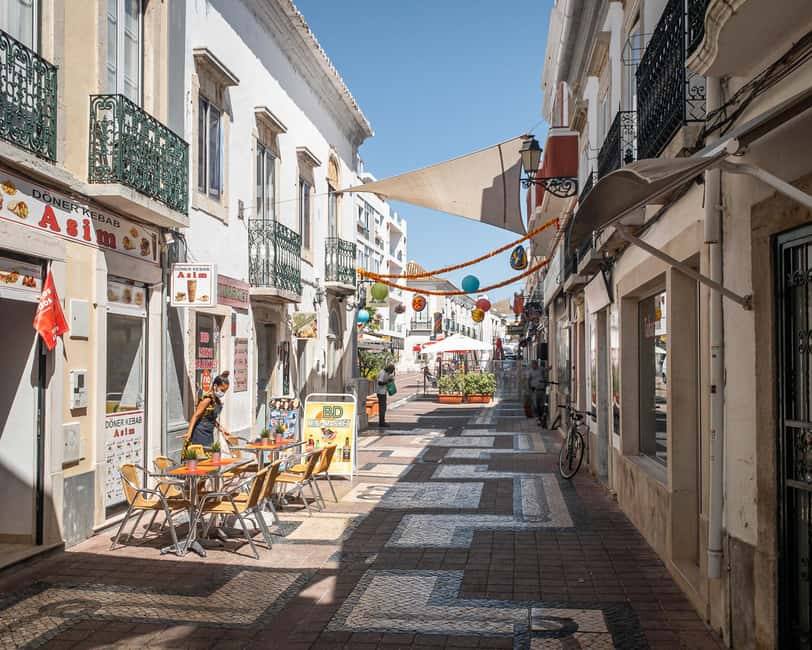
Review · PORTUGAL HISTORY TOURS
Faro: Private & Flexible Walking Tour in Historic Center
Faro’s best sights are packed into a walkable 3 km loop, from the ancient walls and Arco do Repouso to the Cathedral Bell Tower and the estuary. The Walkbox app gives you directions and audio stories without tying you to a group or a fixed departure time.
I like the freedom to stop for coffee, enter a church, or split the route into smaller walks. I also like the personal WhatsApp help from Bernardo, including practical updates such as the weather. The main drawback is that this is not a live guided walk, and steep, uneven streets plus the Bell Tower make it a poor fit for people with mobility impairments.
Key points to know before booking
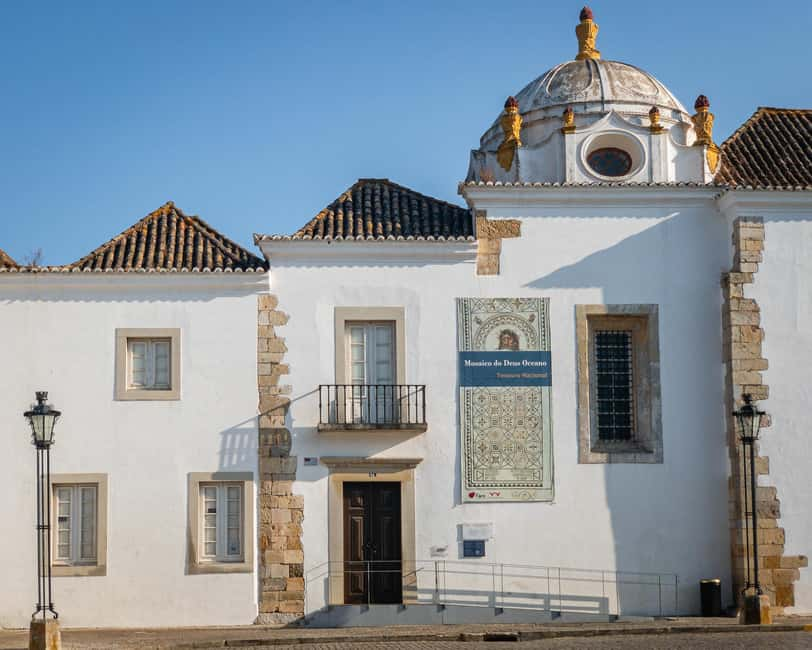
- A private 3 km loop: Follow a circular route through Faro’s Old Town, Baixa de Faro, churches, marina, and estuary.
- Audio that works offline: Walkbox plays natural-sounding stories automatically as you reach more than 40 points of interest.
- Four language choices: Use the content in English, Portuguese, French, or Spanish.
- Flexible timing: Start when you like and complete the walk in one outing or in sections within five days of booking.
- Personal help by WhatsApp: Bernardo and the tour team provide instructions, tips, and support from 8:00 AM to 8:00 PM.
- Strong value at $9: The price covers the route, app content, practical information, and support, but not entry tickets.
Why this Faro walk works so well

Faro is often treated as the Algarve’s airport city, a place to pass through on the way to the coast. That misses the point. The historic center has Roman, medieval, religious, and maritime layers, and they sit close enough together for a rewarding half-day on foot.
This experience gives you a way to connect those pieces without hiring a private guide. You use your own smartphone, follow the route in the Walkbox app, and hear information as you move between the sights. The result is more structured than wandering alone, but less rigid than joining a scheduled group.
The route includes more than 40 points of interest. Some are major landmarks, such as Faro Cathedral and Carmo Church. Others are streets, squares, gardens, and smaller details that help you understand how Faro’s old center fits together.
I especially like the choice between a complete three-hour outing and a slower version with breaks. One person finished in about two hours after stopping at several places, which tells you the stated duration is a guide rather than a strict timetable. If you enter attractions, linger over views, or pause for lunch, plan on longer.
More History Walking Tours in Portugal
- Lisbon: History, Stories and Lifestyle Walking Tour
★ 4.8 · 10,902 reviews - Porto: Historic City Center Walking Tour
★ 4.7 · 1,172 reviews - Porto: Historical Center Walking Tour
★ 4.8 · 898 reviews
Starting beside the estuary and Largo de São Francisco
The tour begins near the estuary, beside the entrance to the historic center and close to the Largo de São Francisco car park. This is a useful starting point because it puts you near the eastern side of the old city and gives you an immediate sense of Faro’s position beside the water.
You can begin at another nearby point of interest because the route is circular. However, the instructions are designed to work in a counter-clockwise direction. If you start elsewhere, follow that direction so notes such as turning right at the next intersection match the route.
The starting area is practical for anyone arriving by car, since the Largo de São Francisco car park is nearby. You should still wear comfortable shoes. Faro’s historic streets use cobblestones, and the route includes walking through old quarters rather than flat, modern sidewalks from start to finish.
Inside the medieval walls and King Afonso III Square

The first major section takes you into Faro’s walled Old Town. The walls give this part of the walk a clear sense of place. You are not simply crossing a collection of old buildings. You are moving through a historic enclosure with gateways, squares, and narrow routes that shaped how people entered and left the city.
The route leads toward King Afonso III Square, one of the natural focal points of the old center. This is a good early stop because it helps you get your bearings before the walk moves into the lower streets.
From there, you leave through the Arco do Repouso. The name refers to a resting place, and the arch is one of the more atmospheric transitions on the route. You move from the enclosed medieval quarter into Baixa de Faro, where the city feels more open and commercial.
The app’s automatic audio is useful here. You can keep your phone in hand, listen while walking, and stop when a building or street catches your eye. You are not trying to keep up with a guide or waiting for a whole group to gather.
Baixa de Faro and the city’s churches
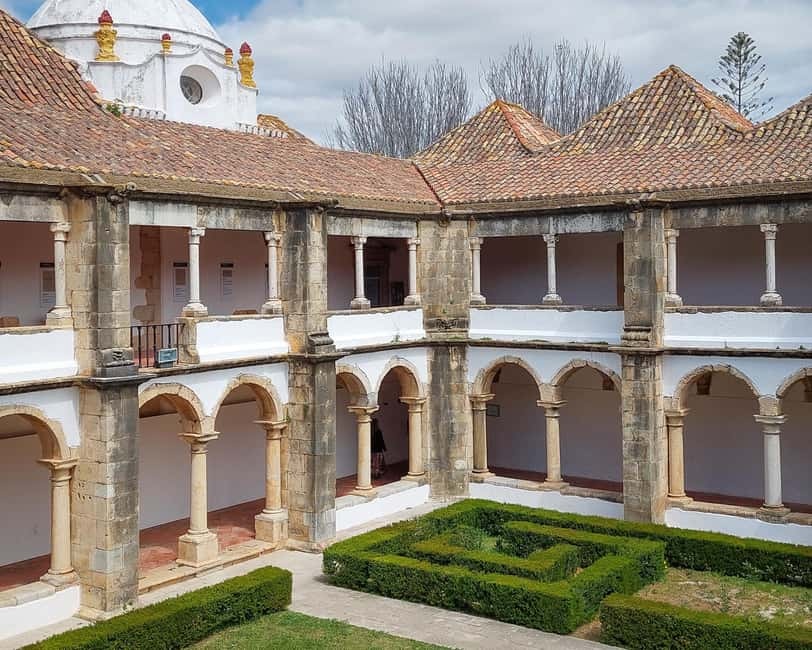
Baixa de Faro brings a change of pace. Cobblestone streets are lined with shops, and the route shows you how the historic center extends beyond the fortified area. This section is less about one single monument and more about the connection between everyday city life and older architecture.
The church stops are among the strongest parts of the walk. The itinerary includes the Church of São Pedro, Carmo Church, the Ossos Chapel, and the Convent of Santo António dos Capuchos. Each gives the route a different religious and architectural focus.
Carmo Church is a particular highlight. It is one of the most recognizable churches in Faro and an important stop for understanding the city’s religious art. Nearby, the Ossos Chapel offers a more somber experience. The name tells you what to expect: this is a chapel associated with human remains, so it may not suit every visitor, especially younger children or anyone uncomfortable with funerary displays.
The Convent of Santo António dos Capuchos adds another layer to the church sequence. Instead of seeing one grand building and moving on, you get a broader look at the religious institutions that shaped Faro’s old center.
Tickets for paid attractions are not included. The app provides prices and opening hours where they apply, which is helpful, but you should still check the information when planning your day. Entry times can determine how long you spend in this section.
More Old Town and Historic Centre Walks in Portugal
- Lisbon: Live Fado Show with Port Wine in Historic Center
★ 4.7 · 4,166 reviews - Porto Guided Tour to the Historical Center on a Tuk Tuk
★ 4.5 · 418 reviews - Lisbon’s historic old town in a tuk-tuk in German
★ 4.9 · 319 reviews - Porto: Private Tour to the Historic Center in a Classic Car
★ 4.9 · 268 reviews
Faro Marina and Manuel Bívar Garden
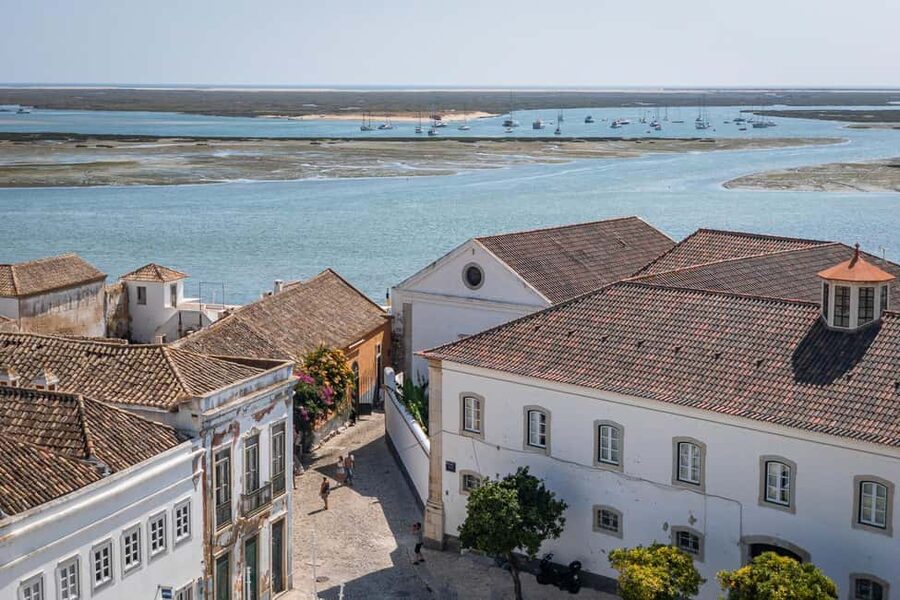
After the church area, the walk loops toward Faro Marina and the Manuel Bívar Garden. This part gives your feet a break from the tight streets and adds the city’s waterfront setting to the experience.
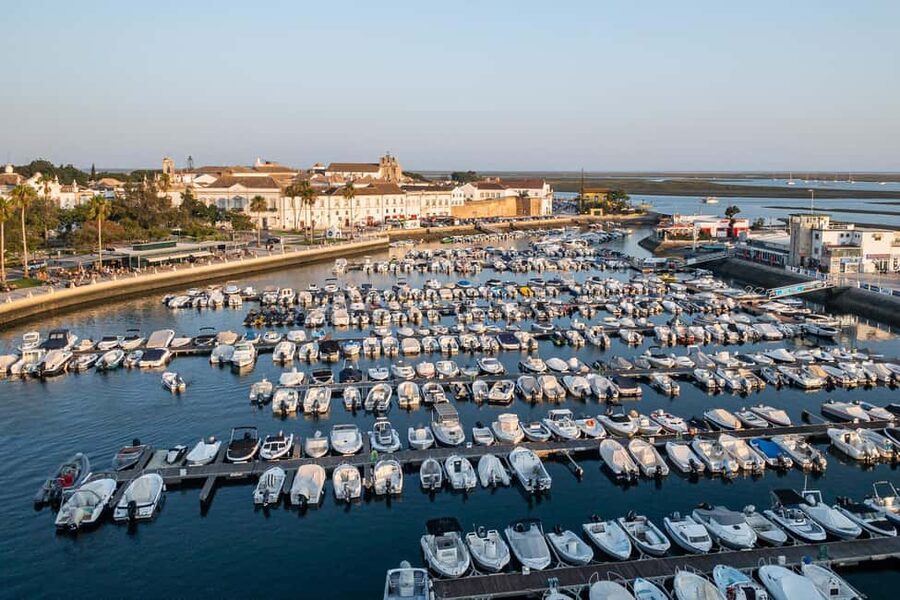
The marina helps explain Faro’s relationship with the estuary. The scenery here is different from the enclosed Old Town, with more open views and a calmer sense of space. The Manuel Bívar Garden is another useful pause point before you return to the historic center.
You can also take in marina views from the rooftop of the Eva Hotel. The rooftop viewpoint is one of the more appealing small additions to the route because it lets you see Faro from above without committing to a long climb. The view is especially useful for understanding the shape of the old center, the water, and the route you have already walked.
The app format suits this part of the tour. Waterfront stops are often best enjoyed at your own speed. You may want a few minutes for photos or simply to look across the estuary, and there is no group schedule pushing you onward.
Re-entering through Arco da Vila

The route returns to the Old Town through the Arco da Vila, Faro’s grander city gateway. This entrance has a more formal feel than the Arco do Repouso and creates a strong visual return to the historic center.
From here, you continue to Largo da Sé. This square gathers several of Faro’s most important civic and religious buildings in one place. You will see the Episcopal Palace, the Town Hall, and the Cathedral, so the app’s explanations are useful for sorting out the different roles of these buildings.
I like this sequence because it places the Cathedral in its proper setting. You do not see it as an isolated attraction. You approach it through the old city, after the walls, lower streets, churches, garden, and gateways have already built a picture of Faro.
Faro Cathedral and the Bell Tower climb
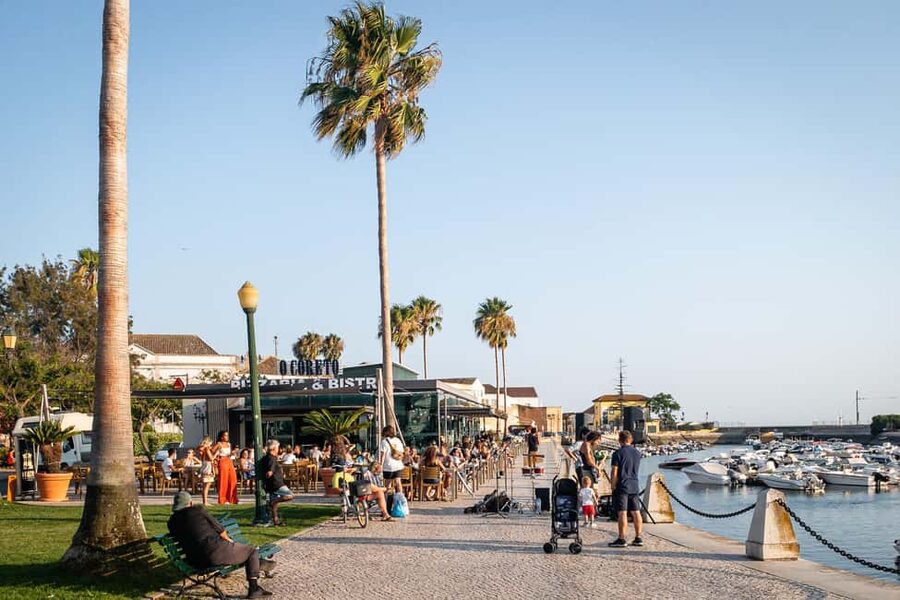
Faro Cathedral is the high point of the itinerary, both historically and physically. It is one of the city’s defining buildings, and Largo da Sé gives you time to appreciate its exterior and the surrounding square.
The Bell Tower climb is the most important practical consideration in this section. The reward is a sweeping view over Faro, the historic center, and the estuary. The climb also changes your understanding of the route because you can look down over streets and rooftops you have just crossed.
This is not a suitable outing for people with mobility impairments, and the tower is a clear reason why. Even visitors who walk comfortably should allow time and energy for stairs. If you are tired by this point, you can still enjoy the square and Cathedral without treating the tower as an obligation.
Paid attraction tickets are separate from the $9 tour price. That low price is for the digital walking experience, route design, stories, support, and attraction information. Add admission costs separately if you plan to enter the Cathedral or other paid sites.
Leaving through Porta Nova and returning by the water

The final section takes you out of the Old Town through Porta Nova and back along the estuary to the starting point. This makes the experience feel like a proper circuit rather than a route that leaves you at the opposite end of the city.
The waterfront return is a gentle finish after the churches, gateways, square, and tower. It also gives you a final look at Faro from the edge of the historic center.
Because the route ends where it starts, it works well before another activity or a meal in the center. You are not left figuring out transport back to a distant meeting point. That convenience matters more than it may sound, especially if you have only a few hours in Faro.
How the Walkbox app changes the experience
Walkbox is the essential part of this activity. The app works offline, so you do not need to depend on a constant connection while walking. You should arrive with a charged smartphone and make sure you understand the instructions before setting out.
The audio plays automatically as you explore. That means you can keep moving instead of repeatedly stopping to read long blocks of text. At the same time, this format asks you to pay attention to your phone and route notes, so it is not as relaxed as having a person point out the next street.
The content is available in English, Portuguese, French, and Spanish. That makes the experience useful for mixed-language groups, and you can choose the language that feels most natural for you.
Support by WhatsApp adds a personal touch that many app-only walks lack. Bernardo contacted one couple before the tour, explained how to use it, and shared a weather update for Faro. The curator is available from 8:00 AM to 8:00 PM, with phone support if needed.
That does not turn the walk into a live guided tour. It does mean you have somewhere to ask for help with onboarding, route questions, practical tips, and recommendations before or during the experience.
Is $9 good value for Faro?
At $9 per person, this is inexpensive for a three-hour city experience, but the booking rule deserves attention. You book based on the number of smartphones that will be used, not the total number of people in your group.
That matters if two people plan to share one phone. If four people are walking together but using two smartphones, the booking requirement follows the two devices. Read the booking instructions carefully so you select the correct amount.
The price covers the audio content, route, four language options, prices and opening hours for attractions, and personal support. It does not cover tickets to paid attractions, food, transport, or other personal costs.
I see the strongest value for independent visitors who want a planned route without paying for a private human guide. You get enough structure to find the main sights, and you can pause or stop when you wish. If you want a long conversation with a local guide, detailed answers about every building, or help inside each attraction, a live tour would suit you better.
Who should book this walking tour?
I would recommend it to first-time visitors with a free half-day in Faro, couples who prefer their own pace, and families with older children who can manage cobblestones and the tower option. It also suits people arriving without much background knowledge of the city.
The route is useful for independent walkers who might otherwise see the Cathedral, marina, and Carmo Church as separate stops. It links them into one clear circuit.
You should think twice if you dislike using a smartphone while sightseeing, want a live person beside you, or have mobility concerns. The route is easy to follow, but old streets and the Bell Tower are not designed for every body.
You can cancel up to 24 hours before the experience for a full refund, and reserve now while paying later. The activity has no minimum number of participants, so you do not need to wait for a group to form.
My verdict on this self-guided Faro route
Book this tour if you want a low-cost, private way to understand Faro’s historic center and you are comfortable using an app. The combination of offline audio, automatic stories, a circular route, and WhatsApp help makes it more useful than a simple map.
Choose it especially if your schedule is uncertain. You can start when convenient and complete the route in full or in parts within five days of booking.
Skip it if your priority is a personal guide who can adapt every explanation to your interests. One useful improvement would be more depth for visitors who want extended information about selected sights, but the existing format keeps the walk moving and manageable.
For most independent visitors, the $9 price is easy to justify. Wear good shoes, charge your phone, check the opening hours of the places you want to enter, and save enough energy for the Cathedral Bell Tower.
FAQ
How long does the Faro walking tour take?
The route covers about 3 km and takes approximately three hours, depending on your walking speed and how long you spend at each stop. One person completed it in about two hours while stopping at several places.
Where does the tour start and finish?
It starts and ends beside the estuary, near the entrance to Faro’s historic center and close to the Largo de São Francisco car park.
Can I start the circular route somewhere other than the meeting point?
Yes. You may start from any nearby point of interest. If you do, walk counter-clockwise so the route directions match the instructions.
What languages are available?
The tour content is available in English, Portuguese, French, and Spanish.
Do I need a smartphone?
Yes. You need a charged smartphone to use the Walkbox app and follow the route.
Does the tour include attraction tickets?
No. Tickets for paid attractions are not included. The route includes prices and opening hours where applicable.
Is the tour suitable for people with mobility impairments?
No. The activity is not suitable for people with mobility impairments. The cobblestone streets and Bell Tower climb are important considerations.
How many people should I book for?
Book according to the number of smartphones that will be used, not the number of people in your group. There is no minimum number of participants.
More Private History Tours in Portugal
- Porto: Private Tour of the Historic City in a Ford T Car
★ 4.8 · 932 reviews - Historic Porto by Private Electric Tuk Tuk to Top Landmarks
★ 4.5 · 735 reviews - Private Tuk Tuk Tour Through Lisbon’s Historical Streets
★ 5.0 · 734 reviews - Lisbon Highlights – Private Tour with Van and Local Guide
★ 5.0 · 716 reviews
Newest history tours we have reviewed in Portugal
- Coimbra’s Historical Highlights: A Self-Guided Audio Tour★ 5.0 · 22 reviews
- In the Heart of the City: Get to know the history of Tomar and taste local Tapas!★ 5.0 · 22 reviews
- All of Tomar’s history and loads of fun.★ 5.0 · 39 reviews
- Albufeira Wine Tasting: Boutique Winery Tour & Historic Silves★ 5.0 · 380 reviews
- Arrábida: Beach, Nature & History★ 5.0 · 89 reviews
- Albufeira Wine Tour: 2 Vineyards, 6 Tastings & Historic Silves★ 5.0 · 123 reviews
- Albufeira History Walking Tour with Wine and Tapas★ 5.0 · 47 reviews
- Historical Algarve – Full-Day Trip★ 4.5 · 150 reviews
Old Town & Historic Centre Walks, compared.

Madrid Essential: Historic Center, Plaza Mayor & Royal Palace
Read our review →
Live Fado Show with Port Wine in Historic Center
Read our review →
Valencia Old Town Tour with Wine & Tapas in 11th Century Historic Monument
Read our review →
Prague Old Town, Medieval Underground and Dungeon Historical Tour
Read our review →
Cartagena: Historic Center and Getsemaní Shared Walking Tour
Read our review →
Old Town Walking Tour History and Tales in Edinburgh
Read our review →