
Review · PARIS HISTORY TOURS
Explore the Marais: History, Art & Local Culture
The best thing about this Marais walk is its mix of old and new. In two hours, you move from medieval houses and a centuries-old church to street art, LGBTQIA+ landmarks, the Jewish Quarter, Victor Hugo’s former home, and the site of the Bastille. It gives you a useful map of one of Paris’s most layered neighborhoods.
I like the small maximum of 12 people, which gives you a fair chance to hear the guide and ask questions. I also like the merveilleux tasting, a light, dramatic meringue pastry that adds a proper Paris food stop without turning the tour into a full meal. The main consideration is pace: 2 kilometers in two hours means frequent stops, but not much time for lingering or shopping.
Key points to know before you book
- Medieval Marais streets: See old corbelled houses, narrow lanes, courtyards, and architecture that can be easy to miss alone.
- Several sides of Paris: The route covers Jewish heritage, LGBTQIA+ culture, street art, religion, monarchy, literature, and revolution.
- One pastry included: The merveilleux is part of the tour, but drinks and additional food cost extra.
- Maximum 12 people: A small group makes it easier to follow the guide and shape the conversation around your interests.
- Family-friendly walking: Children are welcome, and the 2-kilometer route is manageable for most people comfortable on foot.
- Useful first-day orientation: Guides such as Paloma, Sarah, Camila, and Laure have been praised for making the area easy to understand and for offering food and shopping tips.
Starting opposite the Pompidou Centre
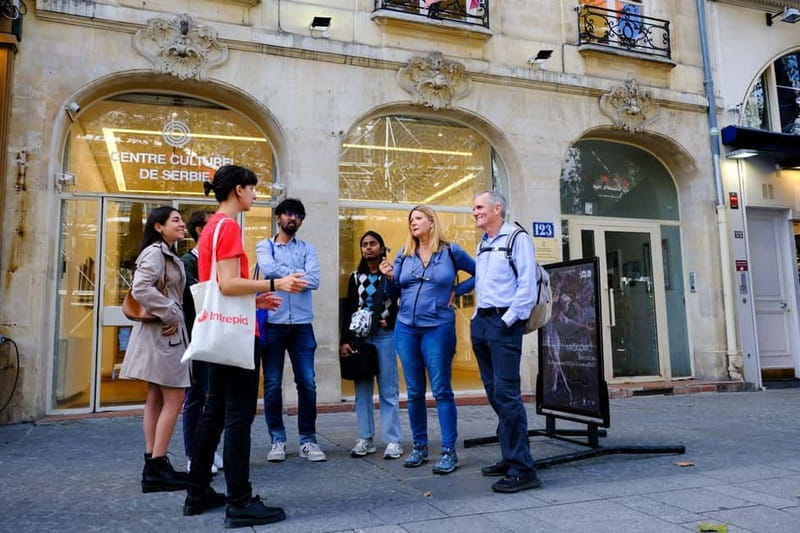
Meet at 123 Rue Saint-Martin, opposite the Centre Pompidou by the Centre Culturel de Serbie. Look for the guide holding a Paris Urban Adventures sign. The listed meeting point is beside a public automatic toilet, so allow a few extra minutes to identify the exact spot rather than arriving at the Pompidou entrance itself.
The Centre Pompidou is the first major landmark in the area. You do not get a full museum visit, but the guide spends about 10 minutes using the building and its setting to introduce modern Paris. This is a sensible beginning because the Pompidou’s bold pipes, bright colors, and exposed structure make a sharp contrast with the older streets you soon enter.
You should wear comfortable shoes. This is a walking tour on city streets, with roughly 2 kilometers covered. An umbrella is also worth packing. Paris weather can change quickly, and there is no promise of shelter during the route.
More Local Culture and Traditions Tours in Paris:
- Amsterdam Food and Cultural Tour with Tastings
★ 5.0 · 4,315 reviews - Sevilla Food Tour: Tapas, Wine, History & Traditions
★ 5.0 · 3,468 reviews - Tromsø: Reindeer Camp and Sami Cultural Tour with Lunch
★ 4.7 · 3,326 reviews
Reading the Marais through street art and old streets
The Marais is not one neat historical period. Its appeal comes from the overlap. You might be looking at an old facade one moment and a small piece of street art the next. The guide points out details that are easy to pass without context, which is one of the main reasons to take a walking tour here instead of relying only on a map.
The route includes the lively LGBTQIA+ side of the neighborhood. This gives the walk a present-day focus instead of treating the Marais as a museum district. You get a sense of how communities, shops, art, and daily life have changed the area over time.
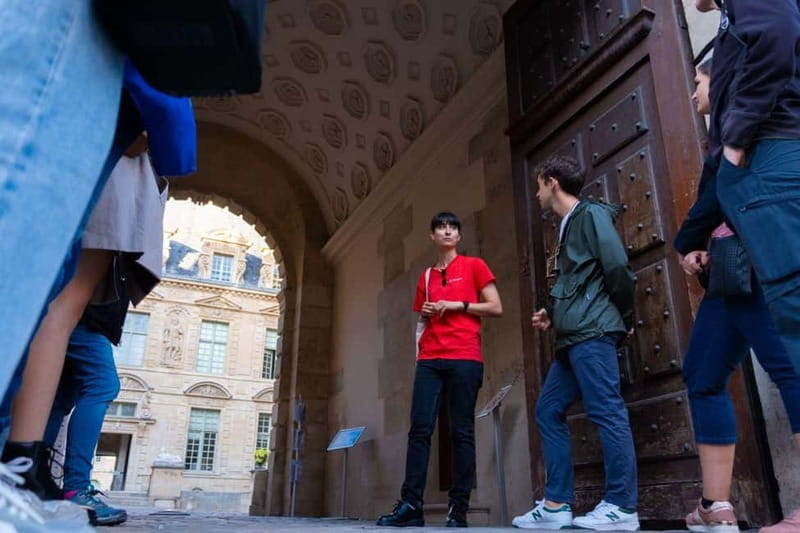
The older architecture is more intimate than grand. Look for medieval lanes and unusual corbelled houses, where upper floors project over the street. These details help explain how dense Paris once worked, and why the Marais feels different from the broad avenues associated with Baron Haussmann.
Your guide’s personality will shape this section. Paloma has been singled out for bringing the streets to life and adjusting the walk to individual interests. Camila has been praised for turning the street art into a kind of visual treasure hunt and for giving useful suggestions on food and shopping. Those are practical strengths, especially if this is your first day in Paris.
Hôtel de Ville and the city’s changing center
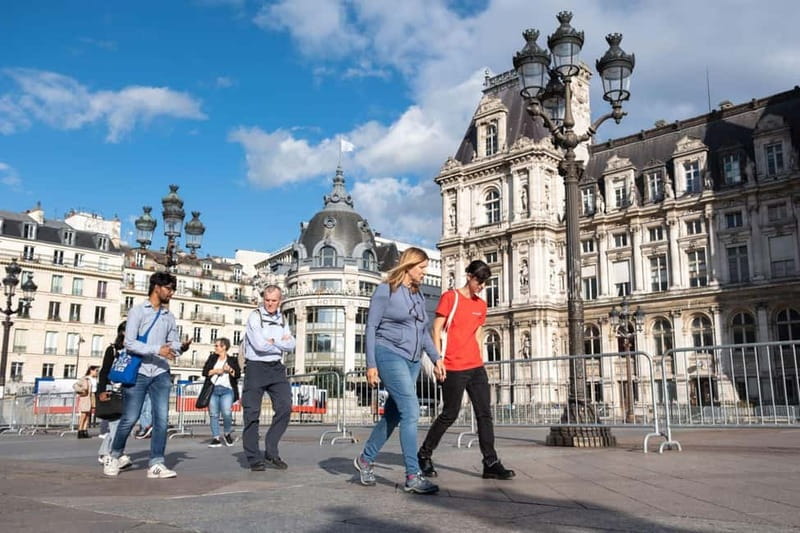
Hôtel de Ville is one of the route’s main public spaces. The stop lasts about 15 minutes, giving your guide time to explain the setting and connect it with the wider story of Paris. You are not simply ticking off a famous building. You are seeing how the Marais sits beside the city’s civic center.
This is also a good place to get your bearings. From here, the walk moves into more enclosed streets, and the contrast is clear. Large civic space gives way to lanes, courtyards, old walls, and local businesses.
The route begins near the Pompidou Centre and passes through Hôtel de Ville, but the experience is not designed as a museum tour. If you want long interiors, extensive art collections, or time for photographs at every stop, two hours will feel short. If you want a clear introduction to the neighborhood, the brisk structure works well.
Saint Gervais Church and medieval Marais
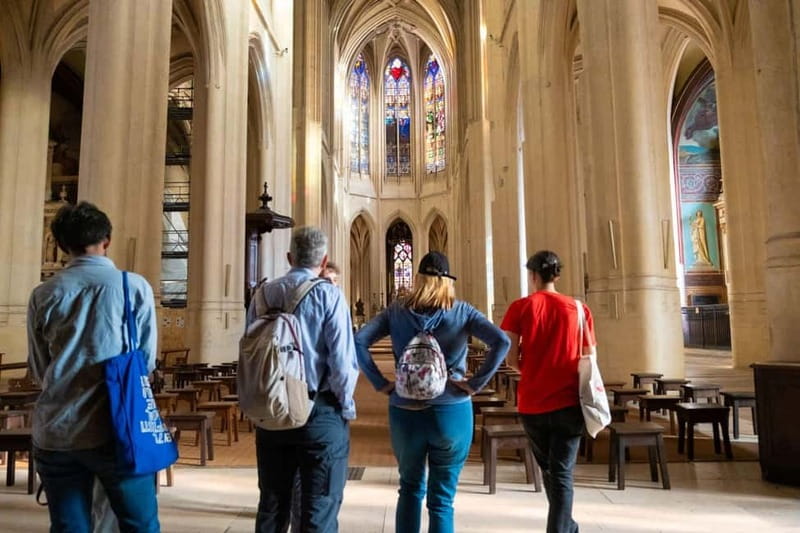
Saint Gervais Church brings a quieter note to the walk. The visit is listed at about 15 minutes, enough to look at the church and hear its place in the neighborhood without turning the tour into a full religious-art lesson.
This stop works because it adds another layer to the Marais. The neighborhood is not only about cafes, boutiques, food, and nightlife. Churches, historic buildings, and older residential streets show how long people have lived and worshipped here.
The guide’s explanations matter most inside and around Saint Gervais. A good guide can help you notice architecture and local history without burying you in dates. The strongest guide feedback for this tour focuses on that balance. Sarah, Maxi, Cecilia, and Paloma have all been praised for clear explanations, an engaging pace, and the ability to answer questions beyond a basic script.
Families can do this part comfortably. A parent traveling with children aged 10 and 12 found the stories and architecture accessible, and the route allows the guide to keep moving rather than asking children to stand through a long lecture.
More History Tours in Paris:
- Paris: Dark History and Ghostly Guided Walking Tour
★ 4.7 · 1,000 reviews - Notre Dame Cathedral: Exterior Guided Tour & Unscheduled Access
★ 4.5 · 409 reviews - Paris City of Fashion History Private Guided Walking Tour
★ 5.0 · 221 reviews - History of Paris City Center w/ Notre Dame Semi-Private 12ppl Max
★ 5.0 · 194 reviews
The merveilleux pastry stop
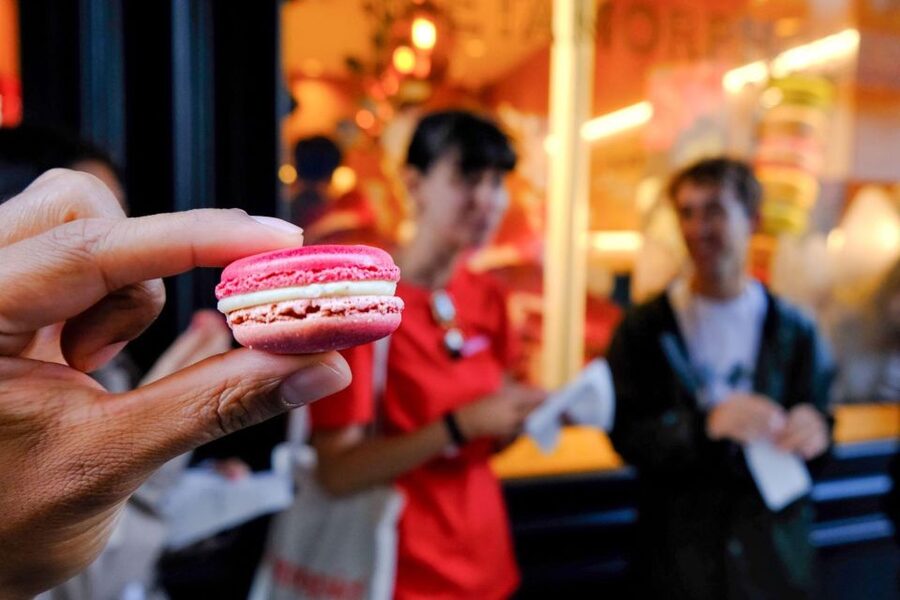
The pastry tasting is a small but well-chosen part of the experience. A merveilleux is built around meringue and cream, with a light, airy texture and a look that feels more special than an ordinary snack. The stop gives you a taste of local bakery culture without taking up a large part of the tour.
I would treat this as a tasting, not lunch. The current inclusions specify one local pastry, while drinks and additional food are not included. Some older versions of this experience appear to have included broader food and wine stops, but you should book the current tour expecting the merveilleux only.
This detail matters when comparing walking tours. At $49 per person, the value is mainly in the guide, the route, and the interpretation of the neighborhood. The pastry is a pleasant bonus. It is not enough food to replace a meal, and you may want to plan lunch or dinner afterward.
The tour is suitable for vegetarians. It is not suitable for lactose-free, gluten-free, or vegan visitors according to the stated food information. If you have one of those dietary needs, this is a real limitation, not a minor footnote.
Rue des Rosiers and Paris’s Jewish Quarter

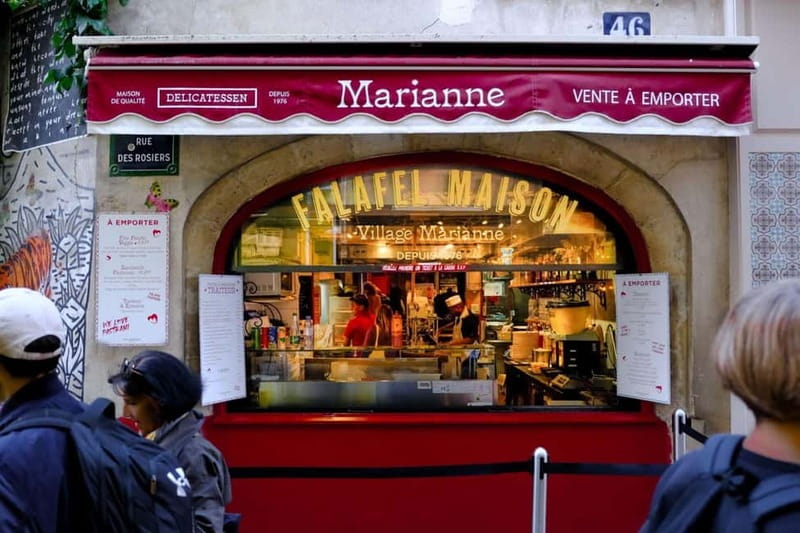
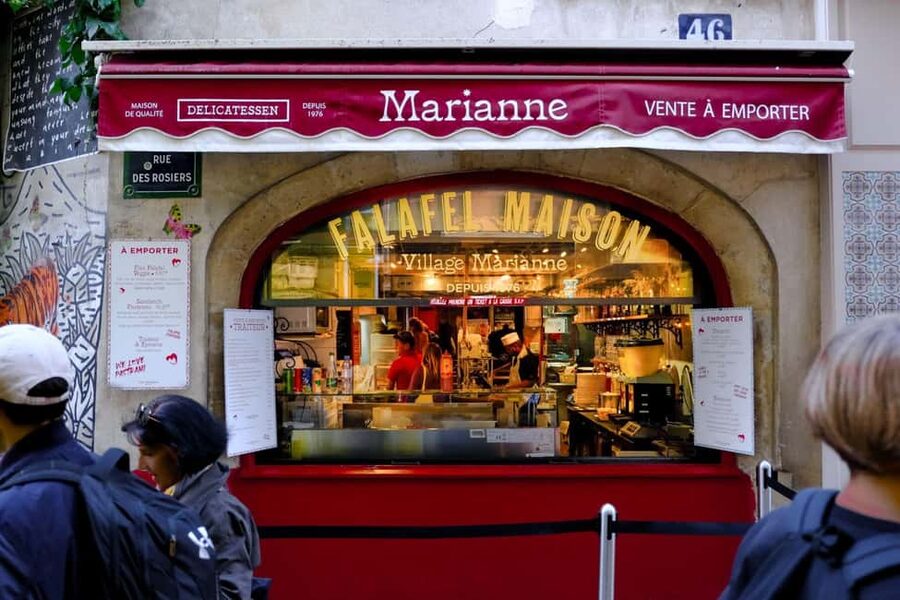
Rue des Rosiers is the heart of the Jewish Quarter portion of the walk. The street is known for food as well as community life, so this is where the tour’s cultural and culinary sides meet. You may see falafel shops and other food businesses, but the included tasting is the merveilleux rather than a falafel meal.
The guide helps place the street within the wider story of Paris’s Jewish community. That context is more useful than simply stopping for a photograph. It gives you a better understanding of why this small area remains such an important part of the Marais.
You will also have some free visual information to take in here: shopfronts, signs, street activity, and the way the street feels different from the nearby medieval lanes. Keep your group together and listen closely. Rue des Rosiers can be busy, and the guide may need to keep the walk moving.
This section is especially useful if you want more than a standard monuments tour. The route makes room for communities and everyday culture, not only famous buildings. That broader focus is one of the experience’s strongest qualities.
Place des Vosges and Victor Hugo
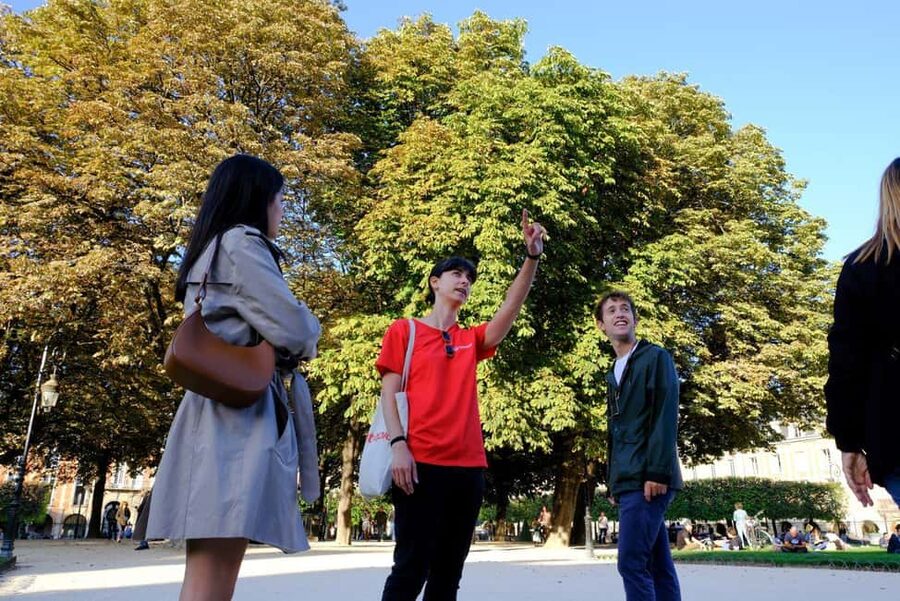
Place des Vosges is one of the most handsome squares in the Marais. Its regular layout and arcaded buildings create a calmer, more ordered space after the narrow streets around Rue des Rosiers. The stop lasts about 15 minutes, giving you time to see the square and hear about its literary connection.
Victor Hugo lived here, and the tour uses that link to bring literature into the walk. The square is not just an attractive photo stop. It connects the physical neighborhood with one of France’s major writers and gives you a reason to look more closely at the buildings around the edges.
This is a good point to ask your guide for recommendations. Guides have been praised for adapting the conversation to personal interests, including suggestions for food and shopping. If you want to return to the Marais later, Place des Vosges is a useful place to pause and decide where to go next.
There is a small route detail worth checking when you book. The description says the walk continues to Place de la Bastille, while the listed finish point says Place des Vosges. The experience clearly includes both landmarks, but confirm the exact ending and meeting instructions for your departure date.
Bastille and the French Revolution
The route description gives about 30 minutes to Place de la Bastille, the site linked with the beginning of the French Revolution. This is the longest listed stop, and that makes sense. Bastille is more than a single building or intact monument. The historical importance comes from what happened here and how the site fits into the story of revolutionary Paris.
A guide can make the location easier to understand because much of the original prison has disappeared. You need explanation to connect the present-day square with the events that made the Bastille such a powerful symbol.
The tour is said to end in this area, where you can stop at a local bar for a drink. Drinks are not included, so consider this an optional continuation rather than part of the paid experience. If the confirmed end point is Place des Vosges instead, you can still use the guide’s suggestions to continue exploring on your own.
The Bastille stop also gives the tour a strong finish. You begin with modern art near Pompidou, move through medieval and religious Paris, visit a living cultural quarter, and end with revolution. That range is a lot to fit into a short walk.
What the $49 price gets you
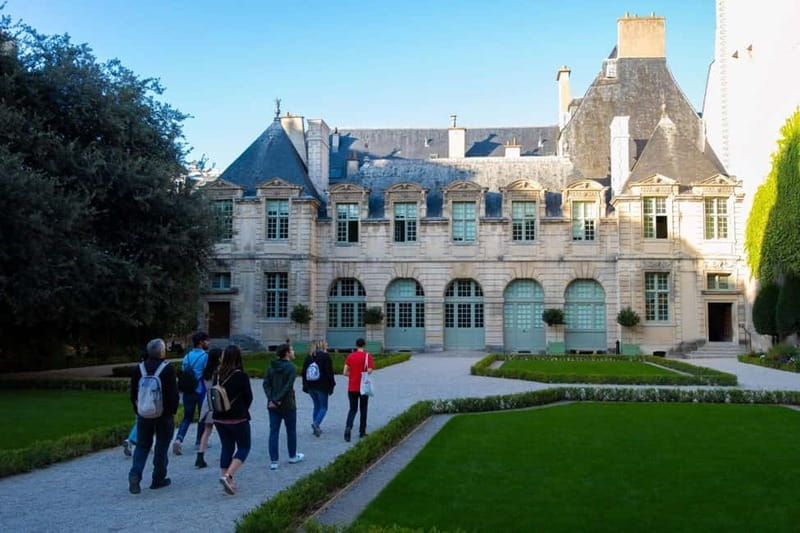
At $49, this is not the cheapest way to see the Marais. You can walk these streets for free, visit some public spaces on your own, and buy a pastry separately. The price makes sense if you want someone to connect the sights into one clear story and point out details you would likely miss.
The small group helps protect the value. With no more than 12 people, the guide can answer questions and adjust the conversation. Private groups are also available if you want a more personal format, though the private option may affect the final cost.
The 4.6 rating from 105 reviews points to a consistently strong experience, with guide quality receiving the most praise. That is important here because the Marais is easy to wander but harder to understand. Sarah, Maxi, Cecilia, Camila, Paloma, Laure, and others have been praised for warmth, clear history, good pacing, and local suggestions.
The tour is carbon neutral and operated by a B Corp-certified company. That will not change the route or the pastry, but it may matter if you prefer to book with a company that has formal social and environmental commitments.
Who should take this Marais walk?
I would recommend it to you if you want a first look at the Marais before exploring independently. The route gives you enough background to return later for food, shopping, museums, or photography with a better sense of place.
It is also a good fit for families, solo visitors, and couples who prefer conversation over a large sightseeing group. One solo visitor in her 50s found the small-group setting welcoming, which is useful to know if you are concerned about feeling out of place.
You should think twice if you want a serious food tour. The current experience includes one merveilleux, not a full series of tastings, and drinks are extra. You should also skip it if you need lactose-free, gluten-free, or vegan food.
Finally, check the day’s timing before booking if you have a tight schedule. The advertised duration is two hours, but some past experiences ran longer. Allow a little breathing room around the walk, especially if you plan to eat or visit another attraction immediately afterward.
Should you book it?
Book this tour if you want history with a local, everyday feel, not just a parade of famous buildings. The Marais is at its best when medieval streets, Jewish heritage, LGBTQIA+ life, street art, literature, and revolution are seen together. This walk gives you that broad view in a manageable two-hour format.
At $49, the guide is the main purchase. The pastry is enjoyable, but the real value lies in finding the old houses, understanding Rue des Rosiers, and hearing why Place des Vosges and Bastille matter. If you arrive in Paris without much time, or want a useful orientation before exploring alone, I would book it. If your priority is a substantial food crawl or long museum visits, spend your money elsewhere.
FAQ
How long is the Marais walking tour?
The advertised duration is 2 hours, and the route covers about 2 kilometers, or 1.2 miles.
Where does the tour meet?
Meet at 123 Rue Saint-Martin, 75004 Paris, opposite the Centre Pompidou by the Centre Culturel de Serbie. Your guide will hold a Paris Urban Adventures sign.
What language is the tour offered in?
The tour is conducted in English by a live English-speaking guide.
Is the pastry tasting included?
Yes. A local merveilleux pastry tasting is included. Drinks and additional food are not included.
Is the tour suitable for children?
Yes. The tour is described as child-friendly.
Can I book a private tour?
Yes. A private group option is available, as well as the small-group format with a maximum of 12 people.
Newest history tours we have reviewed in Paris
- The historic district of Montmartre★ 4.9 · 66 reviews
- Paris: Fashion History Walking Tour in the Heart of Paris★ 4.9 · 22 reviews
- Paris: Khéops VR Experience – Explore Ancient Egypt★ 4.9 · 39 reviews
- Paris Jewish History 2-Hour Private Guided Walking Tour★ 4.6 · 32 reviews
- Paris: French Fashion History Walking Tour★ 4.9 · 37 reviews
- Montmartre Walking Tour: A Journey Through Art and History★ 5.0 · 21 reviews
- Historic Paris Walking Tour in English★ 4.9 · 78 reviews
- Arc de Triomphe Rooftop: Unveil History & Breathtaking Views★ 3.1 · 23 reviews
Local Culture & Traditions Tours, compared.

Amsterdam Food and Cultural Tour with Tastings
Read our review →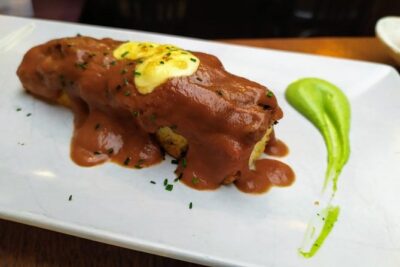
Sevilla Food Tour: Tapas, Wine, History & Traditions
Read our review →
Tromsø: Reindeer Camp and Sami Cultural Tour with Lunch
Read our review →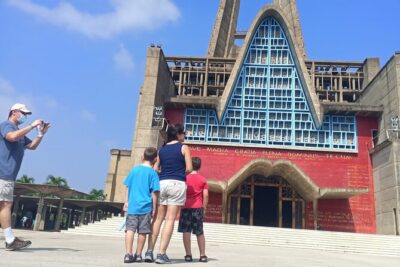
Half Day Dominican Republic Cultural Tour : Small Group
Read our review →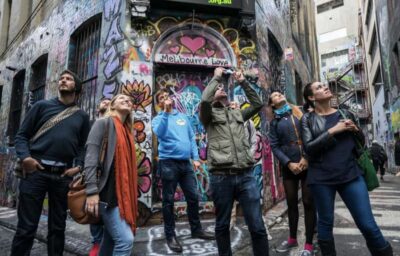
Ultimate Melbourne Walking Tour: History, Laneways & Culture
Read our review →
Tromsø: Sámi Reindeer Sledding and Sami Cultural Tour
Read our review →
Kyoto Gion: 2-Hour Geisha Culture & History Walking Tour
Read our review →
Marrakech Historical and Cultural Tour – Half Day City Tour
Read our review →Browse the lists this tour appears in