
Review · SPAIN HISTORY TOURS
Guided Tour of Historic and Monumental Trujillo
Trujillo’s appeal comes into focus quickly: one grand Renaissance plaza leads into a medieval town of stone walls, towers, palaces, churches, and old military houses. This two-hour walking tour gives you the history in one organized sweep, from Francisco Pizarro’s statue to the Muslim castle above town.
I like the way the route joins famous sights with less obvious corners, including the Casa-Fuerte de Luis de Chaves and the Bejarano Redoubt. I also like the modest $13.90 price, especially since the guide connects Trujillo with the routes of Isabel la Católica, Carlos V, the Discoverers, and film locations.
The main consideration is pace. Two hours is enough for a strong introduction, not a slow inspection of every palace and church interior. The listed stops include free admission, but you should not assume that every building is entered during the walk.
Key points at a glance
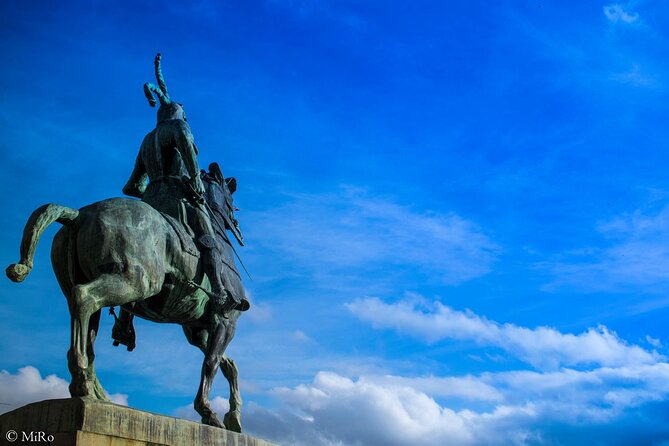
- Plaza Mayor sets the scene: Begin among Renaissance palaces and the equestrian statue of Francisco Pizarro.
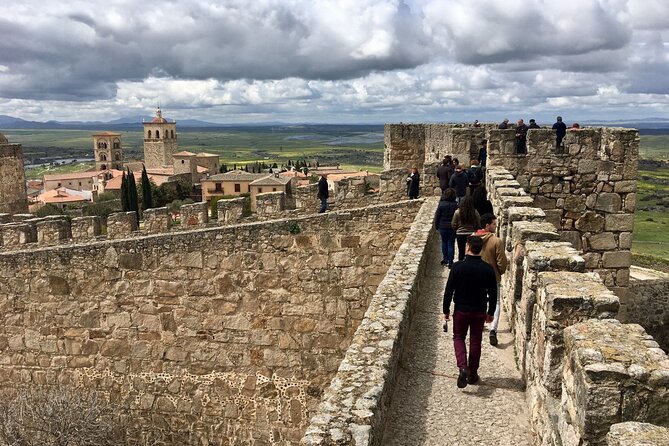
- The route reaches the castle: See the Muslim alcazaba, walls, and the old cistern known as the aljibe.
- Medieval power comes alive: Visit strong houses linked to the Catholic Monarchs and local noble families.
- Churches add artistic depth: Santa Maria la Mayor includes Romanesque remains and a Spanish-Flemish altarpiece.
- The guide adds useful context: Ana is one named guide associated with the tour, praised for an engaging and full explanation of the old center.
- The logistics are simple: Meet at Plaza Mayor, walk for about two hours, and return to the same point.
Starting in Plaza Mayor among Trujillo’s palaces
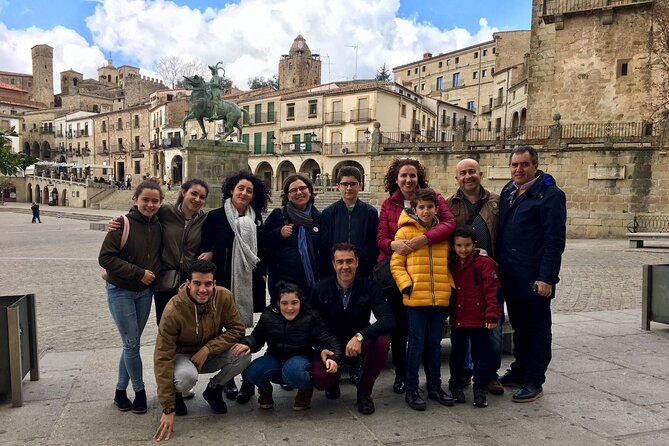
The tour begins at TurismoTrujillo.es Actividades Turísticas, at Plaza Mayor, 20. That is a useful starting point because Plaza Mayor is not just a meeting place. It is the town’s grand visual introduction, framed by Renaissance buildings and dominated by the equestrian monument to Francisco Pizarro.
Plan to spend the first part getting your bearings. The plaza was built in the 16th century, with construction beginning in 1562 by order of Hernando Pizarro. That detail helps explain why the square feels more formal and spacious than the tighter streets inside the old walls.
The guide spends about 20 minutes here, with an additional short look at the plaza’s development and the Pizarro monument. The statue is an easy landmark, and the surrounding buildings provide the first lesson in Trujillo’s rise from fortified medieval settlement to a wealthy Renaissance town.
You will hear about Francisco Pizarro, the conqueror of Peru, but the statue should not be treated as the whole story. Trujillo’s links to the Americas shaped its wealth and architecture, yet the town’s identity also comes from Muslim rule, Christian military orders, noble families, and royal politics. A good guide helps you see those layers together.
More Guided Tours in Spain:
- Madrid Historical Tour with Local Guide in Eco Tuk Tuk Private
★ 5.0 · 876 reviews - Guided Tour of Madrid of the Austrias and the Historic Center
★ 5.0 · 520 reviews - Seville: Tapas, Taverns and History Guided Walking Tour
★ 4.9 · 515 reviews
The Palacio de San Carlos and the power of noble families
From the plaza, the walk turns toward the Palacio de San Carlos, also called the Palacio de los Vargas-Carvajal. It is a Plateresque building, a Spanish Renaissance style known for carefully worked decorative details.
The building keeps its original Plateresque facade, along with another facade facing Domingo Street. The visit here is short, about four minutes, so think of it as a focused exterior explanation rather than a full palace tour.
This is one reason the tour works well for first-time visitors. Instead of seeing a grand facade and moving on without context, you learn how Trujillo’s leading families marked their position through stonework, location, and fortified homes. In the old center, military defense and social status often shared the same walls.
The tour’s emphasis on specific photographic corners is useful here. Trujillo’s buildings are close together, and a guide can point out angles that are easy to miss when you are simply walking from one attraction to the next.
Inside the medieval center, where defense shaped daily life
The historic center is the heart of the experience. The route takes in the Muslim alcazaba, city walls, strong houses, manor houses, palaces, convents, and churches. The supplied timing gives this part roughly two hours, although the overall activity is advertised at about two hours, so the stop times should be read as an outline rather than a strict schedule.
Expect a continuous walking route rather than a series of separate visits. The old center is compact enough to link these sights on foot, but its historic character comes from the way the buildings fit together. Narrow streets, defensive structures, and noble residences tell you how protection and prestige shaped the town.
The route also fits several historical themes. You may hear connections to the Route of Isabel la Católica, the Route of Carlos V, the Discoverers route, and places used as film settings. These themes give you different ways to understand the same streets: as royal territory, a military frontier, a launch point for overseas expeditions, and a convincing medieval setting for the screen.
Casa-Fuerte de Luis de Chaves and the politics of succession
The Casa-Fuerte de Luis de Chaves El Viejo is a strong house from the 13th and 14th centuries. Its most notable connection is to the Catholic Monarchs, who stayed there during the Wars of Succession.
That makes this more than another old stone residence. The building connects Trujillo to a period when royal authority, noble power, and military control were closely linked. A fortified house could serve as a residence, a defensive post, and a statement of family strength.
The scheduled explanation lasts about 10 minutes. That is enough time to understand why the building mattered, though not enough for a lengthy architectural study. I would pay close attention here if you enjoy political history, since the site gives a more direct connection to the struggles around the Catholic Monarchs than a simple palace facade would.
More History Tours in Spain:
- Madrid Essential: Historic Center, Plaza Mayor & Royal Palace
★ 5.0 · 6,416 reviews - Barcelona: Tapas Walking Tour with Food, Wine, and History
★ 4.8 · 4,261 reviews - Sevilla Food Tour: Tapas, Wine, History & Traditions
★ 5.0 · 3,468 reviews - Valencia Old Town Tour with Wine & Tapas in 11th Century Historic Monument
★ 5.0 · 3,234 reviews
Palacio Viejo, the Cadena, and the Military Order of Santiago
The Palacio Viejo, also called the Palacio de la Cadena, is linked to a 13th-century church founded by the Military Order of Santiago. The name and setting point to the military-religious world that shaped much of medieval Extremadura.
This short stop, listed at about five minutes, helps connect the town’s religious buildings with its defensive past. Orders such as Santiago were not simply church institutions. They also held land, defended territory, and influenced politics.
You should expect a concise explanation rather than an extended church visit. The value lies in seeing how Trujillo’s monuments belong to a wider network of fortified Christian towns and military orders.
Climbing toward Castillo de Trujillo
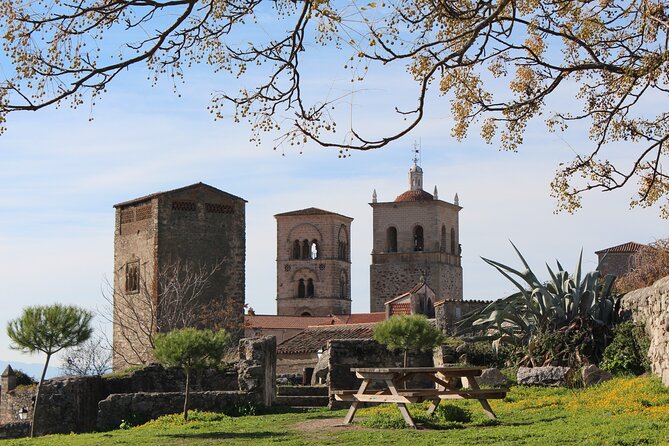
The castle is one of the route’s major highlights. Castillo de Trujillo occupies the site of a Muslim alcazaba and includes an aljibe, or cistern, dating from the 10th to the 12th centuries.
This is where the town’s earlier history becomes especially clear. The castle area shows that Trujillo was important before the Renaissance palaces and overseas wealth arrived. Its walls and elevated position reflect the need to control movement and defend the settlement.
The castle stop is listed at about 10 minutes. That is a brief window, so the tour is best for orientation and key historical points rather than a long castle exploration. If you want to study the walls, cistern, and views at leisure, plan to return after the tour if your schedule allows.
The walk toward the castle may also be the most demanding part for some people, since historic hill towns often involve uneven streets and changes in level. The tour information says most people can participate, but you should still wear practical shoes.
Pizarro’s family home and Trujillo’s American connections
The Pizarro House Museum is a 15th-century manor house belonging to a hidalgo, a member of the lower nobility. Its place on the route adds a personal dimension to the wider Pizarro story introduced in Plaza Mayor.
The museum helps move the subject away from a single monument and toward the social world that produced explorers and conquerors. The house represents the status and domestic setting of a local noble family, while the plaza statue represents Pizarro’s later fame.
The stop is listed at about 10 minutes. That is useful for a first look, though you should check on the day whether the tour includes the interior or focuses on the exterior and its history. The activity data lists admission as free, but that does not necessarily mean every room is part of the guided visit.
Santa Maria la Mayor and Torre Julia
I would give special attention to Iglesia de Santa Maria la Mayor. It is described as a Gothic church declared a National Monument, with earlier Romanesque remains including the Torre Julia.
The church also contains a Spanish-Flemish altarpiece by Fernando Gallego. That gives the stop artistic weight beyond its architecture. You get several periods in one place: Romanesque traces, Gothic construction, and a later altarpiece shaped by Spanish-Flemish artistic influence.
Unlike some of the shorter exterior stops, Santa Maria can reward a slower visit after the tour. The guided explanation should help you know what to look for, especially if you are not familiar with the difference between Romanesque and Gothic forms.
The available information does not specify how long the group remains here or whether interior access is guaranteed. Treat it as an important landmark on the route, then confirm entry details with the guide if seeing the altarpiece is a priority.
The Escobar strong house and an overlooked woman in the story
The Casa Fuerte de los Escobar is a 15th-century military building. It was home to María de Escobar, identified with the first woman to bring wheat and barley seeds to Peru.
This is one of the route’s most distinctive details. Stories about the conquest of Peru often center on famous men, but María de Escobar’s connection brings agriculture, food, and the movement of plants into the picture. Her story broadens the meaning of Trujillo’s American links.
The stop is listed at about 10 minutes. That gives the guide room to explain both the building and María’s role, making it one of the places where a short visit can deliver an unusually memorable fact.
The Triumph Gate and Bejarano Redoubt
The Triumph Gate is one of the old entrances through Trujillo’s defenses. Nearby, the Bejarano Redoubt is a 13th-century strong house that defended the gate.
Taken together, these two stops show how the town protected its entrances. The gate controlled access, while the strong house provided a defended position close by. This is the kind of relationship that can be hard to understand from a map but becomes clear when you see the buildings in sequence.
The Bejarano Redoubt also reinforces a useful theme of the tour: Trujillo’s historic center is not just a collection of beautiful facades. It was an active defensive town, with homes and military structures serving practical purposes.
Puerta de San Andres and the return to Plaza Mayor
The route finishes around Puerta de San Andres, one of the seven gates in the old wall, next to the Church of San Andrés. It is a fitting final stop because it brings together the wall, the church, and the controlled entrances that shaped movement through the medieval town.
After the walk, the activity returns to the original meeting point in Plaza Mayor. That makes the tour easy to fit into a day of sightseeing. You finish where you began, with the main square ready for lunch, another museum, or an independent return to the castle or church.
The route is also useful for photography. The guide points out especially interesting corners and picture spots, and that can save you from walking past a fine view or facade without noticing it.
What the $13.90 price really gives you
At $13.90 per person, this is a low-cost way to get a structured introduction to a town with many separate monuments. The value is not in admission savings, since the listed stops show free admission. The value is in the guide’s narration, route planning, historical connections, and help identifying what you are looking at.
A two-hour private exploration can easily become a string of disconnected facades. Here, the guide links the Muslim alcazaba to the Christian military orders, the noble houses to the Catholic Monarchs, and the Pizarro monuments to the broader Discoverers theme.
The maximum group size is 30 people. That is large enough to keep the price low, but it may feel less personal than a small-group walk. Ana is one named guide, and the tour’s strongest praise centers on her full, engaging explanation of the historic center. Guide assignments can change, so treat her name as useful information, not a guarantee.
The mobile ticket keeps the practical side simple. Confirmation arrives when you book, and free cancellation is available until 24 hours before the start time. Changes or cancellations inside that window are not accepted for a refund.
Who will get the most from this walk
I would choose this tour if you are visiting Trujillo for the first time, have only a few hours, or want a clear route through the old center before exploring alone. It is especially suited to people who enjoy architecture, medieval fortifications, Spanish royal history, and the local connections to the Americas.
It also works well if you want more than the usual Pizarro story. The route includes María de Escobar, the Military Order of Santiago, the Catholic Monarchs, Romanesque remains, and the Muslim castle.
You may want something else if you prefer slow museum visits, long photography sessions, or a very small group. The tour covers many sites in about two hours, so you will need to keep moving and may want to return independently to the places that catch your eye.
Should you book the Historic and Monumental Trujillo Tour?
Yes, if you want a practical first look at Trujillo without paying much. The route packs Plaza Mayor, noble houses, gates, churches, the castle, and the old defenses into one coherent walk, and the 5 out of 5 rating from 933 ratings, with 100 percent recommending it, supports its strong reputation.
Book it for orientation, context, and useful photo stops. Do not book it expecting a detailed interior visit to every monument. For most people, the best plan is to take the walk early in your stay, then return on your own to Santa Maria la Mayor, the castle, or any palace that deserves more time.
FAQ
Where does the tour begin?
It begins at TurismoTrujillo.es Actividades Turísticas, Plaza Mayor, 20, 10200 Trujillo, Cáceres, Spain.
Where does the tour end?
The activity ends back at the meeting point in Plaza Mayor.
How long does the tour last?
The tour lasts approximately two hours.
How much does the tour cost?
The listed price is $13.90 per person.
Is admission to the stops included?
The listed itinerary shows free admission for the stops. It does not state that interior access to every building is guaranteed during the guided walk.
What major sights are covered?
The route includes Plaza Mayor, Palacio de San Carlos, the historic center, Casa-Fuerte de Luis de Chaves, Palacio Viejo, Castillo de Trujillo, Pizarro House Museum, Santa Maria la Mayor, Casa Fuerte de los Escobar, the Triumph Gate, Bejarano Redoubt, and Puerta de San Andres.
How large can the group be?
The activity allows a maximum of 30 participants.
Can I cancel for a full refund?
Yes. You can cancel at least 24 hours before the start time for a full refund. Cancellations and changes made less than 24 hours before the start time are not accepted for a refund.
Newest history tours we have reviewed in Spain
- Bilbao Historical Tour in small group★ 4.7 · 52 reviews
- Barcelona Tapas Tour, Taverns, History & Local Culture★ 5.0 · 25 reviews
- Barcelona Historical 3-Hour Bike Tour★ 4.7 · 222 reviews
- Barcelona: Market, Tasty Tapas/Food and Gothic History Tour★ 4.7 · 48 reviews
- Barcelona: Cemetery Tour – Gothic Graves & Local History★ 4.9 · 33 reviews
- Barcelona & Chocolate Amatller History and Culture + Activity and Tasting★ 4.9 · 173 reviews
- Barcelona: The Spanish Civil War Historical Walking Tour★ 4.9 · 239 reviews
- Barcelona: 3-Hour Esoteric, Spiritual & Historical Tour★ 5.0 · 34 reviews
Spain History Tours, compared.
Madrid Essential: Historic Center, Plaza Mayor & Royal Palace
Read our review →
Tapas Walking Tour with Food, Wine, and History
Read our review →
Sevilla Food Tour: Tapas, Wine, History & Traditions
Read our review →
Valencia Old Town Tour with Wine & Tapas in 11th Century Historic Monument
Read our review →
Madrid Tapas & Taverns Small Group Food & History Tour
Read our review →
Barcelona Tapas Walking Tour: Food, Wine & History
Read our review →
Ultimate Seville Tapas, Wine & History Small Group Tour
Read our review →
Córdoba: Skip-the-Line Great Mosque-Cathedral History Tour
Read our review →Browse the lists this tour appears in