

Review · ST AUGUSTINE HISTORY TOURS
Walking History Tour of St. Augustine’s Historic District
St. Augustine’s past comes alive on foot, where a cemetery, a grand hotel, a Spanish fort, and a quiet public square all fit into one compact route. This tour connects the city’s early colonial story with its later transformation into a Gilded Age resort town, rather than treating Spanish rule as the whole story.
I like the small maximum group of 15, which makes it easier to hear and ask questions. I also like the range of stops, especially the contrast between Tolomato Cemetery and the lavish former Ponce de Leon Hotel, now Flagler College. Guide Kevin is known for his humor, local perspective, and willingness to spend extra time on questions.
The main point to plan around is timing. Though scheduled for 90 minutes, Kevin often continues for two hours or more. That extra history may feel like a bonus, but you should not book this walk immediately before another fixed appointment.
Key points to know
- A nearly two-mile route: You walk between the Visitor Information Center, Tolomato Cemetery, Flagler College, the plaza, the Castillo, and the Old City Gate.
- History beyond Spanish occupation: The tour reaches into the Flagler era, the Gilded Age, and the early 1900s.
- Kevin leads many departures: He is praised for clear storytelling, humor, local knowledge, and taking questions seriously.
- The Castillo is viewed from outside: The fort’s story is covered, but entry to the monument is not part of this walk.
- Plan for more than 90 minutes: The tour often runs well past its advertised length.
- Good walking shoes matter: Bring bottled water and be ready for a moderate physical effort.
Why this St. Augustine walk is more than a colonial history lesson
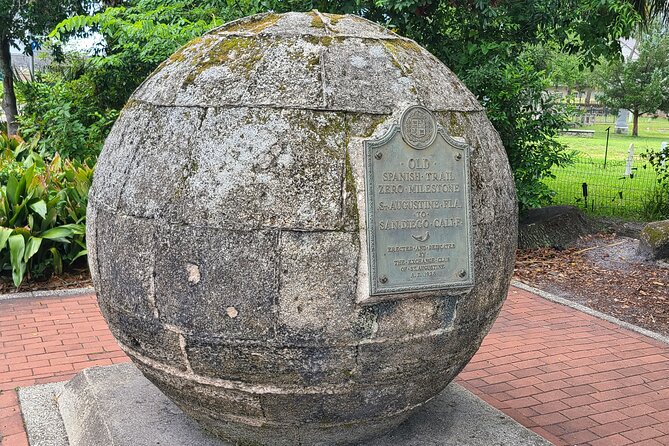
St. Augustine is often presented through its Spanish beginnings, and that story matters. But the city’s identity also took shape through cemeteries, churches, public buildings, military defenses, and Henry Flagler’s ambitious remaking of the town in the late 1800s.
This route gives you that wider view. You begin near the Castillo de San Marcos National Monument and walk through the Historic District, with stops that reach from the city’s earliest days to the early 20th century. Along the way, you see how old St. Augustine was reused, reshaped, and sometimes nearly demolished.
I find that structure useful for a first visit. You get a basic timeline, but you also get the human stories that help individual buildings stick in your mind. Kevin’s style is conversational rather than rushed. He welcomes questions, adds side stories, and often spends longer than planned explaining a point.
That can be a major strength if you want a real history discussion. It can be a drawback if your day is tightly scheduled.
More History Walking Tours in the USA
- History and Hauntings of Salem Guided Walking Tour
★ 5.0 · 14,564 reviews - Boston: Freedom Trail History Small Group Walking Tour
★ 5.0 · 6,450 reviews - Historic Charleston Guided Sightseeing Walking Tour
★ 5.0 · 6,216 reviews
Tolomato Cemetery and the Love Tree
Tolomato Cemetery is the first major stop, and it immediately signals that this is not just a parade of famous buildings. The cemetery is described as the oldest in the city, with origins reaching back before the arrival of the Spanish in 1562.
You have about five minutes here, so do not expect a long cemetery visit. Instead, use the stop to consider how much older St. Augustine’s story is than the streets and structures you see today. Cemeteries can also reveal how a city remembers its past, and Tolomato gives the tour a quieter opening than a fort or public square would.
The stop includes the Love Tree, with a playful warning to approach it at your own risk. That lighter moment fits the tour’s reported tone, where humor breaks up the dates and political history.
Admission is not included. The tour focuses on seeing the site and hearing its story, so you should not count on an extended interior visit.
Two Flagler-era churches and two different moods
Grace United Methodist Church represents the period when Henry Flagler helped remake St. Augustine in the late 19th century. The church is one of the city’s Flagler-era buildings, and the guide explains its part in the city’s revival during that period.
The stop lasts about five minutes. That is enough for an exterior introduction, but not enough for a detailed architectural study. Think of it as one piece of the larger Flagler story, which becomes clearer when you reach Flagler College.
Memorial Presbyterian Church receives more time, about 10 minutes. It is described as one of the city’s most beautiful buildings, but the important part is not just its appearance. You also hear the painful story connected with its creation.
That mix of architecture and personal loss is one of the tour’s useful habits. St. Augustine can sometimes feel like a collection of picturesque facades. A story about the people behind a building gives the structure more weight and helps you see the city as a place shaped by ambition, grief, faith, and money.
Admission to both churches is not included. The tour information does not promise interior access, so plan to experience these stops mainly through the guide’s explanation and the view from the route.
Flagler College and the Gilded Age transformation
Flagler College occupies the former Ponce de Leon Hotel, built during the Gilded Age. The building represented a new kind of St. Augustine, one aimed at wealthy visitors and shaped by luxury rather than military defense or colonial government.
The guide presents the hotel as a standard-setter for opulence in St. Augustine. That makes this stop a key counterpoint to Tolomato Cemetery and the Castillo. You are not only hearing how the city began. You are seeing how it tried to reinvent itself.
The scheduled stop is about five minutes, which is brief for a building of this importance. The walk is not a full interior tour of Flagler College, and the admission ticket is not included. If you want to see the former hotel in greater detail, you may need to return separately and arrange its historic tour.
Still, even a short explanation can make the building easier to understand. The point is not simply that it is grand. It shows how St. Augustine’s future was tied to tourism, investment, and the ambitions of Henry Flagler.
Kevin’s approach is especially useful here because he does not limit the city’s story to the Spanish period. The Gilded Age is one of the most praised parts of the experience, and it gives you a more complete picture of why the city looks the way it does today.
More Old Town and Historic Centre Walks in the USA
- Philadelphia Old City Historic Walking Tour with 10+ Top Sites
★ 5.0 · 2,020 reviews - Asheville Historic Downtown Guided Electric Bike Tour with Scenic Views
★ 5.0 · 1,234 reviews - Creepy Crawl Night-Time Haunted Pub Walking Tour of Savannah’s Historic District
★ 4.5 · 802 reviews - Savannah: Historic District Foodie Walking Tour
★ 4.8 · 613 reviews
Plaza de la Constitución and 250 years of power
Plaza de la Constitución is the central civic stop, with about 10 minutes devoted to its story. Founded in 1599 by royal decree, the plaza was tied to the Government House, which served as Florida’s seat of power for almost 250 years.
This is where the tour shifts from individual buildings to government and public life. The guide explains how the plaza came to be, what happened to the governors who lived there, and how the Government House was recreated in 1933 through a Works Progress Administration project.
That last detail matters. Many historic places are not preserved in one uninterrupted form. They may be altered, rebuilt, or reinterpreted long after their first construction. The plaza lets you think about both the original colonial city and the later decision to recreate parts of it.
Admission to the plaza is free. Since it is an open public space, you can also use the stop to rest briefly and take in the surrounding streets. The tour does not give you a long pause, but the plaza is one of the better places to orient yourself within the Historic District.
The Castillo from the outside
The Castillo de San Marcos National Monument receives the longest scheduled stop, about 15 minutes. A licensed fort guide explains the history of St. Augustine’s forts, the construction of the Castillo, and its importance to both the city and the nation.
The major limitation is simple: this tour covers the exterior. Admission to the monument is not included, so you do not enter the fort as part of the walk.
That is still valuable for a first look. The Castillo is one of St. Augustine’s defining sights, and understanding why it was built makes the structure more than a dramatic stone backdrop. The guide’s discussion covers the wider fort system as well, which helps place the Castillo within the city’s military story.
If you want to explore the fort’s interior, plan a separate visit. This tour can serve as a useful introduction, but it is not a substitute for spending time inside the national monument.
Because the Castillo comes late in the route, the tour’s possible extended timing matters here. If you have to leave early, this may be the part you miss. One person had to depart before the fort because the actual walk ran longer than expected, so keep your schedule open.
The Old City Gate and the walk back
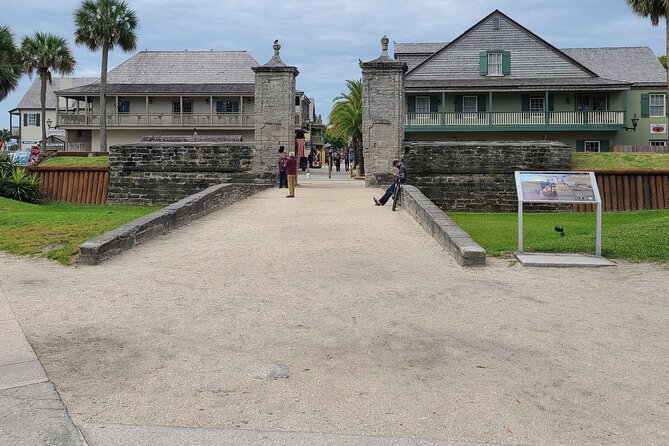
The final listed stop is the old entrance to St. Augustine, now associated with City Gate Spirits. The site marks the traditional entrance to the city from 1762 and offers a story about its construction and the effort that saved it from demolition.
This is a fitting ending. You have seen the city’s cemetery, churches, resort architecture, government center, and fort. The gate brings the focus back to the practical shape of the old town and the question of what survives when a city changes.
The stop lasts about five minutes, and admission is free. From here, the activity returns to the original meeting point at the St. Augustine and St. Johns County Visitor Information Center, 10 S Castillo Drive.
The route covers close to two miles. That is an easy-to-understand distance, but the stop-and-start nature of a history walk can make it feel longer than a casual stroll. Wear shoes you can trust, carry water, and be ready to stand while listening.
What Kevin adds to the experience
Kevin is the guide most often associated with this experience. His strengths are clear: he speaks with humor, answers questions, and has a strong command of St. Augustine’s past. He also offers suggestions for restaurants and other places to visit, including a direct way to reach him for recommendations.
You should expect an informal, discussion-friendly style rather than a tightly timed script. Kevin sometimes runs more than two hours because he follows questions and adds stories. That is ideal if you like history told through personalities and local details.
The small group limit helps. With no more than 15 people, you have a better chance of hearing the guide and asking something specific. It also keeps the walk from feeling like a large procession through narrow historic streets.
Still, your experience depends on the guide assigned that day. Kevin is the named guide in the available information, but the tour details do not promise that every departure will be led by him.
Is $25 a fair price?
At $25 per person, the tour is fairly priced if you want an introduction to St. Augustine that links several parts of the city. You are paying for about two miles of guiding, a small group, a historical overview, and the chance to ask questions as you go.
The value is strongest for first-time visitors who want help understanding the city before exploring on their own. A trolley ride can cover more ground with less walking, but it may not give you the same opportunity to stop, ask questions, and connect separate sites.
The price does not include admission to Tolomato Cemetery, the churches, Flagler College, or the Castillo. Since the listed route mainly views these places from outside, you should budget separately if you want interior visits.
I would also judge the price against the guide’s time. If your tour runs for two hours or more, as often happens, the cost becomes even better. Just remember that extra time is not guaranteed and can complicate later plans.
Who should book this walking tour?
I would choose this experience if you want:
- A first look at St. Augustine’s Historic District
- A timeline that reaches from early settlement to the early 1900s
- More than a Spanish colonial overview
- A guide who encourages questions
- A small group instead of a large vehicle tour
- Stories about architecture, government, military defense, and local people
It suits history fans, couples, families with older children, and anyone who likes to understand a place before sightseeing independently. The walk is also a good fit if you prefer a relaxed pace and conversation over a rapid checklist of sights.
I would think twice if you have limited mobility, need a strict 90-minute finish, or want extensive interior access to the buildings. The tour requires a moderate level of fitness, and the nearly two-mile route includes time on foot and standing.
The activity is offered in English and uses a mobile ticket. Service animals are allowed, and the meeting point is near public transportation.
Weather, booking, and cancellation details
Confirmation is sent within 48 hours of booking, subject to availability. The experience requires good weather, so rain can lead to a new date or a full refund.
You can cancel for a full refund up to 24 hours before the start time. Inside that 24-hour window, cancellations and changes are not accepted for a refund. If bad weather or an unmet minimum causes the tour to be canceled, you are offered another date or experience, or a full refund.
Because the tour can fill ahead of time, booking early is sensible. It is booked an average of 16 days in advance, so do not assume you can wait until the morning of your visit.
My verdict: book it if you want context, not just photographs
I would book this walk early in a St. Augustine visit, especially if you want the city to make sense before you explore its museums and historic buildings on your own.
The combination of Tolomato Cemetery, Flagler College, the plaza, the Castillo, and the Old City Gate gives you a strong overview. Kevin’s humor and willingness to answer questions add real value, though his habit of running long means you must leave room in your schedule.
Book it if you like stories, details, and a guide who treats history as a conversation. Skip it if you need a tightly controlled 90-minute activity or want admission to the major sites included. For $25, it is a solid choice for a curious first-time visitor who arrives with comfortable shoes and an open afternoon.
FAQ
How long does the tour last?
The scheduled duration is about 1 hour and 30 minutes. It may run longer, sometimes reaching two hours or more, so avoid booking another fixed activity immediately afterward.
How far do you walk?
The route covers nearly two miles through St. Augustine’s Historic District. A moderate level of physical fitness is recommended.
Where does the tour start?
It starts at the St. Augustine and St. Johns County Visitor Information Center at 10 S Castillo Drive, St. Augustine, Florida 32084.
Where does the tour end?
The activity ends back at the original meeting point.
Is admission to the Castillo included?
No. The tour covers the exterior of the Castillo de San Marcos National Monument and explains its history, but admission is not included.
Is admission to Flagler College included?
No. The former Ponce de Leon Hotel is visited as part of the walk, but the admission ticket is not included.
Is the tour offered in English?
Yes. The tour is offered in English.
How many people can join the tour?
The maximum group size is 15 people.
Can I cancel for a refund?
You can cancel up to 24 hours before the start time for a full refund. Cancellations or changes made less than 24 hours before the start time are not refunded. If poor weather cancels the tour, you are offered another date or a full refund.
Newest history tours we have reviewed in the USA
- Nashville: Belle Meade Historic Mansion Tour★ 4.8 · 63 reviews
- Beaufort: Local History and Film Sites Tour by golf cart★ 4.9 · 102 reviews
- Boston: Guided Seafood Tasting and History Tour★ 4.9 · 90 reviews
- Beaufort: Gullah Heritage Tour★ 4.8 · 26 reviews
- Beaufort: Historic City Tour by Bus★ 4.9 · 228 reviews
- Austin: Downtown Austin Haunted History Tour★ 4.4 · 31 reviews
- Austin: Morning History Walking Tour of Downtown Austin★ 4.9 · 71 reviews
- Atlanta: Beltline Food, Street Art, and History Walking Tour★ 5.0 · 47 reviews
Old Town & Historic Centre Walks, compared.

Madrid Essential: Historic Center, Plaza Mayor & Royal Palace
Read our review →
Live Fado Show with Port Wine in Historic Center
Read our review →
Valencia Old Town Tour with Wine & Tapas in 11th Century Historic Monument
Read our review →
Prague Old Town, Medieval Underground and Dungeon Historical Tour
Read our review →
Cartagena: Historic Center and Getsemaní Shared Walking Tour
Read our review →
Old Town Walking Tour History and Tales in Edinburgh
Read our review →
Philadelphia Old City Historic Walking Tour with 10+ Top Sites
Read our review →Browse the lists this tour appears in