
Review · SEVILLE HISTORY TOURS
Historical Italica: Half-Day Guided Tour from Seville
Itálica gives you something Seville itself cannot: a walk through a Roman city where broad streets, grand houses, floor mosaics, and an enormous amphitheater still shape the ground beneath your feet. I like the short ride from Seville and the chance to see Roman Spain without giving up a full day. I also like the bonus stop at San Isidoro del Campo, especially if you enjoy art, religious history, and unusual buildings.
The main caution is organization. Most outings run well, but late buses and too many pickup points have occasionally shortened the visit. The monastery also divides opinion, and the quality of English explanation can depend on your guide, so this tour suits you best if you want convenience and interpretation more than a completely independent visit.
Key points at a glance
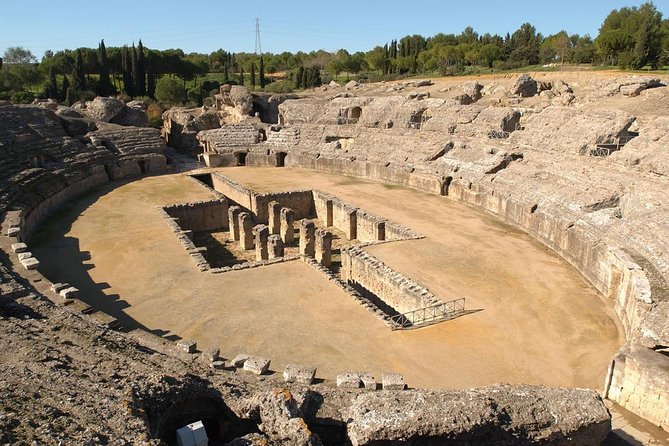
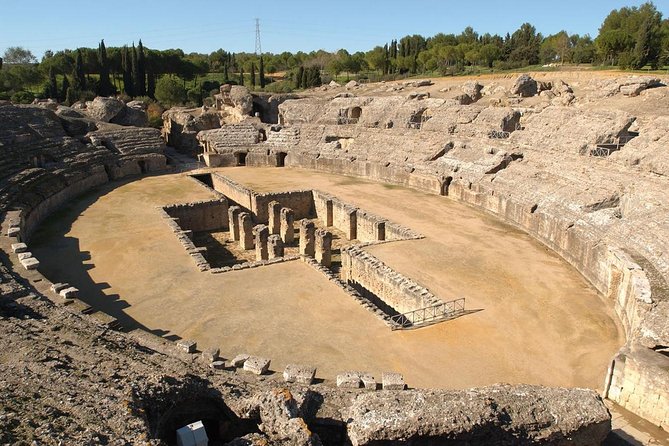
- Itálica’s huge amphitheater gives you the clearest sense of the city’s scale, with space for up to 25,000 spectators.
- Roman mosaics and domus houses are the real treasures, showing how wealthy residents lived rather than just how soldiers fought.
- San Isidoro del Campo adds an unexpected medieval stop and gives the outing more variety than a Roman site alone.
- The ride takes about 20 minutes from Seville, making this a practical half-day escape.
- Guides can make or break the visit, with Jesús, Rebecca, Leon, Miguel, Alberto, Juanra, and others praised for vivid explanations.
- Plan for heat, walking, and sun, especially in August, and carry water since food and drinks are not included.
Why Itálica is worth leaving Seville
If Roman history interests you, Itálica is one of the easiest worthwhile excursions from Seville. The ancient city lies only about 20 minutes away by bus, yet the setting feels far removed from the narrow lanes and grand plazas of central Seville.
Itálica is known as the first Roman settlement on the Iberian Peninsula. That claim gives the site historical weight, but the pleasure of visiting comes from seeing how a Roman town worked at street level. You are not just looking at scattered columns. You walk through the remains of homes, public spaces, and an amphitheater large enough to hold about 25,000 people.
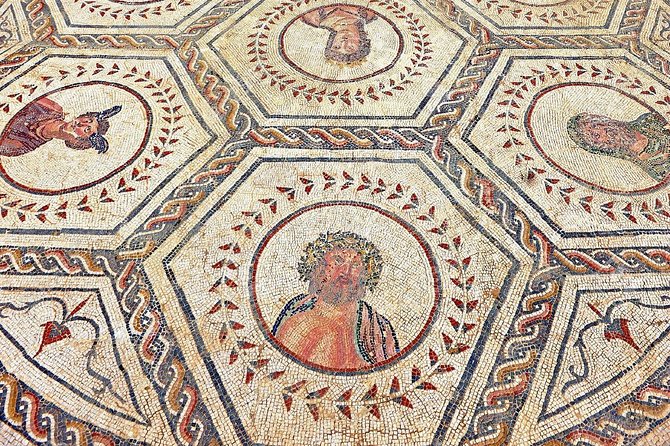
I especially like the preserved mosaics. They bring color and pattern to the ruins, and they help you picture the owners of the larger domus houses as wealthy people with expensive tastes, not simply names in a textbook. The houses also give you a better sense of daily life than the amphitheater alone.
The site is still being excavated and preserved. That means you may see areas that feel unfinished, but it also gives the visit a living archaeological quality. You can see that the ancient city is not a finished museum display. It is a place that continues to reveal itself.
More Half-Day Tours in Spain:
- Lima’s Vibrant Heritage: Exploring the City’s Landmarks Half-day
★ 4.5 · 581 reviews - From Ho Chi Minh: Cu Chi Tunnels Half-Day History Tour with Guide
★ 5.0 · 480 reviews - Naxos: Half-Day Guided History and Culture Sightseeing Tour
★ 4.7 · 435 reviews
Walking through the amphitheater and Roman houses
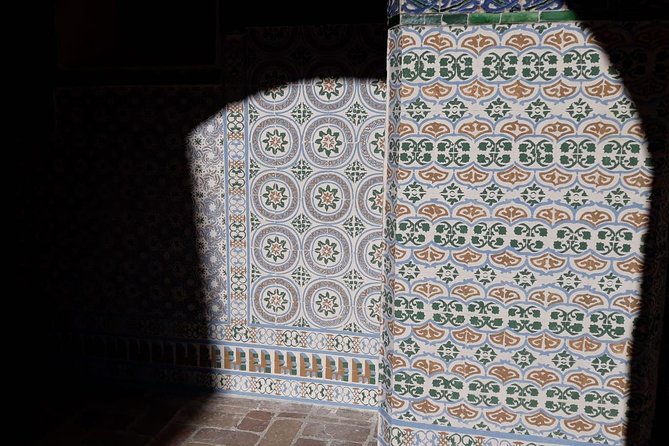
The Itálica portion takes about two hours and includes admission. Your guide leads you around the archaeological complex, explaining the Roman settlement, its buildings, and the surviving decorative details.
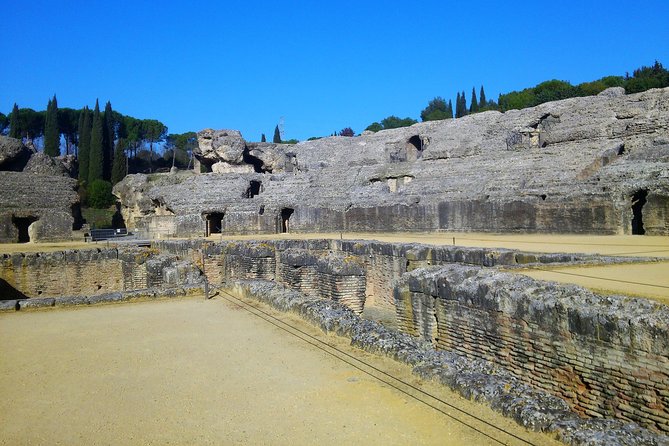
The amphitheater is the obvious starting point for most people. Its size is impressive even before you hear the numbers. The scale helps explain the importance of public entertainment in Roman society, and the underground passages add another layer to the visit. One especially useful detail from the tour experience is the chance to walk through tunnels beneath the remains of the arena.
Do not rush past the houses. Their mosaics are often the most memorable part of Itálica. The designs show a level of care and expense that makes the social divide within the city easier to understand. These were not modest village homes. They were substantial residences built for upper-class families.
The guide matters here because the ruins can otherwise seem quiet and incomplete. A strong guide points out details you might miss, explains the difference between a street, a house, and a public structure, and links the remains to ordinary Roman life. Guides including Jesús, Rebecca, Leon, Miguel, Juanra, Alberto, and Inez have been praised for doing exactly that, with Alberto in particular noted for turning walls and paving stones into a clear story about the people who once lived there.
There is one important qualification. The advertised focus is the Itálica archaeological complex, including its amphitheater and mosaics, but one outing did not include the theater or baths. If seeing a particular structure is essential to you, ask the guide what is open and included on the day of your visit. Excavation work, access, and the group’s pace can affect the route.
San Isidoro del Campo adds a different Spain
The second stop is San Isidoro del Campo, a former fortress monastery seen on the way to or from Itálica. Admission is included, and the visit takes about an hour.
This stop changes the mood completely. After Roman streets and pagan public buildings, you move into a religious complex with medieval history, art, and architecture. That contrast is one of the tour’s strengths. You are not spending the entire half-day looking at one type of ruin.
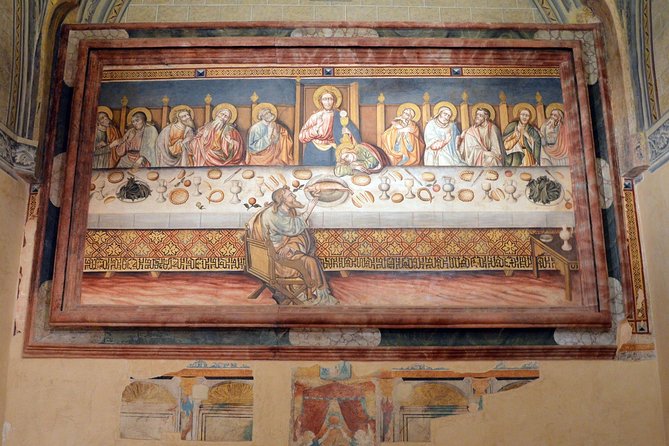
The monastery is especially useful if you enjoy churches, religious art, and Spanish history after the Roman period. A good guide can explain how the building fits into the long story of the region, rather than treating it as a quick photo stop. Jesús received particular praise for giving the monastery a full historical explanation instead of simply walking the group through the church.
Still, I would not book this outing solely for San Isidoro del Campo. The monastery is the less consistent part of the experience. Some people find it beautiful and unexpectedly interesting. Others find it boring or unrelated after the excitement of Itálica, and a few would have preferred to spend more time at the Roman site.
That difference comes down to your interests. If you are already tired of churches after touring Seville, the monastery may feel like an extra obligation. If you enjoy architecture, religious history, and places you might not find on your own, it is a useful addition.
The guides shape the whole morning
This is a guided walking tour, not simply a bus ride with admission tickets. That distinction matters at Itálica, where a guide can help you understand why the houses, mosaics, amphitheater, and streets matter.
The strongest guide reports describe a lively style with clear storytelling, humor, historical detail, and time to look around independently. Leon was praised for making a large group feel included. Rebecca was noted for pointing out small details that are easy to miss. Miguel received praise for explaining both the site and the work involved in uncovering and preserving it. Jesús was repeatedly described as passionate about Roman history.
Alberto’s storytelling also earned special praise for making the ancient city feel populated rather than empty. That is the best reason to take a guided visit. You can technically reach Itálica by public transport for only a few euros, but you will need to provide your own context.
The weaker experiences came from language and timing. One guide was difficult for some English speakers to understand, and one outing combined English and French explanations despite being sold as an English tour. Another guide had to handle Spanish and English groups together when a colleague did not arrive.
The tour is offered in English, but I would still treat the guide assignment as part of the gamble. Most of the available feedback points to strong explanations, yet a tour with a large group and mixed languages can feel less focused.
More Guided Tours in Spain:
- Guided Tour of Historic and Monumental Trujillo
★ 5.0 · 930 reviews - Madrid Historical Tour with Local Guide in Eco Tuk Tuk Private
★ 5.0 · 876 reviews - Guided Tour of Madrid of the Austrias and the Historic Center
★ 5.0 · 520 reviews - Seville: Tapas, Taverns and History Guided Walking Tour
★ 4.9 · 515 reviews
Transport, timing, and group size
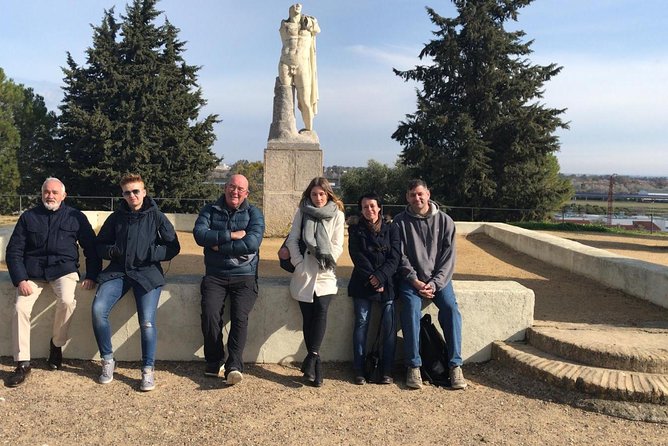
The tour lasts about four hours, including shared round-trip transportation. The bus ride from Seville is short, roughly 20 minutes according to the tour information and direct experience of the route. That makes Itálica a sensible choice when you want an excursion without spending half the day in transit.
The included vehicle is a practical advantage. You do not need to work out the local bus, find the archaeological entrance, or arrange your return. The buses have been described as clean and comfortable, and the pickup process is generally straightforward.
The maximum group size is 60 people. That is large enough to affect the feel of the walk, especially in narrow spaces or when several groups gather near a mosaic. The better guides handle the size well, but you should not expect the intimacy of a private tour.
Timekeeping is the main practical concern. A few outings have started late because of delayed buses or several pickup points. One delay reportedly cut 30 minutes from the visit, which matters if you have a train, timed attraction, or dinner reservation in Seville.
I would avoid booking this tour on a day when you need to reach the station immediately afterward. Give yourself a buffer. The official duration is approximately four hours, but transport delays can make the return less predictable.
Heat, walking, and what to bring
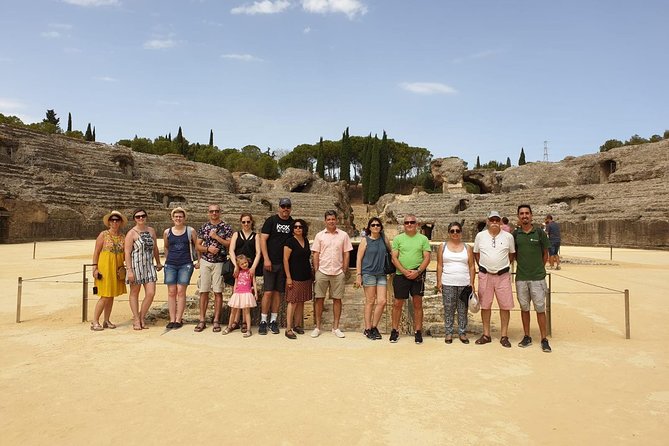
Itálica is an outdoor archaeological site, so weather affects the experience. In August, the heat can become intense, with little shade in some areas. You may find yourself moving from one patch of shadow to the next while listening to the guide.
Wear comfortable shoes. The tour is a guided walking visit, and the ground around ancient ruins is not the place for delicate footwear. Bring water, a hat, sunscreen, and protection from the sun.
Food and drinks are not included. This is more important than it sounds because the combination of heat, walking, and an extended morning can leave you tired. Carry your own water and a snack unless you have confirmed that there will be a suitable opportunity to buy refreshments.
It is also sensible to carry identification or a copy of your passport. Requirements are not clearly explained in the supplied tour details, and one participant reported that having passport images on a phone proved useful.
Most people can take part, but this is not a seated sightseeing excursion. You will walk through an archaeological complex and spend time standing while the guide explains the site. If mobility is a concern, ask the provider about the route before booking.
Is $47.18 a fair price?
At $47.18 per person, the tour sits in a reasonable range for a half-day outing from Seville. The price includes admission, round-trip shared transport, a professional guide, and taxes.
You can reach Itálica independently for much less by local bus. That option makes sense if you have a strong background in Roman history, are comfortable finding your way around, and do not mind researching the site yourself.
The guided tour earns its price through convenience and interpretation. You are paying to avoid transport planning, get direct access to the archaeological complex, and hear explanations about the mosaics, houses, amphitheater, and monastery. You also receive a second historic site without arranging another ticket or route.
The value drops if you mainly want to wander alone, dislike large groups, or already know the history. It also drops if a delay shortens your visit or if the guide’s English is hard to follow. For most first-time visitors who want an easy half-day from Seville, the combination of transport, admission, and guiding is fair.
The experience is well suited to people who enjoy Roman history, archaeology, mosaics, and historic buildings. It is less ideal for anyone seeking a relaxed food outing, since no meal or drinks are included and the focus is entirely cultural.
How the experience compares with going alone
Independent travel gives you flexibility. The commuter bus costs only a few euros, and you can decide how long to spend at the ruins. If you have already studied Itálica or prefer reading information on your own, this may be the better bargain.
The guided version removes several small complications. You do not need to check the bus route, coordinate the return, buy entry separately, or decide which remains deserve your attention. A good guide also supplies the human detail that signs alone may not provide.
The monastery is another factor. If you go independently, you may not visit San Isidoro del Campo at all. That is a benefit if the monastery does not interest you, but a loss if you enjoy discovering an unexpected second site.
For a first visit, I would choose the tour if I had limited time in Seville and wanted the history explained. I would go independently if I had already seen the main Roman sites, wanted a slower pace, or needed complete control over my schedule.
Who should book this half-day outing?
I would recommend it most strongly to:
- People with a serious interest in Roman history or archaeology
- First-time visitors to Seville who want an easy excursion
- Anyone who values a guide’s stories more than a low-cost bus ride
- Solo visitors who like joining a group for a cultural outing
- People who enjoy combining Roman ruins with medieval religious architecture
I would think twice if you are highly sensitive to heat, need firm return times, dislike large groups, or want only Roman remains. In those cases, the transport and monastery may not justify the compromises.
The 93 percent recommendation rate and 4.7 rating suggest that the experience usually works well, but the lower ratings point to real issues rather than minor complaints: late departures, rushed visits, mixed-language explanations, and inconsistent communication. Those are manageable concerns if you plan carefully, but they should not be ignored.
Should you book the Italica tour?
Book it if you want the easiest way to see one of Spain’s important Roman sites from Seville, and if you value a guide who can explain what the mosaics and houses reveal about ancient life. The amphitheater is striking, the site is close to town, and San Isidoro del Campo gives the morning a useful second chapter.
Skip it in favor of independent transport if your schedule is tight, your Roman background is strong, or you have no interest in the monastery. If you do book, carry water, wear walking shoes, leave spare time after the scheduled return, and ask what parts of Itálica are included that day.
FAQ
How long does the tour last?
The experience lasts approximately four hours, including the shared round-trip transfer from Seville and the visits to Itálica and San Isidoro del Campo.
What is the price?
The listed price is $47.18 per person.
Is the tour offered in English?
Yes. English is one of the available tour languages. Guide quality and language clarity can vary, and some departures have included more than one language.
What does the price include?
The price includes a professional guide, shared round-trip transportation, admission tickets, and taxes.
Are food and drinks included?
No. Food and drinks are not included, so bring water and anything else you may need during the half-day outing.
What will I see at Itálica?
You will visit the archaeological complex, including the amphitheater, Roman mosaics, and examples of upper-class domus houses. The exact route may vary, and access to the theater or baths is not guaranteed.
What is San Isidoro del Campo?
San Isidoro del Campo is a former fortress monastery visited as part of the outing. The stop includes admission and lasts about an hour.
How large can the group be?
The tour can have a maximum of 60 participants.
Can I cancel for a full refund?
Yes. You can cancel at least 24 hours before the experience begins for a full refund. Cancellations or changes made less than 24 hours before the start time are not refundable, and the tour may be changed or refunded if the minimum number of participants is not reached.
Newest history tours we have reviewed in Spain
- Bilbao Historical Tour in small group★ 4.7 · 52 reviews
- Barcelona Tapas Tour, Taverns, History & Local Culture★ 5.0 · 25 reviews
- Barcelona Historical 3-Hour Bike Tour★ 4.7 · 222 reviews
- Barcelona: Market, Tasty Tapas/Food and Gothic History Tour★ 4.7 · 48 reviews
- Barcelona: Cemetery Tour – Gothic Graves & Local History★ 4.9 · 33 reviews
- Barcelona & Chocolate Amatller History and Culture + Activity and Tasting★ 4.9 · 173 reviews
- Barcelona: The Spanish Civil War Historical Walking Tour★ 4.9 · 239 reviews
- Barcelona: 3-Hour Sips, Sites & Bites Food & History Tour★ 4.8 · 33 reviews
Seville History Tours, compared.
Sevilla Food Tour: Tapas, Wine, History & Traditions
Read our review →
Ultimate Seville Tapas, Wine & History Small Group Tour
Read our review →
Seville Evening Historical Tour with Haunted History
Read our review →
Historic Gibraltar Rock and St Michael’s Cave Tour from Seville
Read our review →
Browse the lists this tour appears in