
Review · ITALY HISTORY TOURS
Skip-the-Line Half-Day Private Tour Ancient Pompeii Highlights with Native Guide
Pompeii rewards a guide who can read the ruins like a city, not just point at them. This private two-hour tour takes you from the theaters and main streets to the Forum, baths, homes, mills, Gladiators’ Gym, and Lupanare, with stories that help you picture daily Roman life. I especially like the skip-the-line entry and the chance to set the pace with your own group.
I also like the small-group attention. Guides such as Lello, Italo, Fabio, Rosanna, and Lelo have been praised for warm delivery, strong English, useful detail, and the ability to keep children and teenagers interested. The main drawback is the clock: two hours is a brisk introduction, and Pompeii is far too large to see fully in that time.
Key points before you book
- Private access: Only your group takes part, so the guide can adjust explanations and pace to your interests.
- Major Pompeii sights: The route includes Via dell’Abbondanza, the Stabian Baths, Forum, Lupanare, theaters, domus, mills, and Gladiators’ Gym.
- Skip the long entrance lines: Admission is included, which matters on a busy day.
- English-speaking art historian guide: Expect history, architecture, anecdotes, and practical help finding your way through the site.
- Short but concentrated: The tour lasts about two hours, making it useful for a tight schedule but not a full archaeological visit.
- Good booking demand: It is often reserved about 87 days ahead, so popular dates may require planning.
Why two hours can work at Pompeii
Pompeii is not a single monument. It is a huge ancient city, with streets, shops, temples, baths, theaters, homes, public buildings, and open excavations spread across a broad area. Without a plan, you can spend much of your visit wandering, backtracking, and wondering which doorway matters.
That is where this tour earns its keep. A private guide gives you a clear route and explains what you are seeing as you go. Instead of looking at a wall and hearing only that it is old, you learn how the street worked, what a Roman household needed, or why a public bath mattered.
The two-hour format is best viewed as a highlights tour. You will not see every house, garden, painting, and street in Pompeii. You will, however, get a useful framework for the city and its people. If you have only a morning, are traveling with children, or want a guided introduction before exploring alone, this length makes sense.
If Pompeii is a main reason for your visit, I would prefer more time. The short schedule means the guide must keep moving, and some stops may receive only a brief explanation. That limitation is built into the tour, not a flaw in the site or necessarily in the guiding.
More Ancient History Tours in Italy
- Colosseum: Underground and Ancient Rome Tour
★ 4.7 · 12,691 reviews - Colosseum & Ancient Rome with Arena Floor Option I Max 6 People
★ 5.0 · 3,306 reviews - Rome: Colosseum, Ancient Rome Tour or AudioGuided Tour
★ 4.4 · 2,879 reviews
Meeting at Piazza Esedra
The tour begins at Hotel Vittoria on Piazza Esedra in Pompei. The activity ends back at the same meeting point, so you do not need to arrange a separate return transfer.
Hotel pickup and drop-off are not included. You must make your own way to the meeting point, but the location is near public transportation. Confirmation is provided when you book, and the tour is offered in English.
Arrive ready to walk. The site calls for a moderate level of physical fitness, and Pompeii’s ancient streets can make the visit tiring, especially in hot weather. One practical tip is simple: bring water. Summer sun can make even a short route feel demanding.
The skip-the-line feature is useful because it protects your limited sightseeing time. You are not paying to stand outside while your two-hour visit ticks away. Admission is included, along with a local guide, professional guide, and professional art historian guide.
Teatro Grande and Teatro Piccolo
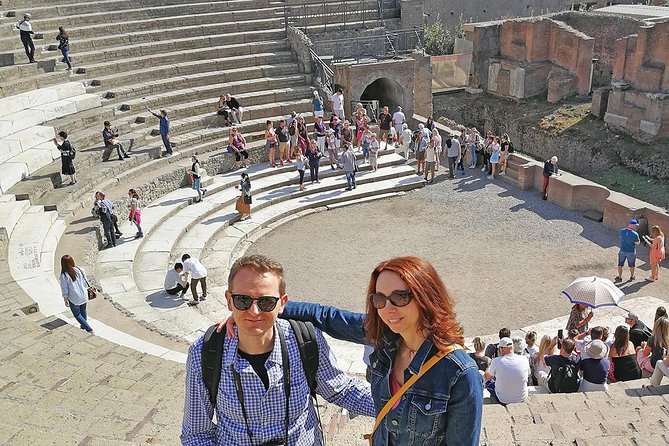
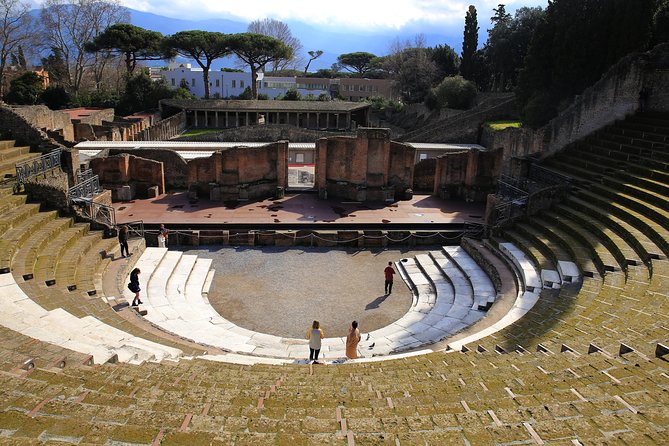
The theaters provide a lively opening to Pompeii. The Teatro Grande is the larger performance space, while the Teatro Piccolo, also known as the small theater, is valued for its remarkable acoustics.
A good guide can make these places more than stone seating and empty stages. You learn how public entertainment fit into Roman life and how the design of the smaller theater helped sound carry across the room. The guide is also expected to share anecdotes and lesser details that you might miss when walking through on your own.
These stops are particularly useful for families. The theatrical setting is easy to picture, and the acoustics offer something you can appreciate in the moment rather than simply read about. If your guide is Lello, Italo, Fabio, Rosanna, or Lelo, the experience may have a slightly different style, but the route is built around explanation and storytelling.
The tradeoff is time. You may not linger long enough to study every architectural detail. The point here is to understand the role of the theaters in city life, then continue toward the streets and public center.
Via dell’Abbondanza: Pompeii’s everyday street
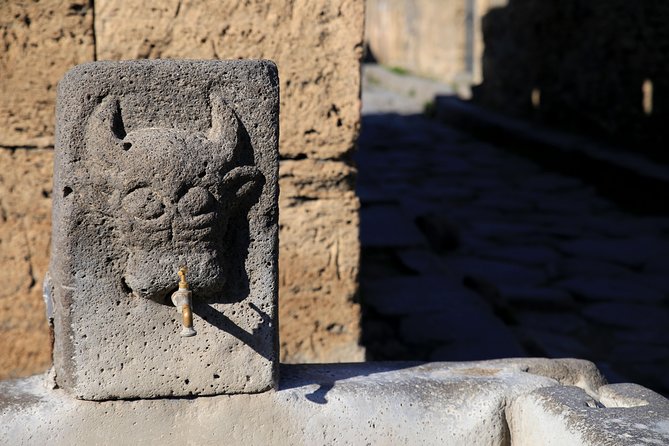
Via dell’Abbondanza is one of the most important stops because it gives you the feel of Pompeii as a working city. You walk along a main street rather than viewing isolated ruins, which helps connect homes, shops, public buildings, and movement through the city.
This is where the guide’s interpretation matters most. The tour aims to explain how Romans lived, not merely list dates. You may hear about daily routines, the way people used the streets, and the small details that reveal how practical Roman life could be.
The street also helps you understand Pompeii’s scale. A theater or bathhouse can seem like a single attraction, but Via dell’Abbondanza shows how those places fitted into a larger urban system. You move through the same kind of route ancient residents used, with the guide providing the context.
Expect a concise visit of about 20 minutes within the planned route. That is enough to establish the character of the street, but not enough to inspect every building along it. If you are fascinated by shops, homes, or street design, make a note of what you want to revisit after the private tour.
More Private History Tours in Italy
- Ancient Ostia Antica Semi-Private Day Trip from Rome by Train with Guide
★ 4.5 · 579 reviews - Colosseum & Ancient Rome Semi-Private Tour
★ 5.0 · 208 reviews - Ancient Pompeii Private Tour: Skip the Line & Kid-Friendly Option
★ 5.0 · 167 reviews - Private Rome Food Tour in the Historic Centre with 8+Tastings
★ 5.0 · 135 reviews
Stabian Baths and the Roman habit of bathing
The Stabian Baths are among the most useful stops for understanding public life. Roman baths were not just places to wash. They were social and civic spaces, and the surviving rooms show how carefully such facilities were organized.
Your guide explains the thermal baths as part of ordinary Roman life. The stop helps answer practical questions: where people gathered, how public facilities worked, and why baths mattered in a city like Pompeii.
The baths are also a good example of why a guide can add value to admission. On your own, you see rooms and walls. With explanation, you can begin to understand the purpose of the spaces and the habits they supported.
Do not expect a long, technical archaeology lesson in a 20-minute segment. The strength of this stop is its clarity. It gives you a solid picture of one major part of Roman society without taking the whole morning.
The Forum, Pompeii’s public heart
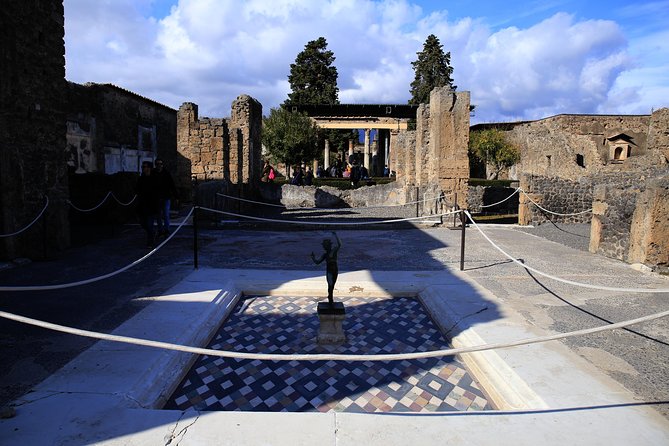
The Forum is the essential Pompeii stop, and this tour gives it a central place. This was the city’s main square, surrounded by public and commercial buildings. Walking through it gives you the clearest sense of Pompeii as a Roman town with civic life, markets, religion, and administration.
The guide helps you read the open space. Rather than seeing scattered columns, you can picture people crossing the square, merchants working nearby, and public business taking place around them. The excavated Forum is also important for understanding how much of Pompeii’s public center has been revealed.
I would pay close attention here. Several parts of the tour are interesting, but the Forum gives the best broad view of the city’s organization. It ties together the private houses, shops, baths, theaters, and streets you have already seen.
The Forum can be crowded, and it is one of the places where a private guide may help you keep moving without losing the main points. The tour does not promise an empty site, but a guide can steer your attention toward the most useful views and avoid wasting time.
Lupanare and the less polished side of Roman life
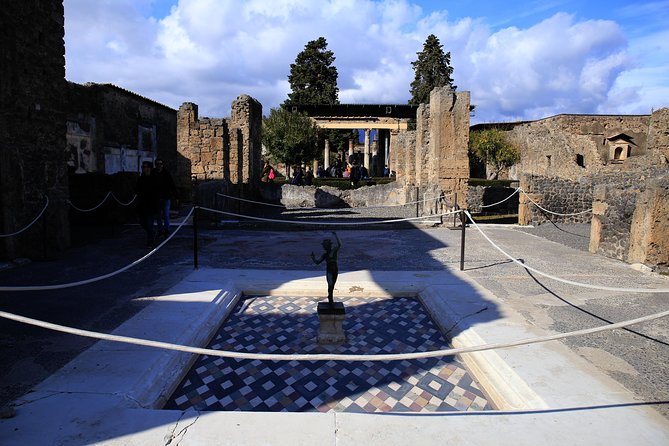
The Lupanare is famous for its erotic frescoes, and it is one of Pompeii’s most talked-about buildings. The attraction is not simply shock value. It offers a glimpse into a less formal side of ancient urban life and shows how the city’s public image included subjects that modern visitors may find direct or uncomfortable.
Your guide can place the paintings and rooms in historical context. That matters because a quick walk through the building can reduce it to a collection of unusual images. The explanation helps you understand why the site is significant and how it fits into the broader story of Pompeii.
This stop may not suit every child, so adults should decide how much explanation is appropriate for their group. Children must be accompanied by an adult on the tour, and families may want to tell the guide in advance if they prefer a more measured approach.
The Lupanare is usually busy because it is one of the best-known sites in Pompeii. A private tour does not remove other people from the building, but it gives you a guide who can explain what you are seeing instead of leaving you to form a rushed impression.
Homes, mills, and the Gladiators’ Gym
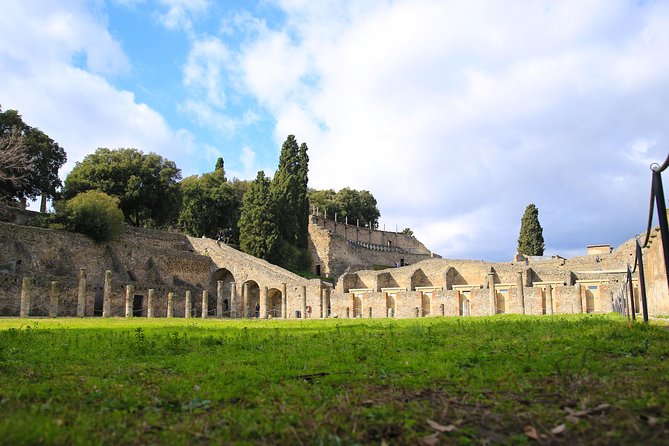
The tour also brings in several parts of Pompeii that show how people lived and worked. Domus, or private homes, can reveal the difference between public streets and domestic space. Mills point toward food production and daily labor. The Gladiators’ Gym adds another layer, connecting the city with training and spectacle.
These sites help keep the visit from becoming a parade of famous ruins. You get a broader look at Pompeii as a real community, with work, entertainment, social life, and private households existing close together.
The guide’s storytelling is especially valuable here. Several guides associated with the experience, including Lello and Fabio, have been praised for making the city feel inhabited rather than frozen in time. Lello is also described as having an archaeologist’s command of Pompeii and the eruption of Mount Vesuvius in 79 AD.
That said, the exact balance of stops can vary because the tour is private and the guide may adjust the route. A group interested in architecture may spend more time on homes, while families may prefer the theaters and street life. The published route gives you the main framework, but the private format leaves room for emphasis.
What the guides add
The strongest reason to choose this tour over a basic entry ticket is the guide. The most praised qualities are energy, clear English, humor, historical context, and the ability to answer questions without turning the visit into a lecture.
Lello is described as warm, funny, and highly engaging. Italo is praised for energy and for bringing Pompeii to life. Fabio has been compared to a friendly professor, while Rosanna is noted for navigating crowds and drawing teenagers into the discussion with questions. Lelo is described as an archaeologist with a strong grasp of the eruption and the ancient city.
You should not assume you will receive a particular guide unless the provider confirms it. Still, these names give you a useful sense of the guiding style connected with the experience. The best guides do more than recite facts. They point out small details, connect one building to another, and help you picture what the city was like before the eruption.
There is also a useful warning. One booking was judged average because the guide seemed focused on getting through the route and offered information that did not always match accepted historical and anthropological views. That is a reminder to ask questions if something sounds uncertain. A private format gives you a better chance to clarify a point than a large group tour does.
Is $83.48 per person good value?
At $83.48 per person, this is not the cheapest way to enter Pompeii. You are paying for more than admission: a private group, skip-the-line access, and about two hours with a local professional and art historian guide.
The value depends on how you use your time. If you have only a short window, skipping the entrance queue can protect a meaningful part of your visit. If you are visiting with family or a small group, private guiding also means you do not have to follow a large crowd or listen to explanations that do not match your interests.
For one person or a pair on a tight budget, the price may feel high for two hours. For a group that can share the private booking cost, the value improves, especially if you want personal attention and a clear route.
I would see the price as reasonable for a focused introduction, not as payment for a complete Pompeii experience. You are buying efficiency and interpretation. You are not buying enough time to examine the entire archaeological park.
Who should book this Pompeii tour?
This experience suits you if you:
- Have only two or three hours for Pompeii
- Want a private guide instead of a large group
- Prefer history explained in clear English
- Are visiting with children or teenagers
- Want the major sights without planning your own route
- Value skip-the-line entry
- Have a moderate level of physical fitness
- Want to ask questions and adjust the pace
It is less suitable if you want a slow archaeological study, extensive time inside individual houses, or a full-day exploration. In that case, the two-hour route will feel compressed.
The tour also works well as a first visit. After the guide leaves you back at Piazza Esedra, you will have a clearer sense of which areas deserve more time if you continue exploring independently.
Practical details to keep in mind
Children must be accompanied by an adult. The activity requires good weather, so poor conditions can lead to a different date or a full refund. Free cancellation is available up to 24 hours before the start time, while later cancellations and changes are not refunded or accepted.
Plan for walking and bring water, particularly in summer. Since hotel pickup is not included, allow time to reach Hotel Vittoria at Piazza Esedra on your own.
The tour is offered in English and is a private activity, meaning only your group participates. Group discounts may be available, which can make the per-person cost more attractive for families or friends traveling together.
Should you book it?
Book this tour if you want Pompeii’s main story without losing time at the entrance or getting lost among the ruins. The private format, strong guide-led storytelling, Forum, Stabian Baths, theaters, Via dell’Abbondanza, and Lupanare make it a well-focused first look.
I would book it especially for a family, a small group, or anyone with limited time in the area. Just keep your expectations clear: two hours gives you the outline, not every chapter. If Pompeii is a major focus of your trip, use this as an introduction and allow extra time to explore on your own.
FAQ
How long does the Pompeii tour last?
The tour lasts approximately two hours.
Is the tour private?
Yes. Only your group participates in the activity.
Is skip-the-line entry included?
Yes. The tour includes guaranteed skip-the-line entry and admission to the listed Pompeii sites.
What language is the tour offered in?
The tour is offered in English.
Where does the tour begin?
It begins at Hotel Vittoria, Piazza Esedra, 80045 Pompei, Italy.
Where does the tour end?
The activity ends back at the meeting point at Hotel Vittoria.
Is hotel pickup included?
No. Hotel pickup and drop-off are not included.
Which Pompeii sites are included?
The route includes the Teatro Grande, Teatro Piccolo, Via dell’Abbondanza, Stabian Baths, Forum, Lupanare, domus, mills, Gladiators’ Gym, and other areas of Pompeii Archaeological Park.
Can children join the tour?
Yes, but children must be accompanied by an adult.
What happens if the weather is poor?
If the experience is canceled due to poor weather, you will be offered a different date or a full refund.
More Skip-the-Line Tickets in Italy
- Taormina: Ancient Theater Skip-the-Line Ticket & Audio Guide
★ 4.5 · 2,412 reviews - Historic Milan Tour with Skip-the-Line Last Supper Ticket
★ 4.5 · 1,976 reviews - Córdoba: Skip-the-Line Great Mosque-Cathedral History Tour
★ 4.7 · 1,690 reviews - Skip-the-Line Schonbrunn Palace Guided Tour and Vienna Historical City Tour
★ 3.5 · 940 reviews
More Pompeii and Vesuvius History Tours in Italy
- Discover the Ancient Ruins of Pompeii: Day Trip from Rome
★ 3.5 · 2,247 reviews - Small-Group Rome to Pompeii & Amalfi: Day of History & Sea
★ 5.0 · 239 reviews
Newest history tours we have reviewed in Italy
- Bologna: Street Food Tour in the Historic Center★ 4.8 · 125 reviews
- Asti Historic Town Walking Tour★ 4.5 · 82 reviews
- Ancient Rome: Archeological area Largo Argentina★ 3.9 · 49 reviews
- Ancient Rome Half-Day Segway Tour★ 4.8 · 25 reviews
- Alghero: Historic Center Walking Tour with A Local Guide★ 4.8 · 120 reviews
- Alghero: walking tours around the ancient city★ 4.6 · 30 reviews
- Amalfi Organic Lemon Tour & Tasting in the Historical Garden★ 4.9 · 46 reviews
- Alba: History Walking Tour and Food Tasting with a Local★ 4.8 · 20 reviews
Ancient History Tours, compared.
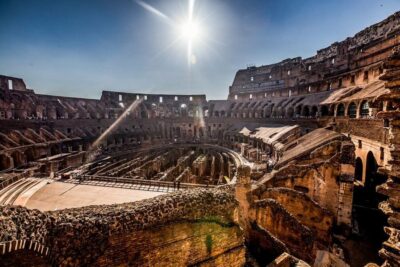
Colosseum: Underground and Ancient Rome Tour
Read our review →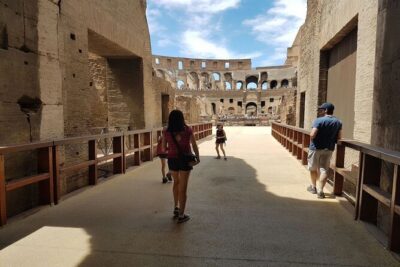
Colosseum & Ancient Rome with Arena Floor Option I Max 6 People
Read our review →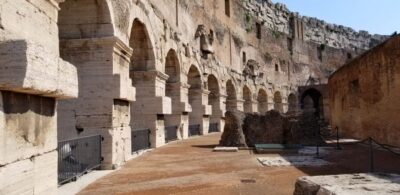
Colosseum, Ancient Rome Tour or AudioGuided Tour
Read our review →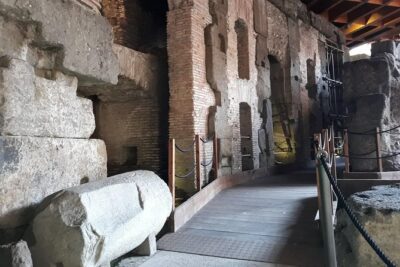
Colosseum Underground & Ancient Rome Guided Tour
Read our review →
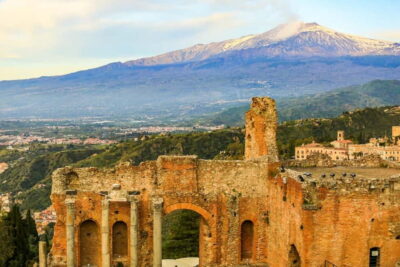
Taormina: Ancient Theater Skip-the-Line Ticket & Audio Guide
Read our review →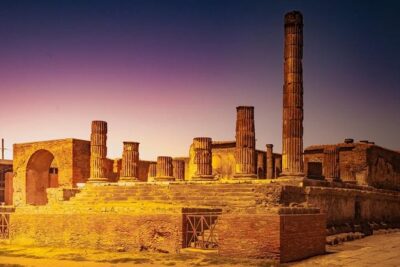
Discover the Ancient Ruins of Pompeii: Day Trip from Rome
Read our review →
Discover Matera, the ancient city – English tour
Read our review →Browse the lists this tour appears in