
Review · PHILADELPHIA HISTORY TOURS
2.5 Hour Philadelphia History Tour with Washington War Tent Show
Philadelphia’s most powerful history lesson may be the short walk between Independence Hall and the Museum of the American Revolution. This tour connects the places where the country was debated with the people, conflicts, and compromises behind those famous walls. The best moment is the presentation of George Washington’s War Tent, a rare physical link to the Revolutionary War.
I like the small group, capped at 12, because it gives you room to ask questions. I also like the route: it covers major landmarks, an old residential street, Franklin’s grave, and the President’s House site without making you choose between a museum and a city walk. The main drawback is that most historic buildings are viewed from outside, and the route packs a lot into 2.5 hours.
Key points to know before booking
- Washington’s War Tent is the tour’s special feature: You see a presentation of the tent George Washington used during much of the war inside the Museum of the American Revolution.
- The route covers Old City’s essential sights: Independence Hall, Congress Hall, the Liberty Bell Center, Carpenters’ Hall, Elfreth’s Alley, and more appear in one walk.
- The group stays small: A maximum of 12 people makes it easier to hear the guide and ask questions.
- The museum visit continues after the tour: Your ticket includes the tent presentation and a discounted admission offer for exploring the rest of the museum later.
- The tour is history-heavy but lively: Guides including Tom, John, Maria Gorshin, PJ, Carla, Caroline, and David have been praised for clear storytelling and useful local suggestions.
- Plan for a real walk: The route lasts about 2.5 hours and ends in Old City, not back at the starting point.
Why the War Tent gives this walking tour a clear purpose
Many Philadelphia history walks cover the same famous buildings. This one has a useful anchor: Washington’s War Tent. Seeing the tent after walking through the places where independence was argued gives the tour a physical object to tie the story together.
The tent presentation takes place inside the Museum of the American Revolution. You do not simply pass the museum on the sidewalk. The guide brings you in to see this specific presentation, then gives you a discounted ticket to return at the time of your choice after the tour.
That setup works well if you want a guided introduction first and a self-paced museum visit later. You can listen to the main story with the group, then return when you are ready to spend more time with the museum’s exhibits. The 20-minute museum stop itself is brief, so do not treat it as a full museum visit.
The subject matter also goes beyond a simple list of dates. The route brings up the philosophies, conflicts, and people tied to the founding of the United States. It also touches on slavery, abolition, women’s activism, and civil rights through places such as the Liberty Bell Center and the President’s House.
More Shows in the USA:
- Lisbon: Live Fado Show with Port Wine in Historic Center
★ 4.7 · 4,166 reviews - Porto: An Intimate Fado Show in a Historical Tavern
★ 4.8 · 2,055 reviews - Lisbon: Fado Show with Wine in a Historic Venue
★ 4.8 · 1,294 reviews
Starting at the Signer’s Garden
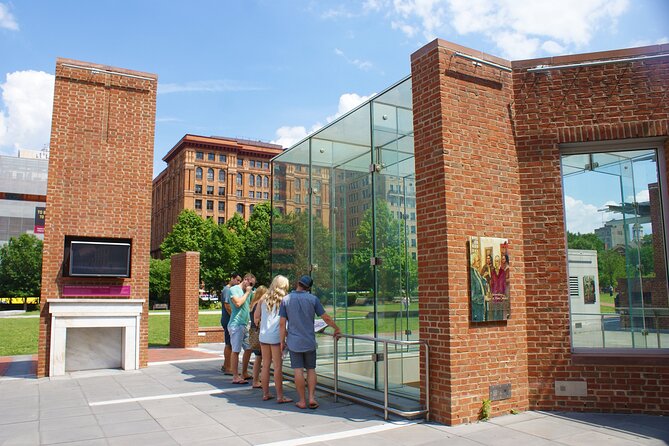
The meeting point is the statue known as The Signer in Signer’s Garden, at 434 to 498 Chestnut Street. The statue represents the signers of the Declaration of Independence and the Constitution, along with the continuing idea of freedom.
This is a fitting place to begin because it sets the tone for the walk. You are not starting with a random street corner. You are starting with a public reminder that the founding story involved a group of people, not just one famous figure.
The opening stop lasts about five minutes and is free. Arrive ready to walk, since the route moves through the Historic District on foot and includes several outdoor stops.
Independence Hall and the buildings around it
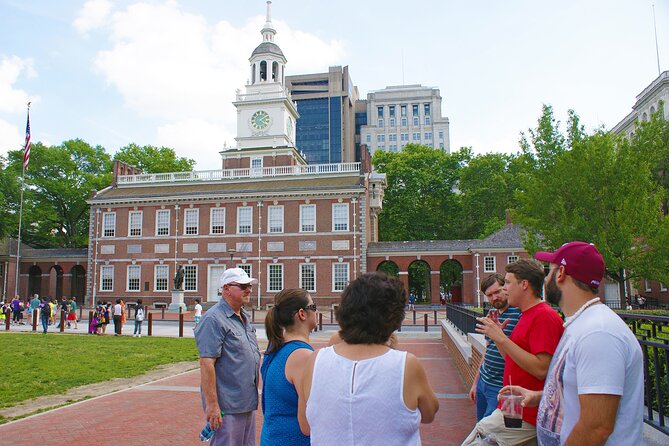
The first major section takes you through Independence National Historical Park. You see Independence Hall, Congress Hall, and Old City Hall, while the guide explains how these buildings shaped Philadelphia and the new American government.
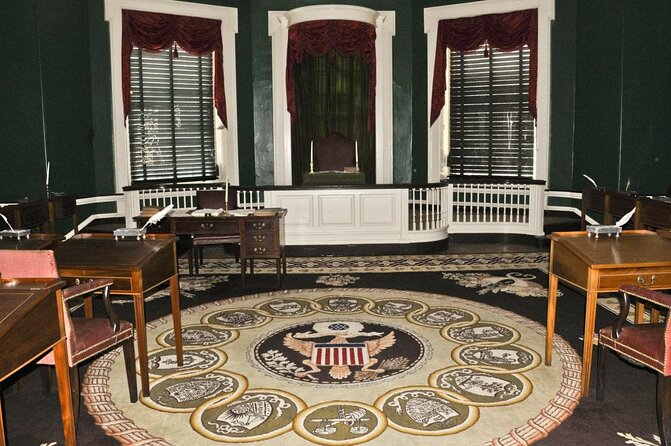
Independence Hall is viewed from the outside on this tour. You circle the building while hearing about the debates, political ideas, setbacks, and successes linked to the Founding Fathers. The building appears on the $100 bill, but its real importance is less about the picture on the currency and more about the decisions made inside.
Do not book this experience expecting a full interior visit to Independence Hall. The route gives you context and exterior views. If entering the building matters to you, plan to arrange that separately.
Congress Hall sits beside Independence Hall and was the original home of the United States Congress. Old City Hall adds another piece to the story of early American government. Each stop receives about 10 minutes, which is enough for a focused explanation but not a long architectural inspection.
This brisk rhythm is one reason the tour works for a first visit. You cover several important places without spending the entire morning at one site. The tradeoff is that history buffs who want long talks at every building may find the pace quick.
The Liberty Bell beyond the usual photo stop
The Liberty Bell Center is another outdoor stop on the route. The guide explains the bell’s history and corrects some of the popular myths around it.
The useful part here is the broader story. The bell became a symbol not only of American independence, but also of later movements, including abolitionists, suffragettes, and the civil rights movement. That helps place it in a longer American story instead of treating it as a single Revolutionary-era object.
You do not enter the Liberty Bell venue during this tour. This detail matters. If you want an indoor look and a picture from inside the center, visit before or after the walking tour. One guide specifically pointed out this practical issue, and it is an easy detail to miss when planning a short Philadelphia visit.
More History Tours in the USA:
- New York City: American Museum of Natural History Ticket
★ 4.5 · 15,447 reviews - History and Hauntings of Salem Guided Walking Tour
★ 5.0 · 14,564 reviews - Charleston’s Old South Carriage Historic Horse & Carriage Tour
★ 5.0 · 10,023 reviews - Beneath The Streets Underground History Tour
★ 4.5 · 8,006 reviews
Carpenters’ Hall and the work of the First Continental Congress
Carpenters’ Hall is viewed from outside, but it earns its place on the route. The building is tied to the founding of Pennsylvania and hosted the First Continental Congress.
This stop helps connect the famous national story to Philadelphia’s local story. The city was not just a backdrop for the Revolution. Its civic groups, tradespeople, meeting places, and political institutions helped shape what happened.
The exterior visit is short, so you will not get the full experience of the building’s interior. Still, the guide’s explanation gives you a reason to return if the site catches your interest.
Washington’s War Tent at the Museum of the American Revolution
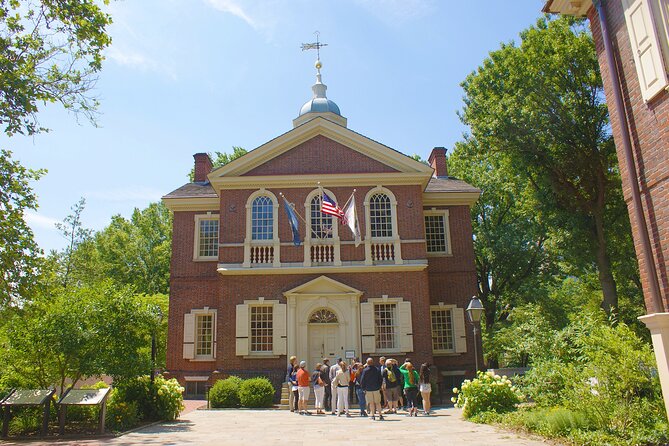
The Museum of the American Revolution is the tour’s only indoor museum stop and its main selling point. The group goes inside for a presentation featuring George Washington’s War Tent, which was present during many critical moments of the Revolutionary War.
The tent gives the story a human scale. Independence Hall can feel grand and formal. The War Tent suggests the mobile, uncertain side of the conflict and Washington’s life away from government chambers.
You spend about 20 minutes at the museum during the guided portion. That is enough for the presentation, but not enough to see everything. The discounted museum ticket is therefore important. You can return after the tour and explore the rest at your own pace.
I see this as good value for anyone who wants both a guide and museum time. The $45 price includes the walking tour, the tent presentation, a local guide, and a discounted museum admission offer. It does not include food, drinks, souvenirs, or personal purchases. Since the group is limited to 12, the price is reasonable for a guided introduction, especially if you use the museum discount afterward.
Elfreth’s Alley and Philadelphia’s residential past
Elfreth’s Alley changes the feel of the tour. After government buildings and national symbols, you walk along one of the oldest continuously occupied residential streets in the United States.
The narrow street, brickwork, and early 18th-century homes show how different daily life was from the formal public spaces nearby. This is one of the route’s most appealing stops for photography, but the guide also gives it historical weight. You see a real residential setting, not just a monument built to explain the past.
The tour includes the street from the outside and lasts about 10 minutes. If you want to explore house interiors or spend time studying architectural details, you will need to return on your own.
Betsy Ross, Benjamin Franklin, and the stories behind the names
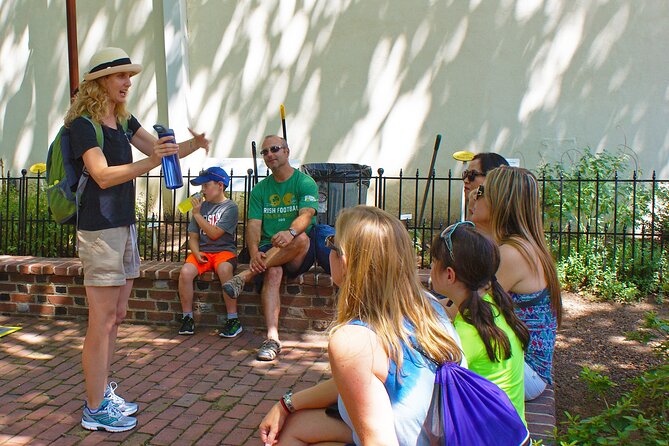
The walk continues past the Betsy Ross House. The guide discusses the famous seamstress and flag maker while separating the popular story of the first American flag from what can be firmly supported.
That approach is helpful. Philadelphia’s founding stories often come with legends attached, and a good guide should explain the difference between tradition and evidence rather than repeating every familiar tale.
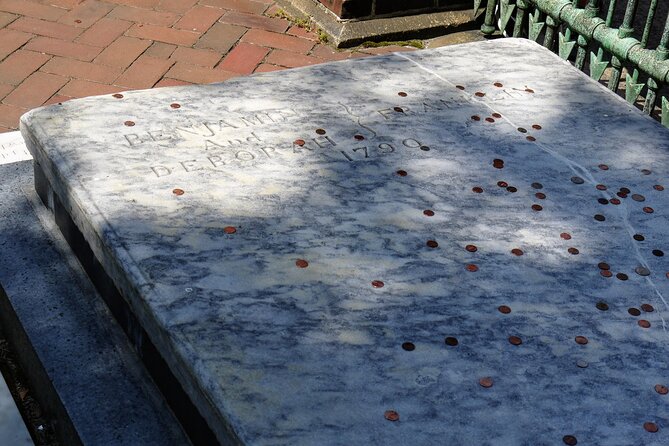
You also pass Benjamin Franklin’s grave on Arch Street. Franklin is one of the city’s best-known figures, and this brief stop adds another personal connection to the political and scientific story already unfolding around you.
The grave is not treated as a long stop, but it gives you a clear place to revisit later. If Franklin interests you, you may want to use this walk as a way to choose which nearby sites deserve more of your own time.
The President’s House and the difficult parts of the founding story
The final historical stop is the President’s House site. George Washington and John Adams lived here while serving as president, but the site also addresses the enslaved people who lived there.
That makes this an important closing point. The tour does not present the founding period as a simple story of liberty without contradiction. It asks you to consider the gap between the language of freedom and the reality of slavery.
The location remains an active archaeological site, which gives the stop added interest. You are looking at a place where public memory, excavation, and national history meet in the middle of downtown Philadelphia.
What the guides do best
The guide can make or break a history walk, and this experience has a strong record in that area. Guides named Tom, John, Maria Gorshin, PJ, Carla, Caroline, David, Donato, Pat, Peter, Laura, Alex, and PK have all led highly praised tours.
The consistent strength is not just factual recall. The best guides keep the story moving, answer questions, and connect one stop to the next. Tom has been described as especially animated. John is noted for answering questions and keeping children interested. Maria is praised for her vivid descriptions and warm attention to families. David is a good example of a guide who can pack a lot into the 2.5-hour route while offering food and sightseeing suggestions afterward.
Guides have also adapted when some buildings were closed during government shutdowns. In those cases, they added more explanation outdoors and suggested other places that remained open. That flexibility matters in Philadelphia, where access to historic buildings can change.
The experience is offered in English. Communication before the tour has been described as clear, and confirmation is provided at booking.
Who should book this Philadelphia history tour
I would choose this tour for a first visit, a short stay, or a family that wants a clear introduction before exploring on its own. It is especially useful if you have only a few hours in the Historic District and want to see many key sites without building the route yourself.
It also suits history fans who prefer stories over audio guides. The small group lets you ask questions, and the guide can adjust explanations to the group’s interests.
Families can benefit from the variety. Children may not want a long lecture inside one building, but the route keeps changing: statues, halls, a bell, a museum presentation, an old street, a grave, and an archaeological site. The family comments also suggest that guides such as John and Maria made an effort to include younger participants.
I would hesitate if your main goal is entering every major landmark. Independence Hall, Congress Hall, Old City Hall, Carpenters’ Hall, the Liberty Bell Center, and the Betsy Ross House are not full interior visits on this route. Think of the experience as a guided overview with one focused museum presentation, not a series of complete admissions.
The route is also not ideal for anyone who dislikes walking or standing for extended periods. Most participants can take part, and service animals are allowed, but the experience remains a 2.5-hour walking tour.
Practical details that affect the value
The price is $45 per person. That includes the local guide, the guided walk, the Washington War Tent presentation, a donation to a local nonprofit historic organization, and a discount for a later museum visit.
The value is strongest when you use the museum ticket afterward. If you only attend the guided portion and skip the rest of the museum, you are paying mainly for the guide and route. If you have time to return, the package becomes more useful.
The group maximum is 12, which is a meaningful advantage over a large city walk. You should be able to hear the guide more easily and ask questions without waiting through a crowd.
The tour starts in Signer’s Garden and ends in Old City. That makes it easy to continue sightseeing or find food nearby, but you should not expect to finish where you began. The tour is usually booked well in advance, with an average booking window of about 31 days, so reserve early if your schedule is fixed.
Free cancellation is available until 24 hours before the start time. Cancellations within 24 hours are not refunded, and changes made inside that window are not accepted.
Should you book it?
Book this tour if you want a well-organized first look at Philadelphia’s Revolutionary sites, prefer a small group, and like the idea of pairing an outdoor walk with a focused museum presentation.
The strongest reason to choose it is the Washington War Tent. The most useful practical feature is the discounted museum entry after the tour. The main limitation is clear: many buildings are exterior stops, so you need extra planning if interior access is a priority.
For a first-time visit, a family, or anyone with limited time, I think the $45 price is fair. You get the city’s main founding landmarks, a guide who can connect them, and a museum reason to keep exploring after the walk. If you want a full museum visit and interior tours of every building, book this as your orientation, not as your entire Philadelphia history plan.
FAQ
How long is the Philadelphia History Tour with Washington War Tent?
The tour lasts about 2 hours and 30 minutes.
How much does the tour cost?
The price is $45 per person.
What is included in the tour?
You receive a local guide, the walking tour, a presentation featuring George Washington’s War Tent, a donation to a local nonprofit historic organization, and discounted entry to the Museum of the American Revolution for use after the tour.
Do you enter Independence Hall and the Liberty Bell Center?
No. Independence Hall and the Liberty Bell Center are viewed from outside during this tour. You do not enter the Liberty Bell venue as part of the experience.
How large is the tour group?
The group has a maximum of 12 participants.
Where does the tour start and finish?
The tour begins at The Signer statue in Signer’s Garden at 434 to 498 Chestnut Street, Philadelphia. It ends in Old City, Philadelphia.
Newest history tours we have reviewed in the USA
- Nashville: Belle Meade Historic Mansion Tour★ 4.8 · 63 reviews
- Beaufort: Local History and Film Sites Tour by golf cart★ 4.9 · 102 reviews
- Boston: Guided Seafood Tasting and History Tour★ 4.9 · 90 reviews
- Beaufort: Gullah Heritage Tour★ 4.8 · 26 reviews
- Beaufort: Historic City Tour by Bus★ 4.9 · 228 reviews
- Austin: Downtown Austin Haunted History Tour★ 4.4 · 31 reviews
- Austin: Morning History Walking Tour of Downtown Austin★ 4.9 · 71 reviews
- Atlanta: Beltline Food, Street Art, and History Walking Tour★ 5.0 · 47 reviews
Philadelphia History Tours, compared.
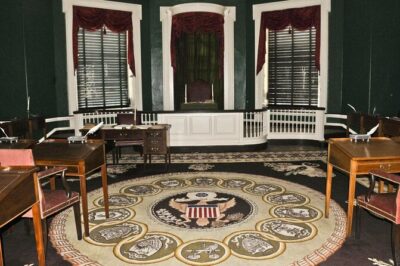
Revolution and the Founders: History Tour of Philadelphia
Read our review →
Philadelphia Old City Historic Walking Tour with 10+ Top Sites
Read our review →

Browse the lists this tour appears in