
Review · NEW YORK CITY HISTORY TOURS
Tribeca Architecture And History Walking Tour
Tribeca’s appeal is hiding in plain sight: a handsome doorway, a cast-iron facade, an old market building, or a quiet block that once had a very different purpose. This walking tour connects those details to 300 years of Manhattan history, showing how farmland became one of New York’s most expensive addresses.
I like the tour’s small maximum of 15 people, which should make it easier to hear the guide and ask questions. I also like the mix of architecture, local history, pop culture, and practical food suggestions. Meghan Sara has led many of the tours, and her animated storytelling is a major part of the experience.
The main drawback is simple: this is a 2.5-hour outdoor walk, so weather matters. The pace is manageable, but you will want comfortable shoes, water, and clothing suited to the forecast. The tour can be canceled for poor weather.
Key points at a glance
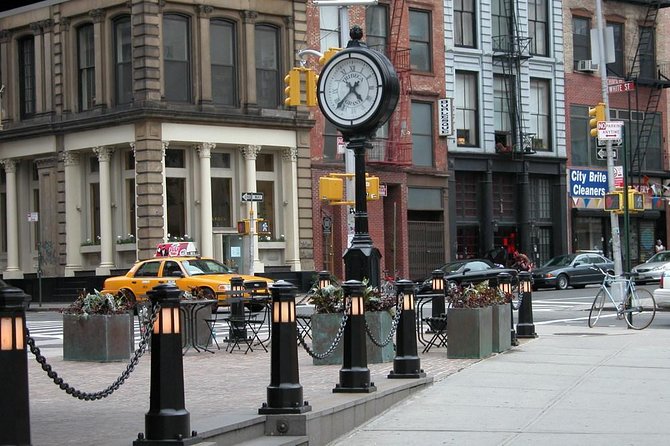
- More than 15 Tribeca locations: The route links buildings, streets, and landmarks rather than focusing on one isolated attraction.
- A real neighborhood story: You learn how farmland changed into a wealthy, fashionable Manhattan district.
- Cast-iron architecture: Tribeca’s older commercial buildings give the walk much of its visual appeal.
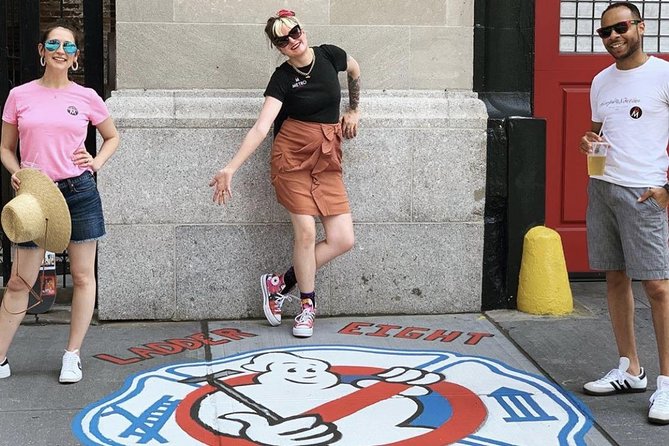
- Ghostbusters firehouse stop: Company 8 offers a fun photo opportunity and a chance to hear why the firehouse matters beyond the film.
- Guide-led, not lecture-led: Meghan Sara is praised for humor, energy, vivid stories, and adapting explanations to the group.
- Useful at the start of a New York visit: The guide may point you toward restaurants, bakeries, cafés, and other places to return to later.
Starting at Tweed Courthouse and entering old Manhattan

The tour begins at Tweed Courthouse, 52 Chambers Street, at 11:00 a.m. That start point places you near Lower Manhattan’s civic core, where the city’s early development, government, commerce, and neighborhoods overlap.
From there, you walk into TriBeCa, whose name comes from Triangle Below Canal Street. The area is not a single monument or museum. Its appeal comes from reading the streets: looking upward at facades, noticing materials, and understanding why buildings were made in certain shapes.
That is why this walk works even if you know little about architecture. You do not need to identify every style or memorize construction terms. The guide explains what you are seeing in plain language, then adds the human story behind it.
The opening section is also useful for setting expectations. This is not a tour where you spend two hours inside landmark buildings. Much of the experience happens on public streets, with stops for photographs and short explanations. You will need to stay alert to traffic, other pedestrians, and changing sidewalk conditions.
More History Walking Tours in New York City
- Hamilton and Washington Revolutionary Walking Tour
★ 5.0 · 182 reviews - #1 Rated NYC Chinatown Food and History Walking Tour with FNYT
★ 5.0 · 171 reviews - Lower Manhattan Secrets And History Walking Tour
★ 5.0 · 96 reviews
How farmland became an expensive address
The heart of the tour is Tribeca’s change over time. The neighborhood began as part of a much less urban Manhattan, then developed as the city expanded. Commercial activity, warehouses, workshops, and large old buildings helped shape the district before it became associated with luxury homes, famous residents, and costly real estate.
A good guide makes this change easy to picture. Instead of seeing only polished facades and expensive apartments, you begin to think about the work that once took place behind those walls. A building can look quiet today while carrying traces of trade, manufacturing, storage, and migration.
The tour also explains how Tribeca earned its modern reputation. It is described as one of New York City’s wealthiest areas, with a reputation that attracts celebrities and high property prices. That part of the story is useful, but the walk does not need to become a celebrity-address hunt. The stronger material is the contrast between the neighborhood’s former working identity and its present-day prestige.
I especially like this kind of context because it gives you something to look for after the tour. You may notice differences in building scale, window design, entrances, and street layout that would otherwise blend together. The neighborhood becomes easier to read.
Cast iron, old facades, and details above eye level
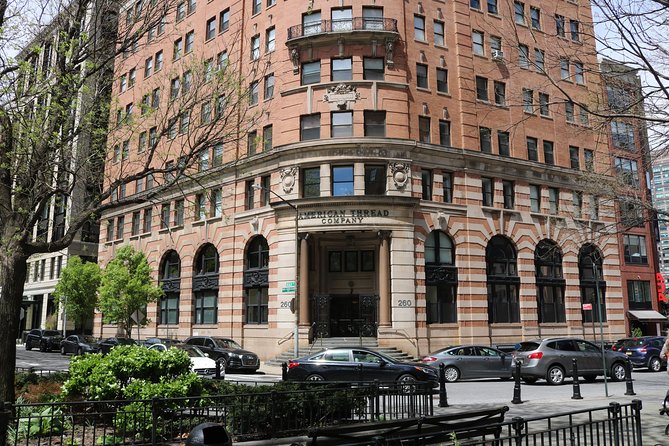
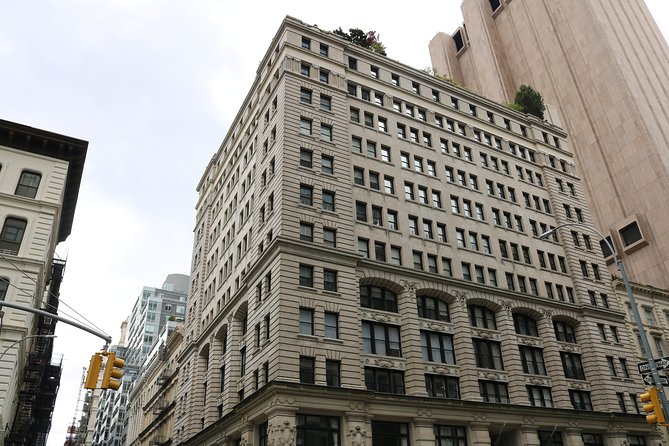
Tribeca is particularly rewarding for anyone who enjoys architecture without wanting a technical seminar. The route includes many older cast-iron buildings, an important reason to keep your eyes above street level.
Cast iron allowed builders to create decorative facades with repeated columns, arches, and elaborate details. It also helped give commercial buildings a strong visual identity. On a self-guided walk, you could easily photograph these structures without understanding why they look the way they do. With a guide, the details have a clearer purpose.
The tour covers more than 15 locations, so the experience should feel varied rather than fixed around one building. You might pause at a facade, then move on to a story about the neighborhood’s name, a local character, an architectural feature, or a change in land use.
That variety is one of the tour’s strengths. The best walking tours give you a steady rhythm: see something, hear why it matters, walk a little, then find another point of interest. The itinerary is long enough to cover real ground without turning into an exhausting full-day march.
Still, do not expect every stop to be a grand landmark. Some of the value comes from small details that are easy to miss. If you prefer major interiors, museum collections, or formal access to historic buildings, this may feel less substantial than an indoor attraction.
The Ghostbusters firehouse and the pop culture pause
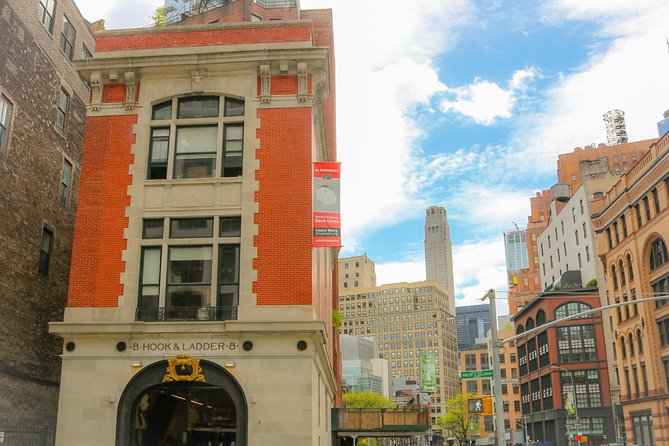
The Ghostbusters firehouse, Company 8, is one of the most recognizable stops. It gives the tour an easy pop culture hook and a clear photo opportunity.
The useful part is that the firehouse is not treated only as a movie backdrop. You learn why it has significance beyond Ghostbusters, while still getting the fun of seeing a place familiar from the screen. That balance keeps the stop from feeling like a quick gimmick.
For fans of the film, this may be the most memorable moment of the walk. For everyone else, it breaks up the architecture and offers a lighter story. The stop lasts about 10 minutes, so it does not take over the tour.
You should keep expectations realistic. This is a photo stop, not a promise of a long interior visit or a movie-themed attraction. The firehouse remains a working location, so the experience centers on seeing the exterior and hearing the story around it.
More History Walking Tours in the USA
- History and Hauntings of Salem Guided Walking Tour
★ 5.0 · 14,564 reviews - Boston: Freedom Trail History Small Group Walking Tour
★ 5.0 · 6,450 reviews - Historic Charleston Guided Sightseeing Walking Tour
★ 5.0 · 6,216 reviews - Savannah History and Haunts Candlelit Ghost Walking Tour
★ 5.0 · 3,235 reviews
A guide who brings the streets to life
The guide makes a major difference on a neighborhood tour, and Meghan Sara is repeatedly praised for her energy, humor, and command of the subject. Her style appears to combine history, architecture, art, local recommendations, and odd facts rather than presenting a dry sequence of dates.
That approach suits Tribeca. The neighborhood requires explanation because its most interesting features are spread across ordinary streets. A guide who notices small details and tells stories with enthusiasm can turn a quiet block into part of the main event.
Meghan is also praised for adjusting the tour to the group’s interests. That matters in a small party of up to 15 people. You can ask about architecture, local history, film locations, restaurants, or unusual New York stories. One memorable example mentioned by past participants is a discussion of New York beavers, a reminder that the guide adds unexpected side notes rather than sticking to a rigid script.
The tone seems friendly and accessible. You do not need an architecture background, and the guide’s humor should help younger visitors stay engaged. One particularly useful indication is that the tour worked for a local family that included a 14-year-old, which suggests the material is not aimed only at serious preservation fans.
The guide may also point out places to eat and drink, including restaurants, bakeries, cafés, and lunch spots. I would take notes or save recommendations on your phone. Those tips are more useful if you take the tour early in your New York stay, when you still have time to return.
A well-paced 2.5-hour walk, with a few practical limits
The stated duration is about two and a half hours. That is long enough for a proper neighborhood introduction but short enough to fit around other Lower Manhattan plans.
The walk includes stops for photographs and explanations, so it is not a nonstop march. Past participants also appreciated pauses that allowed time to warm up and use a restroom. That matters in New York, where public facilities are not always easy to find when you need one.
Even so, plan for a real outdoor activity. Wear shoes you can walk in comfortably, and bring water. Snacks are not included, so eat beforehand or carry something small. The 11:00 a.m. start may work well for a late breakfast, followed by lunch in or near Tribeca after the tour.
Weather deserves more attention than it usually gets in a city walking tour. The experience requires good weather, and it may be canceled if conditions are poor. A different date or a full refund is offered in that situation. On a hot day, the guide may help by finding cooler stops, and on a wet day you should not assume the tour will be pleasant simply because it is still technically possible.
The route ends at 8 Beach Street in Tribeca Park. That gives you a natural point from which to continue exploring the neighborhood, find food, or make your way toward another Lower Manhattan sight.
What the $50 price buys you
At $50 per person, this is not the cheapest way to walk around Tribeca. You can stroll through the neighborhood on your own for free, and you can photograph the Ghostbusters firehouse without paying for a ticket.
The value comes from interpretation. You are paying for two and a half hours of organized context, a route covering more than 15 locations, and the chance to ask questions as the neighborhood unfolds. If you would otherwise walk past old buildings without knowing what made them important, the guide can make the cost worthwhile.
The small group limit also helps. A maximum of 15 people is more personal than a large city tour, while still keeping the price below many private walks. The included Manhattan recommendation guides add some practical value, especially if you want ideas for the rest of your visit.
This tour makes less sense if you already have strong knowledge of Tribeca architecture and prefer to explore alone. It is also not the right purchase if you are seeking interior access, a food tasting, or a short celebrity-themed excursion. Snacks are not included, and the Ghostbusters stop is only one part of a much broader history walk.
The rating attached to the experience is 4.9 from 141 ratings, with 99 percent recommending it. Those numbers fit the tour’s strongest selling points: the guide, the stories, the mix of subjects, and the feeling that even longtime New Yorkers can notice something new.
Who should book the Tribeca walk
I would recommend this tour to first-time visitors who want to understand Lower Manhattan beyond the major memorials and skyscrapers. It is also a good fit for repeat visitors who enjoy architecture, old neighborhoods, and stories about how New York changed.
Families with older children and teenagers should find enough variety to stay interested, especially with the film connection and shorter stops. The route also suits couples, solo visitors, and local residents who want a guided look at an area they may usually pass through without stopping.
You should think twice if walking for 2.5 hours is difficult, if you want a fully indoor activity, or if your schedule cannot absorb a weather-related change. The experience allows service animals, is near public transportation, and most people can participate, but the supplied details do not promise a step-free route or seating at every stop.
Free cancellation is available until 24 hours before the 11:00 a.m. start. Inside that window, refunds are not provided and changes are not accepted. The experience also requires a minimum number of participants, so a cancellation for that reason can lead to another date, another experience, or a full refund.
Should you book it?
Book this tour if you want Tribeca to feel like a real neighborhood rather than a backdrop for expensive apartments and celebrity names. The combination of cast-iron architecture, local history, odd facts, food tips, and the Ghostbusters firehouse gives the walk a useful range.
I would book it early in a New York visit, then use the end point and restaurant suggestions to shape the rest of your day. Skip it if you want a museum-style tour, extensive interior access, or a quick photo tour. For most visitors who like streets, stories, and buildings, $50 is a fair price for a small-group introduction led by an engaging guide such as Meghan Sara.
FAQ
Where does the Tribeca Architecture and History Walking Tour begin?
The tour begins at Tweed Courthouse, 52 Chambers Street, New York, NY 10007.
What time does the tour start?
The stated start time is 11:00 a.m.
How long does the tour last?
The tour lasts approximately two hours and 30 minutes.
Where does the tour end?
The walk ends at Tribeca Park at 8 Beach Street, New York, NY 10013.
How many people can join the tour?
The tour has a maximum group size of 15 participants.
Is the Ghostbusters firehouse included?
Yes. The route includes a stop at Ghostbusters Firehouse Company 8, with time for a photo opportunity and information about the firehouse.
Are snacks included?
No. Snacks are not included.
What happens if bad weather cancels the tour?
If poor weather causes a cancellation, you will be offered a different date or a full refund.
More Architecture and Landmark Tours in the USA
- Chicago in a Day: Food, History & Architecture Walking Tour
★ 5.0 · 1,153 reviews - Historic Charleston Walking Tour: Rainbow Row, Churches, and More
★ 5.0 · 691 reviews - Charleston’s Best Highlights: History, Culture & Architecture
★ 5.0 · 422 reviews - Venice: St. Mark’s Basilica Guided Tour & VR History Intro
★ 3.9 · 4,880 reviews
Newest history tours we have reviewed in the USA
- Nashville: Belle Meade Historic Mansion Tour★ 4.8 · 63 reviews
- Beaufort: Local History and Film Sites Tour by golf cart★ 4.9 · 102 reviews
- Boston: Guided Seafood Tasting and History Tour★ 4.9 · 90 reviews
- Beaufort: Gullah Heritage Tour★ 4.8 · 26 reviews
- Beaufort: Historic City Tour by Bus★ 4.9 · 228 reviews
- Austin: Downtown Austin Haunted History Tour★ 4.4 · 31 reviews
- Austin: Morning History Walking Tour of Downtown Austin★ 4.9 · 71 reviews
- Atlanta: Beltline Food, Street Art, and History Walking Tour★ 5.0 · 47 reviews
Architecture & Landmark Tours, compared.

St. Mark’s Basilica Guided Tour & VR History Intro
Read our review →
Venice’s Best: Basilica, Doge’s Palace, Gondola & History Gallery
Read our review →
Córdoba: Skip-the-Line Great Mosque-Cathedral History Tour
Read our review →
Pantheon Elite Guided Tour – Rome’s Iconic Ancient Temple
Read our review →
Abu Dhabi Grand Mosque, Palace, and Heritage Village
Read our review →
Chicago in a Day: Food, History & Architecture Walking Tour
Read our review →

Colosseum Special Access Tour, with Ancient Temples & Tombs
Read our review →Browse the lists this tour appears in