
Review · CHARLESTON HISTORY TOURS
Charleston: History and Architecture Guided Walking Tour
Charleston’s best stories are often tucked behind its handsome facades. This 90-minute walk leads you through three secret alleys, old gates with elaborate wrought iron, and the South of Broad and French Quarter districts before finishing at Pineapple Fountain. The hidden passages give the tour a fine sense of discovery, while the guide supplies the context that a stroll past pretty buildings cannot.
I like two things in particular: the mix of architecture and history, and the chance to enter major sites such as St. Michael’s Church, Dock Street Theatre, and the Old Exchange when they are available. Guides including Jeff, Emerson, Paige, and Jackson have been singled out for clear storytelling, humor, and local insight. The main consideration is that access to those interiors is not guaranteed, and a one-mile walk can be awkward for anyone with mobility limits.
Key points at a glance
- Three secret alleys: See quieter corners of downtown that are easy to miss on your own.
- A one-mile route: The pace is leisurely, with frequent stops during the 90-minute walk.
- Important interiors: St. Michael’s Church, Dock Street Theatre, and the Old Exchange may be included when open and available.
- Architecture with detail: Look closely at historic homes, colorful buildings, old gates, and decorative ironwork.
- Strong guide roster: Jeff, Emerson, Paige, Jackson, and other guides are praised for storytelling, local knowledge, and friendly delivery.
- Pineapple Fountain finish: The route ends at a useful downtown landmark for continuing your Charleston sightseeing.
Why this Charleston walking tour works well
Charleston can be hard to read at street level. You see pastel walls, piazzas, church spires, cobblestones, and iron gates, but without explanation, much of it remains attractive scenery. A good guide turns those details into a connected story.
That is the central value here. You are not simply walking from one famous address to another. You are moving through the Historic Downtown, South of Broad, and French Quarter districts while learning how the city’s buildings, streets, and public landmarks fit together.
The route covers about one mile, so this is not a strenuous march. Your guide stops often, which gives you time to look up at the buildings, examine the ironwork, and ask questions. The schedule is tight enough to keep the walk moving, yet relaxed enough for an introduction to Charleston.
I would take this tour early in your stay. It gives you a useful map of the central districts and points out places you can revisit later at your own pace. It also helps you decide which churches, museums, streets, and buildings deserve a longer visit.
More History Walking Tours in Charleston
- Historic Charleston Guided Sightseeing Walking Tour
★ 5.0 · 6,216 reviews - Hidden Alleyways and Historic Sites Small-Group Walking Tour
★ 5.0 · 2,335 reviews - Charleston historical walking tour with a Professor of History at The Citadel
★ 5.0 · 1,284 reviews
Starting in Historic Downtown
The meeting point is beneath the awning in front of the Charleston Tours & Activities windows. The guides generally arrive about 15 minutes before departure, and you are asked to arrive around 10 minutes early for check-in.
That early arrival matters. Downtown Charleston has a compact feel, but a first visit can involve confusing corners, busy sidewalks, and unfamiliar street names. Give yourself time to locate the windows without rushing into the tour.
The walk begins in the Historic Downtown area and then works through two of Charleston’s most characterful districts. You will spend much of the tour outdoors, so comfortable shoes and clothing suited to the weather are essential. The tour operates rain or shine.
Because the route is in the street environment, conditions can affect your comfort. Warm weather, rain, and uneven historic surfaces are worth considering before you book. The frequent stops help, but this remains a walking tour rather than a seated history talk.
South of Broad and the city’s old homes
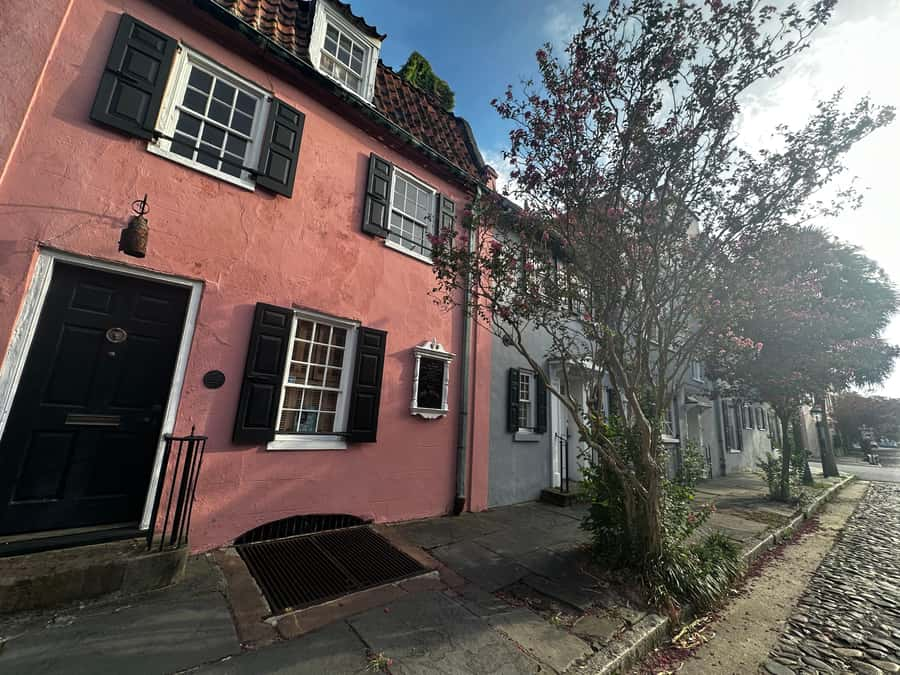
The South of Broad district supplies much of the visual appeal. Historic homes line streets where small design details matter as much as the larger facades. Your guide points out architectural features and explains why the buildings look the way they do.
Pay special attention to the gates. The tour highlights centuries-old entrances with beautiful wrought iron work, and these details are easy to overlook if you are hurrying toward a major landmark. Curving patterns, formal entrances, and carefully preserved metalwork show how much thought went into the boundary between private homes and public streets.
The architecture is not presented as decoration alone. The guide connects buildings with Charleston’s past and present, giving you a better sense of how the city has preserved its identity. The strongest part of the experience is this connection between what you see and why it matters.
If architecture is your main interest, keep realistic expectations. The walk includes many buildings and visual details, but it is also a general history tour. One person felt the tour could have spent longer on architecture, even while enjoying the guide’s humor and clarity. You will get a broad introduction rather than a specialist lecture on building styles.
Three secret alleys and quieter Charleston
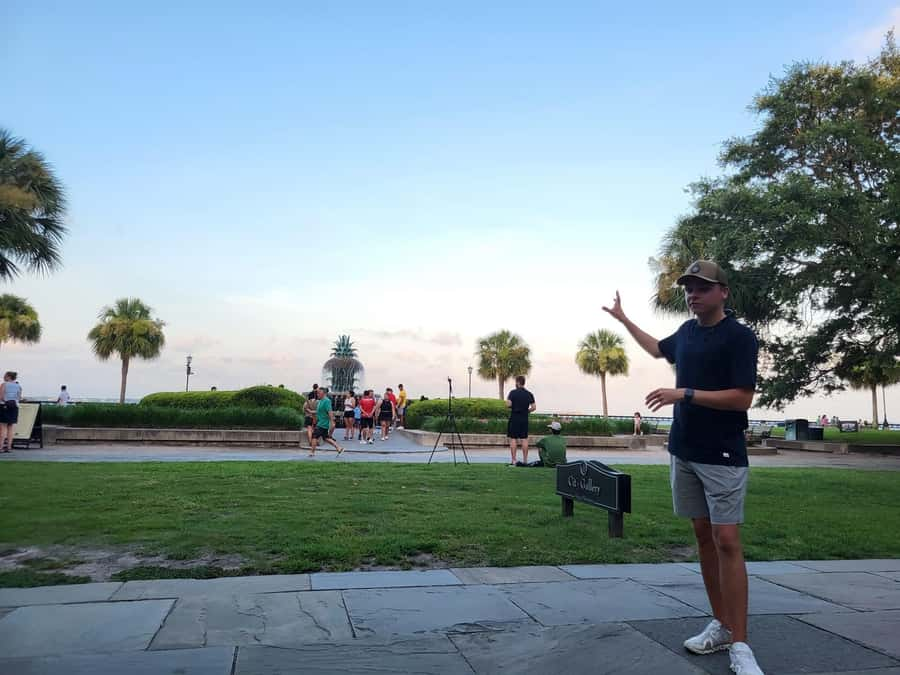
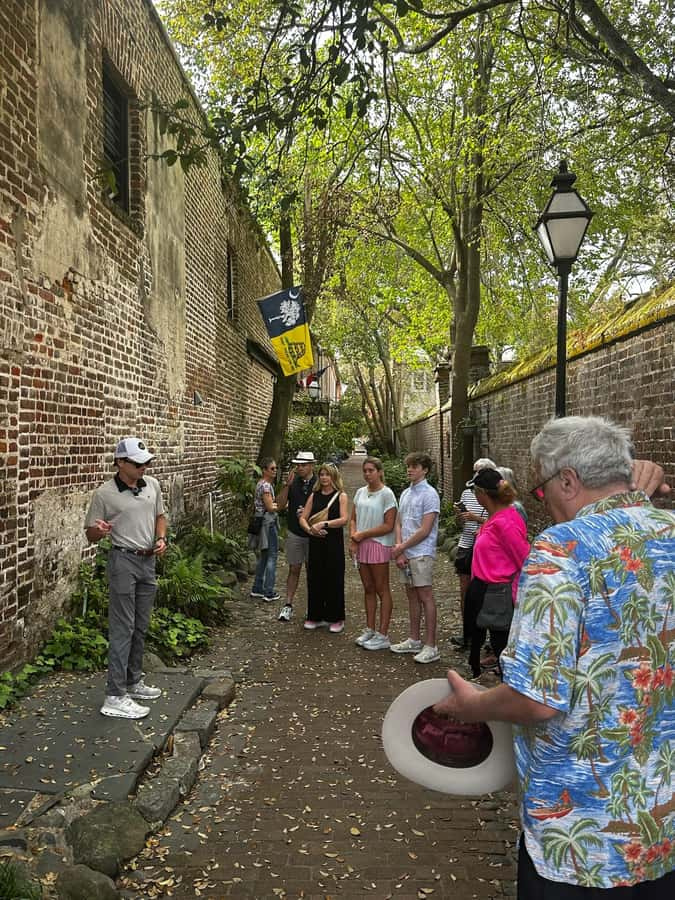
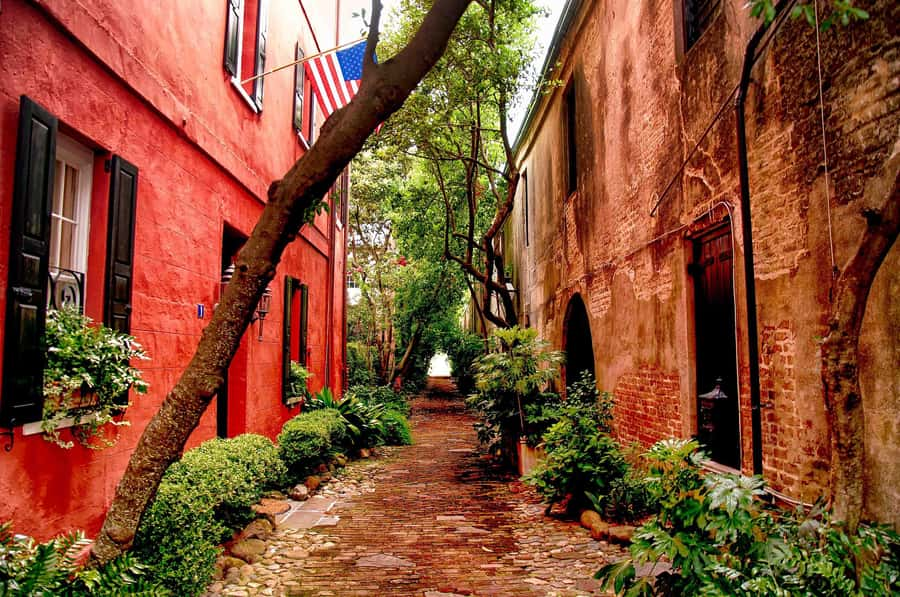
The three secret alleys are a smart feature. Main streets show you Charleston’s celebrated face, but narrow passages reveal a different scale. They create pauses from the regular flow of downtown and give you places to notice textures, walls, gates, and small changes in the city’s built form.
These alleys also add variety to the route. A tour that stayed only on broad historic streets could start to feel repetitive. Moving into tucked-away corridors makes the walk feel more exploratory, even though you remain close to the central sights.
I would not expect these passages to be empty or mysterious in a dramatic sense. Their value is subtler. They let you see how older parts of Charleston connect, and they give the guide room to share stories you might not encounter while following a standard map.
This is also where a local guide earns the $29 price. You could walk through the main districts alone, but you would be unlikely to find all three alleys or understand their place in the city. The route saves you time and gives you a narrative as you go.
More History Walking Tours in the USA
- Charleston: Old Walled City Historical Walking Tour
★ 4.7 · 705 reviews - Historic Charleston Walking Tour: Rainbow Row, Churches, and More
★ 5.0 · 691 reviews - Charleston History and Hops Tour: Bar and History Walk
★ 5.0 · 316 reviews - Small-Group Tour: Charleston Old Walled City Historical Walking Tour
★ 4.5 · 283 reviews
French Quarter landmarks and possible interior visits
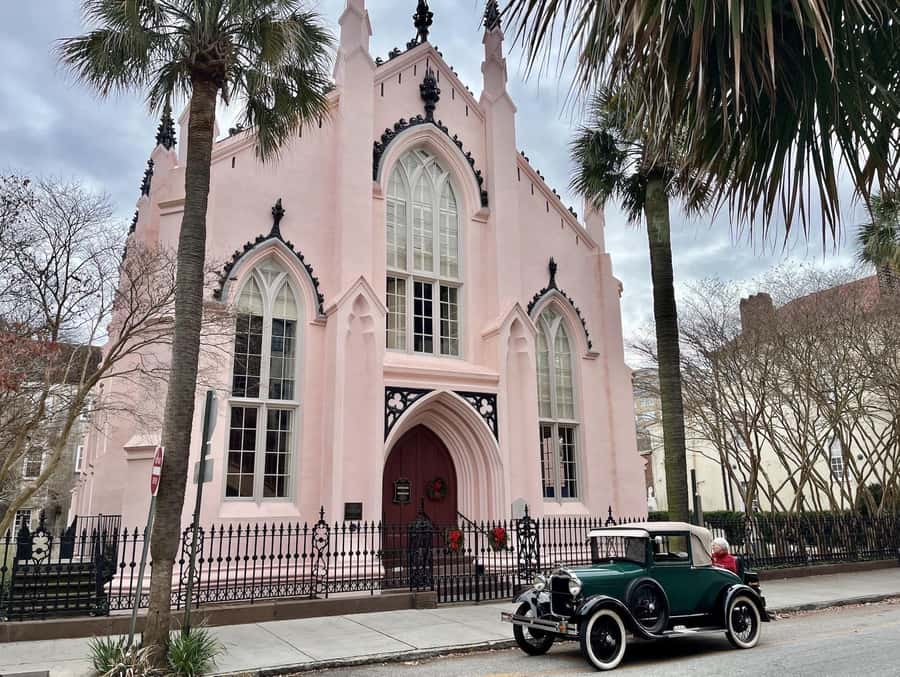
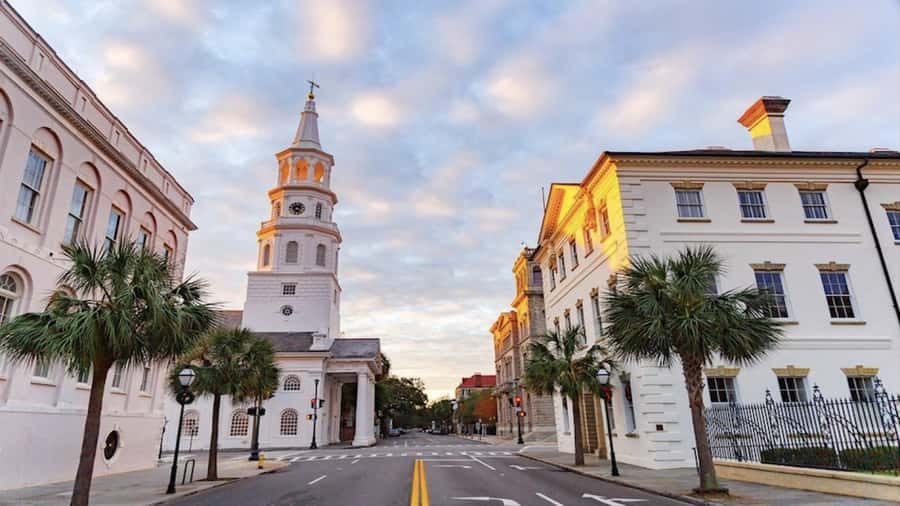
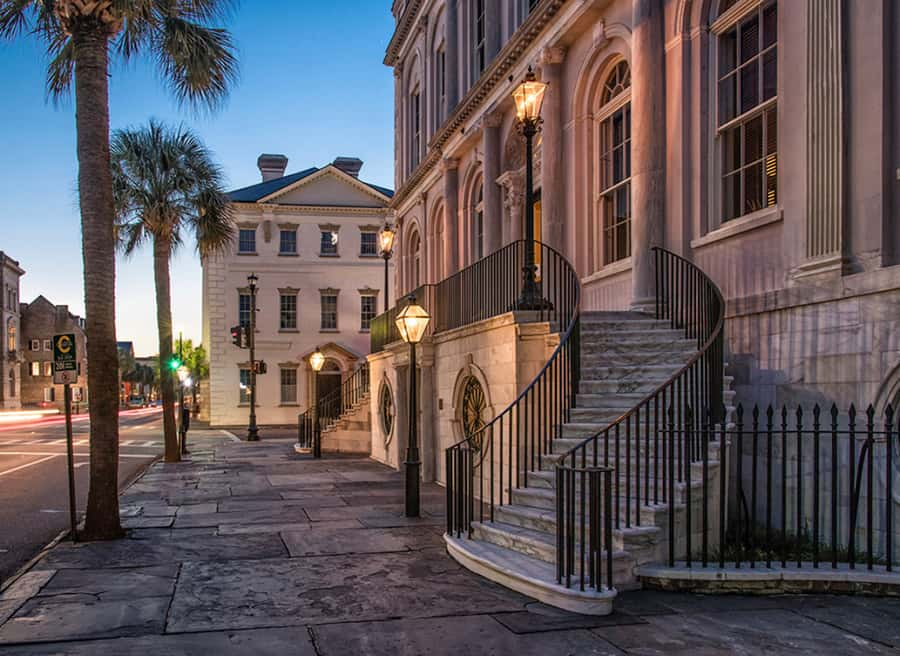
The French Quarter section brings several major sights into the walk. The itinerary includes St. Michael’s Church, Dock Street Theatre, and the Old Exchange, with entry subject to availability.
That condition is important. These interiors are a bonus, not a promise. Opening schedules, events, or other restrictions can affect access, so book the tour for the outdoor route and guide rather than treating admission as guaranteed.
St. Michael’s Church adds a religious and architectural dimension to the walk. Dock Street Theatre connects the tour with Charleston’s cultural life, while the Old Exchange gives you another major historic setting. Seeing the buildings from inside can make their scale and design easier to understand than an exterior stop alone.
When entry is not possible, the tour still has plenty of street-level material. You will visit or pass landmarks such as Rainbow Row, City Market, and St. Philip’s Church. The guide’s role is to explain what you are seeing, not simply point at it and move on.
Rainbow Row, City Market, and St. Philip’s Church
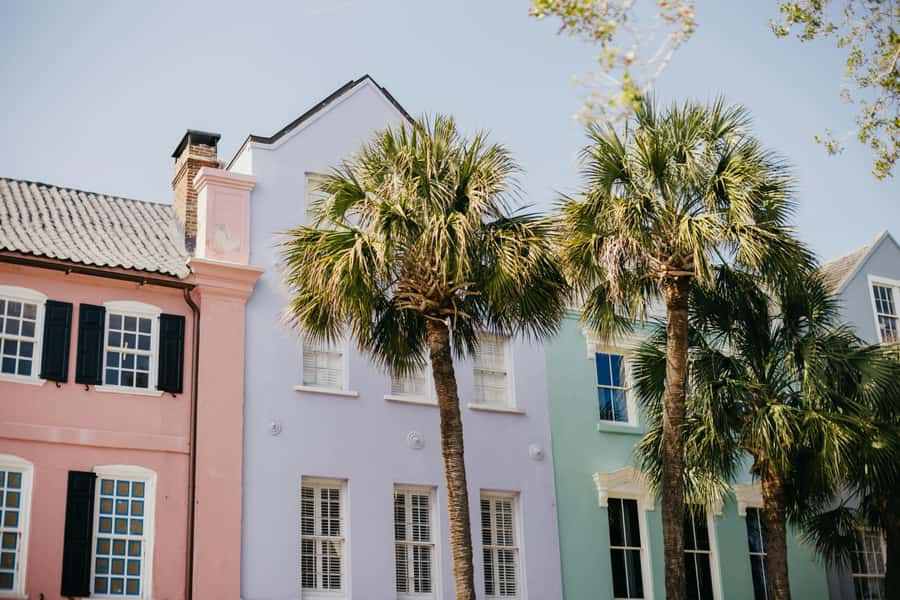
Rainbow Row is one of Charleston’s most recognizable stretches of colorful historic buildings. It is an easy place to appreciate the city’s visual charm, but it can also become a quick photo stop if nobody explains the wider setting.
The tour gives the row a place within the downtown route. You will see how its colorful facades relate to the surrounding streets and older buildings. The point is not just to collect a photograph. It is to notice the patterns of preservation, the proportions of the homes, and the way Charleston’s colors work against the city’s historic materials.
City Market adds a busier public setting. Here, the atmosphere shifts from quiet residential streets to a more active downtown area. It makes a useful contrast with the secret alleys and South of Broad homes.
St. Philip’s Church adds another prominent landmark to the sequence. Together, these stops create a varied picture of central Charleston: private homes, religious buildings, cultural sites, public markets, and narrow lanes. You are not spending the whole 90 minutes looking at one kind of building.
Finishing at Pineapple Fountain
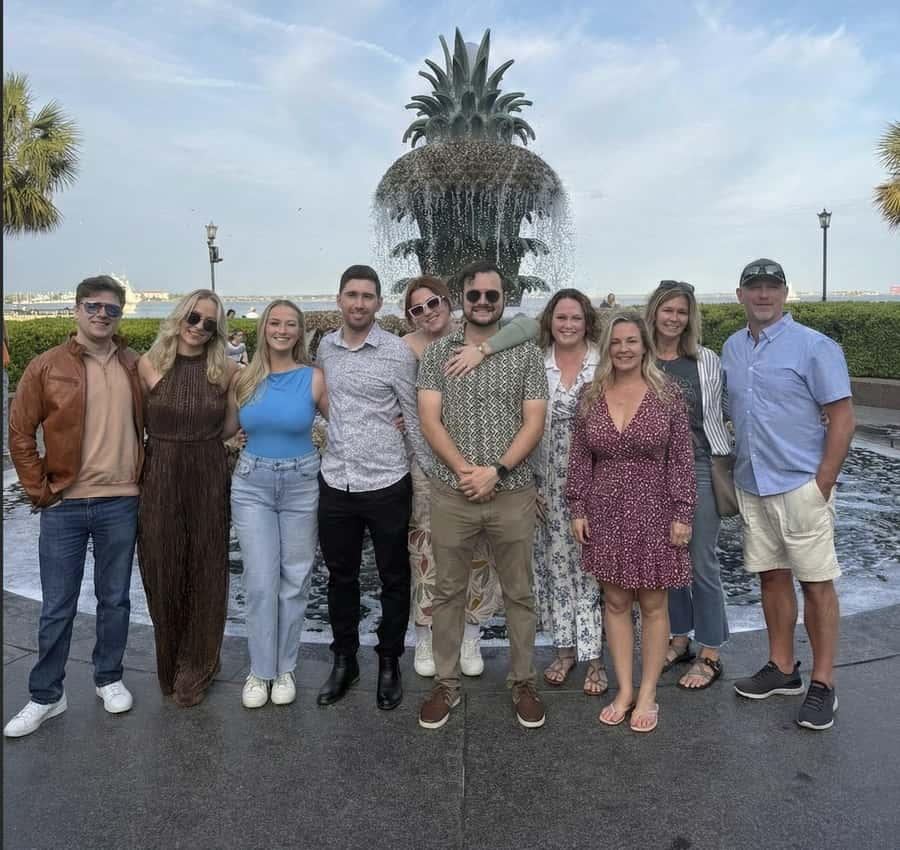
The route ends at the famous Pineapple Fountain. This is a practical finish because it leaves you in a recognizable part of Charleston with options for continuing your day.
The endpoint also gives the tour a clear shape. You begin in Historic Downtown, work through the South of Broad and French Quarter districts, and finish near the waterfront area. That makes the walk useful as an orientation tour, especially if you are still learning how the central streets connect.
I like tours that finish somewhere useful rather than returning you to an anonymous meeting point. From Pineapple Fountain, you can continue sightseeing, take photographs, or pause after the steady stream of information.
The guides make the difference
The most consistent strength of this experience is the guide. Jeff is repeatedly praised for his local perspective, entertaining anecdotes, puns, and enthusiasm for Charleston. He is described as a native Charlestonian in one account and as someone deeply attached to his adopted home in another, so his background may vary by tour, but his engaging style is a clear asset.
Emerson is also frequently highlighted. His background in history helps explain why several people found his presentation especially strong. He is praised for answering questions, pointing out small details, and keeping the group interested.
Paige brings a more conversational style. She is described as passionate, ready to discuss Charleston, and attentive to questions. Her treatment of the Gullah Geechee people was specifically appreciated, which is useful for anyone seeking a broader view of the city’s past.
Jackson is described as young, funny, friendly, and well prepared. He kept the walk moving while still allowing time to explain features. Other guides, including Philip, have been praised for adjusting the pace and waiting when needed.
Guide quality can vary from departure to departure, as it does with any walking tour. The repeated pattern is encouraging: clear delivery, local enthusiasm, room for questions, and a good balance of facts and stories.
What the tour says, and what it may leave out
A responsible Charleston tour needs to handle the city’s past honestly. The experience includes history connected to Charleston’s buildings, streets, churches, and communities, and at least one guide was praised for discussing the Gullah Geechee people.
Still, one person felt that the story of the slave trade did not receive enough attention. That is a fair concern. Charleston’s architecture cannot be separated from the labor, commerce, and wealth that shaped the city.
If you want a tour focused mainly on slavery, African American history, or the Gullah Geechee tradition, this may not be enough on its own. Its main purpose is a broad downtown introduction that combines architecture, landmarks, local stories, and city history. Ask questions during the walk if you want more detail on those subjects.
I see this as a useful first layer rather than the final word on Charleston’s past. It can help you identify topics and places to explore in greater depth afterward.
Is $29 a fair price?
At $29 per person, this is a good value if you want a guided introduction to central Charleston. You get 90 minutes with a local guide, a route of about one mile, three secret alleys, and the possibility of entering three significant landmarks.
The value comes less from the walking distance than from the interpretation. Charleston’s streets are accessible to anyone, but the connections between the buildings, gates, churches, theaters, and public spaces are not always obvious. A good guide gives you the background quickly, then leaves you with a better eye for the rest of your trip.
The price is especially reasonable for first-time visitors, couples, families with older children, and anyone who prefers a short orientation to a long formal tour. A private group is available if you want a more personal format, though the standard group may be enough for most people.
One drawback is that group size can affect the experience. A person found one departure a little too large, even while praising the guide. Larger groups may make it harder to hear, ask questions, or gather around a small architectural detail.
Who should book this walking tour?
You should consider it if you want:
- A short first look at Charleston’s historic center
- Stories behind the buildings rather than photographs alone
- Secret alleys and decorative ironwork
- A guide who can answer questions and adjust the conversation
- A route that combines South of Broad, the French Quarter, Rainbow Row, City Market, and Pineapple Fountain
- The chance to see major interiors when availability allows
It is less suitable if you want a specialist architecture course, a dedicated slavery-history tour, or a slow visit inside every landmark. It is also not a good choice for anyone unable to manage a one-mile outdoor walk with frequent standing stops.
The activity is marked wheelchair accessible, but the information also says it is not suitable for people with mobility impairments. Because those statements do not fully match, contact the operator before booking if you have specific access needs.
Practical tips for a better walk
Arrive 10 minutes early, and do not worry if the guide is not under the awning before roughly 15 minutes ahead of time. Guides typically arrive shortly before departure.
Wear supportive shoes. The distance is modest, but historic downtown streets and frequent stops make comfort more important than speed.
Dress for the forecast and carry what you need for rain or sun. The tour departs in all weather, so rain is not automatically a reason to expect a cancellation.
If you care most about entering St. Michael’s Church, Dock Street Theatre, or the Old Exchange, ask about availability when you book. Treat interior access as a fortunate addition, not the sole reason to reserve.
Use the question time. Guides such as Jeff, Emerson, Paige, Jackson, and Philip are praised for engaging in conversation, and your questions can steer the walk toward architecture, local stories, food and drink history, or the city’s past.
Should you book it?
Yes, if you want a lively and affordable introduction to Charleston’s central historic districts. The three alleys, ironwork, colorful buildings, and possible landmark interiors give the route more texture than a basic street-by-street overview.
Book it early in your visit so the walk can orient the rest of your sightseeing. Just keep two limits in mind: the landmark interiors depend on availability, and the tour offers a broad history rather than a full treatment of slavery, architecture, or Gullah Geechee culture. For $29, it delivers a strong first look, especially when you get a guide with the energy and storytelling ability associated with Jeff, Emerson, Paige, or Jackson.
FAQ
How long is the Charleston History and Architecture Guided Walking Tour?
The tour lasts 90 minutes and covers about one mile at a leisurely pace with frequent stops.
Where does the tour meet?
Your guide meets you beneath the awning in front of the Charleston Tours & Activities windows. The listed coordinates are 32.7797147, -79.9273302.
What areas does the tour visit?
The route begins in Historic Downtown and continues through the South of Broad and French Quarter districts. It finishes at Pineapple Fountain.
Are landmark entrances included?
Entrance to St. Michael’s Church, the Old Exchange Building, and Dock Street Theatre is included when available. Access is subject to availability.
Does the tour visit secret alleys?
Yes. The route includes three secret alleys, along with historic homes, old gates, wrought ironwork, Rainbow Row, City Market, and St. Philip’s Church.
Is the walking tour wheelchair accessible?
The activity is listed as wheelchair accessible, but it is also marked as not suitable for people with mobility impairments. Contact the operator before booking to discuss your particular needs.
Can I cancel or pay later?
You can cancel up to 24 hours in advance for a full refund. Reserve now and pay later is available, so you do not have to pay at the time of booking.
More Architecture and Landmark Tours in Charleston
- Charleston’s Best Highlights: History, Culture & Architecture
★ 5.0 · 422 reviews - Charleston History, Homes, and Architecture Guided Walking Tour
★ 5.0 · 267 reviews - Charleston History and Architecture Walking Tour
★ 5.0 · 63 reviews - Venice: St. Mark’s Basilica Guided Tour & VR History Intro
★ 3.9 · 4,880 reviews
Newest history tours we have reviewed in Charleston
- Charleston’s Strong Women of the South History Tour★ 4.5 · 27 reviews
- Charleston’s Historic Pubs, Taverns, and Taprooms Tour★ 4.5 · 33 reviews
- Sip History in The Sun Cabana Covered Cocktail Class★ 5.0 · 332 reviews
- Small-Group Tour: Charleston Old Walled City Historical Walking Tour★ 4.5 · 283 reviews
- Private Sunset Sail BYOB Dolphin/History Tours on 43ft Mystique★ 5.0 · 42 reviews
- Sip History In a Secret Speakeasy Cocktail Class★ 5.0 · 40 reviews
- Private Afternoon Sailing/Dolphin & History Tour on 43ft Mystique★ 5.0 · 32 reviews
- Private Walking Tour of Historic Charleston★ 5.0 · 38 reviews
Architecture & Landmark Tours, compared.

St. Mark’s Basilica Guided Tour & VR History Intro
Read our review →
Venice’s Best: Basilica, Doge’s Palace, Gondola & History Gallery
Read our review →
Córdoba: Skip-the-Line Great Mosque-Cathedral History Tour
Read our review →
Pantheon Elite Guided Tour – Rome’s Iconic Ancient Temple
Read our review →
Abu Dhabi Grand Mosque, Palace, and Heritage Village
Read our review →
Chicago in a Day: Food, History & Architecture Walking Tour
Read our review →

Colosseum Special Access Tour, with Ancient Temples & Tombs
Read our review →Browse the lists this tour appears in