
Review · BRUGES HISTORY TOURS
Unforgettable Bruges: Sightseeings, History and Tasting.
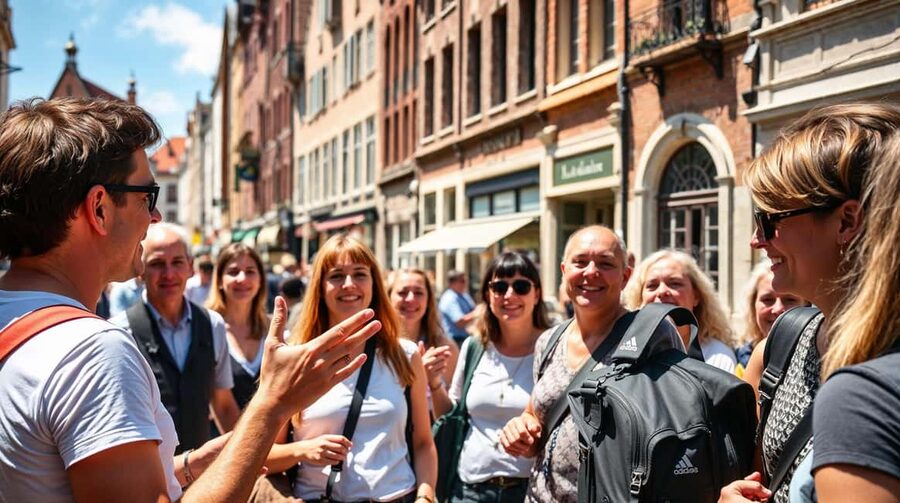
Bruges has the kind of old center where a short walk can raise a dozen good questions. This tour tackles them head-on: does the Basilica of the Holy Blood really hold a relic of Jesus Christ, why did a major European trade center become a ghost town, and why were Bruges death rates unusually low during the Black Death? The route covers more than 15 central landmarks in two hours, with plenty of photo stops.
I like the small group of one to six people, which gives guide Artur Savastieiev room to tell stories rather than simply point at buildings. I also like the unusual details, including the 53 Virgin Mary figures said to appear on building facades. The main drawback is speed: two hours is enough for an excellent introduction, but not enough for long visits inside the museums or churches, and food and drinks are not included.
Key points to know before you book
- Small groups up to six: The format should feel more personal than a large city walk.
- A question-led route: Stories cover relics, trade, disease, cats, beer, and Bruges architecture.
- Over 15 sights in two hours: Expect a brisk walk with frequent stops for photos and short explanations.
- Guide Artur Savastieiev: The experience is led in English, with a storytelling style praised for being entertaining and personal.
- Ends at De Halve Maan brewery: The brewery stop is included as a visit, but food and drinks are extra.
- Excellent low-cost introduction: At $3.41 per person, the price is remarkably small for a guided orientation, though you should not expect lengthy interior tours.
Why this Bruges walk works best as an introduction
Bruges is easy to admire and surprisingly easy to misunderstand. You see medieval-looking streets, canals, towers, and ornate facades, but the city makes more sense once you know why its trade faded, how water shaped its fortunes, and how religious objects affected daily life.
This walk gives you that framework without asking you to spend half a day in a classroom. You move through the historic center while Artur links buildings to stories. The strongest part of the concept is its use of questions. Instead of only listing dates and names, the route asks you to look closely and wonder why the city developed as it did.
The tour has earned a 4.3 rating from 27 reviews, and the most consistent praise concerns Artur’s delivery. He is described as charismatic, intelligent, entertaining, and good at making the city feel personal. That matters in Bruges, where many sights can blur together if you only collect photographs.
The pace will suit you if you want a first look before exploring on your own. It is less suitable if you want to climb every tower, enter every museum, or linger over architectural details. The itinerary allocates only a few minutes to several stops, so think of this as a guided city introduction rather than a series of full admissions.
More History Tours in Belgium:
- Historical Walking Tour: Legends of Bruges
★ 5.0 · 2,541 reviews - Historical Walking Tour: Legends of Antwerp
★ 5.0 · 1,837 reviews - Historical Walking Tour: Legends of Gent
★ 5.0 · 1,761 reviews
Market Square and the Belfry: starting with Bruges at full scale
Meet near the Belfry on Market Square, where the guide waits with a yellow umbrella. This is a practical meeting point because the tower is one of Bruges’ easiest landmarks to recognize, especially if you are arriving in the center for the first time.
Market Square gives you an immediate sense of Bruges’ scale. The tour includes about 15 minutes for sightseeing here, enough to look across the square, take photographs, and hear why this area mattered to the city’s public and commercial life.
The Belfry receives another 15-minute visit. You should not expect a full tower climb during this walk. Instead, the stop helps you understand the tower as a symbol of civic power and as one of the defining shapes in Bruges’ skyline.
If you arrive early, use the square to get your bearings. Look for the yellow umbrella rather than searching for a conventional shop or ticket booth. The tour ends back at the meeting point, at Huisbrouwerij De Halve Maan, so note that the route is designed as a central walking circuit.
Burg Square and City Hall: Bruges’ civic heart
From Market Square, the route continues to Burg Square, another major public space in the old center. The visit lasts about 15 minutes, giving you time to take in the buildings and hear how religion and city government shared this compact part of Bruges.
City Hall receives a shorter five-minute stop for photographs and a visit. That is enough for a quick look and a useful explanation, but not a detailed interior examination. If ornate civic architecture is a main reason for your trip, you may want to return later with more time.
The nearby Blinde-Ezelstraat is another brief visit. Its name and unusual street setting give Artur a chance to move from major squares to smaller pieces of the city’s character. These short stops are where a local storyteller can add value, since the visual details alone may not explain why a narrow lane matters.
The Holy Blood question and Bruges’ religious past
One of the tour’s central questions concerns the Basilica of the Holy Blood. The walk asks whether the basilica stores the real Blood of Jesus Christ. That framing is useful because it treats the relic as both a religious object and a part of Bruges’ long cultural identity.
You should expect a guided look and explanation rather than a lengthy religious service or a full museum session. The itinerary places the basilica area within the Burg Square section, so timing is limited. Visitors interested in sacred art or relics may want to return independently after the walk.
The route also encourages you to watch the facades. It points to 53 Virgin Mary figures around Bruges and challenges you to spot them all. You will not have time to find every one during a two-hour walk, but the idea gives you something to look for after the tour. It turns an ordinary stroll into a small visual hunt.
Same streets, a different century:
- Brussels: Historical Tour with Chocolate & Waffle Tasting
★ 4.8 · 1,206 reviews - Brussels: Historical Walking Tour with Chocolate & Waffle Tasting
★ 5.0 · 1,165 reviews - THE Storytelling Tour of Bruges | First Day Must | History & Tips
★ 5.0 · 925 reviews - Historical Walking Tour: The Story of Bruges – by Legends
★ 4.7 · 483 reviews
Huidenvettersplein and the canals
Huidenvettersplein brings the route closer to Bruges’ water and trade history. It is scheduled as a photo stop and visit for about 10 minutes. You will have time to photograph the square and hear why the canal network mattered to the city’s commercial life.
Bruges is often called the Venice of the North, though the comparison has limits. The charm here comes from compact canals, stone bridges, and streets that remain easy to explore on foot. This tour does not include a boat ride, so do not book it expecting a canal cruise.
The commercial question is one of the better historical hooks in the experience: why did a major European trade center turn into a ghost town? The story gives context to the city’s later quiet character. It also helps explain why Bruges can feel preserved rather than constantly rebuilt.
Bonifacius Bridge and the Gruuthuse area
Bonifacius Bridge is one of the route’s photo stops, with about 10 minutes for a visit and pictures. The short pause suits the bridge’s role as a scenic point, but it also reflects the overall rhythm of the tour: arrive, hear the key story, photograph the view, and keep moving.
The Gruuthusemuseum receives a 10-minute stop with a visit, guided explanation, and sightseeing. You should treat this as an exterior or orientation stop within the walk, not a full museum tour. The itinerary does not promise extended time among the museum’s collections.
That distinction matters. A two-hour route can show you where the Gruuthusemuseum is and explain its place in Bruges, but it cannot give you the same experience as buying admission and exploring at your own pace. If you enjoy museums, use Artur’s introduction to choose which sites deserve a longer return visit.
Our Lady’s Church and Sint-Janshospitaal
The Church of Our Lady receives another 10-minute stop with a photo opportunity, visit, guided tour, and sightseeing. It is one of the route’s main religious landmarks, and its inclusion balances the civic squares and commercial streets.
The schedule is tight, so you will get an overview rather than a slow architectural study. Keep your expectations practical: this walk is built around stories and connections, not long periods of silent viewing.
Sint-Janshospitaal Museum follows with about five minutes for a photo stop, visit, and guided explanation. The short timing makes it an orientation point rather than a complete museum visit. If the hospital’s art or medical history catches your attention, write it down and come back later.
I like this part of the route because it shows how Bruges functioned beyond grand squares. Churches, hospitals, waterways, and streets all formed part of one working city. The walk gives you enough information to see those links, even if it cannot explore each building in depth.
Stoofstraat, Walplein, and the final brewery stop
Stoofstraat and Walplein Square are both short visits of about five minutes. These stops keep the route moving through smaller streets and public spaces rather than confining you to the most famous squares.
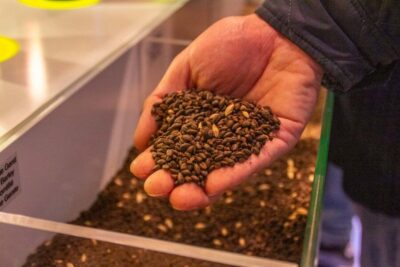
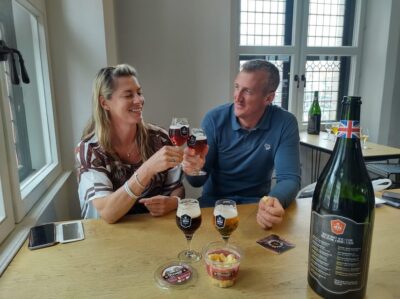
Walplein leads toward De Halve Maan brewery, where the tour finishes. The brewery stop lasts about 10 minutes and includes a visit, guided explanation, and a chance to consider Belgian beer as part of Bruges’ modern identity.
Food and drinks are not included in the price. You should budget separately if you want a beer or something to eat at the end. The stop is therefore best understood as a final cultural and practical touch, not a full brewery tasting.
The name Unforgettable Bruges: Sightseeings, History and Tasting may suggest a formal tasting experience. The supplied details do not promise included tasting samples, so book with the expectation of a brewery visit and beer-related stop, with purchases extra.
The stories that make the route memorable
The strongest feature is not the number of stops. It is the range of questions used to connect them.
You may hear about why Bruges had one of the lowest death rates during the Black Death. You may also hear why there are no cats in Bruges, a curious local detail that gives the walk a lighter turn. These subjects break up the usual sequence of church, square, tower, and canal.
That mix suits Artur’s reported style. The descriptions of his guiding emphasize charisma, intelligence, entertainment, and a personal approach. In practical terms, you are likely to get a tour that favors clear stories and memorable details over a long stream of dates.
The experience also leaves you with things to notice later. Count the Virgin Mary figures. Watch how canals appear beside streets and squares. Compare the grand spaces of Markt and Burg with the narrower lanes around Blinde-Ezelstraat and Stoofstraat.
Price, pace, and group size
At $3.41 per person, this is an unusually inexpensive way to get a two-hour orientation to central Bruges. The value is strongest if you are visiting for the first time, want a quick historical framework, and plan to explore independently afterward.
The low price should not lead you to expect private access, long museum visits, or included refreshments. The tour covers a lot of ground in a short period, and several stops last only five minutes. You are paying mainly for the guide’s storytelling and route planning.
Groups are currently limited to one to six people. That is a major advantage for anyone who dislikes walking behind a large crowd or struggling to hear a guide in a busy square. Larger parties should seek a private option instead of assuming everyone can join this format.
The tour is wheelchair accessible according to the supplied details. Since the route uses central streets and cobbled areas, you may still want to confirm that the current route suits your personal mobility needs before booking.
Free cancellation is available up to 24 hours before the start, and you can reserve now while paying later. Those terms help if your Bruges schedule is still shifting.
Who should book this experience?
Book it if you want a fast, story-led introduction to Bruges, especially if you enjoy unusual historical questions and photo stops. It is also a good match for solo visitors and small parties who value direct contact with a guide.
Families may appreciate the cat story, the hunt for Virgin Mary figures, and the straightforward route through the center. Beer fans will like ending at De Halve Maan brewery, though they should remember that drinks cost extra.
Skip it if your main goal is a detailed museum visit, a tower climb, or an included tasting. The itinerary moves quickly, and the short stops are designed to orient you rather than satisfy a specialist interest in any one building.
Should you book the Bruges walking tour?
I would book this as an affordable first walk, not as your only Bruges experience. Artur Savastieiev’s small-group format and story-based approach give the tour more personality than a basic landmark checklist, while the route covers the city center’s key squares, churches, canals, bridges, and brewery district.
Go in with comfortable shoes, arrive near the Belfry with enough time to find the yellow umbrella, and bring a camera. If you want a drink or meal at De Halve Maan, plan to pay separately. After the walk, return to the sights that caught your attention, especially the Holy Blood basilica, the museums, and the churches.
FAQ
Where does the Bruges walking tour start?
It starts near the Belfort Tower on Market Square in Bruges. The guide waits with a yellow umbrella.
Where does the tour finish?
The activity finishes back at the meeting point, at Huisbrouwerij De Halve Maan.
How long does the experience last?
The walking tour lasts two hours. Starting times depend on availability.
What language is the tour in?
The live tour guide speaks English.
How many people can join the group?
Current bookings are accepted for small groups of one to six people. Larger groups should consider a private tour option.
Is food or beer included?
No. Food and drinks are not included, although the route finishes with a visit to De Halve Maan brewery.
Is the tour wheelchair accessible?
Yes, the activity is listed as wheelchair accessible.
Can I cancel the booking?
Yes. You can cancel up to 24 hours in advance for a full refund. You can also reserve now and pay later.
Newest history tours we have reviewed in Belgium
- Bruges: Historical Walking Tour with Food Tasting★ 3.6 · 22 reviews
- Brussels: BELvue Belgium History Museum Entry Ticket★ 4.6 · 27 reviews
- Bruges: History, Chocolate and Beer Walking Tour★ 4.9 · 65 reviews
- Bruges: Nightly Tales and Untold History Walking Tour★ 4.9 · 154 reviews
- Antwerp: Private 3-Hour Historical Sightseeing Walking Tour★ 4.8 · 70 reviews
- Antwerp: Private Historical Highlights Walking Tour★ 4.9 · 36 reviews
- Private Historical Tour: Legends of Antwerp★ 5.0 · 125 reviews
- Bruges: Private Historical Highlights Walking Tour★ 4.7 · 191 reviews
Bruges History Tours, compared.
THE Storytelling Tour of Bruges | First Day Must | History & Tips
Read our review →
Historical Walking Tour: The Story of Bruges – by Legends
Read our review →
Private Historical Tour: The Highlights of Bruges
Read our review →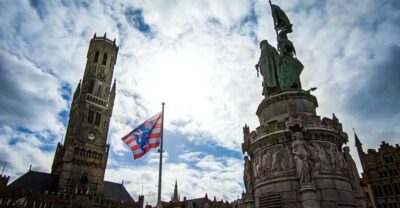
Browse the lists this tour appears in